
The 9mm Luger cartridge has been so popular for so long that it is hard to imagine a time when it was not. But for most of its history, the 9mm competed, often unfavorably, against other cartridges.
Due to a perfect storm of geopolitics and advancements in both the firearms and ammunition industries, the 9mm Luger has outlasted most of its contemporaries to become a platform-setting cartridge relied upon by countless law enforcement and military circles as well as millions of shooters around the world.
Here is how the 9mm became the world standard.
The Birth of the 9mm Luger Cartridge
The 9mm cartridge is not the most powerful nor the least powerful pistol cartridge; the round historically had a reputation for marginal ballistics. But would it surprise you that the 9mm Luger was developed for more stopping power?
After the C93 Borchardt failed the Swiss military trials in the late 1890s, DWM asked Georg Luger to make the design more practical and easier to build. The C93 was the first produced automatic pistol, and its 7.63mm cartridge was in the light and fast category of power in a world where slow-moving, large caliber rounds were considered the gold standard in stopping threats.
Luger developed the C93’s toggle action into what would become the Luger pistol, and the 7.63 Borchardt cartridge was shortened as a result into the .30 Luger in 1898.
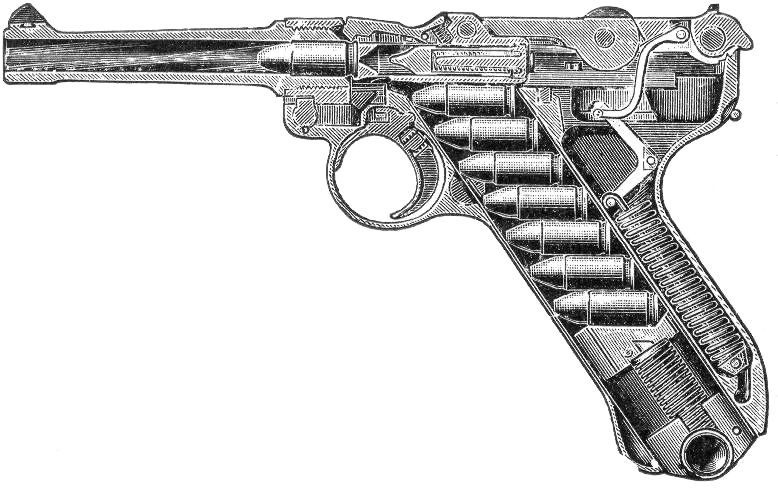
The Swiss were fine with the .30 Luger, but the German Empire, fresh from experiences in its new African dominion, wanted a bigger bullet. Luger expanded the bottleneck .30 Luger round to accept a larger 124 grain .355 inch bullet in 1901, and fielded the new 9mm Luger cartridge and the Luger pistol to a number of countries.
Germany ultimately adopted the Luger pistol, and the 9mm cartridge had its first adherent.
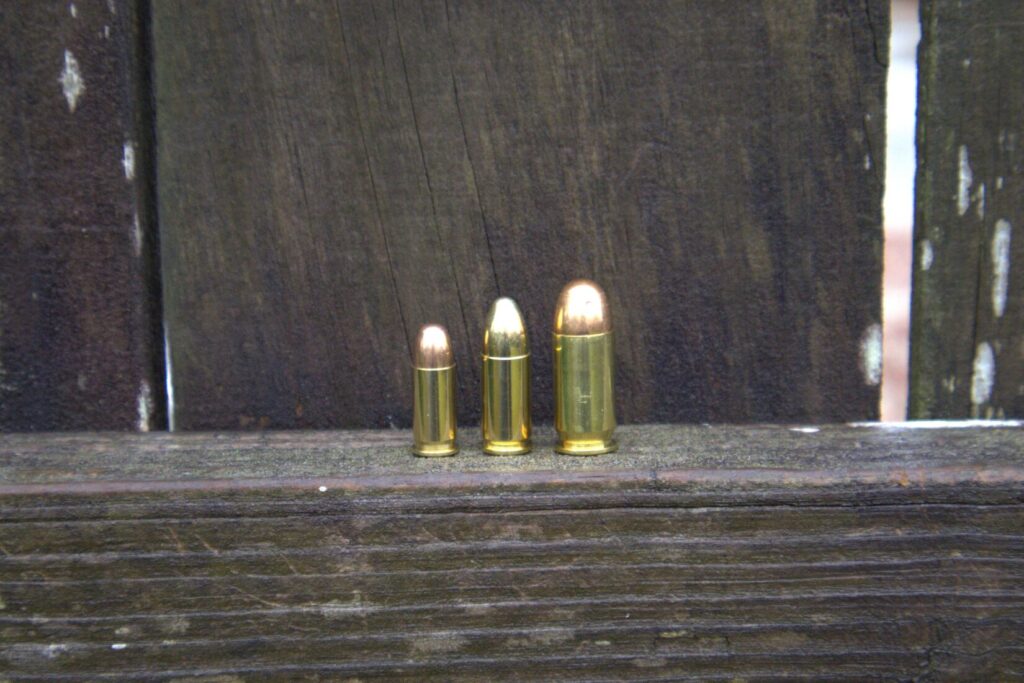
At its inception, the 9mm Luger was a potent cartridge in an autoloading platform in a world making plenty of use out of small-caliber pistols and big-bore revolvers. At the time, the .32 ACP was arguably the most universal pistol cartridge, but revolver rounds like 7.62 Nagant and 8mm Gasser were still being issued. On paper, the 9mm cartridge outclassed those rounds.
The cartridge and gun combination compared favorably to slower, bigger cartridges like .45 Colt or .455 Webley used in lower capacity revolvers. Its closest rival in the auto pistol market, the .45 ACP, would not achieve success until it was adopted alongside the M1911 pistol by the United States government.
Cartridges International: The German Empire’s Enduring Conquest
When studying the effects of the World Wars, it is impossible to escape the conclusion of consolidation. It was a paradigm shift where old powers were felled by new powers with bigger networks of influence, control, and vulnerability. The World Wars also led to a pistol cartridge consolidation around 9mm.
The German Army fielded the P08 Luger during the First World War as its standard pistol. By war’s end, German stormtroopers on the Western front, whose job it was to crack tough trench defenses, were heavily armed with pistols, grenades, and sometimes the new MP18 submachine gun, a fully automatic shoulder-fired long gun chambered in 9mm.
Germany continued to use the 9mm as its standard pistol and submachine gun cartridge through the Second World War. The massive successes of the Wehrmacht in 1939 and 1940 saw her enemies adopting the 9mm cartridge simply because it was possible to capture and use German ammunition. For example, the British Empire and Commonwealth did not have a submachine gun and issued revolvers instead of pistols at the onset of the war.
After Dunkirk, Britain developed the STEN submachine gun chambered in 9mm. In addition, gun designer Dieudonne Saive and other personnel from FN in Belgium were moved to London, and the FN Hi Power 9mm pistol was spun up in production for contracts to the Commonwealth and to Nationalist China to arm the global effort against the Axis powers.
After the war, Britain, the Commonwealth, and most of Europe rebuilt their militaries and retained or adopted the 9mm cartridge out of necessity and practicality. The creation of NATO and the adoption of 9mm as that organization’s standard pistol cartridge in 1949 was a foregone conclusion. But one major power did not adopt 9mm: the United States.
The Slow American Reception: 1945-1986
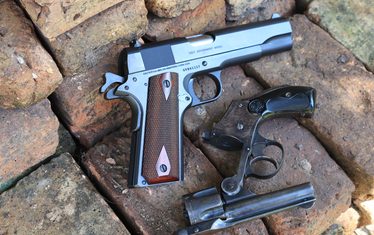
After World War II, the US military continued to use the Colt M1911 pistol in .45 ACP. But at the end of that conflict, the design was showing its age, and a replacement was sought. Colt released their lighter Commander model and Smith & Wesson pitched the double-action Model 39 for the Army’s 1949 pistol trials. These 9mm pistols performed well, but given that the Army was shrinking in order to concentrate on nuclear deterrence, the replacement never happened and the 1911 would continue in service into the 1980s.
The American public largely stuck to revolvers like those used by the majority of law enforcement agencies throughout the country. Many who embraced automatic pistols favored some flavor of 1911 or Colt Pocket model. The glut of 9mm-chambered war trophies and the marketing of the Colt Commander and S&W Model 39 did finally give the round some exposure. Although ammunition variety was poor, the higher capacity and superior ballistics to the .38 Special cartridge led the Illinois State Police to adopt the Model 39 in 1968–the first major agency to adopt an autoloading pistol.
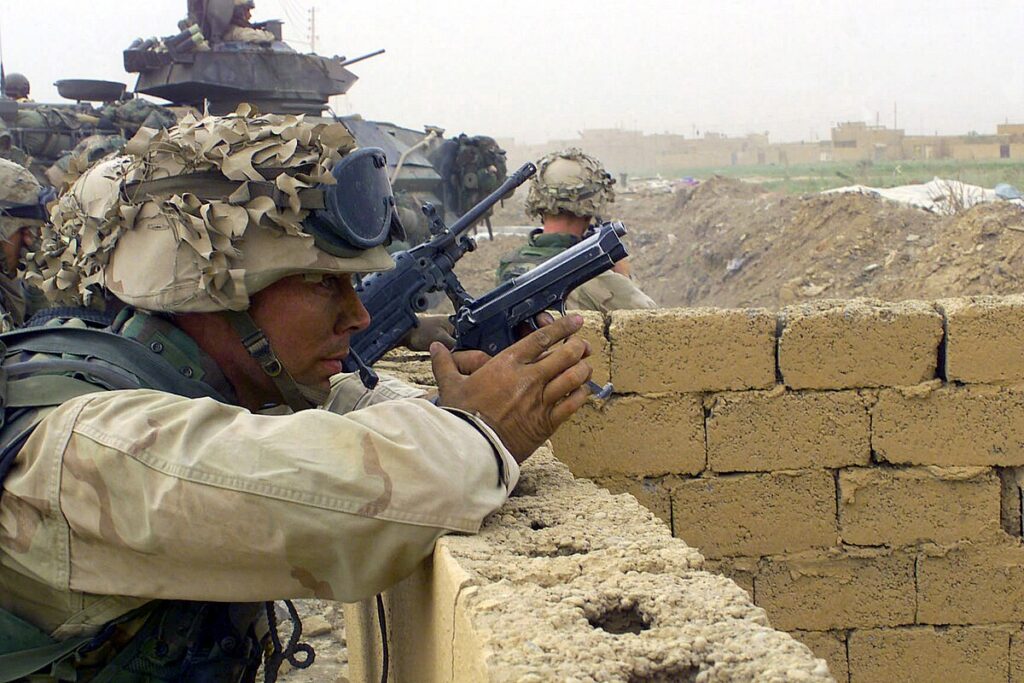
The appeal of 9mm handguns grew with the growth of the Wonder Nine pistol. These were metal-framed high-capacity pistols chambered in 9mm Luger, and they usually came from foreign sources.
The Browning Hi Power, introduced in 1935, was well represented. In 1975, the CZ 75 was introduced, and a year later, the Beretta 92. In 1982, the Glock 17 made its debut, and in 1985, the Sig P226.
The Beretta 92 was adopted by the US Army to replace the 1911 as the M9 in 1985. With the collapse of the Berlin Wall, even members of the former Communist bloc sought out 9mm Luger when their aging stocks of 9mm Makarov pistols could be dispensed with.
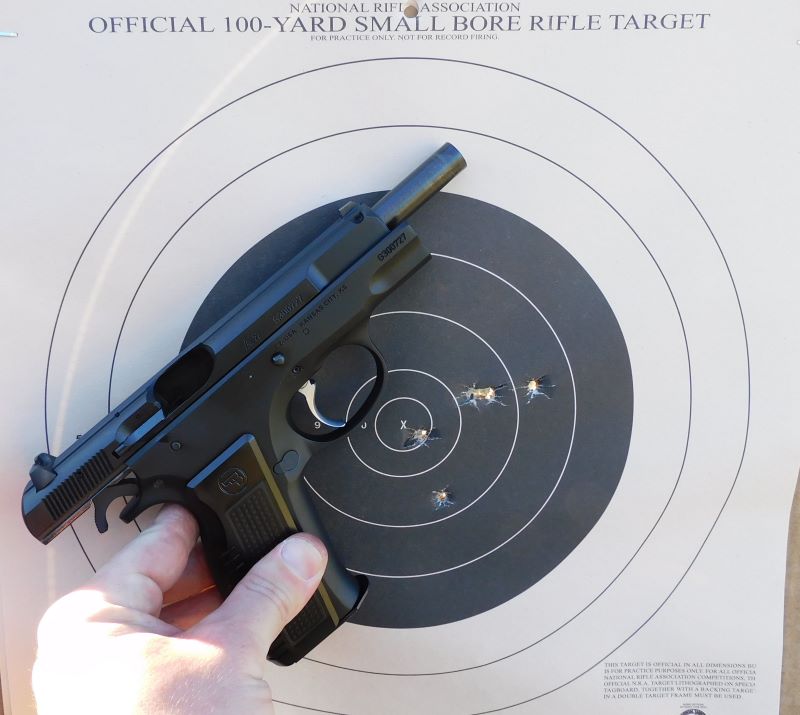
Concurrently, American law enforcement’s move toward semi-auto pistols was fueled in response to greater threats from rifle and Wonder Nine-wielding criminals. 9mm ammunition variety remained a problem, and the round has a reputation for excessive penetration and a lack of power compared to other cartridges, but the Wonder Nine platform’s other advantages were impossible to ignore.

The problem of 9mm and the solution of a semi-auto pistol came to a head in the aftermath of the 1986 FBI Miami Dade Shootout. In a shootout that lasted four minutes, one gunman wounded five FBI agents and killed two. The FBI agents on scene were using .357 Magnum revolvers, while three SWAT-trained agents used S&W 459 12-shot 9mm pistols.
After the fight, the FBI wanted to replace their revolvers entirely, but not with 9mm pistols, which had failed to deliver a stopping shot on the perp. The FBI would go on to adopt the 10mm in 1990, and later the .40 S&W. Departments that began issuing 9mm pistols to their officers abruptly changed direction and went to .40 S&W.
Coming Full Circle: Back to 9mm
In the 1990s and 2000s, the 9mm cartridge remained afloat as a NATO standard cartridge with translated popularity here in the United States. But the march toward .40 S&W cannibalized 9mm sales during that time. The 9mm Luger was seen as smaller and less powerful than the alternatives.
As the FBI developed protocols for uniformly testing duty ammunition in the aftermath of Miami Dade, the 9mm came up short against .40 and .45. It did not help that 9mm is physically smaller. It also did not help that periodical gun culture had a longstanding bias against 9mm. Journal articles from across the decades remained in circulation. These featured limited or pointless testing protocols with limited ammunition variety, as well as ammunition that tended to produce results that did not reflect what was advertised.
Col. Charles Askins, in his 1955 Guns Magazine article, “The Sad Truth About the 9mm,” documents the power of the 9mm against other cartridges with such tests as shooting ice, wax, and GI helmets. Regardless of content, once printed and committed to memory, fact became wisdom.
What ultimately made the 9mm Luger into a universal American cartridge, not just a European one, was the concealed carry market that grew out of shall-issue carry laws that began to be introduced in the 1980s and reaching their crescendo today with constitutional carry.
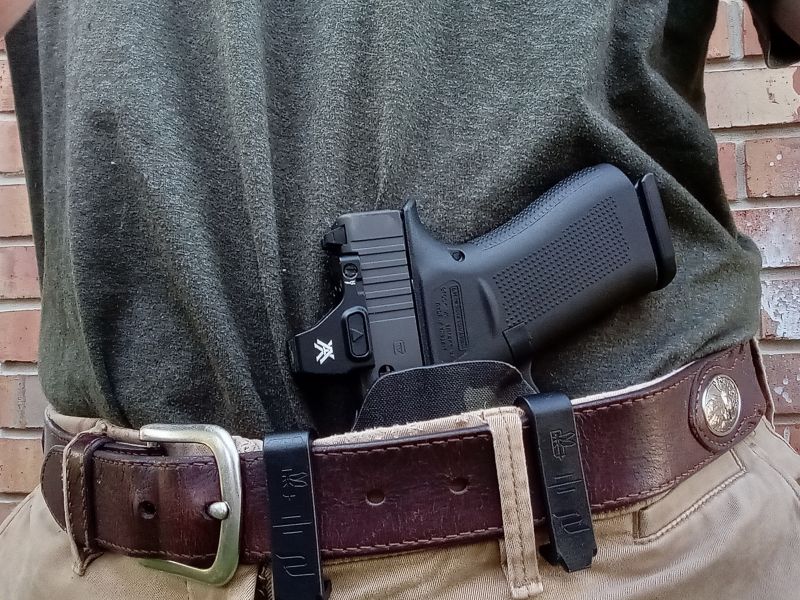
Thanks to NATO adoption, full metal jacket practice ammunition was cheap, and the round never fell into total obscurity. This created a unique marketing opportunity to develop 9mm defensive ammunition that exceeded what was previously available.
In comparative testing as well as real-world shootings, modern 9mm hollow points produce similar results over objectively more powerful cartridges like .40 or .45. Higher-pressure +P rounds pushed the envelope even further.
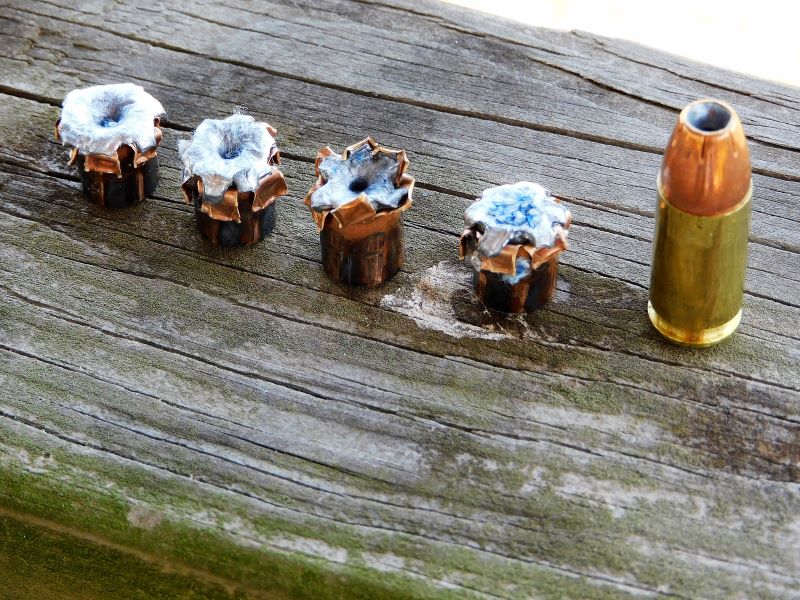
The resurgence of 9mm was alluded to when the FBI abandoned .40 S&W and made the switch back to 9mm in 2015, twenty-five years after abandoning it in the first place.
It was found that the 9mm’s recoil allowed for new officers to shoot faster and more accurately. The economy of scale around 9mm ammunition also made the pistols cost-effective to feed. All these benefits become harder to ignore when the ultimate ballistic advantages even out in the end.
Ten years have passed since the 9mm was readopted, and law enforcement agencies nationwide have returned to it, while the shooting public never gave up on it in the first place. Nationally and internationally, 9mm is the world standard.