
I started and ran the patrol rifle program for eleven and a half years at the agency from which I retired. My tenure only ended when a recently promoted lieutenant, who was “not fond” of being on the range for a full eight hours, decided to “go in a different direction.”
It was sad to see something I created—which people’s lives could depend on and that I kept to a high standard—destroyed out of spite. However, its destruction would eventually verify that everything I had built into the program was the right way to run it.
DAILY/WEEKLY MAINTENANCE
While some maintenance and sustainment must be done by the individual officers signing a rifle in and out every day, the overall responsibility ultimately lies with the person running the program. Taking it a step further, the head of the agency is also responsible. They must assign, assess, and select the right people for the job; look up the term “vicarious liability” and you’ll understand why.
When I first set up the program, I ensured that every rifle was zeroed at 100 yards for both the optic and backup irons. I made sure they were well-lubed and had fresh batteries in the red dots and weaponlights, along with fresh duty ammunition in both the primary magazine and the Redi-Mag. Slings were stowed, and shoot-through muzzle caps were used to prevent debris from entering the muzzle.
At least once a week, I would check every rifle to add lube if needed (over time it tends to run out of the receiver), check the batteries in the weaponlight and optic, and make sure the slings were stowed. I also checked that the mags were full and there were no dented primers, no dented cases, and the ammunition was in good shape in general.
AMMUNITION
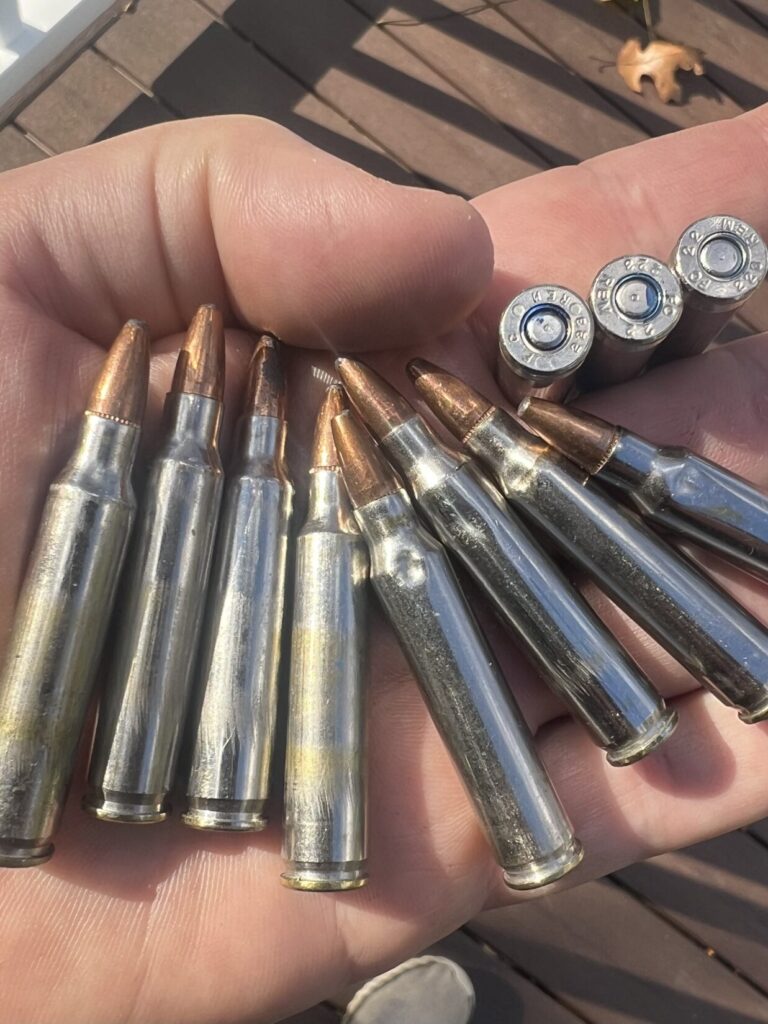
Duty ammunition will get beat up over time and should be replaced at least once a year (sooner if an issue is found). I used the old ammo for confirmation of zeroes, allowing officers to train at distance with their duty rounds rather than cheap training ammo (that matters). I also mandated that any round chambered during an incident be turned in for a fresh one.
Once, I heard a story about a Midwest SWAT member who attempted to shoot an armed suspect during an entry; he got a “click” instead of a “bang” and was forced to transition to his pistol. Other team members reported similar issues on the range, leading to an investigation involving the team, range personnel, and the ammo manufacturer.
The investigation revealed that these officers were constantly re-chambering the top round in their magazines. When you do that, unless you have a weapon like an HK 416 with a firing pin safety, the firing pin lightly taps the primer each time a round is chambered. That is because the firing pin free floats just a little. This is why you should chamber facing in a safe direction in case of a “soft” primer.
When the firing pin lightly taps the primer, it starts to push the priming compound away from the edge of the primer. If you don’t replace that round, eventually you will get a “click” instead of a “bang.”
Patrol rifle program managers need to research and select quality duty ammo. Once you’ve done that, you need to zero your optics and your backup iron sights to a known distance. I chose 100 yards as I don’t see too many shots being taken past that range (save for the 183 yard patrol rifle shot I discussed in my last article), but it is definitely a possibility.
Think about the longest unobstructed distance in a mall within your patrol area, or the longest hall in your local high school or college? To me, those make a 100-yard zero the go-to standard. Many agencies will only use a 25- or 50-yard zero because that’s all their local range allows, or because they don’t want to drive a little further to access a 100-yard range.
Quality duty ammunition is expensive. You can’t spend multiple days in a basic patrol rifle class shooting 1200 or 1300 rounds of duty ammo per person. But you must do an initial zero—and at least a yearly confirmation—with duty ammo, and ensure you train at distance with it as well.
Using the cheapest training ammo found on state bid for distance work will result in a zero shift, which undermines officer confidence when engaging targets at range. So buy the cheap ammo for close-in training, and save the duty ammo for zeroing—whether it’s for a new rifle, a new upper, or whenever an optic is removed or replaced.
You should also use duty ammo for yearly zero confirmation and for training officers at distance, say 75 to 100 yards). I made time to personally confirm zero on each gun before the yearly requal or before a three day basic patrol rifle class for new officers.
Zeros do shift, and officers often tinker with guns when they shouldn’t. I started the patrol rifle program with Aimpoint T1 Micros and later upgraded to the T2. Over time, I noticed the zeros on the red dots shifting more and more dramatically. I mentioned this to a friend, well-known industry expert and Aimpoint brand ambassador Larry Vickers.
Larry asked me if our iron sights were up and 100% co-witnessed with the red dots all the time? I said yes. When I told him they were—we had standard front sight bases and Daniel Defense fixed rear sights—he offered an educated guess: officers were looking through the tube of the optic, seeing that the red dot wasn’t sitting on the very “tippy top” of the front sight like they imagined it needed to be (which is incorrect). This probably led them to adjust the dot themselves until it was superimposed over the tip of the front sight.
This made sense to me; I often found the windage and elevation caps loose or not as tight as I had left them. In one instance, a rifle brought from patrol was missing the elevation cap entirely and printed about a foot high. This continued even after we switched to T2 Micros and free-float railed uppers with folding sights that we kept stowed.
According to the logs, the rifles that stayed assigned to the rack tended to maintain zero perfectly. While some “tweaking” is normal—a few inches here or there can happen due to a new lot of ammo or changes in temperature, altitude, or humidity—whenever a zero shifted by more than a few inches, it was obvious someone had messed with the optic.
During the basic three-day patrol rifle class, I had students shoot at 100 yards with both training and duty ammunition. This wasn’t just to get them comfortable at distance, but to demonstrate exactly how much cheap training ammo shifts away from the duty round the gun is zeroed with. It is vital for the individual officer to understand that shift, and just as important for future instructors to recognize it as well.
INSTRUCTOR PROBLEMS
Speaking of instructors: when I was intentionally replaced, my successors were two inexperienced, recently certified instructors. Both had been through my basic three-day class and several years of my one-day requalification courses. They eventually completed the state-run firearms instructor school and the NRA’s four-day patrol rifle instructor school, so in one sense, they had no excuse.
I mentioned what happened to the training standards in my last article; here, I will stick to the maintenance—or lack thereof. Toward the end of my tenure, I had tested and evaluated a suppressor for several months and got the suppressors approved. After they arrived, they sat unsecured in an instructor’s locker for months. When he finally began the installation, he only did a few at a time.
The first batch appeared to have been fired, as I found carbon on the inside of the suppressors and muzzle devices. Some speculated that the instructors had zeroed them at 25 yards instead of 100. I heard rumors that people then started adjusting the Aimpoints themselves to try and bring the point of impact back to a 100-yard zero, which left me constantly wondering if my own rifle was actually zeroed.
Several months later, when they finally got around to installing the rest of the suppressors, I removed them and checked the inside of every suppressor and muzzle device. They were brand new and unfired. That means we were carrying unzeroed rifles.
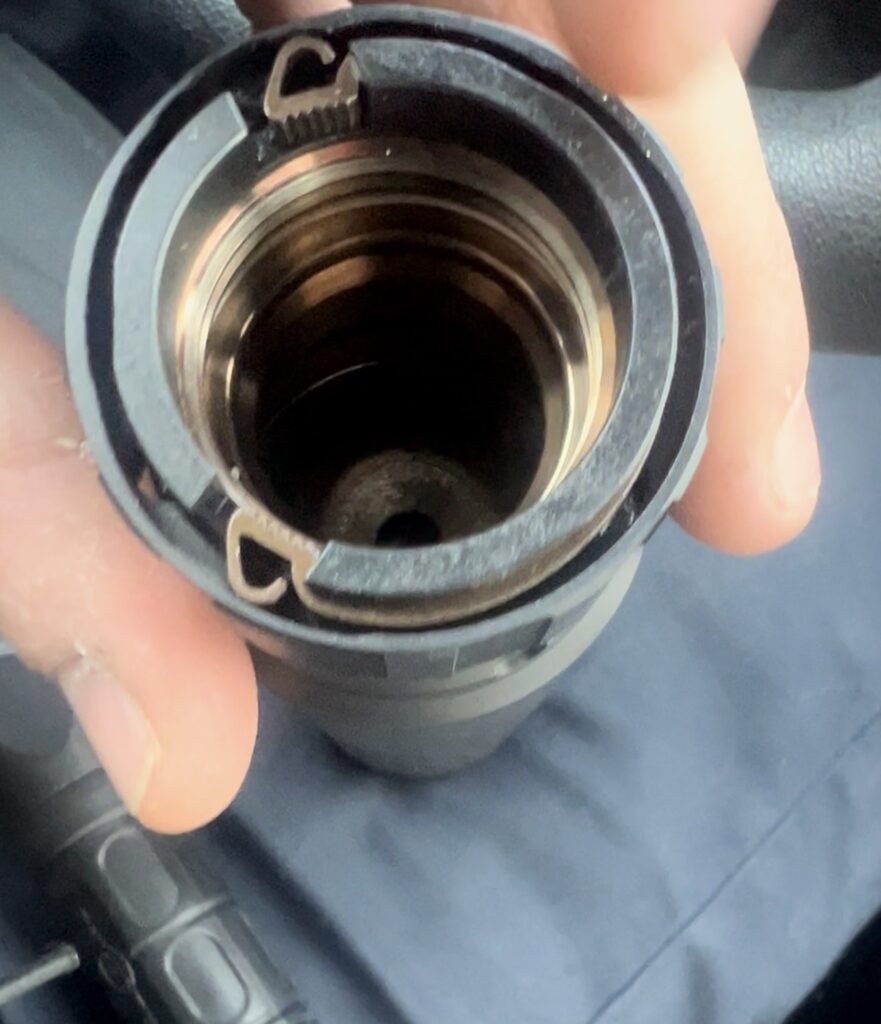
When you add a one-pound object like a suppressor to the end of a barrel—especially a “pencil-thin” 11.5-inch barrel—you need to re-zero. Even though an instructor was scheduled for a full day at the range to install the suppressors, clean the rifles, and re-zero them, that clearly didn’t happen.
So who knows where all these guns where those rifles were actually zeroed. That experience alone made me a staunch proponent of either issuing every officer their own rifle or allowing them to purchase their own within specific agency parameters.
When they started fielding the suppressors, I suggested numerous times that they needed to put duct tape or something over the muzzle of the suppressors to prevent debris from clogging the suppressor or the bore of the rifle. I had put muzzle caps on the rifles before we had suppressors for that same reason.
Back when shotguns were the only long gun option for law enforcement, it was pretty routine for cops to drop cigarette butts and loose change down the barrel of a shotgun sitting muzzle up next to them. Oftentimes those shotguns never left the car unless there was a call. It doesn’t even have to be something so intentionally reckless; something as simple as tripping and falling, dropping the rifle, or smacking the muzzle in the mud when you take a knee at the scene of an incident could clog the suppressor and create an issue.
Several months later, the instructors finally bought cheap suppressor covers on Amazon—not for safety, but because one instructor didn’t like the finish getting scratched. The felt lining on the inside of those cheap covers eventually began to shed, clogging the suppressor bores anyway.
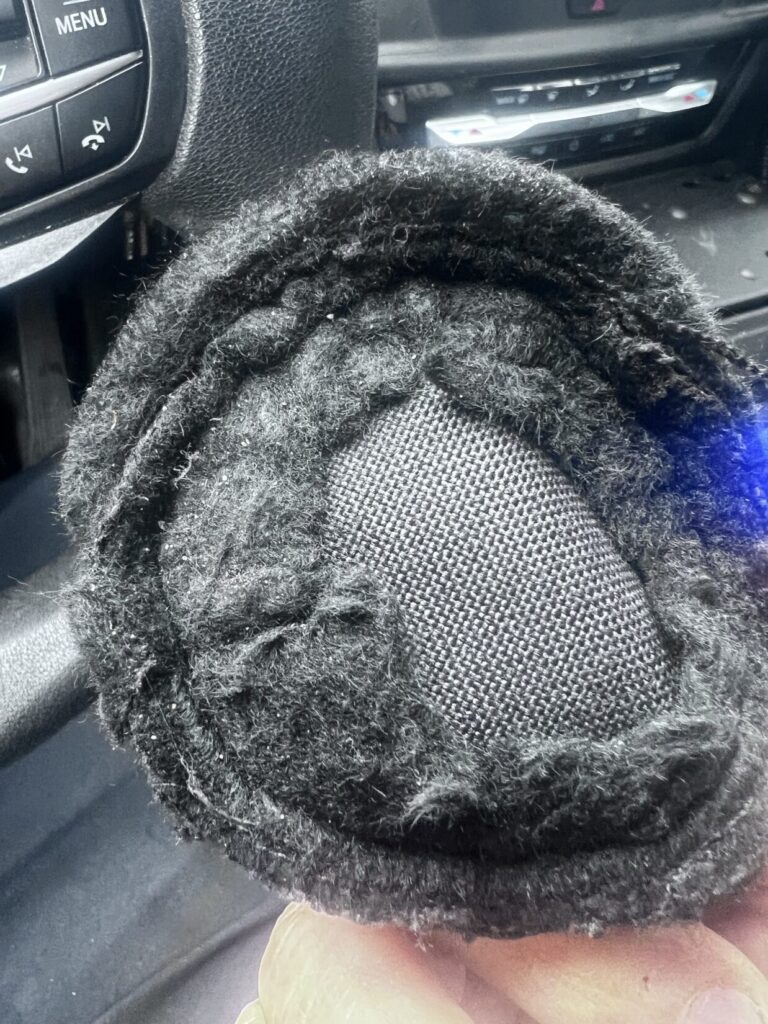
I immediately noticed the rifles were no longer being maintained. There was no lube, no routine checks to ensure the optics and flashlights had fresh batteries, and no verification that the ammunition was in good working order. Slings were often left loose, snagging on other rifles in the locker or on computers and radios in the cars.
Officers were now violating policy by leaving rifles in cars for weeks at a time. Some guys would just take whatever rifle was in the car instead of the rifle they got assigned, creating accountability issues. Oftentimes, I would go to my assigned car, get the rifle that got left in it, and find I had to replace the batteries in the optic or the light.
I’ve found magazines with missing rounds and cartridges with dented primers—clear evidence that rounds had been chambered and then returned to the mag instead of being replaced per policy. I would take the suppressor off and clean the suppressor cover felt out of its bore. I always had to add lube to my assigned rifle.
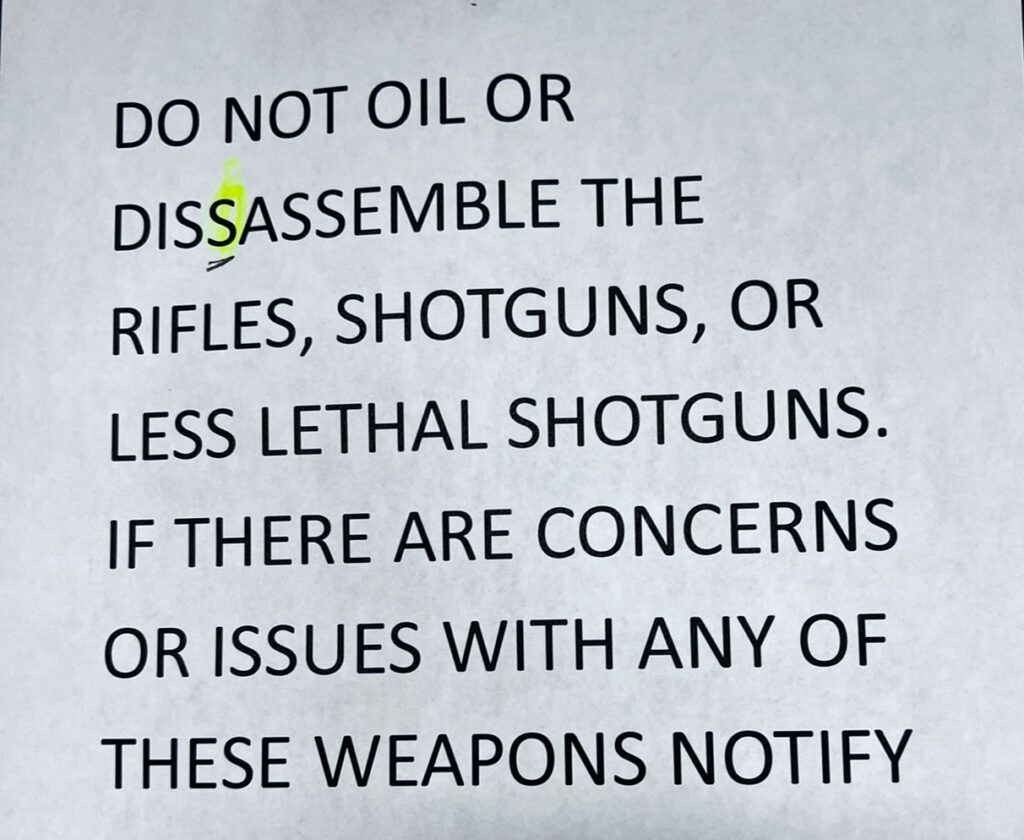
The new instructors were not happy with me, as I made it obvious that they were not doing their job. So they posted a note on the usually unlocked gun cabinets instructing personnel not to disassemble or lube long guns.
By then, I had come to expect such incompetence; one day, I even found a rifle with its optic mounted backward. When I brought it to an instructor’s attention, he simply flipped it around and put the rifle back into service without checking the zero.
Most of the rifles now had the assigned rack numbers cleaned off. Some had one number on the upper receiver and a different number on the lower receiver. It became obvious that the optics were taken off the guns, and the guns were thrown in the ultrasonic cleaner. Not knowing which optic belonged to which rifle, the instructors simply slapped them back on at random without re-zeroing.
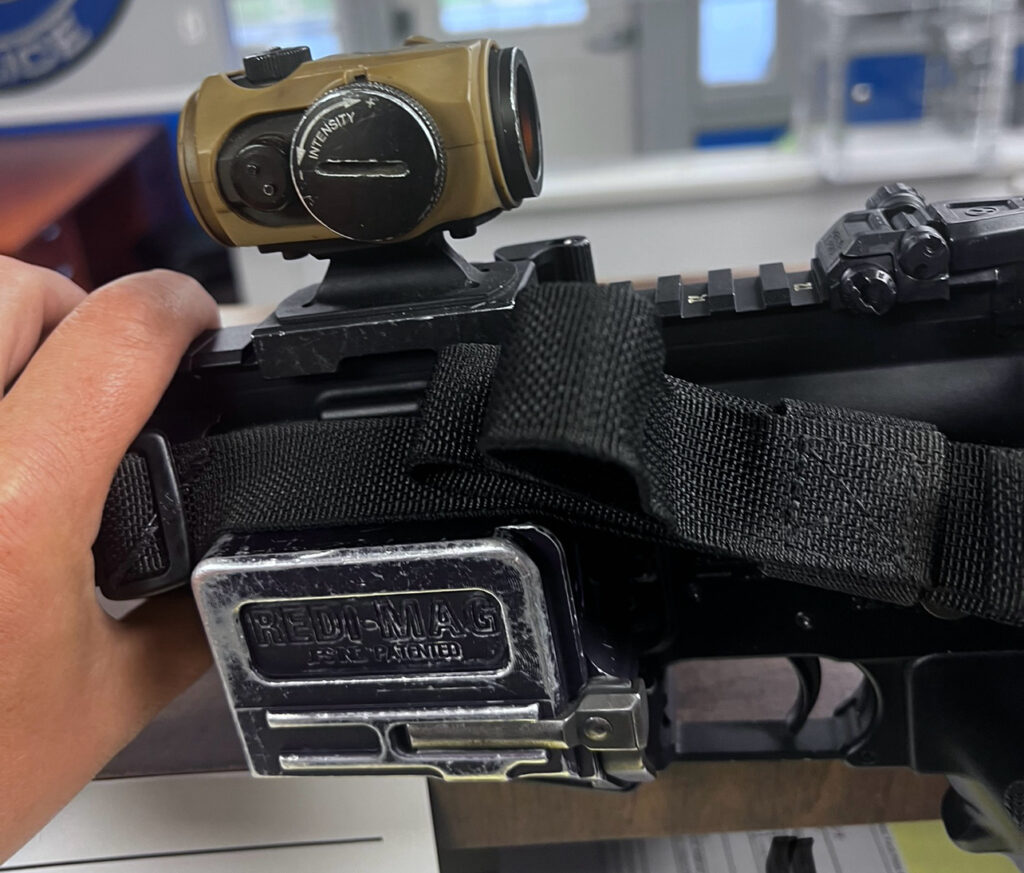
Individual officer-level checks
When an officer draws a rifle from the locker, they are supposed to take it to the clearing barrel, remove both magazines, lock the bolt back, and check the chamber and breech face to ensure the gun is not loaded. The rifles are kept in Condition Three—empty chamber, loaded magazine—until they are deployed during an incident. This is a safety measure, as officers already carry a loaded pistol on their hip all day.
Since the patrol rifle must be moved in and out of the car every shift, the potential for “flagging” bystanders with the muzzle is high. I once had an officer point a rifle at my head while I was seated next to the long gun cabinet, and he told me the gun was unloaded. Well, it was loaded. That cost someone five days’ vacation.
Next, officers inspect the ammunition to make sure it appears in good working order—checking for dimpled primers or other abnormalities—and verify there is no damage to the magazines. They must also confirm the batteries are functional in both the optic and the weaponlight, and that the sling is properly stowed.
Before we had suppressors, officers checked that the muzzle cap was secure; afterward, I used duct tape to cover the suppressor muzzle (instead of covers) to keep out debris and ensure officers checked the tape. At the end of the shift, the reverse process needs to happen, and the guns should be LOCKED in a gun locker.
Conclusion
When I started the patrol rifle program at my former agency, I knew things had to be done the right way. I also knew that the policy had to be “cop-proof.” I had support from first-line supervisors, admin staff, and even cops. However, as times and staff changed, so did that support.
You can’t make people care. That sounds odd when you’re talking about such a serious topic. As I write this, I feel like I am venting—but then I realize that people need to hear this. A current or future instructor, supervisor, or administrator might read this, and it might make a difference at their agency. It could ultimately prevent a tragic and preventable scenario.
Be the one who cares. Do the right thing even when it is not the popular thing. Be the change you wish to see. Set and maintain the standard. The lives of officers and the community depend on it.