
I have a thing for Spanish pistols. Their low price point makes them an affordable option for collectors. Spanish pistols are fairly interesting in their designs, often sharing features with numerous handguns. One of the latest in my collection is the Star 30M.
The Star 30M descends from the Star 28, which was Star’s first original design. Like most Spanish firms, Star would often replicate designs from other companies with slight modifications, mainly 1911s. When the Air Force started looking for a gun to replace their older M15s, Star entered the Model 28.
It never got a fair shake in the competition, since around the same time, the Joint Service Small Arms Program came into being and ran a new contest, which the Beretta 92 eventually won. To be fair, if I’m comparing the Beretta to the Star 30M, the Beretta deserved the slot.
That’s not to say the 28 or the 30M were bad guns, but the Beretta was better. The original 28 had a few flaws, and Star continually improved it, landing on the Star 30M.
The Best Surplus Deal of 2026
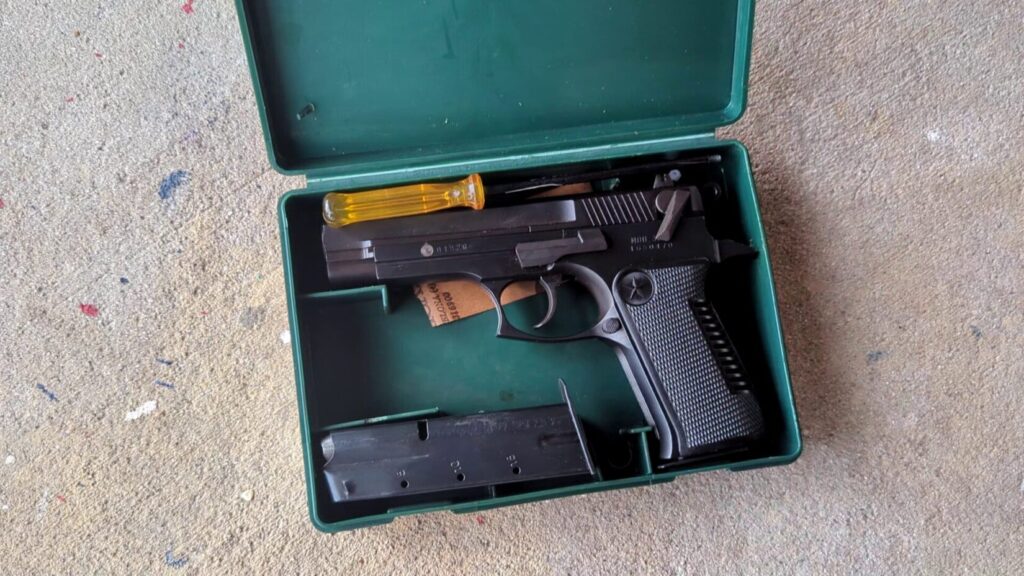
These Star 30M pistols have hit the surplus market. Century Arms imports them, and all the big surplus sellers are slinging them. I purchased this gun for less than $300, and it comes with two magazines, a nice punch rod, and a green box.
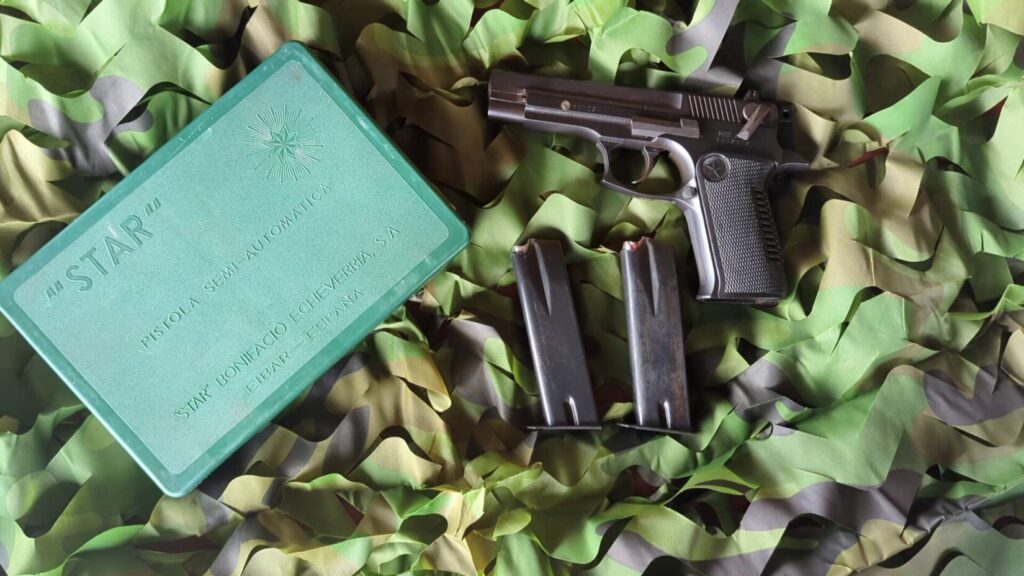
Most of these new imports are Spanish surplus. The Guardia Civil carried these guns for years, which is a Spanish national police agency with a military background. The lines between military police and police are not as distinct in Europe.
The Guardia Civil patrols highways and participates in foreign deployments. If you are lucky, your sample will have a “GC” marking in front of the serial number on the frame. Most of these guns had that marking ground off, mine included.
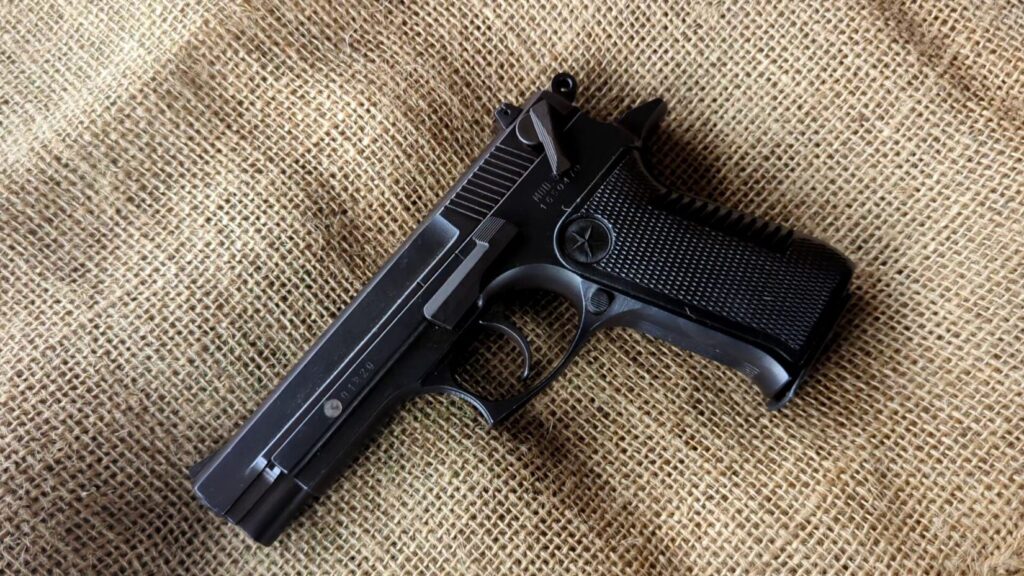
The Spanish weren’t the only people carrying the 30M. Elements of the Peruvian police also carried the 30M.
Inside and Out With the Star 30M
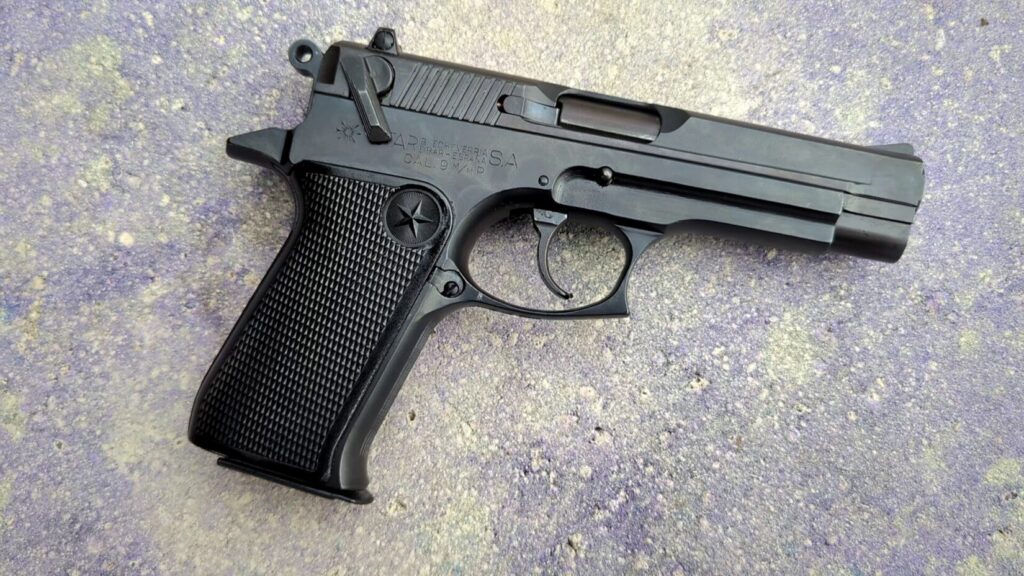
Star produced the 30M from 1984 to 1994. The Star 30M perfectly encapsulated the 1980s and early 90s eras of handguns. It’s an all-metal, hammer-fired, double-action/single-action handgun that feeds from a staggered-column magazine and fires 9mm.
It falls into that oh-so-awesome group of firearms we colloquially call Wonder Nines. The Star 30M series uses a Browning-style short-recoil action with a tilting barrel. The slide and frame configuration makes the 30M stand out.
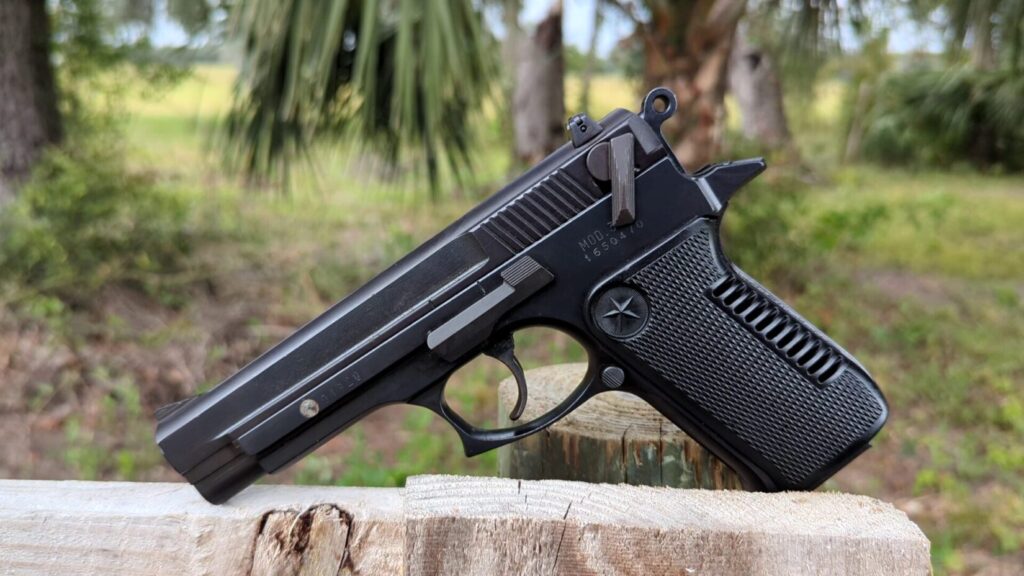
With most guns, the slide rides on the frame. With the 30M, the slide rides inside the frame. This results in a lower bore axis as well as a smaller, lighter slide. Both can contribute to less muzzle rise and recoil. The lighter slide does most of the recoil-reducing work.
That slide also houses our ambidextrous safety, which stands out. This safety doesn’t decock the gun. It retracts the firing pin, making it impossible for the hammer to reach. This allows you to safely carry the gun locked and cocked.
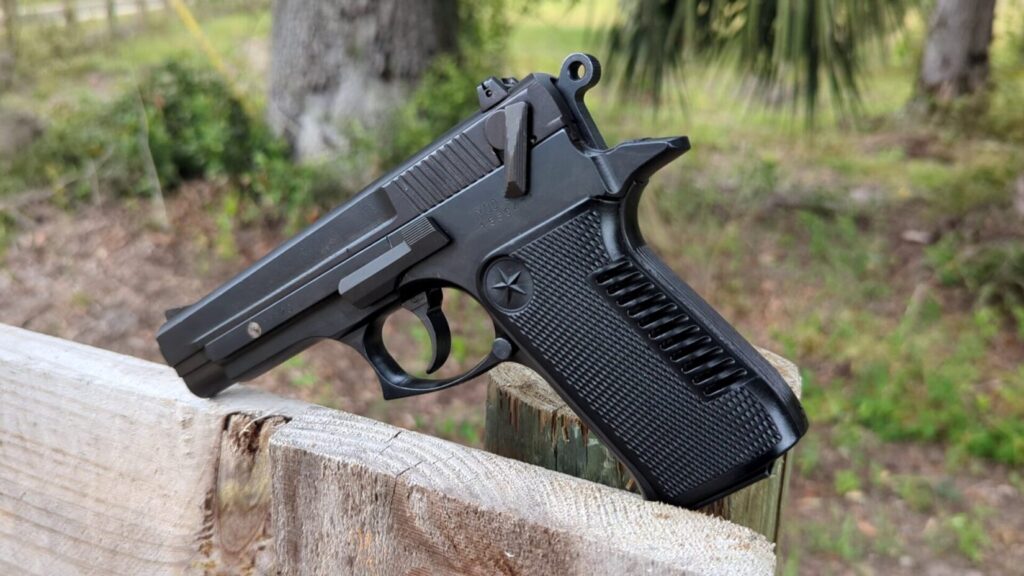
Decocking is as simple as leaving the safety on and manually lowering the hammer, or just pulling the trigger. I still feel unsafe decocking that way if I’m not pointing this gun downrange. It’s likely 100% safe, but I trust my gut in matters of gun safety.
We can activate the trigger with the safety in place and can dry fire the gun with the safety on. I like this because Spanish firing pins are like eggs—fragile.
Ergonomically Sound
I like an all-metal Wonder Nine. I love hammer-fired, DA/SA handguns from the 80s and 90s, but they aren’t perfect. Their ergonomics tend to be fine, but compared to most guns, they are dated. The Star 30M exemplifies those dated ergonomics with a few highlights.
The worst part is the grip width. Not the right-to-left width— it’s chunky, but it’s not bad. The width from front to rear feels like a long walk on a hot day. As a founding member of the big hand club, it challenges my grip.
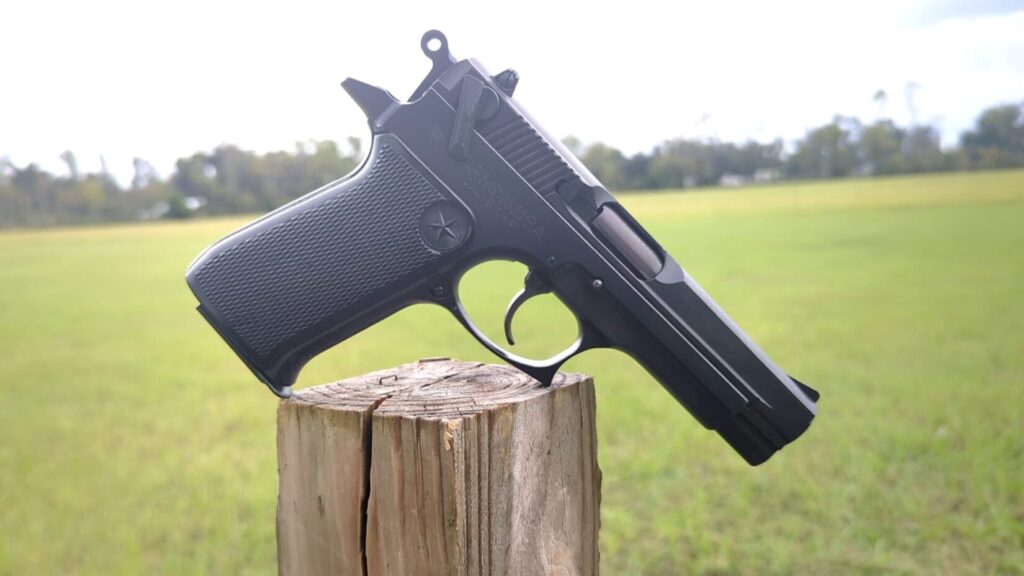
I can lock it down, but it’s no Walther. We get serrations on the front and rear of the grip, and a set of cheap plastic grips, which is fine. The big beavertail on the rear of the gun allows for a high grip, but the trigger guard undercut gives you the opposite feeling.
If you go for that nice high grip, you feel like the trigger guard is stretching your hand.
The Controls
Since the slide sits tight to the frame, it’s no stretch to reach the safety. The safety of this Star 30M is exceptionally stiff and tight, which makes it difficult to maneuver with one hand.
The ambi safety does provide you with excellent wings to work the slide. Guns like the CZ-75, which share a similar slide design, don’t give you much space to grip the gun and work the slide. The Star 30M makes it easy to run that slide back.
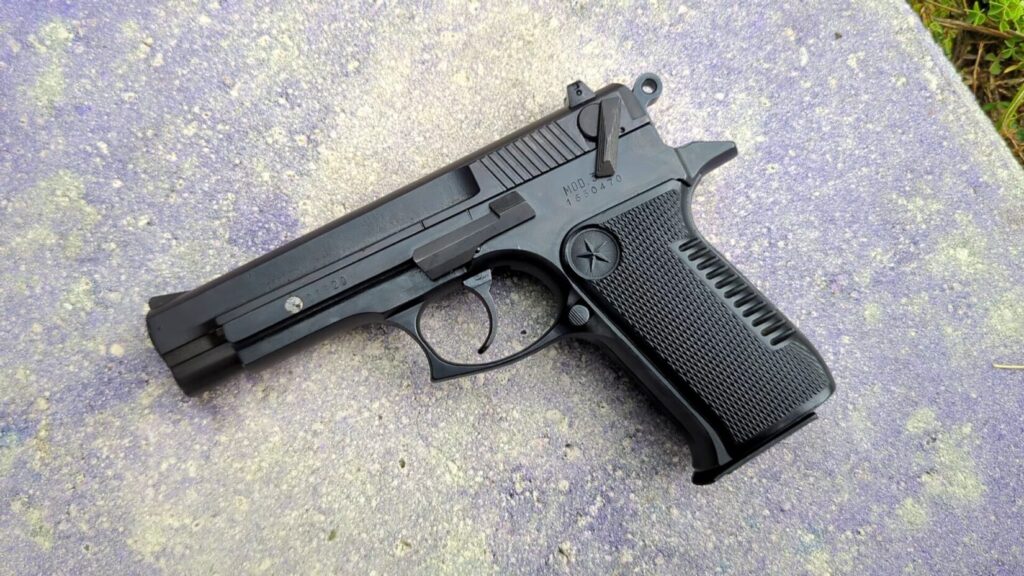
You can also manipulate the slide with the safety on. This makes clearing the gun exceptionally safe. I’ll give it up to the slide release. It’s huge, easy to press, and drops the slide with authority.
The Star 30M At the Range
Spanish handguns aren’t known for their exceptional accuracy. I have examples from World War 1, World War 2, the 70s, 80s, and 90s, and none have ever impressed me. The Star 30M won’t throw 9mm like a sawn-off shotgun, but it won’t impress you.
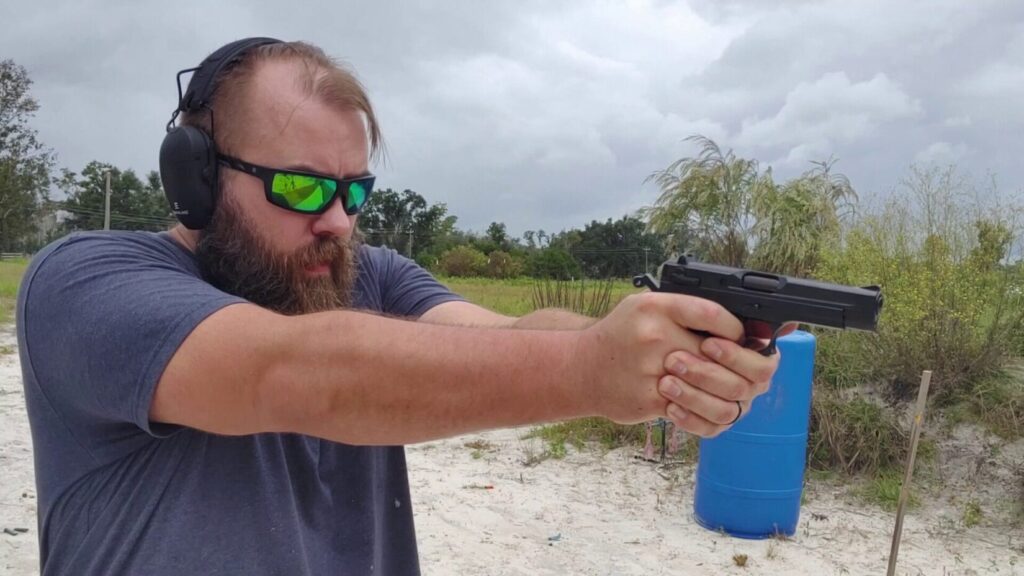
At 25 yards and in, it’s more than capable of decent accuracy. I can print tiny groups at 10 yards and even produce what I feel is an impressive double-action-only group. I could score a 10-10-10 drill in less than six seconds with scores above 80.
Beyond 25 yards, it falls apart. Is it the Indian or the arrow?
That’s a fair question to ask, but I can land more shots at 50 yards with a double-action-only S&W 432 UC snub nose than the Star 30M. The Star 30M suffers from small, all-black sights that offer little contrast. The rear is adjustable for windage, which is a nice touch, but not the fix to the gun’s inconsistency.
Inconsistency seems to be the main problem. If I shoot a group, I’d often get a seemingly random flyer. At long range, I’d use the same hold and make two hits, and suddenly the third round is over his shoulder. It could be me, but I don’t think so.
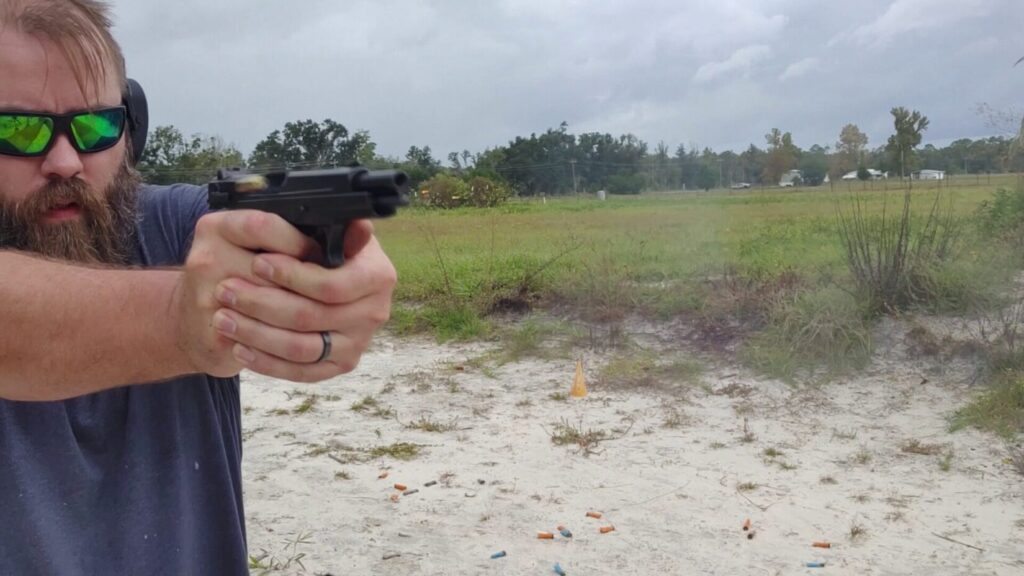
Luckily, the trigger is excellent.
The single-action trigger is downright fantastic. It’s crisp, light, and resets quickly with a nice audible click. It’s better than guns like the CZ-75, the S&W 3rd Gen series, and even the Beretta 92. The double-action rolls nicely, with a gradually increasing weight that breaks rather suddenly.
Getting Snappy
A lot of all-metal Wonder Nines have more recoil than more modern polymer-frame handguns. This is due to a lack of frame flex and a tendency toward a heavy slide. Beretta and CZ avoided these fates with a light slide design, and the Star 30M does the same.
It has hardly any recoil. It’s a truly gentle push-up and not much else. The Star 30M barely moves between shots and might be one of the comfiest shooting 9mm handguns I’ve ever fired.
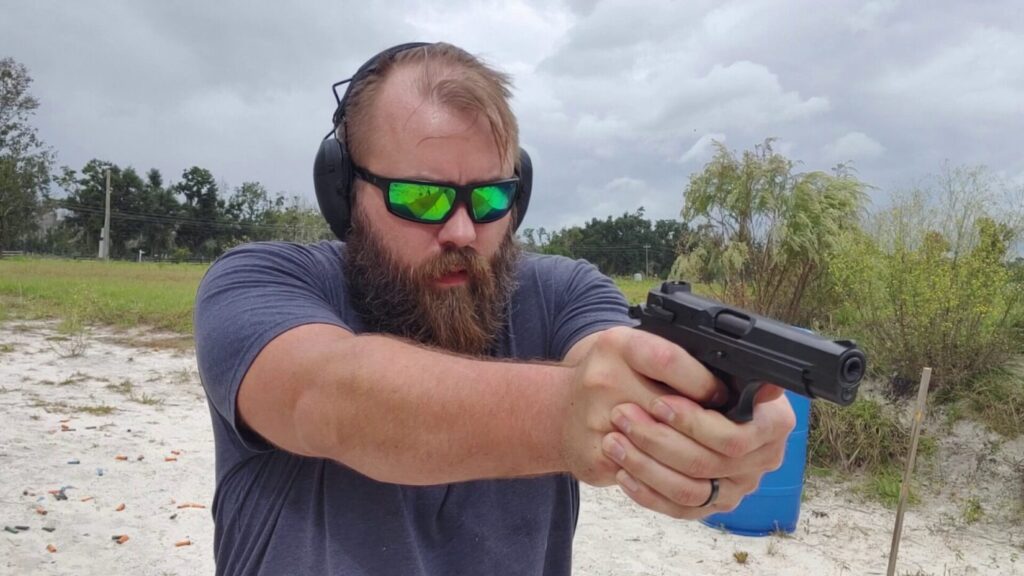
The light slide weight, combined with a gun that weighs 2 pounds and 7 ounces, results in a truly remarkable experience.
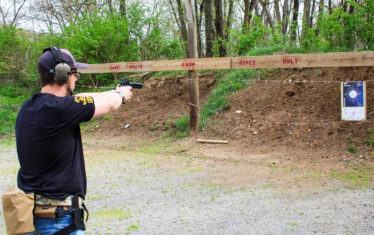
It’s a lot of fun to shoot quickly with. I fired a few low-ready Bill Drills, and I landed my first cold Bill Drill in 2.33 seconds, not bad, and the time only went down from there. Getting a double tap off in less than a second on an 8-inch target also proved to be a Bahama breeze.
Does It Run?
I had three total light strikes in 400 rounds of remanufactured 9mm. All three light strikes reignited on the second trigger pull. That’s why you gotta love a DA/SA design.
You get the option to try again with the press of a trigger. Other than those three light strikes, the gun ran without issue. No jams, no failures to eject, just a few light strikes. Not bad for an old gun.
Surplus Power
The surplus market is dry(ish). We’ve seen a sharp rise in surplus guns, and they aren’t getting any cheaper. Whenever something affordable comes along on the surplus market, it’s worth paying attention to.
The Star 30M represents a well-made, easy-to-shoot, and accurate enough firearm that can be a capable carry or home defense gun. It’s not modern, but it’s interesting, and it’s a lot of fun to shoot. If you collect surplus or want to start, grab a Star 30M. They won’t be priced this low for long.