
A Tactical Pause is not a lapse in action; it is a deliberate, high-speed mental reset designed to prevent a purely reactive response to a developing threat. It’s a deliberate mental process that allows you to gain a critical advantage in a variety of scenarios.
Think of it as a proactive reset that attempts to prevent a purely reactive response to a situation. To help illustrate the idea of a tactical pause, let’s go back in time.
The Real-World Tactical Pause
In 2009, I was in Afghanistan, and we were approaching a village. The village was surrounded by open fields devoid of cover. One fireteam held their position to cover us as we moved, then we’d do the same for them. I was the second man in the patrol as we quickly attempted to cross an open field.
As the point man and I made it halfway across the field, we quickly came under fire.
I had three options: stand in an open field and fight, retreat to the cover we’d left, or charge forward to new cover. Here’s where my tactical pause came into play. I didn’t stop moving or reacting to think; I used the information I already had to make a decision.
As a guy toting a machine gun, my first reaction is to turn and fight back. Fighting against a superior force that’s using cover when I had no cover is not a good idea, especially since they were already shooting at me.
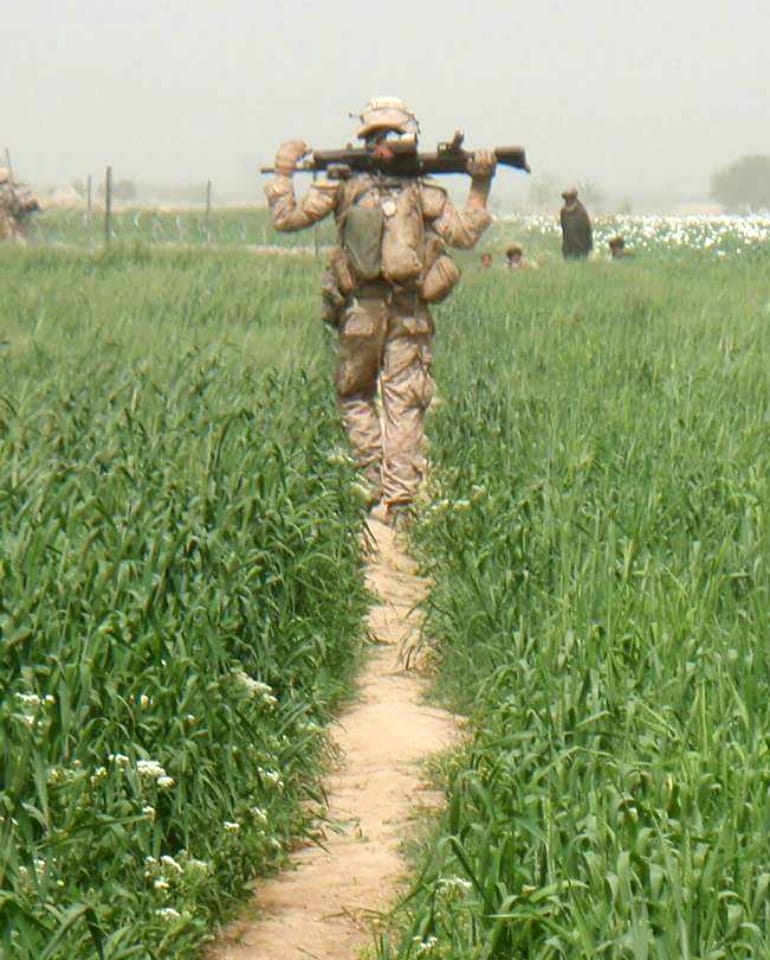
Retreating rearward wasn’t smart either. It was appealing because it felt safe the last time I was there, but it was a no-go. First, Marines don’t retreat. Second, in doing so, I might interrupt the cover fire provided by the second team, putting everyone in a bad spot.
I charged forward with my point man, and we jumped into a ditch. I did that because standing in the open wasn’t smart, I did not want to cut off friendly fire, and the cover in front of me was closer than the cover behind me.
This is one small example of why the tactical pause can be beneficial in life-saving scenarios.
The Tactical Pause 101
The Tactical Pause allows a person in a stressful situation to interrupt the body’s stress response, which boils down to fight, flight, or freeze.
It helps break tunnel vision and re-establish situational awareness, which can can help find other threats, seek cover, escape routes, and more.
The microsecond you’re taking to think can help reduce emotional reactions. This can help you figure out a more rational or tactical response.
There are three specific types of tactical pause: a physiological reset, a cognitive reset, and a tactical reset.
Tactical Breathing — Physiological Reset
When you find yourself in a stressful situation, you’ll often get an adrenaline spike that puts your body into a sympathetic response, a.k.a. fight, flight, or freeze. This can lead to decisions that are not always sound.
With that said, there are times when a panic-driven reaction is the only one you have. If you’re talking to someone and everything seems fine and they suddenly start attacking you, you have to react; there is no pause to be had.
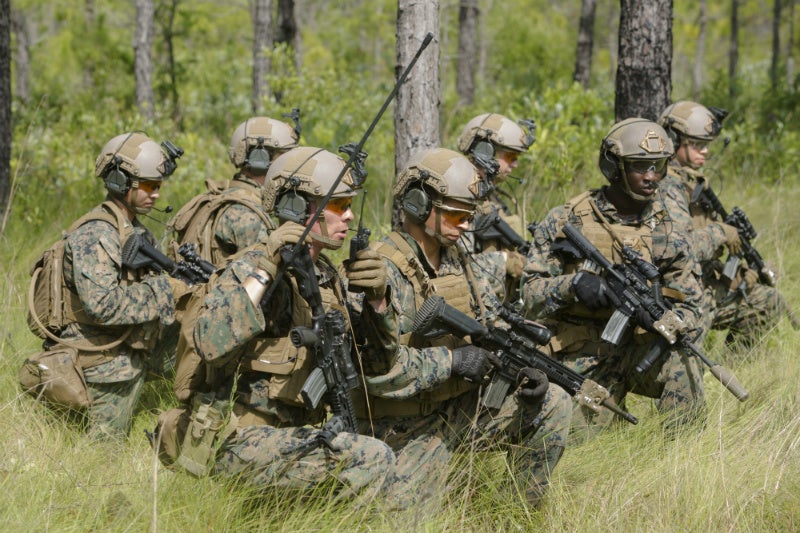
In situations where the fight hasn’t started, but could, you need to slow your system down. One popular method is tactical breathing.
We use a breathing technique called box breathing. It’s straightforward:
- Breathe in slowly for a count of four.
- Hold for a count of four.
- Exhale slowly for a count of four.
- Hold for a count of four.
Repeat this process, and you’ll feel your heart rate drop immediately, your adrenaline slow, and muscle tension reduce. This will put you in a proper physiological state to make good decisions.
The OODA Loop And the Cognitive Reset
The OODA Loop (Observe, Orient, Decide, Act) is a creation of Air Force pilot John Boyd. It’s a decision-making model that applies to nearly any situation. The tactical pause ties back to the OODA Loop.
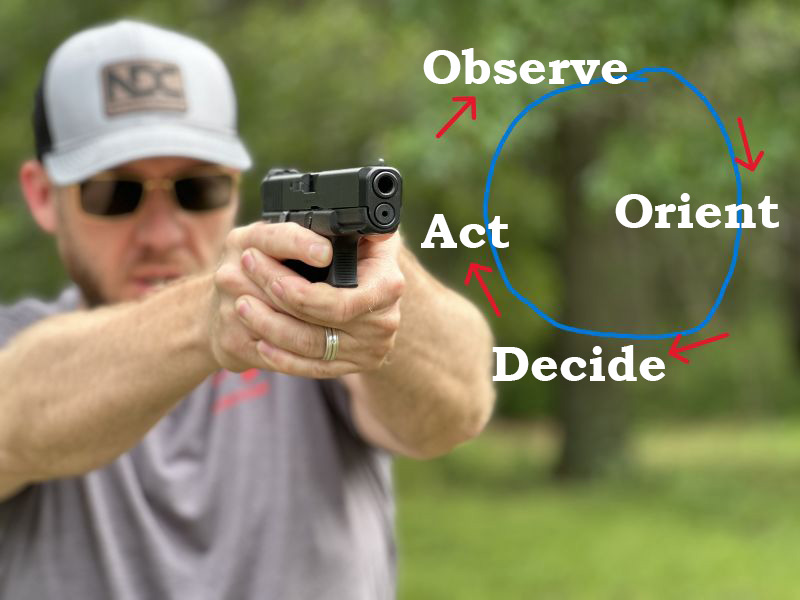
The Tactical Pause is a deliberate extension of the Orient phase. It is the fraction of a second you take to filter the raw data (Observe) through your training and experience, allowing you to avoid panic before selecting a high-quality action (Decide).
Observe
You use your senses to gather information. When stress hits, your immediate reaction is to deal with the problem in front of you.
You can maintain focus on the threat, but also look for secondary threats, cover, concealment, etc. Everything you’re observing will feed into the next step: Orient.
Orient
Orient is the most crucial step. We are now filtering that observed information through our past experiences, our training, and real-world experience.
This is where we take a tactical pause before moving on. A tactical pause lets you filter the most important information, avoiding overload and reverting to a panic-driven response.
Decide
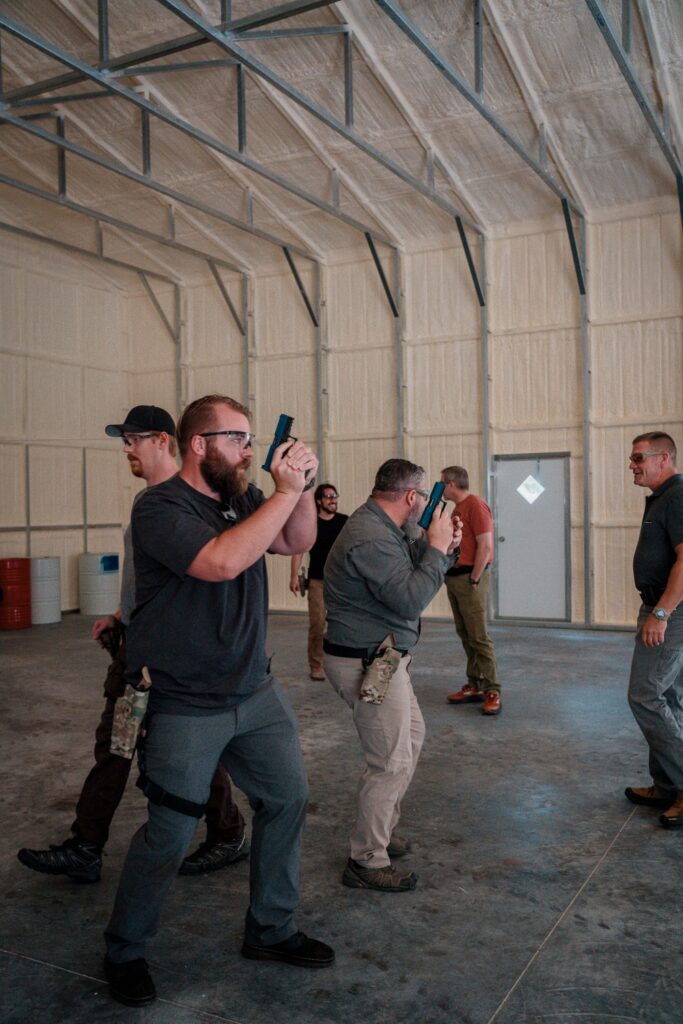
In the decide phase, we are building that specific plan of action. In a high-stress environment, an overwhelmed person’s decision will likely be run or shoot; that’s a reactive measure.
The tactical pause will help you avoid cognitive overload and to make a high-quality decision. Is someone acting threateningly? What are your decisions? Engage with the proper tool? Use cover? Call for backup?
All three are valid, but a tactical pause will allow you to pick which action with specificity. Using cover becomes using the best side of cover because it allows for better engagement of the threat. Using force becomes deciding what tool to use to safely engage the threat without harming others. Calling for backup becomes a specific location with a description of the threat.
Act
Our tactical pause reduced our cognitive load and fed us better data. That means our action can be decisive, effective, and more accurate than a purely reactive response.
From here, we go back to observing, but now we are factoring in the action we took into our data and how that action changed the situation.
The Tactical Reset
The benefit of the tactical pause is that you can complete your OODA Loop and make effective decisions and effective actions. Efficient and effective actions can interrupt an opponent’s OODA Loop. Action is better than reaction, and if you can force a threat to react, you can gain an upper hand.
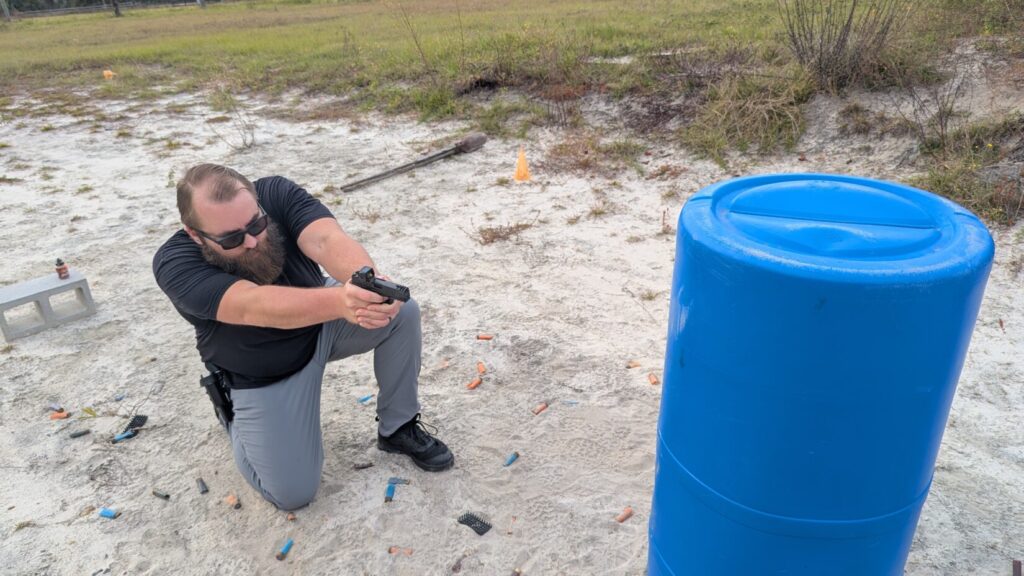
This is our tactical reset, and it relies on cover and distance.
Utilizing cover and distance can force an enemy to react and reset their OODA loop cycle before it completes. Our goal is to cognitively overload a threat, force them to react without efficient and effective action.
Time is our decisional currency; the more we have, the better. If you break contact and take cover, your threat has to react to that, and you get more time to react because you have cover.
If you break contact and increase the distance, the threat now has to react to that. Increased distance means increased time to make a decision. Just moving from left to right can create an interruption in someone’s OODA Loop.
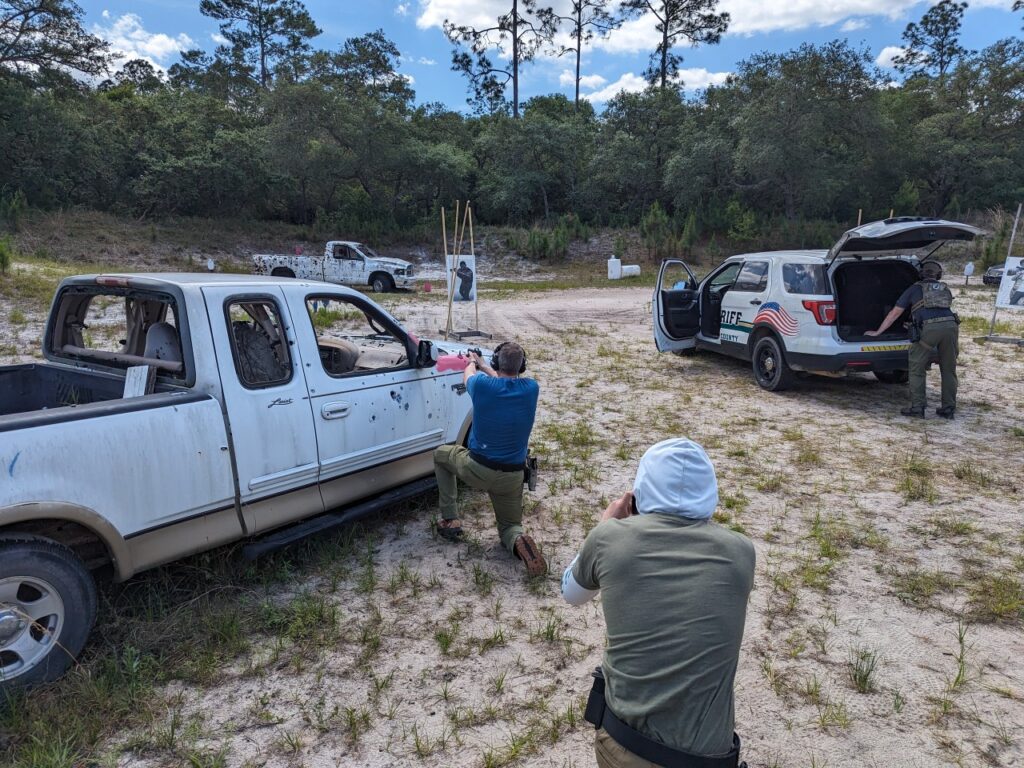
Cover and distance give us time; time gives a better observation and orientation phase. It allows us to interrupt a threat’s OODA loop and prevent them from taking decisive action.
Training Your Tactical Pause
Training the tactical pause is best done with a training partner. You’ll want to design scenarios where immediate action can be punished as a failure point. The best tactical pause training comes from high-pressure scenarios, with force-on-force among the most valuable ways to train.
Outside of partner training, force-on-force training, and similar complicated training mechanisms, we can integrate the tactical pause in a few ways solo and off the range.
Tactical Breathing Practice
Practice tactical breathing throughout the day. Do the box breathing techniques at a red light, as you get dressed, anytime you can fit in the practice is valuable. Box breathing is easy, but the first time you do it, you shouldn’t be jacked up on adrenaline.
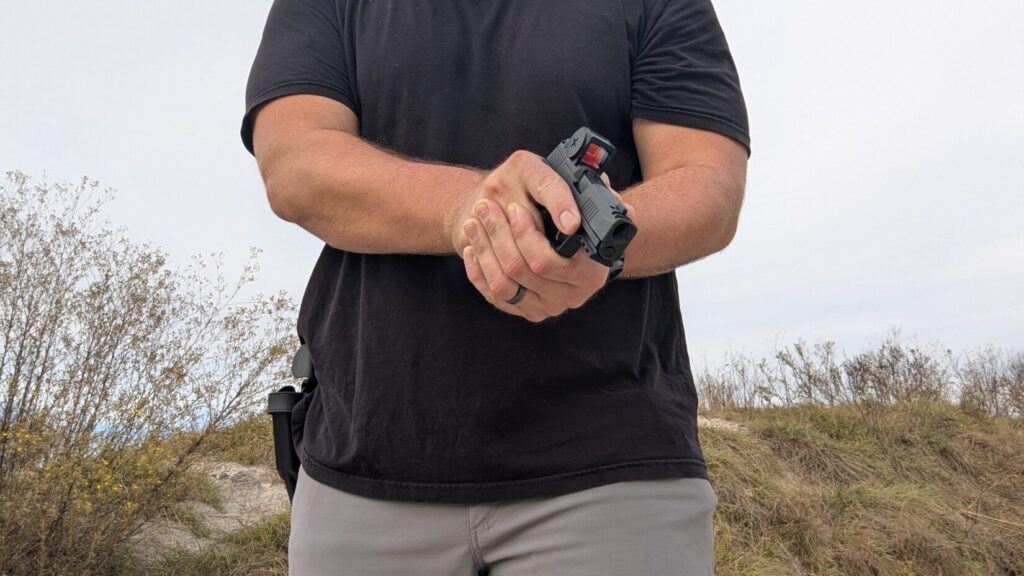
Practicing Box Breathing helps you flow into it more easily when needed. I like introducing box breathing into my workouts. Between sets, I do a round of box breathing and use my Garmin to track how much it reduces my heart rate.
As someone who shoots in competition, as I step up to shoot, I box breathe. It lowers my adrenaline, calms my nerves, and makes me a better shooter. Do it at the range before a drill; see if it can improve your time and accuracy.
Cognitive Reset Drills
Training the cognitive reset is working through the O and O Stage of the OODA Loop slowly, stretching each stage out.
Walk into a room and observe three things about the room: Where are the exits? What in the room can stop bullets? Who is standing closest to you?
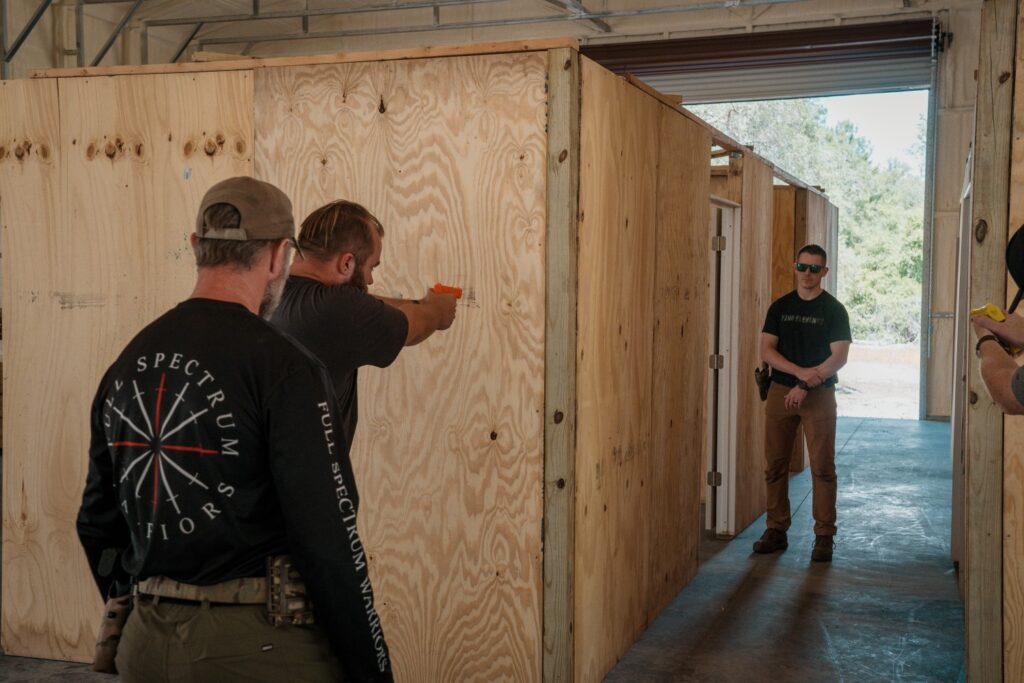
Orient yourself by mentally recalling those three observations in as vivid detail as possible. This builds the habit of processing information and filtering out useless noise.
When shooting at the range, do the same thing: don’t just shoot a drill, reholster, and start over. Observe the world around you after you fire. Do a set of box breathing after every drill to build that habit.
Tactical Reset Footwork
To train the tactical reset, you should introduce footwork conditioning into your daily habits. When someone is too close to you, make an effort to step back, always observe for space, and when possible, preserve space and distance. Build the habit of focusing on space and how you could retreat from the situation.
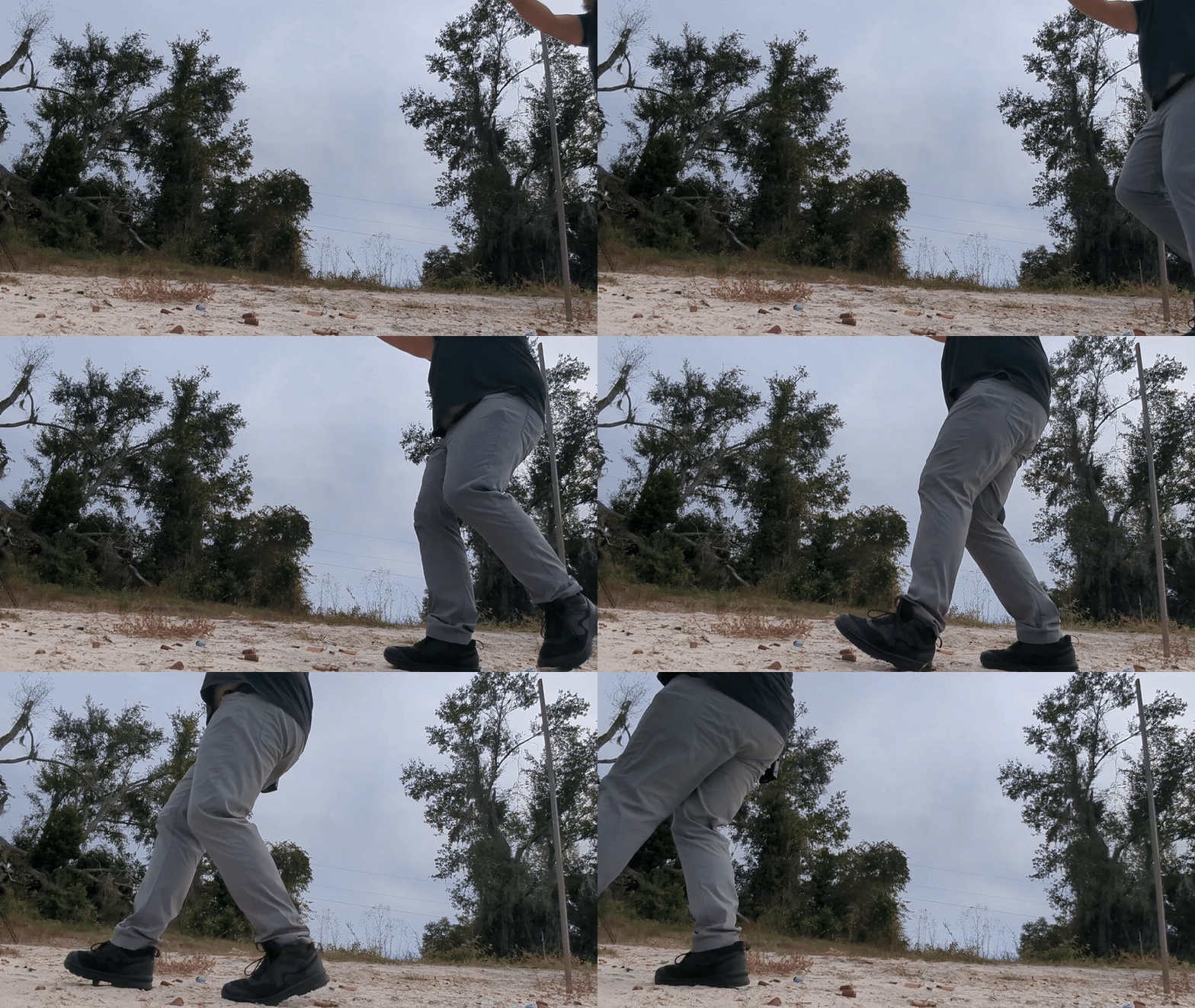
As you go through any area, note what could be used for cover. Columns, walls, and engine blocks are all cover. As you identify cover, move toward it when possible, using box breathing to link your movement to the cover.
Calling a Time Out
The Tactical Pause is a simple mindset that can improve your likelihood of making sound strategic decisions. It’s simple, but requires forethought and practice. Micro drills, like what we discussed above, can ingrain good habits without the need for a specialized class or training partner.
When you can, press pause and gather the physiological, cognitive, and tactical reset you need to succeed.