
The AR-15 has a long history that is often overlooked. The great granddaddy of the rifle we know today, from movies, current conflicts, and the range, has been through some changes over the decades. But those rifles of yesteryear are still quite popular and have even seen a resurgence in the gun community.
Retro
Now known as “retro AR,” these classics are making a comeback. From the triangle handguard rifles of the Vietnam conflict to the A2 from the beginning of the Global War on Terror. The AR-15 pattern rifle has now been with us for over 50 years and continues to serve to this day.
To date myself a little, my previous service rifle now qualifies as retro. Boy, does that make me feel old.
In the USMC, I carried the M-16A2 into combat. I packed that long musket-length version of the M-16 around on forced marches, to the field, and to Iraq. We trained with the rifle often, and we all became very proficient with it. I don’t ever recall having a malfunction with it in the USMC, which is not something you hear from our Vietnam veterans.
M-16 Evolution
The M-16 had progressed from its rocky beginning in the jungles, where it was thrust into service rather hastily. It was originally produced without a chrome-lined bore, which led to maintenance issues in the wet environments.
The military moved quickly to address the problems with the M-16 and added many features, chrome-lined bores, forward assists, and proper cleaning equipment, just to name a few. A few decades later, and you can still see the similarities between the 1960 variant and what our troops use today.
The AR-15 is the semi-automatic version of the M-16, and it has followed the same evolution. America’s rifle, which is what the AR-15 has become, is now popular for all manner of recreational shooting. You can regularly find variations of the AR being used in competition, hunting, and general sport shooting.
A New Range
We have a new range going in, not far from my hometown. They have plans to host all manner of matches, and one of those caught my eye—a two-gun type match where you shoot both a rifle and pistol as you move about stages. These types of competitions require you to shoot on the move and engage multiple targets.
Here in the west, where we have plenty of distance to shoot, I imagine they will stretch out the shots some as well. I regularly compete in pistol-only events, and this is something that should spice up my match shooting. We never want to get stagnant in what we do, shooting-wise, we always need to press on to new challenges.
The Rifles
I didn’t have a rifle for this type of competition, so that was the first thing I had to remedy. Pondering over this problem a bit and looking at what was out there, I knew I needed something different.
The typical rifles covered in rails and all their high-speed attachments just didn’t excite me. A little history sure did, though. I happened to be scrolling through the web and noticed Springfield Armory had started producing a retro AR-15. Their A2 variant looked exactly like the rifle I carried in the GWOT.
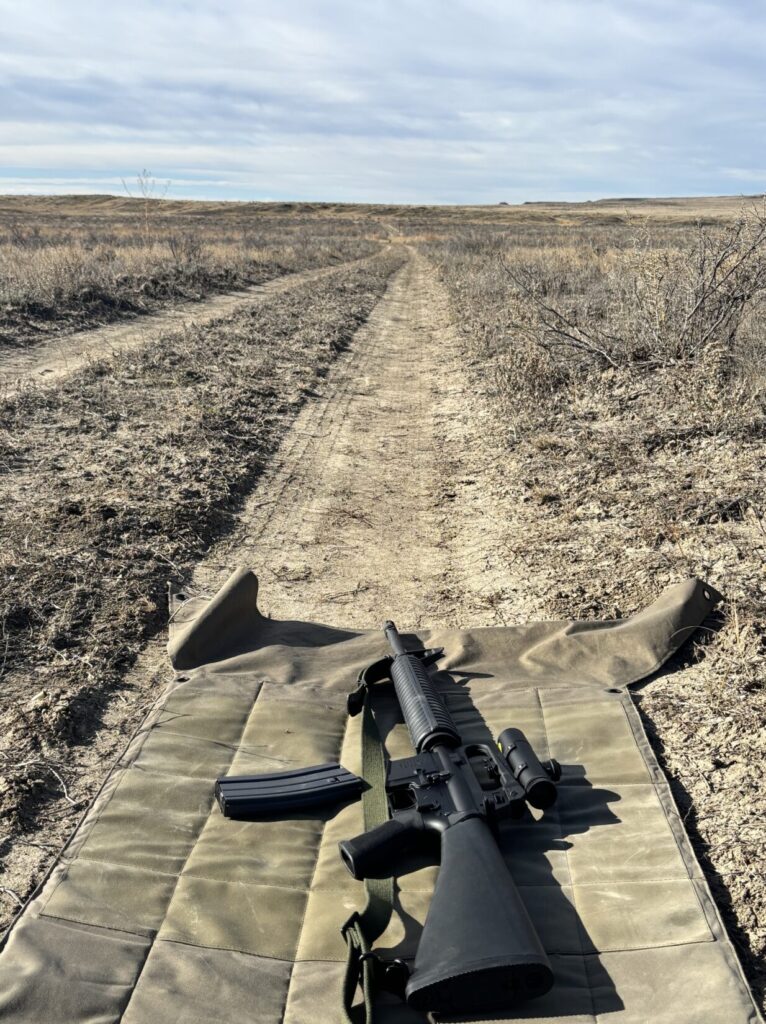
With many of the A2-type rifles being phased out of production, I snatched one up immediately. The first range day with the rifle, I could almost feel the desert heat on the back of my neck as I was pressing the trigger. Springfield had made a perfect civilian reproduction of the rifle I once carried.
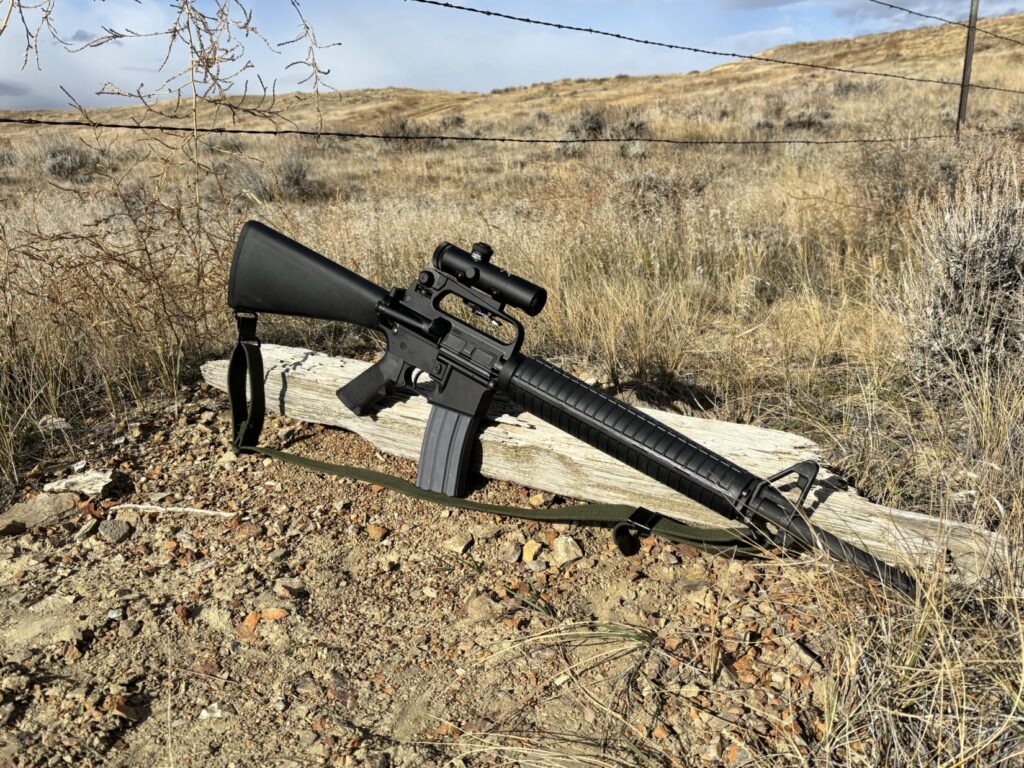
I decided to outfit this rifle with some classic equipment. First up was a standard green web sling like I used in the USMC. It’s a simple sling that isn’t as high-speed as the modern 2 and 3-point slings. But from my training, I know how to get into a sling quickly and stabilize my aim.
With the rifle set up with just iron sights and the sling, I had a few great range days smacking steel to 500 yards, but I wanted more.
Retro Optics
The A2 had optics adapted to it in the military quite regularly. Various optics and mounts were used to attach scopes to the carry handle. I prefer reticles that are not cluttered, and for the type of shooting I was anticipating, a simple optic would work just fine.
Through my web searching, I discovered that Brownells had gotten into the retro optics game. I knew exactly what I needed when I spotted it on their website.
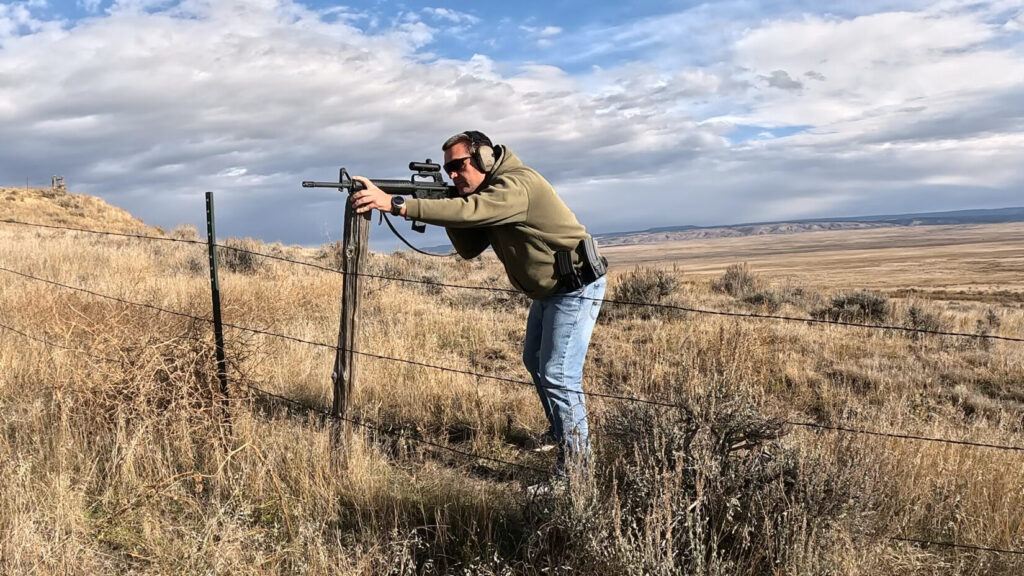
Brownells is producing a clone of the original Colt AR scope. This optic is made in the same Japanese plant as the original, with modernized features. The Retro AR scope is a 4-power scope with a bullet drop compensator. Having just a basic duplex reticle, it fit my needs exactly.
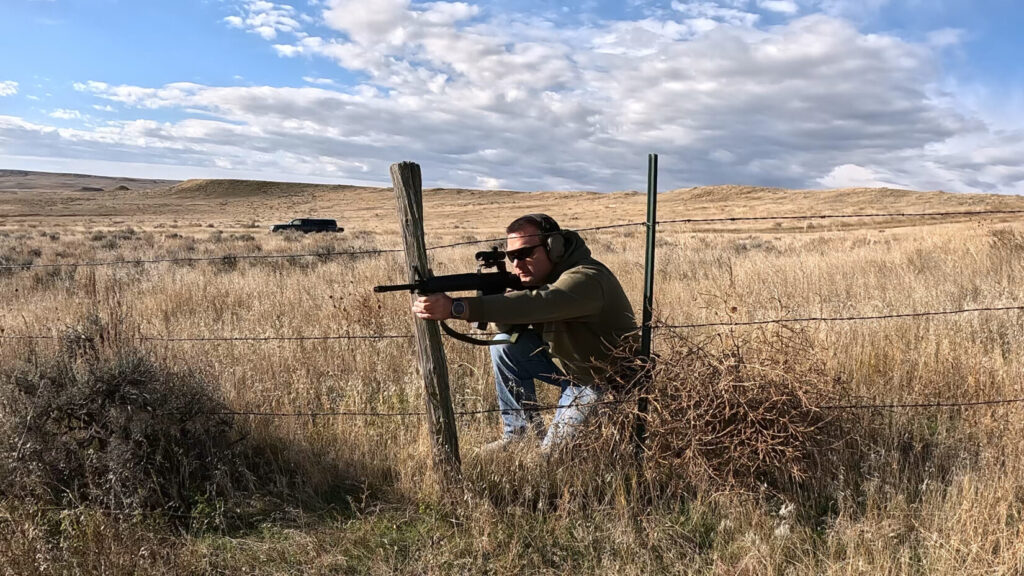
Once the Brownells/Colt optic was mounted and zeroed, the range sessions became even more fun. I proceeded to the prairie to stretch the legs on the rifle. Hits to 500 yards on 6 to 10 inch steel were made regularly. Along with the accuracy, the speed of engagement picked up quite a bit as well.
The Next Build
Now, if you have ever shot competition, you know it gives you lots of excuses to have multiple guns set up. What if the course of fire favors a different setup? What if your first gun goes down? Do you really need more excuses to collect more firearms? I know, that last question was silly; of course not!
In the early days of the GWOT, the defense contractor market was booming. After I exited the USMC and began working as a gunsmith and in the firearms retail world. I saw all manner of guns being cobbled together. These guns were slated to be issued to contractors for deployments to the Middle East. We would see all types of parts slapped together to get something functional for the mission. Memories of that gave me inspiration for my next build.
The Contractor
The XM-177 was a variant of the M-16 used by special forces in Vietnam. It was easily recognizable by its long flash hider. This flash hider was attached to a barrel that was under 11 inches long to reduce muzzle flash and blast. It also served as the attachment point for early underbarrel-mounted grenade launchers.
I always thought the XM-177 was a neat-looking rifle. I decided to base my next build around that barrel design and blended it with some of the craziness I saw from the contractors of the GWOT.
Once again, I looked around the internet and found TNTE Sales. They were producing exactly what I was looking for. A modernized twist on the XM-177 that would fit the bill. A quick order was placed, and in no time, I had the perfect upper. A 16-inch pinned and welded barrel with a flat top upper and triangle handguards. I couldn’t ask for a better retro slash GWOT contractor upper!
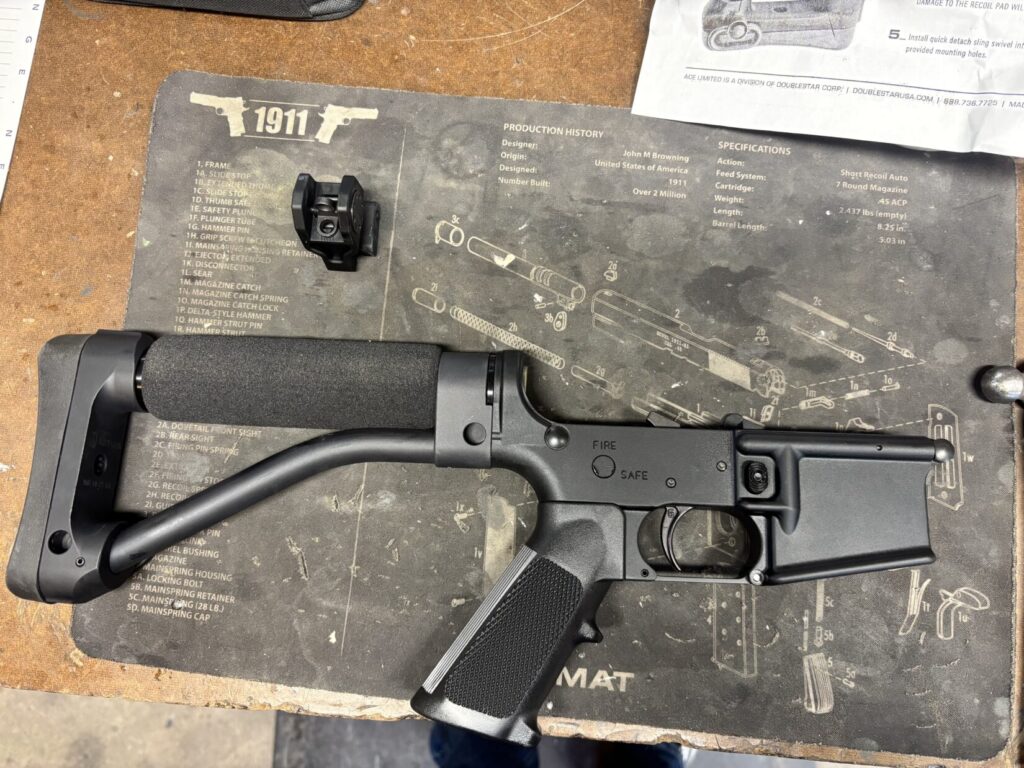
But of course, we need a lower, and this was where I would complete the look. In the early 2000s, the ACE skeleton stocks were very popular. Probably due to the assault weapons ban, since we couldn’t have collapsible stocks. These stocks were actually quite functional. Being made of solid aluminum and having a stiff rubber butt pad, they don’t wiggle and flex like the modern plastic stocks do.
I gathered up my components and put together a lower. I selected the ACE entry length skeleton stock to keep this rifle more compact. For a trigger, I went with a premium option, and the rest of the components were of standard grade.
Optics for the XM-177
In the USMC, my battalion tried out a lot of optics, and one stuck with me—the early Trijicon reflex sight that was both fiber optic and tritium powered. This optic had a triangle reticle that made precise aiming possible at distance. Sadly, Trijicon has discontinued this optic, but someone came in to fill that gap.
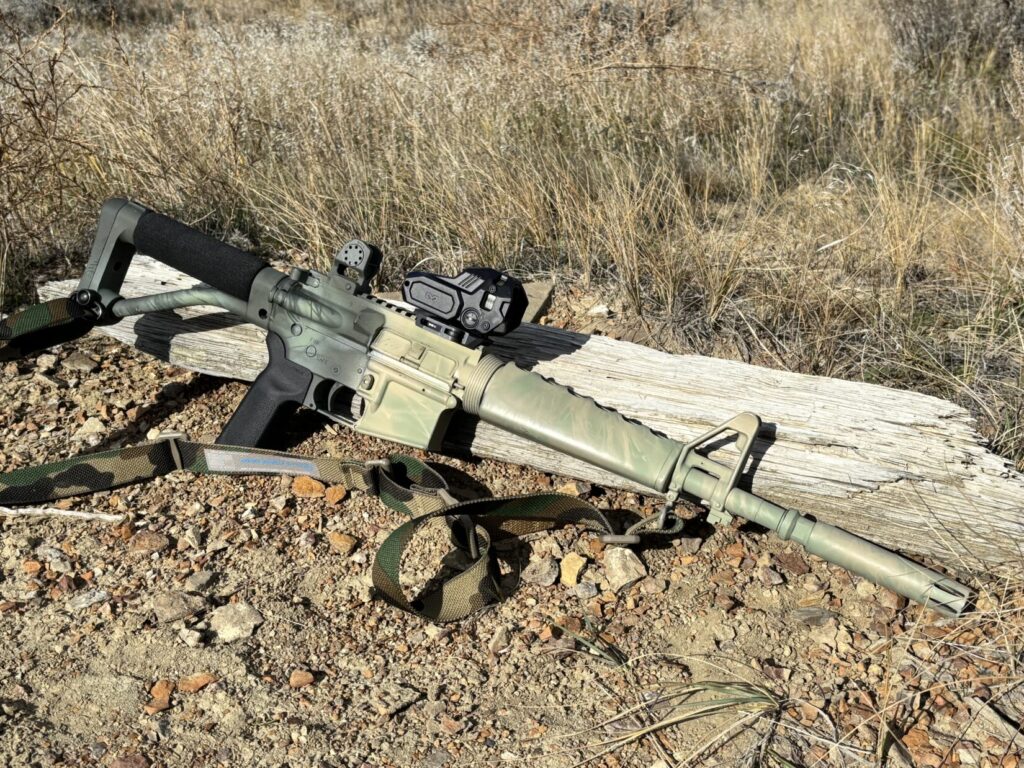
Meprolight, which produces optics for the Israeli military, produces one very similar. Their M22 PRO has both fiber optics and tritium for illumination. In addition, they added a light module so that you can press a button and add another source of illumination should the environment require it. In lighting situations where you are shooting from a dark area to a bright area, this can be crucial.
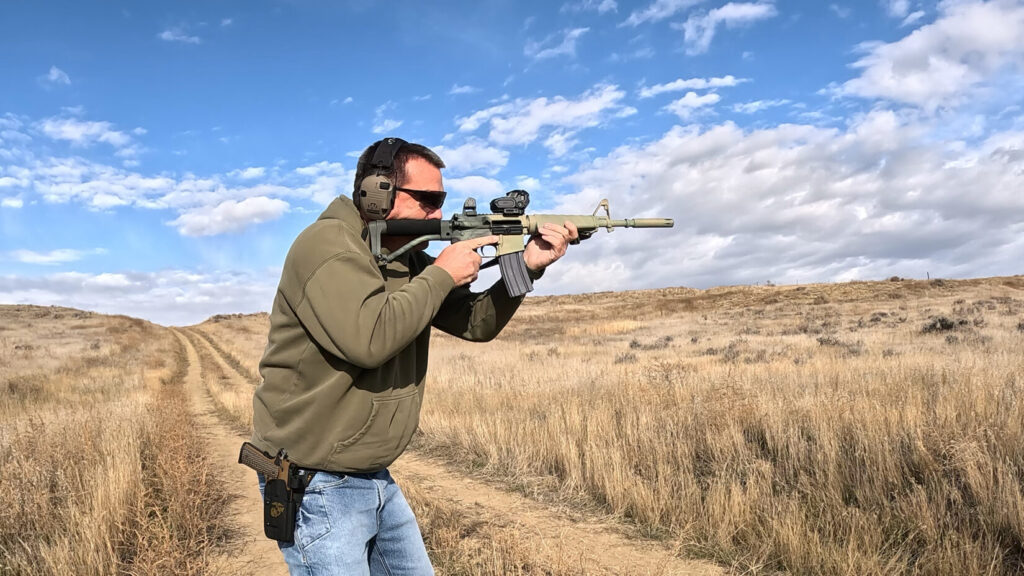
I found the M22 PRO to be easy to mount with its integrated optics mount, and zeroing was a breeze. Shots at distance on man-sized steel were also easily achieved with the triangle reticle. I ran the M22 PRO out to 400 yards without much issue. Meprolight also produces magnifiers that would aid with distance shooting.
Speed shooting with the M22 PRO was the real test. While shooting with both eyes open, the large triangle was quick to pick up. At modest ranges, you could place the entire reticle center of the target and engage very quickly. As the distance increased and more precision was needed, it was simple to switch to focusing on the triangle tip to make hits.
Meprolight has a winner with the M22 PRO for a carbine optic, and I look forward to putting this to use in competition.
Carrying Ammo
Now, I’m fully aware that I will be putting myself at a disadvantage using these retro guns in competition. I plan to make up for that as much as possible with my belt gear.
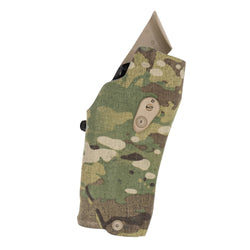
Carrying your ammunition on your belt allows for faster reloads and easier movement around a stage in competition. I selected the Safariland Competition Belt as the base for my gear. This belt is rigid enough to support a heavy load. The belt utilizes a velcro under belt, which allows for easy on/off and keeps it secure to your waist.
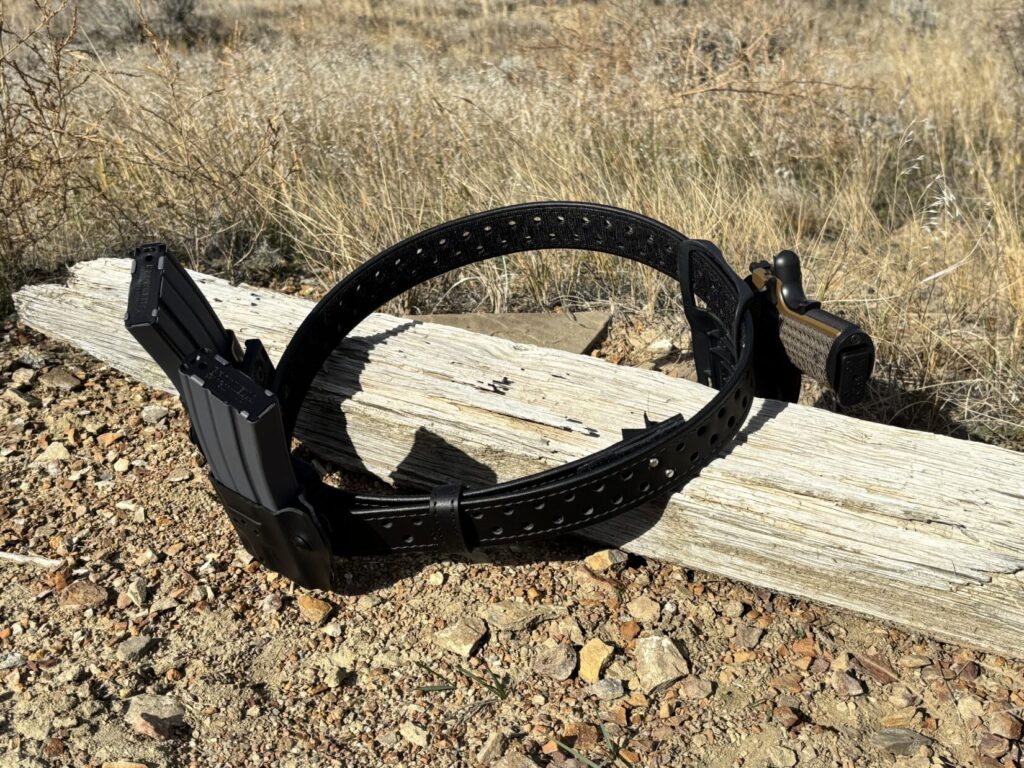
Along with the belt, I have decided to go with the ELS (Equipment Locking System) for my magazine pouches. This will allow me to add or remove ammunition carriers for various stage requirements. The open-top rifle magazine pouches from Safariland proved to be fast for reloads.

I haven’t yet decided which pistol I will run for two gun, thus you don’t see pistol mags on my belt. I am leaning towards a Beretta 92 to make this retro rig complete.
Once I decide which handgun I want to run, this belt rig will be competition-ready. The ease with which I can switch out magazine pouches adds to its functionality. Some courses of fire will require both pistol and rifle, and some will be one or the other. Being able to remove unnecessary gear or add what is needed makes the ELS system a no-brainer.
Competition Ready
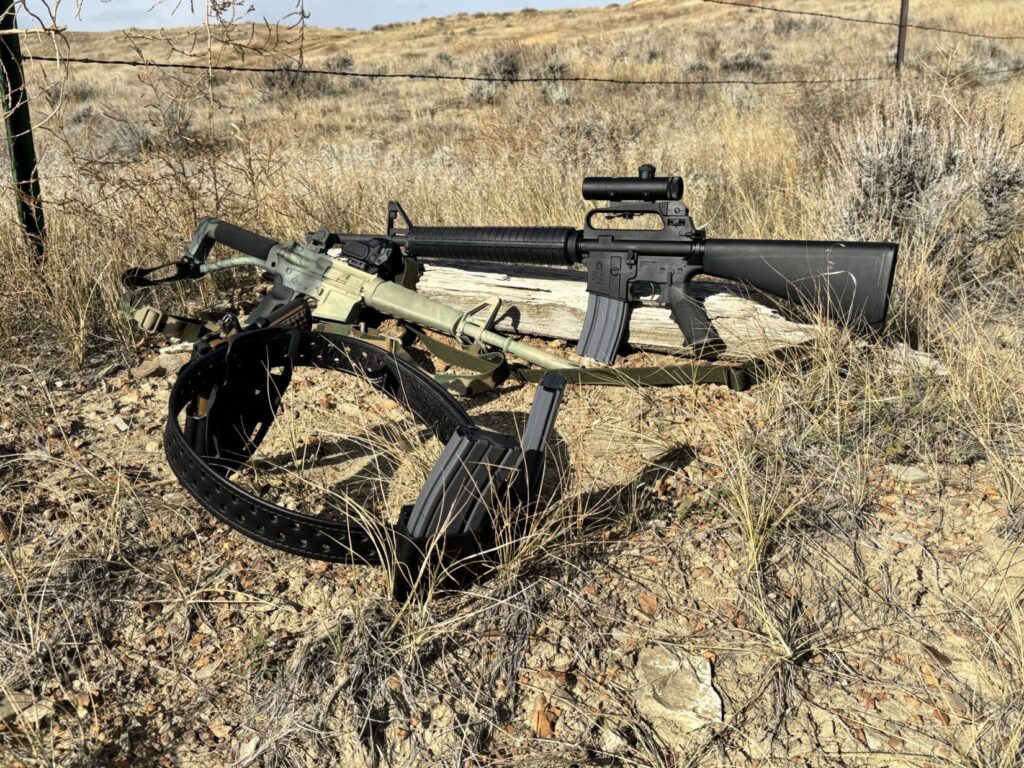
The retro AR rifles draw my attention. Running something that is now considered a classic and is also from my past just adds to the fun of competition shooting for me.
I take my pistol competitions seriously and practice almost daily for them. Two-gun matches will be my matches that are focused on the fun of the shooting sports and not so much on the competition. I can not wait to step on the stage with a rifle now considered retro! There will be a smile on my face as I hear the distant ping against the steel.