
A fast, smooth magazine change can be the difference between success and failure during an incident. This is something I used to do once in a while, but not nearly enough. After getting my hands on the new TitanX laser training pistol from Mantis, however, I’ve been doing a ton of mag change drills.
There is no excuse for slacking on my mag-change drills; I just never really get around to it when I’m at the range. At the risk of sounding lazy, the only reason I practice more now is because it’s easier and more convenient to train at home.
We have already talked about the TitanX in other articles, so I don’t want to spend too much time on that today. Instead, I want to focus more on how this training pistol can help with your mag-change efficiency. There are a number of drills you can perform with the TitanX that involve mag changes.
But before we get into the drills, let’s first discuss why it’s important to add this to your regular training.
Why Practice Magazine Changes?
In high-pressure situations, the unexpected happens quickly. If you train on a regular basis, your body will kick into gear and respond to a threat. Of course, how it responds depends on the type of training you do and how often you do it.
While statistics vary over time and from one organization to another, they all point to a low number of rounds being fired during an incident. Most of the stats I’ve seen lately indicate that an average of three to four shots are fired at around 3 yards during a self-defense shooting. Some may view this as a reason to focus more on shot placement than magazine changes.
But the problem with overlooking the “less likely” parts of an incident in your training is that they create weak points. If you’re really good at three things and bad at four others, which is more likely to cause a failure?
Anyone who’s been involved in an incident will also tell you they are never “normal.” It’s perfectly fine to prioritize your training for the most likely threat, but it doesn’t mean skipping the rest.
In the event you do fire all the rounds in your firearm, those couple of seconds become the most important in your life.
Mag Change Drills with the TitanX
Again, the best mag change training happens on the range, with your everyday carry gun and holster. But regardless of how often you make it to the range, training systems like the TitanX from Mantis are great at supplementing that training.
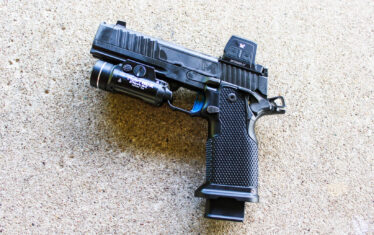
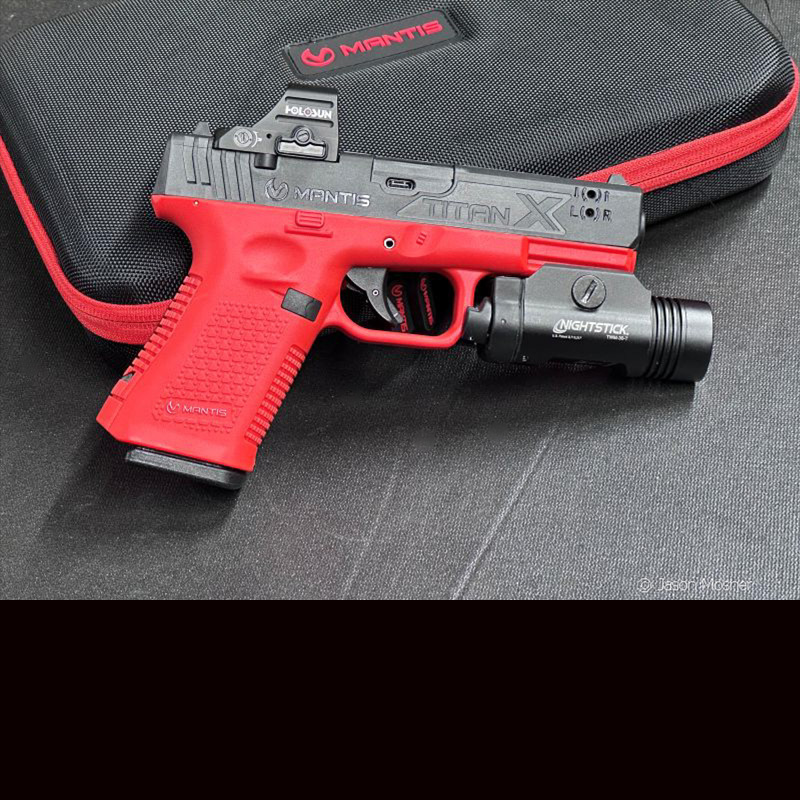
The TitanX is molded after a Glock handgun, but from what I understand, other models will be on the way. Besides its other useful training qualities, performing mag changes is one of my favorite things to do with this pistol. Because the trigger is weighted and resets, you can engage with a target, perform a mag change, and re-engage with a target.
Two weighted magazines come with the TitanX, but I picked up a couple more just for mag change drills.
For most people, a smooth mag change comes down to two specific tasks. Grabbing the new magazine and getting it into the mag-well of the handgun. Most people don’t have an issue with hitting the mag release and dropping the mag.
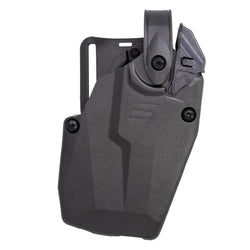
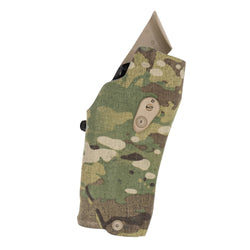
You can also switch up how you carry your handgun and magazine. I work in law enforcement, so I often train with a duty holster and two mags secured to my belt. But for concealed carry, it’s also important to train with your concealment holster and mag. If you carry a mag in your pocket, practice that way.
I’ll admit, sticking your hand in your pocket, trying to pull out a magazine, doesn’t feel as cool and smooth as grabbing one from your belt. But it’s about improving your skills for realistic carry, not looking cool. The faster you become, the better your chances during an incident.
Mag Change Drills with the Titan X
To improve your mag changes, you don’t have to have a specific drill. Some people like to have drills for everything they do, and others like to wing it. But there are benefits from using good drills already created by experts in their field. They force us to perform functions on the range that we wouldn’t do otherwise.
Three-Shot Transition Reload
This drill trains you to fire rapidly and then transition immediately into a combat reload, mimicking running the gun to empty.
Start at the low ready or from the holster (if you are practicing your draw). Insert a weighted magazine and have a spare magazine ready.
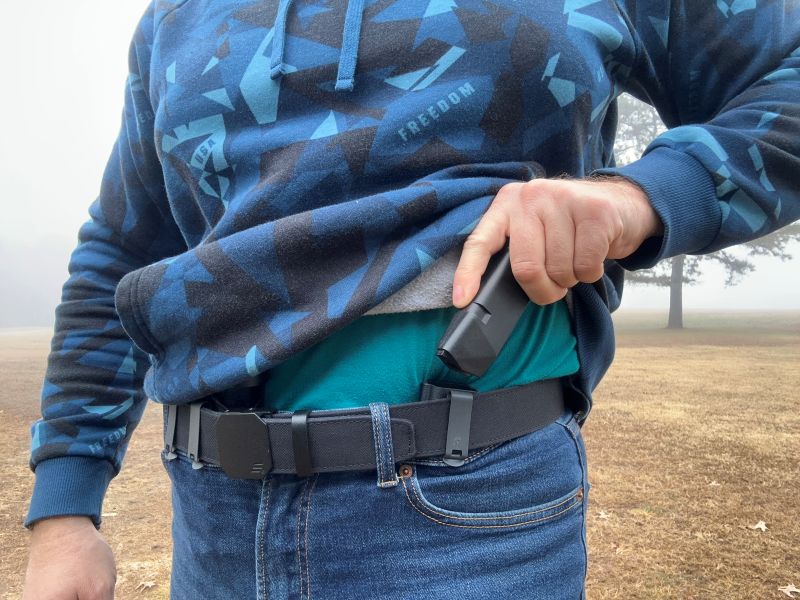
On the start signal (or timer beep), fire three quick “shots” (trigger presses) at your target. The built-in laser on the TitanX helps you focus on maintaining accuracy during rapid fire.
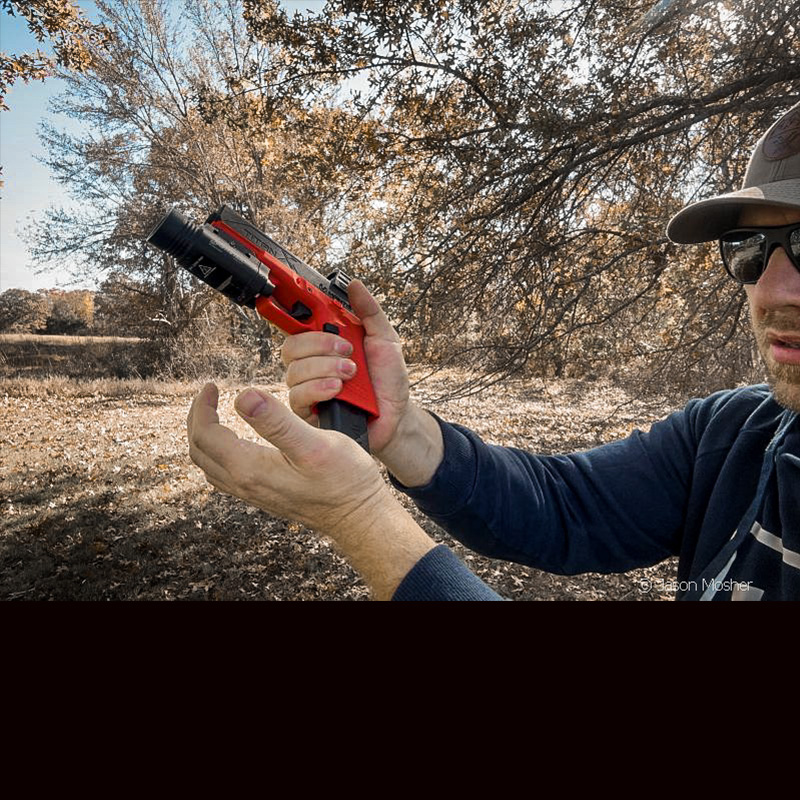
As soon as the third shot breaks, initiate your magazine change. Press the magazine release and give the gun a rapid flick of the wrist. This will help the magazine fall from the gun in cases where it tends to stick.
Insert the new magazine cleanly and firmly before re-engaging the target with one final, accurate “shot.”
Tactical Reload Drill
A tactical reload is performed during a “lull” in the fight—meaning the immediate threat is suppressed or behind cover, and you have the time and environmental security to top off your weapon. The goal is to ensure that if the threat re-emerges (or a new one appears), you are starting that next engagement with full capacity.
Start with a magazine inserted and the gun holstered. I tend to start all these drills with a holstered gun, carrying in a method I would in public.
Fire three “shots” at your target and then perform a tactical reload. For those not familiar with a tactical reload, this involves removing the current magazine before it’s empty and inserting a fresh one. The first magazine is put back into your mag pouch or pocket, depending on how you carry it.
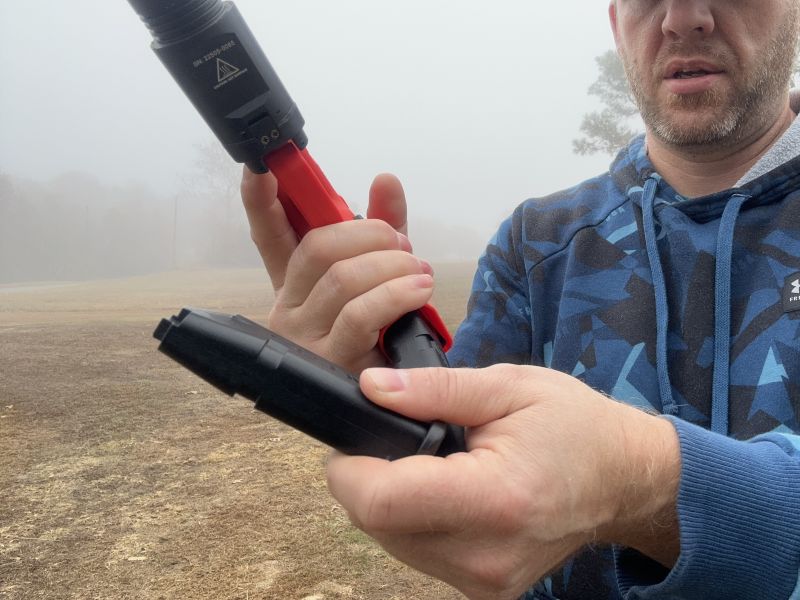
Retaining the first (partially empty) magazine while inserting the full magazine is the hard part of this drill. You are saving the rounds in the partial magazine, so for a moment, you have both magazines in one hand.
Shoot-Move-Reload
When shooting starts, most people will instinctively duck, fall to the ground, or jump behind something. For a person drawing a firearm to defend themselves or others, that’s not an option.
Depending on the situation, you could find yourself needing to move towards cover as you fire, or towards the threat as you fire. Either way, there is a good chance you will need to move.
Once you have gotten used to performing mag changes, add some movement in your drills. This can be combined with other drills or used by itself.
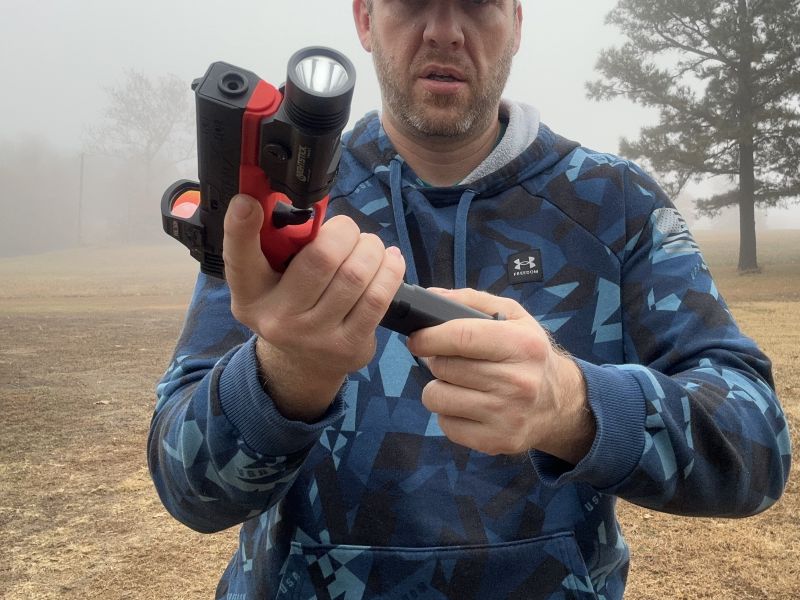
When I do this drill, I like to start with a holstered gun. I then draw my handgun and fire at a target while I move towards the nearest cover. Once I reach cover, I perform a tactical reload. On the next run, however, I fire rapidly while moving at a target and perform a combat reload while I’m moving. This is probably the hardest of them all.
I also like performing this drill specifically with my TitanX before I use live ammo on the range because of all the movement.
Practice makes… almost perfect
I like to say we are never “perfect” because we can always improve. If you carry a firearm for self-defense, you should train with that gun on the range regularly.
But no matter how much you make it to the range, being able to train at home is extremely valuable. With the TitanX, I can train for 5 minutes or an hour, whatever there is time for. It also gives me the ability to do a little training in my home, where there are rooms, stairs, furniture, etc., a setting we don’t normally get to train in.
I’m not trying to be a salesman for Mantis, but this really is one of the best training tools I’ve seen in a long time. If you haven’t already checked out the TitanX laser training pistol, I would recommend it.