
Israel Weapon Industries (IWI) is the small arms division of Israel Military Industries (IMI), which has designed and produced weapons since the 1920s. IMI was privatized in 2005, creating IWI as a primary weapon supplier to the Israel Defense Forces (IDF), which role it fills to this day. Tennessee-based IWI US serves the American market.
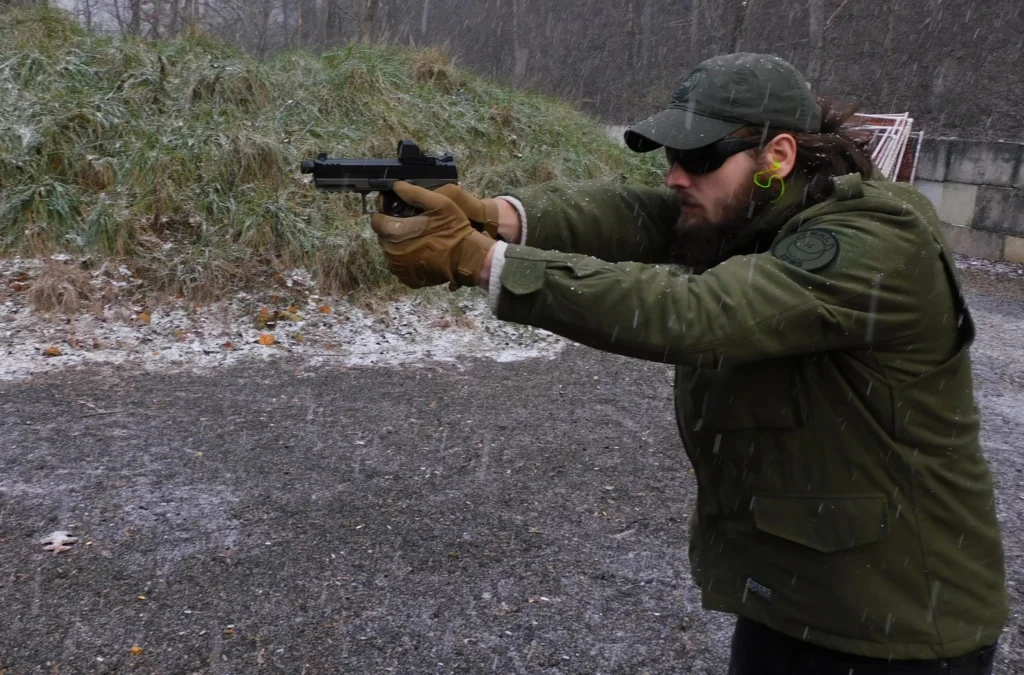
IWI (and IMI) are responsible for iconic designs like the UZI submachine gun and the Galil and Tavor assault rifles. The company also produces high-quality, high-value handguns used by the IDF, law enforcement, and civilians.
I’ve been fortunate to test and run at least one variant of every IWI handgun model. Their performance, reliability, and value have always impressed me. So, I thought an overview of IWI’s handgun lineup was in order.
The IWI Jericho
IMI introduced the Jericho 941 pistol in 1990. The IDF adopted it that year, and the Jericho serves with some IDF units to this day.
The name “Jericho” refers to the Biblical siege of Jericho, a popular naming theme throughout the IWI firearms lineup. The “941” designation refers to the gun’s original chamberings in 9mm Parabellum and .41 Action Express.
Later models also offered .40 Smith & Wesson and a few .45 ACP guns. .41 AE was ultimately a failed cartridge, and the vast majority of Jericho 941s, including all current variants, are chambered in 9mm.
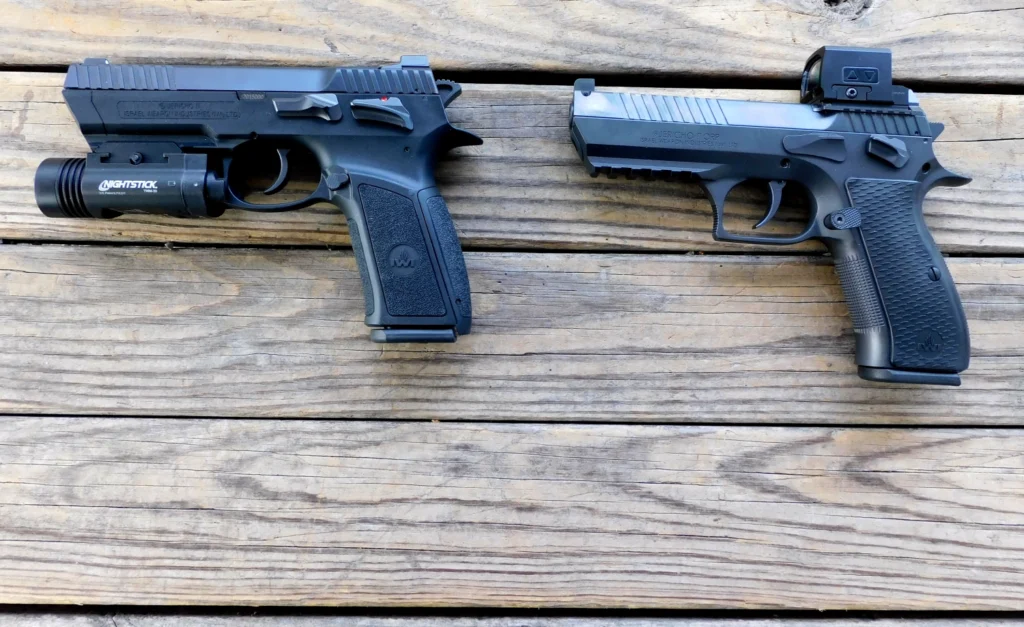
The Jericho 941 is a rugged, all-steel pistol that was once marketed as the “Baby Eagle,” thanks to its resemblance to the legendary Desert Eagle. The two guns, however, are not related in any way. The Jericho is actually based on the classic CZ-75 pistol, with its low-profile slide, internal slide rails, and short recoil system.
2020 saw IWI introduce the polymer-framed Jericho Enhanced, sometimes called the Jericho II. That gun became available in the United States in 2022. The Jericho Enhanced shares the same features and controls as the original Jericho 941, but the polymer construction shaves 4 ounces from the gun’s weight.
All Jericho pistols are hammer-fired with a double/single action (DA/SA) trigger. They are built for hard service and have proven themselves with the IDF over 35 years of service. Here’s a brief look at the two Jericho models and their variants.
Jericho 941 F Series
The Jericho 941 F pistol features a full-size frame with a 4.4-inch barrel. Overall length is 8.2 inches. They include a frame-mounted thumb safety, enabling Condition 1, or “cocked and locked,” carry. A half-cock function allows Condition 2 carry, but the F Series Jerichos do not have a decocker. The shooter must operate the hammer manually to set the half-cock.
The Jericho 941 FS reduces the barrel length to 3.8 inches and the overall length to 7.6 inches.
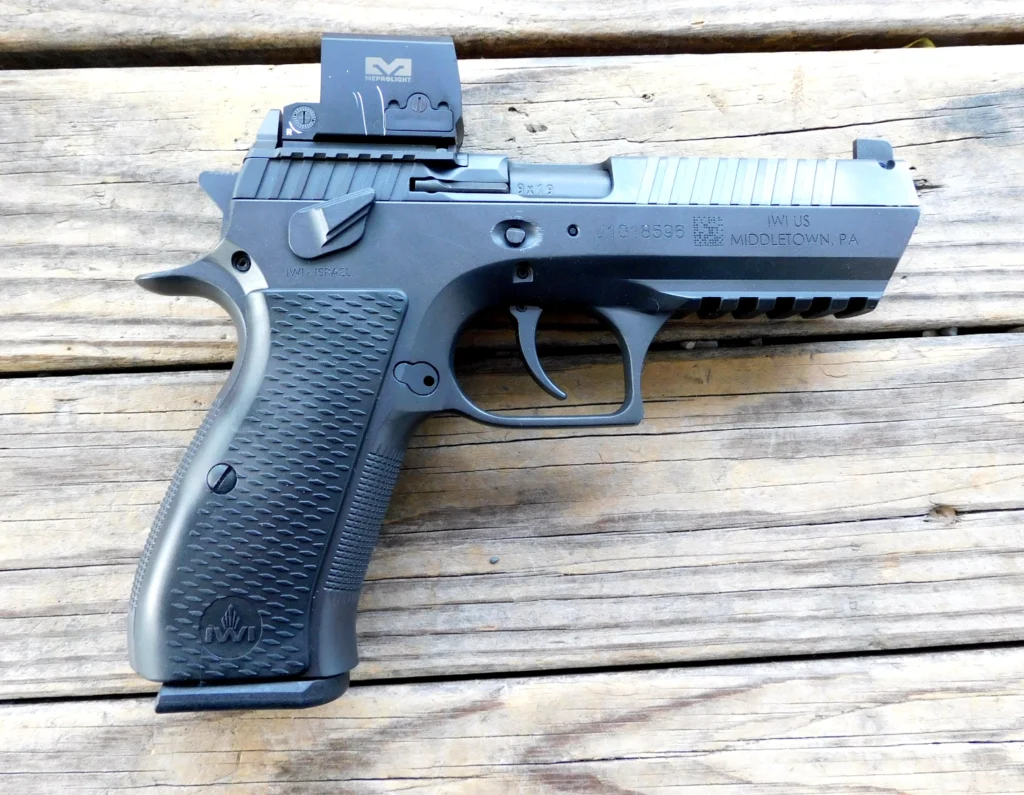
The new optic-ready Jericho 941 F ORP (Full-size Optic-Ready Pistol) features an optic cut with steel RMR and DeltaPoint Pro plates, improved ergonomics, and enhanced controls. It also increases the Jericho 941’s magazine capacity from 16 to 17 rounds. The F ORP modernizes the Jericho 941, keeping it relevant as a service or defensive handgun.
Jericho 941 R Series
The Jericho 941 R Series guns mirror the F Series, but they feature a slide-mounted decocker rather than a thumb safety. The decocker eliminates the need for manual hammer operation, making Condition 2 carry easier. The Jericho 941 RS variant has a 3.8-inch barrel like its FS counterpart.
Jericho Enhanced
The Jericho Enhanced replaces the 941’s steel frame with a lighter polymer. The gun contributed its improved ergonomics to the new Jericho 941 F ORP variant, including a longer, more versatile Picatinny accessory rail and a more positive grip. The Jericho Enhanced also added front slide serrations to the original 941 design, though the 941 F ORP has made them even more aggressive.
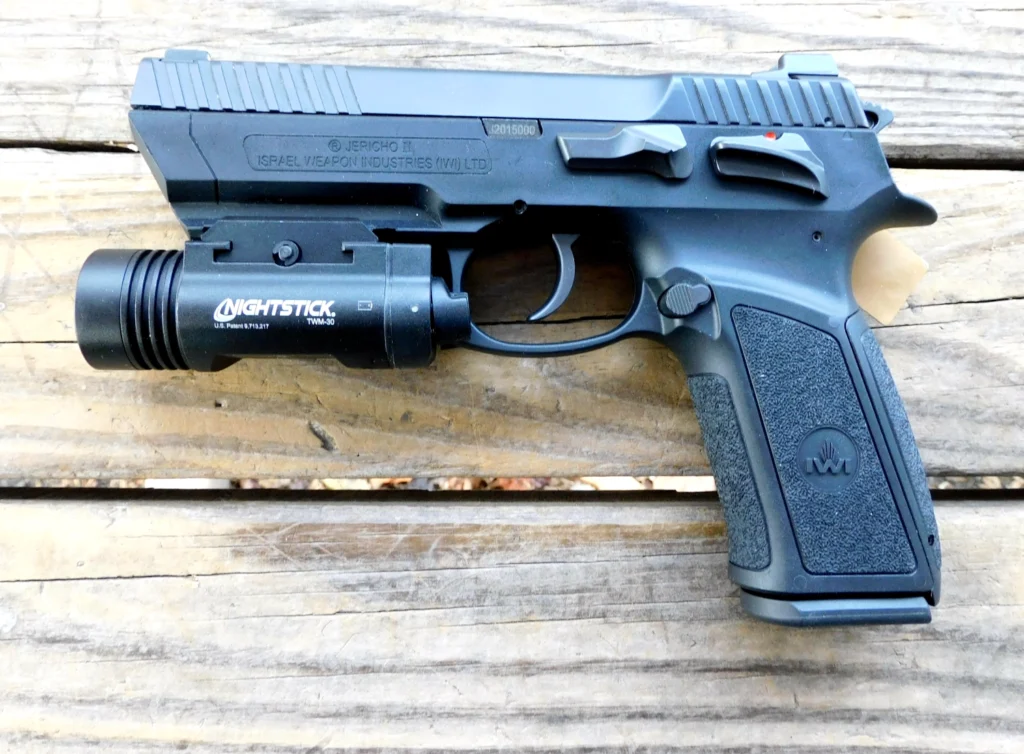
The 941 passed its toughness and reliability to its younger brother, which is nonetheless a lighter pistol than the original. The Jericho Enhanced features a 4.4-inch barrel and the frame-mounted thumb safety, enabling Condition 1 carry. The half-cock function is also present.
A 3.8-inch barrel is available on the Jericho Enhanced Mid-Size variant. The Jericho Enhanced line does not currently include a decocker-equipped R Series or an optic-ready capability. I’m told those may be forthcoming in the future.
The IWI Masada
IWI’s Masada pistol line is named for the First Century AD siege of the fortress of Masada by the Romans. The IDF does not use Masada handguns, which are designed and marketed as law enforcement and civilian defensive pistols, but the IWI legacy of quality is there.
The original Masada pistol debuted in 2017, followed by the Masada Tactical and the subcompact Masada Slim variants. All Masada variants are chambered in 9mm Parabellum, striker-fired, and all but one feature polymer frames. They are also built around the serialized fire control unit, hinting at future modularity options.
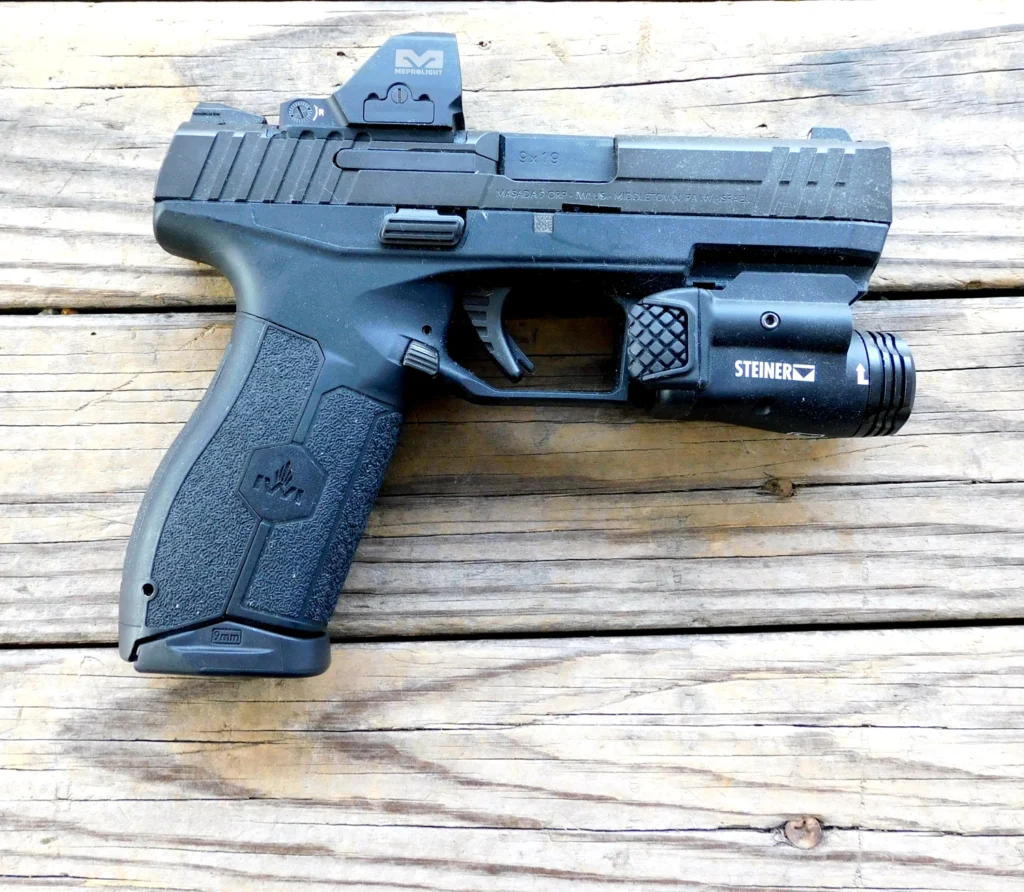
The Masada and Masada Slim bear the same name for marketing purposes, but they are very different pistols. The Slim model is not just a scaled-down Masada. Operation and disassembly are different, and it is not fully ambidextrous.
Most importantly, the Masada line’s different focus does not sacrifice the reliability and performance demonstrated by the Jericho.
Masada
The Masada pistol is a compact-sized handgun with fully ambidextrous controls, a generous front accessory rail, and solid ergonomics. Like the older Jericho, the Masada is very reliable, durable, and accurate.
The gun is optic-ready and includes mounting plates for the major optic footprints. The 17-round magazine capacity equals the industry’s best. IWI offers a Masada variant equipped with Meprolight Hyper Bright night sights.
Masada Tactical
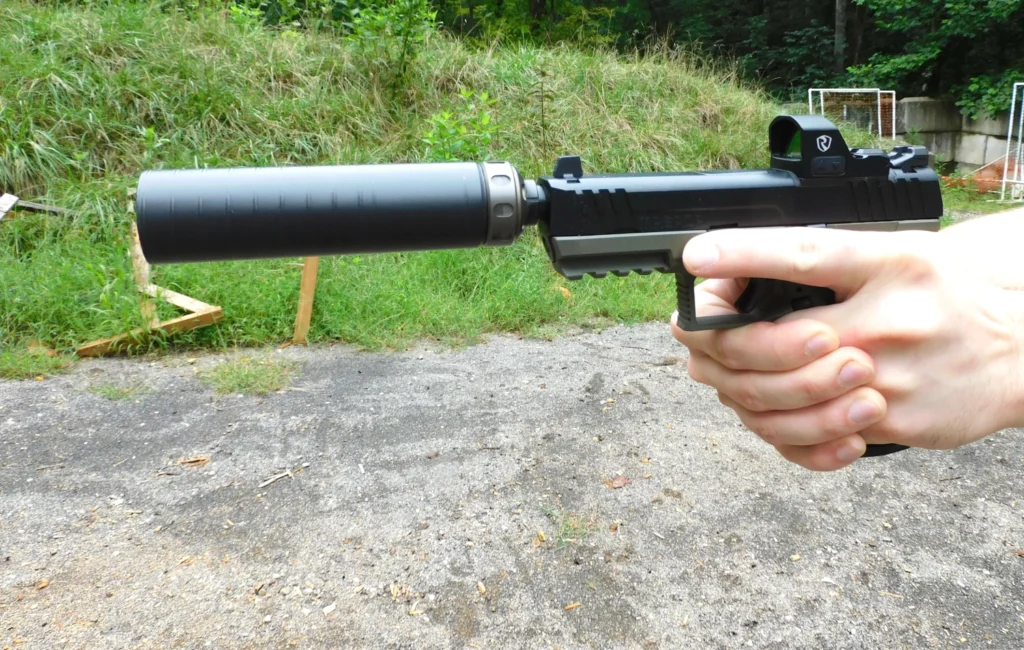
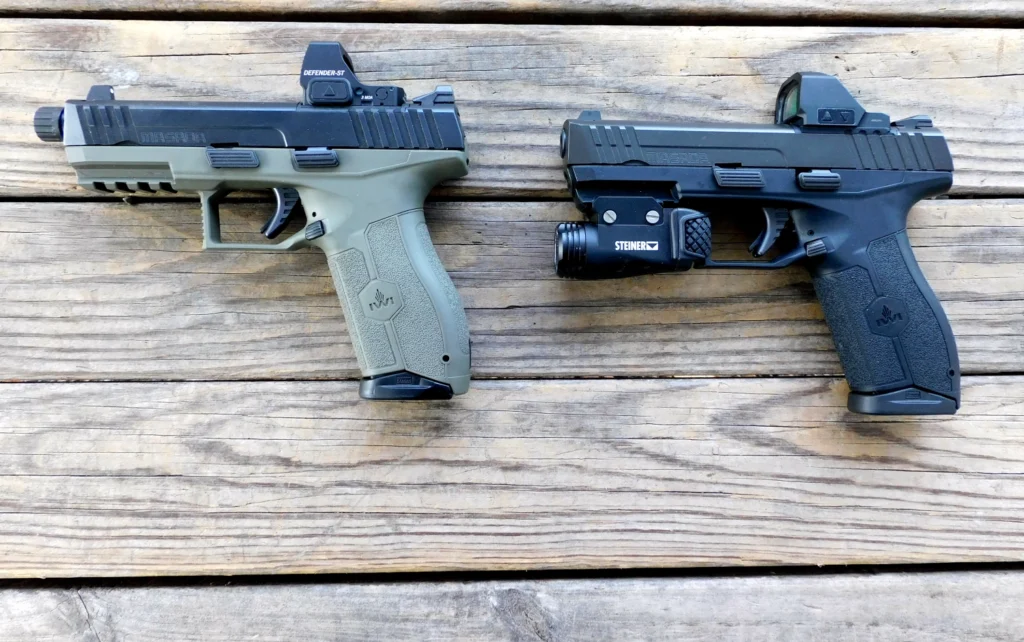
The Masada Tactical includes all the original Masada’s features, adding a 4.6-inch threaded barrel and suppressor-height sights. The Tactical models are also available with OD Green or Desert Tan frames. A Meprolight Hyper Bright night sight-equipped variant is available.
Masada Slim
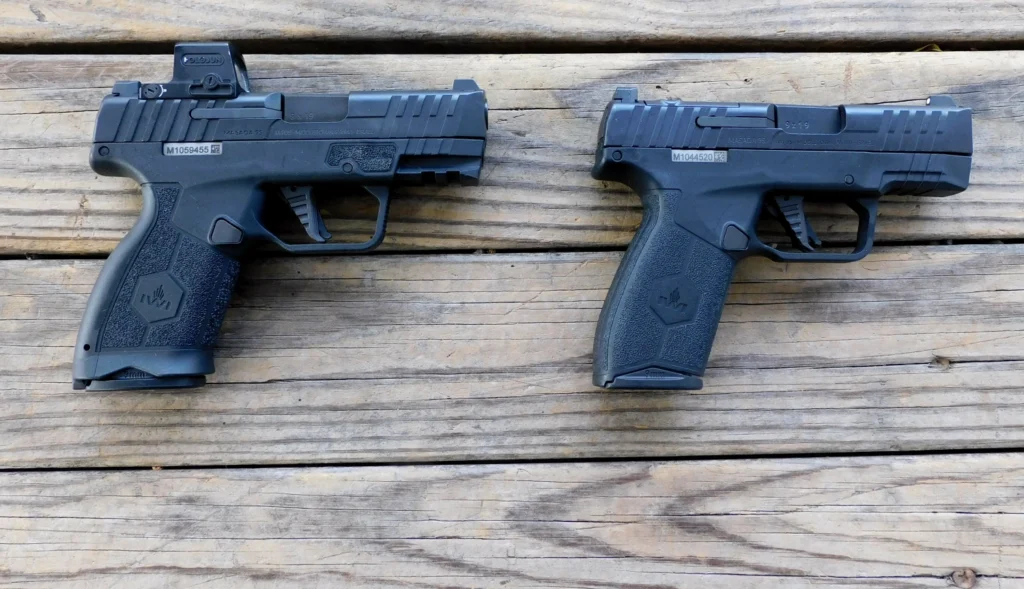
The Masada Slim was IWI’s response to the Sig P365, and it’s most analogous to the P365X. It features the double-stack magazine with the slim frame, 3.4-inch barrel, and a 13+1 capacity. The slide has a Shield RMSc direct-mount capability. It has good ergonomics, responsive controls, and a surprisingly nice trigger.
The Masada Slim is also compatible with IWI’s new 17-round Jericho magazines, though the original Masada mags do not fit the Slim variants. The basic Masada Slim’s only downside is the lack of an accessory rail.
Masada Slim Elite
The Masada Slim Elite adds a two-slot Picatinny rail, while maintaining all the Masada Slim’s good features. It has an updated barrel with a longer feed ramp to maximize reliability. The Masada Slim Elite also includes interchangeable backstraps, unlike the original. And it includes one of those 17-round mags we mentioned previously.
Like the Masada, the Masada Slim and Slim Elite are available with Meprolight Hyper Bright night sights.
Masada Slim Commander Elite
The Masada Slim Commander Elite is meant for the slim pistol carrier with a bit of nostalgia. IWI partnered with Mischief Machine to engineer the Elite 7075 aluminum grip frame with G10 grip panels. The grip frame includes an upgraded Picatinny rail and a high undercut trigger guard. It also adds an extra four ounces of weight. All other features carry over from the Masada Slim and Slim Elite.
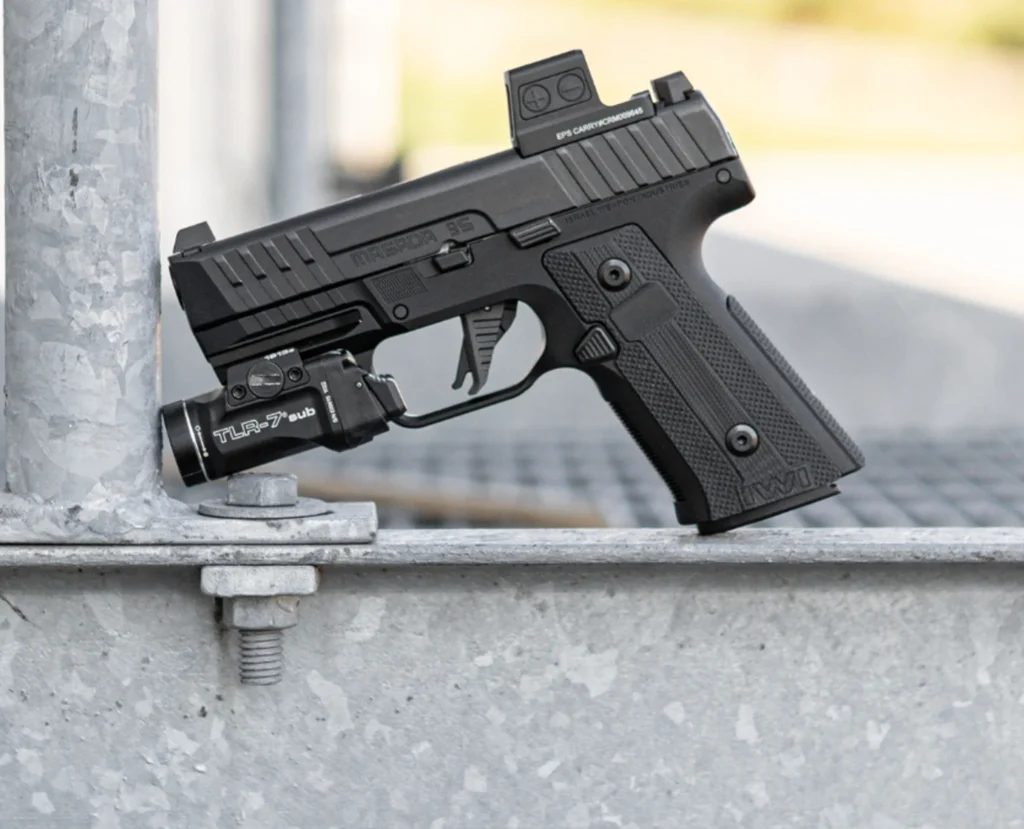
But the most striking difference is that the Mischief Machine grip recreates the 1911 Commander-style grip frame for those who prefer that particular angle and feel. It’s a cool combination.
IWI and Mischief Machine sell the grip frame separately on their websites if you just want to upgrade your Masada Slim Elite. The Commander grip frame is compatible with IWI’s 17-round magazines.
Personal Experience
I have personally tested and run the following IWI handguns:
- The Jericho 941 F ORP
- The Jericho Enhanced
- The Masada
- The Masada Tactical
- The Masada Slim
- The Masada Slim Elite
The Masada Slim Elite is the only one of those that I don’t own, but I nonetheless have several hundred rounds through the test model. Those pistols impressed me and my co-testers with their performance, reliability, ergonomics, and value.
My personal IWI handguns are all part of my system. The Jericho Enhanced is a truck gun. My two Masadas are dedicated home defense guns, with one residing on my nightstand. The Masada Tactical is a test gun for many of the accessories I review, including suppressors. The Masada Slim is a concealed carry gun. The Jericho 941 F ORP will go on a battle belt.
Final Thoughts
You may interpret this as my pushing a particular brand. That isn’t my intent, but I get it. The truth is that I have extensive experience with these pistols, and they have always performed. I have the utmost confidence in each one. If I didn’t, they’d be gathering dust in my safe alongside more than a few other handguns.
I think shooters sometimes overlook IWI. After all, the handgun lineup isn’t terribly diverse, being built around three basic models. But those three basic models, and their variants, flat-out run.
I find myself wondering whether some shooters overlook IWI because their guns aren’t expensive, compared to peer products. Gun owners, after all, tend to equate price with quality, much to our own detriment.
My first IWI handguns were a pair of Masadas that I bought brand-new for $400 apiece in 2020. They cost a little more now, but not much. That might be the smartest gun purchase I’ve ever made. I think IWI’s value is hard to beat.
So, take this article as you will. If nothing else, it’s a basic rundown of the IWI handgun lineup. Perhaps it piques your interest and makes you aware of other options. But it’s also a personal account of my very good experiences with those handguns. Maybe that helps too. Either way, take a look at IWI. They make good stuff.