On a recent trip to Atlanta, I realized just how much time I spent in my vehicle. I commute to work, I have three kids in three different sports, and I often find myself taking long trips for work. The likelihood of being involved in a defensive shooting while driving isn’t nil.
With that in mind, what exactly does a vehicle offer you in terms of cover and concealment? Fighting inside the vehicle isn’t ideal, but fighting around vehicles seems fairly likely. The United States infrastructure is built around the vehicle.
If you’re outside, you are likely somewhat close to some kind of vehicle. Even if you’re not driving it, you’re likely at least somewhat close to one. Knowing how to use the vehicle to its maximum potential in a gunfight is critical.
There is a lot that goes into fighting around vehicles—too much for one article. Today’s focus will be on using the vehicle as cover and concealment.
If you get your gunfight training from TV and movies, you’d think cars are just cover as a whole. Pop culture tells us that every part of the car, sans the windshield, can stop bullets. In reality, a car mostly offers concealment rather than cover.
Knowing the difference can mean the difference between life and death. Concealment stops people from seeing you. Cover stops people from shooting you.
Concealment and the Average Vehicle
Let’s break down what the average car, truck, or SUV offers you in terms of concealment. Concealment is fairly simple: what makes you harder to see?
Door Panels
The door panels of a vehicle can be an excellent source of concealment. They allow you to hide most of your body from view due to their large size. The higher the vehicle, the easier it is to see under, which makes it harder to conceal yourself.
Door panels are made of sheet metal, which doesn’t provide adequate protection or cover.
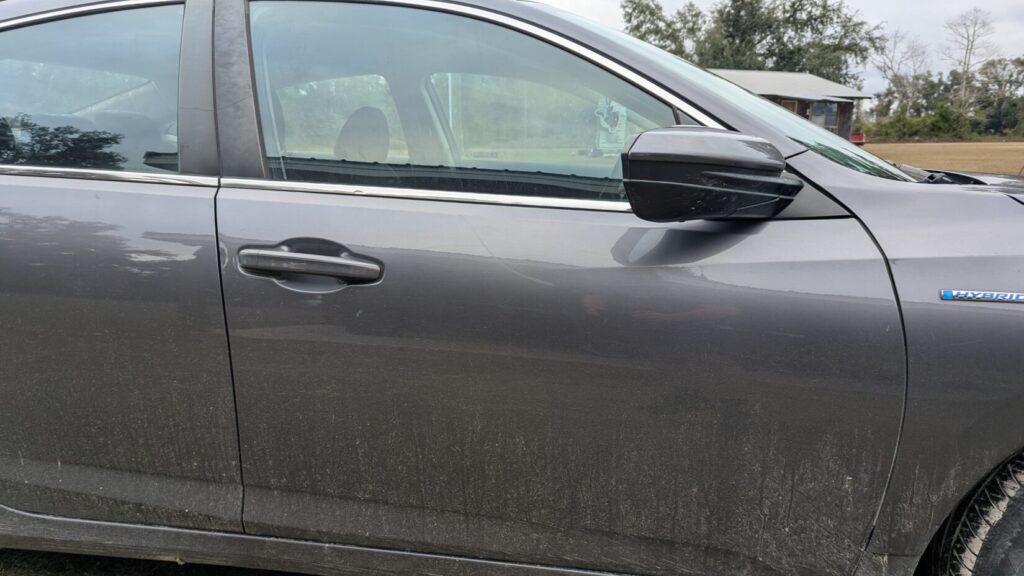
If you’re inside the vehicle, you have one panel between you and the bullet. If you’re outside the vehicle, you have two panels.
It’s entirely possible that both panels could stop a bullet, but it’s altogether caliber-dependent. Something that stops a soft lead .22LR or a .25 ACP might not stop a 9mm, and certainly won’t stop a rifle round. Bullets can do weird things and react in odd ways, but in general, door panels are concealment and not cover.
Trunk, Bed, or SUV Rear
Much like door panels, the trunk, truck bed, or rear of an SUV only offers you sheet metal protection. You get two layers of it, and admittedly, a trunk or bed full of stuff might soak up bullets. A truck bed full of 2x4s might turn your bed into cover.
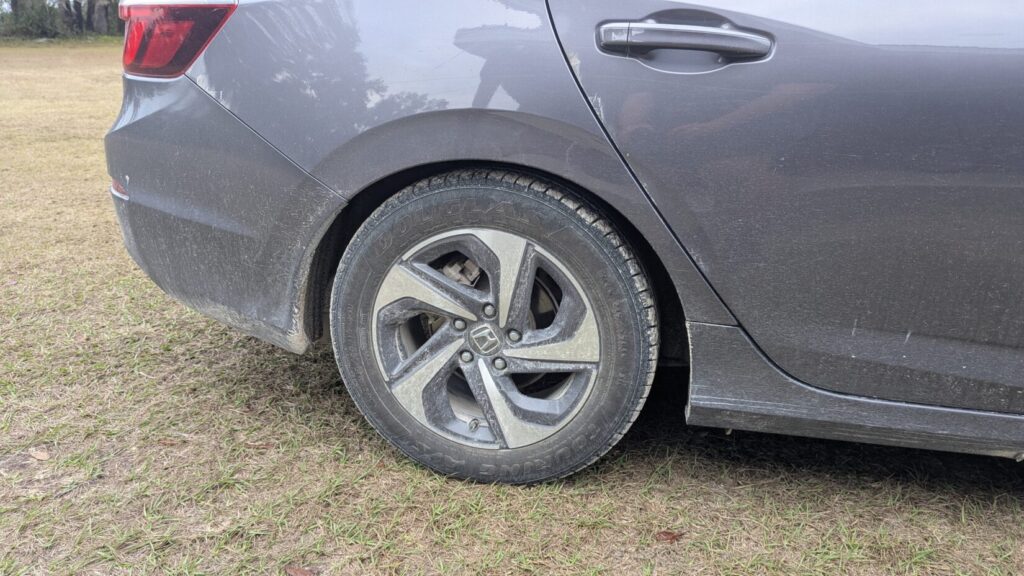
Two layers of sheet metal might stop small-caliber projectiles moving slowly, but, as with door panels, consider this area of your vehicle to be concealment, not cover.
Interior Components
Interior components cover parts of your vehicle like the seats, the dash, the door trim, headrests, and all that fun stuff. Unless you’re stuffing armor panels into your seats and headrests, none of these offers cover. If, for some reason, you’re jammed inside a vehicle, they can offer you some concealment from view.
A Word on Glass
Glass isn’t exactly cover or concealment. If it’s tinted enough, it might be considered concealment, and if the sun is hitting just right, you might get the same effect. While it’s really neither, we need to mention glass and shooting.
Windshield glass seems to do some odd things to bullets. I’ve seen someone shoot the front of a windshield with a direct line of sight to the rear window, and the bullet didn’t make it to the rear window. While glass doesn’t offer cover by any means, you should be aware that bullets tend to divert in seemingly random directions and lose a fair bit of speed when they go through a window.
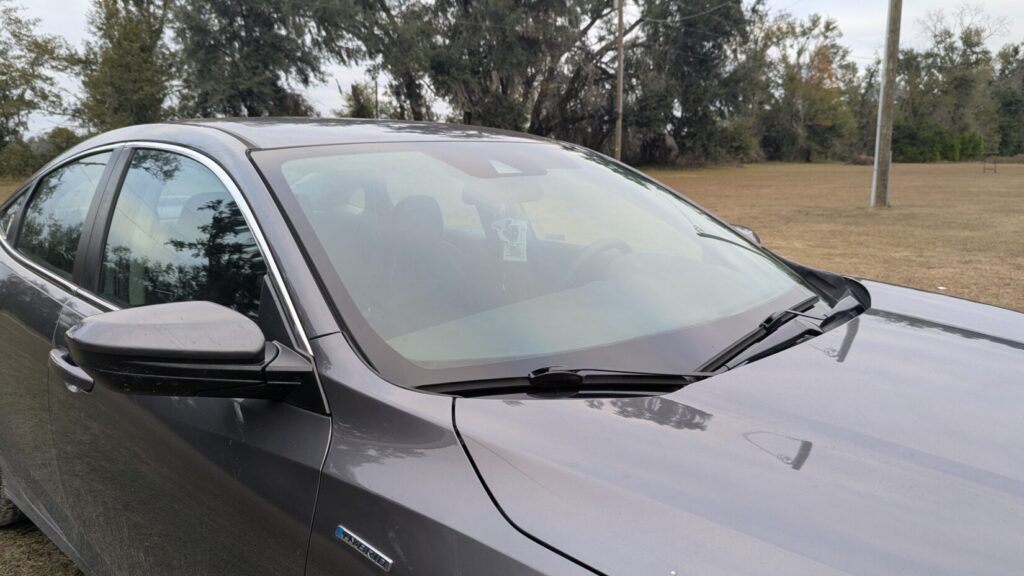
Rifles and handgun cartridges perform differently through glass, but it still seems random how a projectile behaves after hitting a windshield. Windshields are not a single pane of glass; they are two sheets of glass and a layer of rigid, clear plastic. This causes unpredictable bullet reactions.
The Cover Side of a Vehicle
Some parts of the vehicle can act as true cover. Most of a vehicle isn’t, but some of it can be life-saving, and it’s critical you know exactly what’s cover and what’s not.
The Engine Block
If a vehicle had a safety blanket of cover, then it would be the engine block. The engine block is a solid cast metal block, backed by a battery, transmission, and all sorts of dense components that can suck up bullets and save your life. The engine block can eat up rifle and pistol rounds and soak up more than enough to participate in a gunfight.
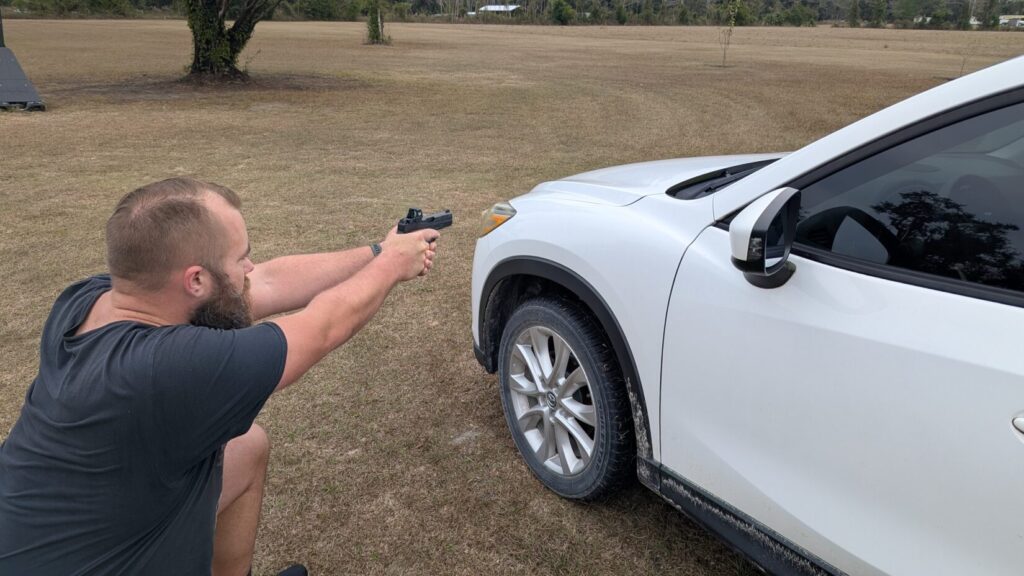
You can use the engine block from multiple angles to put it between you and the threat for a much lower chance of absorbing a round in the middle of the fight. I believe in a defense in depth, and pairing the engine block with another piece of cover will get you the best results.
The Wheels – The Other Piece of Cover
Wheels—and to a lesser extent, tires—provide you with a source of cover. When you mix the front tire with the engine block, or the rear tire with the engine block of a VW Bug, then you’re getting the most use of cover possible.
The metal wheel offers you the most cover possible. The position of the tires and your angle relative to them can help provide some cover.
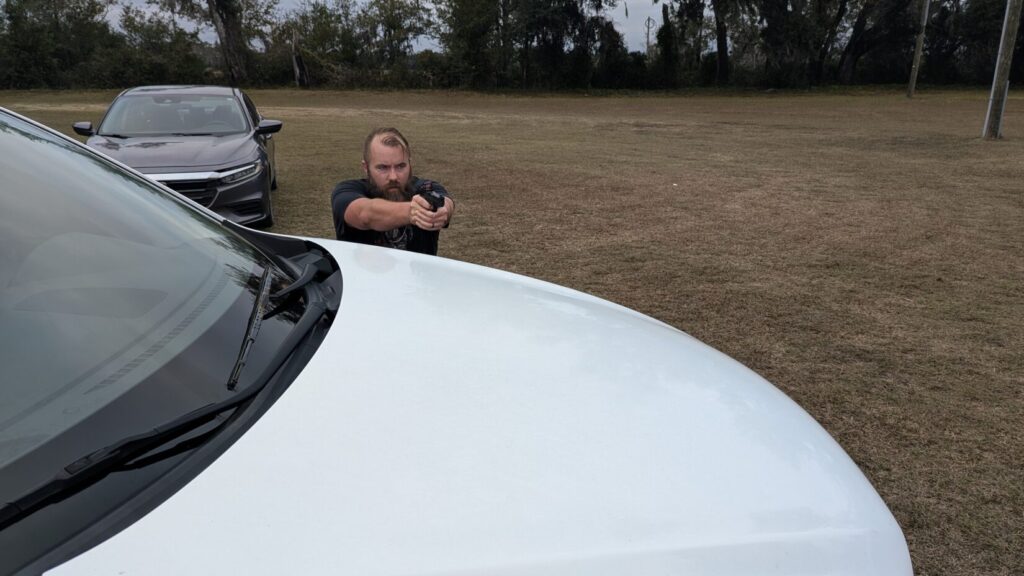
If you’re hiding behind the car and someone is shooting at you, they are likely shooting at a downward angle, and the wheel will likely stop that angle. Tires can also get the benefits of being in a line, so there may be two of them between you and the threat.
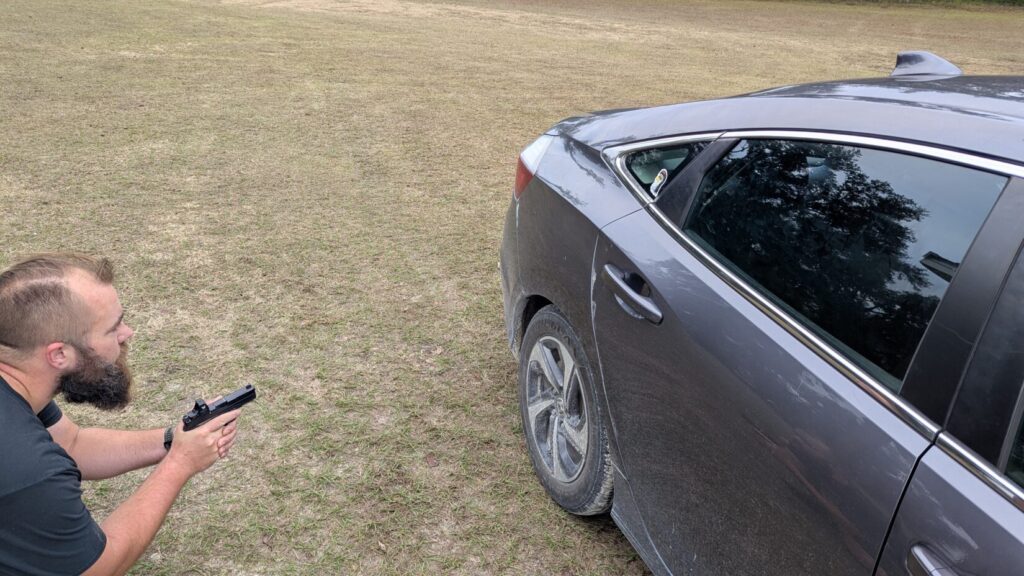
The metal wheels or hubs are the star of the show when it comes to absorbing bullets. If you can combine that with the engine block, you’ll have the most cover possible. If the engine block isn’t available, you can use the rear tire and wheel for some low-level protection, but you need to get lower to use it fully, which can be difficult.
The Pillars of Cover
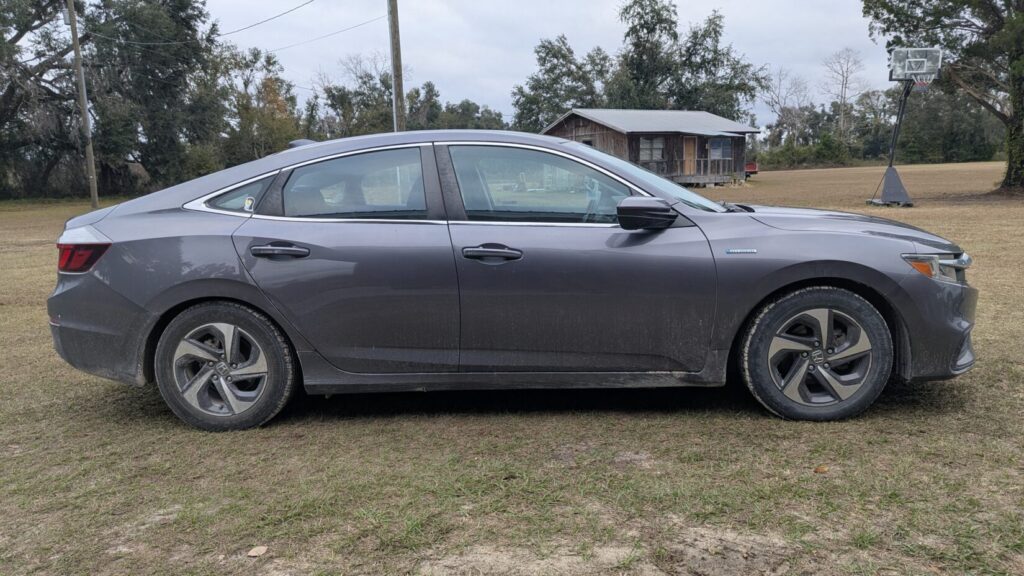
Pillars are structural supports that frame the windows and hold up the roof. These pillars offer some small, narrow shields of cover. Your vehicle likely has three to four pillars, depending on its design. SUVs, vans, and hatchback cars tend to have four pillars.
The pillars are referred to alphabetically from the front to rear. We typically have the front pillar, which is the A-pillar, the B-pillar is the middle, and then the C-pillar. The B-Pillar tends to be the thickest and best for cover.
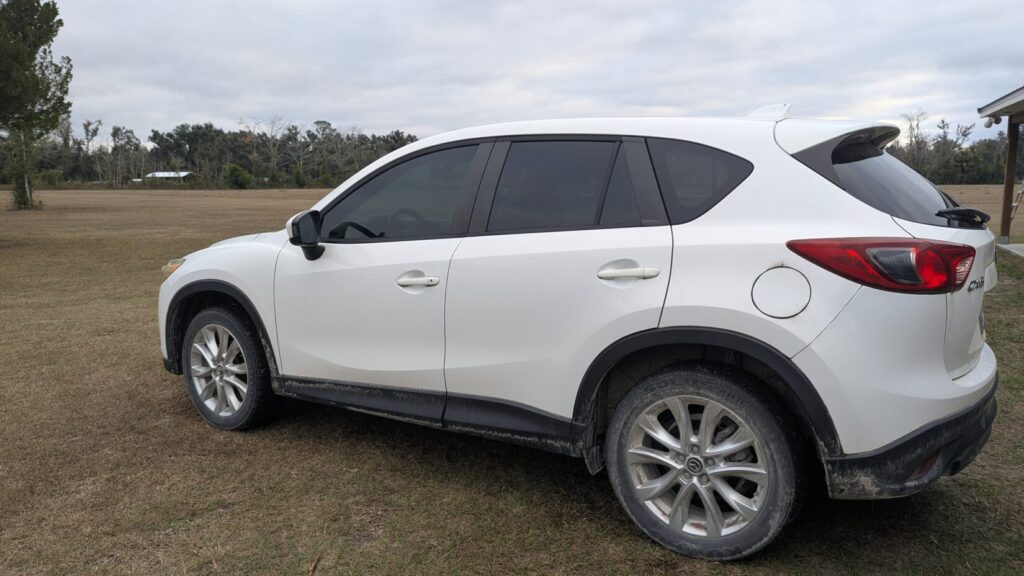
The big benefit to using the pillars is being able to shoot through windows. Additionally, suppose you approach a vehicle that poses a threat. In that case, you can use the B-pillar as cover and to make it exceptionally difficult for someone positioned in the driver’s seat to engage you.
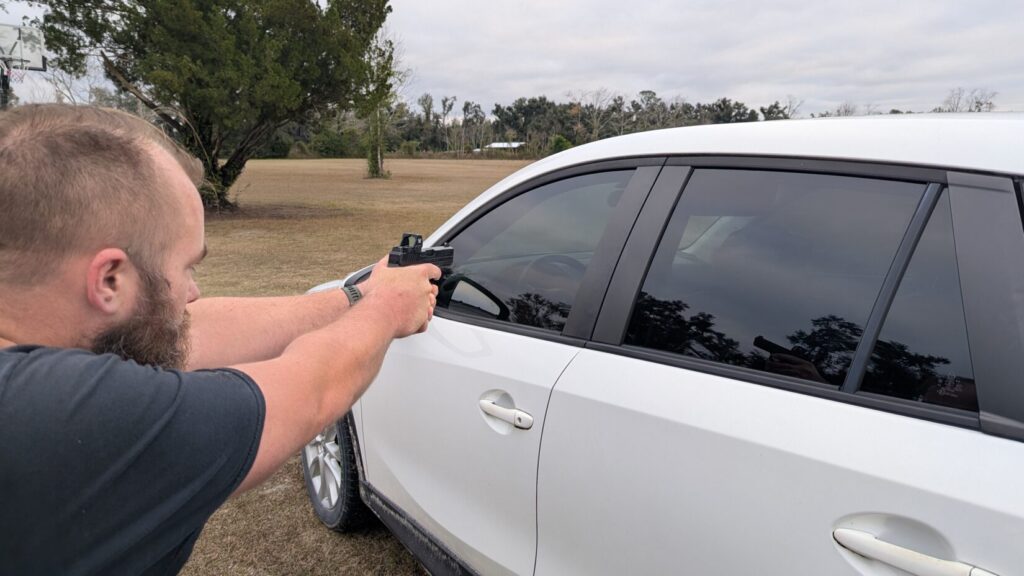
The pillars are in a line, allowing you to place two layers of cover between you and a threat.
Cover, Concealment, and Mobility
Vehicles are not the best cover, but they are better than nothing. Knowing what part of the vehicle is cover and what part is concealment is the critical first step in learning to fight around vehicles. The second is to find a skilled and knowledgeable instructor to teach you the finer points of operating around a vehicle.
Vehicles are a constant in American life; learning to use them to their fullest should be a priority.