
When you’re comparing a $2,500 2011 to a $500 Gen4 Glock 17, you can guess the outcome. Bottom line up front, the Staccato is a better gun in most aspects. I wanted to compare the two to see how big a difference there was between them.
They do have a fair bit in common. The Glock 17 is the classic 9mm duty pistol. It’s designed for practical use and has occupied the holsters of countless law enforcement officers and military units.
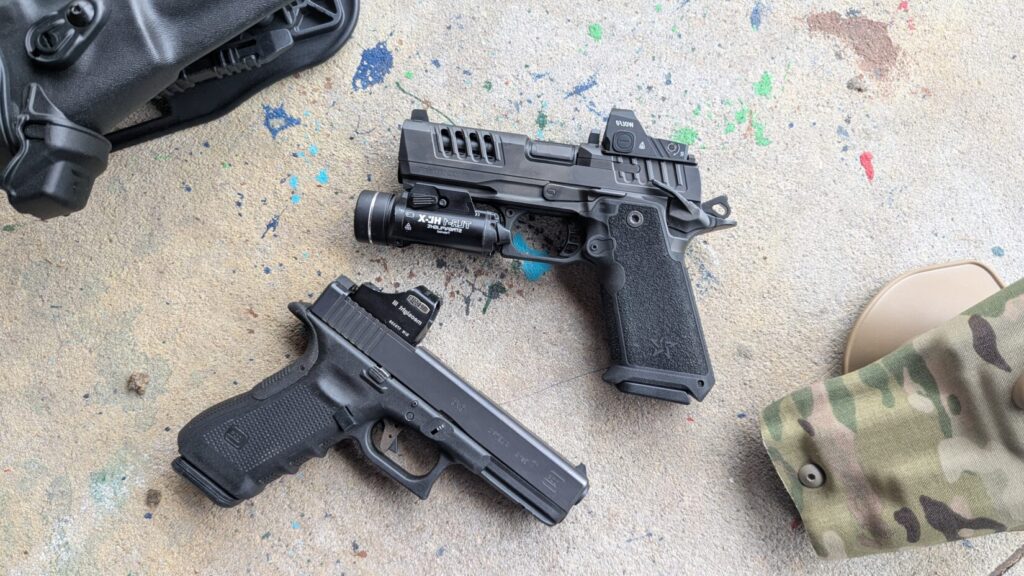
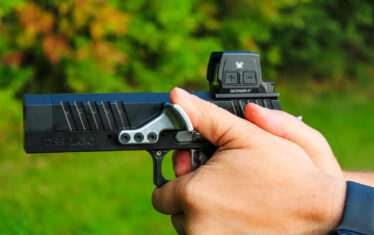
The Staccato HD is a relative newcomer, but it comes from a long line of 2011 pistols. Staccato invented the term and the three-piece design that integrates a polymer grip with a metal frame and slide. Staccato designed the HD for duty use and utilized a drop-safe Series 80 trigger, a new, innovative optics system, and, yes, it actually takes Glock mags.
Both guns serve a similar purpose and share some features, but do things a bit differently. Keep in mind, I consider myself an average shooter. Plenty of people can pick up a Glock 17 and outshoot me with a Staccato.
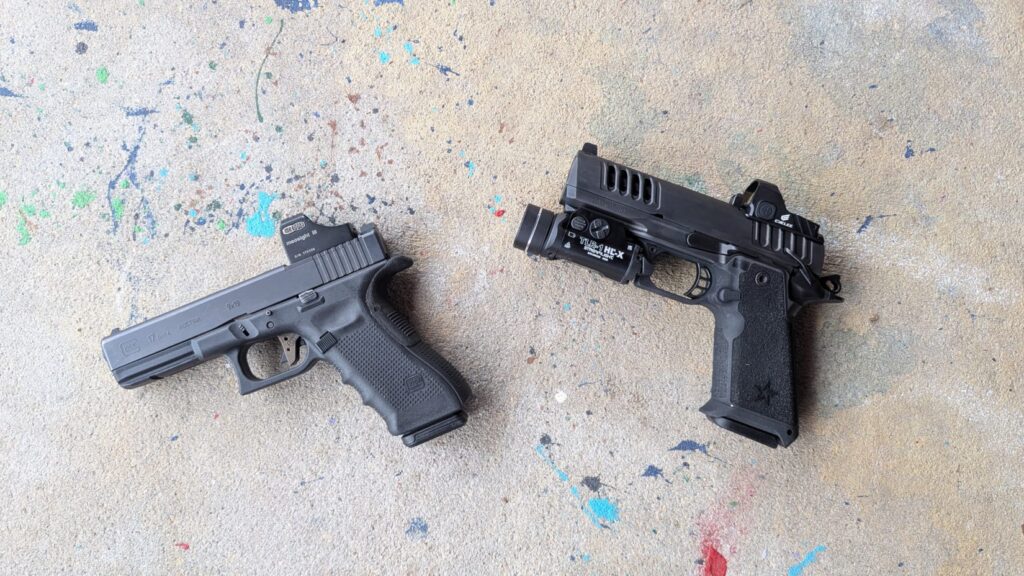
As an average shooter, I think I can bring value to the conversation by simply showing how the difference applies to most shooters.
Staccato HD and Glock 17 Specifications
The Staccato has a single-action, hammer-fired design, and the Glock uses a partially cocked striker. Both offer a consistent trigger pull that most shooters prefer.
The new HD series optics mounting uses plates to accommodate multiple optics, but the optic still attaches directly to the slide. The Glock uses the MOS system, which uses plates as well. The plate attaches to the slide, and the optic attaches to the plate.
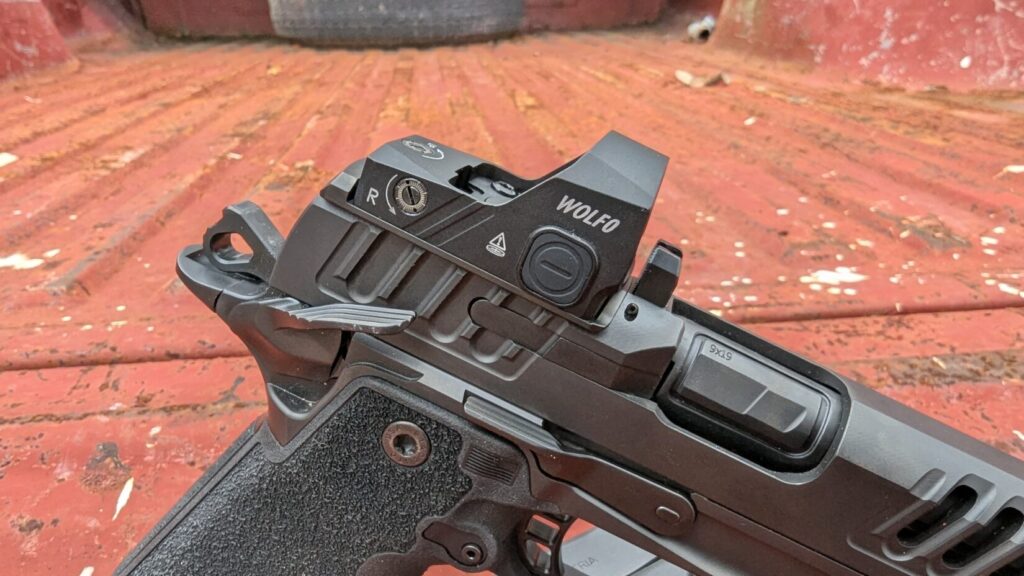
This creates issues with stacking tolerances and is more likely to fail than the Staccato HD method. Out of the box, the Staccato’s sights will also co-witness with optics, but the standard sights of a Glock pistol will not.
The Staccato comes with 18-round Mec-Gar magazines, but can use standard Glock 17 magazines of all lengths, including the D50 drum from Magpul.
Ergonomics
There are a lot of ergonomic differences between the two guns. Ergonomics is largely a personal preference. There can be ergonomic flaws with firearms, but differences are rarely objective.
With that said, the Staccato won’t fit everyone. It has a broad, thick grip that’s quite wide and won’t play well for folks with smaller hands. The texture is also highly aggressive, and if carried close to the body, it might become a bit painful.
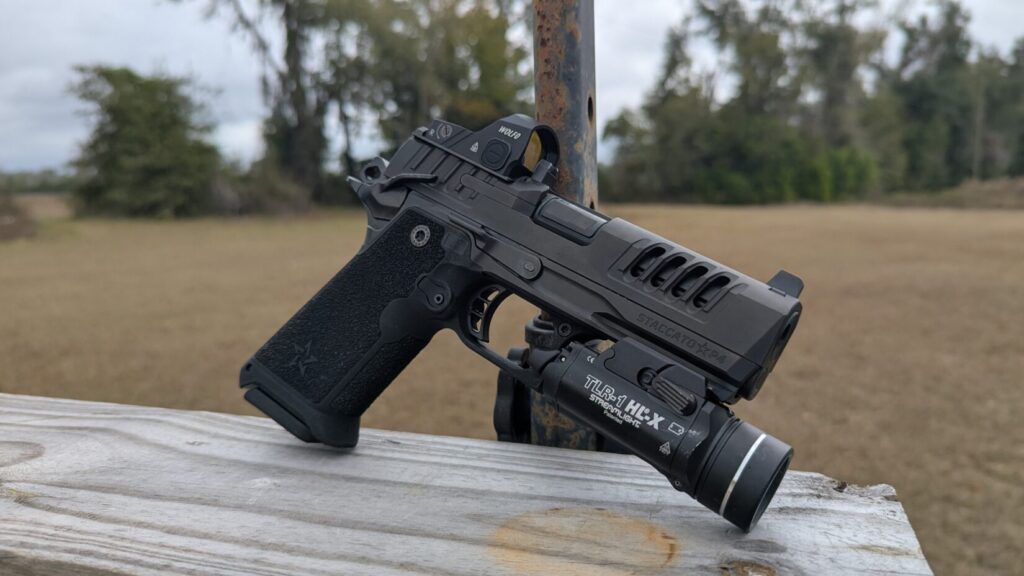
The Glock’s big flaw, according to me, is the micro-sized slide lock. Not only do I find it difficult to manipulate, but my thumbs often lock it downward with an aggressive thumb’s forward grip. The other flaws are the trigger and trigger guard. “Glock knuckle” exists due to your knuckle’s tendency to rub on the trigger guard.
The Glock standard trigger starts to rub and become irritating as you reach higher round counts. It’s irritating, so I swapped a flat-faced trigger shoe in my Glock.
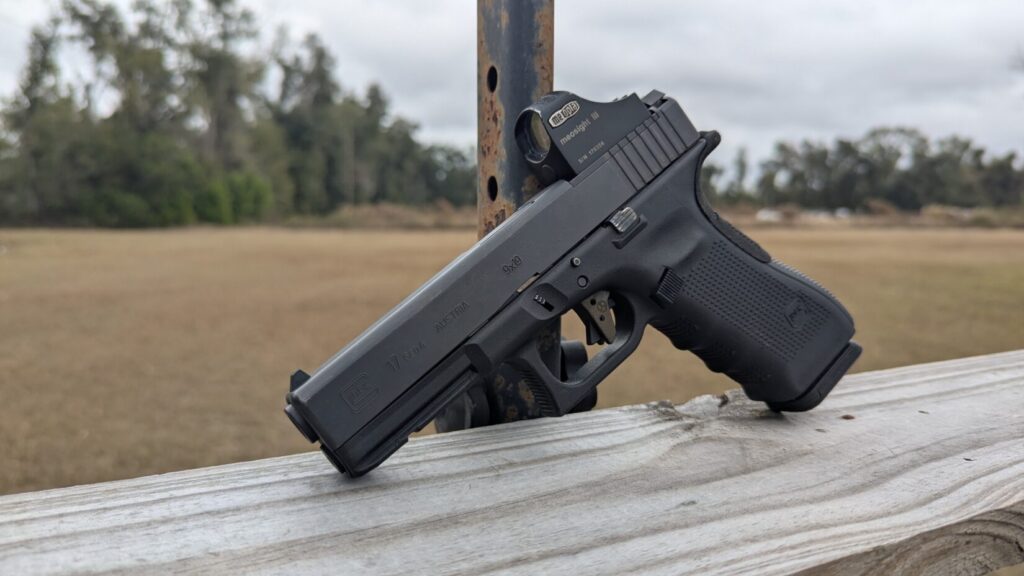
Beyond those issues, both guns have good ergonomics. The HD comes with an ambi-thumb safety, which is the biggest ergonomic difference many people will notice. The HD’s controls are larger and easier to access as a whole.
The Shootout
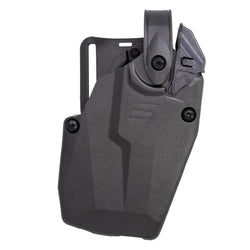
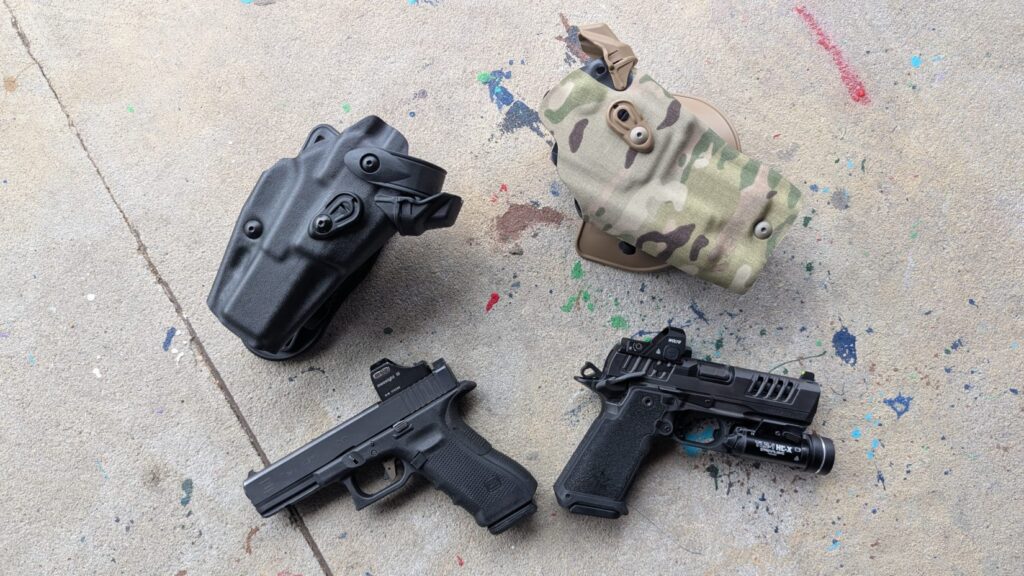
The real difference that matters is how the two guns perform at the range. That’s where we can see the difference most people are going to take into account. For this range review, I used two Safariland retention holsters. The Glock holster is a Level 3, and the Staccato holster is a Level 1.
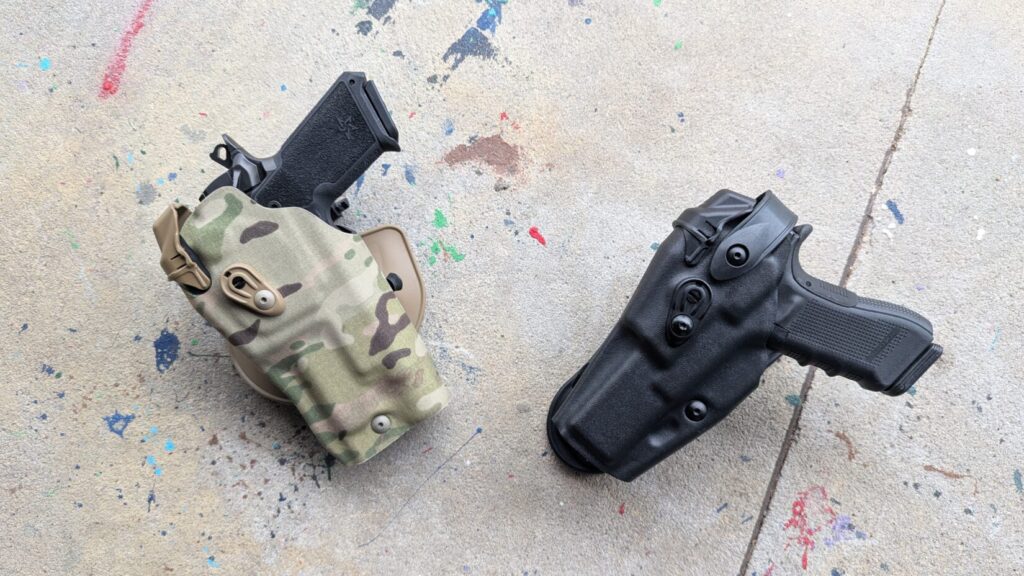
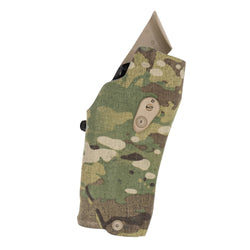
To keep things fair, I disabled the SLS device and drew the guns using the ALS mechanism only. I used the exact same ammunition, and each gun has a red dot sight mounted. I aimed to keep everything externally as fair as possible.
Raw Accuracy
The accuracy test was simple. I’d fire five, five-round groups, at 15 yards and observe. Prior to shooting for groups, I checked the red dot zeroes.
Without any semblance of doubt, the Staccato HD is the more accurate gun. The bull barrel, light trigger, and excellent grip are all working in its favor to deliver tighter, more consistent groups. As you can see, the groups never exceeded the nine ring.
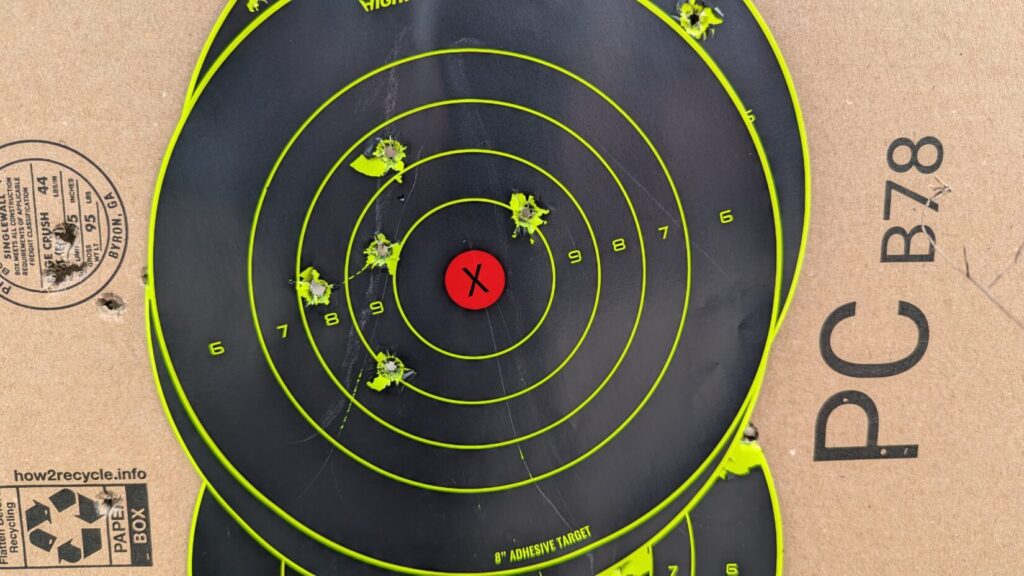
The Glock 17’s groups made their way from one side of the nine ring to the other side of the eight ring.
Beyond shooting for groups, I took both guns to the 25-yard line and shot at a 10-inch gong, and shot from the holster. A simple draw, shoot, and recover using a shot timer.
At this range, both guns performed well overall. I didn’t note any major differences in time or accuracy between the two.

I went back to 50 yards and engaged an IPSC target. The Staccato had a minor advantage. I landed 10-for-10 with the Staccato HD and 8-for-10 with the Glock 17.
Reloads And Failure Drills
The next drill involved several “fire one, reload, fire one” drills. This was a test of the gun’s ergonomics and controls. I repeated the test 10 times with each gun.
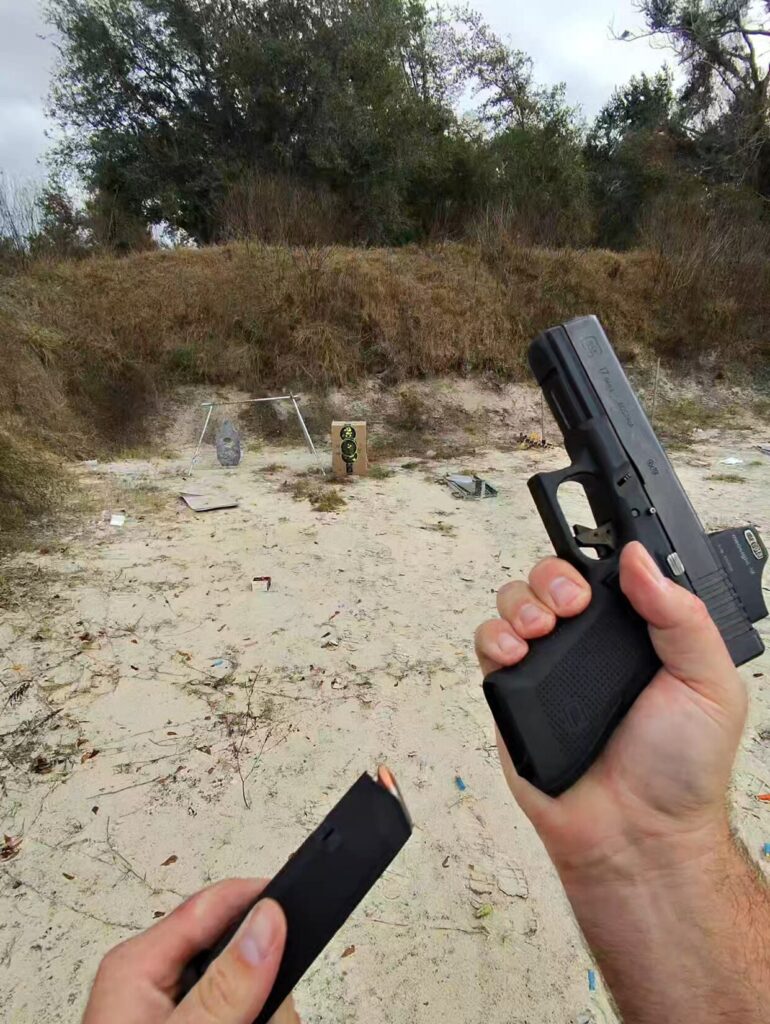
At first, I was faster with the Glock 17 when everything went right. I would run into situations where my forward thumb would pin down the slide lock, preventing it from locking open and slowing my reload. Additionally, sometimes the Glock OEM magazine would require a shake to make it drop from the grip.
With the Staccato, I gained speed when I finally started using the massive slide release. I never pinned it down. I made using the slide release part of my reload, and it would ultimately be about .20 to .25 of a second faster than the Glock, consistently.
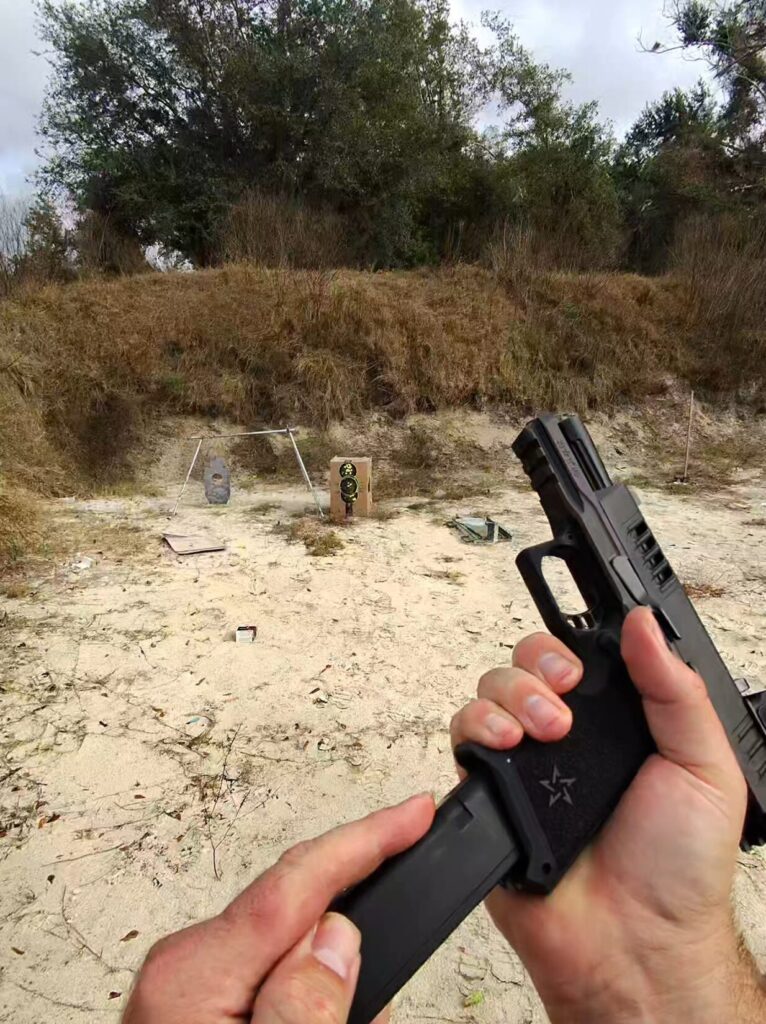
Another benefit of the Staccato is that it freely drops magazines whenever you press the button. The HD magwell also helped speed things up, letting me go a little faster and a little more recklessly to get the magazine into the gun.
Bill Drill
The next drill was the classic Bill Drill. You draw from the holster, fire six rounds into an IPSC-sized A zone at seven yards. I went to the range without A-zone targets, so I swapped in B8s and figured it was good enough for the test.
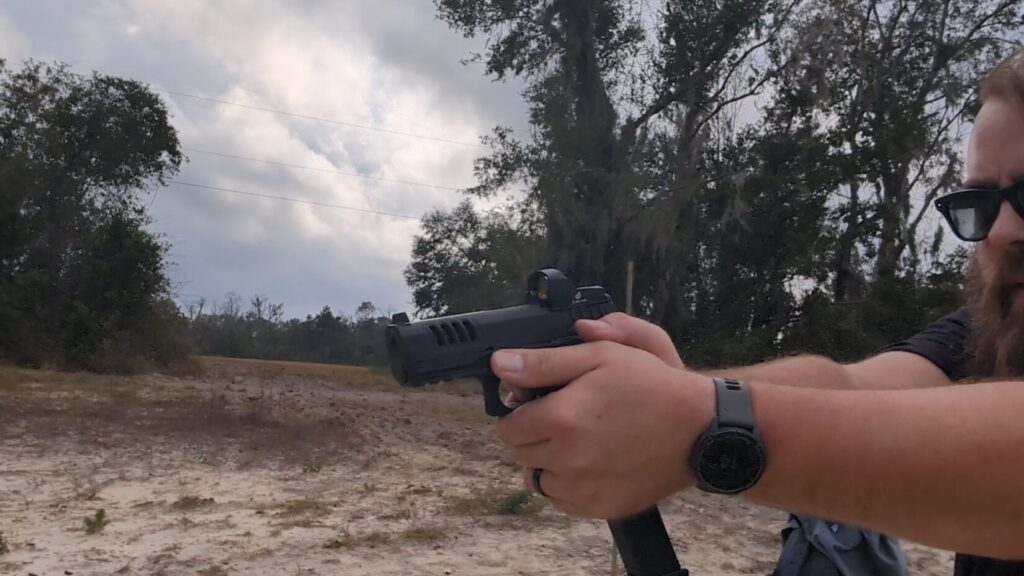
The Staccato outperformed the Glock by a fair margin. From a cold start, I achieved a 2.57 with the Glock 17 with the ALS holster. The Staccato HD gave me a 2.23 with an ALS holster.
I kept running the drill, mainly because it was fun, but the results were about the same. My time decreased more with the Glock, but incremental changes with the Staccato dropped me in the 2.12 realm.
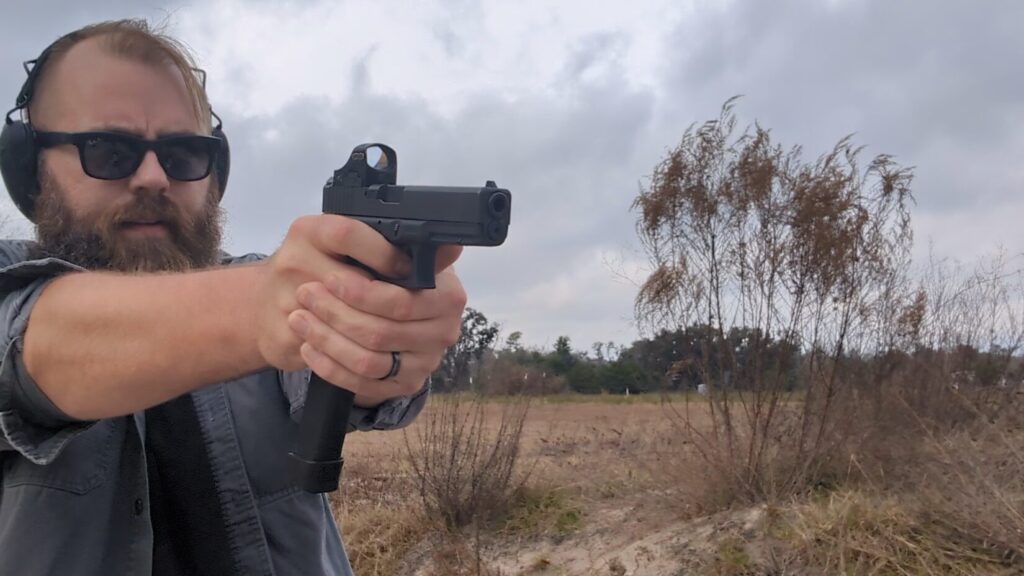
That big, thick grip, the aggressive texture, and the rather light-sprung nature of the Staccato keep it from dipping as the slide returns to battery. The HD’s thick grip and texture make it easier to control and help reduce and counter recoil.
Reliability
I’ve owned the Glock for years, and the Staccato HD for a few weeks now. I’ve been shooting the Staccato between reviewing the gun and writing this article; it’s fired over 700 rounds. I’ve had zero failures with either gun. I cannot recall a single issue with the Glock that wasn’t ammo-related.
The Difference
The Staccato offers you a better gun. The choice you’ll have to make is whether the higher price is worth what it offers. The Glock 17 is a proven and capable handgun, with decades of service, and it’s more than adequate for duty and self-defense. In fact, I’d happily carry either and know it’s enough gun to get me home at the end of the day.
With that said, after shooting the Staccato, I don’t want to go back to other guns. The design, its performance, and the trigger make it addictive to shoot. If money weren’t an issue, it’s Staccato all day.