

We’re back with another Second Amendment update to mark the end of 2025. A lot has happened since our last check on the Amendment that guards the rest, with news about the Justice Department, Bureau of Alcohol, Tobacco, Firearms, & Explosives (ATF), the court system, and some state news.
Some of this is happening right now, while other topics project into 2026. We’ll begin with the most immediate.
The ATF
Thanks to last summer’s Congressional budget reconciliation, the process for purchasing National Firearms Act (NFA) items is changing. Congress reduced the tax on NFA items like suppressors and short-barreled rifles and shotguns (SBR and SBS) from $200 to zero. That reduction takes effect on January 1, 2026. Any NFA item purchased up through December 31, 2025 still requires the $200 tax stamp. But if you wait, that requirement goes away.
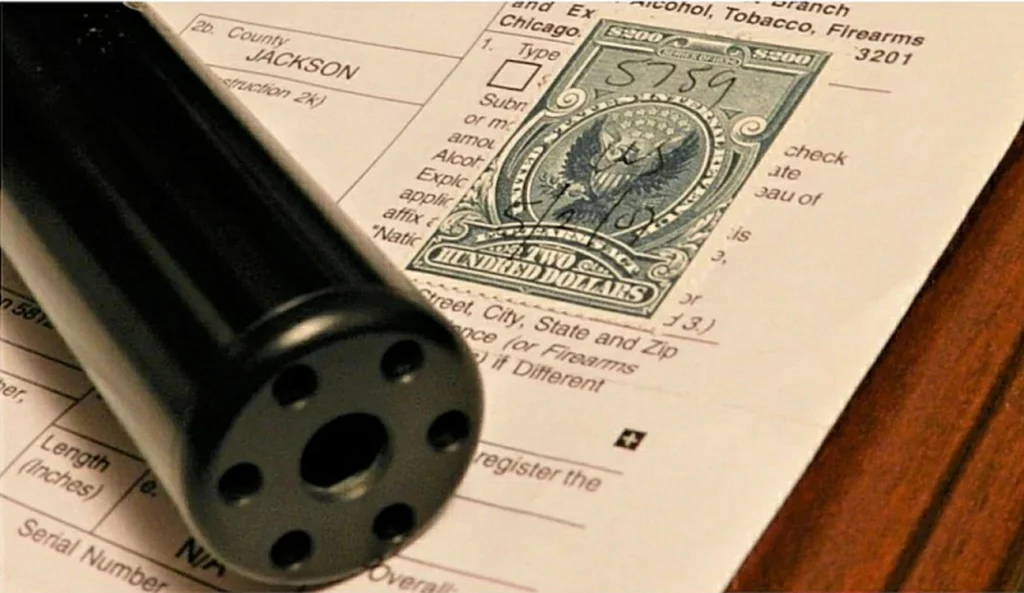
Congressional Republicans tried to do away with the ATF’s NFA registry as well, but the Senate Parliamentarian disallowed it due to restrictions on reconciliation bills. So, even if you buy an NFA item after January 1, it will still be in the registry, meaning you are required to fill out ATF Form 4 as part of the purchase process.
The ATF has announced a temporary shutdown of the e-Form process beginning at midnight on December 26. The shutdown is necessary to update the system to reflect the new policies, as well as to clear any backlog of current applications. We do not know how long the e-Form system will be down. Expect longer than usual approval times once it returns, however, since ATF expects a surge in sales. Current e-Form approval times range from 3 to 6 business days, but that will likely increase for early 2026.
A Pro-2A Director?
President Trump has nominated Deputy Director Robert Cekada as the ATF’s new permanent Director. Cekada is a former NYPD and Plantation, Florida, cop and has been with the ATF since 2005. He has worked as an Assistant Special Agent-in-Charge and Special Agent-in-Charge in Philadelphia, Baltimore, and Miami.

Gun rights groups are cautiously optimistic about Cekada, with many believing he could be the first Director who holds pro-2A views. That remains to be seen, but the agency itself is structurally the same, so it bears watching. Senate confirmation hearings have not been scheduled for Cekada and will likely not happen until early 2026. Even if Cekada is what we hope, a new administration could turn the ATF’s policies on a dime.
The Justice Department Sends Mixed 2A Signals
The Department of Justice (DOJ) opened the 2A Rights Section of the Civil Rights Division on December 4, 2025. The new section’s stated purpose is to investigate state and municipal laws that infringe on citizens’ Second Amendment rights.
The section has already announced lawsuits against Los Angeles County and the US Virgin Islands for their concealed carry license processes, which take way too long to issue permits to qualified applicants. The Virgin Islands process is particularly egregious, requiring home inspections before issuing a permit. It has also sued the state of Hawaii over its so-called “Vampire Law,” which prohibits licensed concealed carry on private property unless the property owner gives explicit permission to do so. Given Hawaii’s anti-gun stance toward public property, the law makes concealed carry all but impossible. Finally, the new section is suing Washington D.C. over its AR-15 ban.
On the Other hand
The new section’s purpose seems contradictory to some of DOJ’s other actions. The NFA has always been on shaky Constitutional ground, but the self-proclaimed “most 2A-friendly Justice Department in history” is vigorously defending it in court.
One could argue that the DOJ is obliged to defend laws passed by Congress and allow the courts to settle the question. But prosecutorial discretion exists, as does the discretion to defend lawsuits brought against the government. DOJ recently accepted amicus briefs filed in support of the NFA by the Brady Campaign to Prevent Gun Violence, Everytown for Gun Safety, and the Giffords Law Center. Those are three of the country’s most virulent anti-2A organizations.

Even more suspect is the inaccurate premise those briefs advance. They claim that Congress chose to keep the NFA firearms registry when it eliminated the $200 tax stamp. The point is extrapolated to state that Congress did so in recognition of the especially dangerous nature of suppressors, SBRs, and SBSs. That statement is untrue since only the Senate Parliamentarian’s ruling prevented the registry’s elimination. The briefs further exaggerate the role those items have played in criminal activity, citing only two examples and no supporting documentation for their claims.
The appellate courts recently ruled that the NFA is Constitutional due to Congress framing it as a tax measure. That ruling was appealed, but the Supreme Court has declined to take it this session. That doesn’t mean that the High Court will not accept the appeal in the future.
Despite its claims and some good news, the DOJ’s attitude toward the Second Amendment is still in question.
The 2A in the Supreme Court
The Supreme Court is currently looking at cases for its next term. Several prominent 2A cases are being considered, though none have yet been accepted.
Duncan v. Bonta is the California magazine ban that has been up and down the judicial ladder so many times that it’s wearing out the rungs. The Supreme Court sent it back to the 9th Circuit for reconsideration in light of the 2022 Bruen Decision, but that court predictably upheld the ban. It seems the High Court will have to accept it now, but this court has been cagey with 2A cases and only takes about half the overall number of cases that its predecessors did. Gator’s Custom Guns v. Washington is another magazine ban case under consideration.
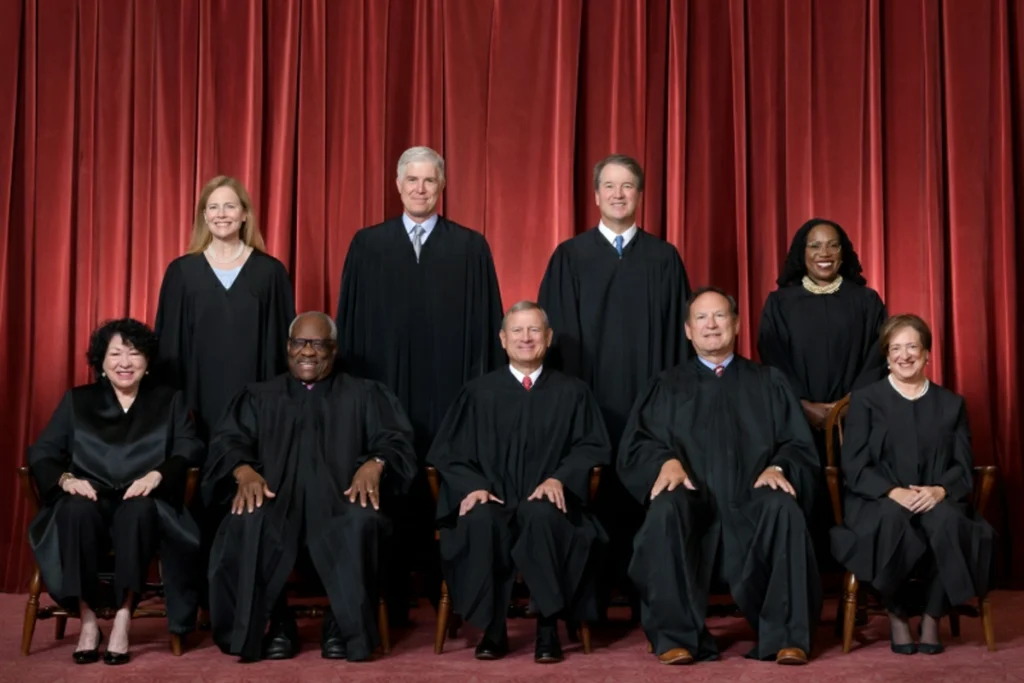
The Supreme Court has long put off accepting an “assault weapons” ban (AWB) case. It seems like it must do so this time but, again, one can’t predict this Court. Viramontes v. Cook County challenges the Illinois AWB and seems the most likely right now. Some believe it will be consolidated with two cases challenging a similar law in Connecticut. Justice Brett Kavanaugh implied last year that he believed the Court was ready to take such a case this time.
The Court has already denied a case challenging the NFA’s SBR regulation and a suit seeking to declare a fundamental right to purchase a firearm.
There are currently 72 suits challenging the ban on firearms ownership for non-violent felons. Those cases will likely be consolidated in some way, but their acceptance remains to be seen.
State 2A News
There’s always something brewing in various states. We’ll look briefly at what’s going on in New Jersey, Missouri, and Virginia.
New Jersey
New Jersey has long been among the nation’s most anti-gun states. Attorney General Matthew Platkin leads the charge, threatening lawsuits against gun companies for any perceived reason, real or imaginary. The state responded to Bruen by making nearly the entire state a “sensitive place,” where guns were not allowed.
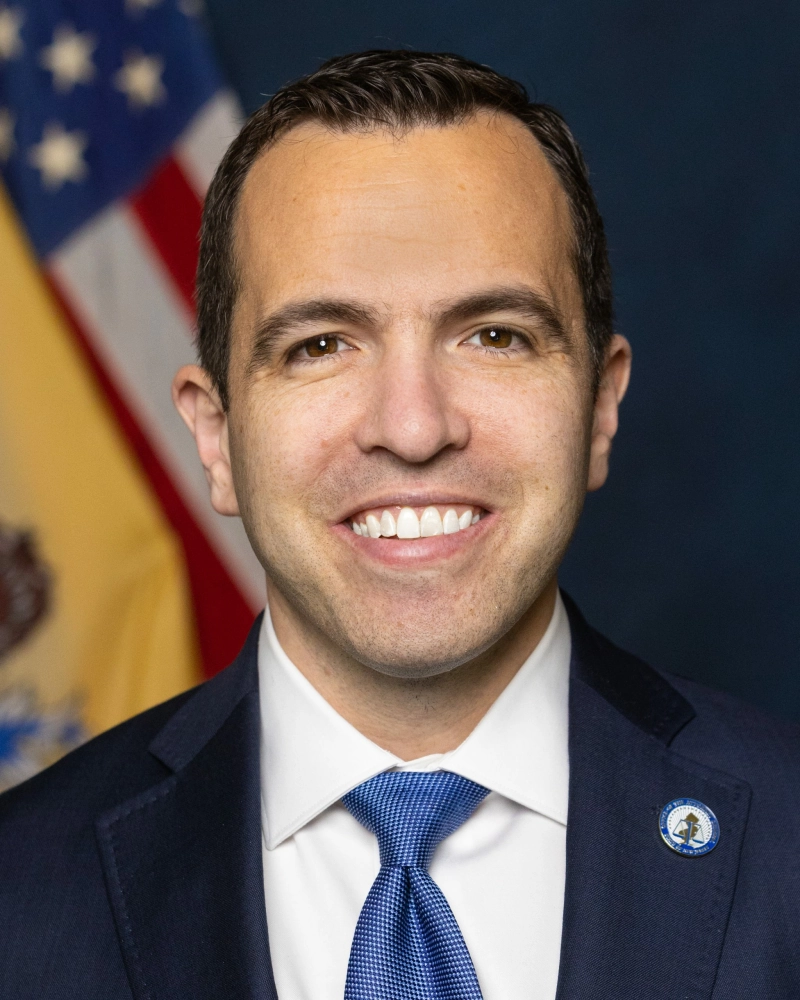
But the Second Amendment Foundation (SAF), supported by the NRA, has filed suit in Koons v. Platkin. A federal district judge issued an injunction blocking the sensitive places law, but a three-judge panel from the 3rd Circuit blocked the injunction. The 3rd Circuit, however, has now granted an en banque hearing by the entire court, which supposedly has an 8-6 conservative majority. We should not rely on supposedly “conservative” appeals court judges, but this case bears watching.
The 3rd Circuit also heard Cheeseman v. Platkin, which challenges New Jersey’s AWB in October. We still await the ruling on that case.
New Mexico
The 10th Circuit has refused an appeal regarding New Mexico’s 7-day waiting period for firearms purchases. A federal district court judge ruled the waiting period law unconstitutional, which was upheld by a 3-judge panel from the 10th Circuit. New Mexico appealed, requesting an en banque hearing by the full court. That appeal was denied, meaning the original ruling will stand, pending a possible appeal to the Supreme Court. This ruling could be very good news to gun owners in states with waiting periods.
Missouri
Missouri enacted the 2021 Second Amendment Protection Act (SAPA) in response to the Biden Administration’s anti-gun rhetoric. SAPA prohibited state and local law enforcement from aiding federal agents whom they perceived to be violating Missourians’ 2A rights. Doing so could result in a $50,000 fine and open the officer up to civil liability.
The Biden DOJ immediately sued, claiming that SAPA prevented federal agencies from enforcing federal gun laws. That is technically incorrect, as SAPA merely prevented state and local agencies from assisting the feds. The Trump DOJ continued the suits, and SAPA was struck down as unconstitutional. Missouri legislators are reportedly working on a new SAPA with different language.
Virginia
Democrats recently swept the Virginia state elections and strengthened their hold on the legislature. Outgoing Republican Governor Glenn Youngkin vetoed over 30 gun control bills in each of the last two years. But Governor-elect Abigail Spanberger has stated that she will sign those bills should they reach her desk in 2026. Spanberger has a clear anti-2A record in Congress.
Democrats have been low-key about their anti-gun efforts so far, hoping to avoid a repeat of the estimated 50,000 gun rights supporters that descended on the state capitol in 2020. But they are quietly pushing a permit-to-purchase scheme: an AWB that will include pistols, magazine restrictions, and expanded Red Flag laws, among others.
Those bills will pass and they will be signed into law. Virginia’s gun owners find themselves hoping for some fortuitous Supreme Court rulings next year and perhaps an intervention from the DOJ. Being a Virginian myself, I find those hopes rather precarious.
Final Thoughts
The Second Amendment has been rebounding lately. The Heller, McDonald, and Bruen Decisions were enormous wins. But the anti-2A movement is relentless. Even if the DOJ eventually lives up to its claims, a new administration may reverse any gains that are made. And certain states will never stop their quest for civilian disarmament.
The euphoria from Bruen has mostly faded. We must recognize that this fight will never be over. Eternal vigilance is required. But that vigilance is not limited to the Second Amendment. Be aware of your rights and be ready to defend them. Because once the statists take them, they never come back.