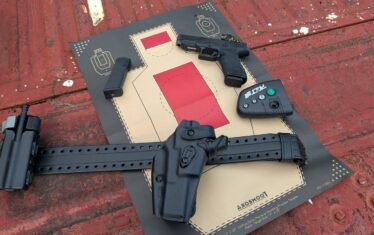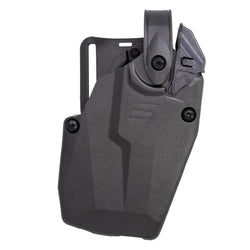
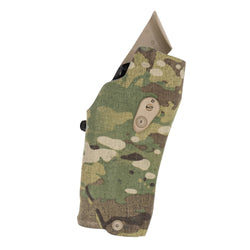
The ALS/SLS Level 3 retention system is the best in the world at keeping your gun in your holster. It provides three movements of physical deterrence that make it difficult for anyone else to take your gun, while making it easy for you to draw. It’s an extremely capable system, but it’s not magic.
The possibility of someone taking your gun always exists. Using the ALS/SLS system is just one crucial step in making sure your gun doesn’t become someone else’s gun. Weapon retention goes beyond your holster.
It’s a continual tactical process that requires a mix of holster safety, mental preparation, and physical control. Proper retention isn’t just relying on the holster; it’s controlling the environment.
The Psychology of Retention
A bad guy who wants to grab your gun doesn’t see it as your gun. He sees it as community property. That’s the mindset you have to adopt to begin to control the environment.
There is also an “It won’t happen to me” mindset you must overcome. Safariland’s retention holsters have reduced successful attempts by a significant margin. In the 1980s, up to 15% of officers killed in the line of duty were shot with their own service firearm.
Over the past 40 years, that number has declined to about 8%. If you’re stuck in that “it can’t happen to me” mindset, go watch bodycam footage of it happening and see if it changes your mind.
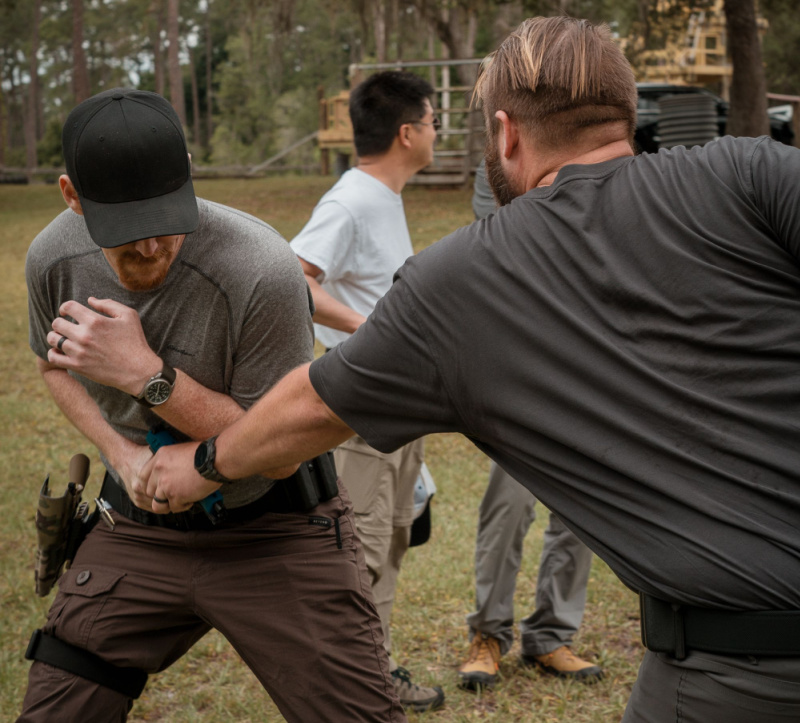
According to NIH research, officers who are disarmed during an encounter have a more than 2-fold increase in the attack resulting in a fatality. FBI statistics show that a high percentage of officers killed in the line of duty with firearms are at a distance of zero to five feet, meaning that most threats occur within reaching distance.
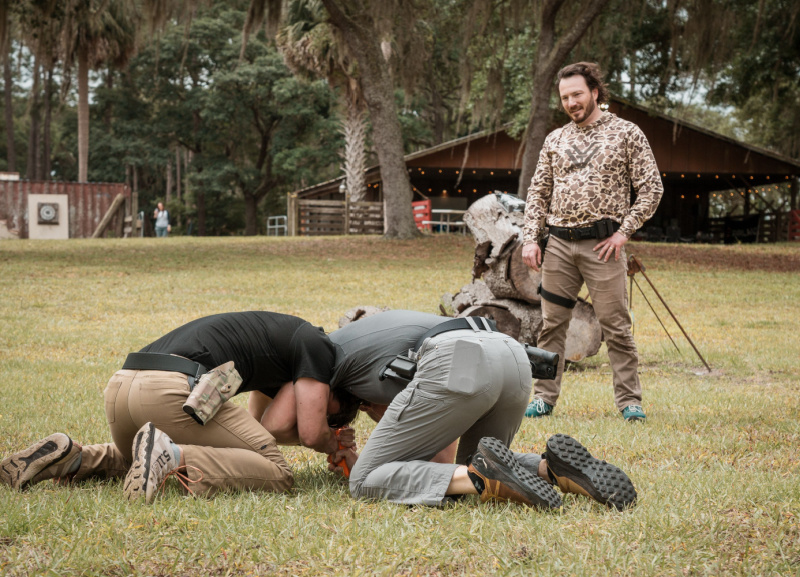
For that reason, we employ proven retention systems, modern holster designs, and duty belts. That’s the equipment side, and it’s critical. However, so is the mental game of making sure your gun doesn’t become community property.
Situational Awareness
Having your head on a swivel and existing in Condition Yellow can allow you to observe potential threats well before a move is ever made. Being aware of your surroundings ensures you are watching your own back and that you have an advantageous position at all times.
You need to be aware of people behind you and to your sides at all times. If you never see the grab coming, then you have less of a chance of resisting it. Being situationally aware even means being aware of your surroundings when you’re engaged with the public, driving, taking a break, etc.
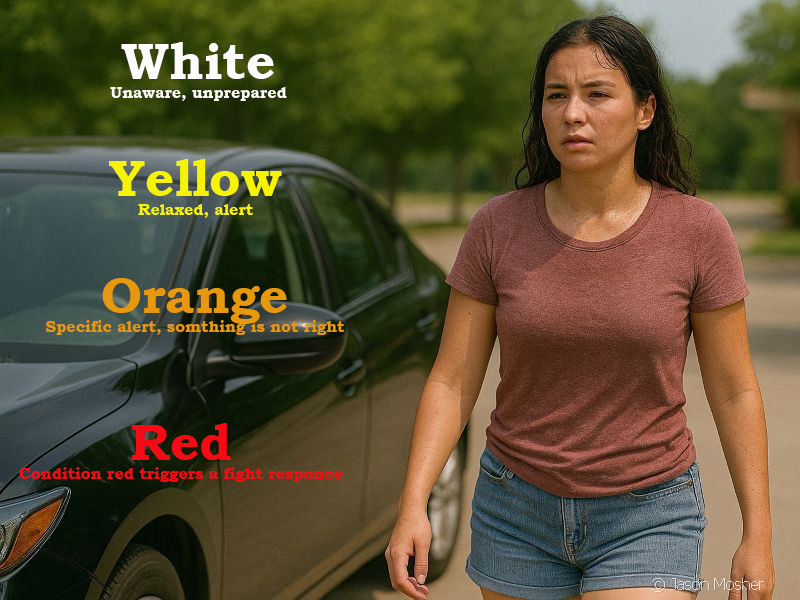
You should use situational awareness to identify pre-attack indicators. These are behaviors an individual might show that signal they are preparing to attack and potentially take your firearm. Identifying these indicators allows you to de-escalate, reposition, or prepare yourself.
Pre-attack indicators include:
- Bladed Stance
- Target Glancing
- Weight Shifting
- Clenched Fists
- Removing Jackets, Glasses, etc.
Pre-attack indicators need their own article, but these are the most common ones you’ll see.
If you have a firearm in your possession, you owe it to yourself and to your community to remain situationally aware at all times.
Distance and Retention
If a high percentage of police officer deaths occur at zero to five feet, that tells us that distance can be our friend. If an attacker can’t reach you, they can’t reach your gun. In a tactical situation, that distance is known as the reactionary gap, and when you’re situationally aware, you can adequately create that gap between you and others.
Distance is time, and time is decisional currency. If we can maintain a safe distance from suspects, we are already a step ahead. If they violate that distance, we have time to react and decide what to do.
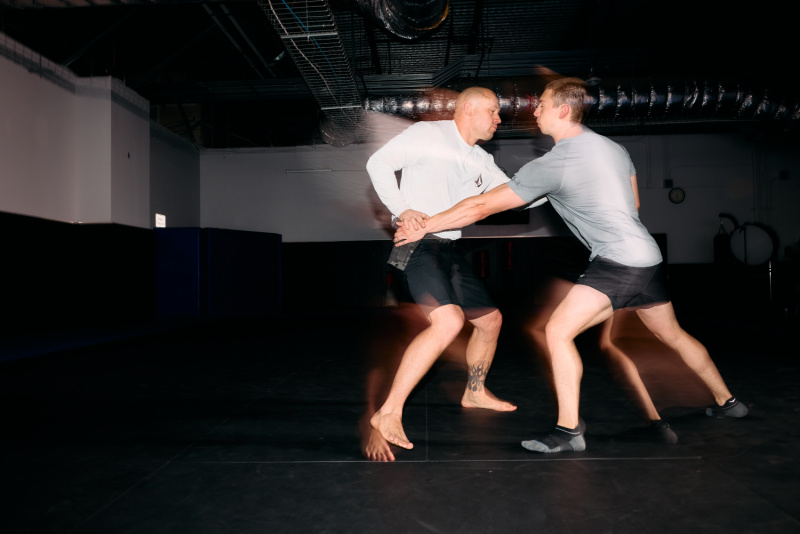
One tactic I’ve been a fan of is putting a hand up to signal someone to stop, to keep that one-arm distance at a bare minimum.
One of the most basic tactics we can use is the interview stance. This casual position blades the officer with the strong side and firearm away from the offender. Their body sits between the gun and the potential bad guy.
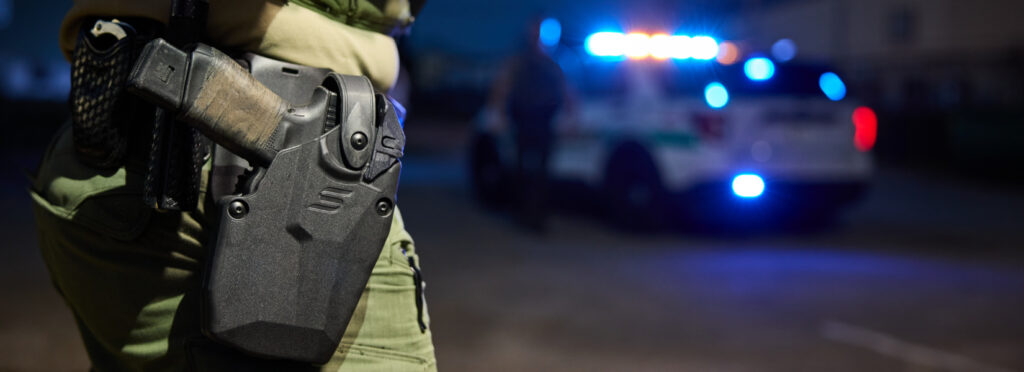
Making this an automated response allows the officer to remain non-threatening, but to react to an attempted grab with ease.
Controlling the Environment
The world is your oyster in a tactical situation, so exploit it. If you are speaking with someone who might be a potential suspect, use the environment. Put barriers between you and them.
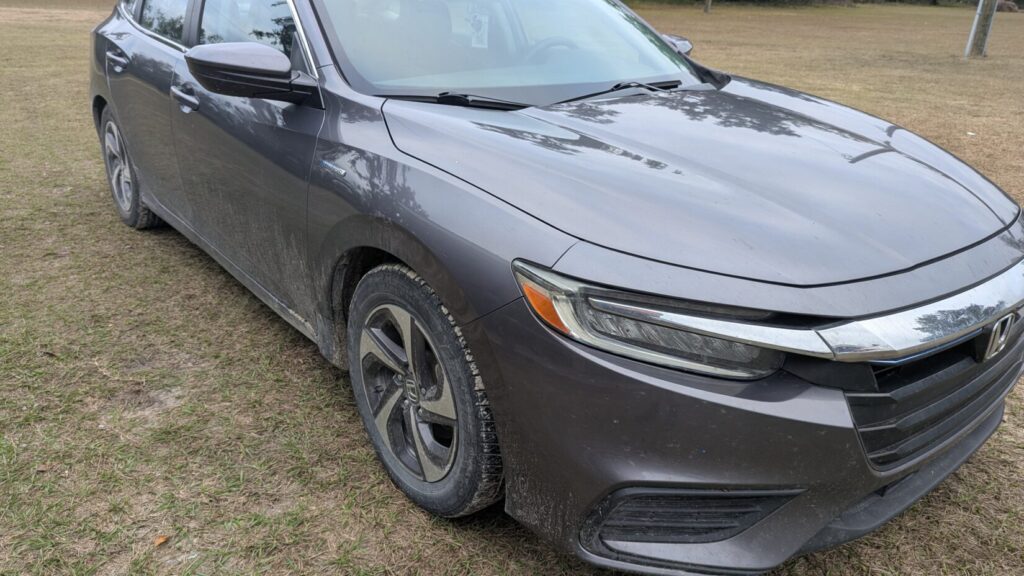
Barriers could include a patrol car, a table, an office chair—anything they have to get around to get to you buys you time, and again, time is decisional currency.
Barriers make accessing you physically difficult, which makes a grab physically difficult. Using a barrier should be part of your common tactics when you’re unsure of the situation. Barrier use isn’t necessarily cover; it’s just something physical between you and a potential threat.
If a situation deteriorates and someone appears to be moving toward you, you need to know when to reach for your gun. Your hand serves as an additional retention mechanism to keep the gun in the holster.
This position will provide additional psychological deterrence because you’ve now prepared for a draw. While positioning your hand on your gun, you can issue commands to create distance and force a potential attacker into a seated or prone position.
Knowing when to retreat and how to get away from an untenable situation is also critical. Facing multiple attackers, a riot, or a similar situation may call for a tactical retreat to a safe location. This ensures your gun remains where it needs to be and you aren’t overwhelmed.
The Mindset
The retention mindset works hand in hand with your holster’s retention devices. Combining the two makes it extremely difficult to take your gun. Your holster can do a lot, but you, as the user, have the responsibility to ensure your firearm remains in your control.