
Air Force pilot John Boyd created the OODA Loop in the 1970s. It is a decision-making model originally designed for fighter pilots, but the idea is fairly simple, and it’s been widely adopted for nearly everything.
You’ll find it used to describe gunfighting, banking, business, or even packing your lunch. If you’re creative enough, you can try to apply the OODA Loop to anything.
OODA stands for Observe, Orient, Decide, and Act. The most important thing to realize is that while it’s a loop, it’s a nonlinear one.
The Problem with OODA
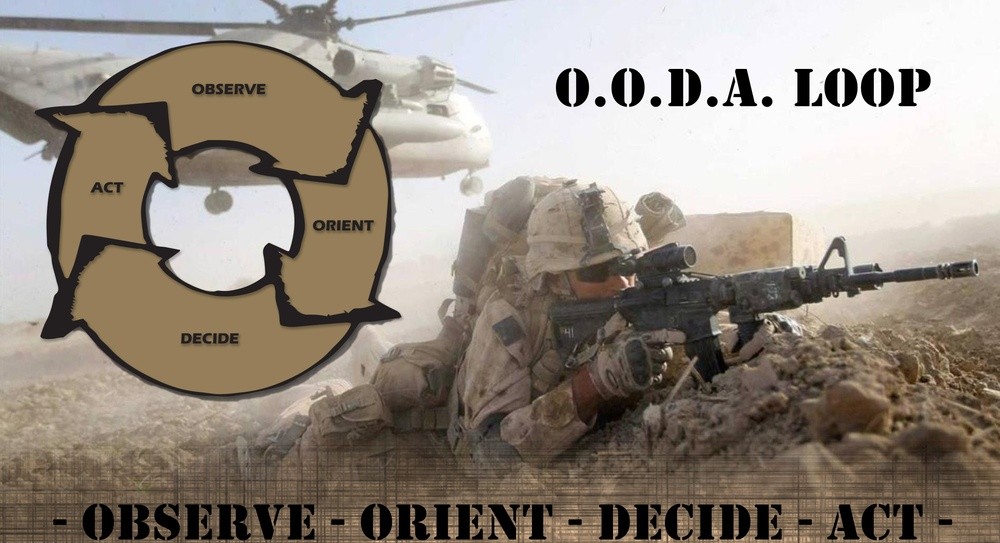
The general public, including myself, often oversimplifies the OODA Loop. Most diagrams present the loop as a circle with Observe, Orient, Decide, and Act as arrows, suggesting you should continually flow from one to the other in a repeating pattern.
However, John Boyd famously drew his own diagram, and it’s a lot more complicated than just a circle and some arrows. It’s important to understand that the loop is a high-level concept often used with great specificity.
This article was inspired by a conversation on social media among a few people I greatly respect: Ash Hess, Frank Woods, and Aaron Cowan.
Observing that conversation challenged me to reevaluate what I knew about the Loop. I read Boyd’s presentations, I looked into neuroscience (which my wife translated into “grunt” terms), and I watched and read experts like Mark McGrath who have extensively studied Boyd’s work.
The Oversimplification of a Loop
The OODA Loop has been radically oversimplified because, as humans, we seek something simple to understand. I learned this oversimplified version in the Marine Corps. If you have to teach a bunch of sweaty recruits the OODA between drill and chow, “simple” becomes a lot more appealing.
You’ll notice in Boyd’s sketch of the OODA Loop that the Orient phase is particularly emphasized; it has several subgroups within it that aren’t just oriented toward the enemy. You are examining everything: your own experiences, biases, cultural norms, and more.
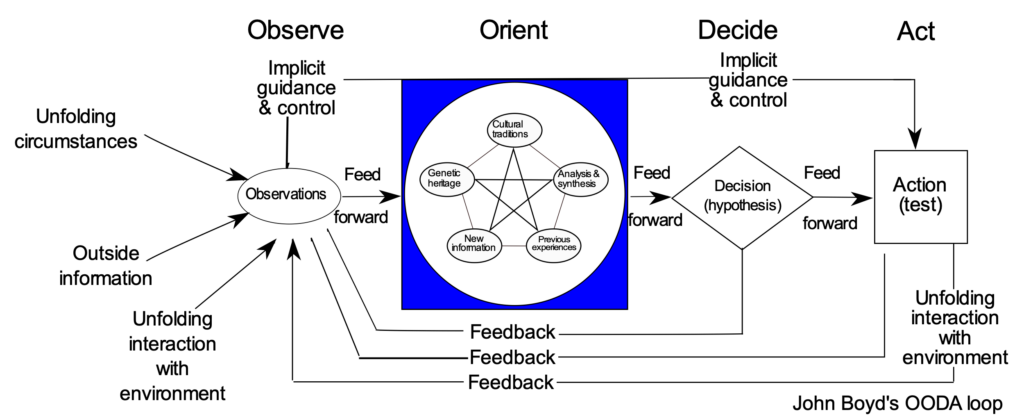
Orient focuses on things you both control and cannot control, including your own brain and how it makes predictions based on experiences. Orientation is something you account for in your decision-making process. According to Boyd, it’s both a constraint and a piece of leverage.
The loop is often portrayed as a linear, step-by-step process, but that’s not how Boyd intended it to work. In a low-stress environment, it’s easy to see the OODA Loop in its simplest form as a linear pattern:
- Observe: I notice my mouth is dry.
- Orient: My orientation tells me I live in a home with running water.
- Decide: I decide to get a glass of water.
- Act: I get the glass of water.
That is a simple, linear method. However, Boyd never intended it to be strictly linear. Can it be? Sure, in simple situations.
Nonlinear Dynamics
In Boyd’s work, the loop is not linear; look at the graph he created. All those lines are constantly shifting between different phases. This idea was best articulated in his book, A Discourse of Winning and Losing.
In the linear model, Orientation comes after Observation. However, Boyd discussed how Orientation influences our observation, our decisions, and our actions. We have a series of feedback loops: Decision feeds orientation, observation feeds orientation, and action feeds both orientation and observation.
Understanding orientation is the key to everything. It’s not the “second step” in a loop; it’s the center of the entire decision-making process. If we improve our orientation through training and experience, we improve every aspect of OODA.
The Human Mind Isn’t Linear
Another important consideration is that the human mind isn’t capable of performing this linear process in high-stress environments. Part of our brain is wired to react.
For example, if we are standing next to each other, having a chat, and I throw a punch at you, what will you do? You might throw your hands up, turn away to save your face, or jump backward. You aren’t going through a “loop” to do this.
Your body is doing it instinctively as a form of self-preservation. This is a response that occurs automatically, without conscious thought, as your thalamus sends information to the amygdala.
Action occurs without a conscious decision. Your brain might even force you to do the “wrong” thing, like turning away and giving your back to an attacker, because it prioritizes speed over sounder decision-making.
The Brain Can Act
The same signal received by your amygdala goes to your sensory cortex for more detailed observation. To put it simply, this signal moves more slowly. By the time you start “thinking” about what to do, your sensory cortex has finally received the information.
This allows you to make better decisions and take more effective actions, if that is part of your orientation.

Let’s use another example: you hear thunder suddenly, and you flinch. You didn’t make that decision consciously. The thunder keeps raging, but you don’t flinch again because your orientation has changed. Then the thunder stops. What happens?
Your brain is a predictive machine, generating theories and expectations before anything happens. This connects to the Orientation phase. Your Observation phase generally confirms or corrects those prior generative assumptions.
We expect thunder; it doesn’t come. Now you reorient to the lack of thunder, and your observation is that the storm is over.
Shaping Orientation
Where this becomes important for violent scenarios faced by police officers, soldiers, and concealed carriers is in the orientation. How can we be oriented to make proper decisions and actions?
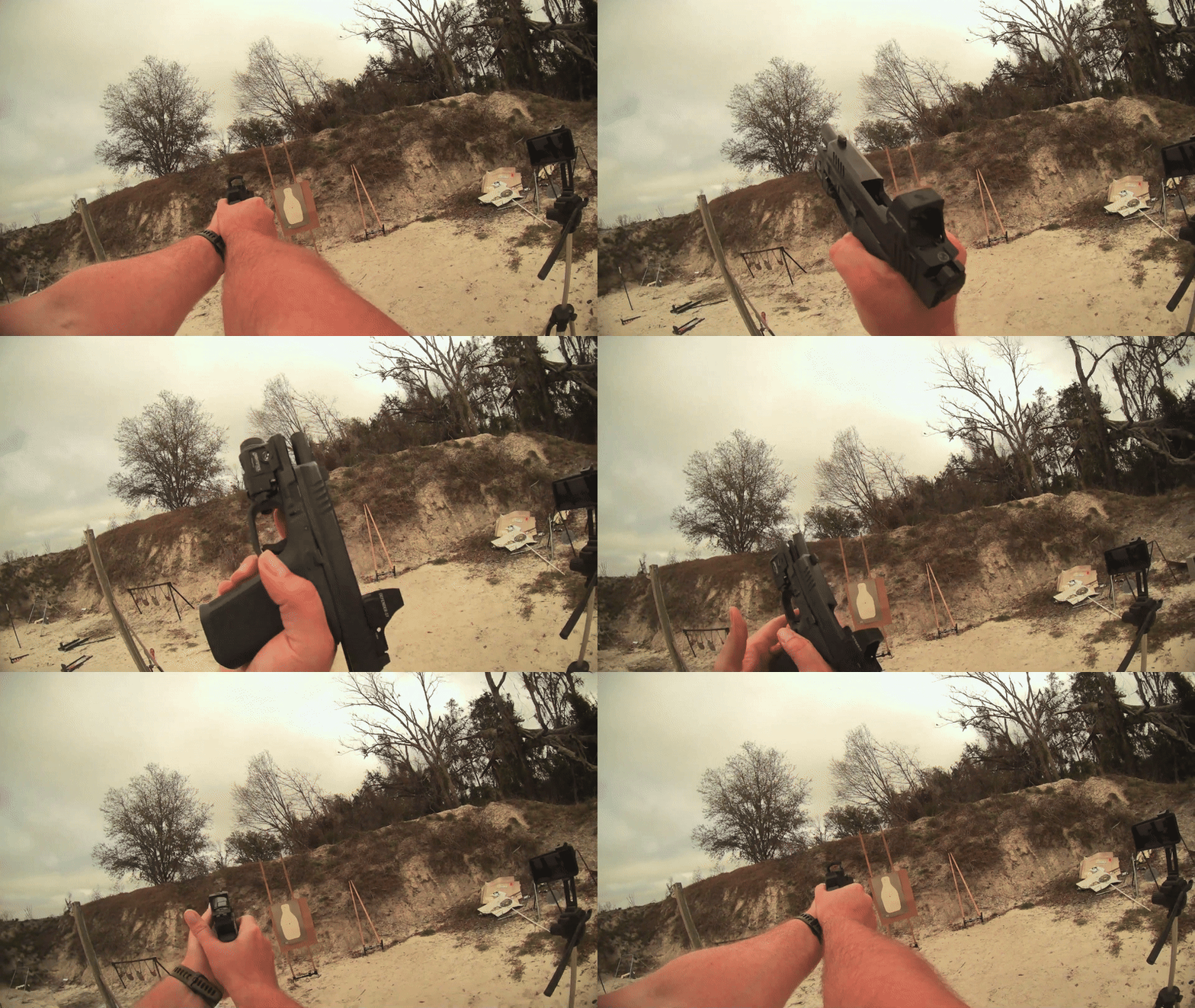
Typically, it’s through training and experience. Experience can be tough to get, but we can all train. Training in pre-attack indicators helps you identify a potential threat sooner. Integrating physical training with firearms training—such as drawing your handgun 100 times a day—feeds your orientation.
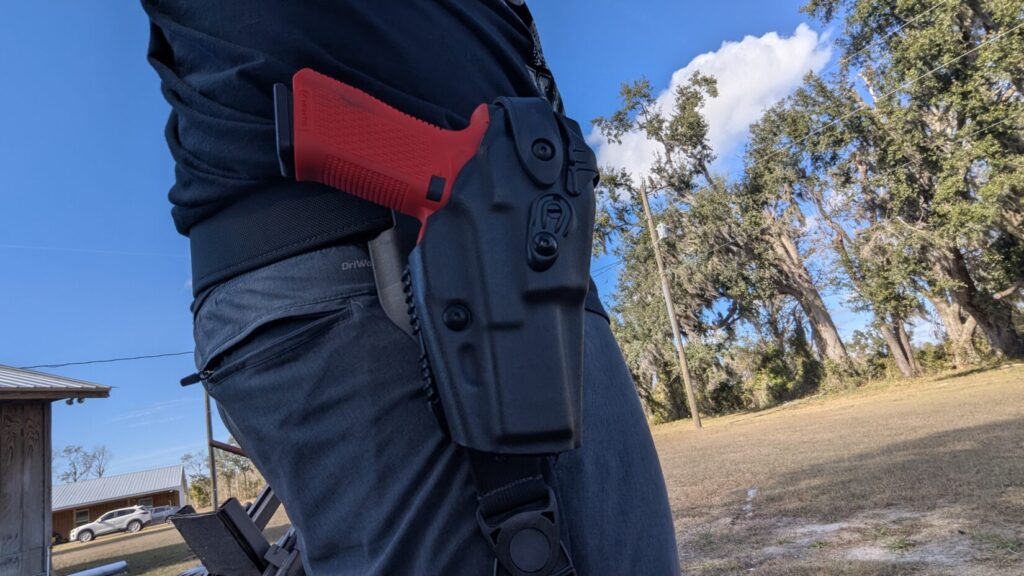
If we have the skills and experience, they become part of our orientation, enabling better decisions and more effective actions. You can mix anything into this: medical training, firefighting, driving, and just about any other skill.
The “Fast” OODA Loop
When people misuse the OODA loop, they focus on moving “faster” to get through the loop before the other guy. In The Essence of Winning and Losing, Boyd discusses the strength of disrupting your opponent’s loop.
You want to disrupt your opponent’s loop by operating within their orientation. You want to prevent them from deciding and acting; instead, you want them to constantly reorient. To do so, you must have the correct degree of tempo and agility.
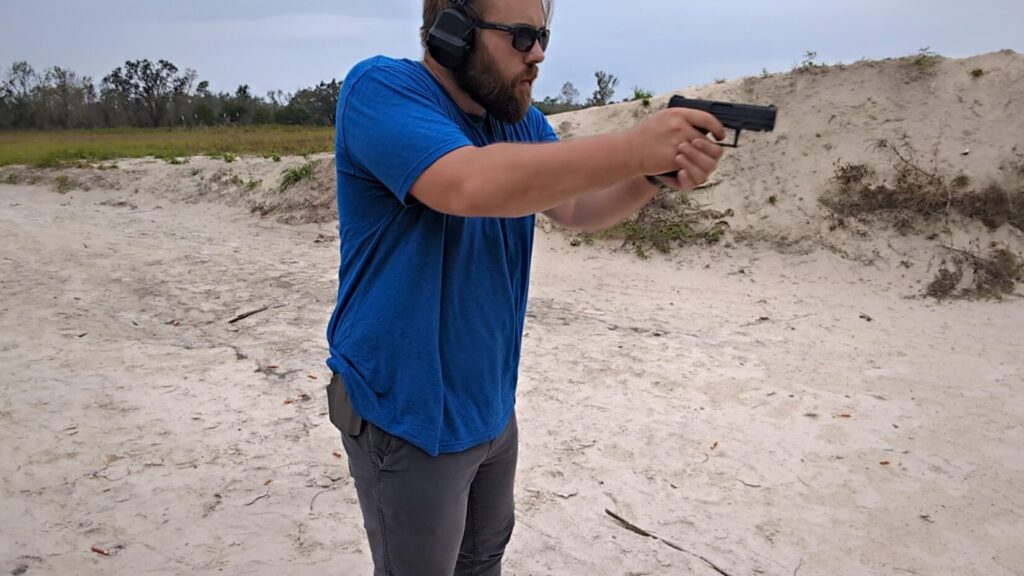
Boyd teaches us that creating novelty and ambiguity are goals that can cause an opponent to overcorrect and collapse. It’s not just running through the loop at speed; it’s making the right decision to take the right action at the right time.
Destruction and Creation
Orientation is everything, and if you want your orientation to succeed, you have to operate in an open system that can react to change. Mark McGrath summarizes Destruction and Creation as:
- We sense, decide, act, and learn based on our Orientation.
- But our perceptions are always incomplete.
- We survive by constantly refining those orientations faster than the world changes.
Boyd saw Orientation as the phase where we “destroy and create” mental models, allowing for adaptation and better decisions.
The Fight
If you’re in a gunfight, how does OODA apply? The idea that it’s as simple as “seeing the bad guy, deciding to shoot, and shooting” is silly. In reality, how can you adapt your orientation to win? What are you doing that the enemy can predict? What can you predict about the enemy?
This is where training and experience come into play. Can making a lateral move to cover disrupt your opponent’s actions? Can attacking from a different angle disrupt them? There isn’t a “magic” decision.
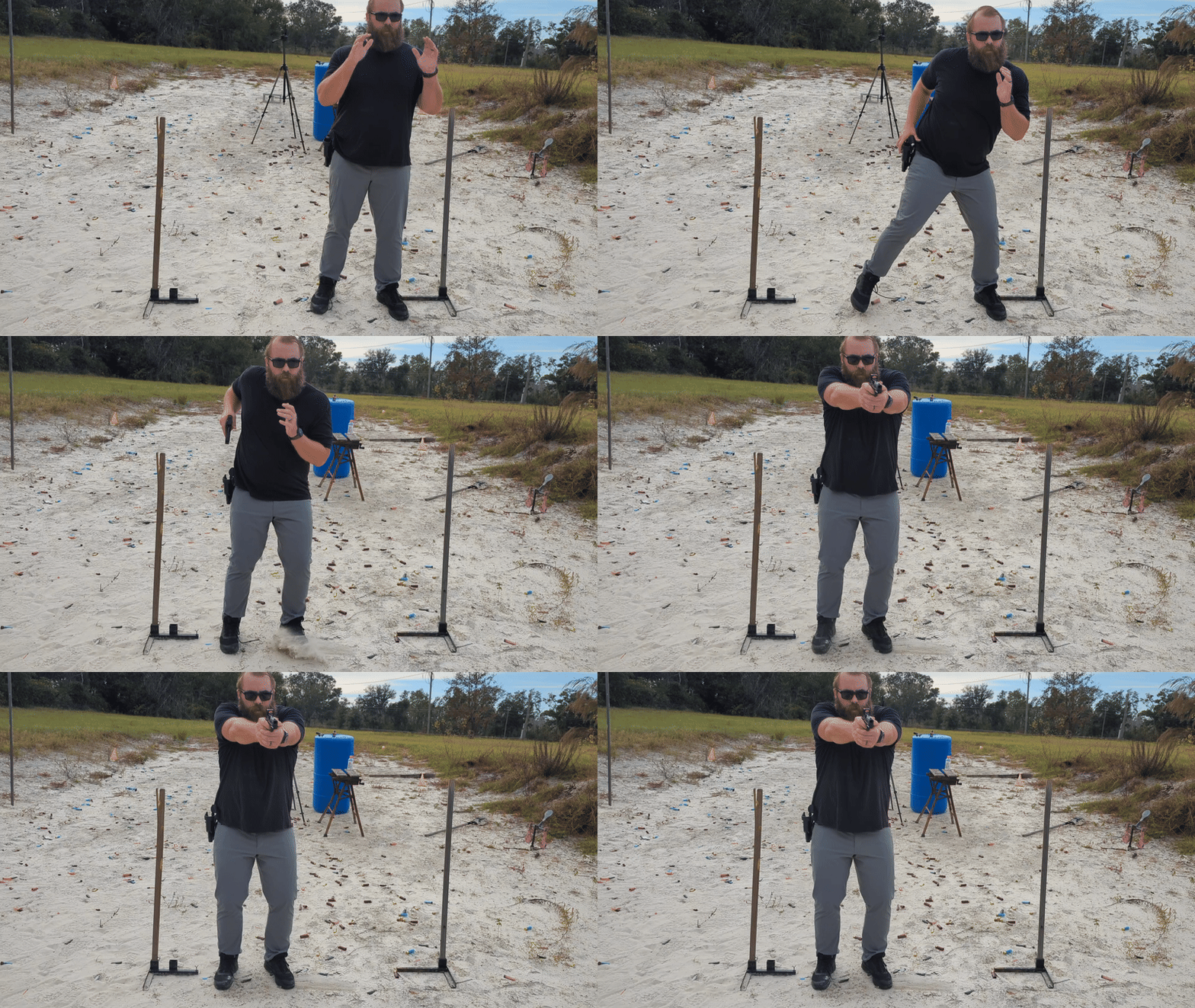
It comes down to your ability to adapt to ever-changing situations. You cannot get bogged down in working through the four steps of a process.
This means being able to efficiently draw your firearm by disabling ALS and SLS components instinctively. Those skills, along with knowing cover from concealment, become part of your orientation.
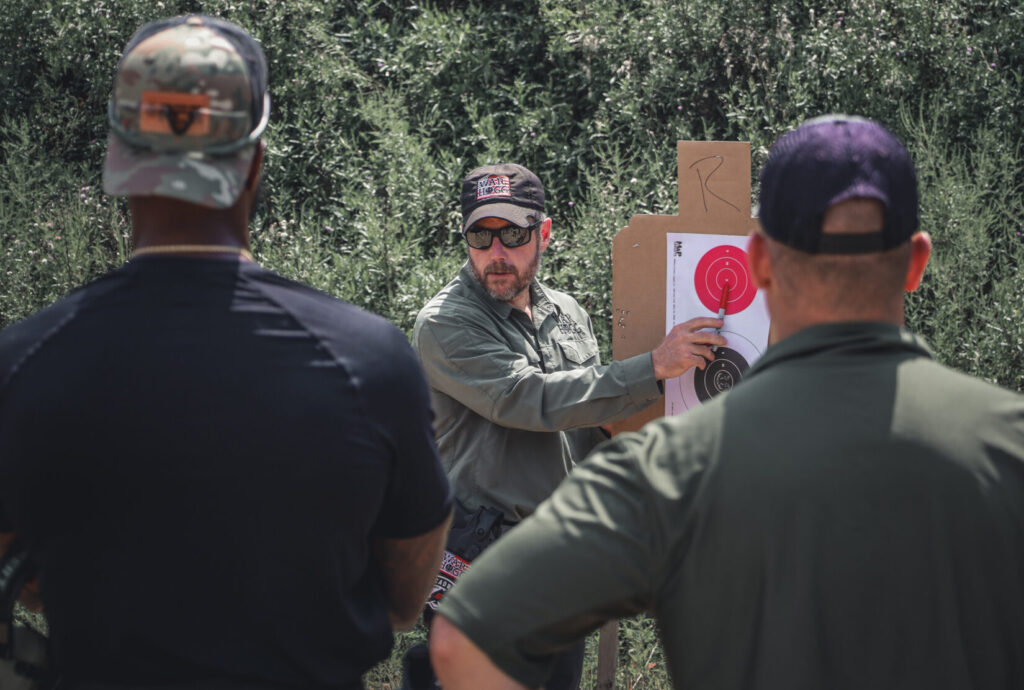
Your goal is to figure out how to shape the environment so the enemy’s orientation collapses. You want to be well-trained to address a threat before a decision is required. We use OODA by shaping our orientation to fuel better actions before a fight ever occurs.
Final Thoughts
If you’re curious about the proper use of OODA, I suggest you read Boyd’s presentations directly. The material is very dense, but widely available. Experts like Mark McGrath have newsletters and podcasts that help explain these concepts in a deeper way.
My own orientation influences this piece of writing. I am no expert, and this is simply what I took from studying Boyd’s work. Because of the complexity, I suggest studying it “from the horse’s mouth” whenever possible.