
You know, as much as I enjoy chasing shiny new pew-pews and the latest tactical gear, gadgets, and gizmos, one of the best parts of working in this industry is the people you meet along the way. Every once in a while, you run into someone who’s not just proficient behind the trigger but genuinely invested in making the profession better. No ego, no marketing buzzwords or bravado, just results.
That’s exactly what happened when I met with Paul Costa at SHOT Show this past January.
Costa is a career law enforcement officer, the founder of Broken Arrow Defense, and one of those rare dudes who doesn’t mince words or tolerate nonsense. He speaks with the unmistakable edge of a Jersey accent and the confidence of someone who’s done the work, put in the years, and learned a few things the hard way. There’s no sales pitch in his delivery, just clear expectations, high standards, and a blunt honesty that’s entirely too refreshing in an industry often drowning in hype.
And when Costa talks about training, duty weapons, and the future of law enforcement, people tend to listen, because the man means business.
But Paul Costa didn’t build his reputation by becoming an influencer or buttered up brand ambassador. In fact, he’ll tell you outright that none of this was ever part of the plan.
Humble Beginnings
“I just liked guns,” Costa says, almost dismissively. “I didn’t set out to do training, nor did I set out to work with big companies like Walther. And I definitely didn’t imagine I’d be here talking about nationwide law enforcement programs.”
And yet here he is, nearly twenty years into a law enforcement career, founder of Broken Arrow Defense, the face of Walther’s Law Enforcement Training Program, and a respected voice shaping how agencies think about firearms training, performance, and accountability.
What makes Costa’s approach different, however, isn’t just his experience, but rather his perspective. He’s lived the operational reality of policing, has trained alongside some of the most capable shooters and elite tactical units in the country, and has spent years dissecting why law enforcement gunfighting skills often lag behind where they should be. More importantly, he’s figured out how to fix it.
That philosophy now lives at the intersection of Broken Arrow Defense, Walther Arms, and the Walther PDP platform. It’s a partnership that is quietly redefining what “support” actually means when an agency adopts a new duty weapon.
That is to say, it’s less about selling Walther pistols and more about building better cops. You know, the stuff that really matters.
A Career Forged the Hard Way
Costa’s path into training began the same way most law enforcement careers do, with good intentions, limited information, and a lot of assumptions.
His words, not mine.
Like many officers, he entered the profession believing that regular qualifications and periodic in-service training were enough. He shot often. He carried a gun daily. By all conventional standards, he was “trained.”
But over time, especially as he moved into more operationally demanding assignments, Costa began noticing a gap.
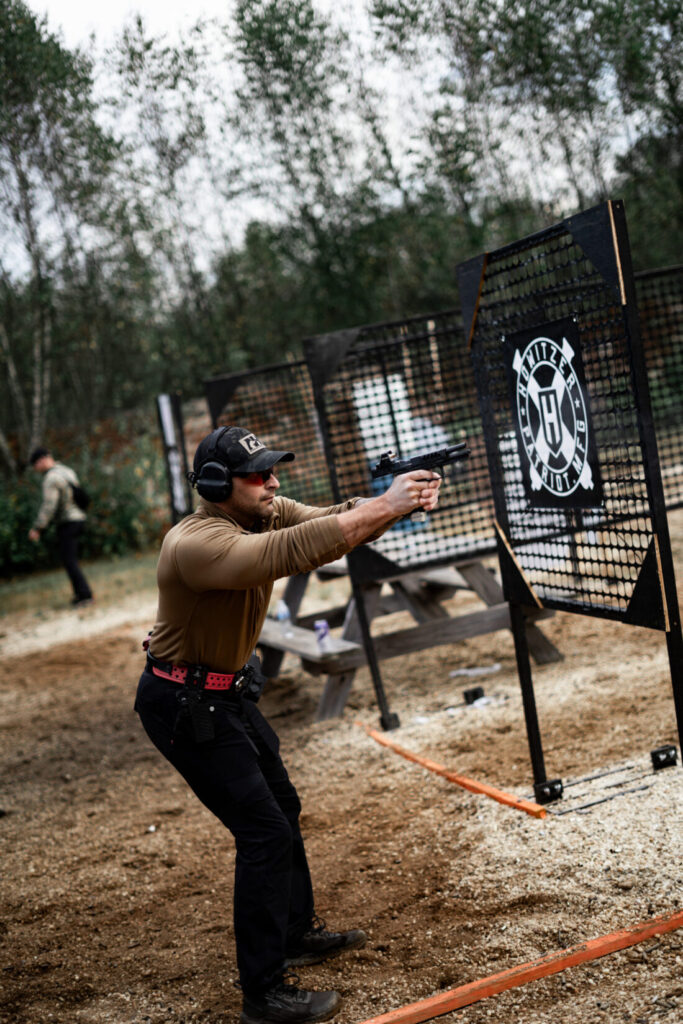
“I was around high-end operators all the time,” he explains. “Guys doing real work in dangerous environments. But when it came to shooting, nobody was really great at it.”
The wake-up call came unexpectedly, during a class he hadn’t even planned to attend.
At the time, Costa admits he had little respect for competition shooting. He viewed it as disconnected from the realities of law enforcement. Games didn’t translate to gunfights. Paper targets didn’t shoot back.
Then he found himself on a range surrounded by plumbers, electricians, accountants — everyday civilians — running stock pistols with a level of efficiency and consistency that stopped him cold.
“They had no reason to be that good,” Costa says. “And they were way better than me.”
That moment changed everything.
Discovering What Law Enforcement Was Missing
Costa didn’t walk away from that experience thinking competition shooters were better prepared for combat. What he recognized instead was something far more important: they were training differently.
“They understood the specific behaviors that actually matter,” he explains. “Grip, pressure, vision, timing… all the things that we just gloss over in law enforcement.”
In traditional police firearms training, instruction often boils down to overused slogans and outdated, fuddy teaching techniques.
“Grip it harder.”
“Don’t think, just shoot.”
“Man up.”
According to Costa, none of that builds repeatable performance.
“We weren’t taught cues or how to self-diagnose. We weren’t taught why something worked,” he says. “Instead, we were told what to do and expected results to magically appear.”
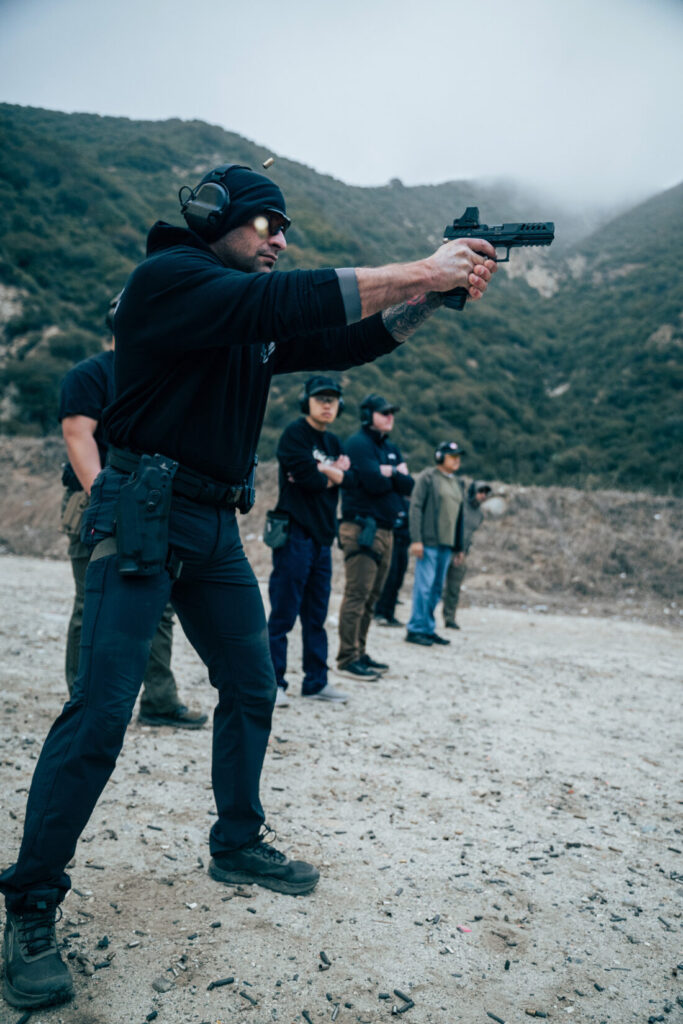
As Costa began exploring competition training methods, attending matches, and dissecting how high-level shooters developed skill, he saw that clarity creates consistency.
That clarity, he says, is missing in a lot of law enforcement training practices.
“There was a void,” Costa says plainly. “And nobody wanted to admit it.”
Broken Arrow Defense: Not a Game, Not a Gimmick
Broken Arrow Defense was Costa’s answer to that void.
The mission wasn’t to turn cops into competitors. Quite the opposite, really.
It was to give them access to performance-based shooting fundamentals without stripping away the context of real-world policing.
“I knew if I showed up and said, ‘Hey, this is competition stuff,’ I’d get laughed out of the room,” Costa says. “So the goal was always translation.”
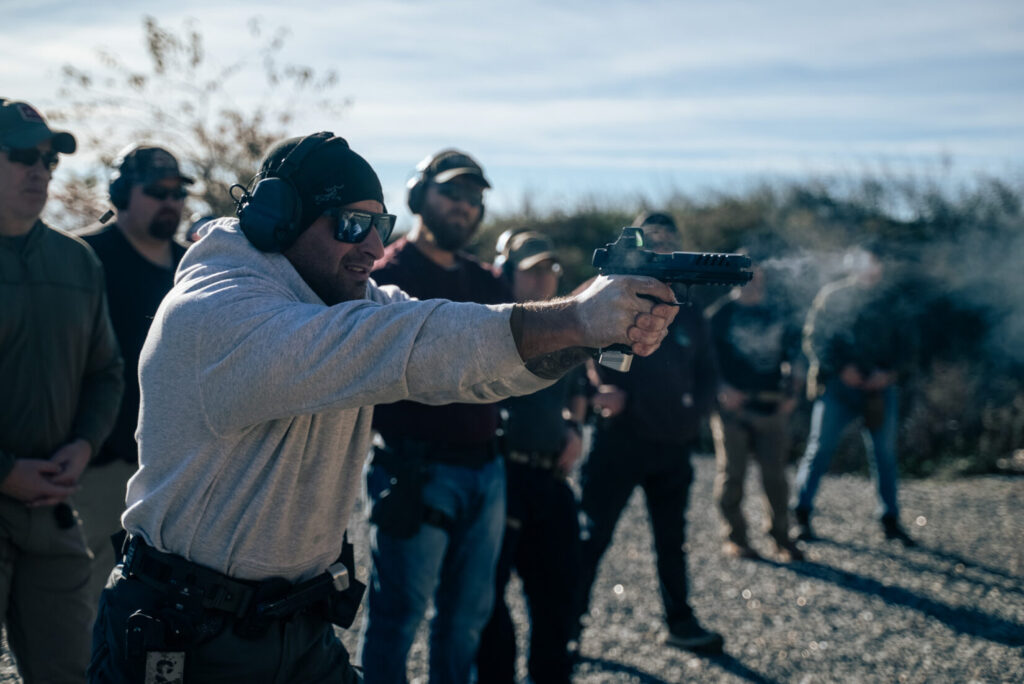
To that end, Costa says that Broken Arrow Defense courses focus on repeatable mechanics under stress, objective performance standards, decision-making, accountability, and duty gear realism.
All things that, really, we should all be incorporating into our training, but that’s a story for another day.
That said, Costa’s credibility as an active law enforcement officer matters a lot here.
“I understand the bureaucracy. The politics. The rules of engagement. The realities,” he says. “You can’t tell me I don’t get it because I live it, too.”
That credibility allows Costa to have uncomfortable conversations that others can’t.
“I can stand in front of a room and say, ‘We’re not good at this,’ and they listen because they know I’m not speaking from theory.”
Everything Costa teaches comes back to that fusion of real-world experience and performance shooting techniques.
In other words, he ain’t blowin’ smoke. That kind of professionalism and bona fide experience commands attention.
The Equipment Problem Nobody Talks About
As Broken Arrow Defense grew, Costa began to encounter another systemic issue in how law enforcement adopts equipment.
Free training bundled with firearm purchases had become the norm. On paper, it sounded like a value proposition. In practice, it rarely was.
“Companies would send out instructors who had no business teaching,” Costa says. “Being a cop for thirty years doesn’t make you a good firearms instructor.”
The result was predictable. Agencies accepted subpar training, recognized its lack of value, and then paid out of pocket to bring in external instructors to fix the damage.
“That’s insane,” Costa says. “We were paying twice, and still not getting what we needed.”
When Walther entered the picture, Costa saw an opportunity to disrupt that cycle entirely.
Why Walther Was Willing to Do It Differently
Costa’s conversations with Walther broke the norm. Whereas some training companies seek sponsorships, Costa was far more concerned with actually training better cops. His focus was on structure, repeatable results, and actually bringing value to the table.
“If we’re going to support law enforcement,” he told Walther, “it has to be real support.”
That meant high-end instructors, training built into agency adoption, and more importantly, a duty pistol worthy of the program: the PDP.
Naturally, Costa had already vetted the gun.
“I wouldn’t be here if the pistol sucked,” he says bluntly.
A fair point, I’d say.
The PDP Platform
But Costa is careful not to frame the Walther PDP as the only good pistol on the market.
“Everyone makes reliable guns now,” he says. “That’s not the differentiator.”
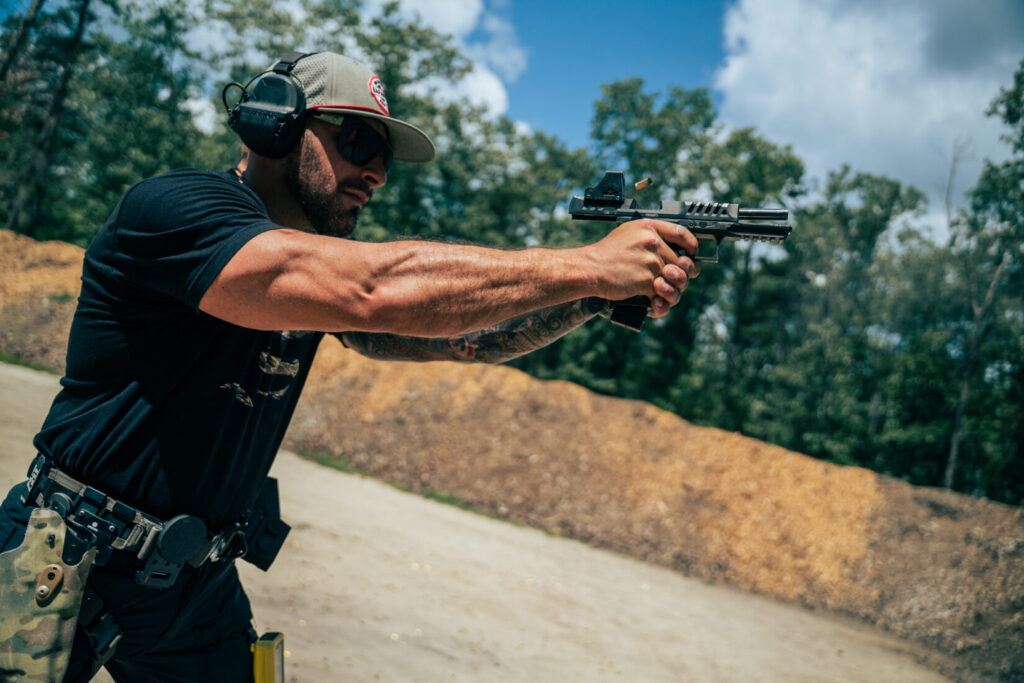
What separates the PDP, in his experience, is how it performs in the hands of average and below-average shooters, which, sadly, represents the majority of any agency.
When Costa conducts demos, he insists on side-by-side comparisons.
“I want competitor guns on the table,” he says. “I don’t want anyone taking my word for it.”
Importantly, though, Costa runs everything stock during these comparisons. No hand-picked samples. No polished and jobbed-up performance pieces. Factory stock. Always.
Time and again, the results are the same.
“I’ve never had someone shoot them back-to-back and say the PDP wasn’t easier or better,” he says.
Costa points to several factors:
Ergonomics That Reduce Variables
The PDP’s neutral grip angle allows officers to present the pistol without compensating with wrist tension or awkward adjustments.
“Every extra thing you have to maintain is a variable,” Costa explains. “Variables cause inconsistency.”
Again, a fair point.
A Truly Duty-Grade Trigger
Costa doesn’t beat around the bush here.
“I don’t care what striker-fired pistol you bring, I’ll say it straight up: the stock PDP trigger is better,” he says.
The optional Dynamic Performance Trigger takes that further, but when I pressed the issue during our conversation, Costa stressed that the factory trigger alone already outperforms expectations.
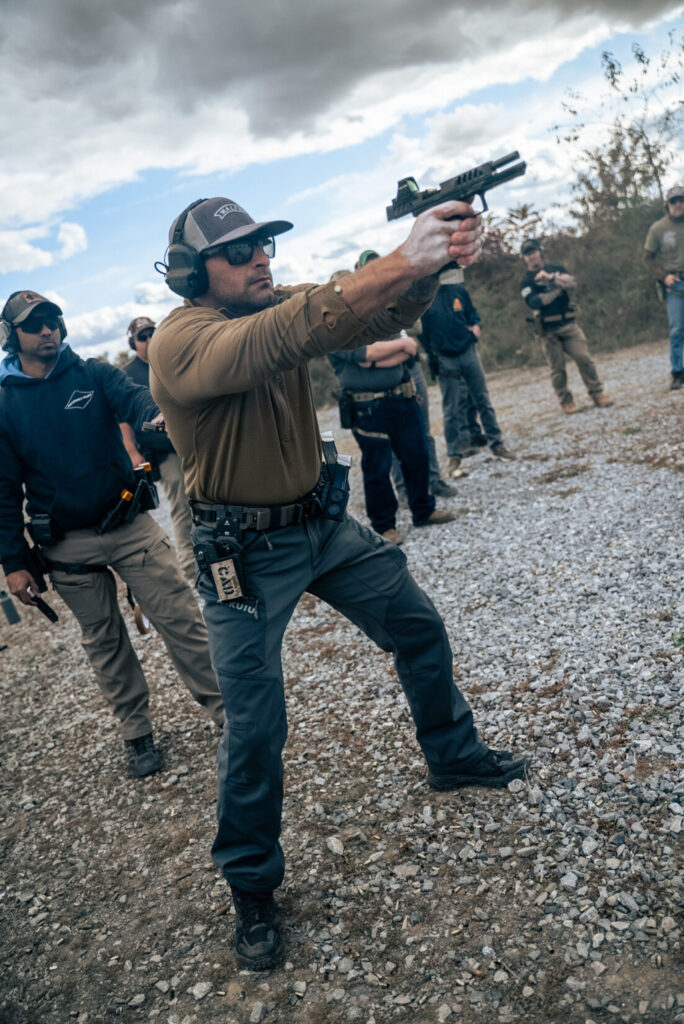
And as if his passion and no-nonsense personality weren’t enough alone, I handled the gun myself, and I say again: he ain’t blowin’ smoke. That trigger’s got the business.
I digress.
A Forgiving Platform for Real People
To Costa, the most telling metric isn’t top-end performance. It’s improvement.
“Bad shooters shoot drastically better with the PDP,” Costa says. “And that matters.”
Costa was quick to clarify that while the gun doesn’t replace training, it removes unnecessary barriers.
“It gets them to baseline faster,” he explains. “Then we build from there.”
Training Is the Product
The pistol, however, is only half the equation.
Walther’s Law Enforcement Training Program, shaped heavily by Costa, fundamentally rethinks how agencies are supported.
Large agencies receive dedicated on-site training.
Smaller agencies send instructors to Broken Arrow Defense’s open-enrollment classes nationwide at no cost. Walther eats that cost, because they genuinely believe in developing better-trained officers, no matter the size of the department.
“There are no second-tier departments,” Costa says. “Everyone deserves access.”
For small agencies with limited budgets, the impact is enormous.
“At some of these smaller local agencies, you might only have one firearms instructor,” Costa explains. “Now that guy gets world-class training without breaking the department.”
This access model is something Costa hasn’t seen anywhere else.
“I genuinely don’t think anyone else is doing this,” he says. “Probably because it’s expensive.”
But to Costa and Walther, it’s a worthwhile expense.
A Cultural Shift, Not a Sales Pitch
Costa bristles at the idea that this program exists to push volume.
“This isn’t about units sold,” he says. “It’s about standards.”
Every course, demo, and conversation is designed to expose officers to what good actually looks like.
“I’m giving you the blueprint,” Costa says. “What you do with it is up to you.”
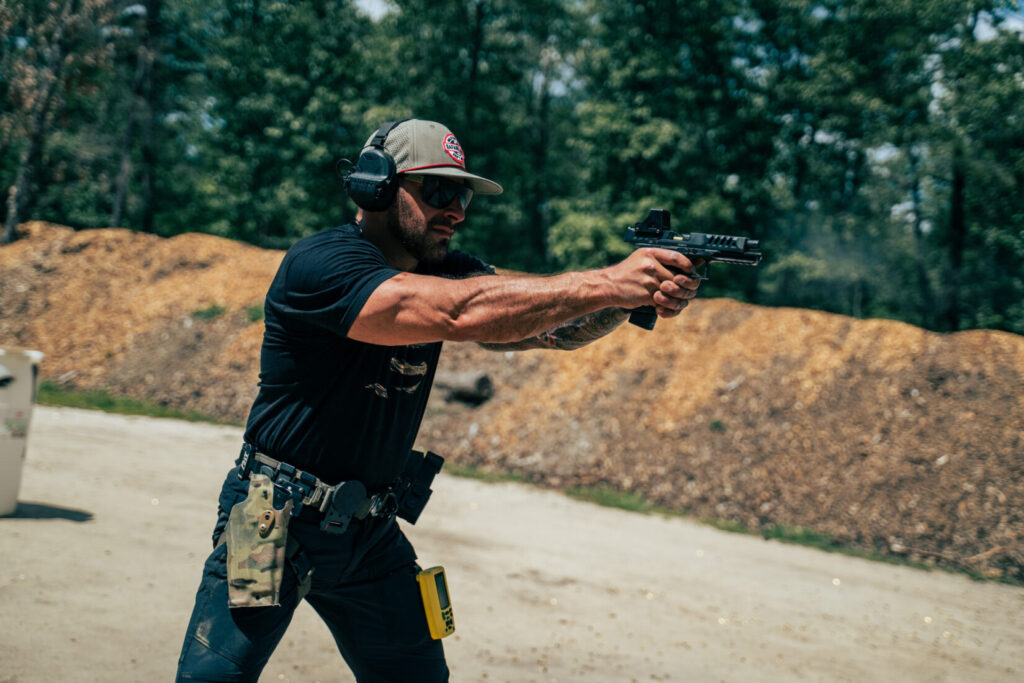
That philosophy aligns naturally with Costa’s involvement in elite evaluation teams like Safariland CADRE, but he’s quick to downplay the spotlight.
“It’s just another way to validate gear and ideas in the real world,” he says.
Why This Matters Now
Law enforcement is at a crossroads.
Red-dot optics are becoming standard. Departments are reevaluating legacy equipment. Officers are under greater scrutiny and greater risk than ever before.
“This is a rare window,” Costa says. “Everyone is changing something anyway.”
Walther’s message to agencies is simple: if you’re going to change, change intelligently.
Try the gun. Compare it honestly. Demand real training.
“Get it in their hands,” Costa says. “We’ll take care of the rest.”
Building the Next Generation
Costa isn’t naïve about the challenges of reinventing how we train our peace officers or dethroning the common duty gun of choice.
“We’re going up against decades of inertia,” he says. “That doesn’t change overnight.”
But the momentum is real. Adoption of the PDP as the standard-issue sidearm is rising. More agencies are willing to have the conversation. And more officers are discovering that better performance isn’t about natural talent. That’s like finding a needle in the haystack. It’s about access to valuable, real-world training.
For Costa, that’s the win.
“If one officer goes home safer because they understood this better,” he says, “it’s worth it.”
And in a profession built on responsibility, that may be the most compelling sales pitch of all.
Note: Broken Arrow Defense courses are conducted nationwide. Law enforcement agencies interested in Walther’s LE Training Program can learn more through Walther Arms or Broken Arrow Defense directly.