
This month’s skill builder combines physical fitness with firearms proficiency, creating routines that simulate the high-stress demands of real-world scenarios during live fire sessions. Some people call it “Run and Gun.” We also like to call it “Shooting Under Physical Duress” or “Stress Shoot.”
This month’s skill builder was sparked by input from the On The Range Podcast “CREW” members, who asked more about the fitness aspect of firearms training. It’s a great fit for everyone who carries a firearm.
Why Fitness & Firearms Must Go Together
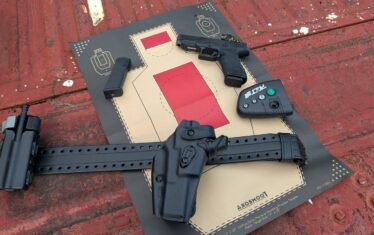
I didn’t plan what I call “Fitness & Firearms” program, it hit me like a revelation at the War HOGG Tactical combat training center. One day, mid-workout, I spotted my gun belt, PACT timer, and a copy of The Firearms Training Notebook nearby. That’s when it hit me: why not stack my dry-fire training between sets? That sparked the whole concept. Now it’s core to how I do all my workouts.
The idea is to spike your heart rate with functional fitness, then demand gun handling under fatigue during your dry fire program. Burpees, sandbag carries, sprints—whatever gets the blood pumping—are followed by draws, transitions, reloads, target indexing, etc. Your body learns to perform when it’s screaming at you to stop. That’s combat reality.
Traditional static range time is great for building a solid foundation in the fundamentals of marksmanship, but it doesn’t prepare you for the fight after you’ve sprinted to cover or fought through exhaustion.
Our intent at War HOGG Tactical is to supplement your firearms training program. We want to help you become more fit, efficient, and effective through a shooting plan designed to reach that goal.
Equipment Needed
- Your normal range and firearms equipment
- Live Fire Range
- Dry Fire Training Area
- Shot Timer, we recommend the PACT Club Timer III. Click the link to learn how to use a timer effectively in your marksmanship training.
- The Firearms Training Notebook – available on Amazon
- Recording device and tripod or holder
- The War HOGG Tactical Training Target
- GORUCK Sandbag, kettlebell, dumbbell, etc.
How The Skill Builder Works
At the beginning of the month, shoot the monthly skill builder exercise. After shooting the skill builder, record your shooting performance data in your copy of The Firearms Training Notebook. Develop your dry fire training plan from that data, and work your training plan throughout the month.
Around the end of the month, reshoot the skill builder and see your improvement. This month, we are adding a fitness component.
February Skill Builder: War HOGG Run and Gun
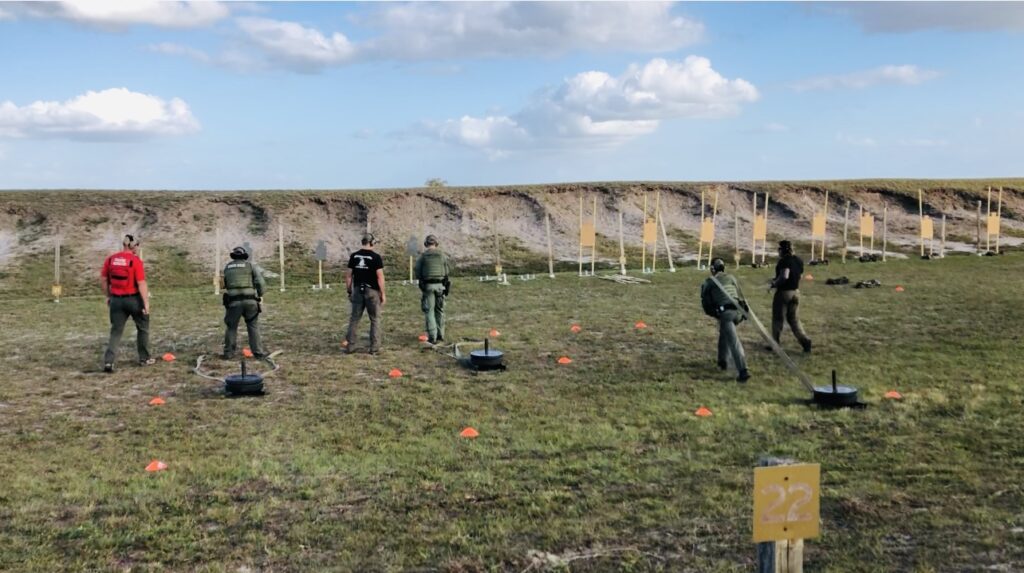
The War HOGG Run and Gun is about elevating your heart rate and seeing how you perform. There are numerous ways to get there, depending on what equipment you have available. For me, GORUCK sandbags are always in the back of my truck, either for my own training or for our law enforcement courses. I like to do three sets to really get the heart and breathing going.
Some simple no-equipment drills:
- Start 25 to 50 meters from your firing line and sprint to it. Conduct a 5-shot drill, reload, and run back to the start/finish line. Do this three times back-to-back.
- If you don’t have the distance to run, you could do bodyweight calisthenics—such as pushups, pullups, dips, air squats, or burpees.
Drills with a Sandbag (35lbs):
- Start 50 meters from the C zone steel target, firing line is 15 meters from the target.
- Perform lateral throws (side-to-side sandbag toss) 35 meters to the firing line. Engage: five shots freestyle (two hands), Return the bag to the start via carry of choice, or add a bear crawl return to really spike your heart rate.
- Move the bag to the firing line using forward throws. Fire five shots with your strong hand, then return to the start/finish line.
- Bear Crawl with the sandbag to the firing line. Fire five shots with your support hand. Return the bag to the start/finish line to stop the clock.
Range Execution
Head out to the range and conduct your designed Run and Gun drill(s) via The Firearms Training Notebook. Remember to do a warmup, I don’t want you pulling a hammy. Then, go out and shoot the drill.
Record your times. I personally add 10 seconds per miss to my overall time. I also write down anything I learned during that drill in my notes section.
The Dry Fire Element
For most shooters, fitness and dry fire training are not combined. For me, it’s the standard. Whenever I work out, I also have my dry fire drill planned between sets. I also conduct standalone dry fire sessions for those focus areas I want to improve on or experiment with.
Don’t be afraid to try different techniques and see if you get a change in performance. A common one that I see often is just a trigger finger placement adjustment, leading to better results. This is where your note section of The Firearms Training Notebook plays a big part. You can review what new techniques worked and which ones did not. The goal is to achieve constant improvement of your shooting skills.
The Skills
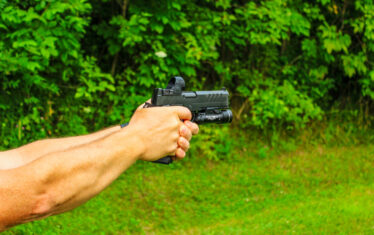
The primary skills developed with the Run and Gun drill are breathing control, recoil management, red dot tracking, and calling your shot.
Another benefit is the chance to do an equipment shakeout. As you run to the firing line, does it look like a yard sale with all your equipment lying around?
Build Your Shooting “CREW”
Having other like-minded shooters around will help you push to make yourself better. If you have friends, family, or co-workers who share your shooting passion, start building that shooting tribe.
This way, not only do you have your own accountability, but you also have others to help you improve on your marksmanship journey. They can record you shooting, possibly give you feedback on things they see, and it’s always good to have some fun competition to help you grow.
At War HOGG Tactical, our motto is “Be 1% Better Everyday!” You can always join us in sharing your marksmanship growth.
Go to our On The Range (OTR) Patreon “CREW” members’ page and join like-minded shooters looking to get more proficient in their marksmanship skills. My co-host / co-author, Mark Kelley founder of Kelley Defense, and I conduct bi-monthly interactive Zoom calls where we break down each shooter’s skill builder. We have even reviewed video of “CREW’ members shooting during our Zoom call and given immediate feedback on where we see they can improve their shooting skills.
Put In The Work — See the results
To see improvement in your marksmanship skills, you must put in the work. This means having a solid dry fire and fitness training plan throughout the month and a way to record your progress, like with The Firearms Training Notebook.
Using additional tools, like a shot timer and a phone to video your training sessions, you can take your dry fire training to the next level and see increased performance during your live training.
Train Hard, Stay Safe, and see you “On The Range” – Rick