
Carrying off the body is never optimal, but sometimes it’s the best option. When I take the kids to the beach, I carry in a fanny pack secured to my waist, or when I go for a hike, a bike ride, or even a jog. It’s convenient and comfortable, but most importantly, it’s secure.
As far as off-body options go, I don’t feel the need to set the fanny pack down to do things. Messenger bags, sling bags, and backpacks can all work, but if I put a gun in one, I don’t put it down until I’m removing the gun, or have the ability to lock the bag up. A fanny pack is just convenient.
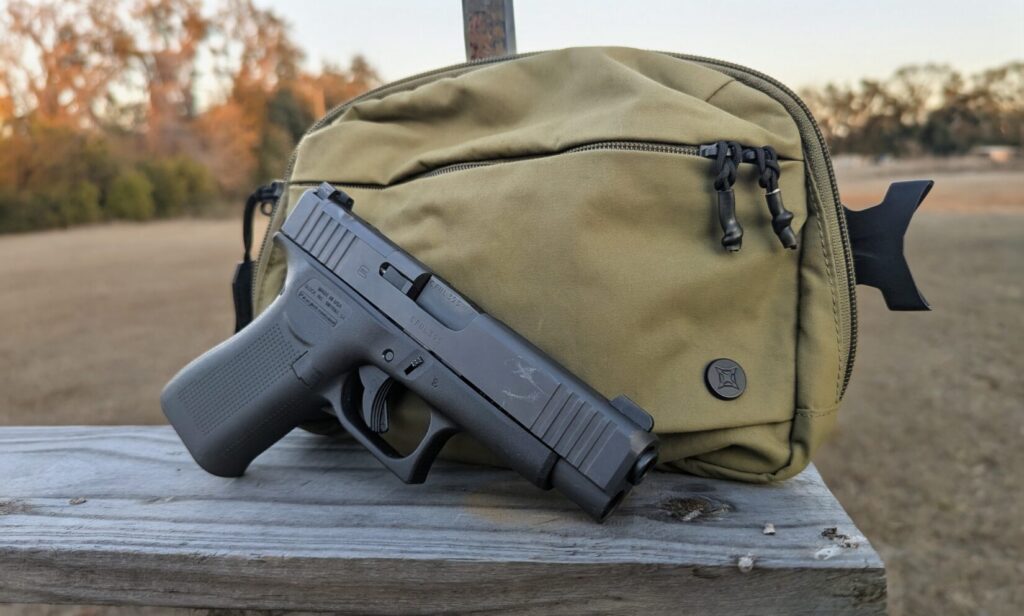
Which fanny pack? I’ve been a fan of Vertx for a long time. I used the S.O.C.P. for a long time, but I’m transitioning to the smaller Everyday Fanny Pack 2.1. I give up a bit of storage space, but it’s just a lot smaller and easier to manage.
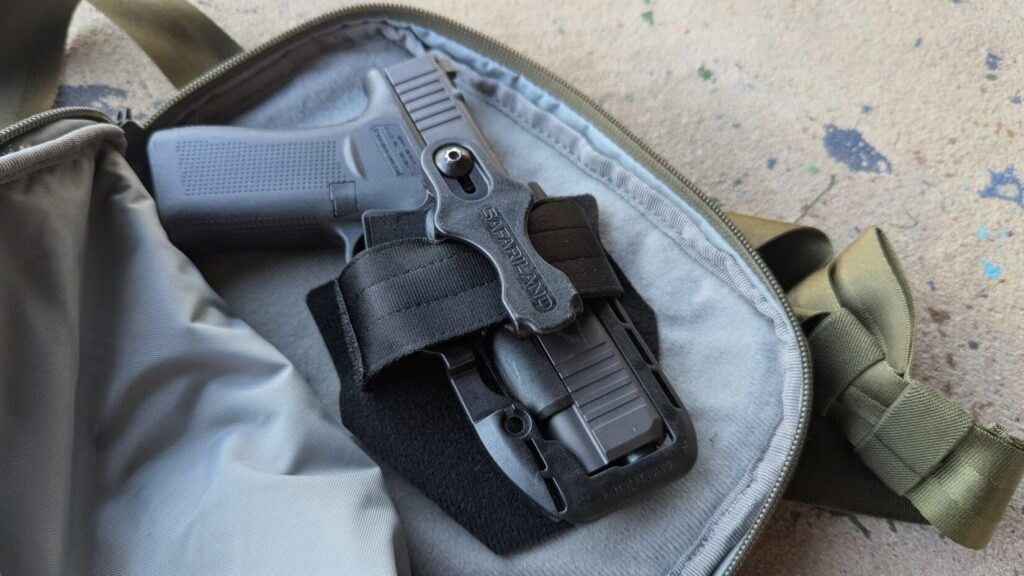
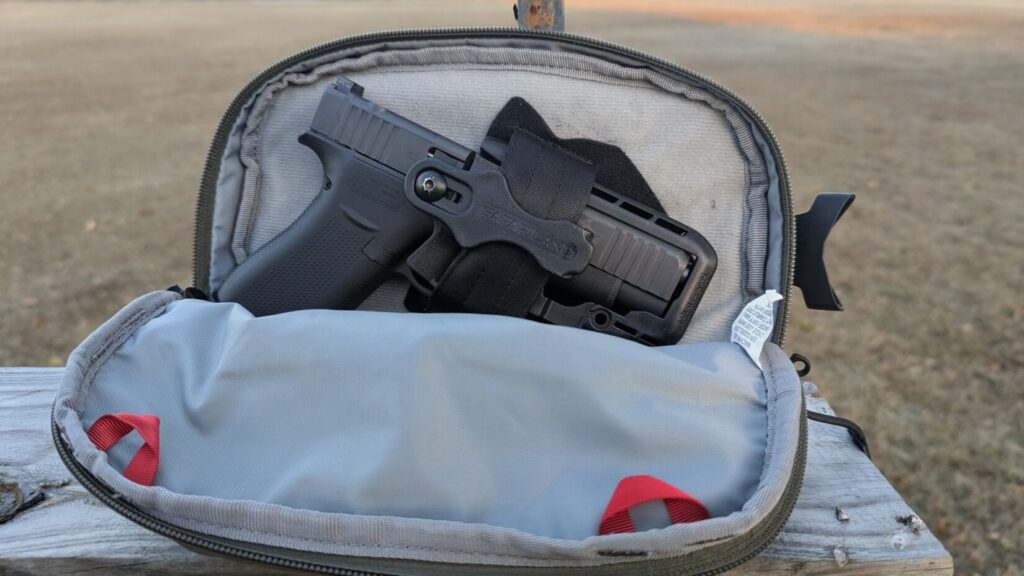
The Everyday Fanny Pack 2.1 is a concealed carry fanny pack with a dedicated CCW pouch. Inside that pouch is a Tactigami HolsterLock that connects to the rear of the pouch and presents an adjustable elastic band. You shove your IWB holster into this band with the clip over the elastic loop.
This way, you’re still using your dedicated holster, and you still have the ability to remove the gun from the fanny pack and clip it to your belt when you need to.
The Everyday Fanny Pack 2.1 uses a fairly wide belt with a large buckle. This big buckle helps support the weight of the gun and whatever else you carry in your fanny pack. A purpose-built design goes a long way.
The Fanny Pack Setup
At SHOT Show 2026, I took a class with Lena Miculek on how to use the fanny pack, and one of the big takeaways from the class for me was proper setup. I’m all about proper setup and the idea that proper planning prevents piss poor performance. With a fanny pack, the first thing we need to set up is how the gun lies in the CCW compartment.
To start, open the CCW compartment, remove the HolsterLock, and put your gun and holster in the HolsterLock. You want to position the gun at an angle where the grip faces upward and toward your dominant hand. Do this by positioning the rear sight or red dot at the top of the corner that coincides with your dominant hand.
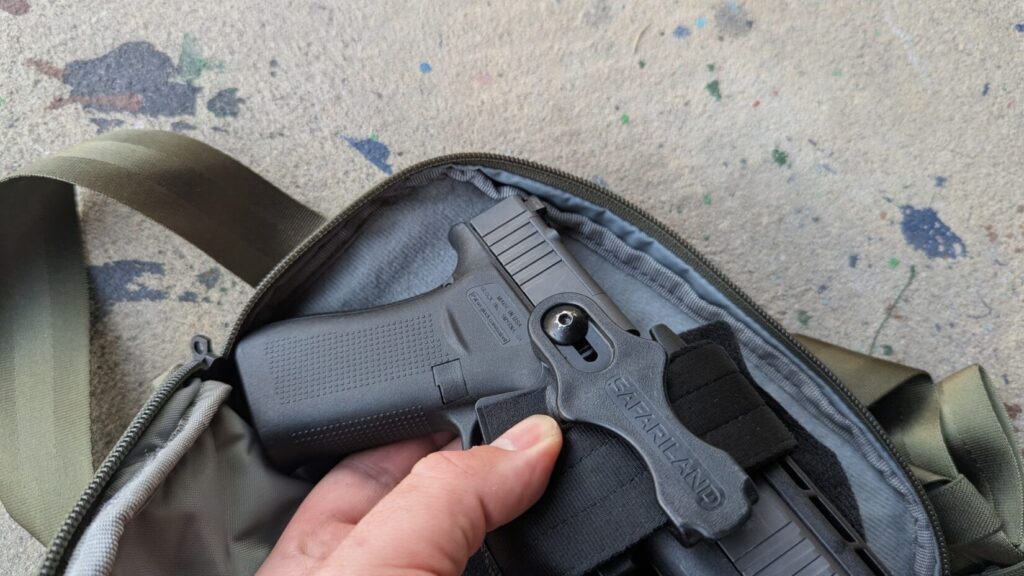
For me, this is the top right corner. Push the holster into the pack at this angle to achieve good access. This positions the gun at an easy angle for your draw.
Next, put some weight in the front pocket. This helps the flap come downward. If you carry a phone, wallet, keys, a reload, etc., put them in the front pocket to make accessing your gun easier.
Hot Pulls
Next, we have to decide how we’ll access the pouch. With the Vertx, we have both zippered access and hot pulls. A hot pull is a tab inside the CCW pouch that has the user pull the entire front of the pouch away from the body.
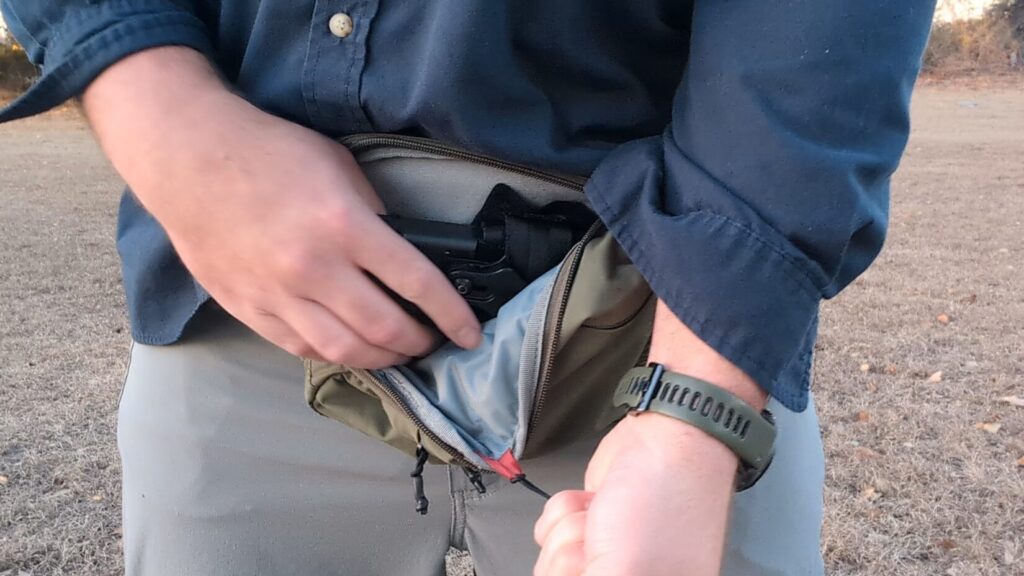
This defeats the zippers and opens the CCW compartment. I like the hot pull a lot. Setting up the hot pull means one zipper should be on the right side of the hot pull and one on the left of the Micro Rapid Access Tab.
The Zippers
The second method is defeating the zippers. The Everyday Fanny Pack 2.1 has two zippers on the CCW pouch. If you’re right-handed, the zippers should be on the right side when closed, and reverse for left-handers.
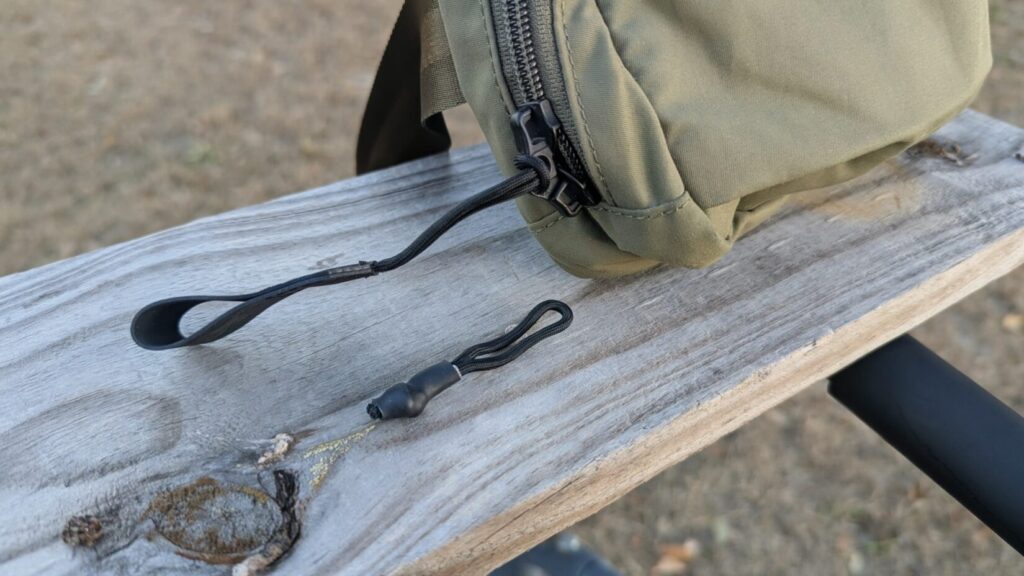
You’ll only use the top zipper when it is pressed to the right or left. With that in mind, remove the tab from the second zipper. This ensures you don’t accidentally grab the wrong tab when drawing. Install the Micro Rapid Access Tab on the top sitting zipper for an easy snag.
Remove any other pull tabs from the concealed carry compartment; only the one zipper you plan to use should have the tab for easy access.
The Draw
Lena taught a simple, easy to learn, but highly effective draw. I’ll describe it from a right-hander’s perspective. Left-handers will do the same thing, just reversing the hand sides.
With the bag in place on your waist, the left hand moves first. It goes to the bottom left corner of the bag, and you follow the bottom of the bag until you reach the corner and the zippers. Here, your left hand can find the zipper and pull it up and over to open the CCW pouch.
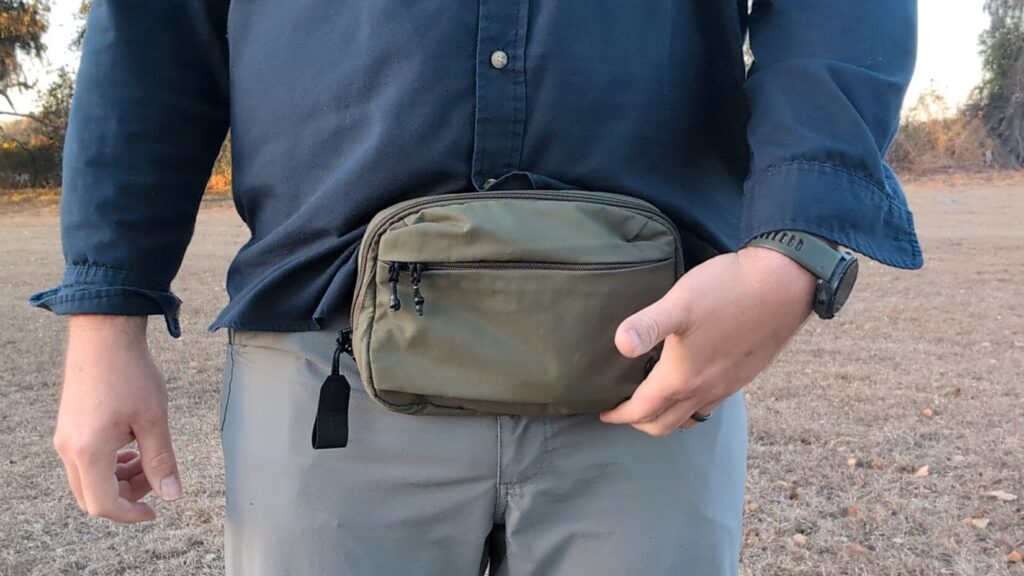
Your left hand will keep tension on the zipper, pulling it away from the bag and toward the body. This helps keep the pouch open. By the time the left hand has pulled the bag opened your right hand should be moving into the bag.
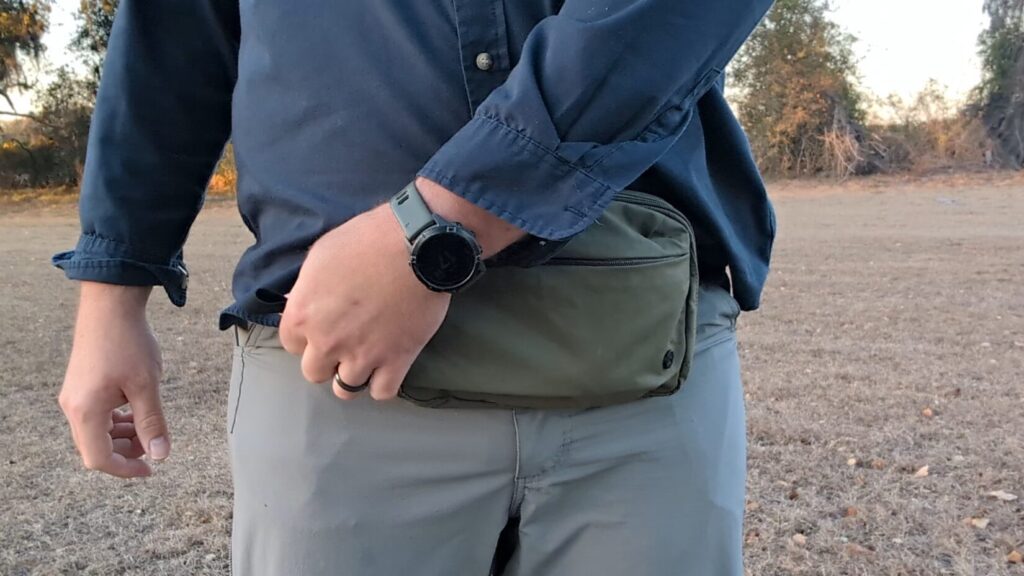
Grip the gun and pull it straight out, orienting it forward. Your left hand should be pulled back and to the body to avoid muzzling yourself as you pull the gun out of the holster and fanny pack. The gun also needs to be drawn straight outward at the upward angle to keep the muzzle oriented downward and to avoid muzzling yourself.
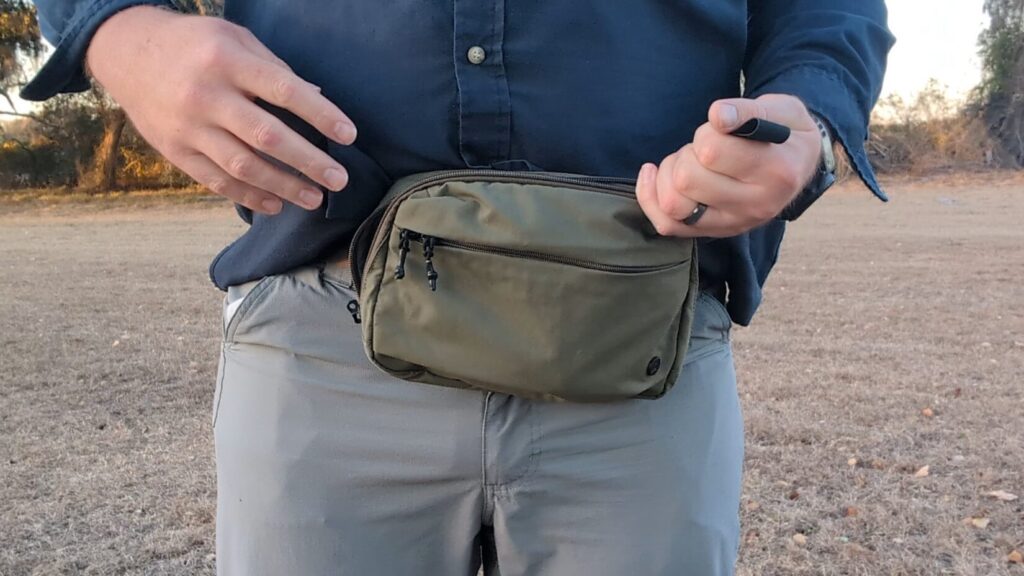
Once your firearm clears the fanny pack, your left hand can release the zipper and assume its position on the firearm. That’s it, that’s the draw. It’s easy, but intuitive and efficient.
The Reholster
Anytime you reholster, you should look the gun into the holster. Reholstering is never a race. For CCW fanny packs, we have to be extremely cautious to avoid muzzling ourselves. We do this slowly and controlled, keeping our elbow behind our wrist.
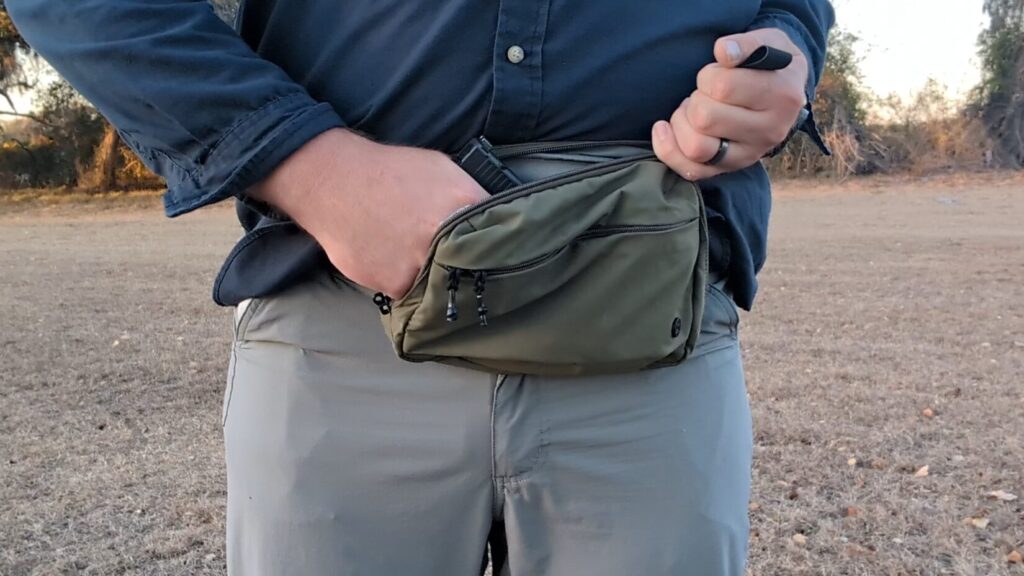
Tuck your left arm to your body and slowly slide the gun into the holster. Heck, if you get a little nervous—maybe you used the firearm and need to reholster, and your hands are shaking—just remove the fanny pack from your body and reholster that way.
Keep your mind and options open.
The Fanny Pack
Like any other holster system and carry position, the fanny pack requires training—a lot of it—a good amount of dry fire, and live fire practice. Setting up the pack and learning how to draw should be a part of your training if you’re planning to engage in fanny pack carry.
Don’t sleep on the fanny pack; it can be a viable option for deep concealment in situations where standard concealment just doesn’t work. However, it only works if you train it to work.