
In American Police Pistols of the 19th Century, we chronicled the first police pistols as American law enforcement developed from unarmed constabularies to professional crime-fighting forces.
In that era, suspicion of armed government agents had to be balanced against the practical need to be armed in an armed society. As such, police forces gravitated toward surprisingly small handguns.
The very first handgun to see standard adoption was the Colt 1849 Pocket Revolver. Here is its story:
The birth of the modern ccw: Colt Pocket Model
Colt produced several legendary six-guns that saw police and military use. The Colt Navy, Colt Walker, Colt Peacemaker, and Colt Thunderer live on in the Western genre. These big-bore revolvers were matched only by the bigger-than-life personalities that carried them. But in a production run from 1850 to 1873, Colt produced 350,000 Pocket models, more than any of their other handguns until the Colt 1911.
After the Mexican War, Colt was back in business with the big .44 caliber Walker revolver. But he understood that with the tapering of government contracts, he needed a smaller handgun that was more appealing to the civilian market. Concealed carry was not a 21st-century concept, and the late 1840s were the peak time of Western expansion and the California Gold Rush.
In 1848, Colt released the Baby Dragoon—a small five-shot .31 caliber revolver based on the successor of the Walker .44. In 1850, Colt finalized the lock work that would be used on their single action revolvers and incorporated it into the new Colt Pocket Model.
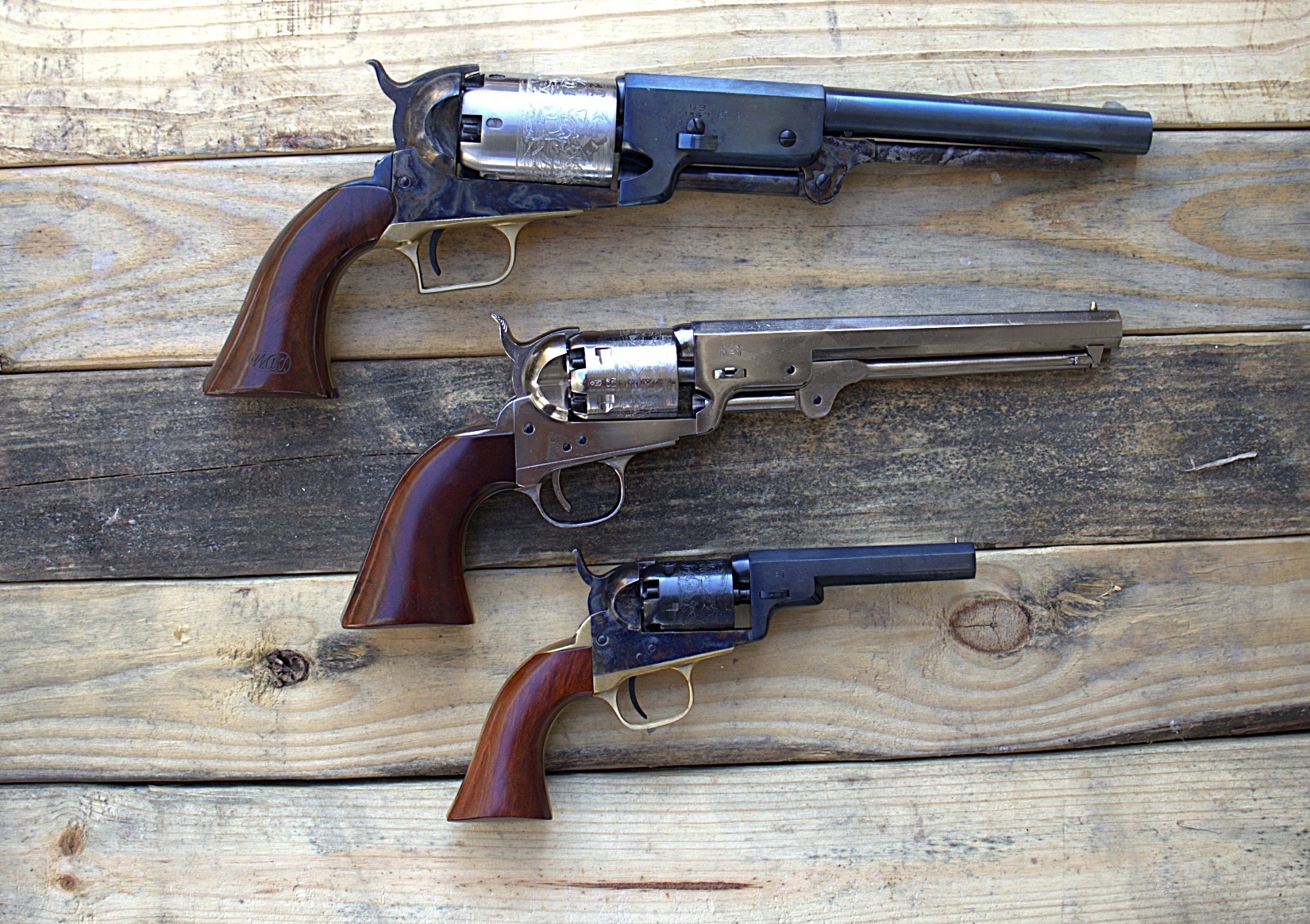
The Colt Pocket Model came in barrel lengths ranging from 3 to 6.5 inches and was small enough to fit in the waistband or a coat pocket. Like other pistols of its era, it was a muzzleloader, but the user got five rounds instead of the single shot you would get out of other small handguns. That advantage alone endeared it to the public, and it went on to outsell its contemporaries both at home and abroad.
The Copper’s New Companion
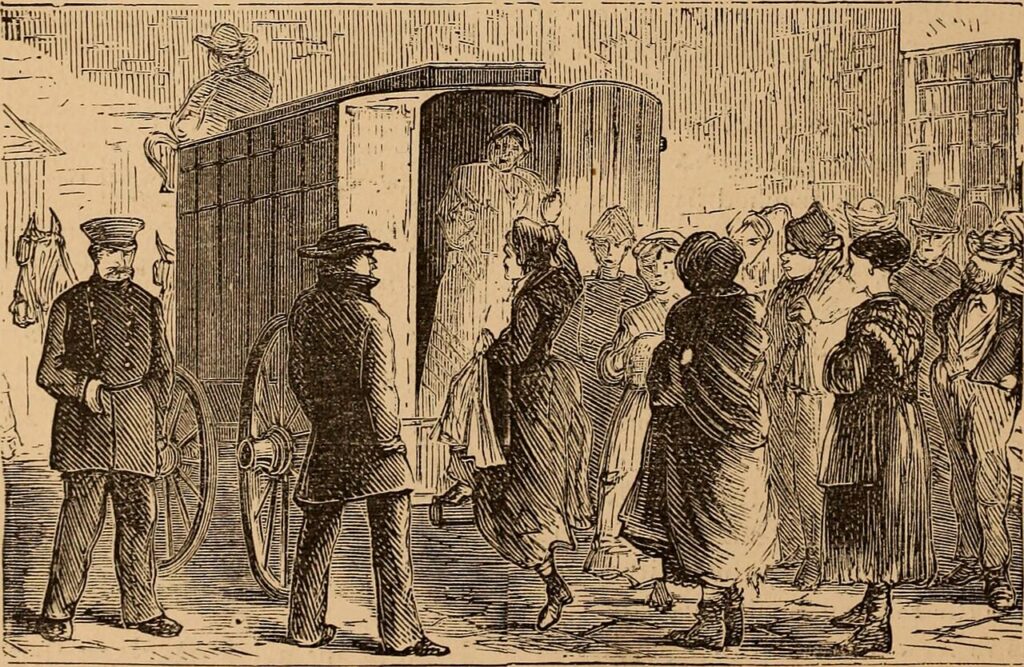
The 1849 Colt Pocket .31 was considered too light for general military issue, but it did see action in the American Civil War. The model ought to be better known for its role in equipping the first professionally armed police forces in the United States.
The Colt’s Pocket model’s introduction coincided with continental expansion and the rise of politically affiliated gangs in urban centers. After the shooting of Sergeant William Jourdan in 1857, following the Know-Nothing Riots of the previous year, the Baltimore Police Department was authorized to be armed. The department purchased 200 Colt Pocket models to issue to their unarmed officers.
Other eastern departments, like the NYPD, also purchased the Pocket Models, although mandated standard pistol issuance would not occur until the end of the century.
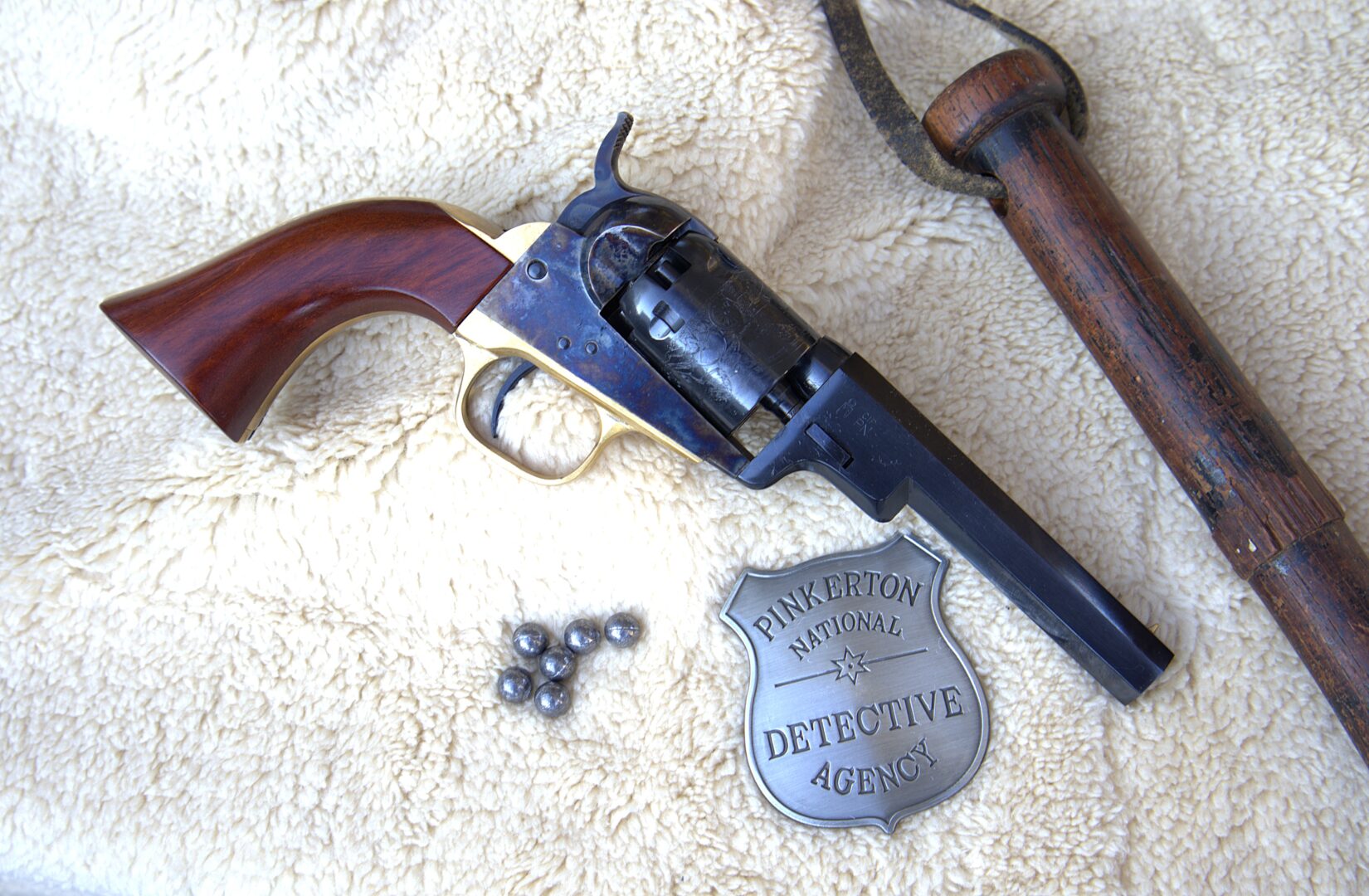
Police sales were brisk enough that Colt redesigned the Pocket model in 1860. Thanks to new steels, Colt was able to use the existing .31 caliber frame and increase the cylinder diameter to accommodate .36 caliber service ammunition for greater power.
The New Police model in .36 caliber would be the first handgun marketed specifically for police, while the same pistol with an octagonal barrel was marketed as the Pocket Navy.
End of the Line
Back in Baltimore, the 1849 Pocket Model continued to be bought for issue to the end of its production run. In 1876, the Baltimore PD replaced it with the Smith & Wesson Single Action chambered in .38 S&W. These little cartridge guns, supplemented by the double-action S&W hammerless New Departure, remained in service until 1917.
Cimarron’s Colt 1849 Pocket Model
In the replica market, the Colt 1849 is not as popular as it was in its heyday, but it is simply too prolific to ignore.
Uberti of Italy makes a fine version, several of which are made specifically for a number of importers.
Cimarron Firearms of Fredericksburg, Texas, offers the standard four-inch barreled model with a choice of with or without a loading lever. This example is a true pocket pistol that comes without a loading lever, and it is cataloged as the 1849 Wells Fargo Model. That is to denote the popularity of this version with the Pony Express and Wells Fargo Company.
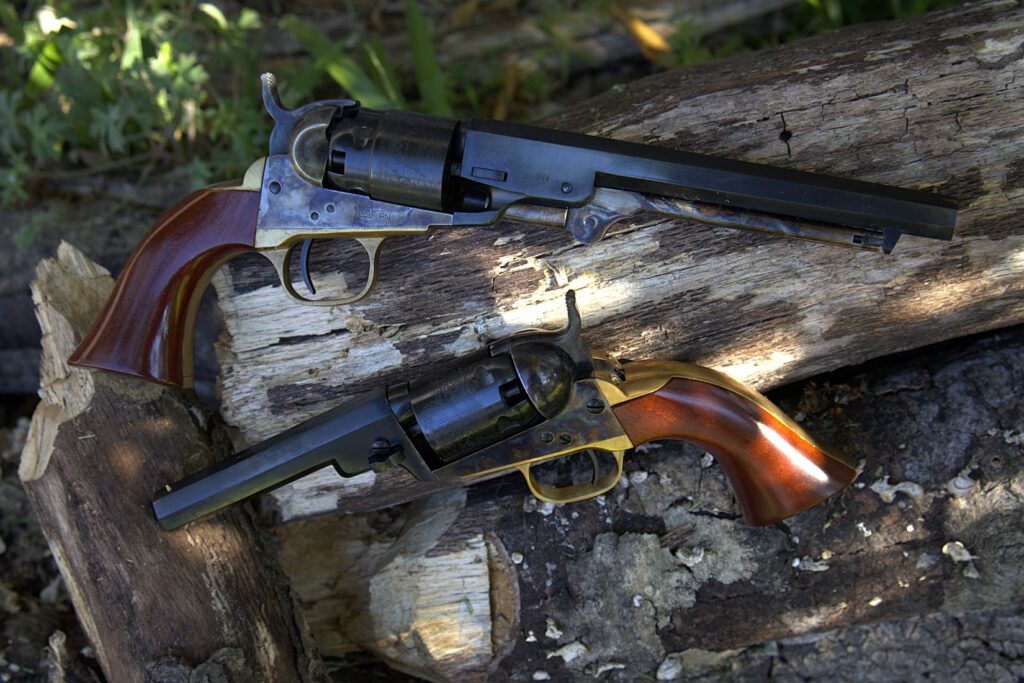
Cimarron’s 1849 Pocket Model wears a blued octagonal barrel, case-hardened frame, and brass grip frame just like the originals. The blued steel cylinder features a laser-engraved version of Colt’s Stagecoach scene, which was a mark of quality in its day.
The pistol wears varnished wood grips and low-profile sights—a fixed brass bead front sight and a rear notch cut into the hammer face. Like other Colt revolvers of its time, the 1849 is an open top design with the cylinder riding on a grooved arbor and anchoring the barrel, which is held in place with a captive key wedge.
Since it comes with no loading lever, the pistol has to be disassembled for loading. Powder is poured into each cylinder, and a bullet forced into the mouth of the chamber with the arbor. The cylinder is then primed with percussion caps, and the pistol reassembled. Unlike some later cartridge single actions, the 1849 has a safety pin that allows for the hammer to ride between loaded chambers for safety.
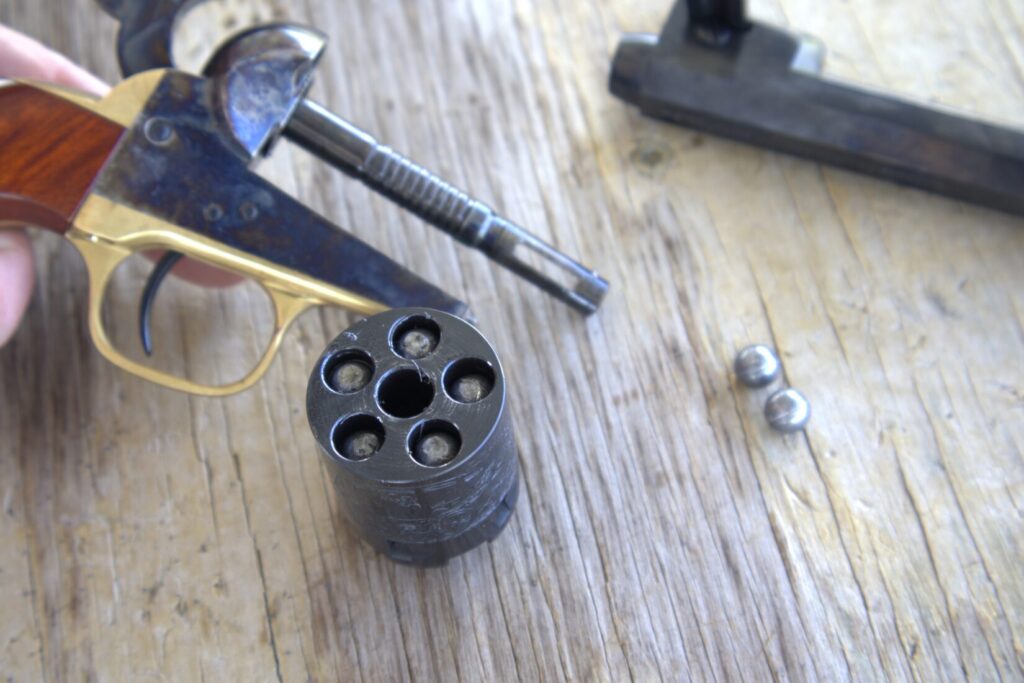
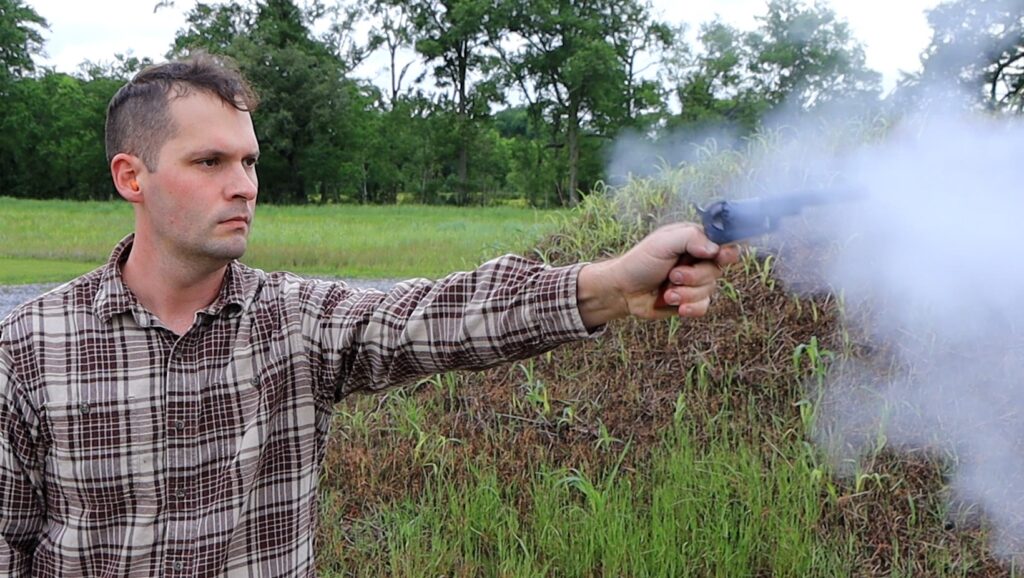
With or without a loading lever, it is apparent that the 1849 Pocket Model is a fire-and-forget pistol. Loading takes time, but getting those five shots off quickly is not a hassle.
The Pocket Model is not the smallest muzzleloader out there, but it is dainty compared to its more famous brothers, and it affords five rounds instead of the single shot one may get with a contemporary derringer-style pistol.
The little 50 grain .31 caliber ball gets running at about 750 feet per second. Later during the American Civil War, a 73 grain paper cartridge loading was developed. No matter how you slice it, the Pocket Model gained capacity and size but sacrificed power.
Even so, the little Pocket Model paved the way for even more effective handguns. The concepts of concealed carry and police sidearms would never be the same.
More than a Footnote
Although unfamiliar by today’s standards, the 1849 Colt Pocket Model paved the way for two separate but interconnected movements. The Pocket Model was the first small handgun to be considered a best-seller. Then, like now, pocket pistols outsold objectively better options simply due to convenience of carry.
Having five rounds instead of only one was a game-changer and that fact opened the door to the opening ripples of the officer survival movement. As long as law enforcement has faced deadly danger, mitigation is key. Sometimes mitigation is as simple as acknowledging reality.
As primitive as it is today, the Colt Pocket Model acknowledged the reality of living and policing in an armed society where high ideals were not always enough.