
During my War HOGG Tactical courses, I tell my students that their Close Quarters Battle (CQB) / Close Quarters Combat (CQC) skills are built on the range. If you’re having to think about things like firearms manipulation, point of aim, and point of impact, you are already behind the CQB power curve.
At War HOGG Tactical, we use a building block methodology of combat marksmanship instruction. The War HOGG “L” CQB Drill combines shooting on the move, both forward and laterally.
When I was an instructor at the 7th Special Forces Group for the Special Forces Advanced Urban Combat (SFAUC) Course, shooting on the move was a key skill we taught our Green Berets students before going into the shoot house. We built a solid fundamentals of combat marksmanship foundation with both pistol and carbine, then added forward and lateral movement in both day and night conditions.
The War HOGG “L” CQB drill combines both these skills into one drill that more closely resembles the actual shooting on the move that is conducted in the shoot house. This CQB training shooting drill was designed using the course of fire section in The Firearms Training Notebook. Remember, your CQB skills are built on the flat range!
Equipment Needed
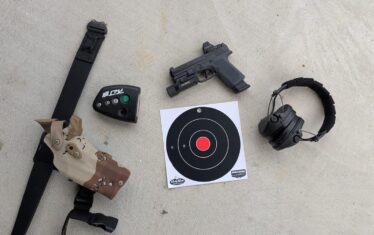
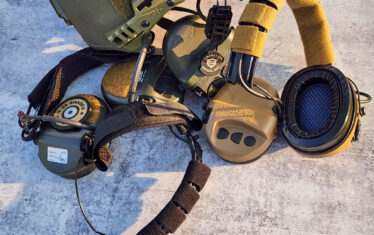
- Normal range and firearms equipment
- Live-fire range
- Dry-fire training area
- The Firearms Training Notebook – available on Amazon
- Recording device and tripod/holder – this will be key to watching your footwork
- Target of choice
- Visible laser
- 4 Orange Cones
Recap Shooting On The Move: Forward / Laterally
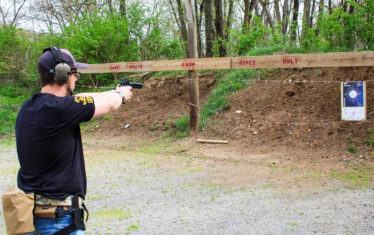
When it comes to shooting on the move, a lot of people overthink the process. I try to walk as naturally as possible while keeping my sights as still as I can. There will always be some sight movement; it’s the amount of movement that matters.
Some people think that your feet have to be in a solid spot to fire the shot. The key is this: if the red dot (or iron sights) is on the acceptable target area, send the shot. If you are consistently shoot low, you’re probably taking the shot as your lead foot comes down, that downward movement can cause the shot to go low. Remember having a good bend in the knees will help act as a shock absorber.
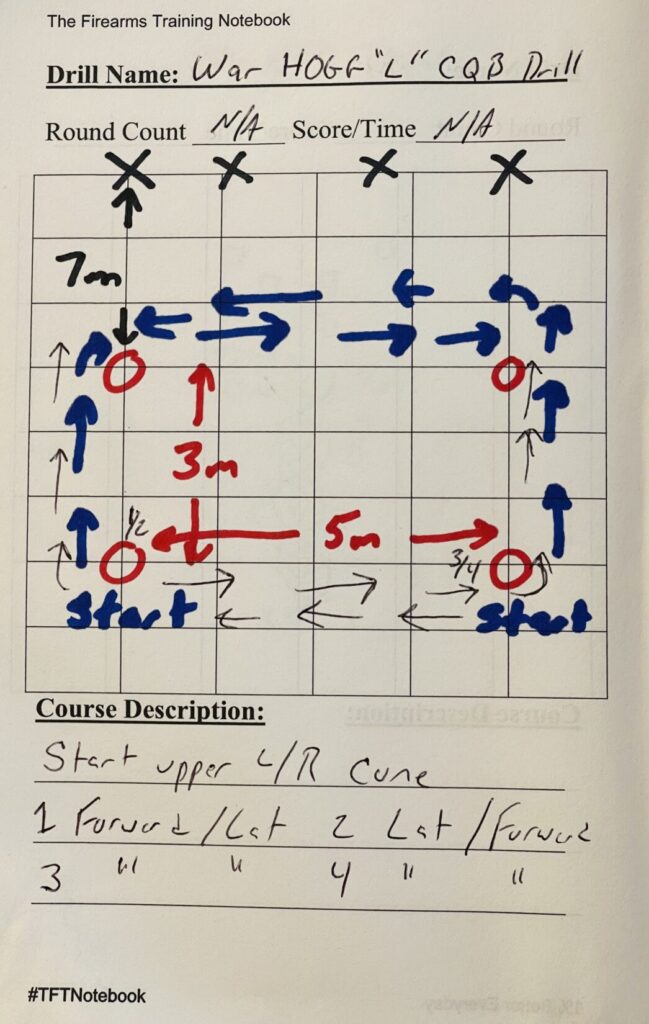
The War HOGG “L” CQB Drill Set-up
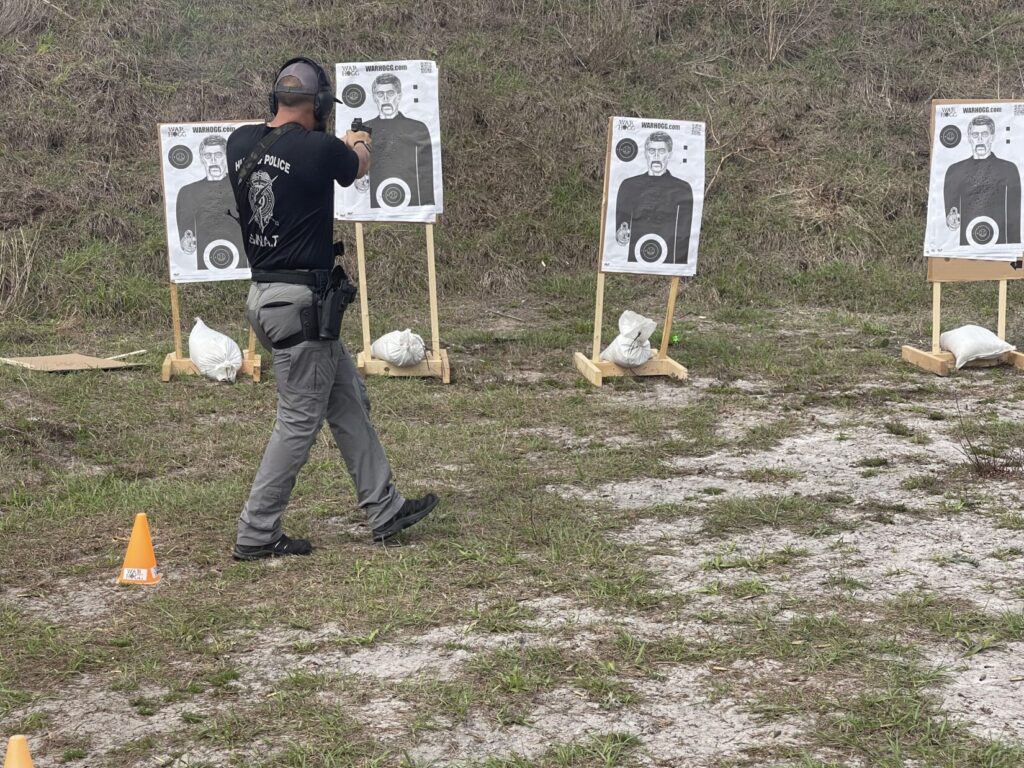
The War HOGG “L” CQB Drill combines both shooting on the move forward and lateral or shooting on the laterally and forward. I set the drill up with 4 six-inch-high orange cones. The lateral distance I use is 5 meters, and the forward distance is 3 meters. The front set of cones are at 7-meter from the target line with 4 War HOGG Tactical Training Targets across the front. You can always adjust the size of the “L” or distance to the target line depending on the size of your range. Typically we have two of these drills running simultaneously when conducting combat marksmanship training in preparation to move on to CQB training.
The War HOGG “L” CQB Drill Execution
The start point is either side of the top cone. The shooter has the option to start moving forward, pivot at the forward corner cone, and shoot on the move laterally. The other option is to start shooting on the move laterally, pivot at the cone, and forward shoot on the move.
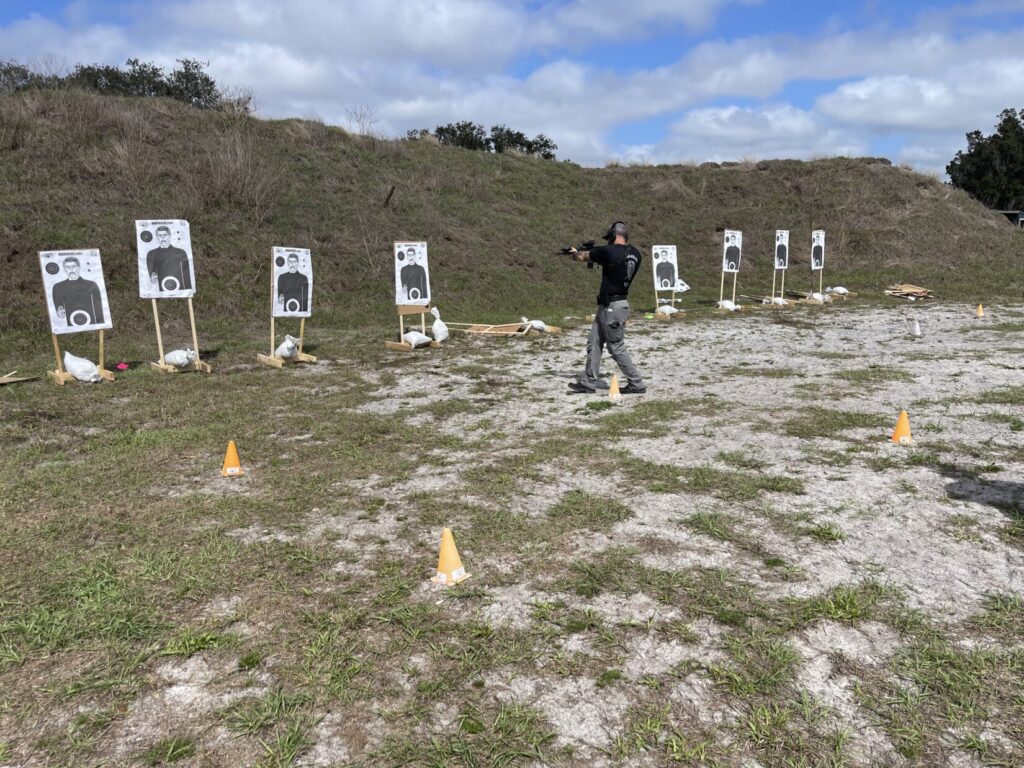
You can get four different looks running this drill. My example will be for a right-handed shooter
- Start upper left cone: Move forward, pivot, shoot on the move laterally (support side).
- Start upper left cone: Shooting on the move laterally support side, pivot, shoot on the move forward.
- Start upper right cone: Shooting on the move forward, pivot, shoot on the move laterally (strong side).
- Start upper right cone: Shooting on the move laterally strong side, pivot, shoot on the move forward.
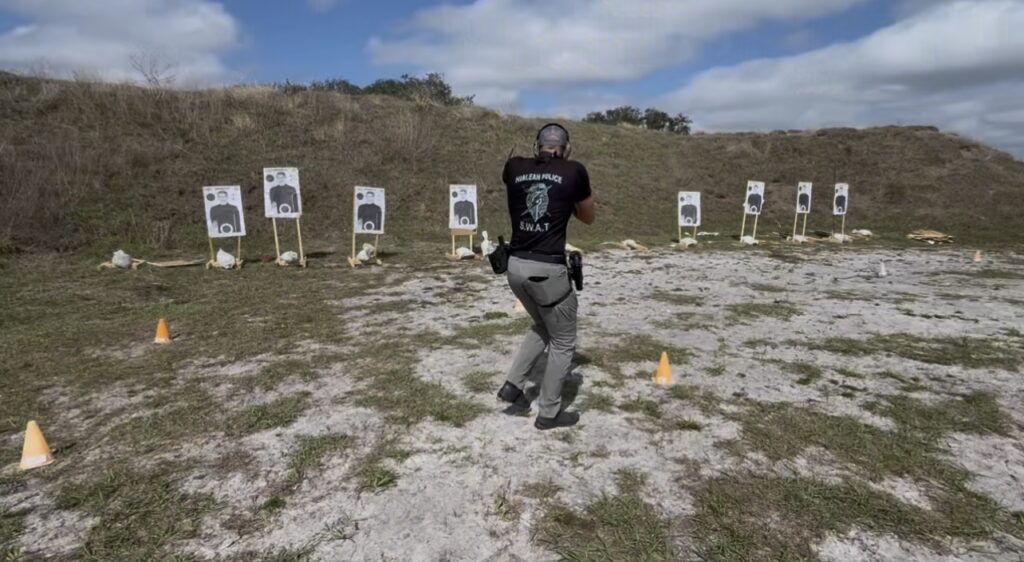
Most shooters have a difficult time shooting off their strong side while moving laterally. The fix is to slide the support hand back towards the magazine well to release the tension in the upper body. This gives the shooter more freedom of movement to pivot at the waist with more range of movement, shooting laterally.
Variations to the War HOGG “L” CQB Drill
You can set up your rifle to have a malfunction or to run out of ammo and force a transition to the pistol and conduct the rest of the drill with the pistol. This mimics the same action that would happen in the shoot house if you had an issue with your carbine.
You can also run the drill completely with the pistol. Don’t forget, if you need to conduct a pistol magazine change, do it on the move, don’t stop.
The Dry Fire Element
A visible laser can be a great dry fire training tool for movement work. You can use something like a weapon-mounted or a handheld visible laser attached to your rifle.
I like the laser for a couple of reasons. First, if you’re new to a red dot, you may or may not see how much that dot is moving. The laser does make it easier to see the amount of movement in your platform.
Second, if you have a training buddy, they can see how much the laser is moving and give input to improve your technique or a suggestion on trying something different to get better performance.
The Skills
Building from our Skill Builder library, the primary skills developed with the War HOGG “L” CQB drill are shooting on the move, target indexing, point of aim versus point of impact with your carbine, and calling your shot.
Whenever you are conducting any type of training session, either dry or live fire, the question should always be what marksmanship/gun handling skills am I improving? Having no firearms training plan means you are just wasting your number one most precious commodity, your time!
Have Accountability
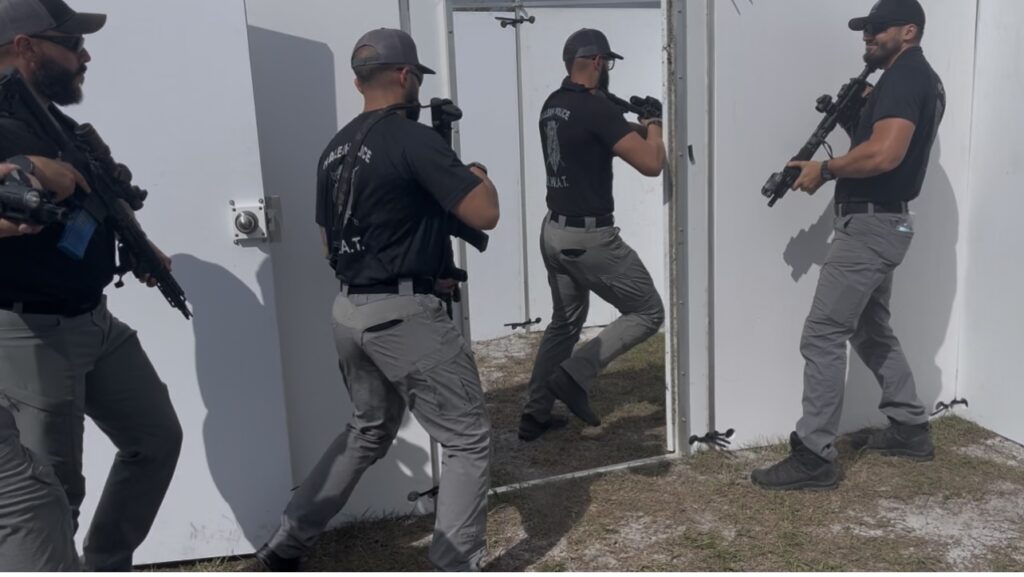
Accountability matters in your shooting performance. You can do it alone, but having a partner, “CREW”, group, or tribe helps keep you on track. There might be something they see that you missed, and it helps with having training accountability.
If you don’t have a network, join ours. Share your marksmanship growth on the On The Range (OTR) “CREW” member’s page or our On The Range Podcast “CREW” Facebook group. My co-host, Mark Kelley of Kelley Defense, and I hold bi-monthly interactive Zoom calls with our OTR CREW members. We break down each shooter’s skill builder and even review members’ training videos live, giving immediate feedback on ways to improve.
Conclusion: “Put In The Work!”
To improve your shooting-on-the-move marksmanship, you must put in the work. Don’t be afraid to experiment with different techniques and see what’s working best for you. That means a solid dry-fire plan and a way to record progress, like The Firearms Training Notebook.
Use training tools like a visible laser and video to level up your dry-fire training and see the improvement in your live training. Remember, your CQB skills are built on the flat range.
Train hard. Stay safe. See you “On The Range” – Rick