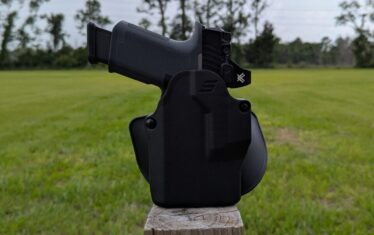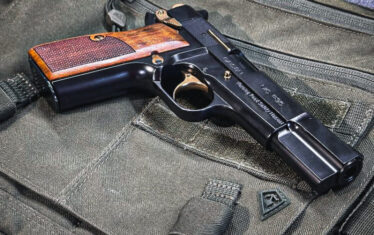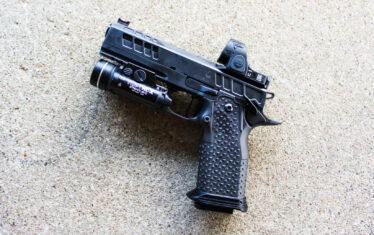


It makes sense that new, modern guns replace the older, even legendary ones. It would also make sense if ammo worked the same way, but it doesn’t. Just in my lifetime, there have been multiple calibers that become popular, fade away, then become popular again. I remember when .40 Smith & Wesson was the coolest caliber on the block. And then it wasn’t.
To be honest, I don’t care for the .40 caliber round all that much. Not because it doesn’t perform well, it just doesn’t make as much sense to me. Focusing on handgun calibers, my preferred choices are .22, 9mm, 10mm, and .45 ACP. That doesn’t leave much of a gap for .40 caliber ammo to fill. Having said that, I do see a benefit to owning a .40 caliber handgun.
For decades, the .40 Smith & Wesson (.40 S&W) ruled the caliber world. This was mostly because it was the preferred choice for American law enforcement. It was the “Goldilocks” cartridge that promised a perfect balance of power and capacity. But a promise is a promise that can be broken.
Over the past 10-12 years, the much older, 9mm Luger has reclaimed its throne as the industry standard for duty and self-defense. This has caused some of us to view the .40 S&W as a relic of a bygone era.
So why do I think it’s still good for a backup caliber? The answer is availability. But before we discuss that, let’s talk about the .40 S&W a little more.
Understanding the .40 Caliber Round
To understand why the .40 S&W remains somewhat relevant, we must look at its design. The cartridge was born after the 1986 FBI Miami shootout. The agency sought a round with better terminal performance than the 9mm rounds of that era. They also wanted more capacity than the traditional .45 ACP. The result was a cartridge that effectively bridged the gap.
Ballistically, the .40 S&W typically utilizes bullets weighing between 155 and 180 grains. A standard 180-grain load travels at approximately 1,000 fps. This produces roughly 400 ft-lbs of muzzle energy. When compared to the 9mm, the .40 S&W offers a larger frontal surface area. This physical diameter allows for significant energy transfer and reliable expansion. It consistently meets and exceeds FBI penetration standards in ballistic gelatin.
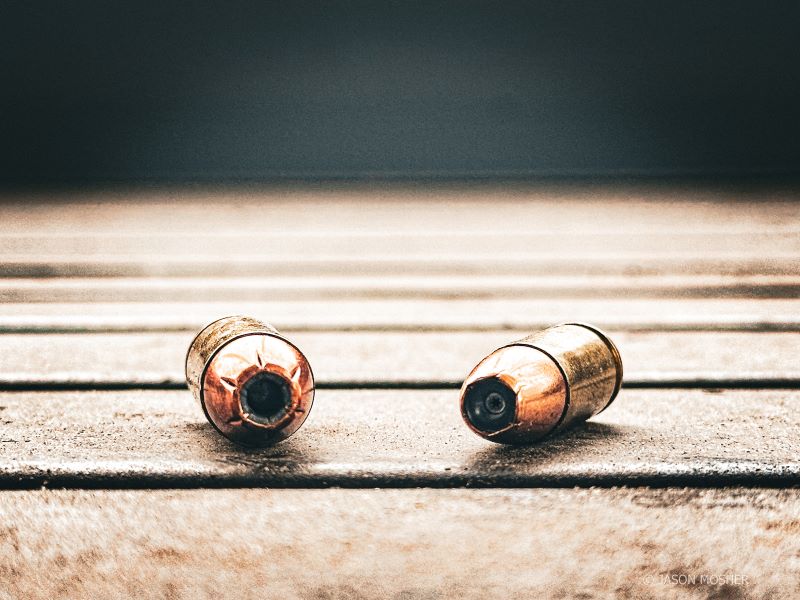
I like to think of the .40 S&W as the “middle child” of the handgun world. It offers more “thump” than the 9mm but carries more rounds than a .45 ACP.
While 9mm technology has improved, the .40 has also benefited from modern engineering. But the recoil is snappier than a 9mm due to higher operating pressures. An experienced shooter can manage this with a proper grip, but it’s noticeable.
The Shift in Popularity
The .40 S&W debuted in 1990 and saw an almost instantaneous adoption rate. By the late 90s, it was the most popular law enforcement caliber in the United States. Its decline began around 2014. The FBI announced a move back to 9mm, citing better recoil management and higher capacity. Soon, local and state agencies across the country followed their lead. My agency switched from .40 to 9mm during this time as well.
Today, few manufacturers offer “new” models designed specifically for .40 S&W ammunition. While popular models like the Glock 22 still exist, they are often secondary thoughts. Most new flagship handguns are released in 9mm first. Many never even receive a .40 caliber variant. This lack of new development makes the caliber seem dead. But, the secondary market is worth watching, and this is what keeps the .40 S&W from completely disappearing.
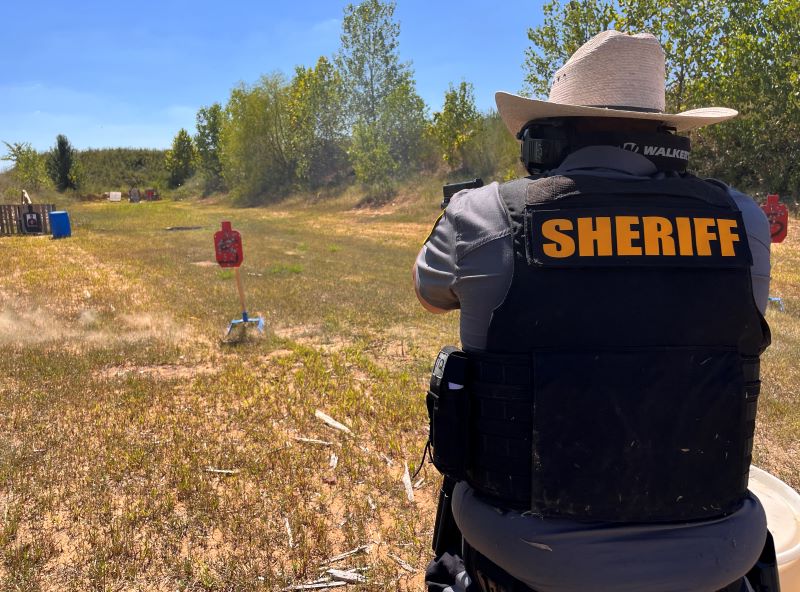
As police departments switched to 9mm, they traded in thousands of .40 caliber handguns. This created a massive flood of law enforcement trade-ins hitting the civilian market. You can often find high-quality duty pistols for a fraction of their original cost at gun stores. This accessibility is the primary reason the caliber is still relevant today, at least in my opinion.
Why .40 S&W as a Backup?
When I refer to a “backup” caliber, I’m talking about a caliber you can revert to when other ammunition becomes scarce. A lot of people use .22 ammo as a backup caliber as well, because it’s cheap and easy to carry in large quantities. But if you remember back a few years, .22 ammo can become extremely hard to find when people get ammo panic syndrome.
The reason I think .40 S&W is a good choice for a backup is that it’s no longer a popular round. Sure, some still love it and use it daily. But in general, it’s just not as popular as other handgun calibers.
During periods of social unrest or supply chain issues, ammunition becomes rare. When an “ammo panic” begins, shooters behave predictably. They rush to stores and buy up the most common calibers first. The shelves are quickly stripped of .22 LR, 9mm, and 5.56 NATO.
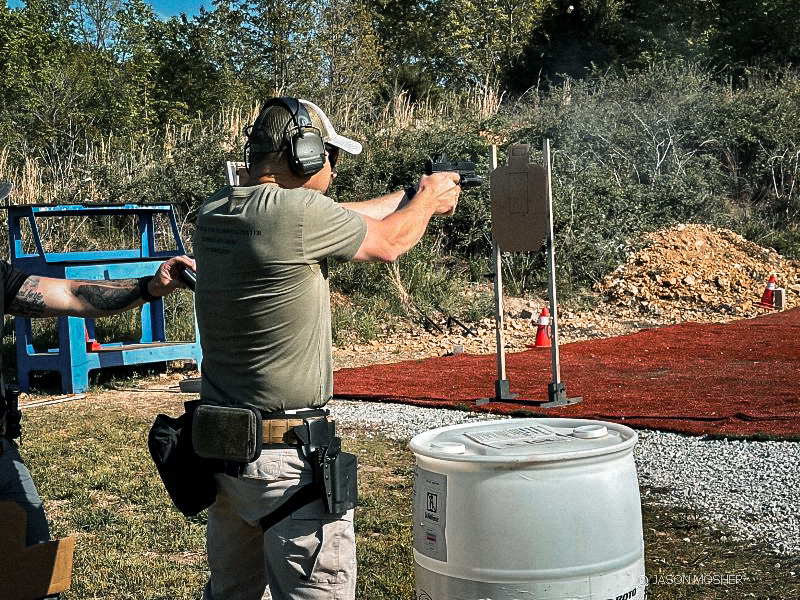
Because the .40 S&W is not as popular as it used to be, it is often easier to find. During our last ammo shortages, I noticed .40 S&W was still available in nearly every gun store I visited.
If your only handgun is a 9mm and you cannot find ammo, your weapon is useless. But if you have a .40 S&W stashed away somewhere, you may just find the ammo you need. It’s like an insurance policy for the prepared citizen.
Do you have a “backup” caliber?
Not everyone will agree with my stance on .40 S&W, but that’s ok, we all have our own opinions. Who knows if the .40 S&W will ever regain its popularity again (though I have my doubts), but here is what I do know. You can find a used .40 S&W handgun for a pretty good deal right now, and .40 ammo isn’t a hot ticket item, so it’s not always sold out. This is a good combination for availability during ammo shortages.
So, do you have a backup caliber? If not, this is a great time to adopt one, even if it’s not your favorite caliber. I’m a big 9mm fan, but the best caliber is the one you can actually find. And even I’ll admit that may not always be 9mm ammunition.