
Ammo is expensive; standard .223/5.56 per round costs more than twice as much as 9mm. If we’re serious about training, but don’t have a black card, then 9mm starts to look a lot more attractive. For that reason, a 9mm Trainer might be an option for you.
AR-15s come in all calibers, including 9mm. This makes it easy to buy or create a 9mm training rifle to ultimately save money. There is an initial up-front cost that might seem high, but the investment pays off rather quickly, depending on the route you take to acquire it.
The Cheap Way
Let’s break that math down. The cheapest way to create a 9mm training rifle is to use the lower you have and purchase a 9mm upper receiver, a heavy buffer, and Mean Arms ExoMags or EndoMags conversions.
- Cheap 9mm Upper: $200.
- Heavy Buffer: $15
- Means Arms ExoMag x2: $62
- Total Price: $277
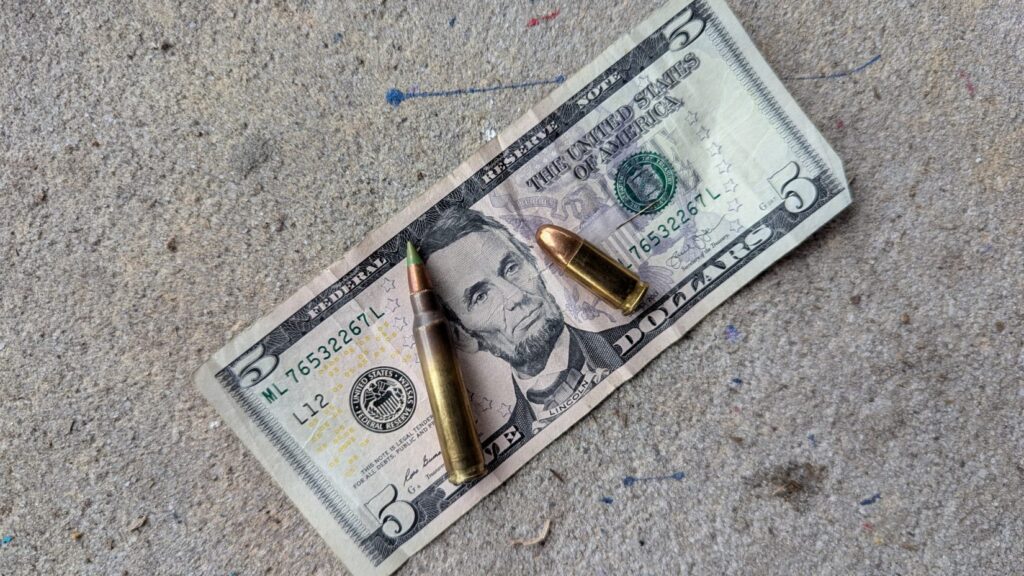
How long would it take you to recover the cost? A magazine of 5.56 at $0.45 per round is $13.50. A 30-round magazine of 9mm would cost you $6.00. Per magazine, you’re saving $7.50.
If we do the math, you’ll recover the cost in 1,108 rounds. Everything fired past 1,108 rounds is saving you $0.25 over training with 5.56/.223. That’s not a lot of ammo, it’s a case plus a few boxes, and you’re saving money.
Of course, if you’re a gun guy, you might already have a 9mm AR-15, so the up-front cost is paid for.
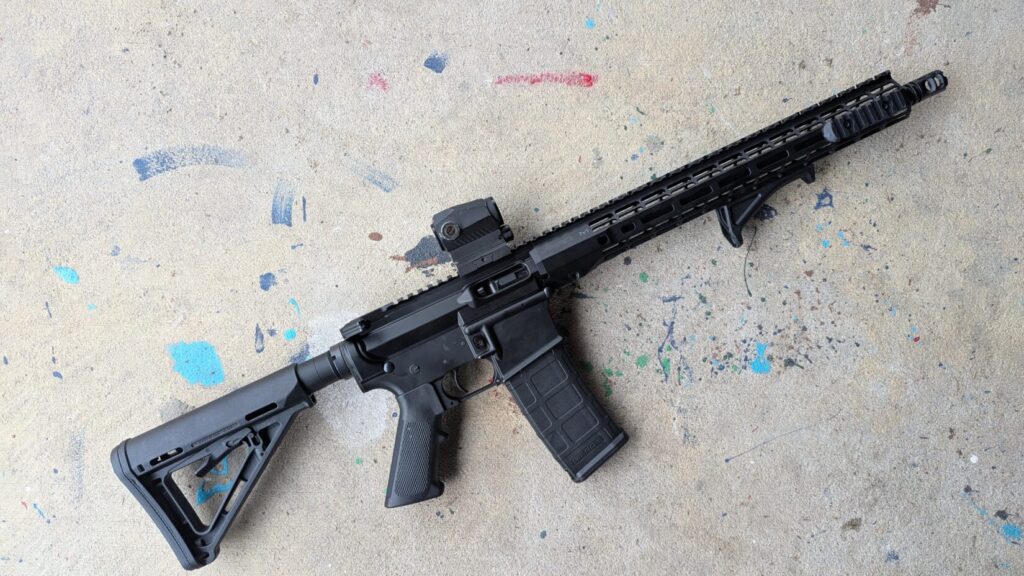
A 9mm Trainer has a lot of potential and a few downsides.
Why a 9mm Trainer?
If you wanted a live fire trainer, the cheapest route will be the CMMG Bravo conversion and .22LR, right? The conversion is cheaper, and the ammo is a lot cheaper than even 9mm.
While those points are true, the .22LR doesn’t offer the recoil of a 5.56. A direct blowback 9mm rifle has roughly the same felt recoil as a 5.56 direct impingement rifle. Additionally, the accuracy of a .22LR through a 5.56 barrel isn’t as consistent as a 9mm rifle.
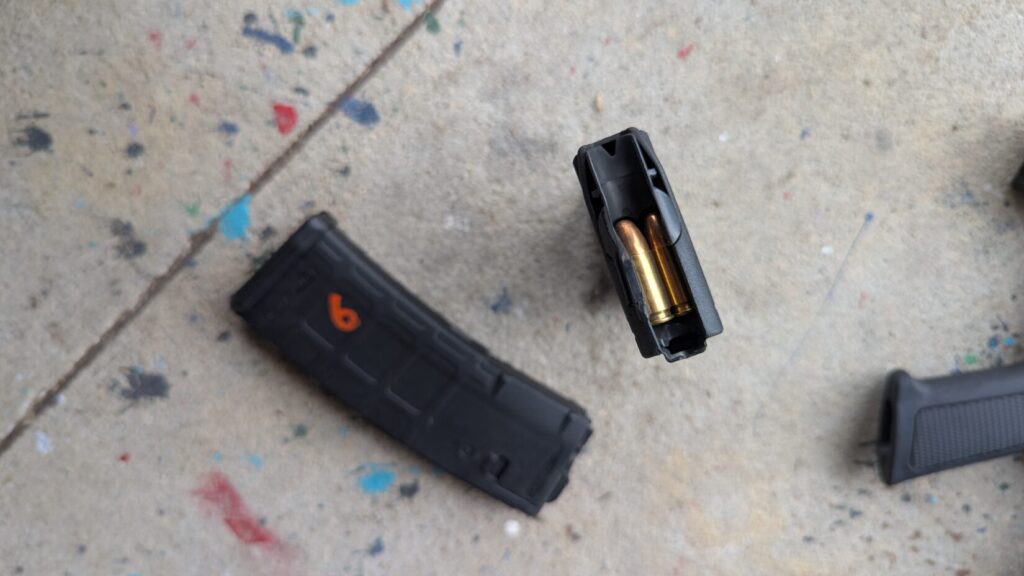
Plus, centerfire 9mm rifles are a lot more reliable than a .22LR conversion system. Those systems are pretty good, but can be finicky.
A 9mm trainer allows you to practice drills and skills out to about 50 yards with ease. Out to 100 yards is possible, but 9mm starts to drop pretty fast at 100 yards. In a CONUS situation (Continental United States), 50 yards is going to cover a lot of your defensive and duty use of a rifle.
Within 50 yards, you can practice height over bore drills, reload drills, target transitions, moving and shooting, and so much more with a rifle that effectively mimics your 5.56 rifle down to the recoil.
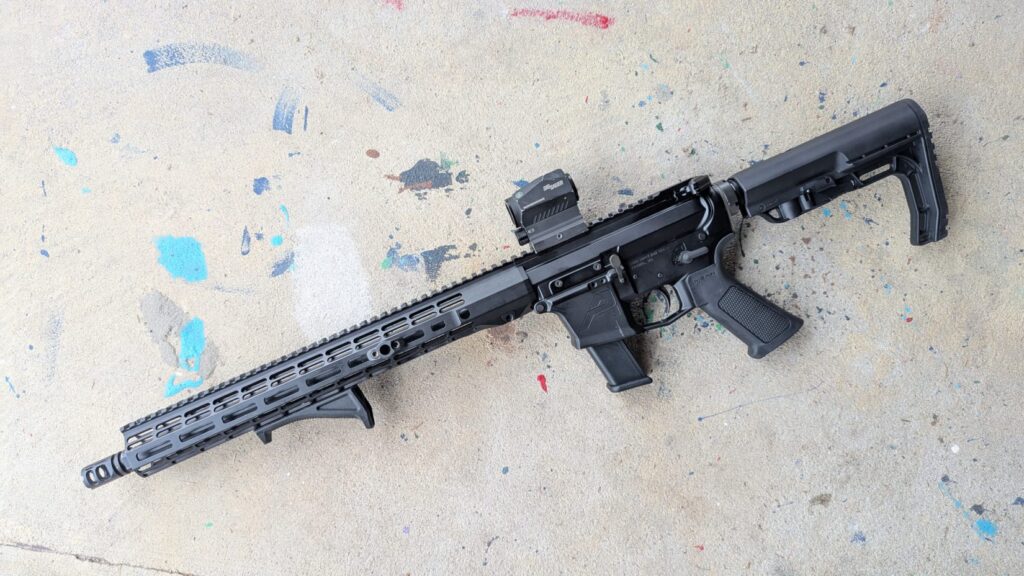
Additionally, the 9mm trainer opens up your ability to train at essentially any firearm range. A lot of indoor ranges, in particular, ban rifle calibers, but 9mm is 9mm even when fired from a rifle. This gives you more locations to train and easier access to training overall.
Downsides of a 9mm Trainer
The most obvious downside is the 9mm’s inability to mimic a 5.56 rifle’s range. You can’t train at rifle ranges with a 9mm trainer. This keeps you working within 50 yards. One of the benefits of a rifle is its versatility at both close and moderate ranges.
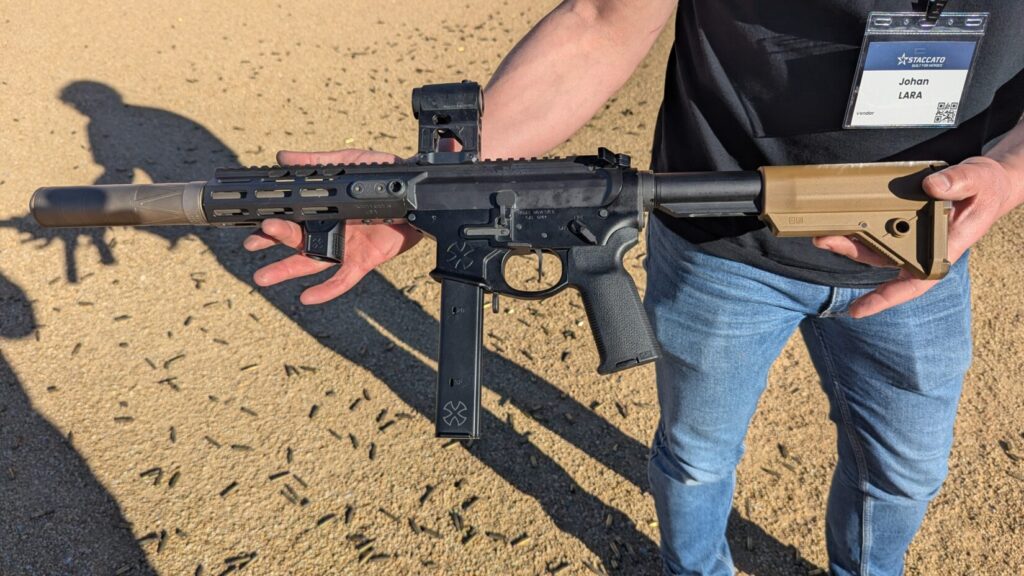
A lot of 9mm rifles won’t have a last-round bolt hold open. It’s often dependent on the magazine. A lot of cheap 9mm rifles won’t have an LRBHO with Glock magazines. Colt SMG magazines do, and some AR uppers integrate an LRBHO for Glock mags.
The Mean arms Endo/Exo does have an LRBHO device built in, which is often why I suggest them for 9mm trainers.
Magazines and AR Trainers
Since we’ve mentioned Glock, Colt, and Mean Arms magazine, let’s discuss magazines. I like the Mean Arms options because they fit perfectly into a standard multi-cal AR-15 lower receiver, and I don’t need a new dedicated 9mm AR lower.
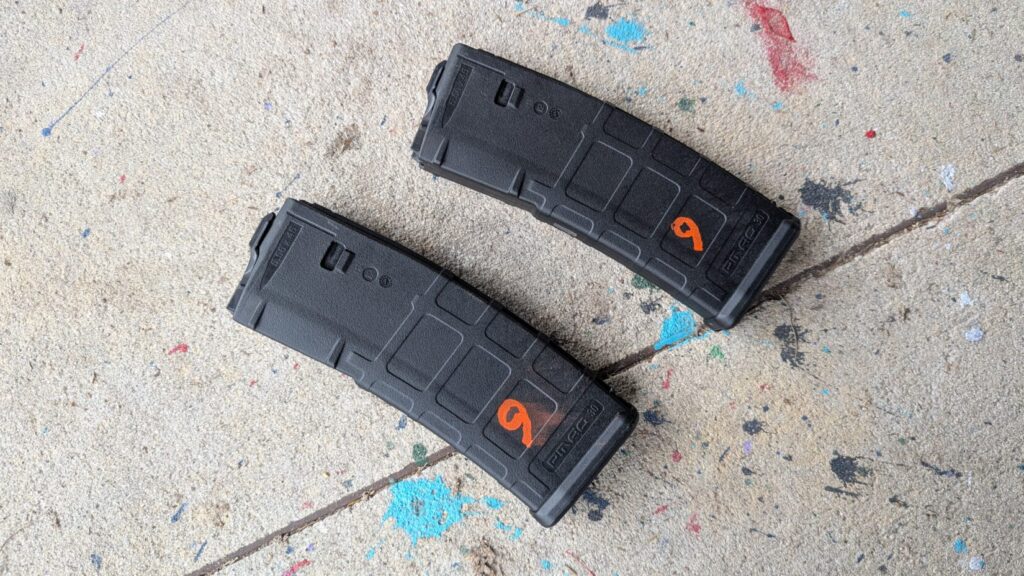
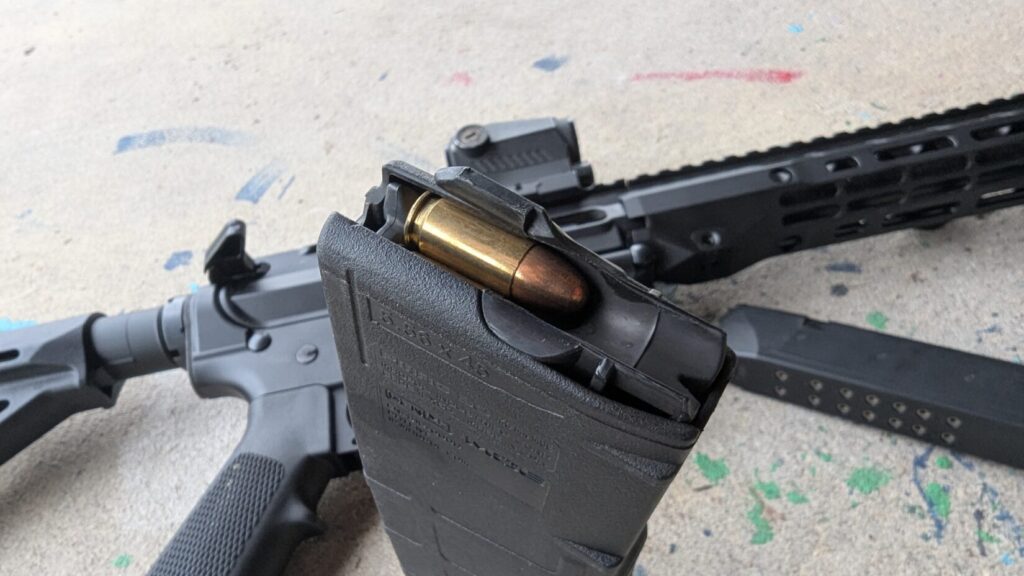
Mean Arms makes the ExoMag, which is a polymer 9mm magazine designed for standard AR lower receivers. The Endo is a conversion kit that allows you to turn a P-MAG into a 9mm magazine. The Exomag is the cheaper and easier way to go.
I use Endo conversions because, well, I already have them and they work quite well.
The Mean Arms options feature an LRBHO, fit into standard AR magazine pouches, and make your live-fire reloads more realistic. With that said, you don’t need Mean Arms magazines or magazine conversions.
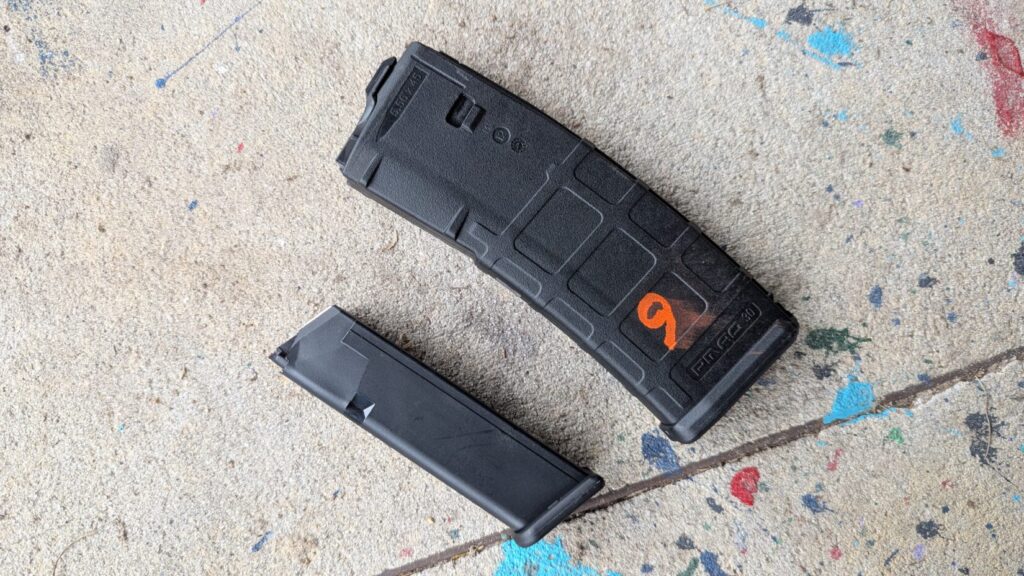
Glock or Colt mags will work fine. If you’re worried about reloads, then I have good news for you. You can just do dry reloads with your AR-15 and AR-15 magazines. You don’t need a special magazine to practice reloads effectively.
If you already have a 9mm AR that uses Glock or Colt mags, just keep rocking them.
Optics and Sights
You can use the same optic from your 5.56 rifle, but that means you have to zero and rezero every time you switch platforms.
What I did was just purchase a cheap red dot to mimic the dot on my rifle. If your rifle has an LPVO or prism, then buy a cheap LPVO or prism. There are plenty out there that are fine for training.
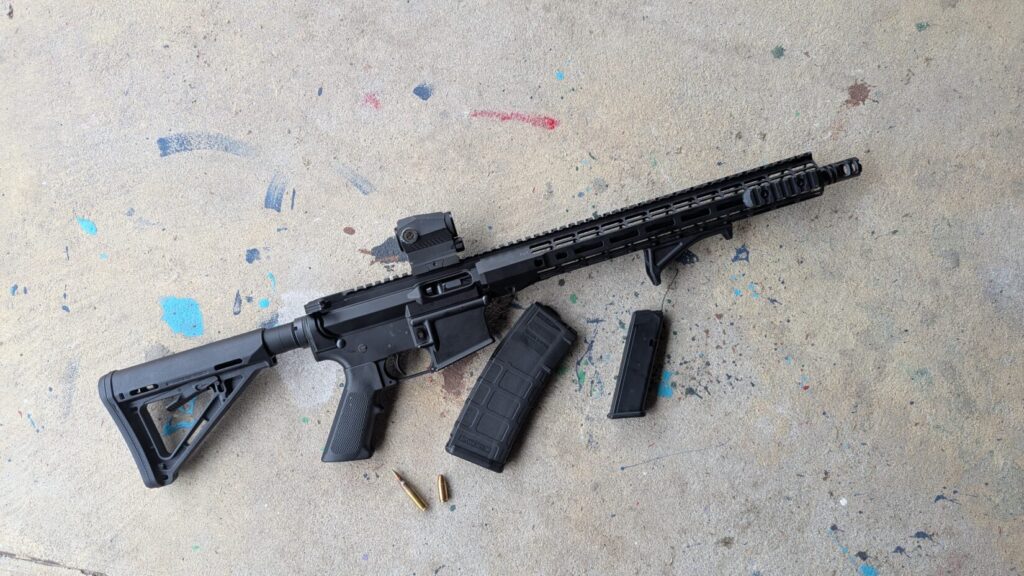
Regardless of the optic or sighting system, just ensure it works similarly to what you use on your chosen rifle. It does not need to be identical, just close enough to be useful.
A new optic will increase the up-front cost, but swapping optics costs more time. You’ll have to choose if time or money is worth it to you.
Train On
Ammo isn’t cheap, and it’s not getting cheaper. A 9mm Trainer can allow you to refine your rifle skills for duty or defensive use without costing a ton of money. You can still get good, solid, live fire reps and save a little money along the way.
As long as you can acknowledge the downsides and work around them, a 9mm trainer is a great way to sharpen your iron.