When you’re choosing a flashlight, weapon light, or headlamp, the packaging can feel like a wall of numbers, icons, and bold promises. For most buyers, it’s difficult to know what’s real and what’s just marketing. That’s exactly why the FL‑1 Standard was created.
Originally published as ANSI/NEMA FL‑1, it established a unified, objective way to test and label portable lights so consumers could compare products using consistent data.
Today, the standard appears as ANSI/PLATO FL‑1, reflecting its transition to PLATO—the Portable Lights American Trade Organization—which now manages and enforces it. The purpose of the standard remains the same, but PLATO’s stewardship modernized how it is maintained. In 2026, PLATO released the most significant update in the standard’s history, adding new testing methods that better reflect how today’s high‑output lights operate.
Functionally, ANSI/NEMA FL‑1 and ANSI/PLATO FL‑1 describe the same foundational metrics. The updated ANSI/PLATO FL‑1‑2025 (published in 2026) expands and clarifies those metrics, especially for short‑duration “turbo” modes that produce extremely high initial brightness.
Why the FL‑1 Standard Exists
Before the FL‑1 Standard, manufacturers used their own testing methods—some rigorous, others questionable. A “500‑lumen” light from one brand could be noticeably dimmer than a “300‑lumen” light from another. Runtime claims were often inflated, and durability ratings were vague or unverified. Consumers had no reliable way to compare products, and even experts struggled to interpret the numbers.
The FL‑1 Standard solved this by establishing clear rules for how participating manufacturers must measure and report performance. These rules ensure that the numbers printed on the box actually reflect how the light performs.
The 2025 revision strengthened this mission by adding standardized testing for Short‑Duration Elevated Brightness (turbo/boost modes). Manufacturers can no longer advertise extreme peak outputs without disclosing how long those levels are sustained.
The Six Core FL‑1 Performance Categories
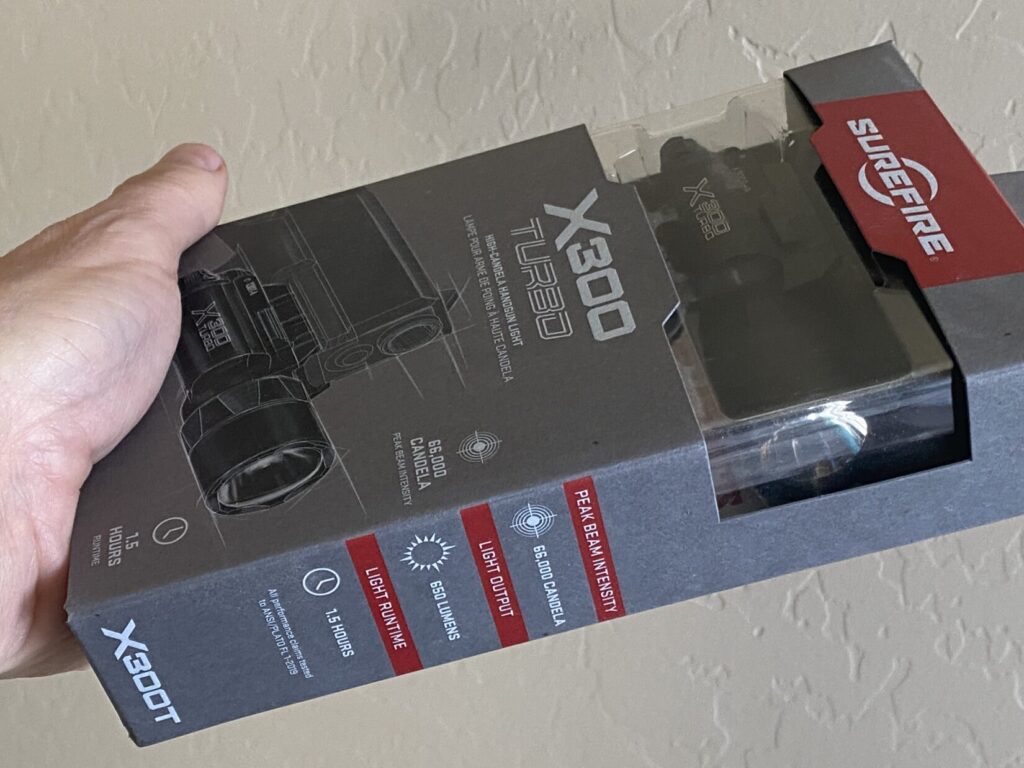
At its core, the FL‑1 Standard defines how to measure six key performance categories: light output, runtime, beam distance, peak beam intensity, impact resistance, and water resistance.
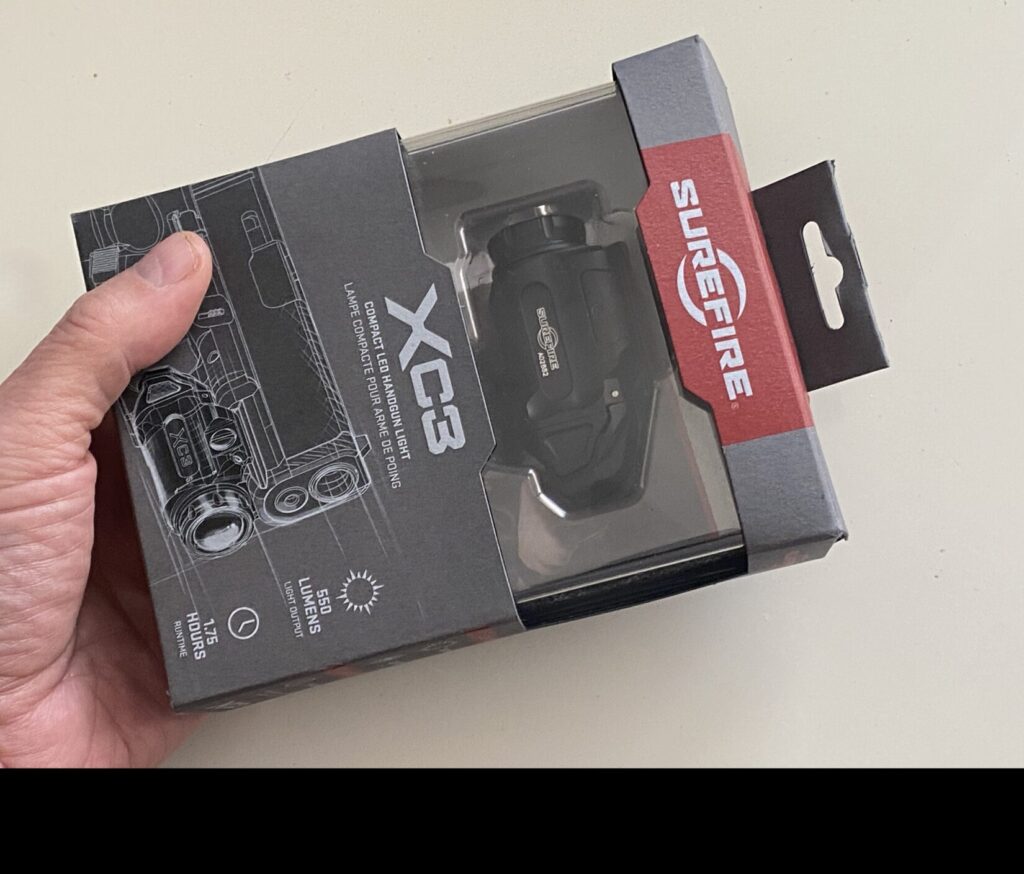
These categories appear on packaging as small icons—simple graphics that represent complex testing procedures. Understanding what each icon means empowers you to choose the right light for your needs rather than relying on marketing language or guesswork.
Light Output (Lumens)
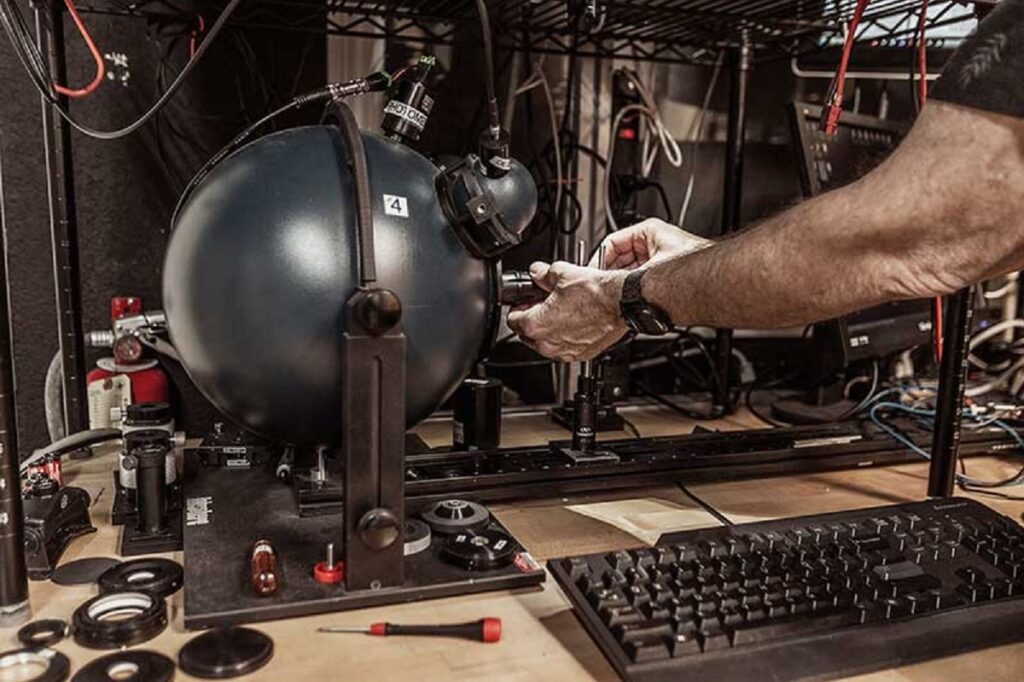
Light output, measured in lumens, represents the total amount of light emitted at the start of the test. The FL‑1 Standard ensures lumen measurements are taken using calibrated equipment and controlled conditions, allowing accurate comparisons across brands.
The 2025 update adds clarity for extremely high‑output lights by requiring manufacturers to disclose both the initial lumen value and the sustained output after thermal regulation begins
Runtime
Runtime is measured from activation with fresh batteries until the light’s output drops to 10% of its initial brightness. This prevents manufacturers from claiming unrealistic runtimes based on extremely dim output levels.
The 2025 revision kept the core definition but added optional reporting for regulated‑output runtime, giving consumers a clearer picture of real‑world performance.
Beam Distance
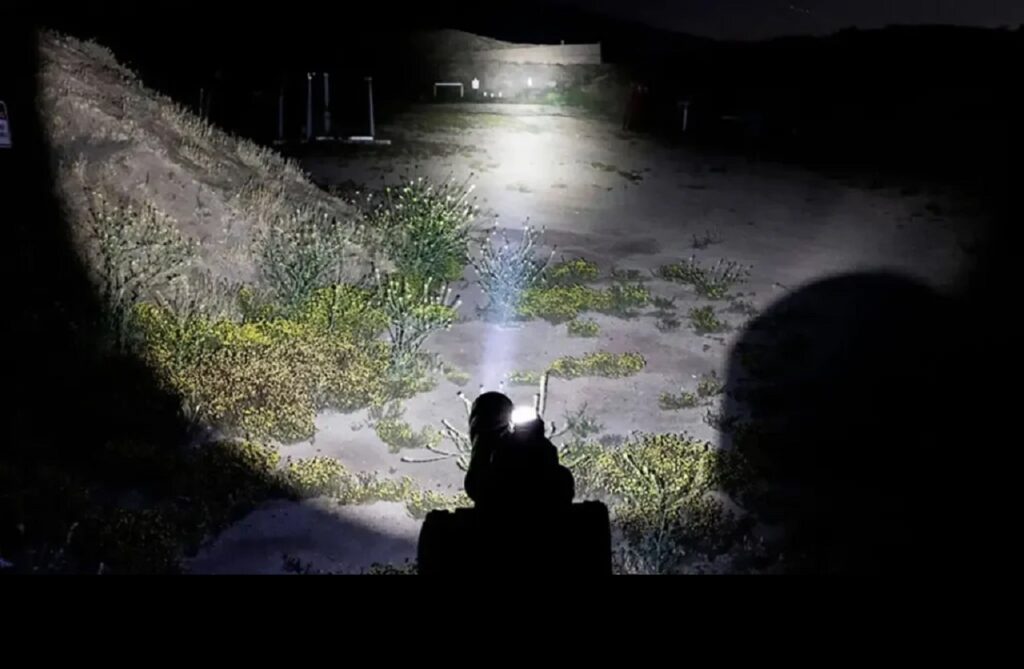
Beam distance, measured in meters, indicates how far the light can project a usable beam. The standard defines “usable” as the distance at which the beam reaches 0.25 lux, roughly the brightness of full moonlight. This benchmark is practical for navigation and identifying objects at distance.
Peak Beam Intensity (Candela)
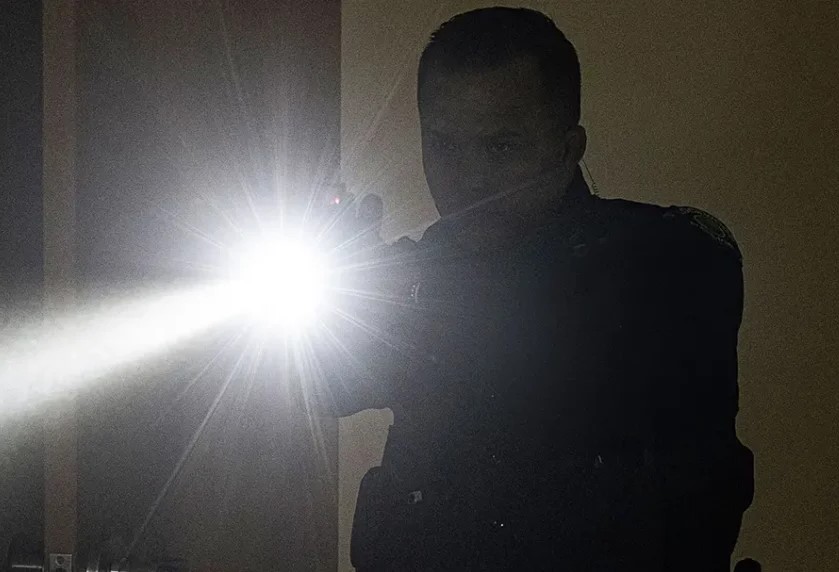
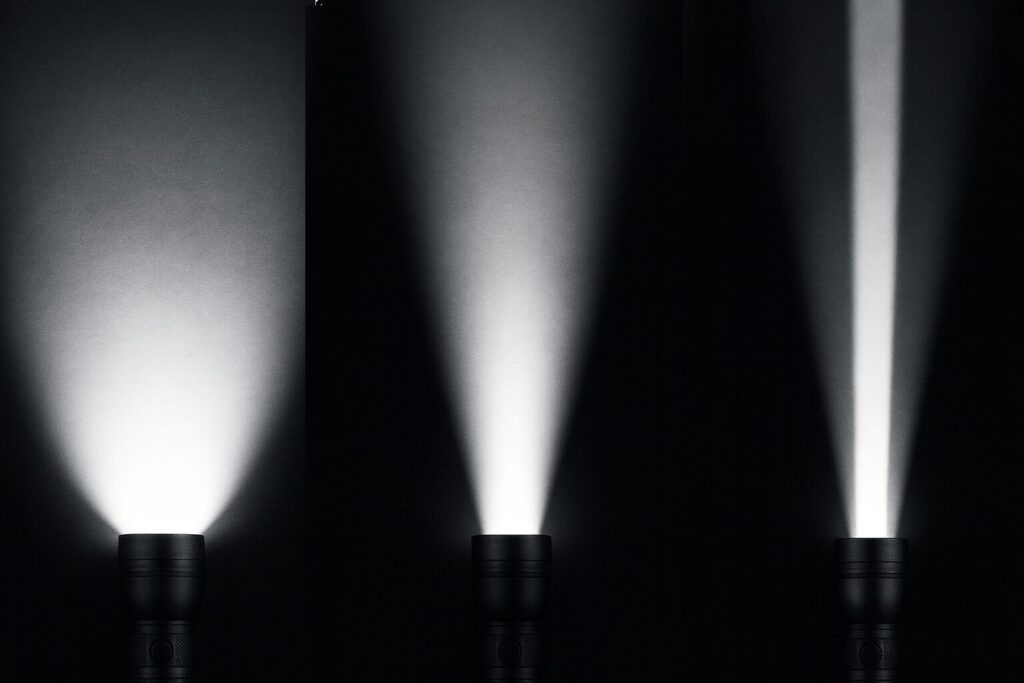
Closely related to beam distance is peak beam intensity, measured in candela. While lumens measure total light output, candela measures the brightness of the most intense point in the beam. A light with high candela produces a tight, focused beam that can reach far distances.
Higher‑candela white light can cut through or better penetrate intermediate photonic barriers—bright, concentrated light that otherwise makes it difficult to identify objects or people beyond it. A light with lower candela may produce a wide, even flood that’s better for close‑range tasks and peripheral awareness. Understanding the difference helps you choose a light suited to your environment—whether you need long‑range visibility or broad, even illumination.
Impact Resistance
Durability is another area where the FL‑1 Standard brings clarity. Impact resistance is tested by dropping the light from a specified height onto concrete. The test ensures that the light can withstand real‑world bumps, drops, and accidents.
A rating of “1 meter” means the light survived multiple drops from that height without cracking or failing. Higher ratings indicate greater toughness. This is especially valuable for tradespeople, campers, and anyone who uses a light in rugged conditions.
Water Resistance (IPX Ratings)
Water resistance is measured using the IPX system, which includes three common ratings under the FL‑1 Standard.
IPX4 means the light can withstand splashing water from any direction—suitable for rain or light exposure. IPX7 means the light can be submerged in up to 1 meter of water for 30 minutes without failing. IPX8 goes further, indicating that the light can be submerged deeper than 1 meter for a manufacturer‑specified duration.
These ratings help you understand whether a light is merely weather‑resistant or truly waterproof.
How FL‑1 Testing Is Performed
The FL‑1 Standard defines not only the metrics but also the testing conditions. Lights must be tested with fresh batteries, in controlled environments, using calibrated equipment. Tests must be repeatable so independent labs can verify results.
The 2025 revision added new procedures for:
- Short‑Duration Elevated Brightness (Turbo Mode)
- Thermal regulation behavior
- Reporting sustained vs. peak output
These additions reflect the reality that modern high‑output lights often produce extremely bright initial bursts that quickly step down due to heat.
What the FL‑1 Standard Does Not Cover
However, it’s important to understand what the FL‑1 Standard does not cover. It doesn’t evaluate build quality, materials, ergonomics, user interface, battery quality, or long‑term reliability. A flashlight may meet the FL‑1 Standard yet still feel flimsy, have poor heat management, or use a confusing control system.
The standard focuses strictly on measurable performance, not subjective qualities. It also applies only to directional lighting.
How the FL‑1 Standard Helps You Choose the Right Light
The FL‑1 Standard is more than a convenience. Instead of relying on marketing claims, FL‑1 ratings give you hard data on how a light will perform when it actually matters. The FL‑1 icons provide clear, standardized information so you can choose equipment that meets operational demands—not advertising hype.
Why the Standard Benefits the Industry
The standard also benefits the industry by encouraging honesty and consistency. Manufacturers who follow the FL‑1 guidelines demonstrate a commitment to transparency. This builds trust with consumers and raises the overall quality of products on the market. It also pushes companies to innovate in meaningful ways—improving efficiency, durability, and performance rather than relying on inflated numbers to market their products.
Final Thoughts
We live in a world where technology evolves rapidly, and marketing can be overwhelming. The ANSI/PLATO FL‑1 Standard serves as a reliable anchor. It transforms technical measurements into clear, comparable information that anyone can understand.
Whether you’re a casual buyer or a dedicated gear enthusiast, knowing how to read the FL‑1 icons empowers you to choose the right light for your needs and avoid being misled by exaggerated claims.
ANSI/PLATO FL‑1‑2025 Standard Performance Chart
| Icon / Category | What It Measures | Definition | How It’s Tested |
|---|---|---|---|
| Light Output (Lumens) | Total visible light | Total luminous flux emitted | Measured in an integrating sphere after 30 seconds; the 2025 revision adds optional sustained‑output reporting. |
| Beam Distance (Meters) | Maximum distance of usable light | Distance at which beam reaches 0.25 lux | Photometric measurement at various distances |
| Peak Beam Intensity (Candela) | Brightest point of the beam | Maximum luminous intensity at beam center | Measured with a lux meter at the brightest point of the beam and converted to candela. |
| Runtime (Hours) | Time until output drops to 10% of initial brightness | Measures sustained performance | Tested continuously on highest mode until output reaches 10%; the. 2025 revision adds optional reporting for regulated‑output runtime |
| Impact Resistance (Meters) | Drop durability | Height from which the light can be dropped without failure | Dropped 6 times from rated height onto concrete |
| Water Resistance (IPX Rating) | Water protection level | IPX4 = splash‑proof; IPX7 = 1m/30min; IPX8 = deeper/longer submersion | Tested per IEC 60529 |