
The Beretta 92GTS came out of nowhere and exploded into my world, and I couldn’t be more excited. I’m an old-school M9 fan. I carried one for a few years, and it’s a gun I have fond memories of.
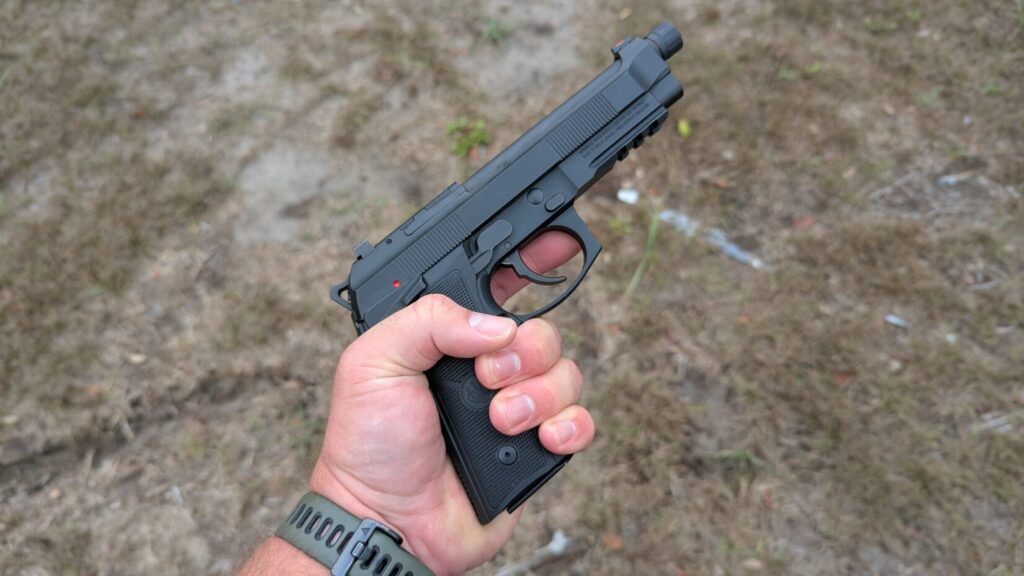
The M9 was an outstanding combat pistol, first adopted in 1985. A little time has passed since then, and while the M9 is still a serviceable pistol, it’s lagging behind the modern era of firearms. Beretta has made a ton of incremental changes with the M9 and 92FS series, and it has culminated in the Beretta 92GTS.
What’s New With the Beretta 92GTS
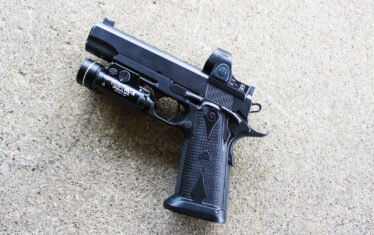
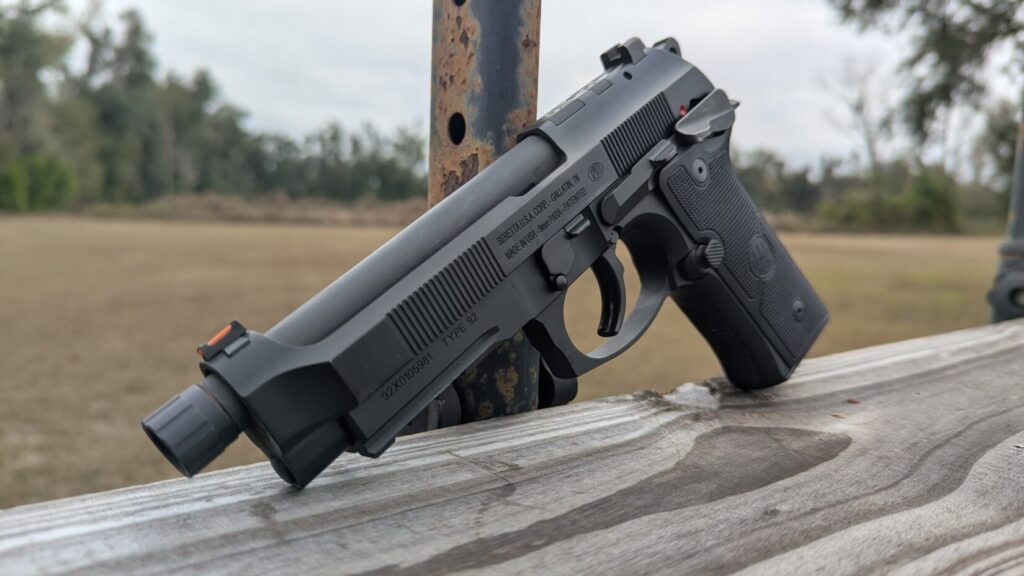
The Beretta 92GTS adds all the modern advantages you could ever want. We get a Picatinny rail for lights and lasers, an optics cut with a variety of removable plates, and a threaded barrel on some models for suppressors or compensators.
It hits those modern tactical notes just perfectly.
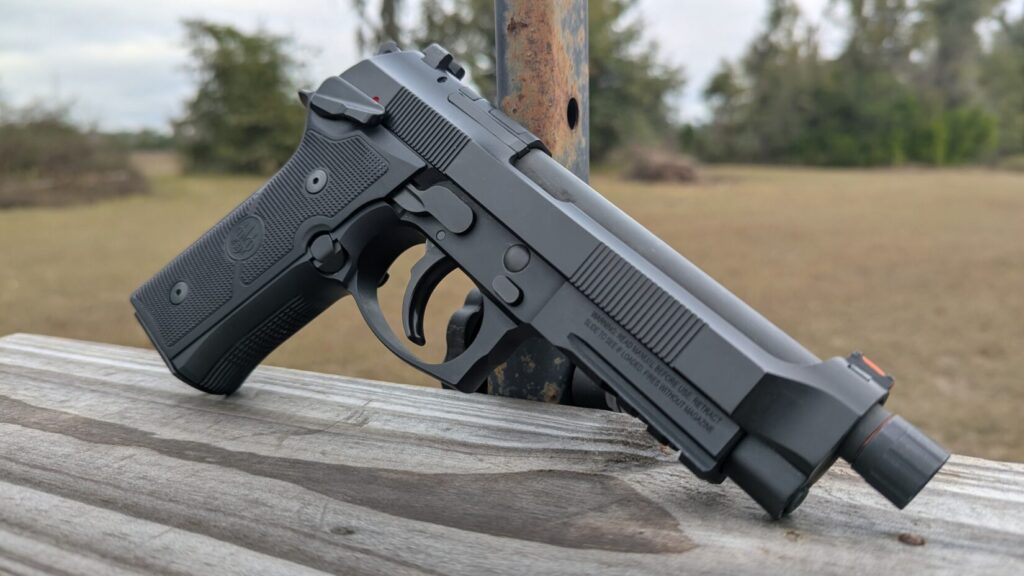
Beyond that, the 92GTS series has received an ergonomic upgrade and various other changes. The most significant being the decocker. Beretta has played around a bit with frame-mounted safeties, but the 92GTS has a frame-mounted decocker.
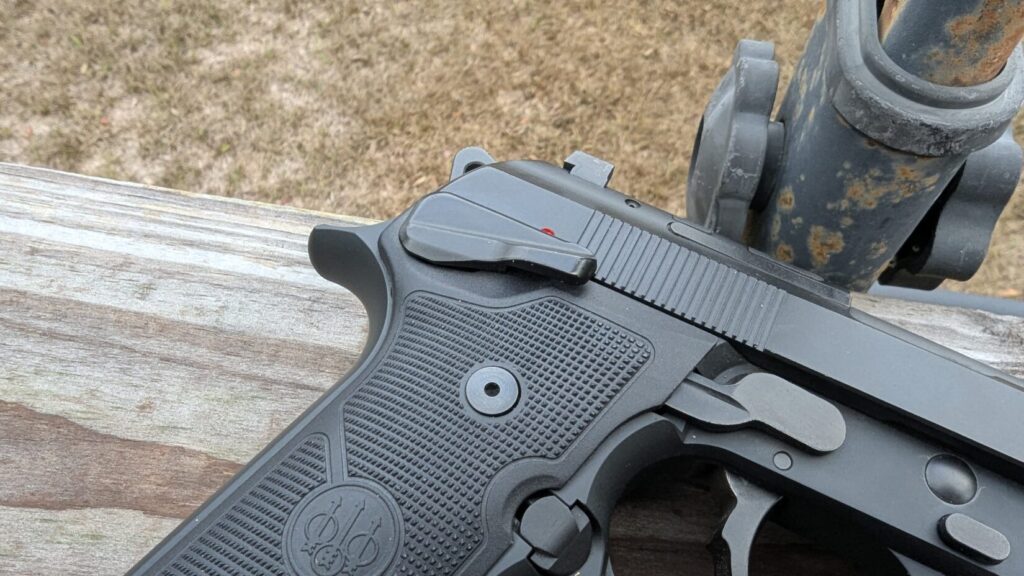
It’s quite different from other frame-mounted decockers. Companies like SIG have traditionally used a thumb-mounted decocker that’s pressed downward. The 92GTS requires you to press up on the decocker. It’s odd, but it’s functional and massive in size.
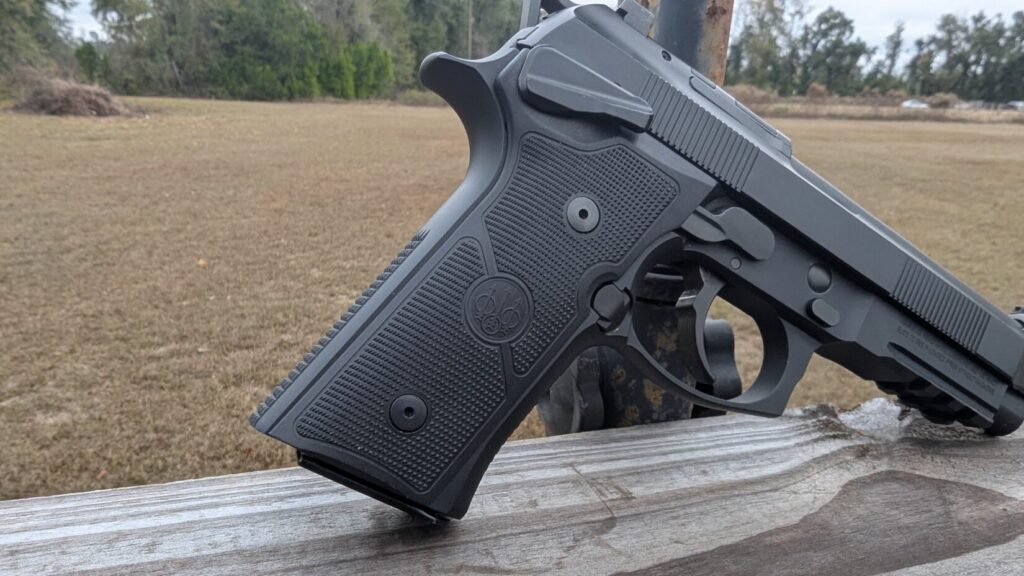
It’s a big shelf that’s fairly easy to press up, and it’s an ambidextrous decocker design. It drops the hammer with ease and returns your gun to standard double-action. To accommodate this new decocker, the Beretta uses a new twin-sear design that ensures a smooth decocking motion and complete and total safety as it reverts to the half-cocked position.
Beretta went with the Vertec frame design, which will be controversial. Some Beretta enthusiasts don’t care for the Vertec frame, but for others, it’s a massive improvement because it thins the grip’s bulk. I’m agnostic on it; I like both frame designs and don’t have a major preference one way or the other.
The front sight is a red fiber-optic design, and it’s removable and swappable if you don’t like it or prefer suppressor-height sights. The Beretta 92GTS is the ultimate Beretta 92.
Run and Gun With the Beretta 92GTS
I love DA/SA guns. I acknowledge the downsides and the problem with an inconsistent trigger pull. Still, I like the design and always have.
The 92GTS does DA/SA right. The double-action trigger pull is remarkably smooth. It’s wonderful, just truly enjoyable all the way around.
Most double-action triggers are fine, but they aren’t great. This is a rare example of a great double-action trigger. After the double-action, we get to the single-action, which is equally enjoyable.
It’s light, crisp, and resets with both audible and tactile feedback. I don’t ride the reset when I shoot, but a short reset means you can get back to pressing the trigger and drive rounds quickly and accurately.
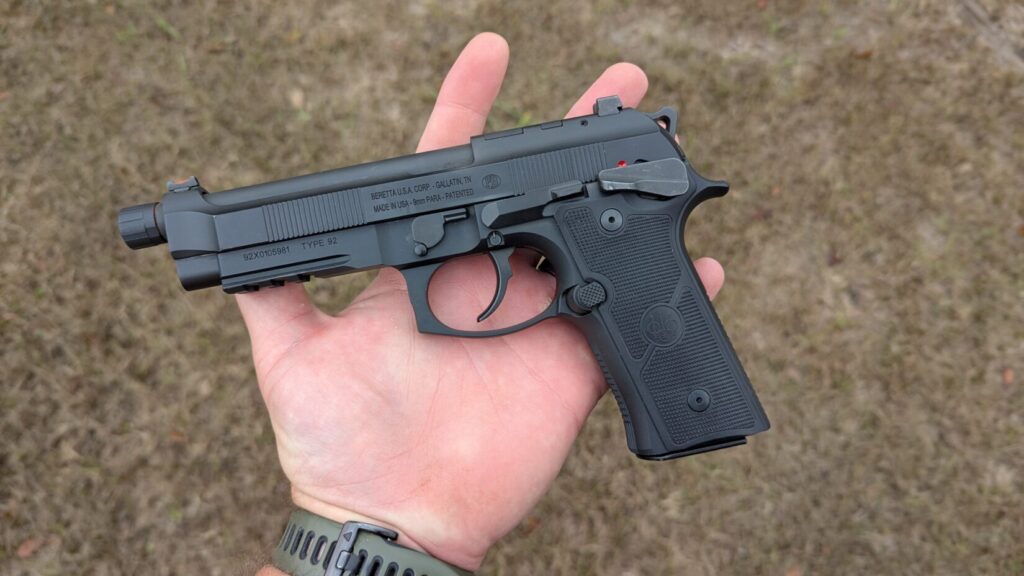
The trigger system is DLC-coated, and the skeletonized hammer does wonders to provide an excellent trigger pull. Beretta calls it the Xtreme-S trigger, and it’s a brilliant trigger design that takes the classic DA/SA trigger of the 92FS design and perfects it.
Accuracy
That excellent trigger and great grip design make it super easy to shoot the gun accurately. A good trigger helps reduce the human error element from the equation. At close range, I was able to keep five rounds in the 10-ring of a B8 target at 15 yards.
At 25 yards, I could keep the rounds in the black. This made me a little cocky, and I attempted the No-Fail Pistol Drill from Presscheck Consulting. I almost passed. Sadly, a couple of my shots were below the 3-second par time, but they all hit the black.
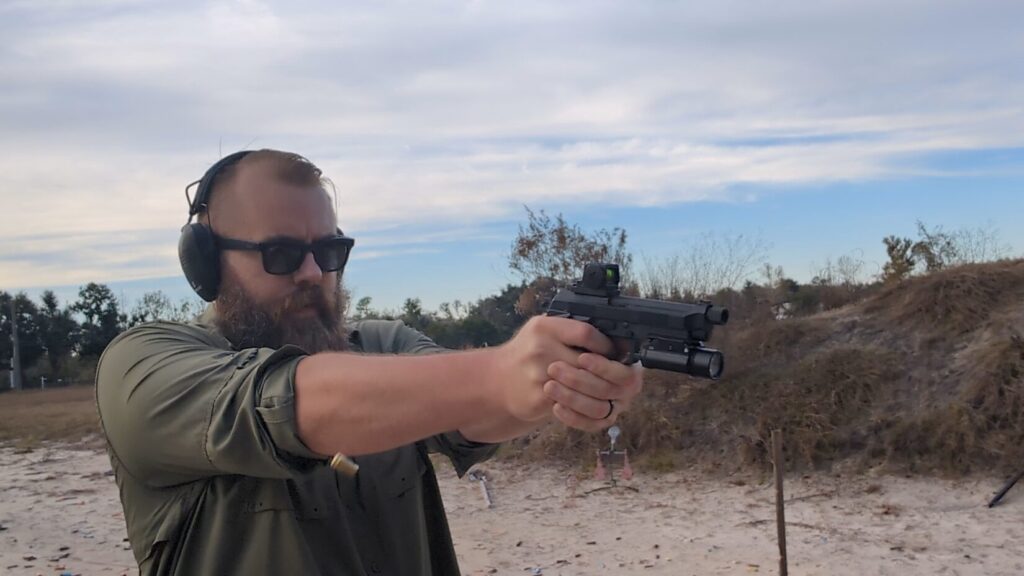
At 50 yards, I got a massive smile on my face as those 9mm rounds slammed into steel targets. Hitting an IPSC-sized steel target was downright easy. Hitting a 10-inch gong was a little more challenging, but doable with single-action fire, if I took my time. At 50 yards, that’s exceptional.
Going Faster
The 92 series has always been known for its light recoil. The slide’s reciprocating mass is low, which results in minimal recoil. That was true with the original M9, and it’s true with the 92GTS. The gun bucks just a hair and settles back down on target.
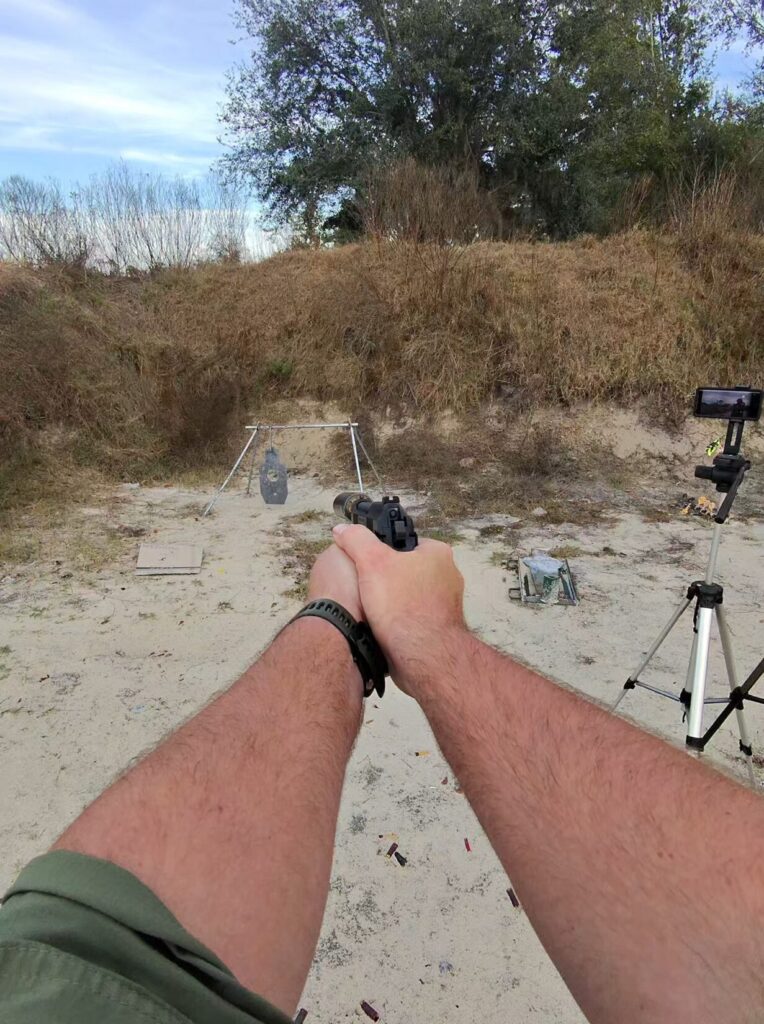
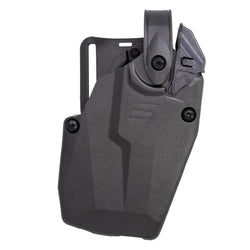
This allows for repeatable and accurate rapid fire. The 92GTS handles extremely well when you start shooting fast. Bill Drills with a Level 1 Retention Holster hovered around the 2.3-second mark for me, so a good shooter can probably drag that well below two seconds.
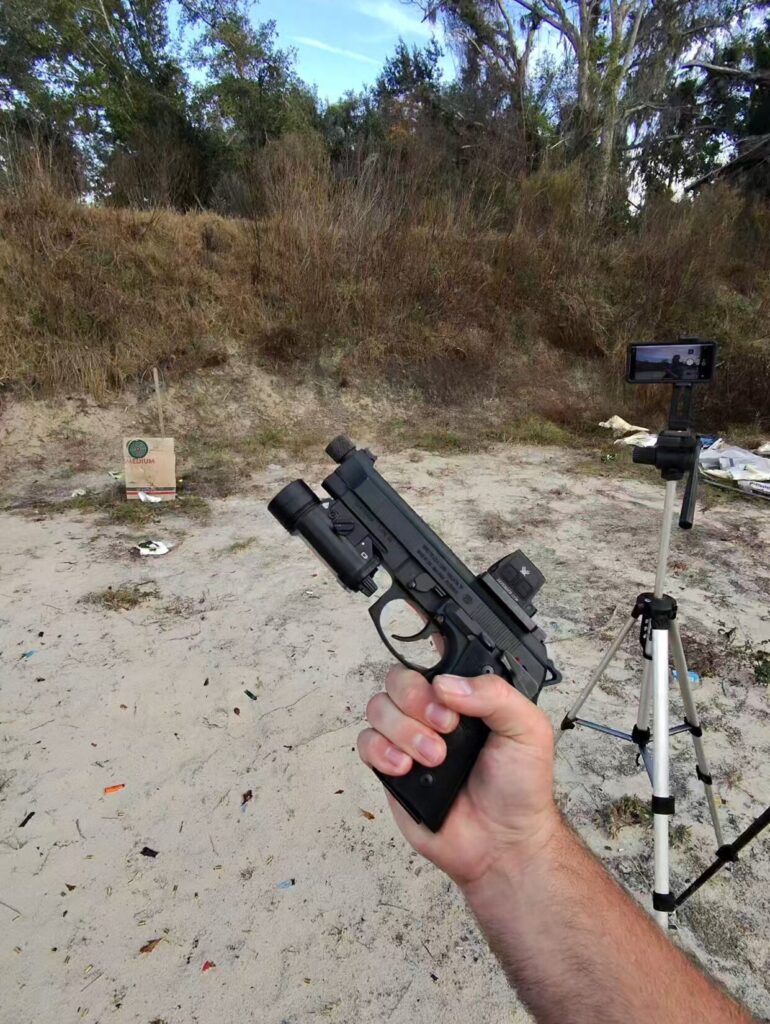
Landing sub-second double-taps at 15 yards with the rounds roughly an inch from each other feels fantastic. I shot a series of failure-to-stop drills, and the gun flows naturally from two rapid shots to the torso to one well-aimed headshot.
Shooting the Beretta 92GTS Suppressed
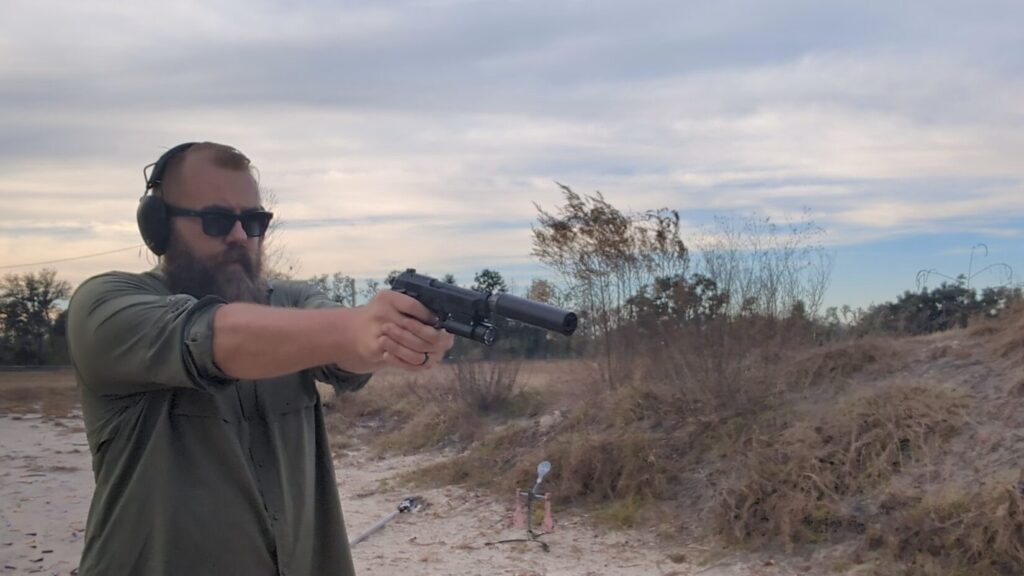
I attached a SilencerCo suppressor to my Beretta 92GTS, and it was absolutely wonderful suppressed. It reduced even more recoil and makes the gun even easier to shoot. When loaded with subsonic ammo, it’s a total joy to shoot.
I can safely drop my ear protection, and the loudest noise is the round hitting steel. Transition to paper, and all you hear is a loud clack of the slide jamming back and forth.
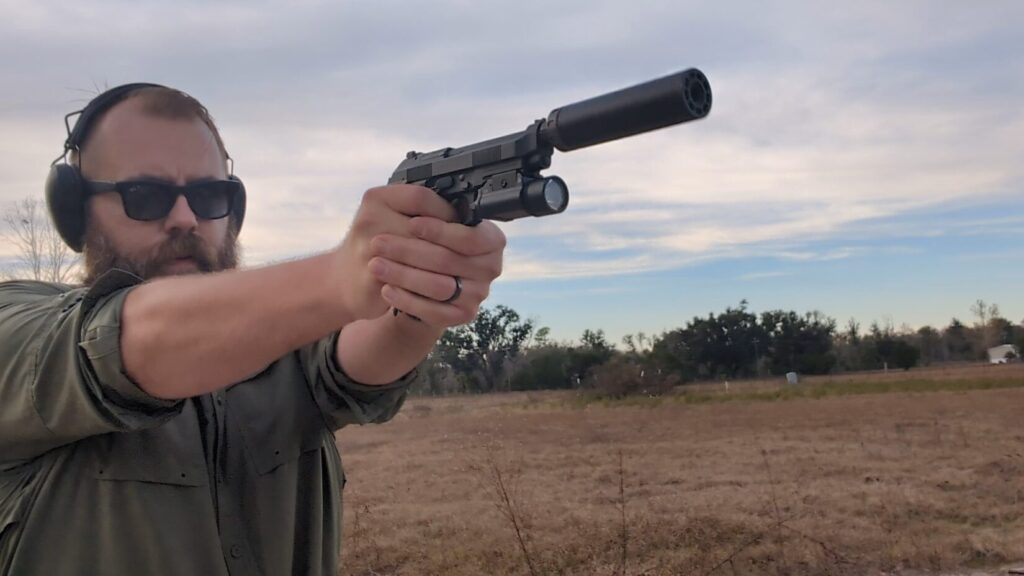
90s movies made me adore the idea of a suppressed Beretta 92, so finally attaching the suppressor to this gun delivered immeasurable joy.
The 92GTS proved to be just as reliable as I expected. I shot the pants off the 92GTS out of sheer enjoyment of the platform, and I experienced zero malfunctions. This includes shooting a variety of steel-cased el cheapo ammo, a mixture of 115 and 124-grain hollow points, and a mix of old and new Beretta magazines.
The Beretta 92GTS
The 92GTS is the ultimate culmination of the 92 platform. It’s got the features and designs I’ve always wanted for the Beretta 92. The rail, the optics cut, the decocker, and the threaded barrel take this gun over the top.
I think Beretta has a winner with the 92GTS. If you’re a Beretta 92 fan, you’ll be adequately impressed by what this new 92 has to offer.