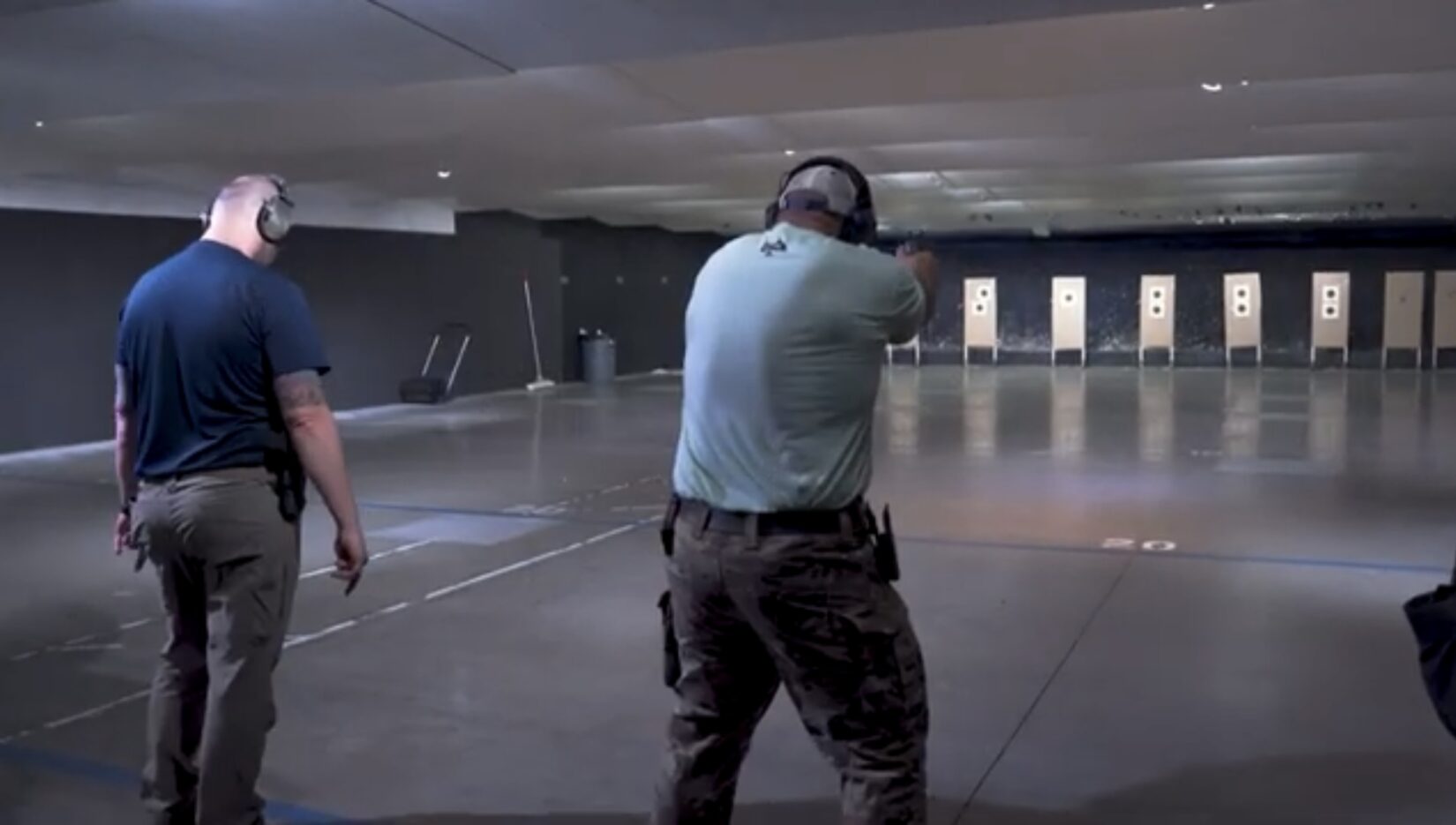
Having shooting goals and a plan is critical to improving your overall marksmanship skills. This month we add some distance to the skill builder shooting exercise and shoot some 25-meter bulls.
We will try to make these skill builders indoor range friendly. Our intent at War HOGG Tactical is to supplement your firearms training program and watch you become more efficient and effective with your firearms.
Equipment Needed
- Firearms & Gear: Your normal range and firearms equipment.
- Target: 25m B8 Bullseye Replacement center or War HOGG Tactical Training Target
- Training Area: Live Fire Range and a Dry Fire Training Area
- Recording Tools: Shot Timer (we recommend the PACT Club Timer III. Click the link to learn how to use a timer effectively in your marksmanship training, and a recording device with a tripod or holder.
- Tracking: The Firearms Training Notebook – available on Amazon
How The Skill Builder Works
Start the beginning of the month shooting the monthly skill builder shooting exercise. After shooting the skill builder, you will need to record your data in your copy of The Firearms Training Notebook. You will then develop your dry fire training plan and work your training plan throughout the month. Around the end of the month, reshoot the skill builder and see your improvement.
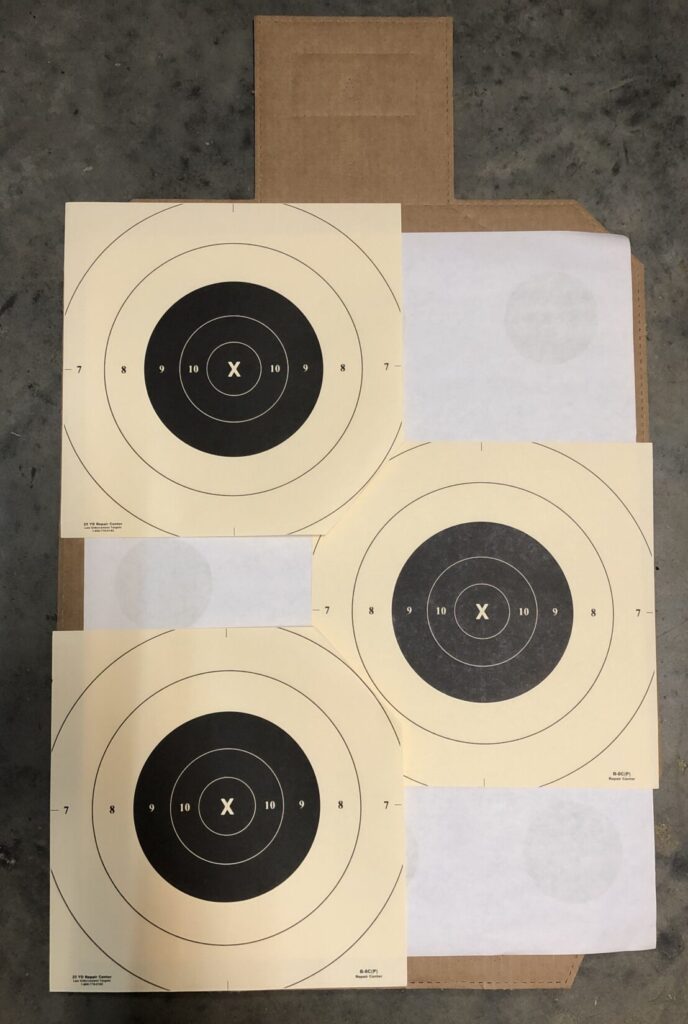
December Skill Builder: 25 Meter Bull
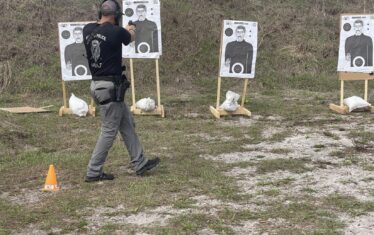
This month’s Skill Builder focuses on the shooting 25 meters bulls with your pistol, in three variations. The slow fire, the timed fire and the rapid fire. The Slow Fire is 10 rounds in 10 minutes, Timed Fire is 5 rounds 20 seconds for two iterations for a total of 10 rounds and the Rapid Fire is 5 rounds in 10 seconds for two iterations for a total of 10 rounds
Head out to the range and conduct your 25-meter bull series. Remember, no warmup. Just shoot the 30 rounds.
Record your scores, marksmanship data, target used (full-size B8 or replacement center), and distance in The Firearms Training Notebook. Don’t forget to use the note section at the bottom of the page to annotate any information you learned during that range session (e.g., poor grip during the rapid string).
Scoring the 25-Meter Bull
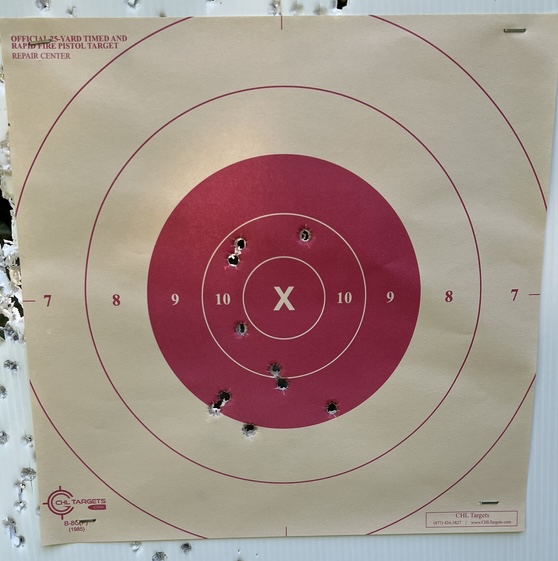
First, make sure you have all 10 shots; each miss is minus 10 points. Note: This is the one exception where I count line breakers, as it is an international standard.
- 10-Ring and X-Ring: 10 points. Make sure to count your X’s in your overall score (e.g., 96-2X).
- 9-Ring: 9 points (or easier math, just subtract 1 point).
- 8-Ring: 8 points (or minus 2 points), and this calculation carries on for the other rings.
Adapting the Skill Builder
I see most shooters struggle at 25 meters; I believe a lot has to do with the mental idea of being at 25 meters. If you are consecutively hitting a 3-inch dot at 5 or 7 meters, you can hit a 25-meter bullseye target.
You can move closer to build your skill, and once you’re constantly hitting the bullseye, push the distance back till you get to 25 meters. You can start from the holster or the ready, depending on your skill level. Also, if you are struggling with the timed and rapid you could make the rapid 30 seconds and the timed 15 seconds. As your skills improve, bring the time back down.
Breakdown of The Skills
Slow Fire: Precision and Fundamentals
The 25-meter slow fire is all about precision, sight alignment, and trigger control. The Slow Fire isolates fundamentals. You have enough time to: perfect your natural point of aim, break clean trigger presses, call your shots, and reset mentally between rounds.
Don’t chase the wobble, accept it, time your press through the natural arc, you will develop this skill over time with your dry fire practice. You have the time: if the sights are not there, don’t take the shot.
For me, I don’t rush my shots; I take almost the full 10 minutes. After each shot, I bring my pistol back to the ready or reholster. I change my focal shift by looking at the ground, taking at least two big deep breaths to oxygenate my eyes, and presenting back out on target.
Timed and Rapid Fire: Consistency Under Pressure
The Timed Fire teaches repeatability. Your fundamentals must be consistent, but with enough time to avoid rushing.
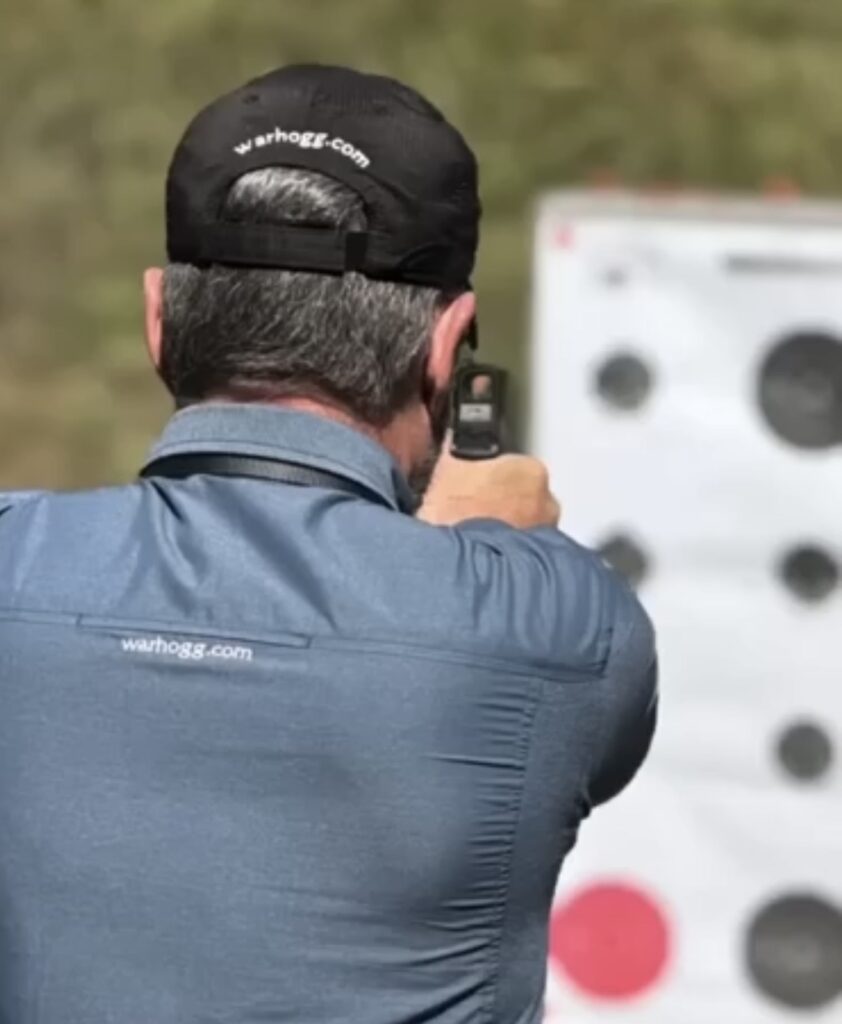
The Rapid Fire tests your ability to control the gun and maintain accuracy while the clock compresses your decision-making. I’m not a fan of a cadence; your sights always give you permission. Your grip is going to be a big factor in your accuracy; you have to have a solid and repeatable grip to be successful.
Check On Your Work
Sometime near the end of the month, head back out to the range and reshoot the War HOGG Self-Eval and see where your performance is at.
Some things could throw your performance off. If you have a firearms malfunction, failure to fire, failure to extract, etc., I would reshoot the drill. If you fumble your magazine change, I would finish the drill, gather your data for The Firearms Training Notebook, then it’s your call if you want to reshoot the drill. You still have 11 pieces of data for a comparison, so all is not wasted.
Build Your Shooting “CREW”
Having other like-minded shooters around will help you push to make yourself better. If you have friends, family, or co-workers who share your shooting passion, start building that shooting tribe.
This way, not only do you have your own accountability, but have others to help you improve on your marksmanship journey. They can record you shooting, possibly give you feedback on things they see, and it’s always good to have some fun competition to help you grow.
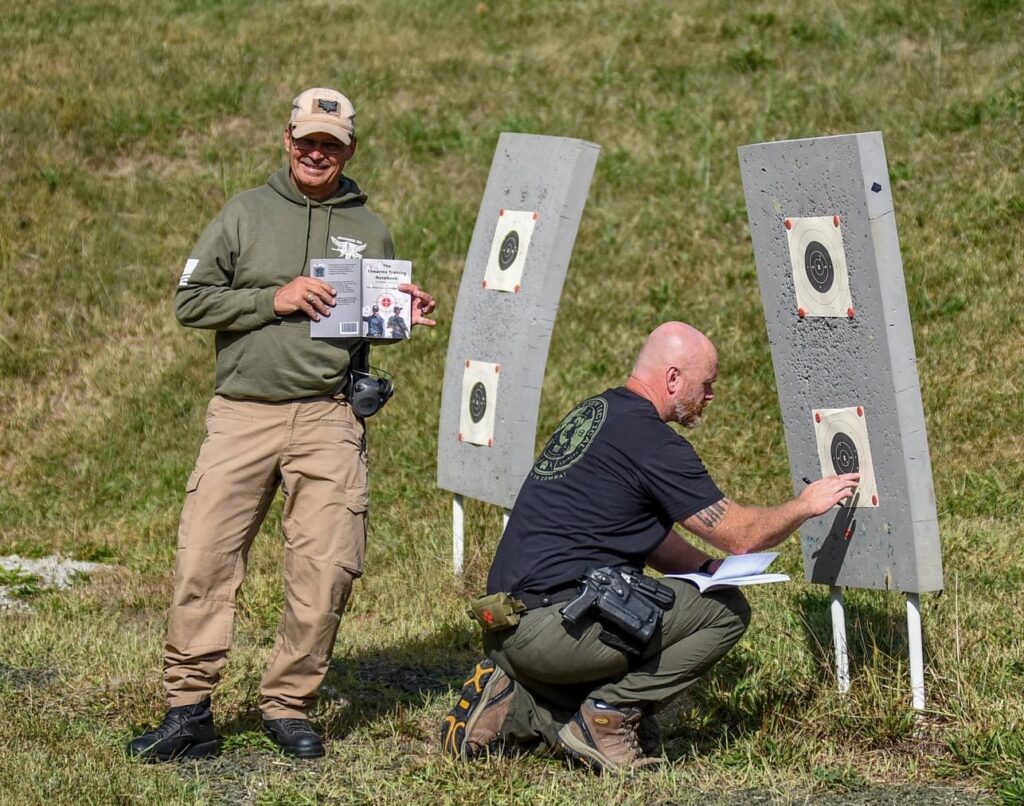
At War HOGG Tactical, we have a motto we apply to all aspects of our life “Be 1% Better Everyday!”
You can always join us in sharing your marksmanship growth. Go to our On The Range (OTR) Patreon “CREW” members page and share your marksmanship journey with like-minded shooters striving for constant marksmanship improvement.
Me and my co-host/co-author Mark Kelley of Kelley Defense conduct a bi-monthly interactive Zoom call with our Patreon “CREW” members where we break down each shooter’s skill builder. We have even reviewed video of “CREW’ members shooting during our Zoom call and given immediate feedback on where we see they can improve their shooting skills.
Conclusion – Put In The Work
To see improvement in your marksmanship skills you must put in the work. This means having a solid dry fire training plan and a way to record your progress like you can with The Firearms Training Notebook.
Use your additional tools like a shot timer and video to take your dry fire training to the next level and see the increased performance during your live training. Looking forward to training with you in 2026!
Train Hard, Stay Safe, and see you “On The Range” – Rick