
When you discuss defensive shotguns, there are really just two serious options. The pump-action or the semi-auto. Sure, lever guns exist, revolving shotguns exist, heck, even bolt actions. For defensive purposes, the pump or semi-auto will be our go-to.
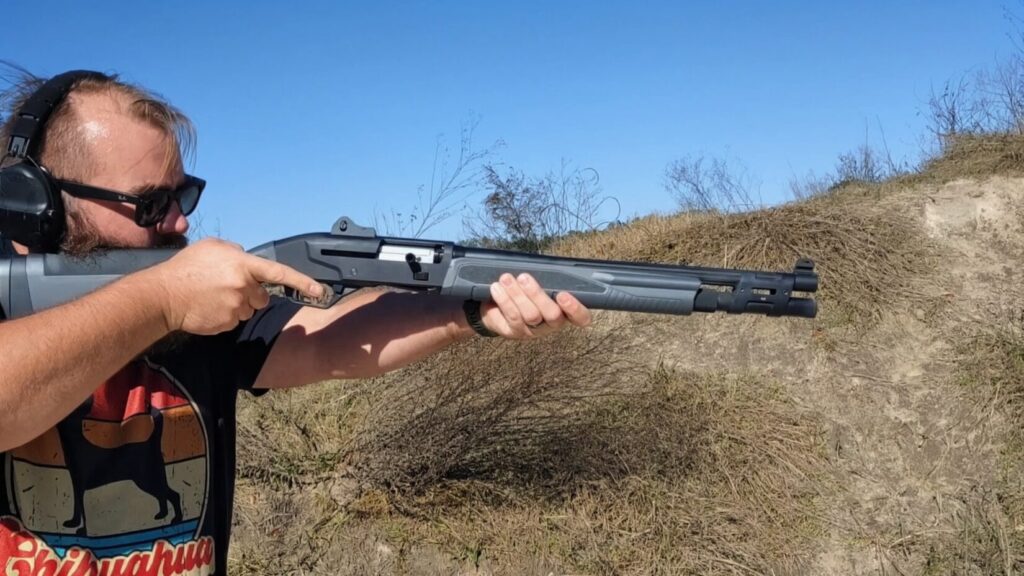
Those other actions can certainly work, but the pump or semi-auto option is going to be the most common, the highest quality, and the most proven options. If you want to use any other shotgun action, you do you, but I’m only going to recommend a pump or semi-auto shotgun.
Both options have their pros and cons.
Price
Pump shotguns are going to be the most affordable option. The Mossberg Maverick is a lot of bang for not so much buck. You can get a good, name-brand pump shotgun for less than a Glock, and a lot less than a quality AR.
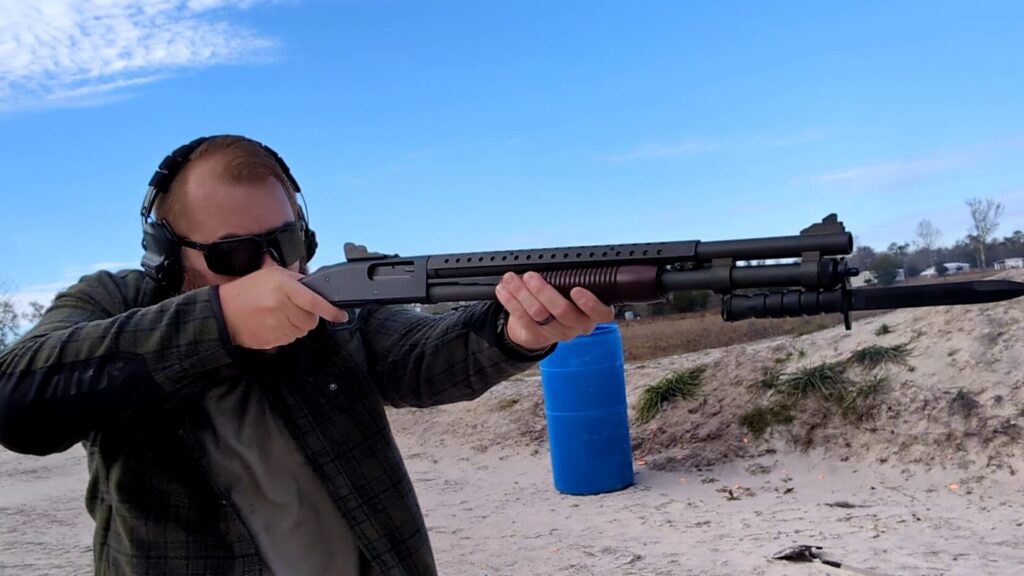
A good quality semi-auto gets a little pricier. Even some of the Turkish semi-autos are pricey, and I wouldn’t trust one of those for self-defense. If we stick to Mossberg, Beretta, or Benelli, we are looking at a grand at least. If we allow Stoeger to enter the chat, a little less, but still more than any pump gun.
Reliability
A manually activated firearm has a lot less to go wrong. No gas system, no inertia system—you are mostly responsible for the weapon’s ability to function.
I say mostly, because we also have ammo, which has its own problems. Typically, this is not a huge problem in a pump gun, but primers can fail to ignite. I’ve seen shells get stuck in the chamber, and other weird stuff.
Unless the ammo fails or the gun breaks, the shooter is responsible for its operation. Which means it can malfunction, but it’s your fault. With a pump gun, the most common malfunction is short stroking. You’re not pulling the action back far enough to cycle the gun, so it clicks instead of bangs.
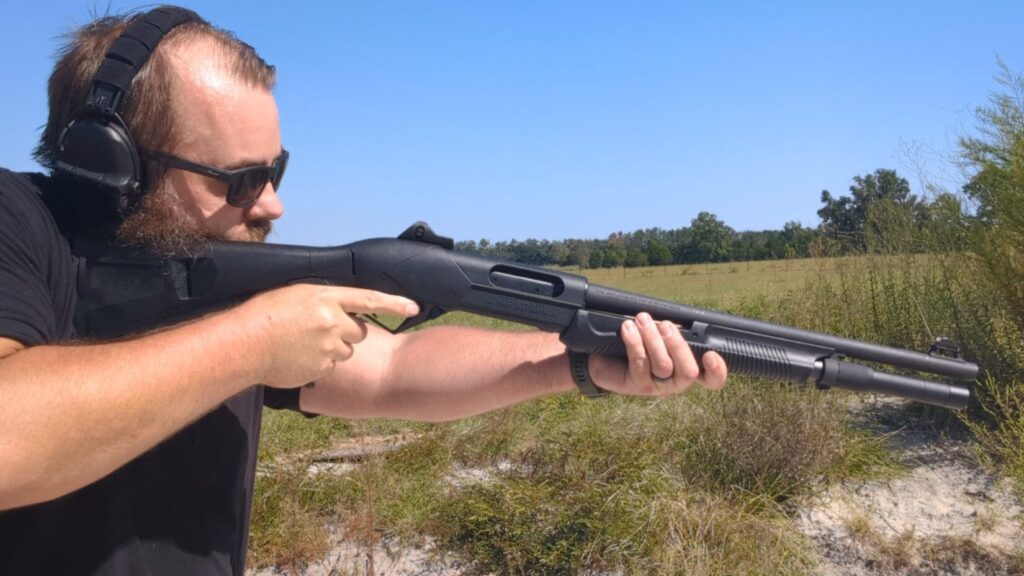
Pump shotguns can excel with short barrels and ported barrels. We are talking below 18 inches and into NFA territory, which is most commonly 14 inches. Once we start shortening semi-auto barrels, things can get finicky. Some guns work better than others with short barrels, but in general, a pump-action will be more reliable with a short or ported barrel.
Additionally, if you get into short-stocking the gun for close-range shooting, some semi-autos might choke, whereas pump guns just don’t care.
Semi-Auto Shotgun Reliability
Semi-auto shotguns depend more on the action than the user. Modern guns largely rely on inertia or gas-operated systems. There are some recoil guns out there, but they aren’t all that common.
Gas systems tend to be more reliable across a broad spectrum of shells. Inertia systems are more sensitive overall. Inertia systems can also be sensitive to added weight, which means you have to ensure they run right with not only your chosen ammo, but also your chosen attachments.
Reliance on these systems requires them to be of high quality. This is why we stick to well-known names and brands. Still, these are guns that will be more picky about ammunition and require a certain willingness to accept what works.
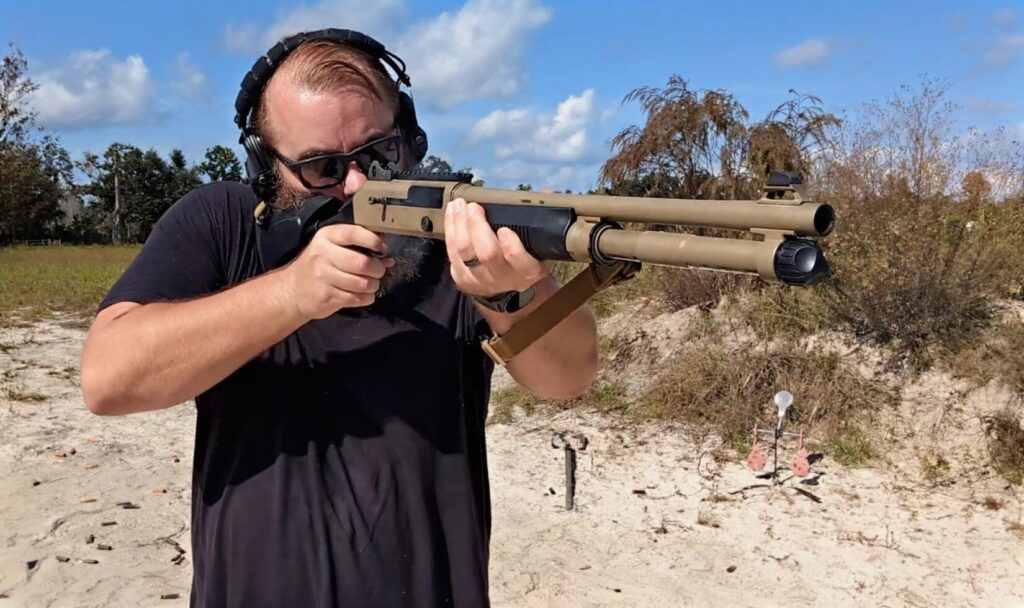
For me, it needs to cycle Federal Flitecontrol 00 Reduced Recoil 8 pellet buckshot every time I pull the trigger. In my experience, the Benelli M4, the Mossberg 940, the Beretta 1301, and the A300 all do. That’s not to say others don’t, but that’s my experience with these guns. These guns seem to cycle everything but meme mini shells and those sub-1000 FPS trap loads.
Gas-operated semi-autos will be more maintenance-heavy than pump guns. I clean my gas-operated semi-autos every 500 to 1000 rounds, but I have no idea when I last cleaned my pump guns, and I only own one inertia gun, and I haven’t ever cleaned it either.
Ease of Use
Pump shotguns aren’t the easiest weapons to use. You have to move one hand to keep it running, which complicates its design. Is it difficult? No, but compared to a semi-auto, it’s more difficult.
The bolt isn’t going to lock back when we run empty unless we leave it back. We have to reach the pump, which can be tricky for smaller shooters.
The real trick is finding a rhythm. If we are using a push-pull method, we are pushing the forend forward and pulling the stock into our shoulder. We push, we pull, we fire; now we have to break that recoil mitigation technique down and work the gun. It takes effort, training, and dry fire to find that good rhythm.
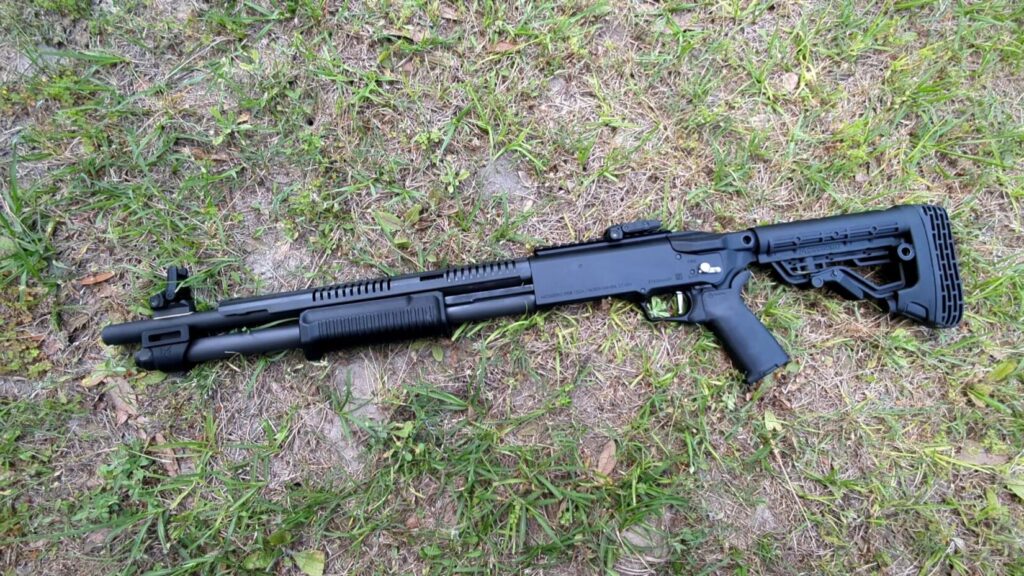
Pump shotguns can be quite light, which makes for more recoil, but does make them easier to handle over long periods of time. They are balanced quite well.
Semi-autos tend to be easier to use. You just apply push/pull and pull the trigger until the threat’s down or your gun is empty. Gas-operated designs tend to be heavier and front-heavy.
Front-heavy makes them less balanced, but the weight up front can help with muzzle rise. Inertia guns can be the overall lighter option in the semi-auto world due to the lack of a gas system.
Recoil
Shotguns have more recoil than other guns, and pump shotguns have more recoil than semi-autos. They’ll always be more of a shoulder-kicker than a semi-auto gun. That means our push-pull has to be more on the money to achieve control.
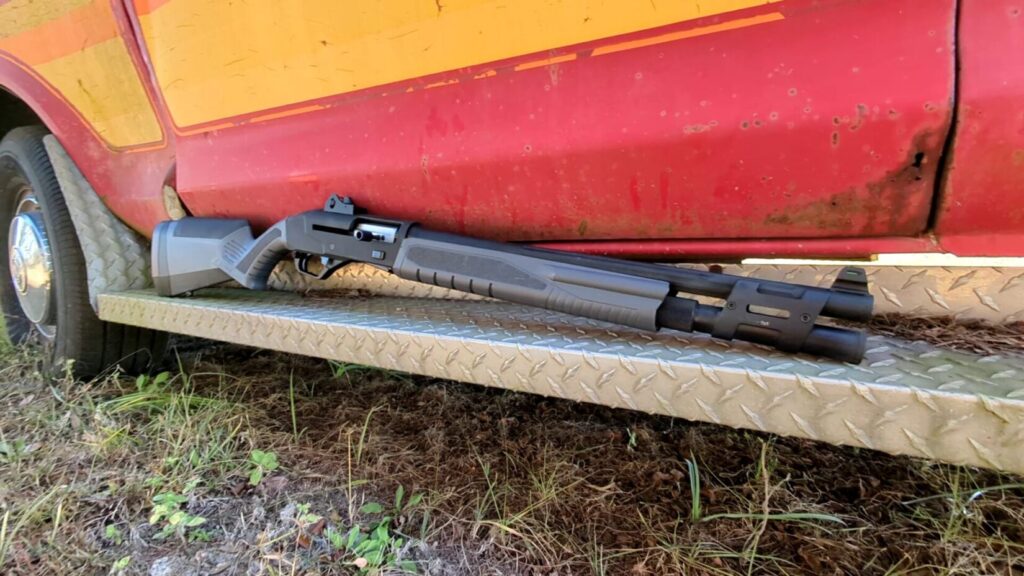
Semi-autos reduce felt recoil by absorbing some of that force to cycle the action. Gas systems bleed off some of the gas created by the fired round to cycle the action. Inertia guns use the recoil to compress a large internal chamber that later unlocks the bolt.
Gas guns give you the softest recoil impulse, followed by inertia guns, and then pump actions.
Rate of fire
For most people, the pump will be slower, and it will take more practice to shoot faster. There are certainly some fast-shooting pump gun guys who will whip me on my best day with a semi-auto.
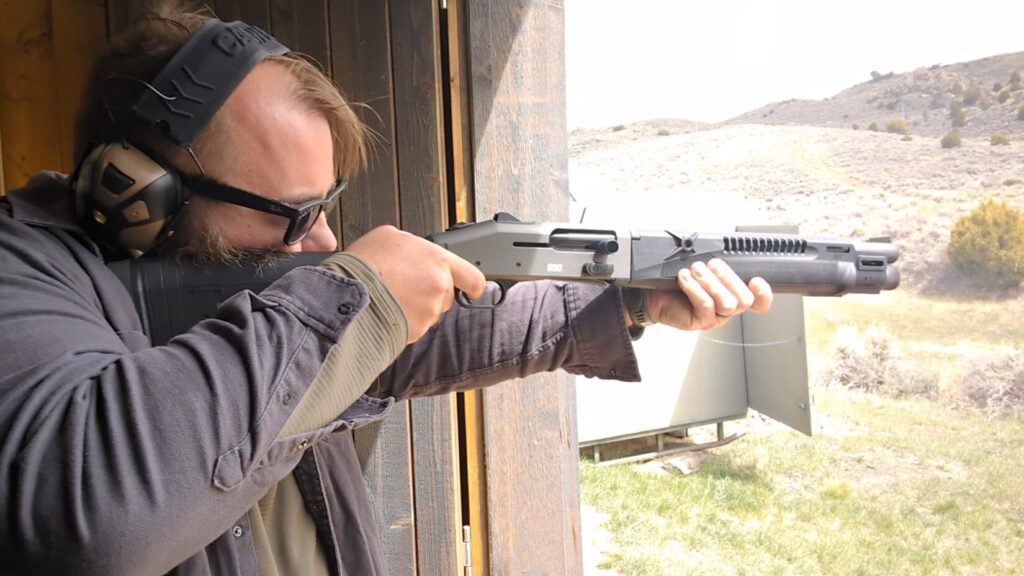
Most people will not be able to shoot a pump gun as fast as they shoot a semi-auto. Having to manually work an action, find a rhythm, and dealing with increased recoil are all obstacles to speed.
The semi-auto options make it as easy as pulling the trigger again.
Which One?
As always, there isn’t a better option for everyone. If I were asked for a recommendation, I would go with a semi-automatic shotgun. I’m a fan of the Beretta A300, the 1301, and the Mossberg 940 Tactical models. However, there is certainly a good argument for pump-action shotguns. Pick what works for you and what you’re willing to train with.
Keep in mind, your budget for the gun is only part of the equation. We have accessories to discuss as well.