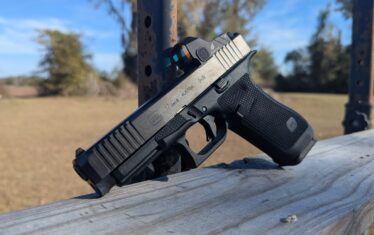
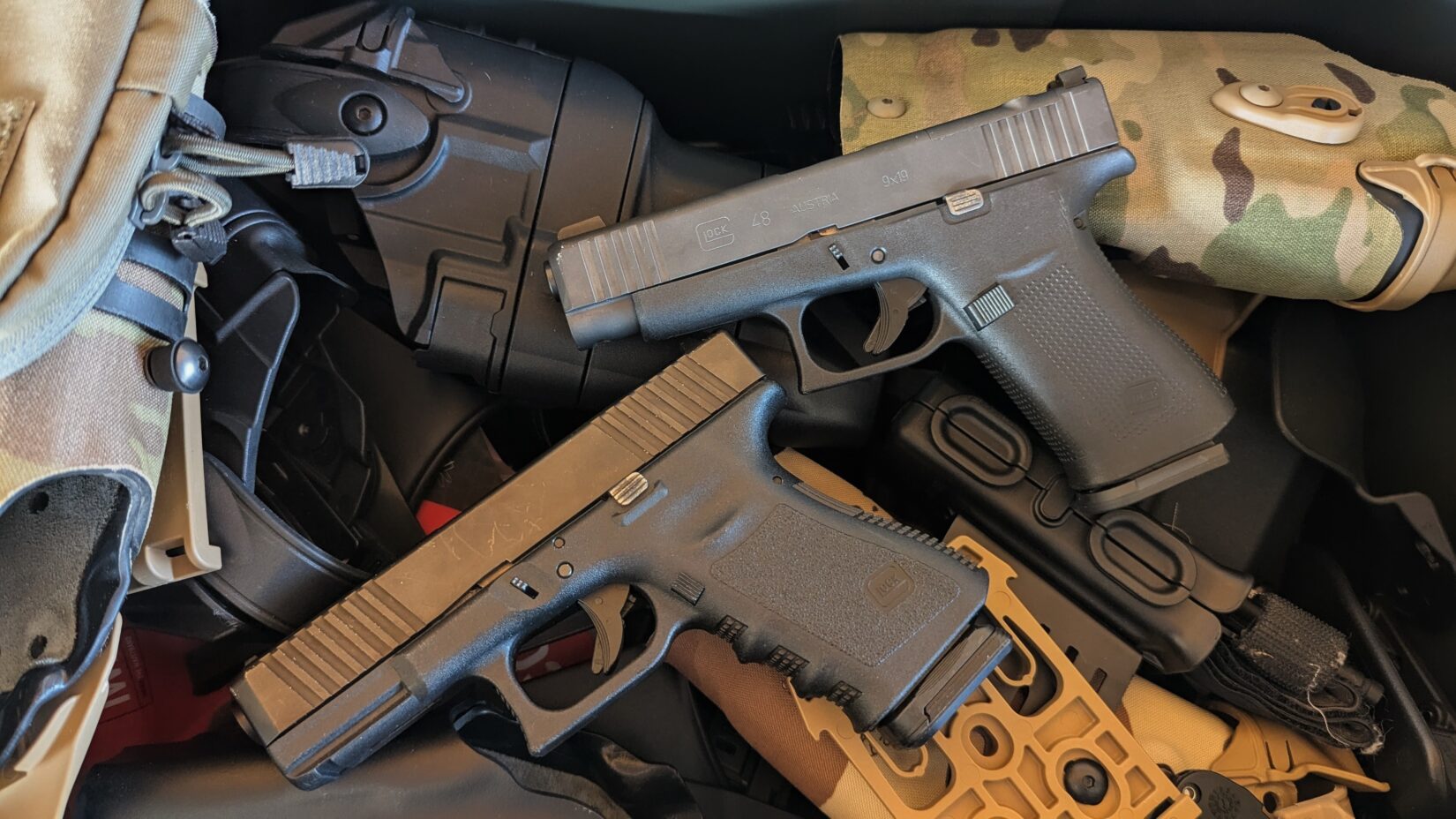
The world of Glock is more diverse than people give it credit for. Sure, the designs are mostly the same, but they incorporate a wide variety of calibers and sizes. Today we are going to focus on two Glocks designed for concealed carry; both are 9mm, but they are quite different: the Glock 48 and Glock 19.
These two firearms have a lot in common, but are also quite different. Both are well-loved by their fans, and both are capable defensive firearms. With that in mind, let’s examine the Glock 19 vs. the Glock 48.
What They Have In Common
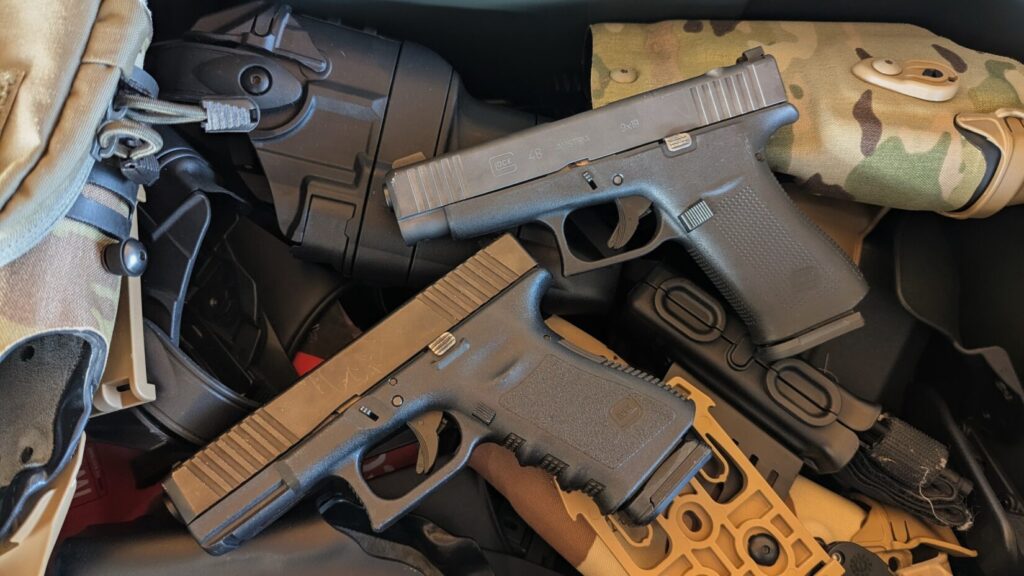
At first glance, they seem identical. Both are striker-fired, polymer-frame 9mm handguns that fall within the compact category of handguns. They are both short-recoil-operated guns and are available in several configurations.
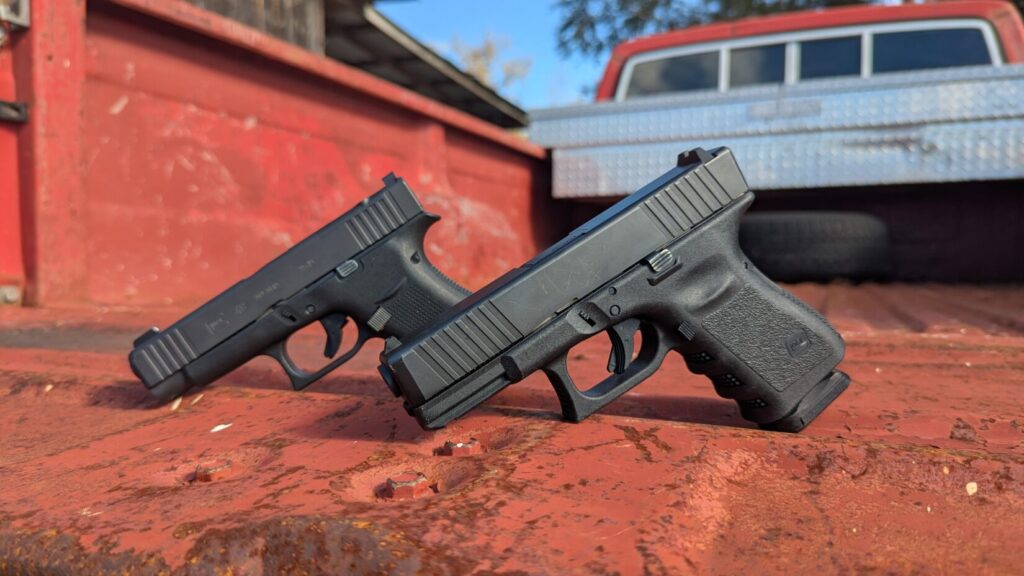
Dimensionally, they share a few similarities. The overall height and length are nearly identical. The Glock 48 has a slightly longer barrel at 4.17 inches vs. 4.02 inches, but in all practical respects, it’s not a noticeable difference.
The 4.17-inch barrel allows the Glock 48 to enter the Canadian market, whereas the Glock 19 could not. However, a change in Canadian gun laws in 2022 banned the outright sale of handguns.
How They Differ
So where do the differences come in? Here’s a quick look.
Concealment Differences
The best way to think of the two guns dimensionally is that the Glock 48 is the Glock 19 on a diet. It’s a quarter inch thinner than the Glock 19. Thinner guns are easier to conceal and comfortably carry.
They are less likely to print, and typically easier to carry in modern carry positions, like appendix, for longer periods of time. The Glock 48 is essentially a single-stack Glock 19. Besides being thinner, it’s about five ounces lighter.
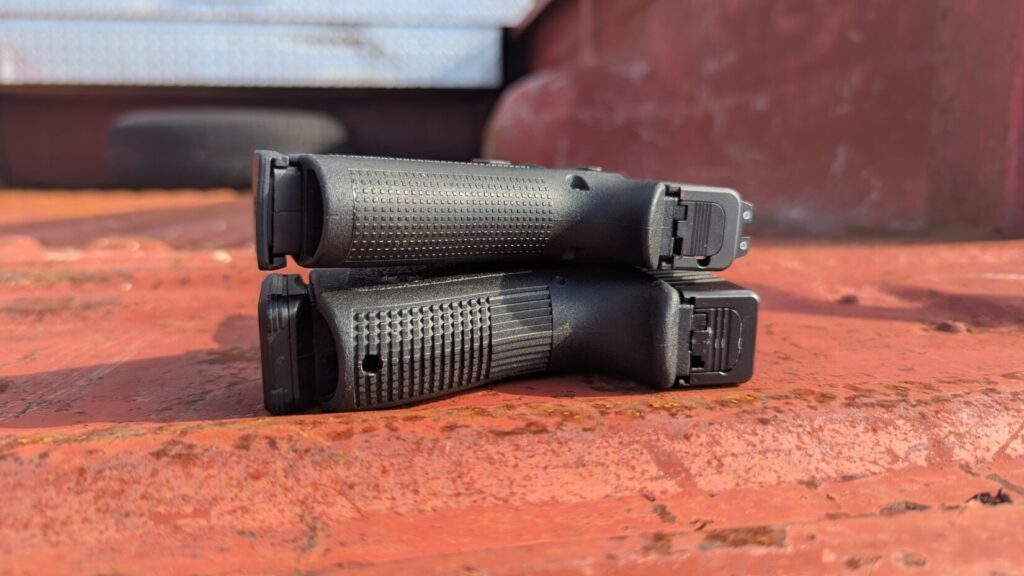
How much does five ounces make a difference? It doesn’t seem like much, but then you pick the two up. The difference is immediate and substantial.
A lighter gun is more comfortable to carry. It tugs less at the belt and allows for more minimalist holsters without complaint. The slimline design of the Glock 48 simply makes it easier to conceal, easier to carry, and ultimately the more comfortable option.
People clamored for a single-stack Glock 19 since the arrival of the single-stack 9mm craze. Glock hit it big with the G48, but the G19 continues to thrive into a sixth generation for a reason.
Capacity
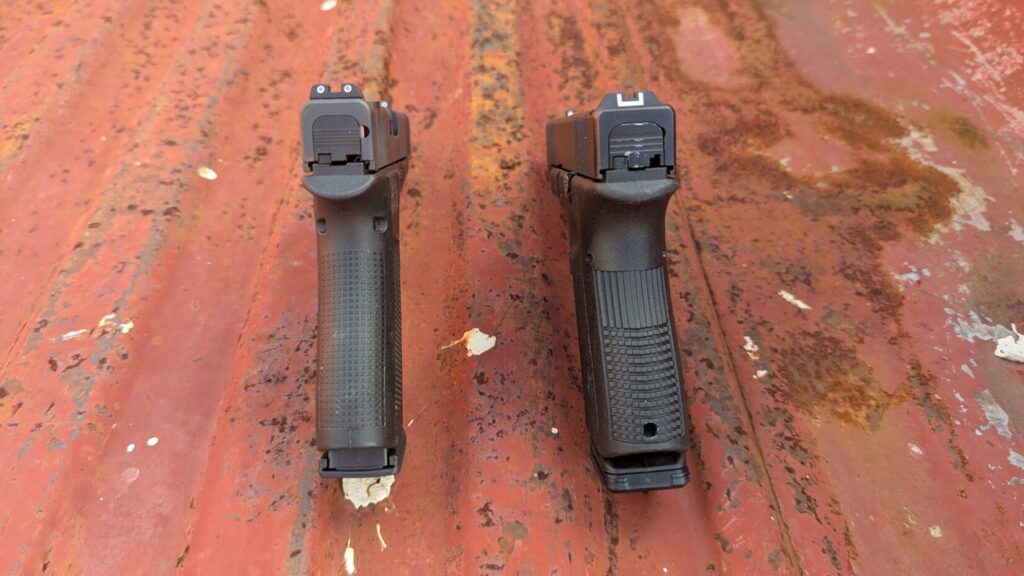
If we measure the standard capacity of each gun, we see a notable difference. The Glock 19 holds 15 rounds, whereas the Glock 48 holds 10. That’s a significant difference in ammo capacity.
The Glock 19 set the standard decades ago for efficient compact handgun capacity. The Glock 48 uses a simpler single-stack magazine compared to the Glock 19’s double-stack design.
There are several aftermarket options. Shield Arms makes a 15-round metal magazine for the G48. PSA produces the Dagger Micro magazines, which are a hybrid of metal and polymer and also hold 15 rounds. Both sit flush within the gun, with no noticeable height below the grip.
While these options are generally reliable, they have issues. The Shield magazines require a metal magazine catch. The PSA magazines tend to be extremely stiff, and in my shooting, occasionally fail to lock back on the last round fired.
Ultimately, the OEM magazines are going to be the most reliable long-term option.
The Glock 19 can use any Glock 17 magazine, which expands capacity to upwards of 50 rounds, but these magazines extend from the bottom of the gun, increasing its height anywhere from a little to “you can’t conceal a drum.”
Shootability
Shootability covers the general ability for users to control the gun. How fast can you make accurate follow-up shots? For a defensive firearm, your ability to handle the firearm with ease is critical.
How each gun handles turns out to be a more individual experience. Most people will find the Glock 19 the easier gun to shoot. The increased weight and width of the grip result in less overall recoil.
The Glock 19 exhibits soft, controllable recoil. The Glock 48’s thinner grip and lightweight make it a little snappier for most people. The thinner grip doesn’t displace recoil as well as the wider grip.
When you get into high round counts, the gun can get a little more tiring than the Glock 19.
On the flip side, people with smaller hands may be overwhelmed by the somewhat thick Glock grip. If your hands are too small to grip the gun, then it will be overly difficult to control. Smaller-handed individuals may have better luck shooting the Glock 48, even with its extra recoil, than the Glock 19.
Accuracy
Accuracy, much like shootability, will be an individual factor. Both guns have roughly the same sight radius, the same trigger, and shoot the same caliber. However, a firm grip is essential for accurate shooting.
I, like most people, find the Glock 19 easier to shoot accurately. I can get a good grip on the gun and not alter that grip as I pull the trigger. A good hand-filling grip helps you maintain consistent pressure and avoid altering your grip as you fire.
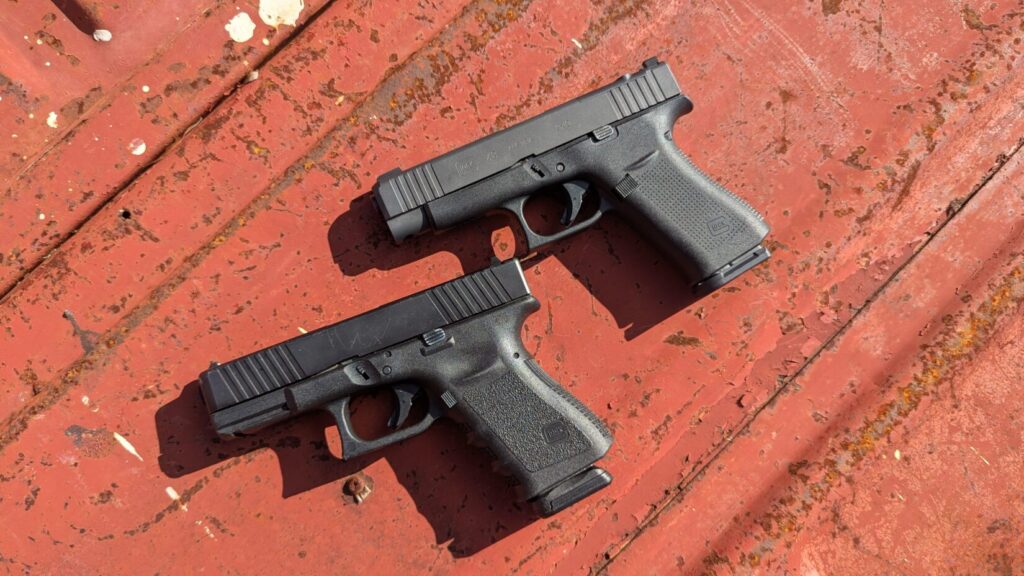
I can shoot the Glock 48 accurately, but I don’t find it as easy to do so. My hands feel a little crowded on the grip compared to the Glock 19. However, if you have small hands, the Glock 48 will likely be the easier gun for you to grip and consistently shoot accurately.
Customization and Variations
The Glock 19 has been around for a lot longer than the Glock 48. This means there are more generations of the gun, and more options overall. The Glock 19 has recently been produced in a Gen 6 variation, which is by far the best generation of Glock.
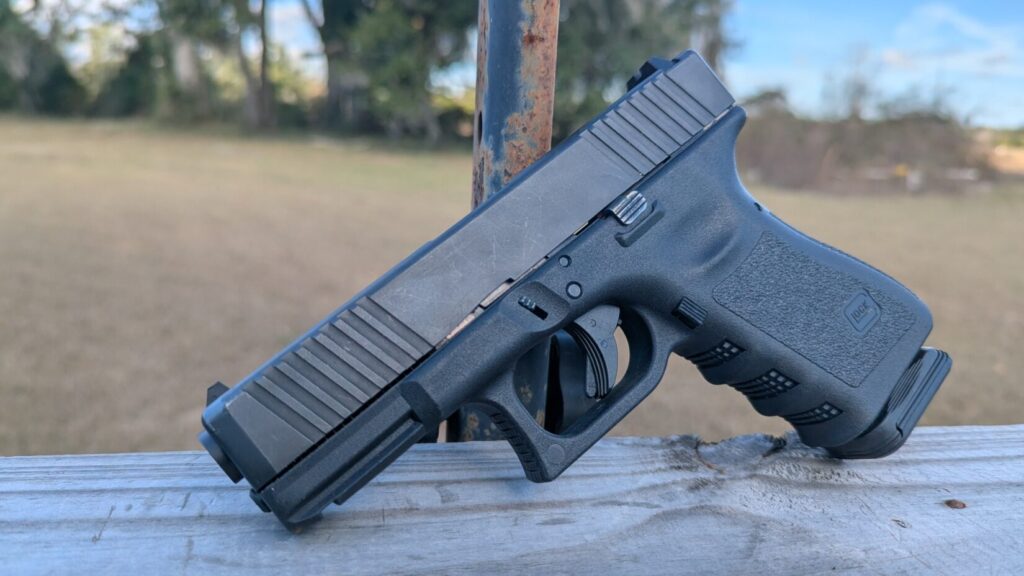
The Glock 19 is available in optics-ready MOS variants. This allows you to use different plates to mount different types of optics. The new Gen 6 ditches the MOS plates for a slight design variation, but it’s still modular and allows for three different footprints.
The Glock 19 has a rail that can accommodate both full-sized, duty-oriented lights such as the Surefire X300 and compact, concealed-carry lights such as the Streamlight TLR-7.
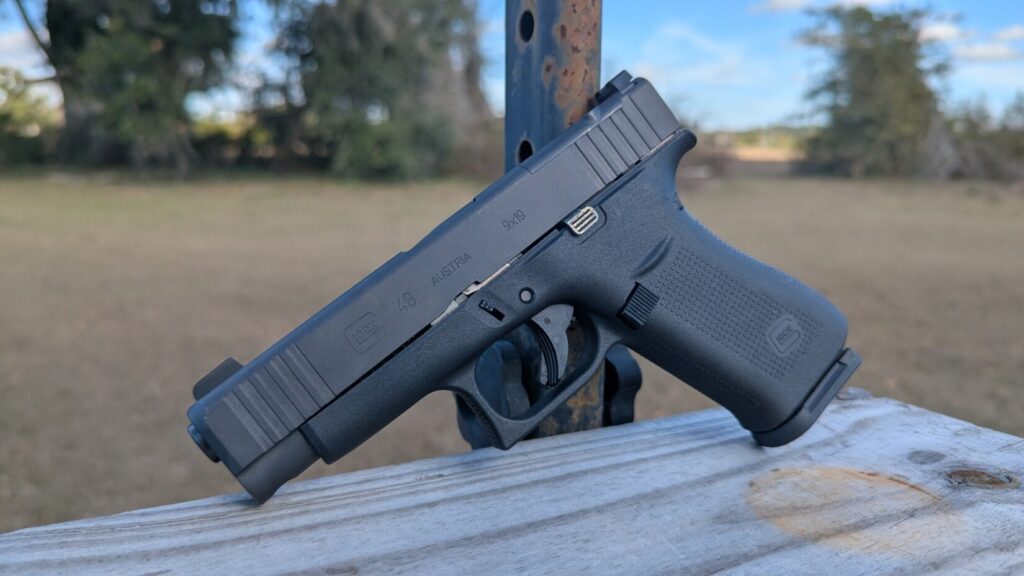
The Glock 48 comes in both a standard model and an MOS model. The MOS model of the Glock 48 isn’t exactly modular. It can only use Shield RMSc optics. The MOS model also has a rail that can accommodate smaller lights like the TLR-7 SUB and Surefire XSC.
Overall, the Glock 19 is the more modular option, with more variants.
The Glock 48 vs. the Glock 19
Is one better than the other? Objectively? No.
Subjectively? Sure.
The Glock 19 remains a “do it all” gun. Its size, capacity, and accessorization make it a gun that succeeds at concealed carry, duty, and home defense.
The Glock 48 is more specialized for the role of concealed carry. Its smaller size, ability to accept only small optics and lights, and reduced capacity lend it to a more defined role.
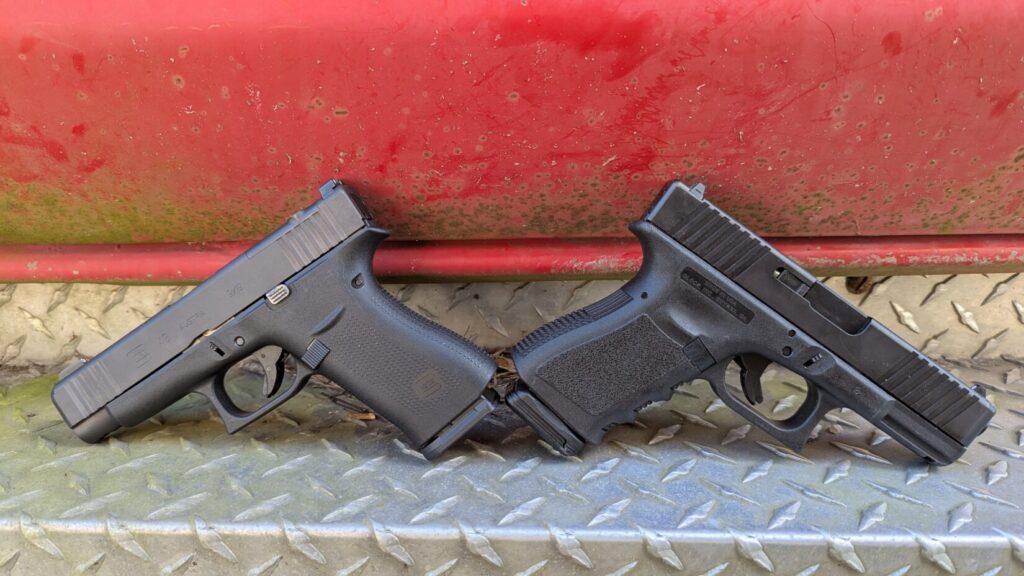
Outside of their intended designs, smaller people with smaller hands will likely appreciate the Glock 48’s size. Everyone else will probably shoot the Glock 19 a bit better.
When choosing, it’s best to handle both. Ensure that you can obtain an adequate grip, manipulate the controls, and comfortably handle the firearm.
Overall, you must weigh your needs, your individual requirements, and which firearm works better for you.