How many times have you purchased an expensive piece of gear, only to find it inoperable when a single little part breaks, gets lost, or wears out? When equipment fails, it’s rarely at a convenient time or location. A small, broken part can quickly render your entire system useless. It’s important to have a hardware kit for your gear to keep it up and running.
The first time I lost a small spring while working on my AR, it became a big deal. You see, I didn’t really know what I was doing, but I wanted to do a deep clean on it. When I saw a small part fly off, I wasn’t sure which part I had even lost or where to find a replacement. By the time I figured it out and ordered the $2 spring, my rifle had been out of commission for over a week.
By the time I got into law enforcement, I had a complete AR parts kit and could replace anything on my rifle. But the next time I lost a part, it wasn’t on my rifle; it was my holster. During the process of switching out my belt attachment for a QLS attachment, I lost several of the screws.
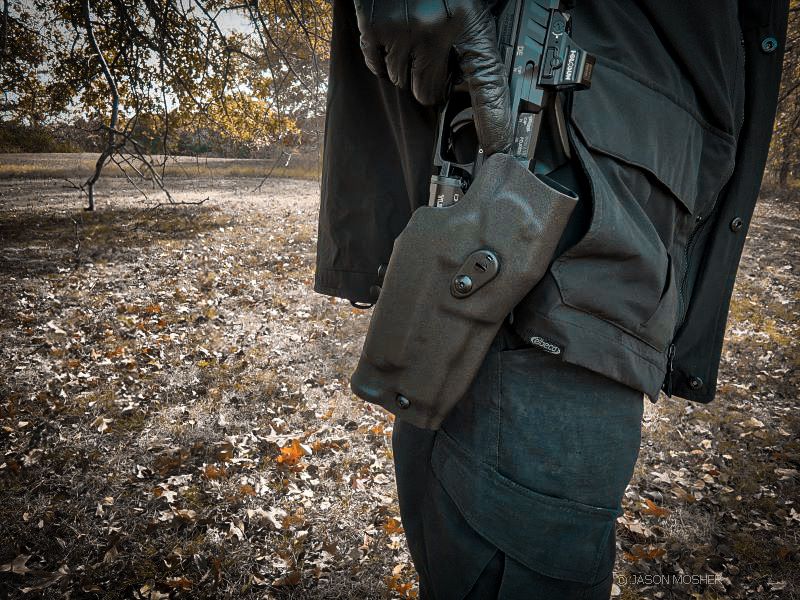
And so here I was again, searching for a replacement part and not being able to use my equipment in the process. Guess what hardware kit I purchased next? Yep, Safariland already makes one that is fully stocked.
Now, don’t get me wrong, I’m not saying you need a kit for every piece of equipment you own, but it’s a good idea for anything you use a lot and rely on.
Here are a few of the hardware kits I keep on hand for my equipment.
The Safariland Hardware Kit
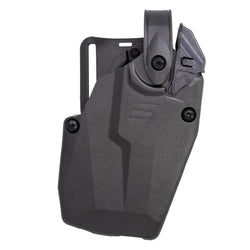
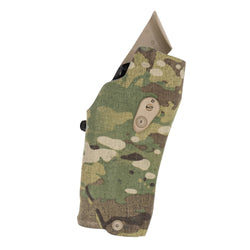
I have been using Safariland holsters for more than two decades. I’ve seen them save officers’ lives, and I know how much testing Safariland does on their holsters to ensure they are reliable.
But like most other types of hardware, holsters have parts that can be lost. This can happen when you are adding or removing an attachment or making an adjustment.
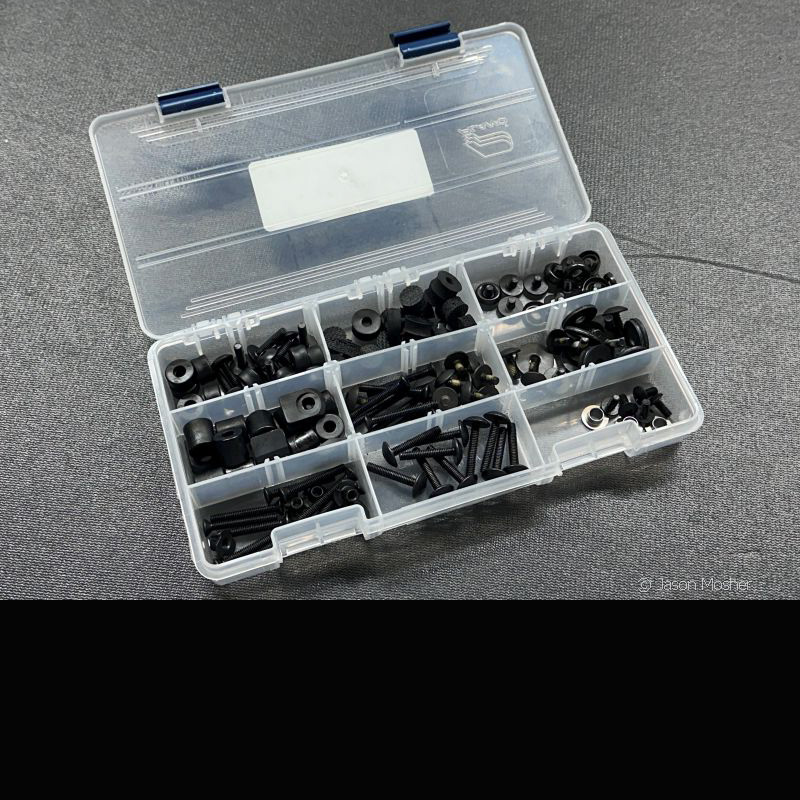
Depending on the holster model, you could find yourself needing plastic or rubber spacers, washers, or a variety of sizes of screws. But the good news is, Safariland already makes a hardware kit just for this purpose. I keep mine in my range or gear bag, so I have access to anything I need in the field.
What comes in the Safariland Hardware Kit?
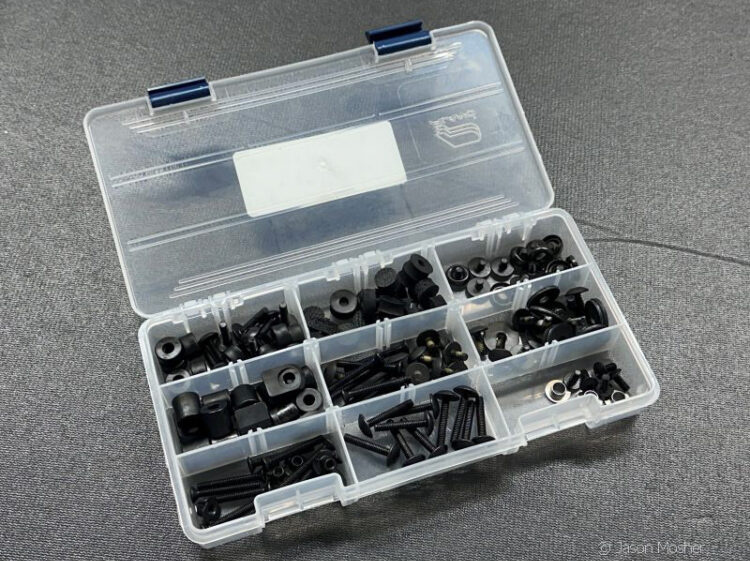
Holster Screws and Washers: Nothing is more frustrating than missing something as simple as a screw. But sometimes finding the exact thread size is not easy. In this kit, you get six different types of screws used on Safariland holsters and gear.
Plastic and Rubber Spacers: Depending on the model, rubber spacers are used to adjust tension on mag pouches and some holsters. These spacers are designed to smash as the adjustment screw is tightened. Some of mine have become so old that they didn’t keep tension on the adjustment screw as well, and needed to be replaced. The plastic washers are used on multiple Safariland items to create a specific size space on the holster.
Specialty holster mount screws and washers: Some of the screws for a holster attachment (like a paddle or belt attachment) use a special nut that fits into the back of the attachment, so it sits flush. They can be easy to lose when you are swapping attachments.
The Glock Handgun Hardware Kit
The Glock pistol is famous for its simple design and reliability. But even the most dependable firearm needs maintenance. A spring can fail, a pin can get lost during maintenance, etc.
For my kit, I found a plastic container that had dividers I could move around to fit each part as needed. I started out with buying a lower parts kit, and then an upper parts kit. As I upgrade or swap parts out on a Glock handgun, I throw the extra parts in this kit as well.
When putting a kit like this together, you can include anything you want. It doesn’t have to be just small pins and springs. It can be a replacement trigger, stock sites, or a threaded barrel to swap out when needed. If you want a bigger kit so you can keep extra magazine parts as well, go for it. It’s your kit, so set it up how you want it.
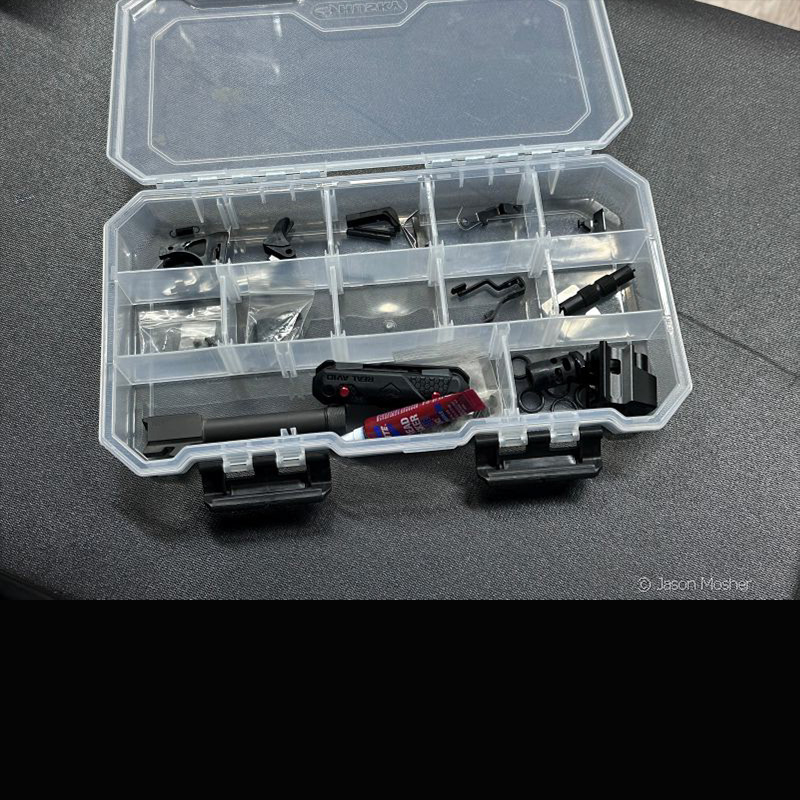
The good thing about Glock handguns is that many of their parts are interchangeable with multiple models. If you have several Glock handguns, you may need to decide if you want all Glock parts to be in one kit or have a separate kit for guns that require different sizes of parts.
For example, a Glock 17 and 19 use mostly the same parts. But a Glock 43 would use different-sized parts than a Glock 17 would.
Ideas for a Glock Handgun Hardware Kit
Springs, Pins, and the Recoil Spring Assembly: Springs are one of those things that will just wear out over time, regardless of the quality. Having an extra trigger spring, striker spring, etc., is a good idea. Frame pins hold the lower receiver together, so an extra pin is also a great idea. It’s not common for these pins to come out during use, but they are easy to lose when taking things apart.
Lower Parts Kit (LPK) Items: This kit includes the trigger assembly, connector, and slide stop lever. It also has the magazine catch and various detents. These parts are important for the trigger’s function and reliable magazine changes.
Upper Parts Kit (UPK) Components: The slide has its own set of parts, including the firing pin, firing pin safety, and their springs. The extractor and ejector are durable parts, but the ejector spring can wear out, and the extractor can wear down over time and not function properly.
Magazine Parts: As a general rule, if your gun does not function correctly, the first thing to check is your magazine. Magazine springs can wear out over time when they are loaded and unloaded repeatedly.
While not as common, I’ve also seen a few base plates get cracked. Under the pressure of the spring, this can cause the base plate to fly off, sending other magazine parts flying with it. Keeping an extra spring, baseplate, and even a follower is not a bad idea.
AR-15 Rifle Hardware Kit
The AR-15 rifle is one of the most used rifles in America. It’s easy to work on, reliable, and extremely modular. But they also have a lot of small parts. Just about everything that moves on an AR-15 has a spring associated with it. This includes the trigger system (which has multiple springs), safety selector, take-down detents, bolt release, etc.
An AR-15 hardware kit is the first parts kit I put together. I use it when I’m doing maintenance, upgrading parts, and even building new rifles. It’s just handy to have every small part you need in one place when you need it.
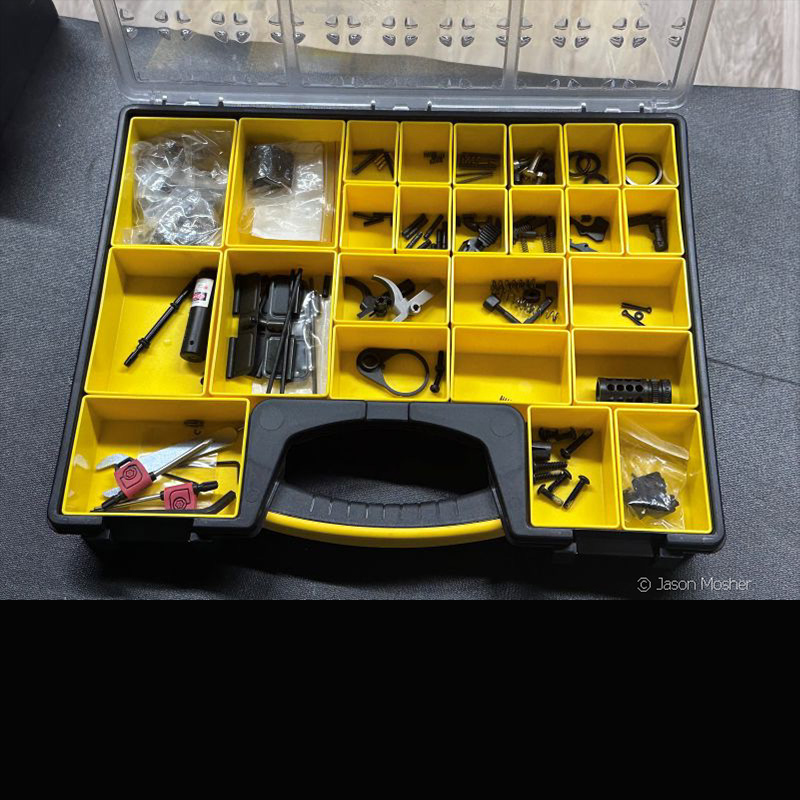
Some people like to separate their lower and upper kits. I found it works better for me to just have one large divider case, so I have access to everything I need in one place.
Suggested AR-15 Spare Parts
Fire Control Group (FCG) Pins and Springs: The FCG consists of the hammer, trigger, and disconnector. Spare trigger and hammer pins, along with their associated springs, are also good to keep on hand.
Detents and Springs: The AR-15 is held together by small detents and springs for the takedown pins and safety selector. These are tiny and often launch into the abyss during disassembly. Extra sets are very cheap insurance.
Bolt Carrier Group (BCG): The bolt is under tremendous stress. Key spares include an extra extractor and extractor spring assembly. A spare set of gas rings is also good for maintaining a proper gas seal and reliable cycling.
Takedown and Pivot Pins: These large pins allow field stripping and rifle disassembly. They can break or become lost, so a spare set is smart to keep on hand.
Grip Screw and Washer: This screw holds the pistol grip onto the lower receiver. It can sometimes work loose or be damaged.
Other kits to consider
Some other kits that are good to have on hand are a part kit for your lights and an M-Lock parts kit. During training and on duty, I’ve found it’s not uncommon for someone to have an issue with their weapon-mounted light system, or something attached to their handguard.
This could be the light not working, an attachment becoming loose, a wire getting in the way, etc. Having some extra parts to try and get it up and running instead of waiting for parts to be delivered is a good idea. Here are some suggestions for these two kits:
Lights kit
- Pressure switches
- Tail-cap
- Rail Mount System
- Light head replacement
- Wire control system
- Handguard tape
- Zip-ties
- Batteries
- Blue Loctite (for rail mount screws)
M-LOK kit
- M-LOK screws
- M LOK Picatinny Rails (for items that must mount directly to a Picatinny rail)
- Magpul cable management system for M-LOK
- Blue Loctite
- Wrench for M-LOCK screws
Putting together a hardware kit can be done a little at a time, or you can find kits ready to go. Again, deciding on what type of kit you need will be a personal choice, but the idea is to start thinking about it. What type of gear do you use the most? What type of accessories are you always changing up?
Once you put a hardware kit together, don’t forget to order new parts when you take something from it. This will allow you to keep your gear ready to go when you need it.