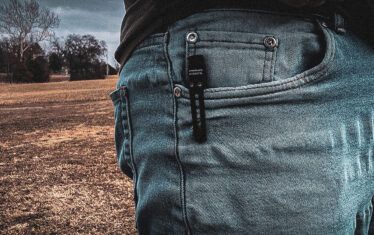

In recent years, I’ve become a big fan of shrinking my carry options. I like a firearm that I can drop into my pocket and go about my day. If you walk this route, you’ll eventually come to a fork in the road where you’ll have to choose between a pocket pistol or a snubnose revolver.
Both are deep concealment options that drop into the pocket with ease. They are small, lightweight, and rather varied in design and function. I’ve experimented heavily with both and wanted to share my insights and experiences.
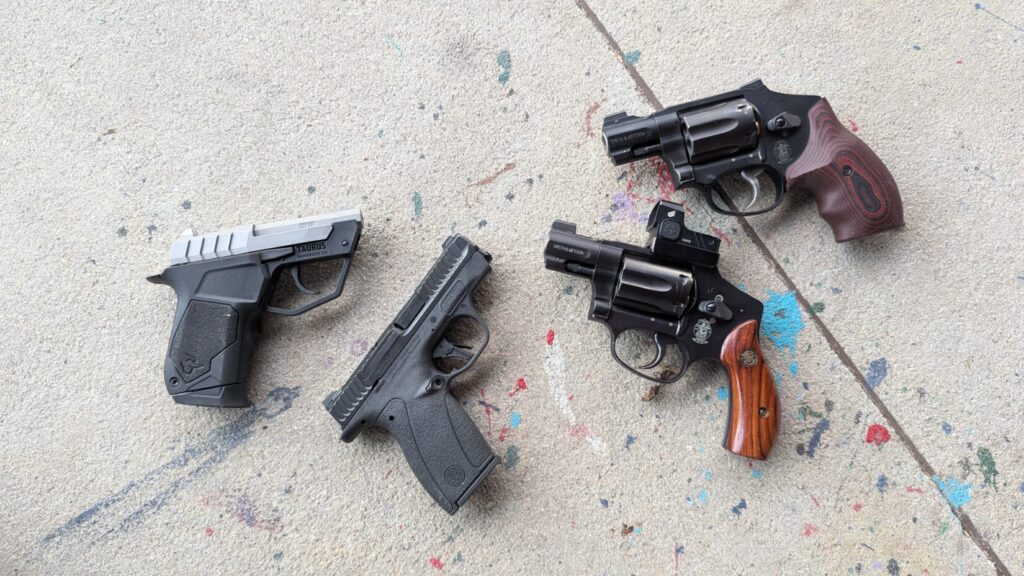
Bottom line up front: there isn’t an objectively better option. Both have their pros and cons, and you’ll have to figure out your subjective best option based on what fits your lifestyle, clothing choices, firearm skill, and preferred caliber.
Let’s break down each of these options so you can figure out which works best for packing in the pocket.
Defining Our Terms
When I say pocket pistol, I mean a gun that can be reasonably concealed in a front or back pocket without any struggle to draw the gun. I can fit a Glock 43X in my pocket, but it’s not a great option for pocket carry for most people. It’s too big, prints too much, and is a fairly clumsy draw.
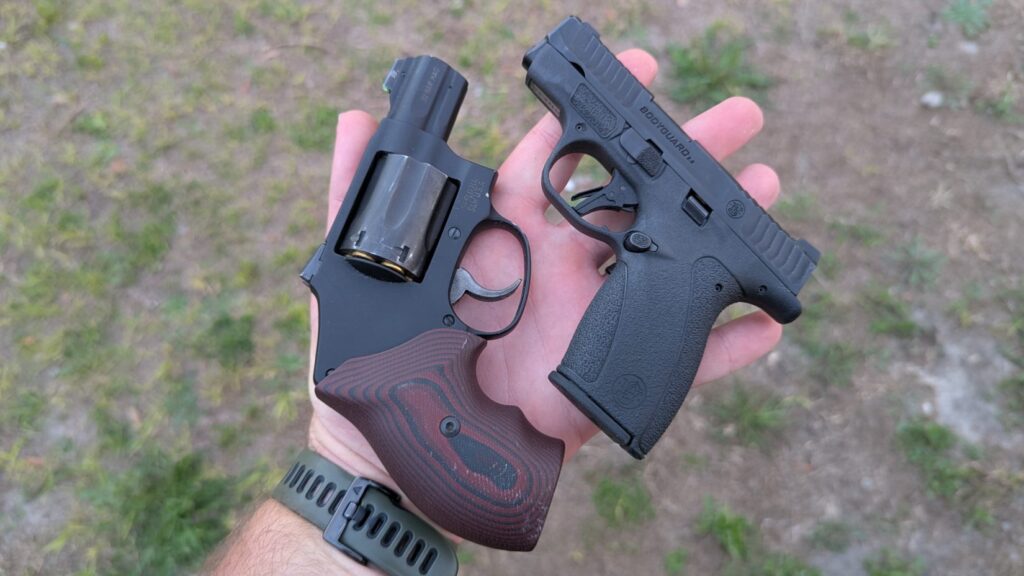
The gun industry loves variety, so for that reason, we have snubnose X-frames in .500 S&W Magnum. Technically, it’s a snubnose, but it isn’t a part of our discussion. We are looking at snubnose revolvers built for concealment, guns that are roughly the same size as S&W’s famed J-frame.
Concealment and Carry
These types of guns are designed for deep concealment and are small enough to fit in your average pocket. This means they are fairly small, and concealment becomes critical. We are looking to remain undetected as much as possible to exploit the benefit of these firearms.
When we compare concealment between a snubnose or pocket pistol, it gets interesting. The flat profile of a semi-automatic gun makes it much easier to disappear in the pocket or elsewhere. This gives us a high degree of concealment with minimal printing.
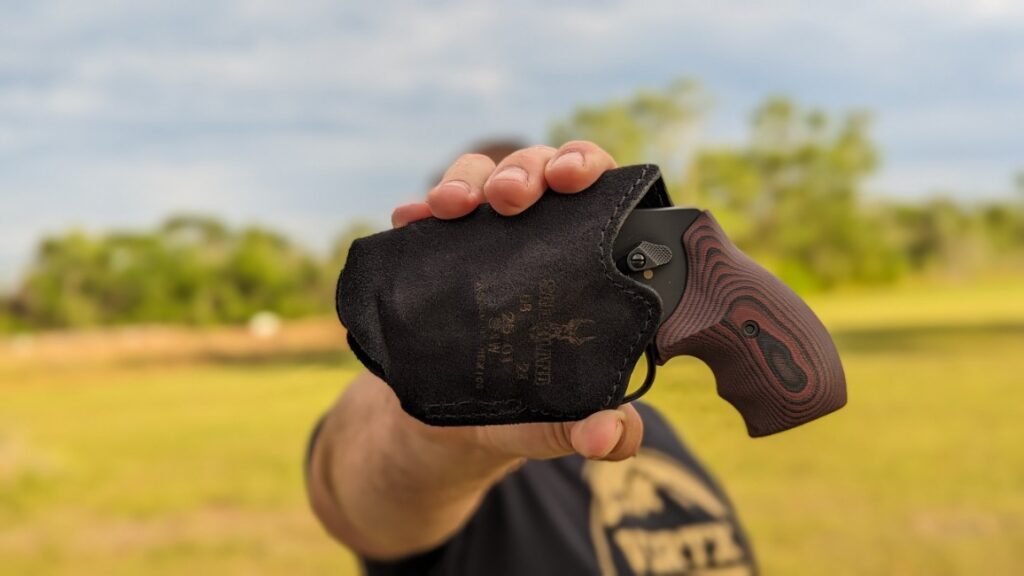
Pocket pistols will work better in smaller pockets, especially those that are often associated with women’s clothing. They tend to be lighter as well, so they can be carried in something like board shorts or even athletic pants. The lightest J-frame doesn’t touch the 6.6-ounce weight of a P32.
The somewhat bulbous shape of a revolver, combined with its typically larger size compared to a slim pocket pistol, would suggest reduced concealability. Technically, that’s correct, but we have another factor to consider.
That bulbous nature of the cylinder might be seen inside a pocket, but due to its unique shape, it’s less likely to be spotted as a firearm. It kind of just looks like junk in your pocket. The cylinder will press against the pants and create a somewhat round imprint, but it also helps keep the rest of the revolver concealed.
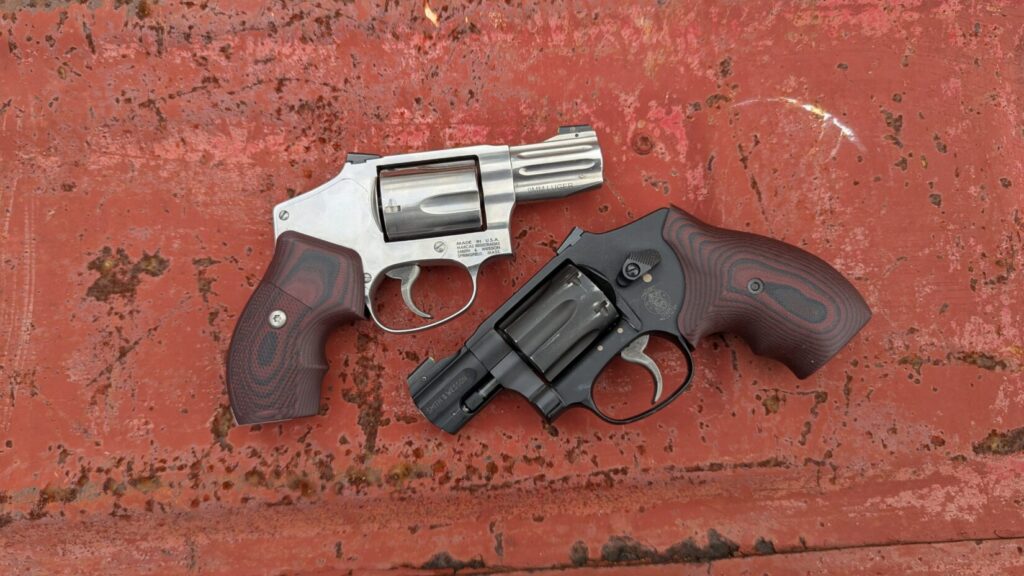
Both guns offer excellent concealment, but do it in different ways. The pocket pistol hides itself by virtue of its smaller size. The revolver uses a hair of deception to achieve pocket concealment.
The Draw
We talked a bit about the bulbous nature of a revolver aiding in concealment, but it also tends to aid in your raw draw. Since the cylinder presses against the pants and body, it centers the grips inside your pocket. This makes it easy to reach into your pocket and establish a good grip on the gun.
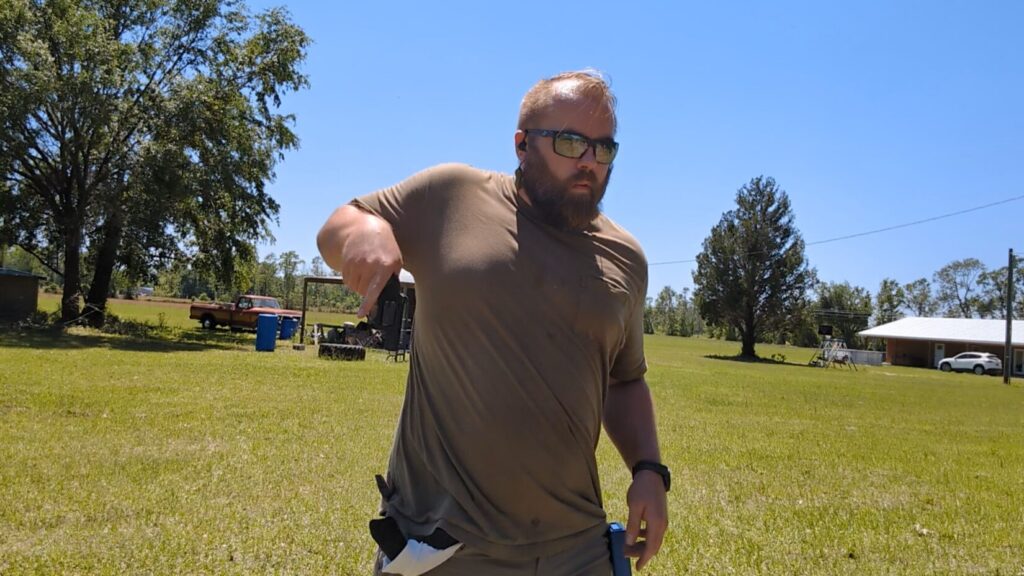
The flat nature of a pocket pistol makes it more difficult to obtain a good grip off the bat. You might find your fingers struggling to get between the gun and the grip. Is it difficult? No. But it’s less intuitive than drawing your typical pocket revolver.
Capacity and Reloading
As always, the semi-automatic pistol will give you more capacity. When we compare caliber versus caliber, or at the closest approximation, it becomes fairly clear that pocket pistols have more rounds than pocket revolvers.
In .22LR, the LCP 2 offers 11 rounds total, whereas the .22LR LCR offers only eight. The P32 offers up to eight rounds of .32 ACP in a flush-fitting magazine, but the 432 series only gives you six rounds of .32 H&R Magnum.
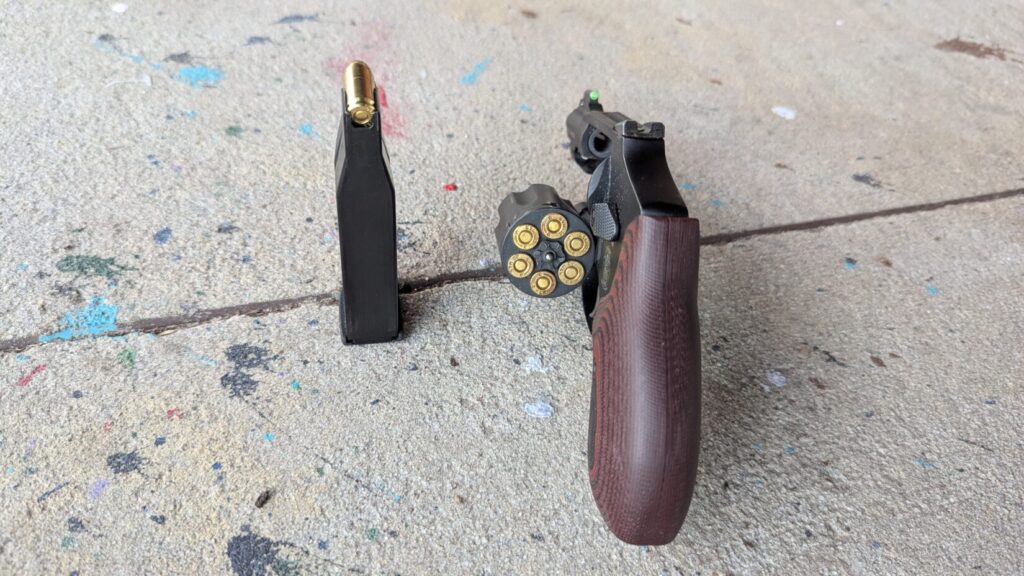
When it comes to reloading the guns, the automatic is faster and more intuitive. Slapping a magazine in place is easier than using a speed strip or speed loader. It’s worth mentioning that many small revolvers have difficulty with speed loaders.
Guns like the LCP MAX and the S&W Bodyguard 2.0 are blowing away revolvers with capacities of 10 to 12 rounds of .380 ACP.
Caliber Options
Most pocket pistols will come in .380 ACP. This tends to be the dominant pocket pistol cartridge. There are a few options in .22LR and a few in .32 ACP, but .380 ACP is the predominant option. There are some guns that are just on the edge of a pocket pistol. For many people, the Glock 43 can be a pocket gun, which opens you up to 9mm. However, not everyone will be capable of carrying even a G43 in a pocket.
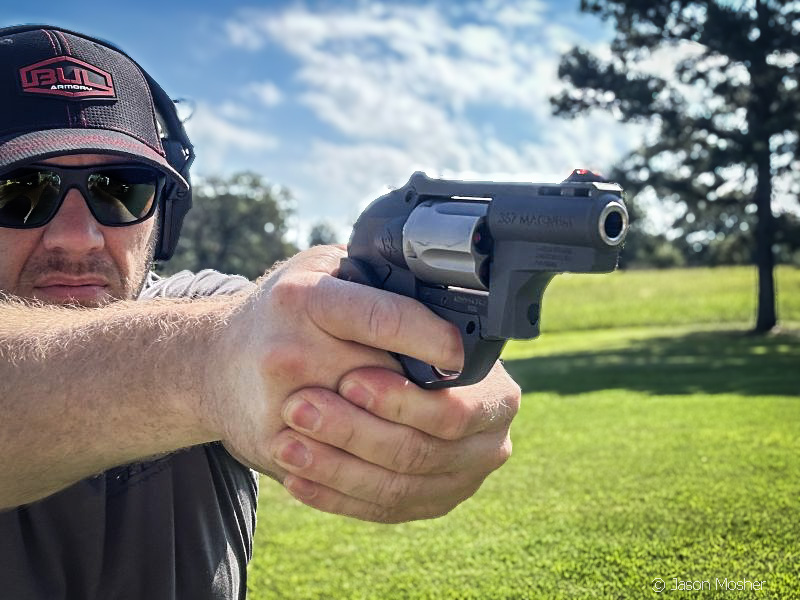
Snubnose revolvers are typically .38 Special, but there are arguably more options that are common enough. The .357 Magnum is a handful in a small gun, but it’s an option. So is 9mm, .32 H&R Magnum, .327 Federal Magnum, .22LR, and .22 Magnum.
Revolvers offer more caliber options and often more potent calibers. The efficacy of some of these cartridges through a 2- to 1.87-inch barrel is certainly worthy of debate, but they are available.
Reliability
The reliability of any gun will likely be a factor, more of its construction and quality control than if it’s a revolver or automatic. Quality revolvers and quality pocket pistols are going to be reliable guns. However, there are some interesting niche considerations worth mentioning.
The Rimfire Issue
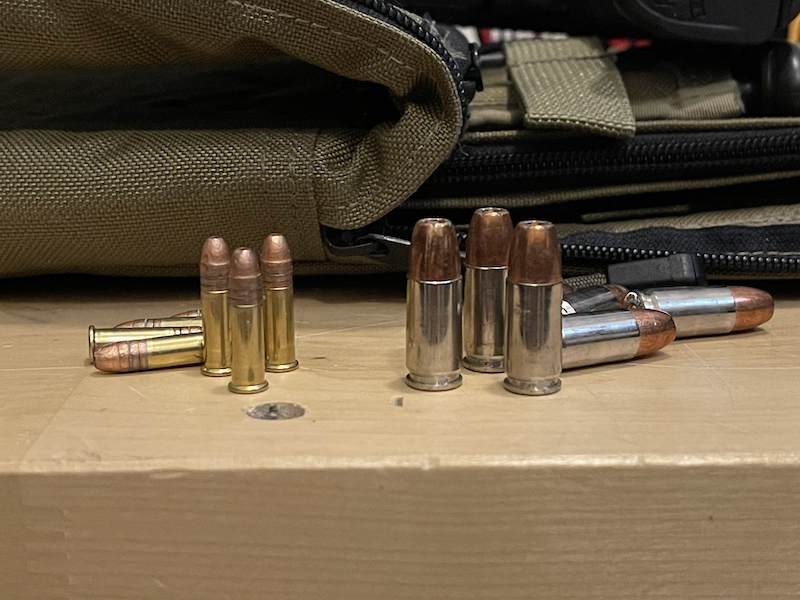
Cartridges like the .22LR and .22 Magnum use rimfire ignition. Rimfire ignition is not as reliable as centerfire. The likelihood of a failure to fire with rimfire cartridges is going to be higher. In an automatic, when the cartridge fails to fire, you have to manually retract the slide to load a second round. In a revolver, you simply pull the trigger again. That’s faster and easier, especially with one hand.
Going Limp
I would like to add this one with the warning that it’s very highly firearm-dependent. Pocket pistols can be prone to limp-wristing more than other semi-autos. You need to make sure you have a good firm grip on your gun.
Contact Distance
If you are in a physical fight and draw your gun, the revolver has some benefits. If you jam the gun into a threat for a contact distance shot, the revolver will function. An automatic is likely to be knocked out of battery, meaning it will not fire.
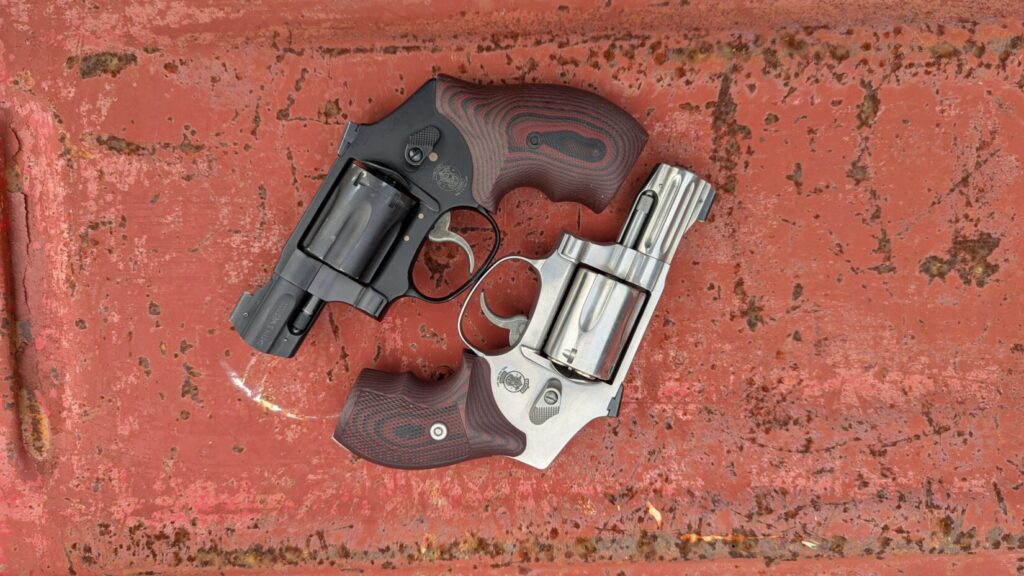
Beyond a contact distance shot, the only time a revolver doesn’t fire is if something interrupts the cylinder or your gun is broken. You can shoot a revolver from inside a coat pocket or a purse, although admittedly, this is a very niche use case.
Control
What about shooting the gun? Which is more accurate and easier to shoot? Well, that’s tough to answer. It’s going to be incredibly dependent on your gun and caliber.
An LCP in .380 and an Airweight in .38 Special are both “hand-slappers.” That might be a slight exaggeration, but they are guns that require you to hold on tight, and they aren’t forgiving.
Now, if you compare a .22 LCR to an LCP in .380, the revolver is easier to handle. If you use an LCP 2 in .22LR compared to a S&W J-frame in .38 Special, the .22LR is going to be easier to shoot.
However, there are exceptions; guns like the S&W BG 2.0 are .380 ACP pocket pistols that are easier to shoot than .38 Special snubnoses. It’s very much gun and caliber dependent. As a fan of anything in .32, I find .32 ACP to be the perfect pocket pistol caliber, and the .32 H&R Mag is perfect for snubnoses.
Accuracy
What about accuracy? Again, it’s going to be firearm-dependent, or more appropriately, sight-dependent. Most pocket guns have small sights. Some, like the Seecamp, have no sights at all.
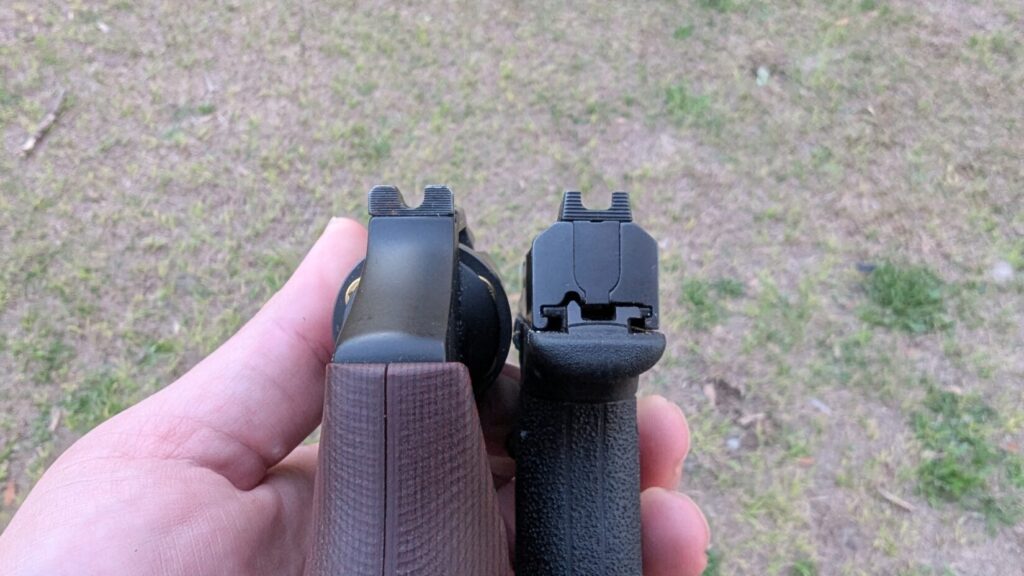
Snubnose revolvers typically have a front sight that you align with a trench across the top strap. Pocket autos are a mix. Some have super small nubs for sights, but in recent years, there has been a trend in improving sights.
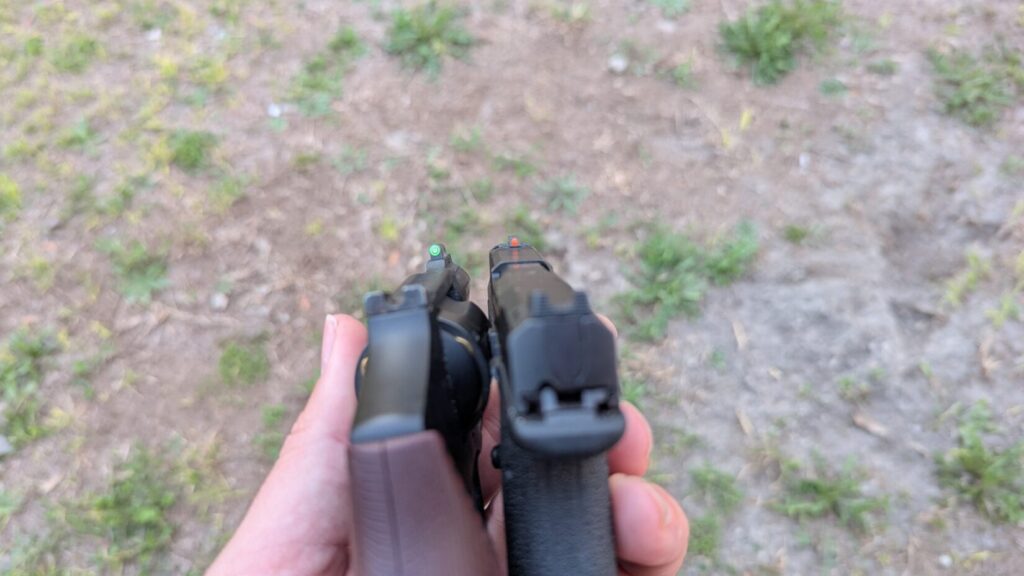
The Bodyguard 2.0 and the Ruger LCP MAX are both examples of pocket-sized pistols with decent sights that make hits easy. The S&W Ultimate Carry and the 940 come with dovetail rear sights that make it easier to make hits.
Beyond the sights, we have to understand the function of triggers. Most pocket revolvers will be DAO (double action only) guns, and longer, heavier triggers can be more difficult to learn to manipulate correctly. While a number of small autos are DAO, they tend to have lighter, shorter triggers than revolvers. With guns like the striker-fired Bodyguard 2.0, the trigger is fairly light and short, which is typically easier to make hits with.
The End Decision
Which would you pick for a pocket gun? The pocket revolver conceals well, draws fast, and has some small reliability advantages. The pocket semi-auto is smaller, lighter, holds more rounds, and is faster to reload.
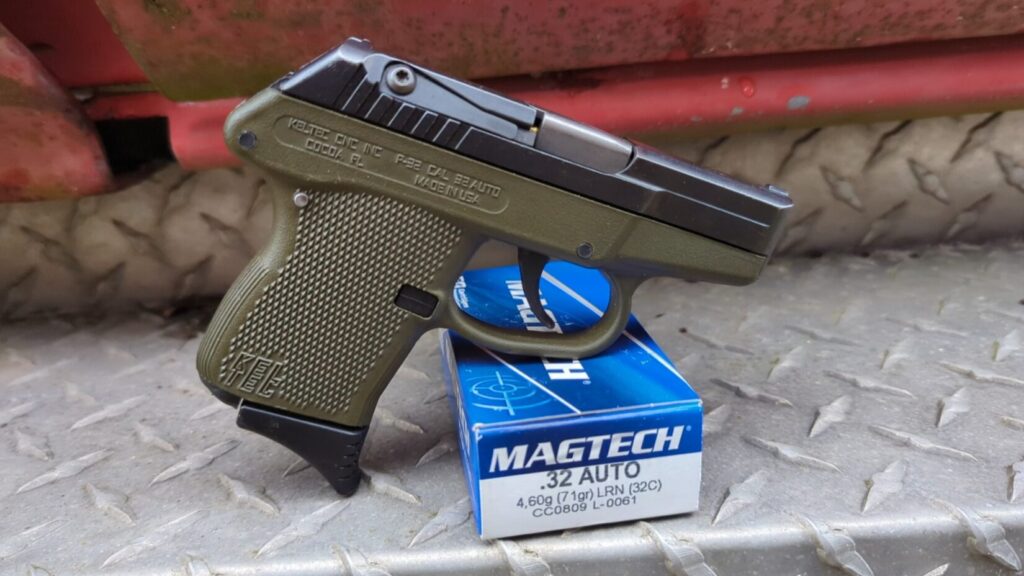
Shootability and accuracy will be firearm-dependent, but both have stellar options. My choices are the KelTec P32 for a small auto and the S&W 432 UC for a revolver. I use both and rotate them depending on my overall goals.
Goals are what you’ll have to weigh when making your choice for a pocket gun.