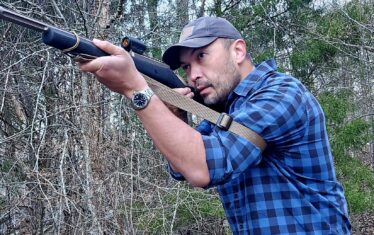

Shotguns aren’t complicated weapons, but shotgun sights can be. Most shotgun sights are fairly simple, but there is a surprising amount of configurations to discuss. Each has its pros and cons. Today, we are going to dive into four of the most common shotgun sights on the market and discuss them in-depth.
The Bead Sight
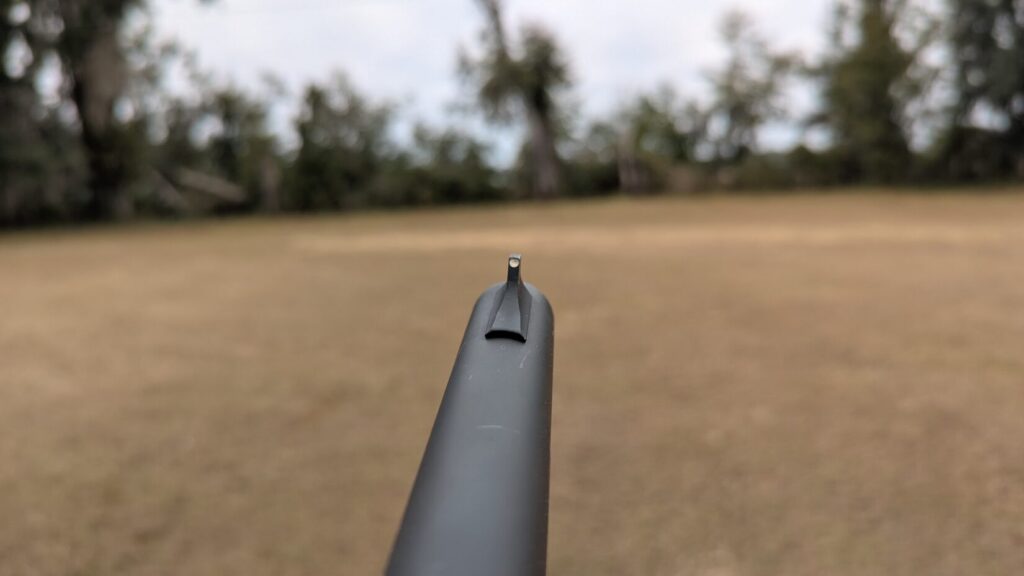
When I use the term bead sight, I want to be clear. I’m discussing any front sight-only design. It can be a traditional brass bead, an XS-style tritium bead, or a fiber optic bead.
The bead sight is the most basic and most common of shotgun sights. They are simple, extremely robust, durable, and easy to use. Bead sights are used on all types of shotguns and have been around for a very long time for good reason.
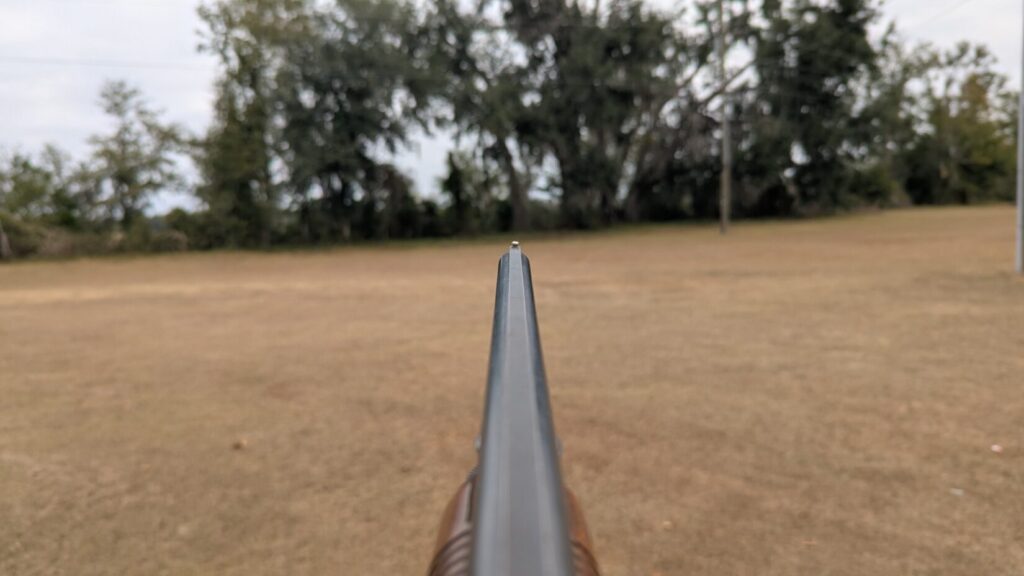
A bead sight works. With most buckshot, a bead sight is enough to get on target quickly and accurately. Transitions between multiple targets are rapid and easy. Shotguns and speed are best friends, and it’s one of the many reasons why shotguns dominate close-quarters combat.
Bead sights make it very easy to use a stress sight picture where you are primarily focused on the target. The bead will appear a little blurry, but you can tell it’s on target, and you can maintain that threat focus. Beads ensure you have excellent all-around situational awareness.
You don’t need to focus on the bead, and you aren’t aligning a rear sight. Shooting with a bead can often feel more like pointing the gun. The bead draws your eye to an aiming point, allowing for rapid confirmation of your shot.
The bead is the bare minimum sight. Plain brass beads tend to reflect light, making them somewhat easy to see in dark environments, while high-visibility beads can increase low-light usage.
The Downside to Bead Sights
Bead sights are non-adjustable. For most basic buckshot, that’s not a major issue. There is also no real rear index point to align with the bead sight. Again, not a major issue with standard buckshot.
When using slugs or specialized buckshot like Federal Flitecontrol, this can be an issue. It leads to less precision with these more specialized loads.
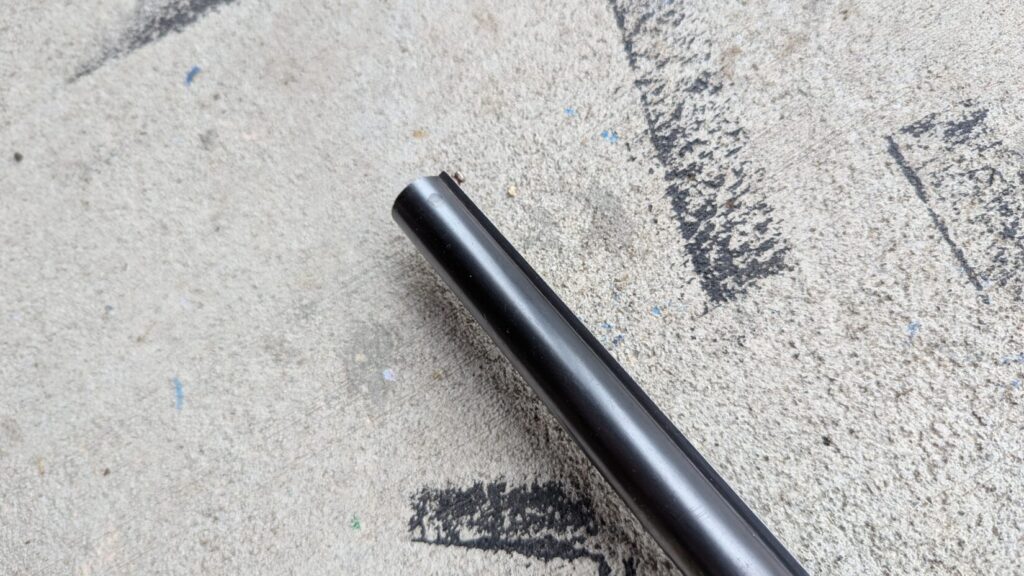
Estimating, or “Kentucky windage,” is fine for deer hunting, but I don’t want that to be a concern for self-defense. Bead sights can also suffer from point of impact/point of aim issues. Specifically, when a bead is attached directly to the barrel, it can often appear that you are hitting high.
Amongst shotgunners, there is a joke that you aim at the belt buckle to hit them in the chest. When it comes to low-light usage, you’ll find your light hitting the threat’s lower body to establish your sight picture, which could degrade your situational awareness.
Ghost Ring Sights
Ghost ring sights are the second-most-popular option for shotgun sights. Most tactical shotgun variants feature ghost-ring iron sights. Anything from Beretta or Benelli likely comes with ghost ring sights.
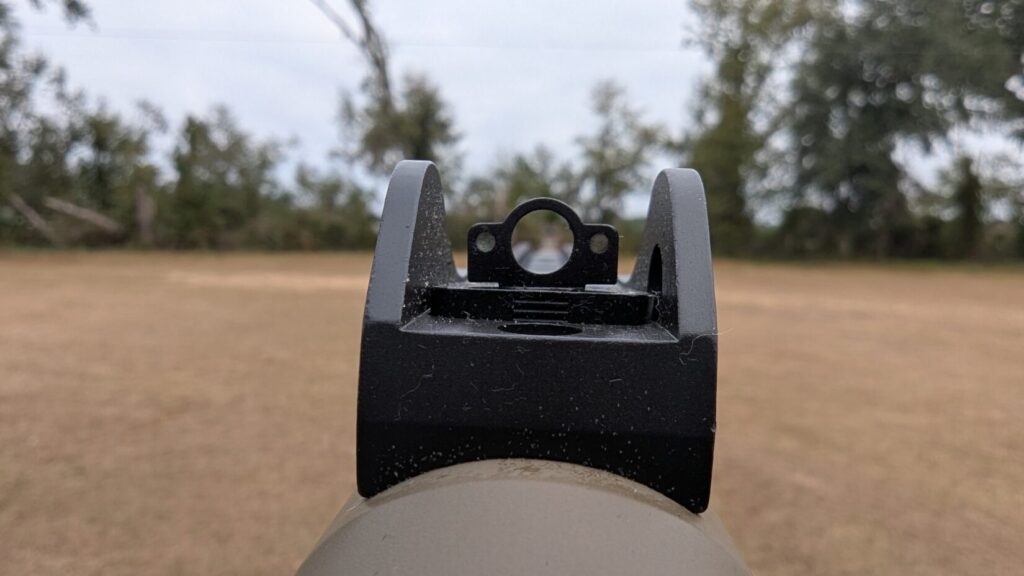
Ghost ring sights use a front sight post backed by a wide peep-style sight. It’s called a ghost ring because it’s relatively large and more or less disappears when you have a proper cheek weld on the shotgun’s stock.
Ghost ring sights can be very quick at close ranges. Your eye wants to find that front sight when looking through the rear sight. You maintain good situational awareness, and the ghost ring front sight is often brightly colored, which works well in low light.
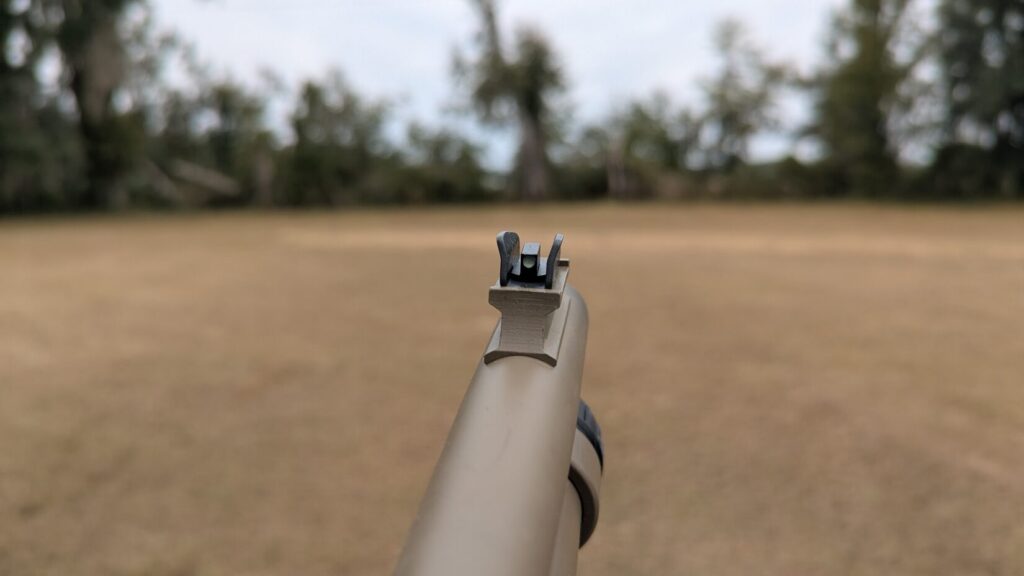
Ghost ring sights are most often adjustable, allowing easy aiming corrections. When using slugs or Flitecontrol, these sights allow for the precise adjustment necessary to score hits at ranges beyond 20 yards, up to 150 yards.
Downsides of the Ghost Ring Sights
Ghost rings are going to be slower than bead sights for ready-up shots and target transitions. How much slower? Fractions of a second with a skilled user, but there is a reason why wing shooters aren’t using ghost ring sights.
Ghost ring sights tend to be a bit fragile. Front posts and rear ghost rings are often protected by some form of wing to reduce these issues. They can break or lose zero if they are not adequately protected.
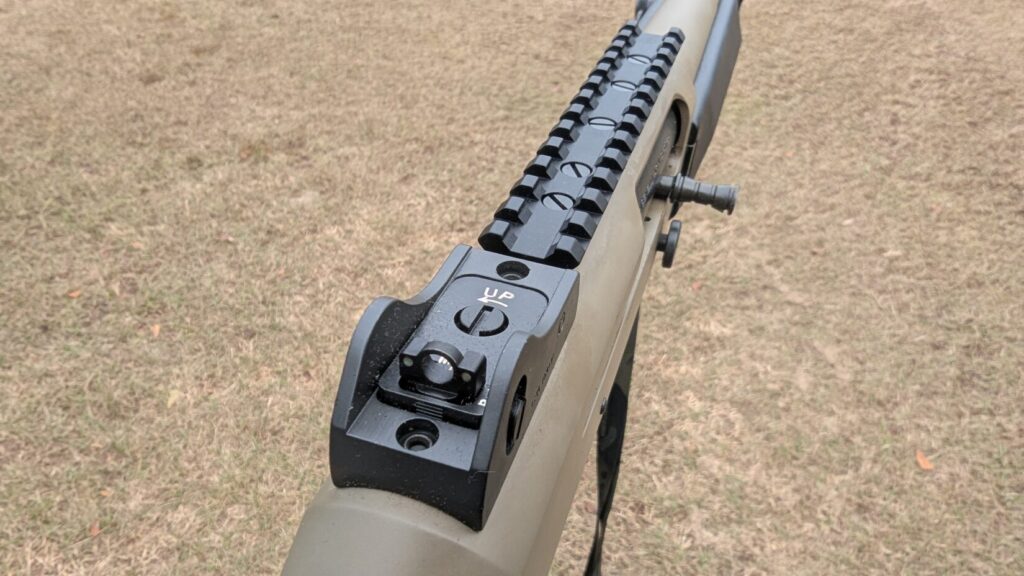
A portion of your field of view will be occupied by these added wings, which can reduce some level of situational awareness. Additionally, they require a good cheek weld every time they are used. A compromised cheek weld can make it difficult to use the sights.
Don’t forget they’ll add some degree of cost to your shotgun selection over a standard bead sight.
Open Rifle Sights
If I had to pick one type of iron shotgun sight, I’d prefer open rifle sights. These sights are mounted to the barrel of your shotgun and offer an open rear sight, much like a handgun, with a front post. These sights have largely fallen out of favor in the modern era.
They are similar to the sights you find on big game hunting rifles. Some of the objectives are the same. They are fast, easy to use, and designed for dangerous situations.
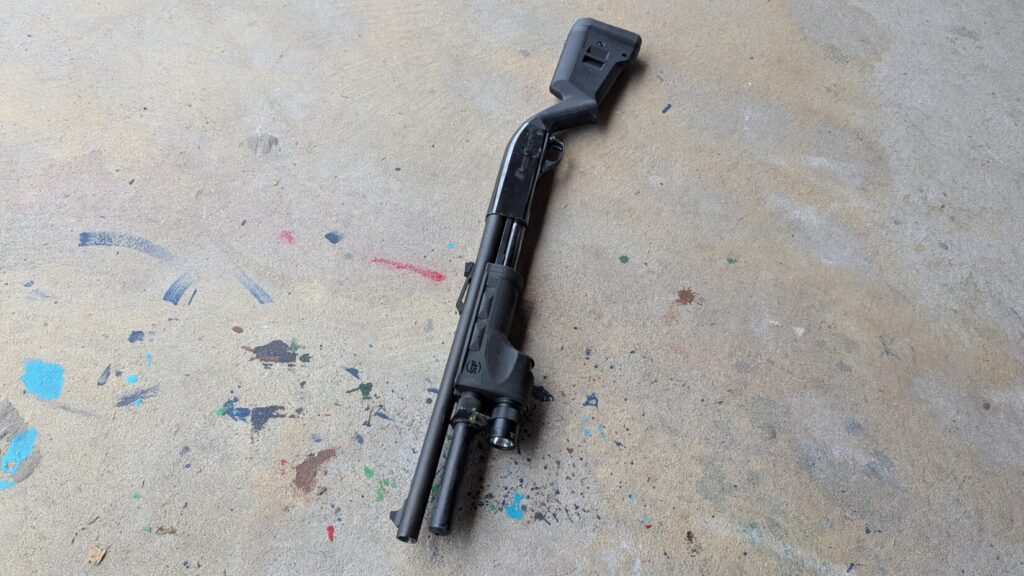
The open rifle sight design is a middle ground between ghost ring sights and bead sights. The short sight radius and open rear sight allow for rapid alignment for rapid shots on target. At close range, you can more or less ignore the rear sight and use the front sight like a bead.
At moderate ranges, like 20 to 25 yards, you can drop the front sight behind the rear sight and get that precise sight alignment. Anyone used to pistol sights or AK sights will feel at home behind a set of open rifle sights.
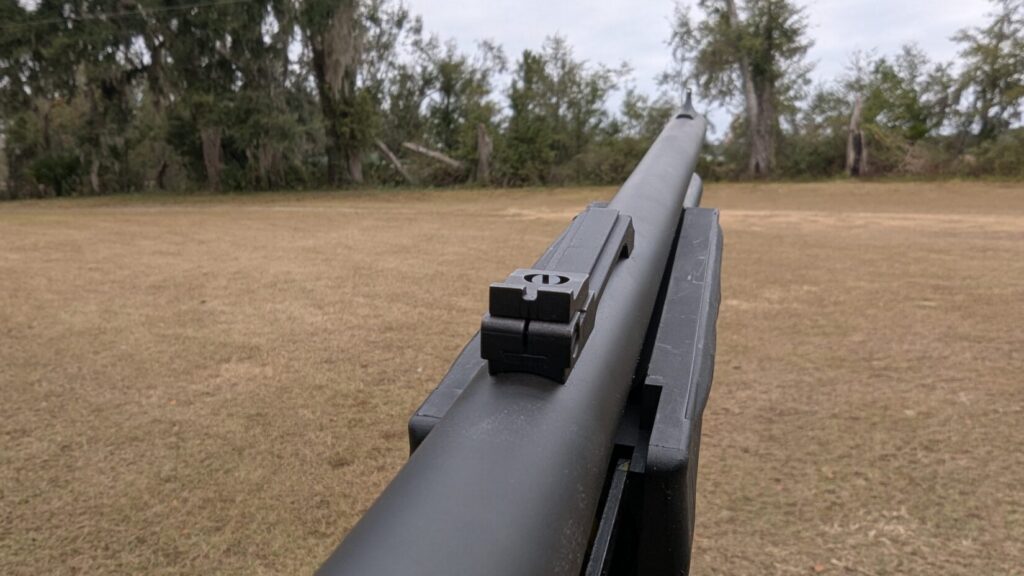
For longer range shots with slugs or Federal Flitecontrol, you can get the precision of a rear sight. Some rear sights are adjustable for windage and elevation. Others are fixed, like the XS rifle sights. It’s easy to land slug shots on target at 100 yards with open rifle sights.
Downsides to Open Rifle Sights
The downsides are tied to the benefits. It gives you some of the strengths of a bead sight with some of the strengths of ghost ring sights. It’s also a compromise between those two styles of sights.
Open rifle sights aren’t as fast as bead sights, but again, it’s fractions of a second. For precision shooting, these sights tend to be less adjustable, and the shorter sight radius tends to lend to less precision.
An adjustable rear sight is easily exposed to the environment and can be banged around. This can knock the zero out of whack.
Also, the distance of the rear sight from your eye can make it tough to find in low-light situations. This can be solved by using something like the XS sights, which include tritium lamps.
Reflex Sights
Reflex sights cover a multitude of optical options. It’s a term I’m using to describe red dots, holographic sights, and even 1x prisms. Reflex sights are the ultimate shotgun sights, with red dots being the mainstay of shotgun optics.
These sights offer you most of the advantages of bead sights, ghost rings, and rifle sights all in one simple platform. They allow for a target focus without sacrificing any precision. You can put the dot on the target, and focus on that target, while still seeing the reticle.
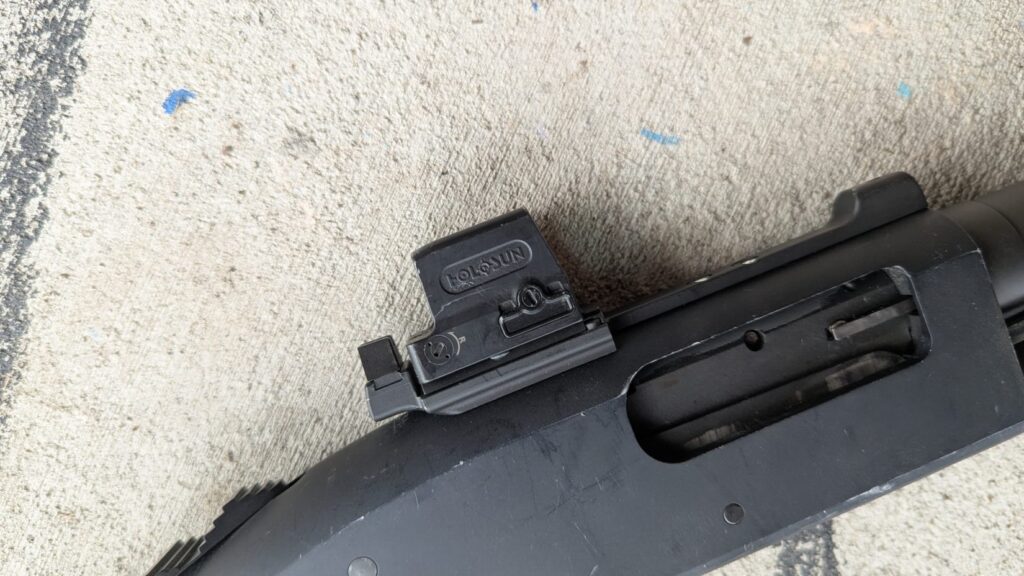
With a reflex sight, we are getting the speed of a bead sight with the precision of a ghost ring option. You can easily zero the optic, ensure proper POA/POI (Point of Aim/Point of Impact), and precision with slugs and Flitecontrol.
Getting up and on target, or transitioning targets, is rapid and easy. Red dots work in low-light conditions and work well with weapon lights. It’s the most visible option of all.
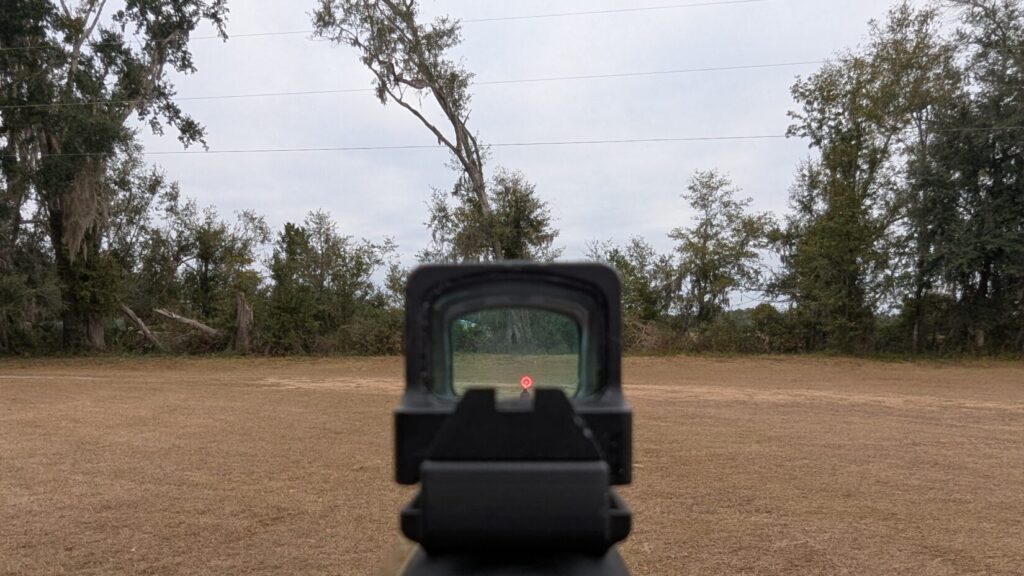
Red dots are the ultimate shotgun sighting option in the modern era. Specifically, a pistol-sized dot tends to work quite well and clings rather low to the gun. Red dots are the way to go, if possible, when it comes to a shotgun.
Downsides to Reflex Sights
That doesn’t mean there aren’t downsides to red dots on shotguns. They are the pricey option, with a good red dot costing at least a couple of hundred dollars.
Another problem is the mounting options. Shotguns don’t use a universal mounting rail. If you use a Picatinny rail and a rail adapter, you are stacking tolerances and increasing the chance of something failing. The Vortex Viper Shotgun Red Dot is perfect for solving this problem. It’s the only one with a built-in universal mount I know of.
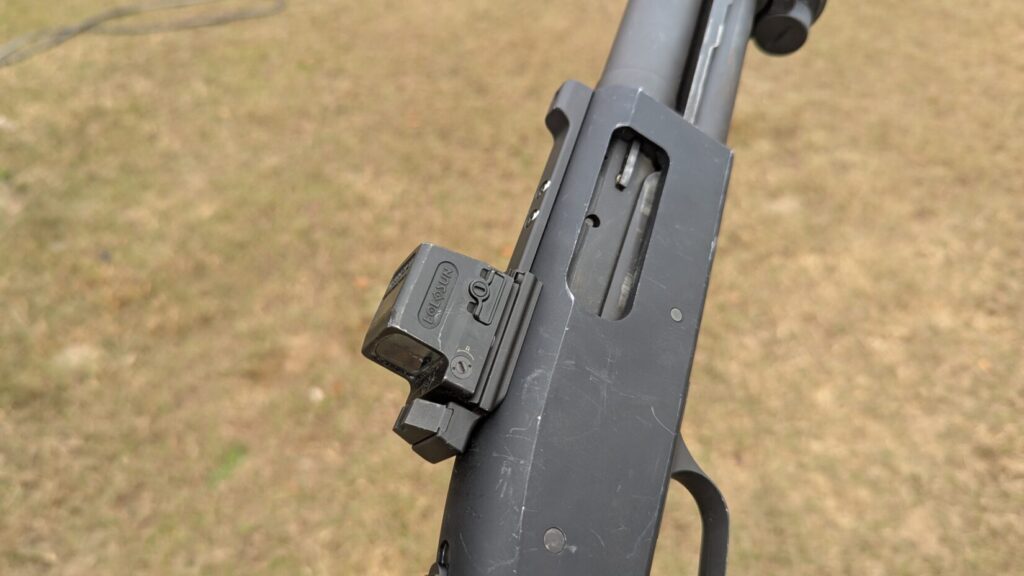
Modern red dots can easily withstand shotgun recoil. It’s simply not a problem. What you might run into, though, is screws starting to rotate themselves out of the mount over heavy round counts, so maintenance is constant and something you absolutely have to pay attention to.
Additionally, bead sight shotguns don’t offer much in the way of co-witnessing iron sights, so if the dot dies or breaks for some reason or another, you’re down a sight. Luckily, options like the Defender Tactical CoSight exist, which integrates Glock sights into an optic’s mount to allow for co-witnessing.
Sighting It Up
Shotgun sights are varied. Each has its strengths and weaknesses. Finding the right one for you can be difficult, and unlike an AR, it’s not easy to swap sights. While iron sights are great, I do think the red dot is ultimately kicking them to the curb.
A bead can get it done, but a red dot offers so much more to the shotgunners who want to take complete control of their fighting tool.