
Slings have evolved from the basic carry strap variety to include quick-detach points, rapid adjustment tabs, lightweight furniture, comfortable padding, and more. While some slings have been designed for specific purposes, the foundational skills for the basic carry strap can usually apply to any two-point variety.
A good sling makes life in the field easier. Understanding how to use a sling in the field is an important skill set and part of good fieldcraft.
American Carry
There are three ways to sling carry a rifle or shotgun commonly taught. American, African/Safari, and European. Traditionally, American Carry is on the strong side of the body with the muzzle up.
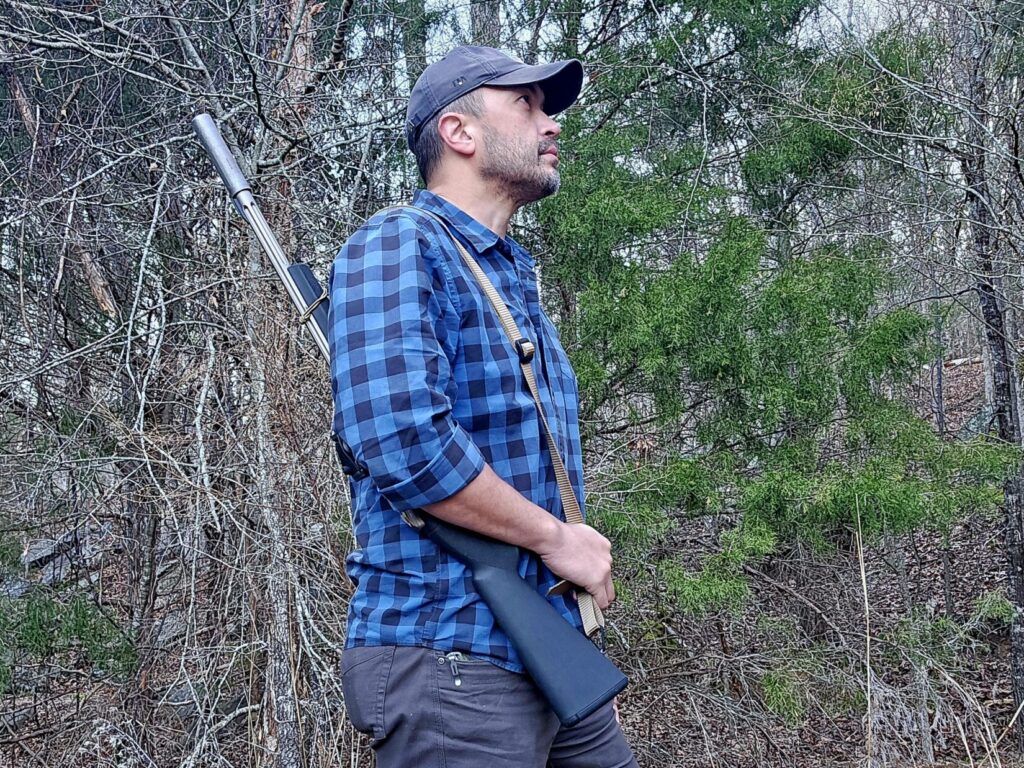
With this method, the muzzle is pointed in a relatively safe direction, with safe direction meaning zero bodily injury and minimal property damage.
American Carry is great when you decide to take a break and drop to a knee, as it keeps the muzzle from driving into the dirt. If you don’t have to worry about branches or obstructions overhead, it makes sense to carry with the barrel up, especially so if you are running a suppressor, extending the overall length of your rifle.
Accessing your rifle is fairly easy, reaching underneath the strong arm with the support hand and grabbing the rifle near the receiver. While American Carry seems like the answer, it can be problematic if you are carrying a pistol in a holster on your strong side.
African Carry
Sometimes referred to as “Safari Carry,” African Carry is when the rifle is carried muzzle down on the support side.
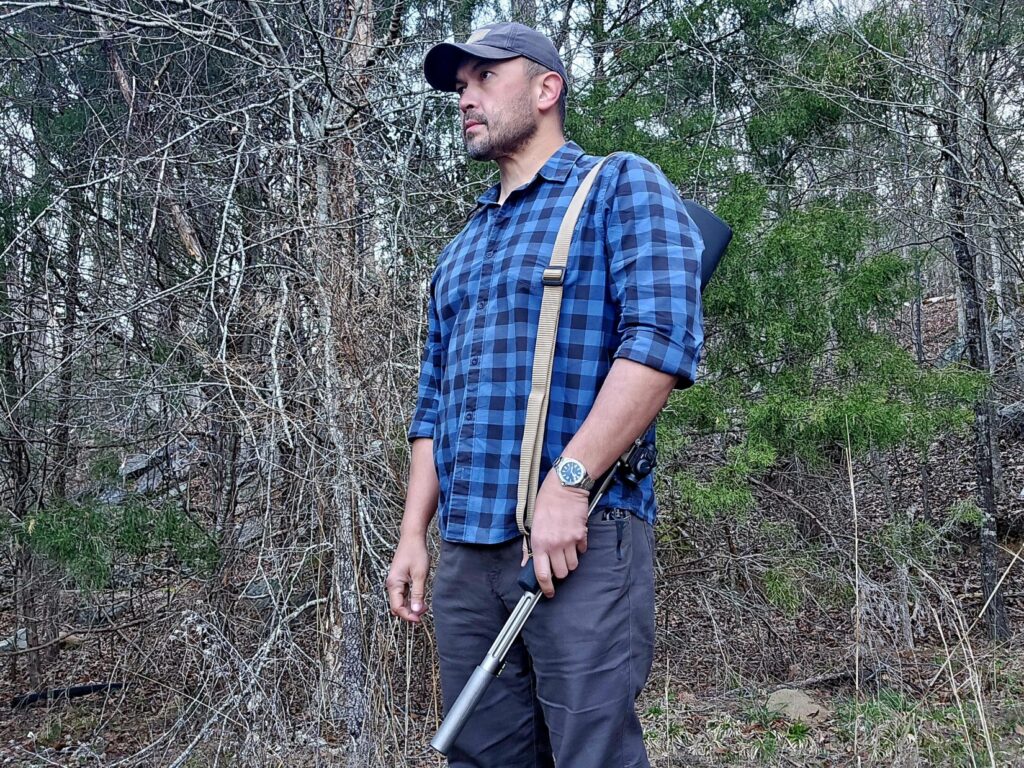
This method allows the muzzle to be controlled with the support hand on the forend of the rifle. It is an excellent way to carry when traveling through thick undergrowth, as the muzzle is less likely to get snagged on branches overhead. Also, this method makes it easier to carry a pistol on the strong side without it scratching the finish of your rifle.
Getting your rifle ready for a shot from African Carry, in my experience, is incredibly fast as the sling slips off the shoulder and the forend rotates up as the buttstock finds the shoulder.
African Carry requires some discipline as the muzzle is positioned downward, and taking a knee or losing your balance crossing an obstacle could result in an obstructed barrel. This is exaggerated even more if you have a suppressor on the end of your barrel.
European Carry
Perhaps the least known of the common hunting sling carry methods is European Carry. This style is accomplished with the rifle carried on the support side with the strap on the back of the shoulder, and the rifle in front of the body with the muzzle up.
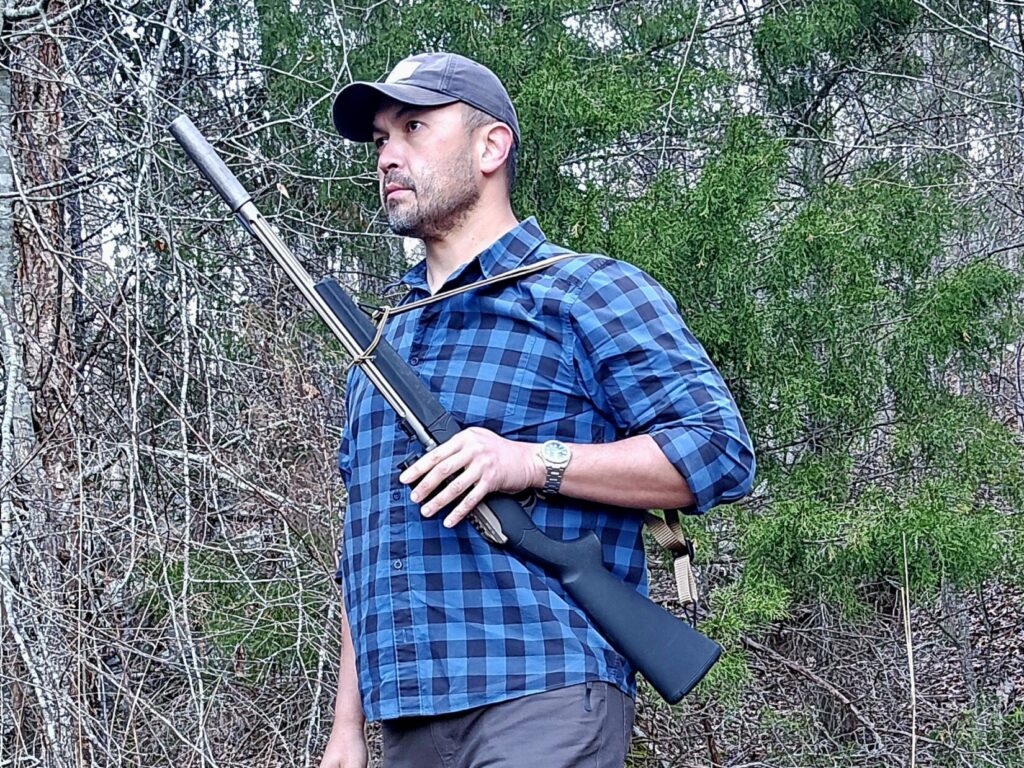
This method is excellent for muzzle awareness and control of your rifle. The drawback to European Carry is the initial awkwardness if you have only carried African or American style before. Also, the weight of the rifle is forward on the body, which can feel like it is forcing you to lean forward.
Getting the rifle up to your shoulder requires shucking the sling and rotating the firearm up to your shoulder.
Sling Supported Shots
The sling you equip your rifle with should be adjusted to your body for comfortable carry. It should also be adjusted for taking a sling-supported shot.
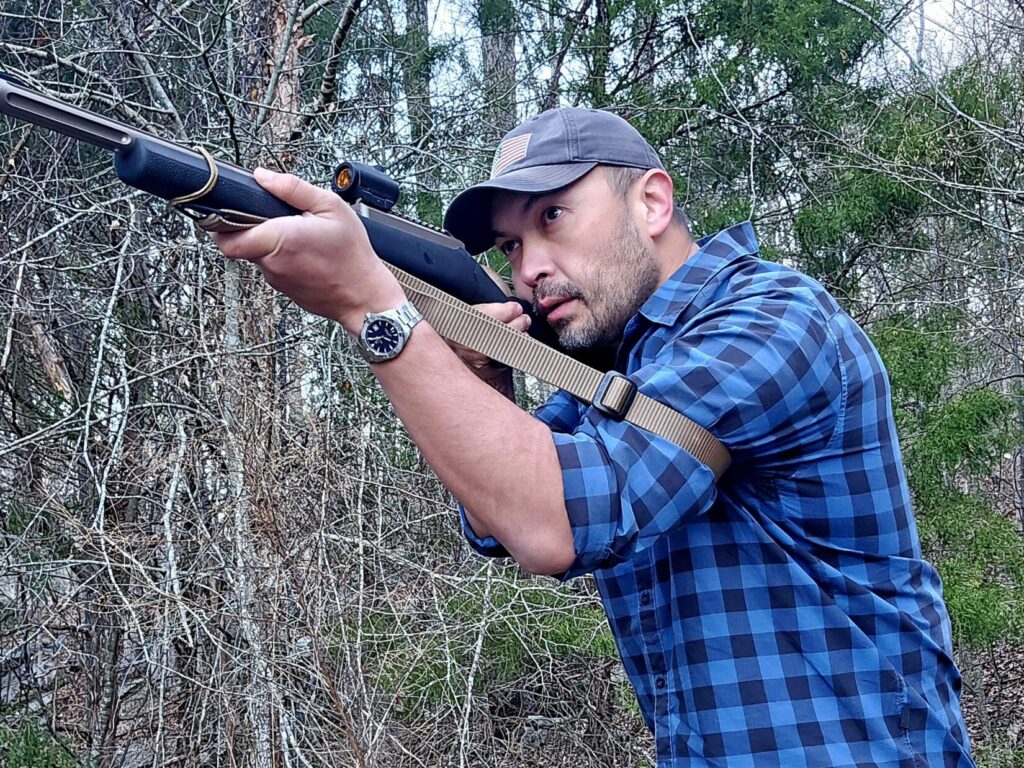
Typically, a firearm has multiple points of contact with the body. The support hand makes contact with the forend, the buttstock with the shoulder pocket, the firing hand with the pistol grip, and the cheek with the comb.
When a sling is used, an additional point of contact high up on the tricep of the support arm is added. The shooter fishes their support arm through the loop formed between the sling and the rifle/shotgun and squeezes the rifle closer to the body.
When done correctly, the firing arm can be pulled away from the rifle, and it will be held in place. This technique, paired with a seated or kneeling shot, is exceptionally stable.
Pole Wrap
Barricade shooting is taught at schools across the country. It’s applicable for urban combat, but there are not many similar form factors available in the woods when you’re hunting.
Woodland hunters can use the rounded trunks of trees like a barricade shot and brace their support hand against it, holding their rifle with their thumb.
For smaller diameter trees, the hunting rifle sling can be detached at the buttstock and wrapped around the tree to hold the rifle more securely.
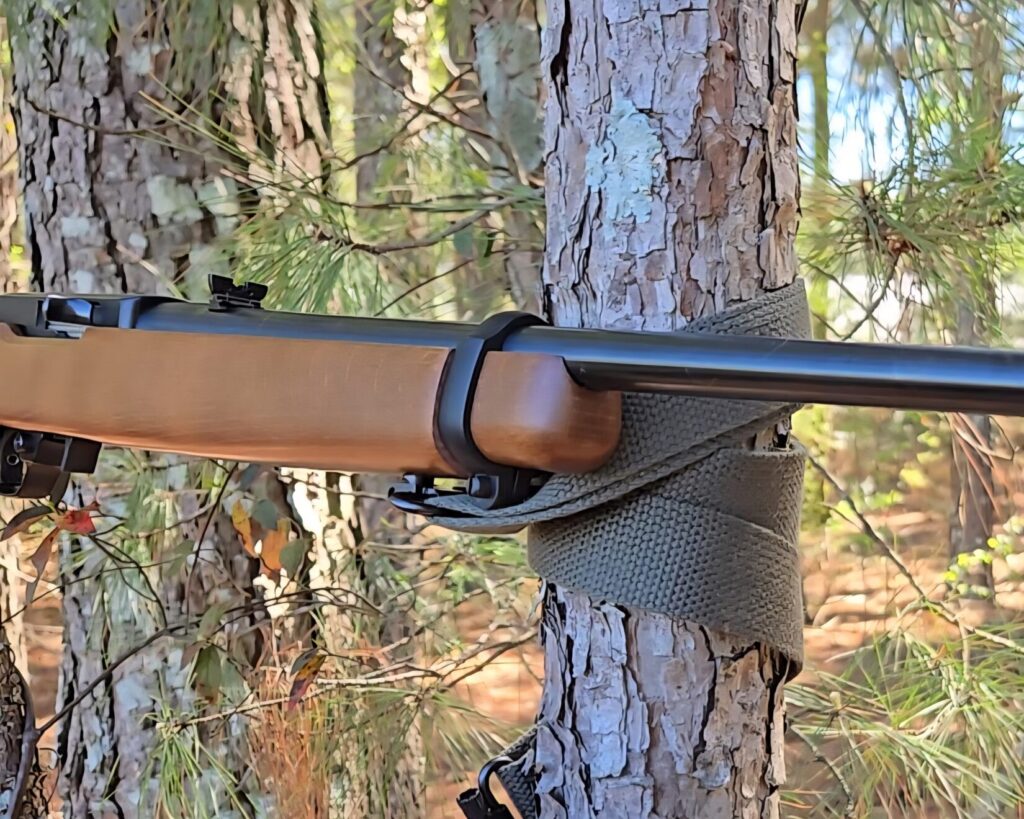
If time allows and the hunter has a quick-detach sling, they can set up a shooting solution that will reduce wobble and increase the likelihood of hitting their target. This technique is particularly useful if the hunter has a rifle with a longer barrel and suppressor that is muzzle heavy and harder to hold steady.
Cross Body
At some point, you may find yourself carrying your rifle cross-body instead of over one shoulder. You may find this method more comfortable if you are covering longer distances or if you need your hands free to carry something else.
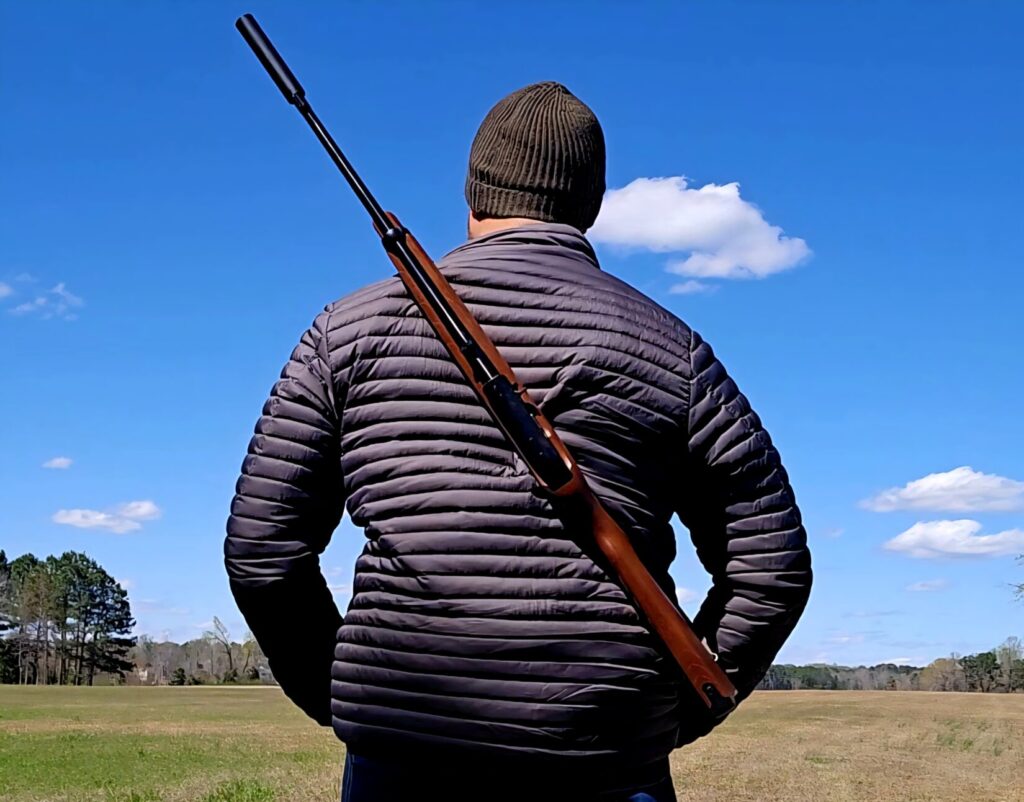
Depending on the configuration of your rifle and whether you are using a chassis or traditional style stock, you may find it is easier to carry the rifle on the front or back of your body.
Carried on the front, it is easier to maintain awareness of your barrel, but your barrel is pointed downward and may get in the way. Carried on the back, your barrel is likely carried upward. Using this method, you won’t be able to see your rifle, and you may hit the barrel on something if attempting to duck under it.
The third method of carrying cross-body is muzzle down across the back. This isn’t advisable with longer rifle barrels for the chance of damaging the barrel with accidental hits against rocks or the ground.
The Little Things
A chain is only as strong as its weakest link, and there are always little links in the concept of a rifle sling. Both leather and synthetic slings have enough structural integrity to hold a rifle.
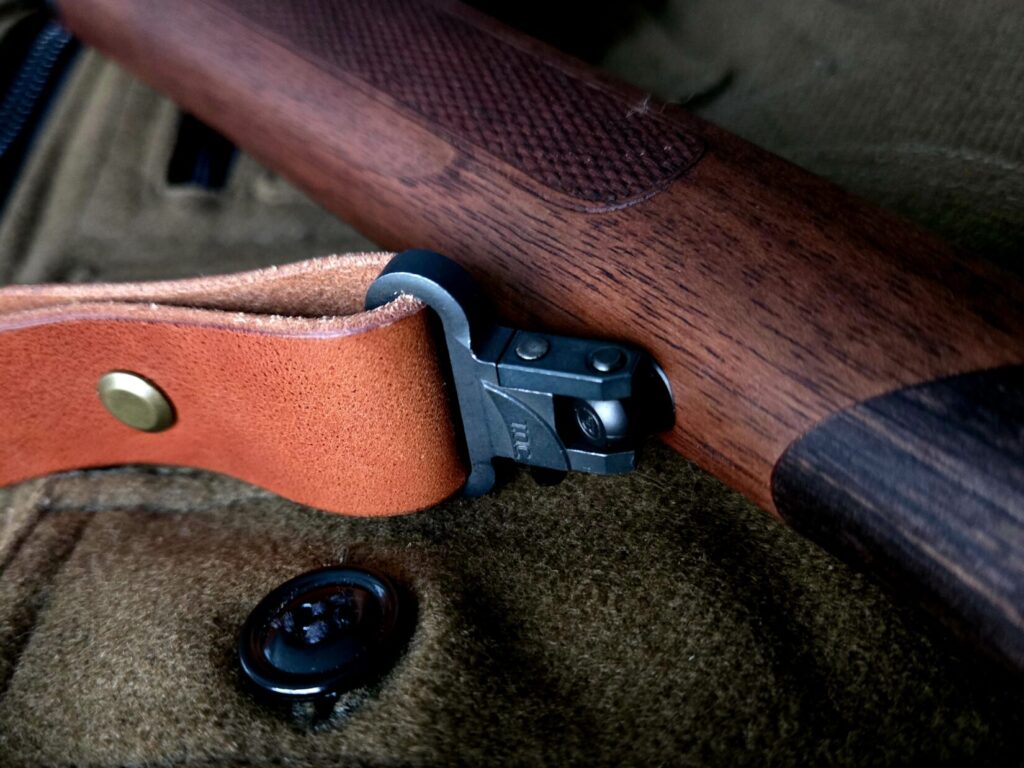
The plastic fasteners, Chicago screws, and sling swivels can all fail. Any tri-glide attachment on a sling should have the nylon fed back through whenever possible. The sling swivel itself should be tested to make sure it is secured before shouldering.
Even the rifle sling swivel studs should be examined, as they are typically screwed into the rifle stock and could walk out to a point where they will pull out under some force. The last thing you need on a hunt is for your rifle to fall from your shoulder, impact the ground, shift your zero, and end your hunt.
A rifle sling isn’t just a carry strap, it is a solution. That said, the best way to get your rifle up to your shoulder and your rounds on target is to have the rifle in your hands when the situation presents itself.
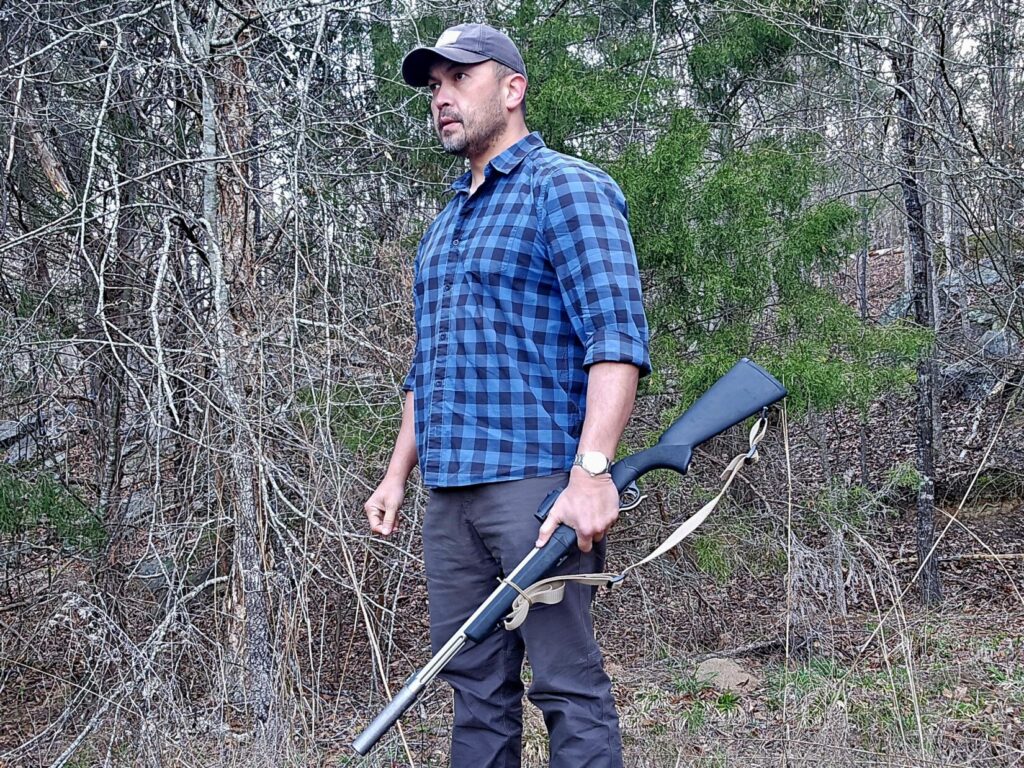
Learn to transition in and out of sling carry methods and adopt what works for you.