
The Snakestaff Systems ETQ (Everyday Carry Tourniquet) is a compact, lightweight tourniquet geared towards accessibility and ease of carry.
Weighing in at 1.1 oz and coming to around 4.5”x2” packed, it definitely offers an improvement in portability for everyday carry. Because it is easy to carry, you are more likely to carry it, so the Snakestaff ETQ will be there if you need it.
Why does everyone need to know how to use a TQ?
The world is a dangerous place. If you carry every day or spend time at the range, you should also know some basic first aid skills. You can be your own first responder in many situations.
I am Wilderness First Aid and CPR certified, and I’ve taken an in-depth Stop-the-Bleed class with local paramedics. However, I am not a medical professional. We’ll talk more about the professionals in a minute.
At a very high level, TQ application is easy to understand. Some wounds bleed profusely. Applying direct pressure is often enough as the pressure stems the flow of blood at the wound.
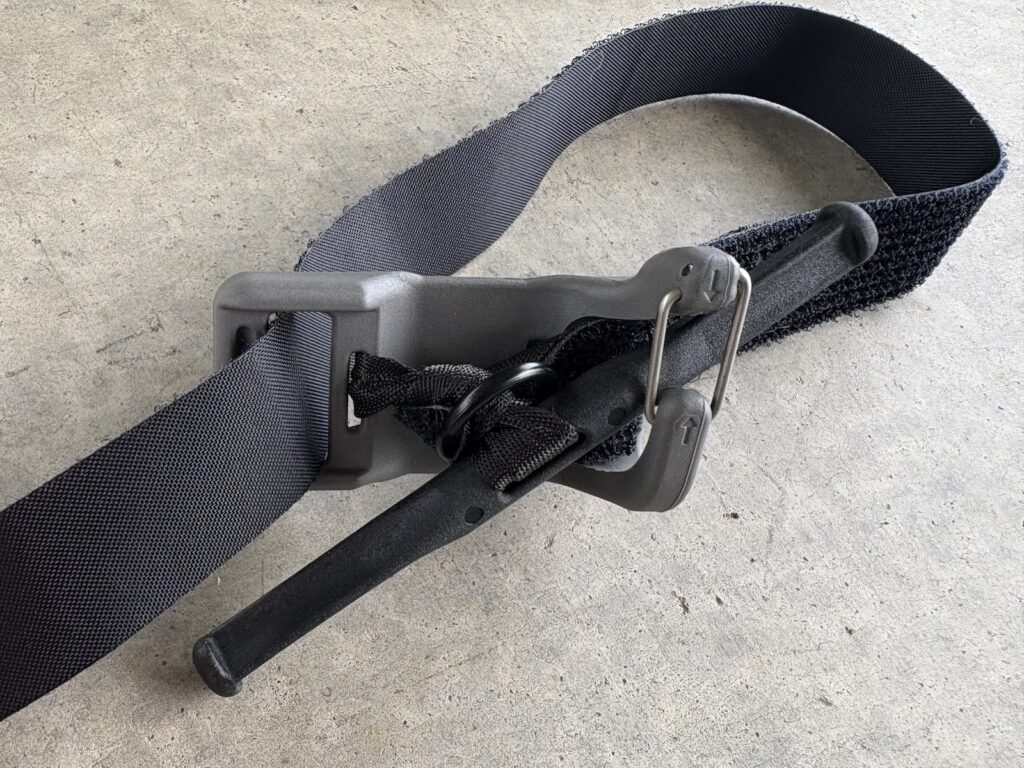
In some instances, pressure is needed deeper. A TQ can be wrapped around a limb two to three inches above the injury. Pull the strap tight and secure it, then tighten down by twisting the windlass to restrict blood loss. Note the time, as first responders will need to know how long the limb has been without blood flow.
This is an emergency life-saving technique. Applying a TQ doesn’t solve the problem, but it slows it down and buys time for medical professionals with better equipment and better training to arrive and take over.
That being said, incorrect application can cause extensive damage without solving the problem. This is why, even as an amateur, learning to properly use a tourniquet and address a wounded patient is vital. Just as you should train to be effective before carrying a firearm, the same concept applies to tourniquets.
TQs for EDC? Aren’t there already good options?
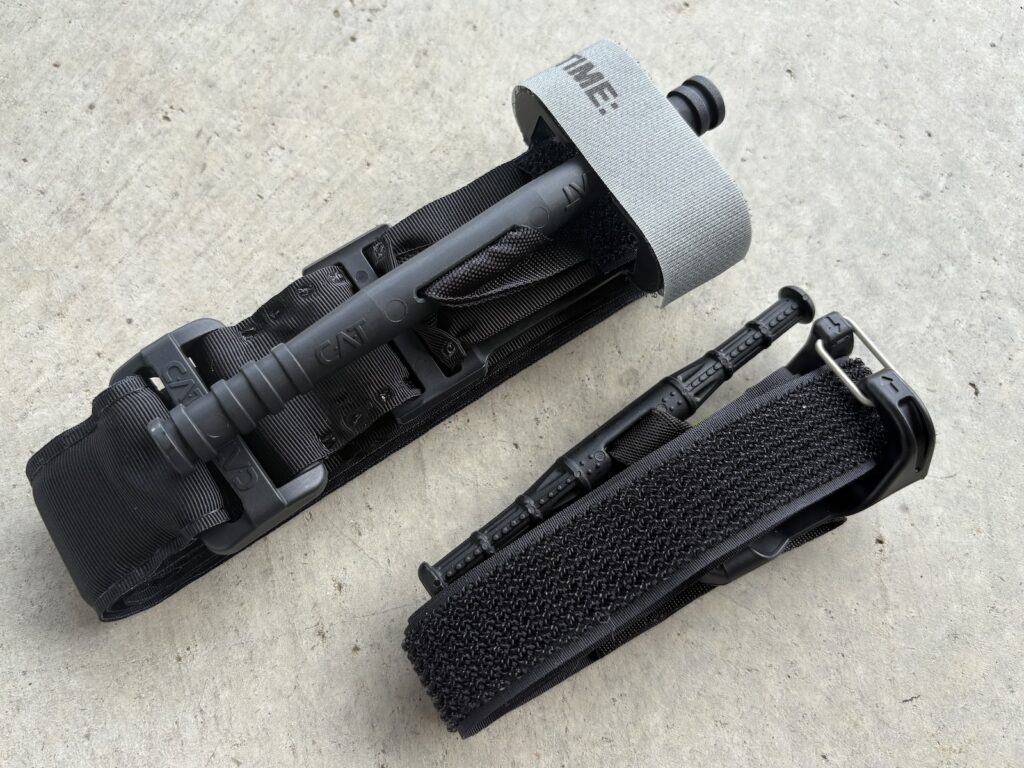
North American Rescue’s Combat Application Tourniquet has been the industry standard for years. It’s tested, proven, and has held up through its generations, both as a civilian lifesaving tool and as a professional lifeline worldwide. Find a trained first responder in uniform, and you’ll likely find a CAT TQ, be it EMS or law enforcement. Additionally, it’s been the issued tourniquet for the U.S. Armed Forces and much of NATO since early in its lifetime.
NAR’s CAT is my go-to for larger med-kits. My IFAK has a CAT in it, and I frequently have another mounted on the front of my holster. I keep one in my truck. This, and the SOF TQs, have trusted track records.
But both are larger. While weight isn’t a deciding factor for most people, both are heavier. Size is where you’d notice an issue. Neither really neatly fit in a front pocket. And this is where the ETQ has the edge. The size of the CAT and SOF TT when they’re applied gives people a sense of security. But their size, packed, prevents many of us from carrying it on us, all the time. The portability of the ETQ makes EDC much more practical.
Snakestaff’s reputation is building.
Professional endorsements
The Committee on Tactical Combat Casualty Care (shortened to TCCC or TC3) is a group of doctors and medics from the U.S. military, whose published guidelines on trauma care have become the standard. As such, they also serve as the authority on all things concerning tourniquets: chiefly, tourniquet use and what specific tourniquets are “recommended.” (I use quotation marks here because, despite being an undisputed decider of professional trauma equipment, they don’t officially approve or restrict anything.)
Whether or not it makes TC3’s recommended list is often make-or-break for people buying a tourniquet, be it an individual, a first responder department, or a military. And reasonably so. But there are two commonly overlooked details about TC3 to consider before ruling out the Snakestaff: they don’t do their own testing, and they don’t look at every tourniquet on the market when making their list.
Instead, TC3 looks at existing information from outside studies on specific tourniquets’ performance, including controlled tests and field use, and compiles a list of those tourniquets that perform to their standards. But for one to even be evaluated by TC3, there has to be very extensive, officially published data spanning years of evaluation.
Understanding the nuances of TC3’s system can be fairly complicated. But importantly, TC3 hasn’t evaluated the ETQ. They haven’t reevaluated anything in more than 7 years, before the ETQ was even in its prototype stage.
If you’re looking for a set of standard requirements for tourniquets, the Department of Defense Tourniquet Working Group and the Joint Trauma System both offer a list of performance requirements. The ETQ meets all of these.
Snakestaff Success Stories
As I was writing this, I reached out to Jefferson Colledge, CEO at Snakestaff. I asked about reports from the field. “We get more every month,” Colledge said. “We are proud of every one of them, but the use cases involving children stand out the most and impact me the most.”
“A 9-year-old boy in rural Minnesota suffered a deep laceration to his upper arm from broken glass. Mom and Dad quickly reacted by using a belt and a towel to control the bleeding, but these improvised measures were not enough to control the bleeding. Luckily, a first responder who was on call at his home only 2 miles up the road responded quickly and controlled the bleeding using an ETQ. The boy was handed off to paramedics and took a 45-minute ride up to their Level 1 pediatric trauma center, where doctors confirmed arterial involvement.
“A 13-year-old boy in Colorado sustained a severe open compound fracture to his leg after being struck by a suburban while riding an e-bike. A bystander who witnessed the collision from his vehicle jumped out, took charge of the scene, and made his way to the boy and his brother, who was also riding the bike. He noticed the obvious deformity and heavy bleeding from his leg and immediately applied the ETQ. First responders arrived shortly after and transported both boys to the hospital.”
As for independent testing, Colledge pointed to a 40-participant study that was conducted by an independent third party of PAs in Texas. “This study was modeled after the US Army Surgical Research Institute’s study of the CAT by NAR. Essentially, the study concluded that both variants of the ETQ successfully occluded arterial flow on upper and lower extremities. The study is currently pending publication and peer review.”
That study can be read here: https://www.researchsquare.com/article/rs-9306279/latest
size matters
I see the size reduction to be an innovation. Snakestaff Systems isn’t trying to replace the CAT. It’s trying to offer a situational alternative that you can still rely on. If you want a good way of thinking about it, compare it to handguns. Don’t think about the CAT vs. the ETQ as a Glock vs. generic clone argument. Think about it as the difference between a G17 and a G43x.
If you’re at the range, carry a G17 OWB. If you’re on duty, carry a G17. But for IWB EDC, the G17 isn’t always the best option. If you want to carry IWB, the 43x is less obtrusive.
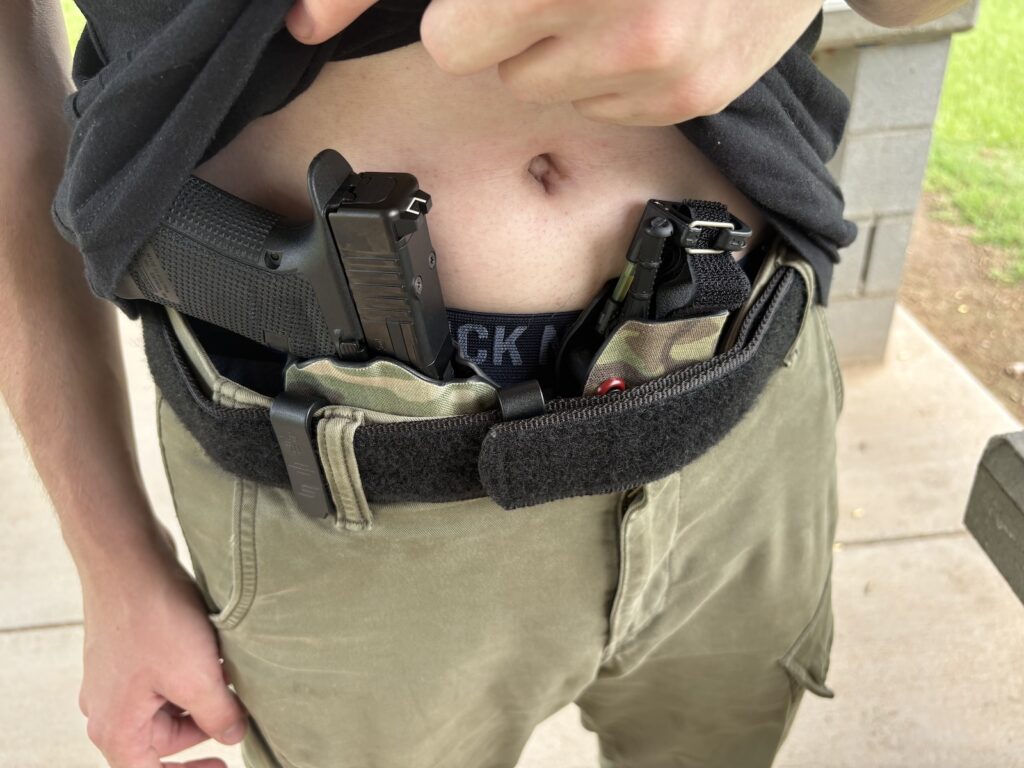
How to carry a Snakestaff ETQ
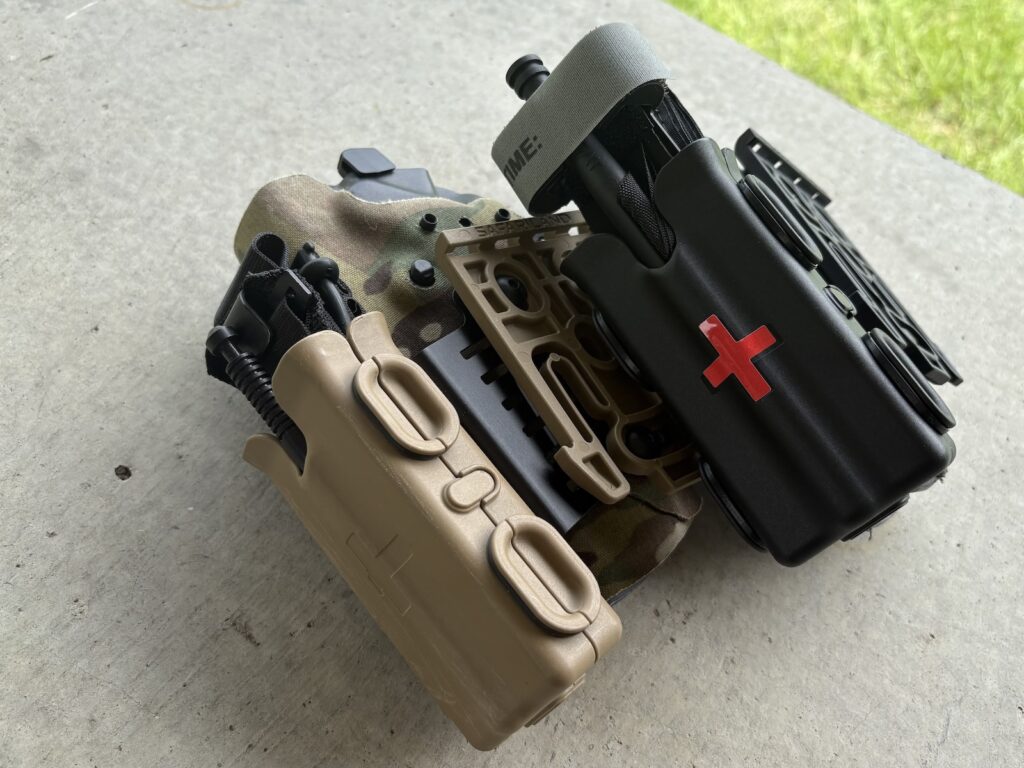
IFAKs, stand-alone pouches, and front-of-holster TQ placements are common. Ideally, you should be able to reach a TQ with either hand. And many people prefer to carry at least two.
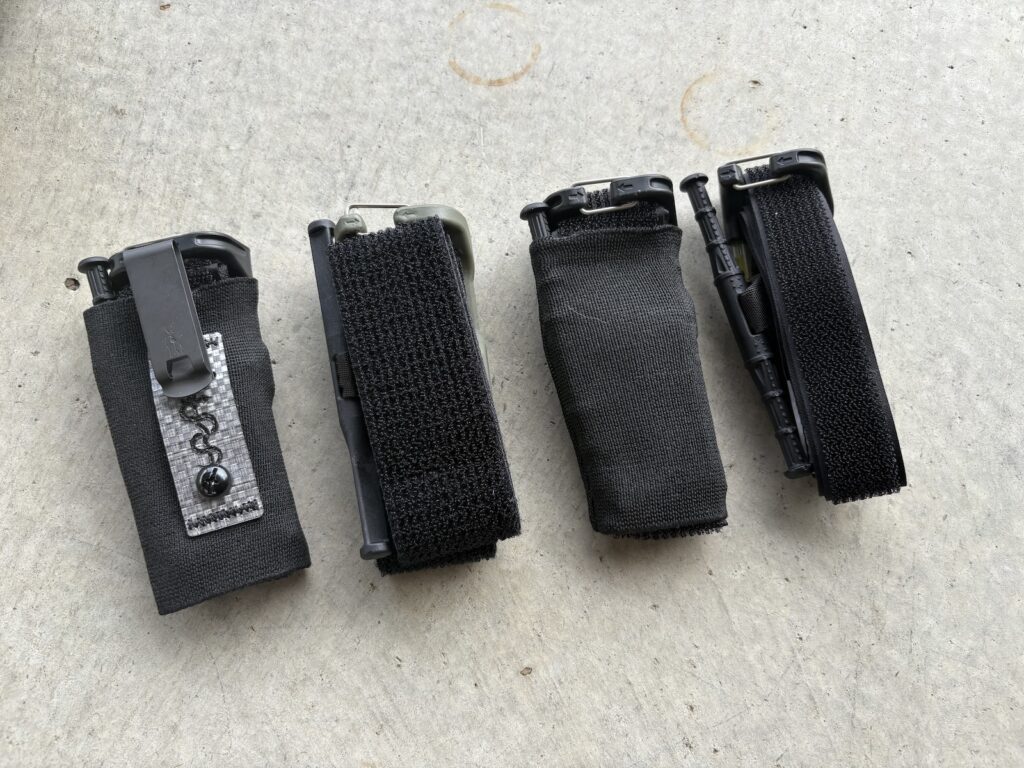
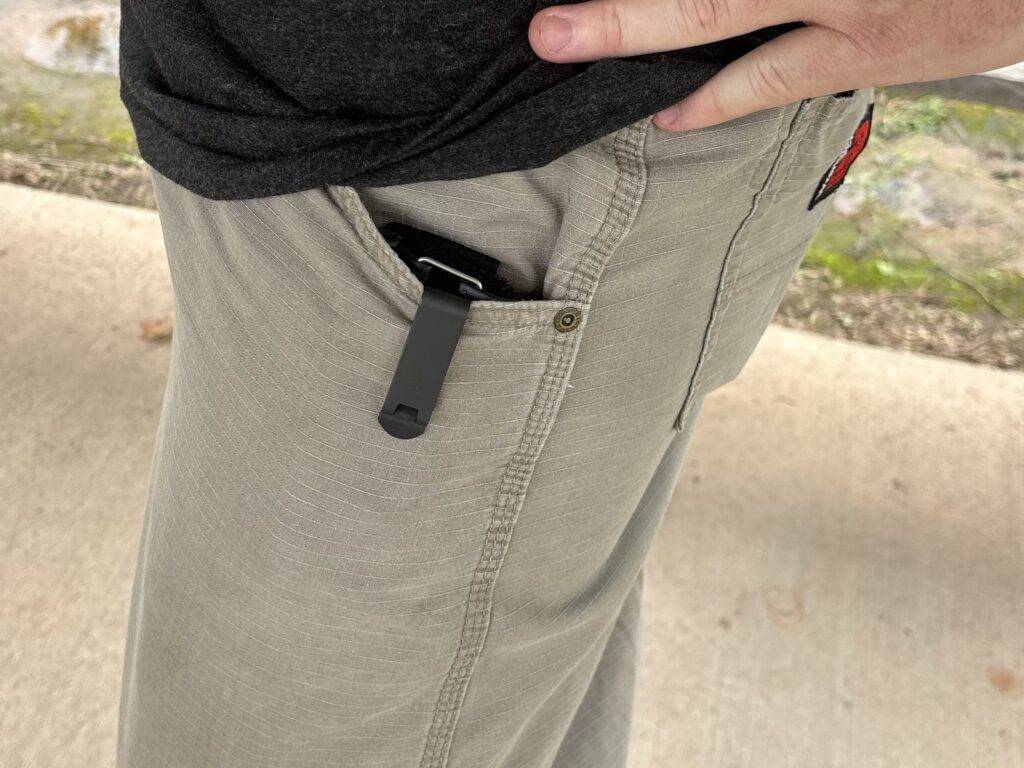
With the ETQ, front pocket carry can go three ways–wrapped, unwrapped, or wrapped with a pocket clip.
The pocket clip will allow for the top of the TQ to ride above the pocket opening, which makes access easier. Remember, unlike a knife or a gun, there’s no reason why a TQ has to be concealed.
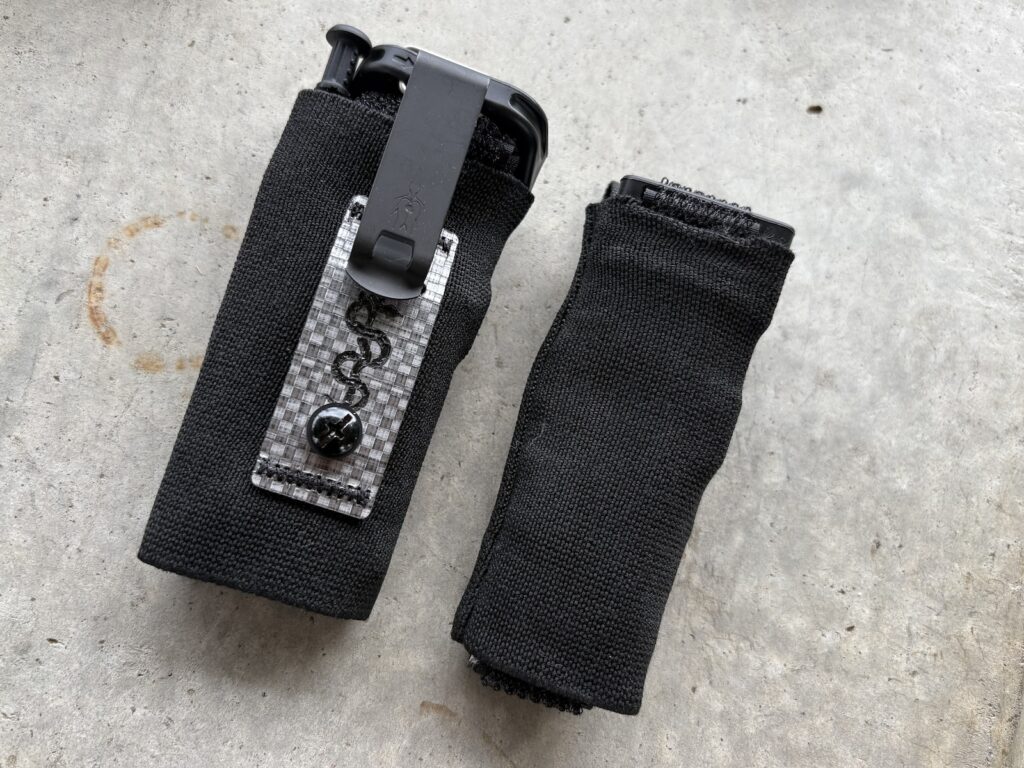
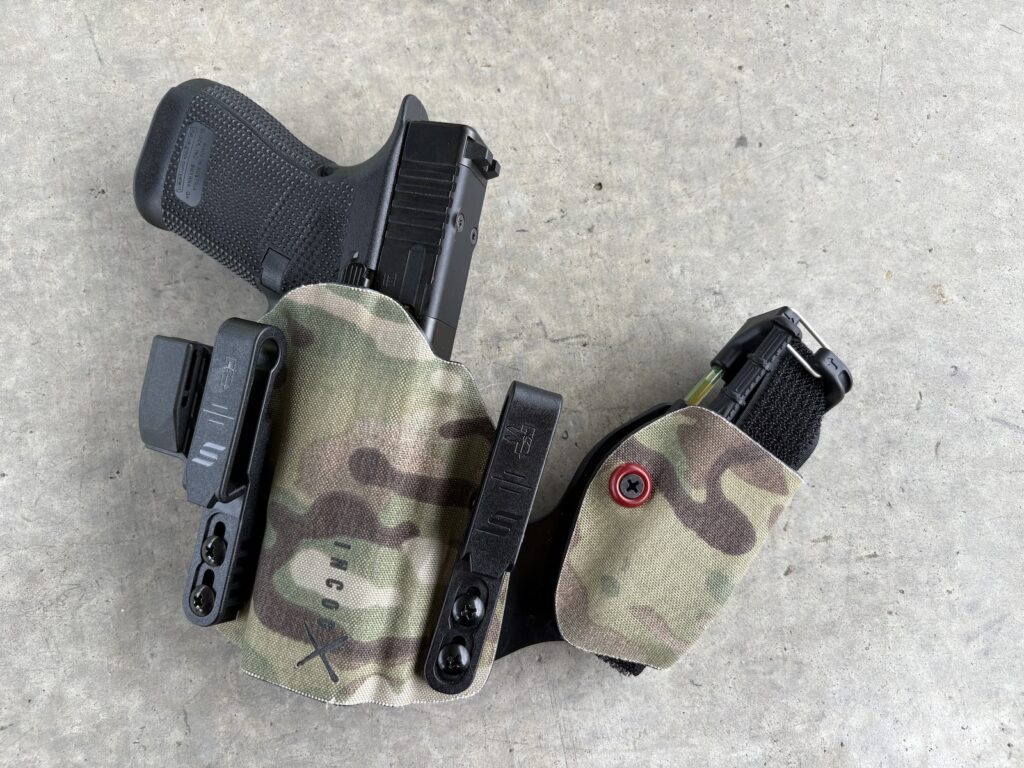
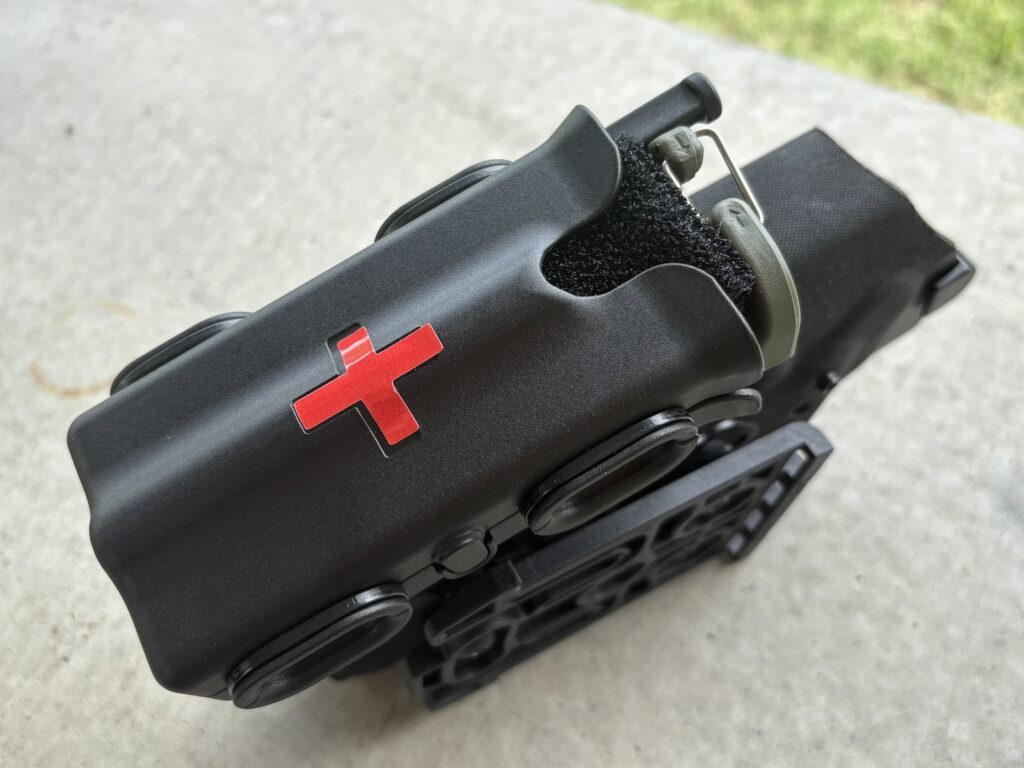
A clip will also allow for IWB carry. And if you want to do IWB in a mag holder, like the one on an Incog X, that works too, as these are about the size of a GLOCK mag.
Off-body carry is also easy. Placing it in an IFAK will help keep it clean. Keeping one in a backpack or bag is also unobtrusive.
Carry and train
People have been carrying TQs for decades now. People have been using improvised TQs made from belts, scarves, or rope for as long as blood flow has been understood.
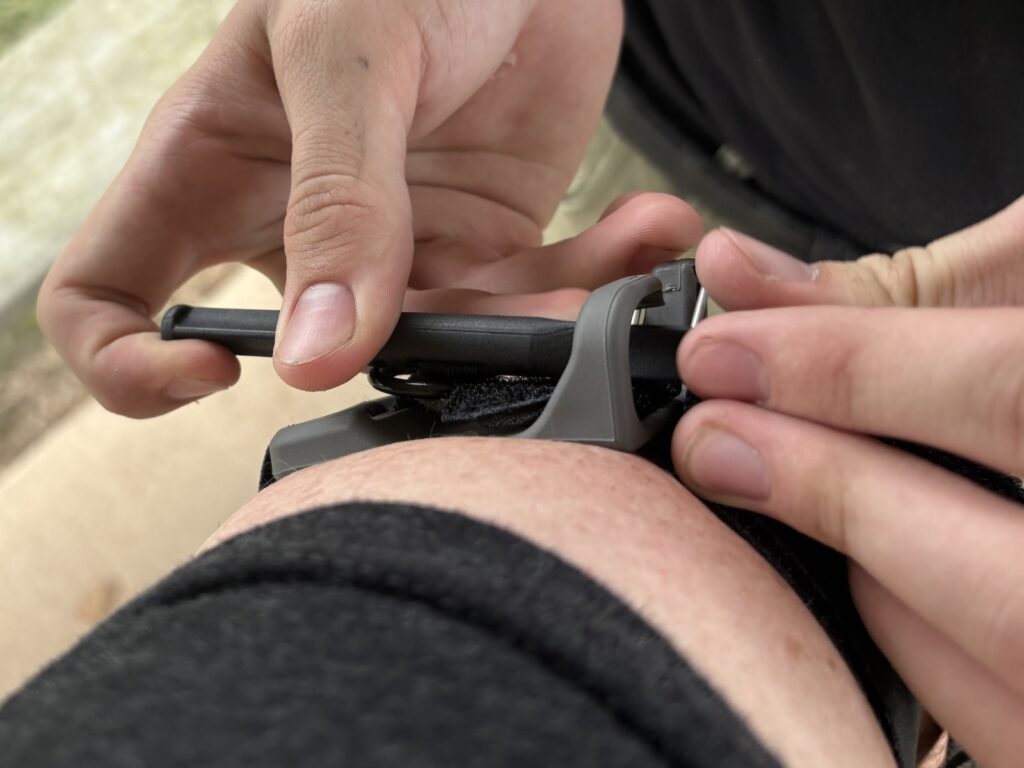
Like any lifesaving skills, there are risks associated with misuse. Cutting off blood flow can lead to amputation. That seems better than the other option, though. Good practice is hard to come by with TQs. If you are going to carry the tools, you have a responsibility to master some serious first aid skills.
If you need a good place to start, check out Stop the Bleed classes.