

Red dots are the dominant close-quarters sight on the market. They occupy shotguns, handguns, rifles, and everything in between, but what about 1X Prisms? Can a 1X prism be a red dot replacement?
The world of 1X prisms is growing quickly, and while the market is still small compared to red dots, there are more now than ever before. While red dots are going to be better for most people in most situations, I think the benefits of 1X prisms are undersold.
Namely, prism sights offer advantages in clarity, durability, reticle selection, and more. For some users and for some roles, I believe the 1X prism can be the superior option.
What is a 1X Prism Sight?
Before we can do anything, we have to make sure we are all on the same page as to what a 1X prism is. If this is your first time hearing about 1X Prisms, you’ve come to the right place.
Core Mechanics
A red dot uses glass with a special coating that reflects an LED to create your reticle. 1X prisms utilize a glass prism to focus both the target image and the reticle. Because the reticle is physically etched into the glass, it remains one of the optic’s greatest strengths.
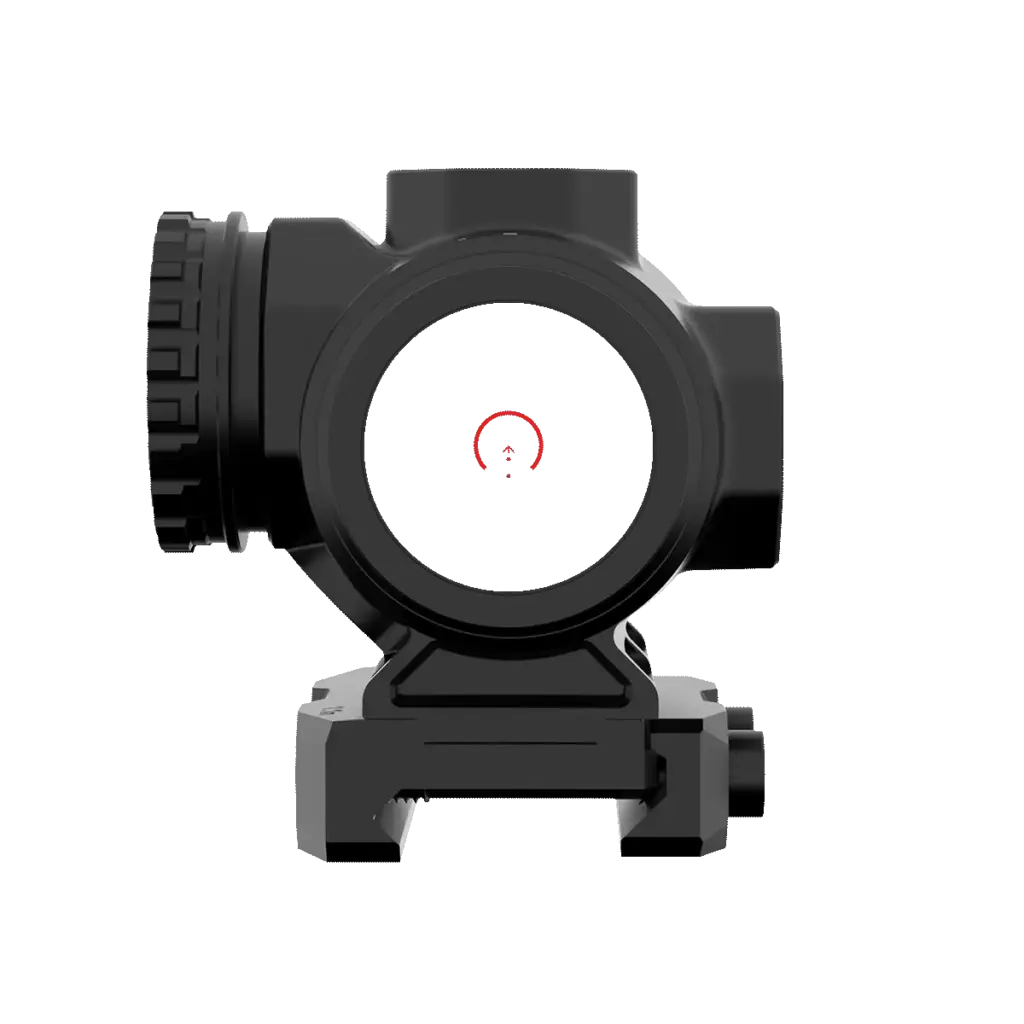
These reticles can be illuminated and come in a multitude of colors, including red, green, and more. Since the reticle is etched, the illumination is optional and not required to use the optic.
Defining 1X
1X prisms are never truly 1X. They all have a slight bit of magnification, even if it’s very minor. This little bit of magnification is a constant factor, though it is typically negligible in practice. Optics like the ACOG 1.5X Prism even embrace that bit of magnification.
Some prisms can even exhibit minification, where the magnification is less than 1X. Manufacturers tend to try their hardest to reduce this effect. Enough so that 1X prisms do not offer any beneficial magnification to the end user.
The 1X Prism Advantage
Astigmatism Correction
The primary selling point for 1X prisms is astigmatism. Imagine your eye is a camera, the lens is round, and it provides a nice, clear picture. If you have astigmatism, your lens is shaped like a football, and light gets bent and comes in blurry and stretched out.
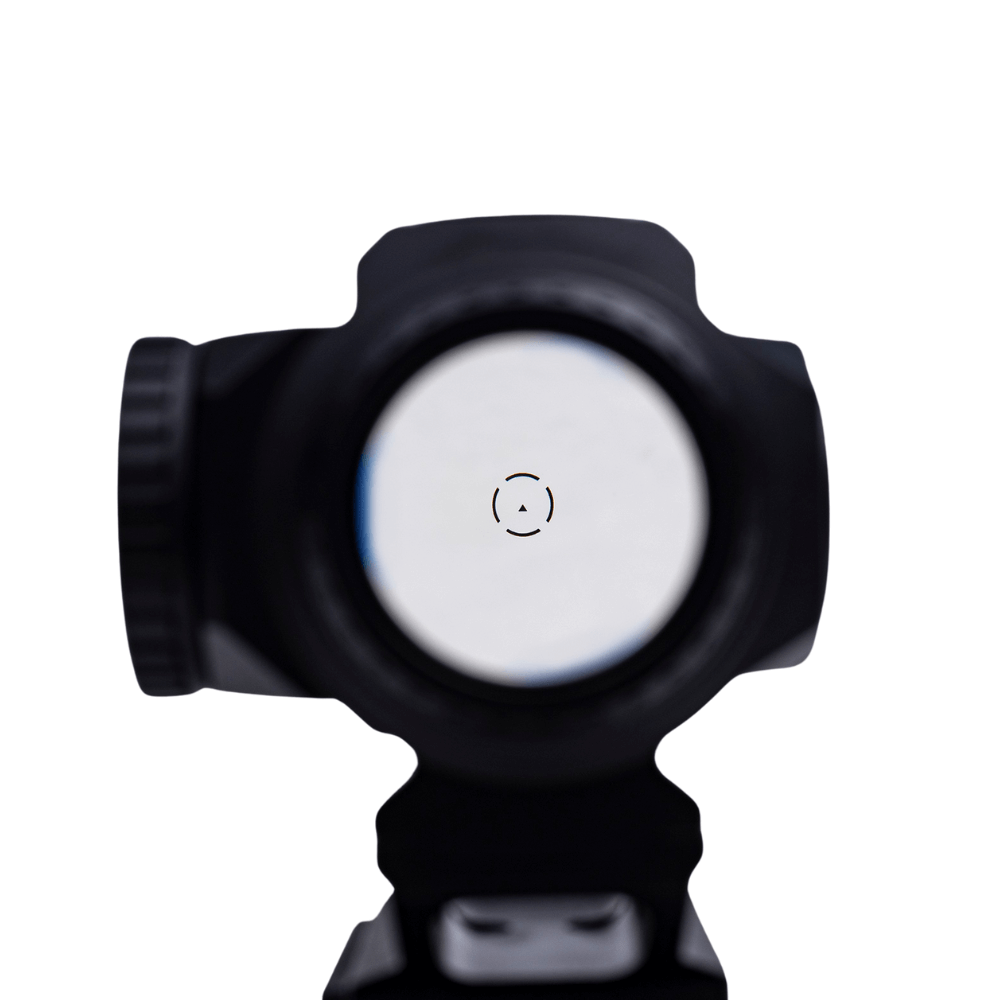
When you look at the high intensity of a red dot, the dot tends to be washed out and way bigger than it should be. Astigmatism varies, but in general, it allows for poor red dot usage. A prism optic doesn’t have that issue.
The etched reticle remains sharp and clear for users. Even with the illumination turned on, the reticle remains crisp for those with astigmatism. This is the reflex optic of choice for astigmatism sufferers.
Durability and Reliability
Prism optics tend to be rock-solid. While many modern red dots are built for hard use, prism optics are inherently sturdier, and since they are less reliant on electronics to function, they are inherently more reliable. They don’t need batteries, and if the electronics fail, oh well, you can still use the etched reticle to aim.
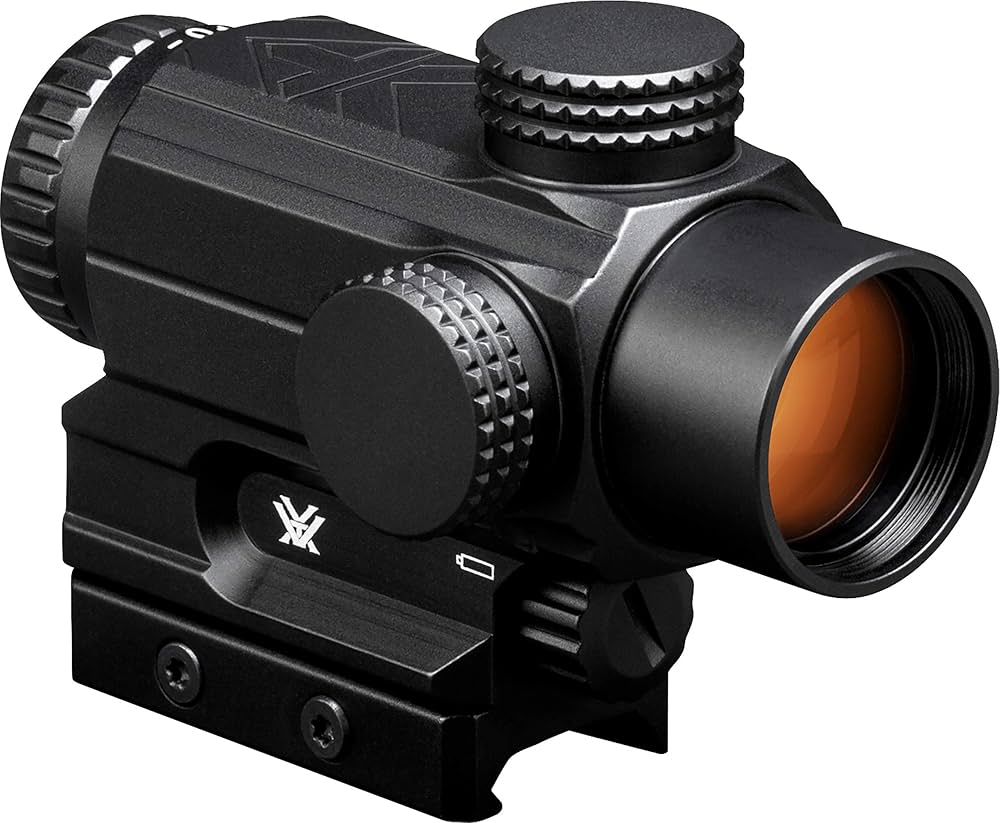
Like everything, some optics are better than others. Durability and reliability will typically depend on the manufacturer. With that said, in general, prism optics are typically very durable and reliable optics. Some prisms, like the ACOG, are renowned for being amongst the toughest optics on the market.
Reticle Design
Red dots typically use a red dot as the reticle. Sure, it can be gold or green, but red dot reticles are typically simplistic. Sometimes they can introduce things like a circle and a dot, but they remain fairly simple all the way around and fairly small. There are lots of restrictions on what an emitter can do.
The use of an etched reticle on a prism sight means you can make any reticle you want. It could be a circle and a dot, or something like the various ACSS reticles put out by Primary Arms. Some of my favorite 1X Prisms feature a height over bore built-in compensation mark.
At super close range, you don’t have to compensate or estimate for height over bore; just use the marker on the reticle. For a 1X Prism, features like bullet drop are less useful due to the lack of magnification, but they remain an option. With that said, the ACSS 9mm Gemini reticle can still be useful due to the round’s short range and presence in so many PCCs.
Washout? What Washout?
Anyone who has done low-light training with a red dot has, at one point or another, washed out their reticle. It’s inevitable. You start in a dark environment, hit the go button, and realize you didn’t turn up your brightness enough. Your weapon light washes out your red dot’s illumination.
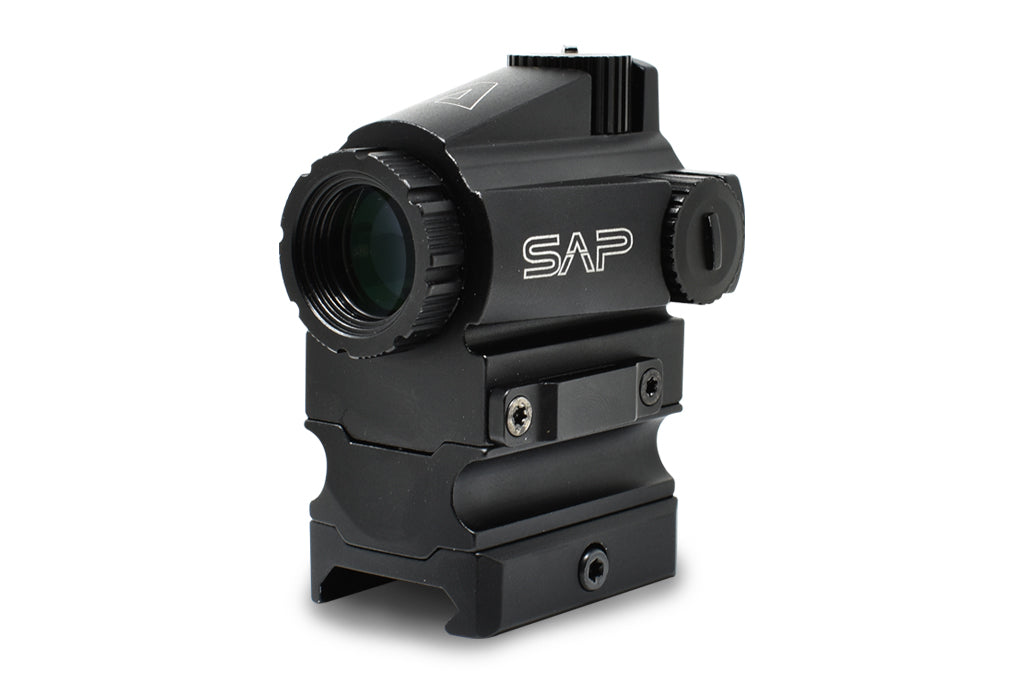
That’s not going to happen with the etched reticle of a prism. It might overwhelm the reticle’s illumination, but the reticle will still be visible against the target.
Trade-offs and Disadvantages
Speed
Red dots are going to be the faster option all around. The simple, bright red reticle is tough to beat. It grabs the eye and makes it easy to put lead on a target. Red dots don’t have eye relief or an eye box; a prism optic still has both.
1X Prisms have great eye relief and forgiving eye boxes, but they still can’t beat a red dot in the speed game.
Mounts
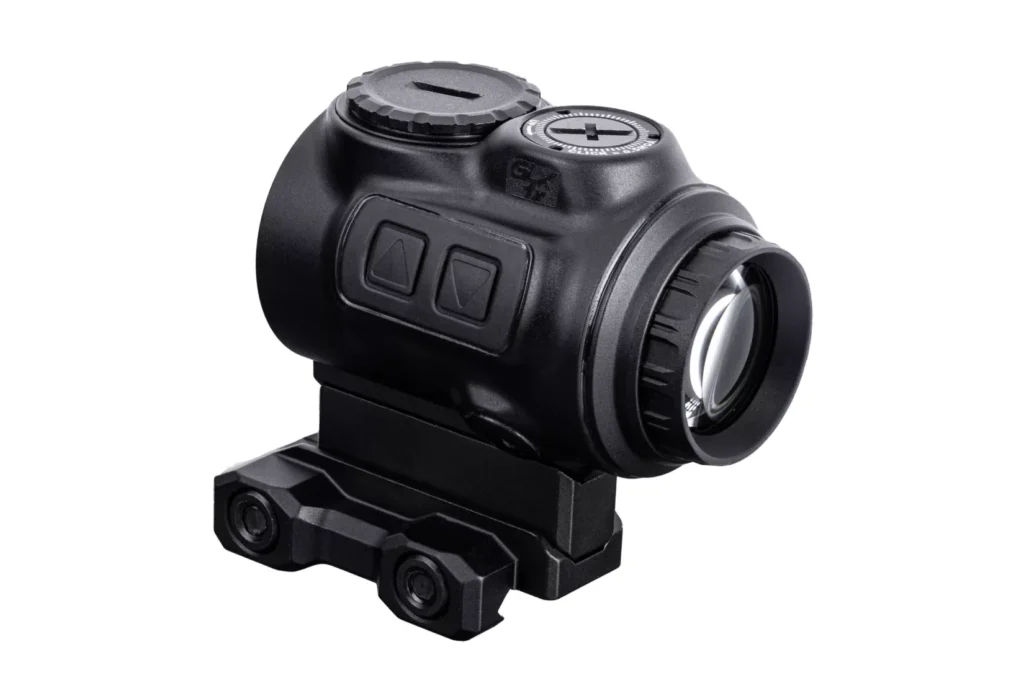
A lot of modern 1X Prisms use Aimpoint T1/T2 mounts, which is a fantastic way to find the right mount for your optic. Unfortunately, many prism sights lack a swappable mount, which restricts their height and complicates their adaptation to platforms outside the AR.
Who Should Choose a 1X Prism?
The best market for a 1X prism will be shooters with astigmatism. They will benefit the most from 1X Prisms. Having a clear and easy-to-see reflex optic makes them a great option.
If you don’t want to deal with batteries and want an optic that won’t wash out, then a prism is the way to go. I also appreciate their reticles and how useful they can be.
If you’re shopping for a reflex optic and have the opportunity, take a peek through a 1X prism before making your choice.