

When Glock and Aimpoint took the COA to SHOT Show 2025, I was excited. I never thought I’d say that about a Glock, but I was impressed by the COA and the A-Cut and knew I had to have one. I wanted a Glock 47 COA, but alas, I never acquired one.
They became scarce, difficult to find due to high demand. Then Glock discontinued the Gen 5, Gen 4, and Gen 3 guns, releasing the Gen V series instead. In late 2025, Glock released the Gen 6 without COA options.
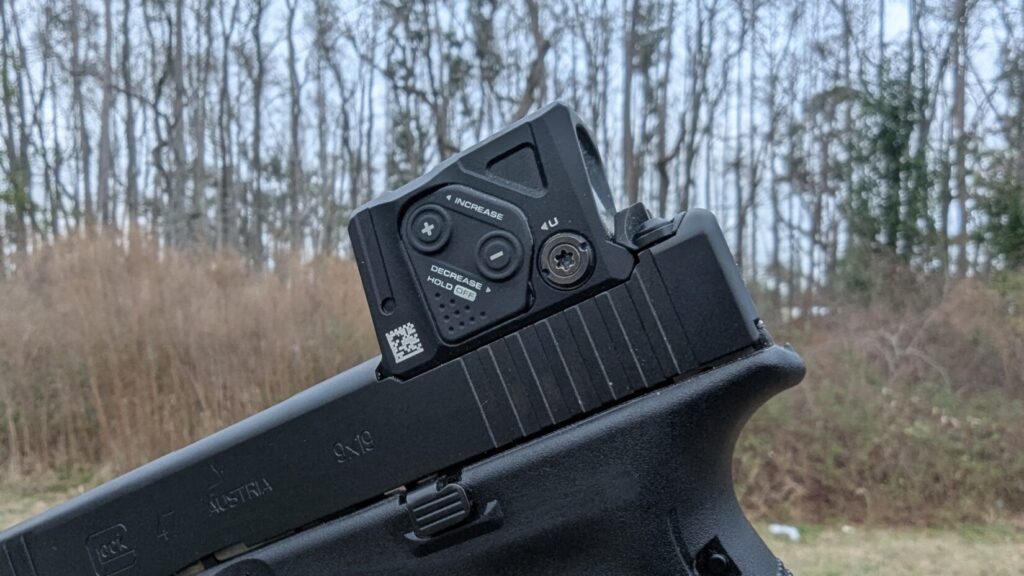
My opportunity to grab a Glock 47 COA had seemingly disappeared. At SHOT 2026, Glock showed a Gen 6 with a COA, but they seem tough to get. Then luck blessed me, and a Gen 5 Glock 47 COA landed in my lap.
Why the Glock 47?
The Glock 47 traces its origin story to U.S. Customs and Border Protection. The 47 series was produced for the agency specifically, and initially, Glock didn’t release them on the civilian market. Getting a Glock 47 was nearly impossible.
At first glance, the Glock 47 looks like a Glock 17. It’s a full-sized, 9mm Glock. However, for the first time ever, you can swap a compact Glock 19 slide onto a Glock 17-sized frame.
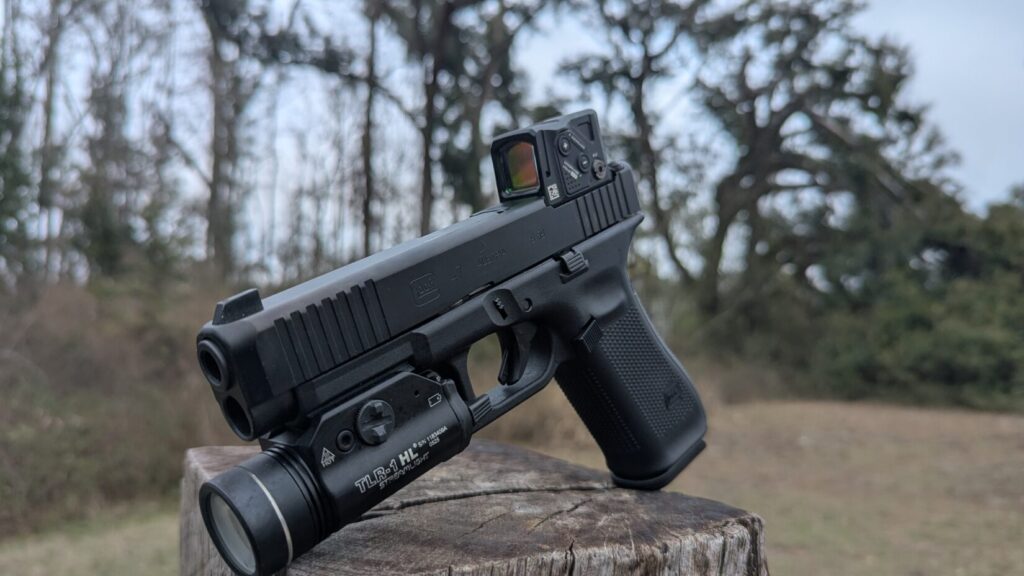
The Gen 5 Glock 47 slide could also be tossed on a Gen 5 Glock 19 frame for a long-slide, short-grip design. It was a new degree of modularity.
The Glock 47 used a Glock 19-length recoil spring, which made this possible. That same design is now used with the Gen 6 Glock 17. The modularity was nice, but the shorter recoil spring created an interesting handling gun.
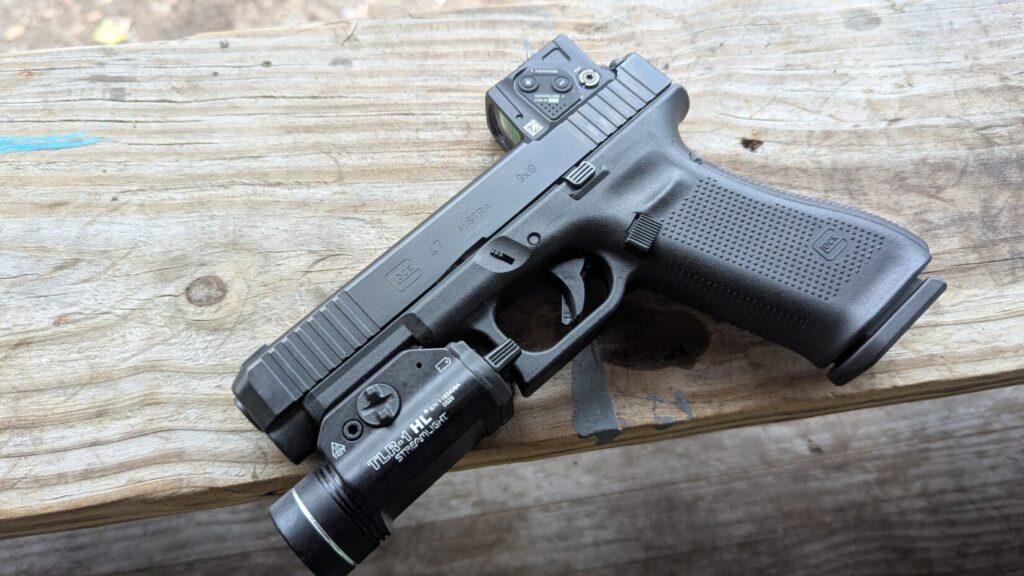
The slide seemed to return to battery faster, and the gun shot flatter. Every incremental benefit is still a benefit, and after trying the Glock 47 side by side with a Glock 17, I knew which one I wanted.
Why the COA?
The COA changed the game with the A-Cut. The COA by itself is just an enclosed emitter optic, a bit smaller than the ACRO series, with a similarly sized window. It sits lower, but the real magic is the A-Cut.
The COA and A-Cut use a front hook and rear locking wedge to lock the optic to the slide. Screws enter the rear sight to pin it down. There are two big benefits to this design.

First, it eliminates the shearing force placed on screws. I’ve had a screw shear while shooting and an optic strike me in the forehead; it wasn’t pleasant, and in a gunfight, it would be disastrous. This won’t happen with the COA.
The second benefit is the fact that the optic sits so low that you don’t need raised sights to cowitness. Standard height sights work just fine.
The Glock 47 COA In Hand
The Glock 47 COA is a pricey package, but for less than $1,000, you’re getting a high-quality gun and high-quality optic. I expected prices to rise for these Gen 5 COAs, but since the Gen 6 COA was announced, it seems to have stabilized the used market.
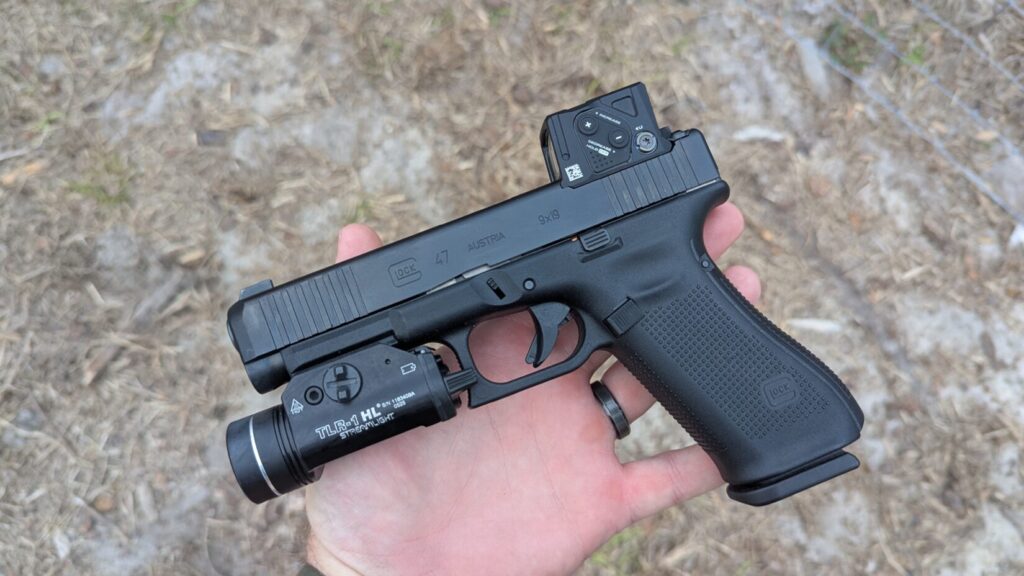
With the gun and optic in hand, I hit the range with glee. Since this is a two-piece system, we’ll have to review both the optic and the handgun, as well as how they work together.
The Glock 47
As mentioned, the Glock 47 shoots flat and recovers quickly. Something about a long slide and short recoil spring makes this gun handle noticeably better. Tracking the COA through the gun’s recoil impulse feels so darn easy.
When the gun recoils, the dot leaves the box, but a moment later, it’s back right where I want it. When shooting fast, I can keep the red dot a blur and land six to 10 round strings of fire inside an IPSC-sized A-zone at 10 yards without difficulty.
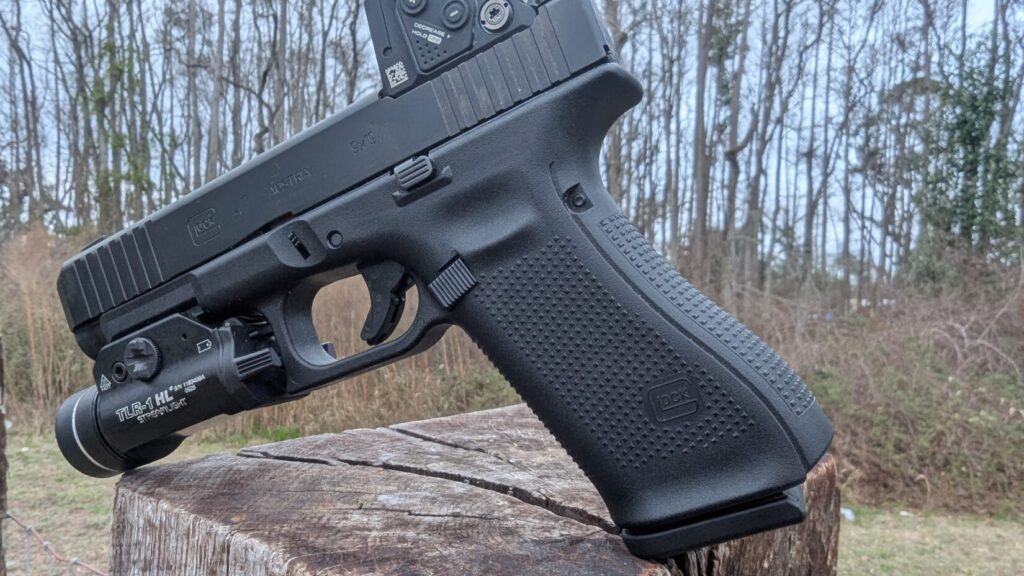
I feel like I’m just hammering the trigger to go faster and faster, and it doesn’t get away from me. The long Glock 17-length grip fills the hand and provides a solid grip to control the gun. The Gen 5 series ditches the finger grooves, which improved the ergonomics for me.
The gun features an ambidextrous slide stop, but Glock’s slide stops don’t work well for me. My thumb almost always pins them down, and it’s something I’m working on. I admittedly hate altering my grip for my gun, but some sacrifices have to be made.
The magazine release is nice and easy to reach, a positive change from my Gen 3 17. I wish the trigger guard had a better undercut, as my knuckle rubs when I go for that high grip on the gun. The trigger has that same Glock profile that gets a little irritating as you get into high-round-count days.
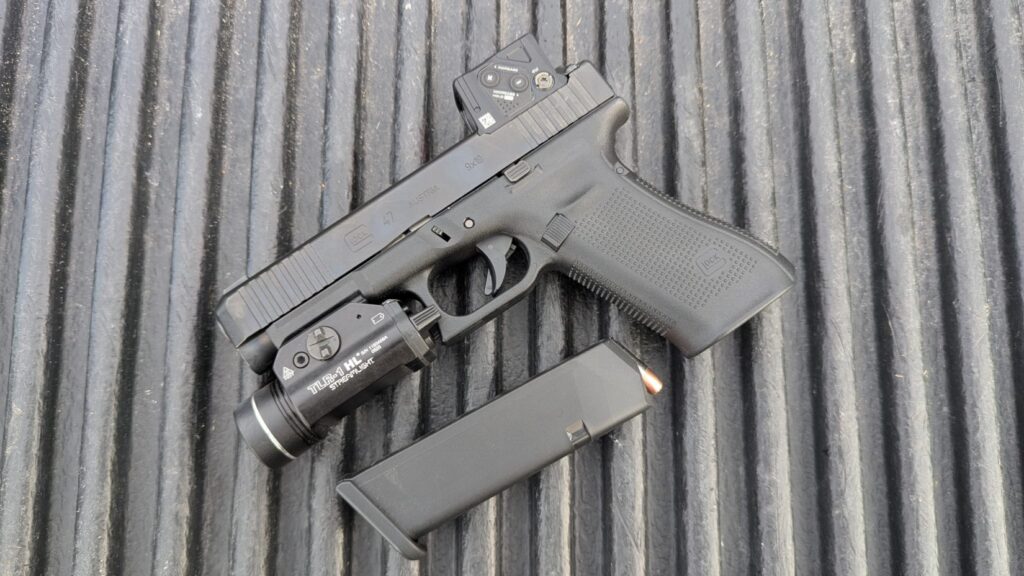
The Glock trigger remains the Glock trigger. It’s perfectly adequate; it’s crisp, short, and functional. It’s not a match trigger, but I’m of the opinion that people create too much hoopla about perfectly adequate triggers.
The COA
With the COA in place, you can expect some fantastic accuracy from the Glock 47, or any Glock. The sharp 3.5 MOA dot is crisp and clear. The view through the COA shows a slight blue tint, but it’s quite clear.
Sitting low is nice, and it feels natural to find the dot from the draw or low ready. The COA’s 12 brightness settings perform well at high noon and under the bright light of a powerful weapon light. The 12th setting amps things up and is incredibly bright.
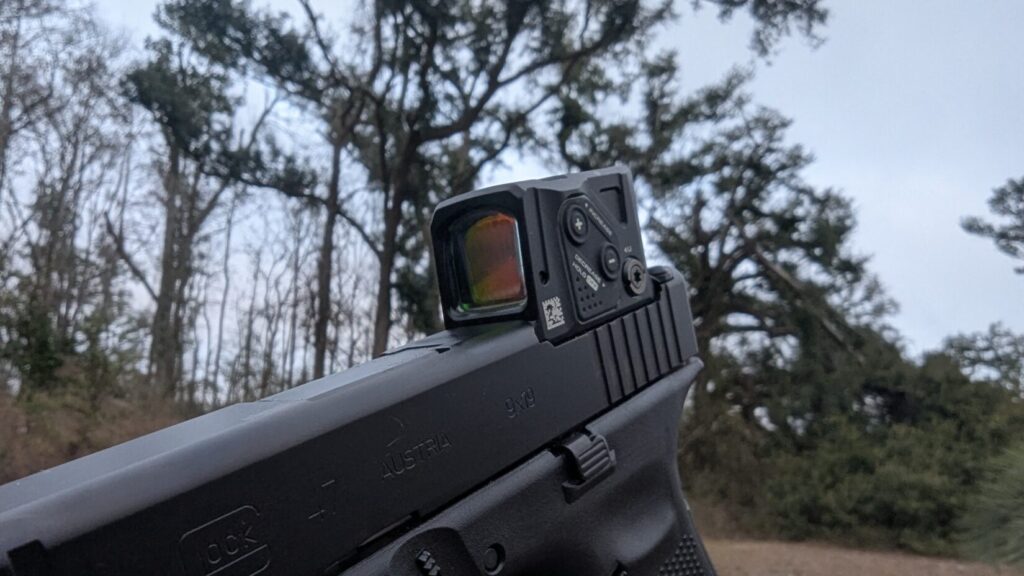
The dot’s refresh rate is fantastic. It becomes a blur as the slide moves back and forth, creating an easy aiming point during rapid fire. It makes it easy to fire those Bill Drills and chew through your ammo while making solid hits.
The enclosed design means it’s weatherproof. It can take rain, dust, snow, and whatever else the world tosses at it and still work. The COA is a more refined ACRO. It’s smaller and lighter, with a nice window and a great dot.
The Glock 47 and COA
The Glock 47 equipped with a COA seems like the perfect police sidearm. It’s got that Glock-level reliability mixed with Aimpoint durability. It offers a flat shooting experience with a dot that’s easy to track.
Until the Glock 17 Gen 6 hits us with the COA, the old 47 is still getting it done. This has become my favorite combination of gun and optic, and I’m excited to see the COA hit the firearms market and make its way to other firearms.