Military designations for firearms can be confusing. We have the M1 Garand and then, suddenly, the M14. So, where are all the other models between 2 and 13?
Mk Stands for Mark
You might also wonder why some guns and gear get M designations, and others get Mk. That’s fairly simple: the Army uses M for “Model.” The Navy uses “Mk.” Mk stands for Mark, as in “Mark 1″, Mark 2”, etc. It is the Navy’s way of designating weapons, including small arms.
MOD, another part of Navy nomenclature you’ll frequently see, stands for Modification.
The history of Navy handguns is interesting, and it’s always differed from that of the Army. Let’s take a look at the designated Navy handguns from Vietnam til now.
Mk 22 Mod 0
The Mk 22 MOD 0 started life as the S&W Model 39. Specifically, a special version of the pistol used by Navy SEALs was converted to a double-stack 14-round magazine. The SEALs and other members of elite units like MACV-SOG wanted a weapon that could eliminate a sentry — or more likely a guard dog — as silently as possible. It needed to be a sidearm so the standard rifle could be carried.
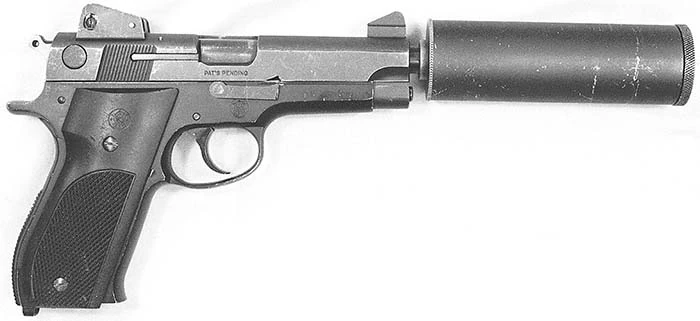
Suppressed guns were used with special units, but those guns still broadcast the surprisingly loud noise of the slide hammering back and forth. With that in mind, the Naval Special Warfare lab designed the Mk22 MOD 0, aka the Hush Puppy, for clandestine operations. This gun featured a suppressor, an early version of a Nielsen device, subsonic 158-grain ammunition, and suppressor height sights.
The Mk22 MOD 0 also featured a slide lock device that held the slide closed to prevent the clacking of the slide moving forward and rearward. The Mk22 MOD 0 even used an attachable stock to make those single shots highly accurate. The gun remained in service well beyond Vietnam but is now retired.
P226 Mk25
In 1985, the United States replaced the M1911 with the more modern 9mm Beretta. It was a controversial change, but the Italian stallion has since served the US well. While the Beretta was a great gun, the SEAL teams were fans of the SIG P226, which at the time was Beretta’s primary competitor.
SEALs had been impressed with the P226 after German Kampfschwimmers found it to work very well in maritime environments.
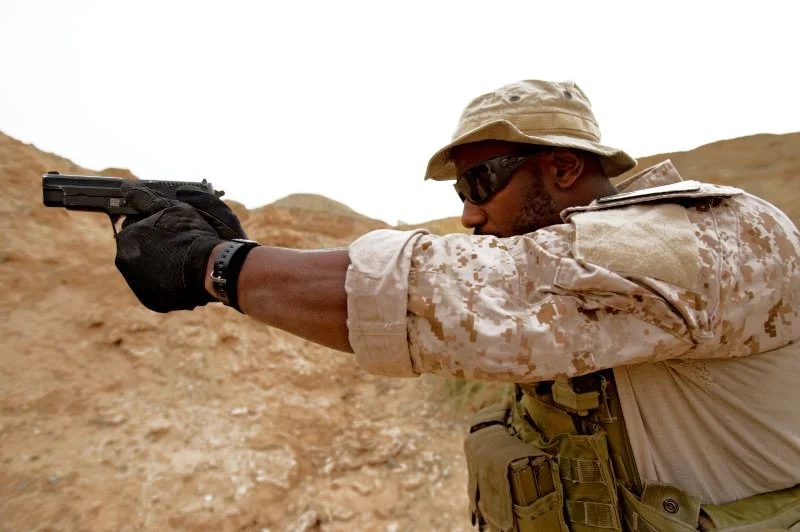
In 1989, the P226 became the Mk 25 with the US Navy. Its final form reflected design measures intended to help it withstand saltwater exposure.
At its core, though, the P226 Mk25 is an all-metal DA/SA pistol with a double-stack 9mm magazine. The P226 is an extremely robust pistol with an excellent history of success. The Mk25 continued that trend. Over time, the gun would change and evolve here and there to add night sights, a rail, and the famed Anchor to symbolize naval tradition.
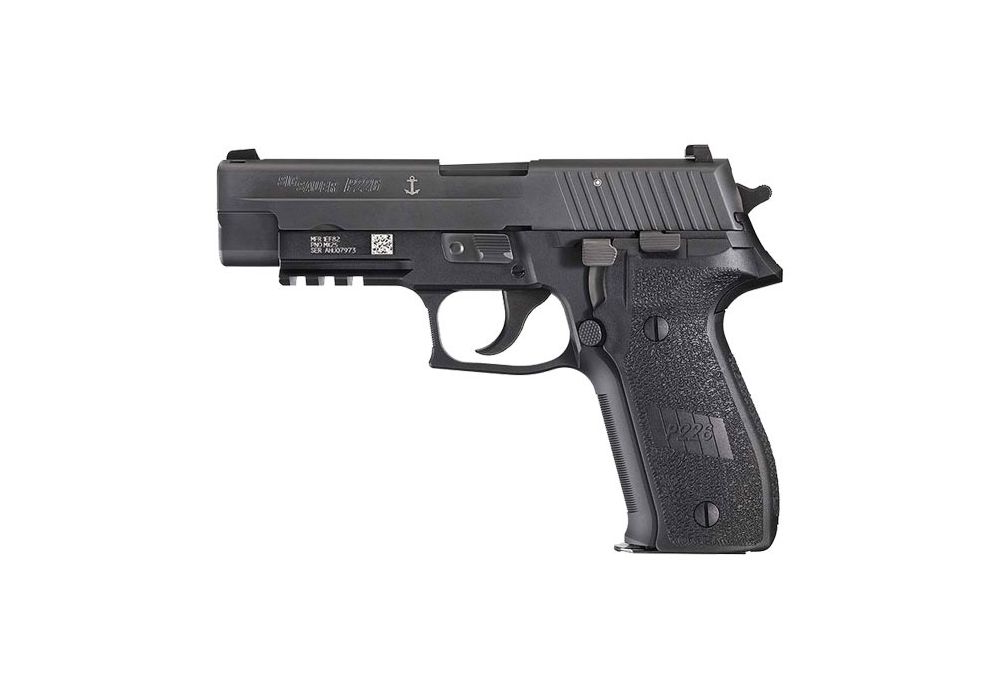
The Mk 25 series is one of the more popular guns within the SEAL teams. It’s not uncommon to see SEALs using the Mk 25 around the world to great success, including during the GWOT (Global War on Terror). It’s one of the longest-serving Navy handguns. It has already been cycled out of some units and will likely be retired completely sometime soon for more modern options.
Mk23: H&K Mark 23
If there was one handgun that epitomized special operations in the 1990s, it was the Mk23. Heckler and Koch and the Naval Special Warfare Lab produced this weapon at the behest of SOCOM.
Handguns are typically designed as last-ditch defensive guns when your long gun fails, but the Mk23 was designed and built to be an offensive firearm. The program it fulfilled was called the Offensive Handgun Weapon System.
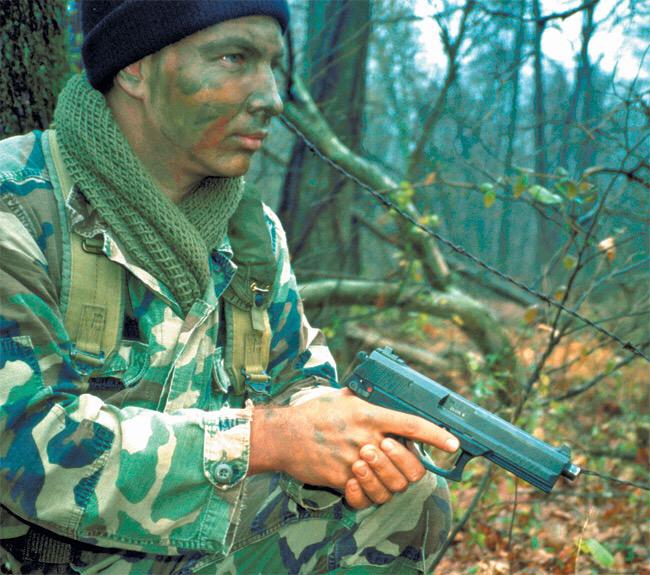
The Mk23 pistol was designed to be used in the worst possible conditions and was put through some absolutely brutal testing. The gun that emerged proved to be one of the most reliable pistols ever made. The final product was a .45 ACP pistol that held 12 rounds of ammo. It was designed to be used with a suppressor and laser aiming unit.
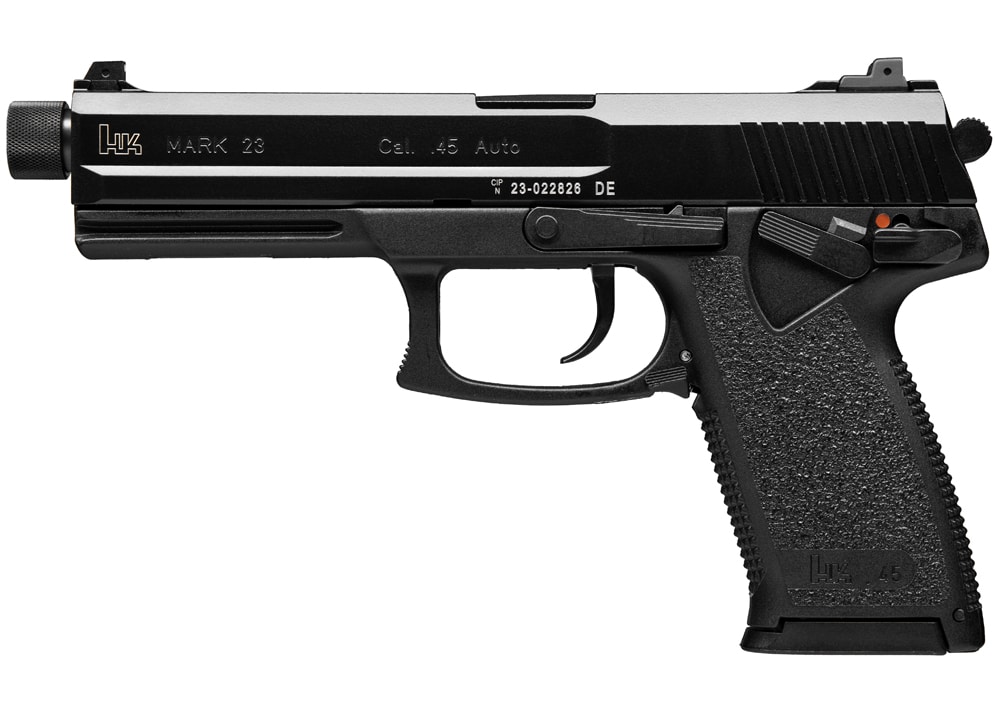
The gun proved to be extremely accurate and capable of producing tight groups at 25 meters. The HK Mk23 pistol was still a product of its time, and the gun used a DA/SA design and a short recoil action.
It was a big gun with a 5.87-inch barrel and an overall length of 9.65 inches without a suppressor. If you’re designing an offensive handgun, then I guess size isn’t a big constraint. This is the biggest of the Navy handguns.
HK Mk24 MOD 0
Heckler and Koch learned a lot about gun design when they produced the Mk23. Some of those lessons went on to inform the design of the Mk 24 Mod 0.
The Mk24 was designed for the failed US Military Joint Combat Pistol Program. This was meant to replace the Beretta with something chambered in .45 ACP. While the program was canceled, the Naval Special Warfare Command adopted the HK45 Compact Tactical as the Mk24 MOD 0.
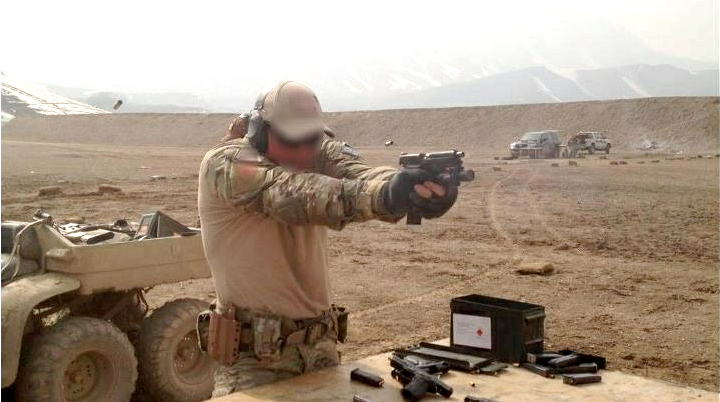
While the HK Mk23 was massive (or seemed that way), the Mk24 is more compact and better suited to low-profile use. It’s got a 4.57-inch threaded barrel and is about 8 inches long. It’s lighter at 25 ounces and still packs ten rounds of .45 ACP.
The big .45 ACP round is naturally subsonic with 230 FMJs and makes for an excellent suppressed pistol round. It’s surprisingly tame, with very minimal recoil and excellent accuracy.
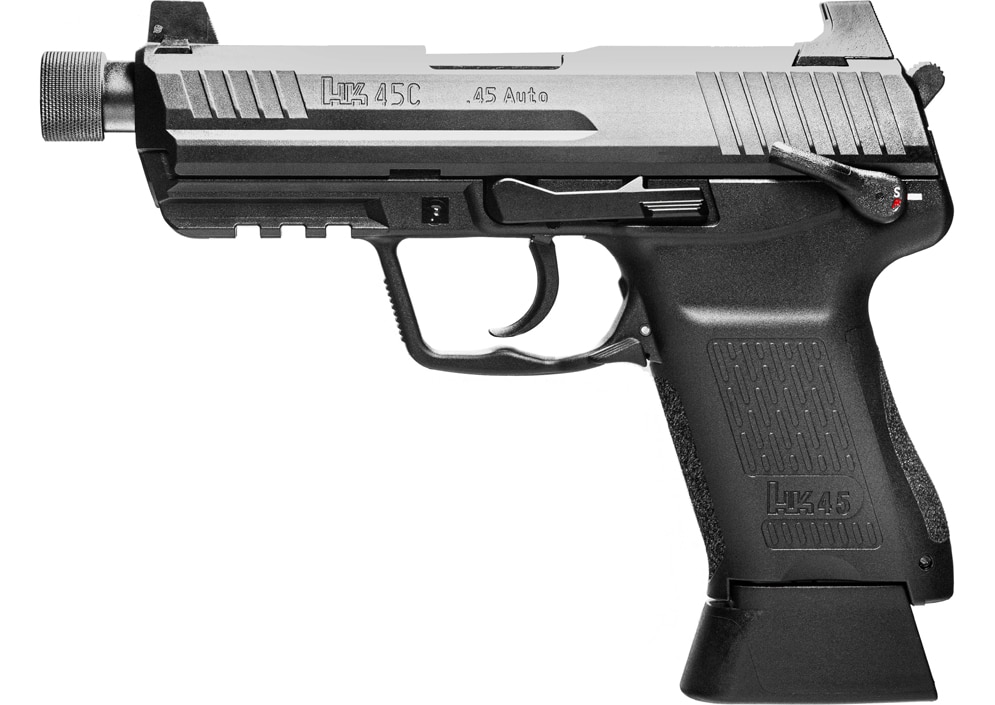
HK designed the Mk24 with a Picatinny rail, night sights, and thumb safety. The gun features a DA/SA action as well. The Mk24 and HK45 series as a whole was designed with the help of Delta Force operator Larry Vickers and Green Beret instructor Ken Hackathorn. Users of the weapon seem to have been limited to SEAL Team Six.
Mk26 Pistol
The Mk 26 is the Glock 26 by a different name. The fact they are both 26s is a happy coincidence. The Glock 26 is a subcompact pistol, meaning it’s fairly small and very easy to carry concealed. The Mk 26 still uses double-stack magazines and holds ten rounds, but it can use the magazines from the Glock 19 and Glock 17 pistols for expanded capacity.
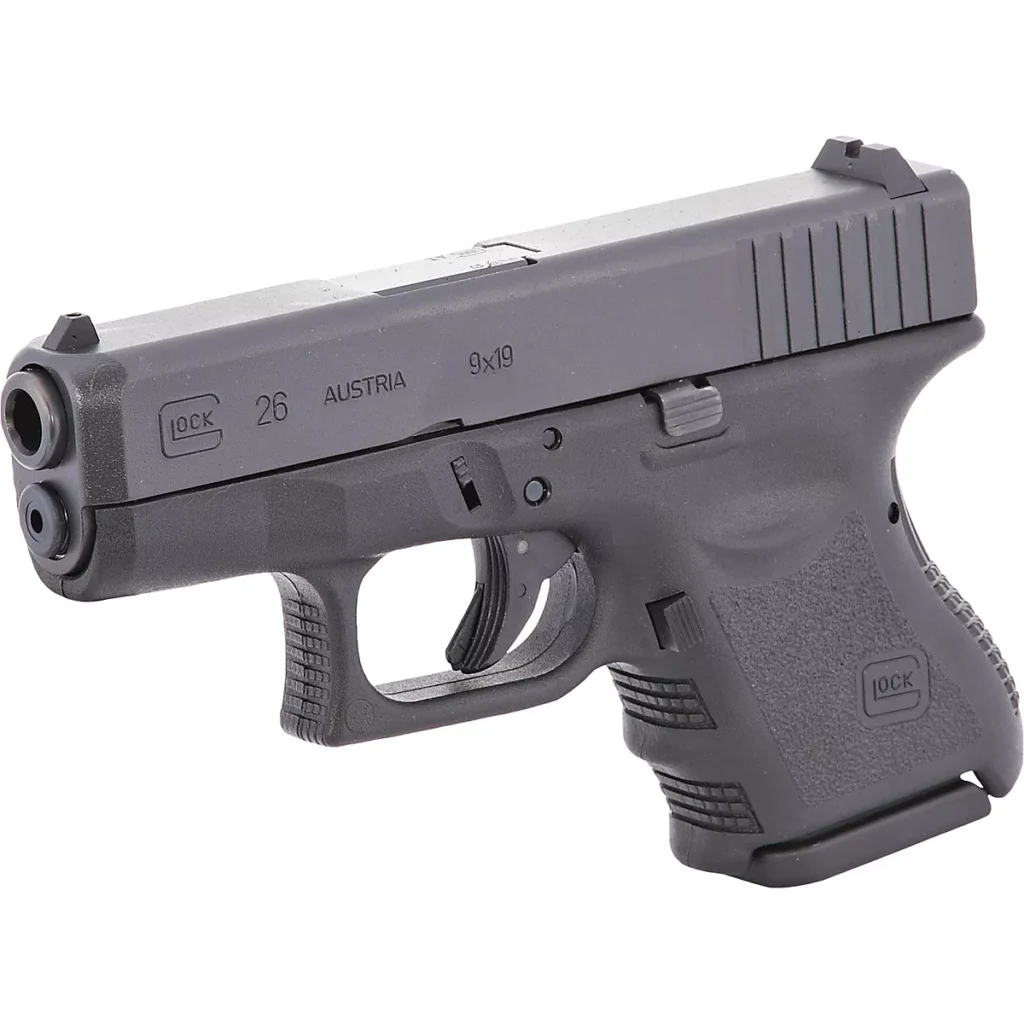
The Mk 26 series and the soon-to-be-mentioned Mk 27 were adopted together and are nearly identical outside of their overall size. Glock makes highly dependable pistols that are comfortable in austere environments. As far as Navy handguns go this gun is quite small. The Glock 26 is designed to act as a concealed carry option for our most elite warfighters in more covert environments.
The Glock 26 is a highly modular pistol, but it’s not clear exactly how these guns are outfitted for use. SEALs and Special Forces guys tend to be discrete in showing off their concealed carry firearms.
Mk27
The latest and final Mk pistol on our list is the Mk27. The Mk27 begins life as a Glock 19. The magazines and the manual of arms translate directly to the Mk 26. This simplifies training and provides very well-made pistols for specific purposes. The Glock 19, or Navy Mk27, is the close assault pistol and general sidearm of both Naval Special Warfare and USSOCOM as a whole.
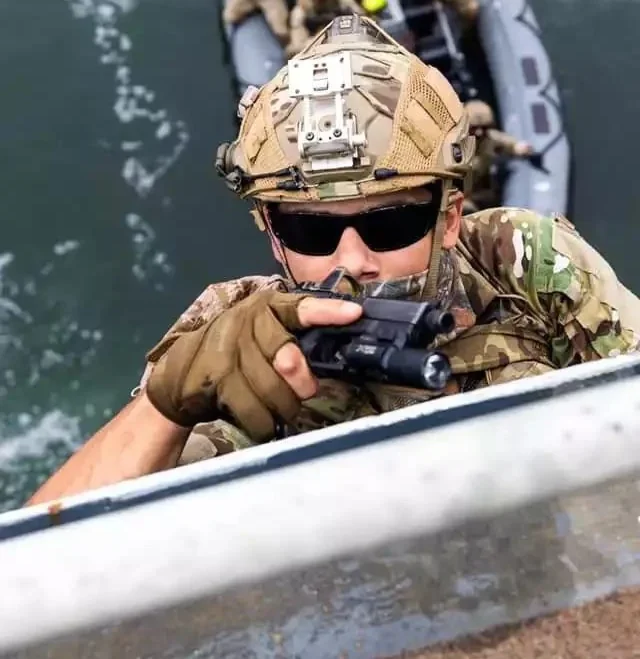
The Mk 27 is a compact pistol with a 4-inch barrel and 15-round double stack 9mm magazine. It’s not quite small, but not very large. It’s also fairly light, and trimming weight where you can is an important consideration for any ground pounder. The Mk 27 uses a striker-fired system that offers one consistent trigger pull over the previous guns and their DA/SA system.
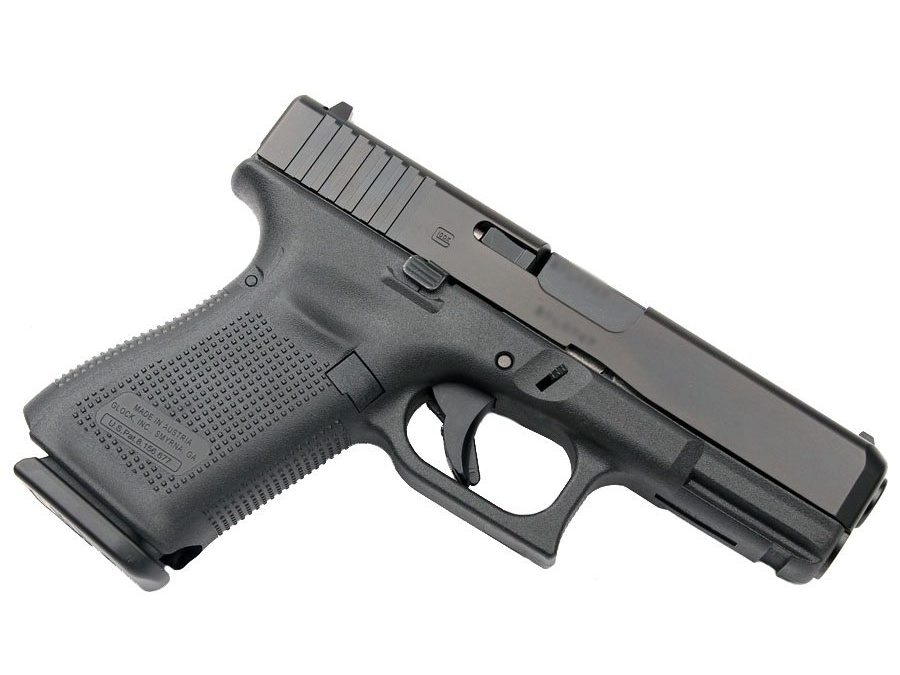
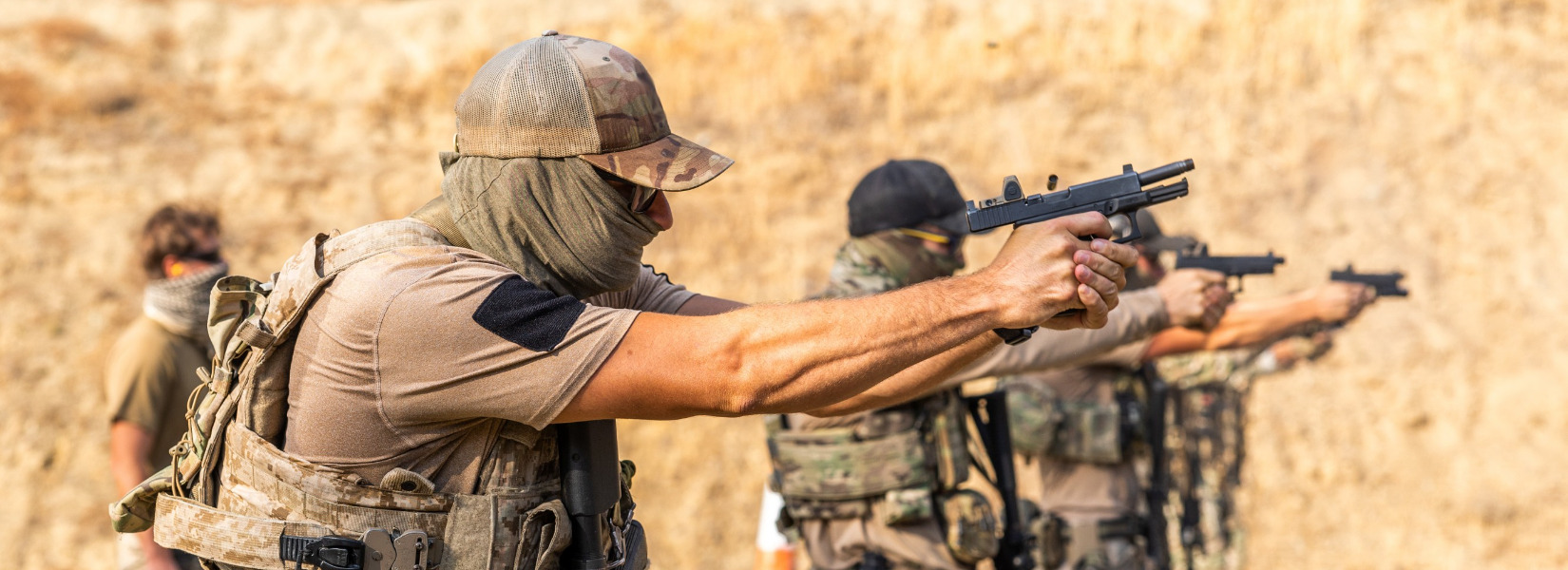
The Mk 27 is often fitted with a Surefire X300 WML and a Trijicon RMR red dot sight. It’s the most modern Mk yet. It’s also not a big surprise to see individual operators using Glocks with custom features, including magazine extensions or just longer mags.
The Mark of a Navy Handgun
The lineup of “Mk” Navy handgun models is quite varied. Although, as you can tell, they are mostly aimed at the Special Operations community of the Navy. They are a varied bunch, each with their own purpose and reason for adoption.
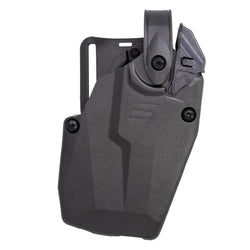
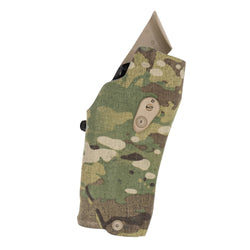
The Mk series can be a great way to trace handgun technology for the last 30 years. We know what the modern naval commando carries, but what do they carry them in? Safariland holsters, of course!