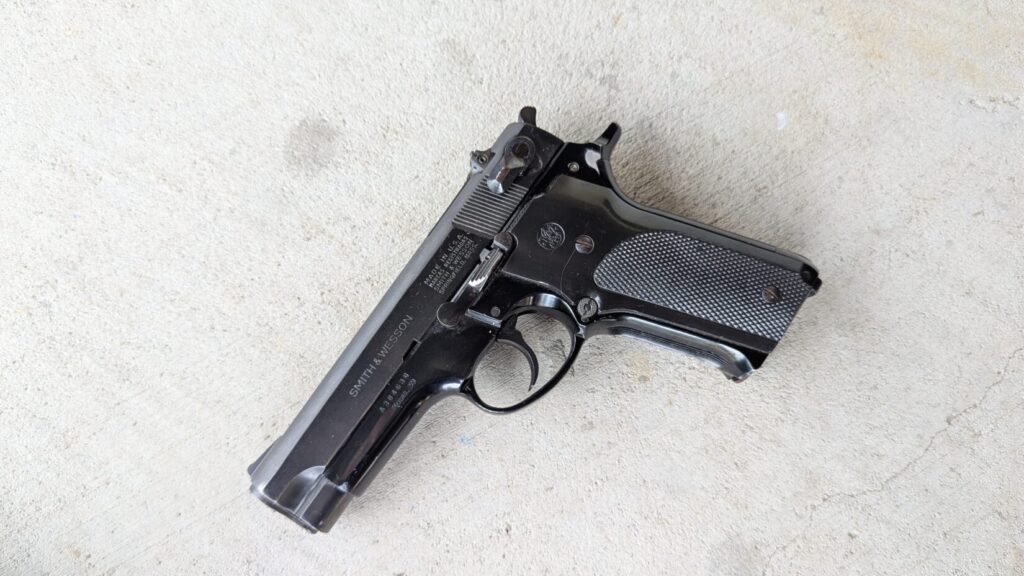
I love guns with a story, guns that come with a built-in history. The S&W Model 59 has a story and a history tied to elite American units and the war in Vietnam. The Model 59 became a mainstay of S&W automatics and would evolve into new generations with a history of service.
Smith & Wesson is well known as a revolver company, even though they produced their first semi-automatic in 1913 in the form of the S&W Model 35, and continued to produce a variety of semi-automatic pistols in a variety of formats. It wasn’t until 1954 that S&W introduced the first semi-automatic that put them firmly in the automatic market: the Model 39.
The Model 39: Setting the Stage
This is a story of the Model 59, but to understand its history, we first need to discuss the Model 39, often considered the first American double-action pistol. The Walther P38 had become the first mass-issued double-action / single-action (DA/SA) pistol during World War 2.
The Model 39 followed that path. This hammer-fired pistol had a long double-action trigger pull for the initial press. After that, the hammer would lock to single-action and provide a shorter, lighter trigger pull.
S&W’s intention was to provide a pistol to replace the M1911, which would have been in service for more than four decades at that point. The Model 39 chambered the 9mm cartridge, which was the cartridge most of the newly formed NATO was moving toward. The 9mm pistol held eight rounds in a traditional single-stack magazine.
The military didn’t replace the M1911 with the Model 39, but it saw some limited adoption by military forces. The Model 39 would serve with the newly created Naval Special Warfare units in the Vietnam War.
There, the pistol served well, but seeing the potential in the gun, the Naval Ordnance Laboratory (NOL) began modifying the handgun. They eventually created the Mk 22 MOD 0, a pistol designed specifically to be suppressed. It became known as the Hush Puppy, and it was used to silently eliminate guard dogs.
One adaptation of the Model 39 by the NOL was to widen the frame to accommodate slightly modified 13-round Browning Hi-Power magazines. S&W took note of this adaptation and in 1971, produced the S&W Model 59.
The S&W Model 59: The American Wonder Nine
S&W produced the Model 59 with all the lessons learned from the Navy SEALs’ adaptation of the Model 39. The Model 59 fielded a double-stack 14-round magazine, and later a 15-round magazine was fielded. Other than that, it stuck to the core design of the Model 39.
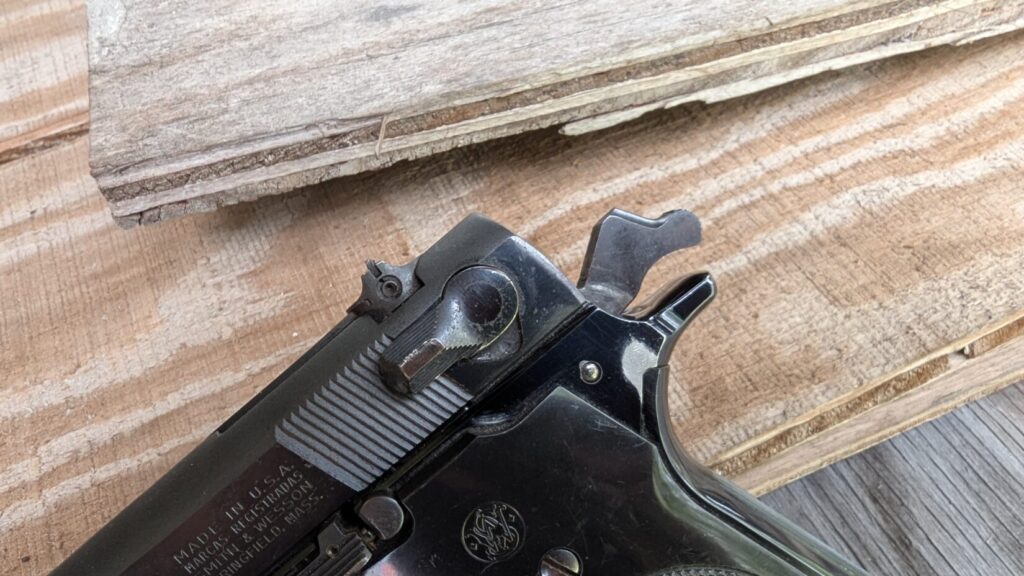
The Model 59 features a DA/SA trigger design and uses the Browning short-recoil action. The pistol utilizes a slide-mounted manual safety that also acts as a decocker. A decocker reverts the weapon from single action back to double action.
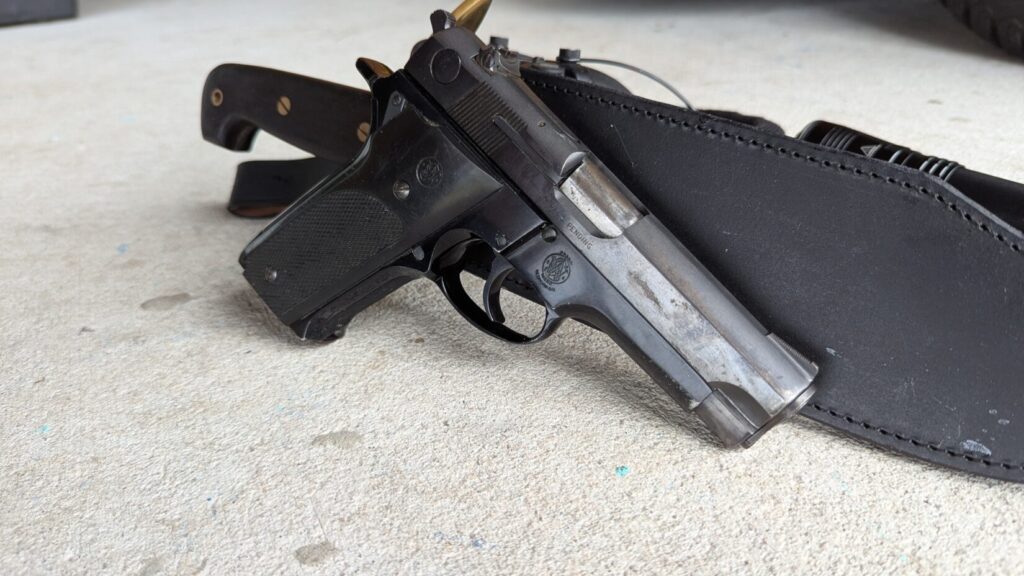
The Model 59 fielded a magazine safety, which had become popular with semi-autos at the time. The magazine safety ensures the gun cannot fire without a magazine in place. The transition from revolvers to semi-autos made some folks nervous, and the fear was that shooters would think removing the magazine would unload the handgun.
The Model 59 represented America’s entry into the Wonder Nine category of firearms—Wonder Nines being double-action, all-metal handguns with double-stack magazines. Firearms of this type would become standard with police and military forces.
The Las Vegas Metropolitan Police Department would adopt the Model 59, and follow-on generations of the Model 59 would be adopted by the FBI, the LAPD, the Royal Canadian Mounted Police, the Japanese Coast Guard, the NYPD, and many, many more.
The Model 59 In 2026
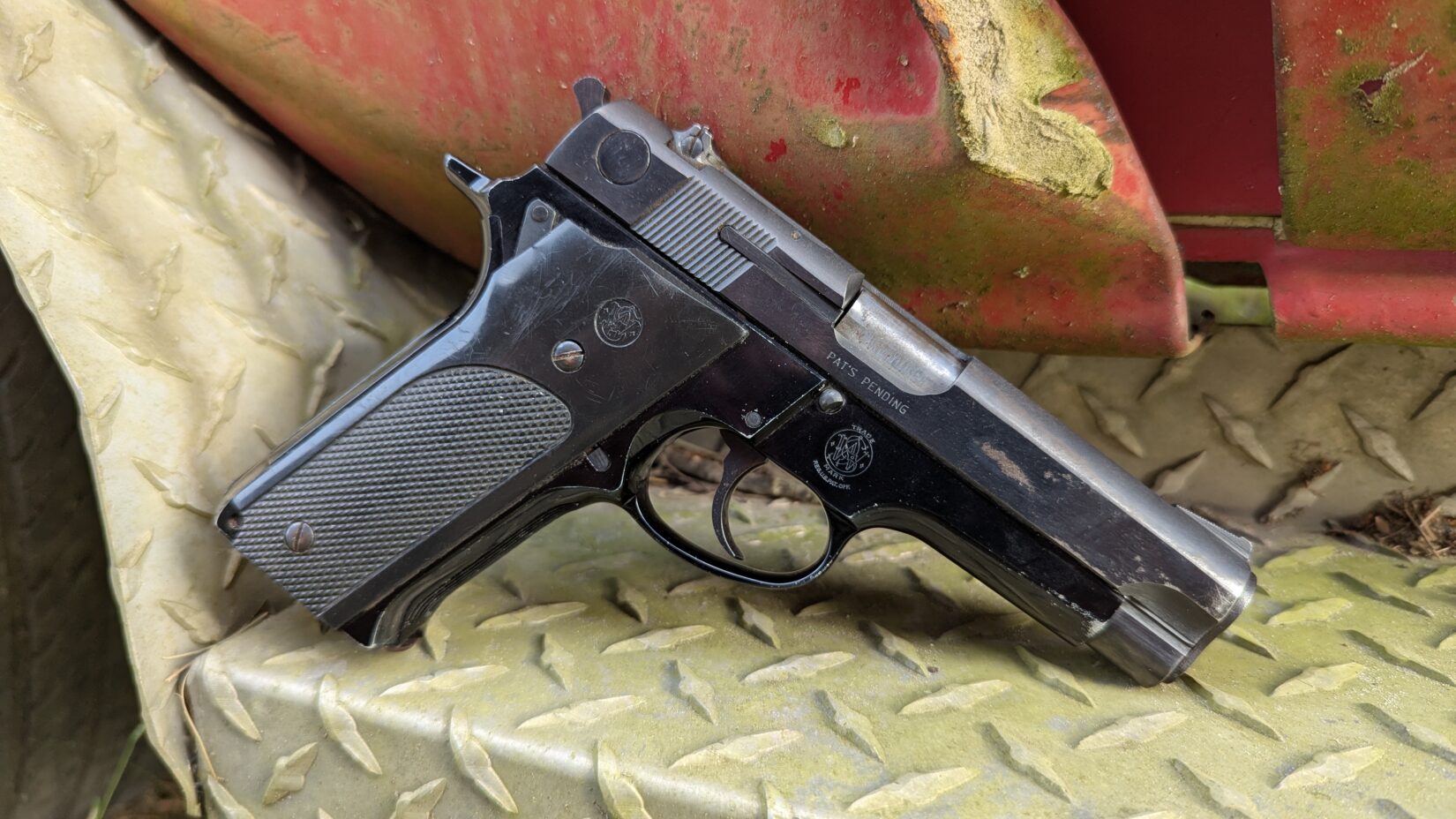
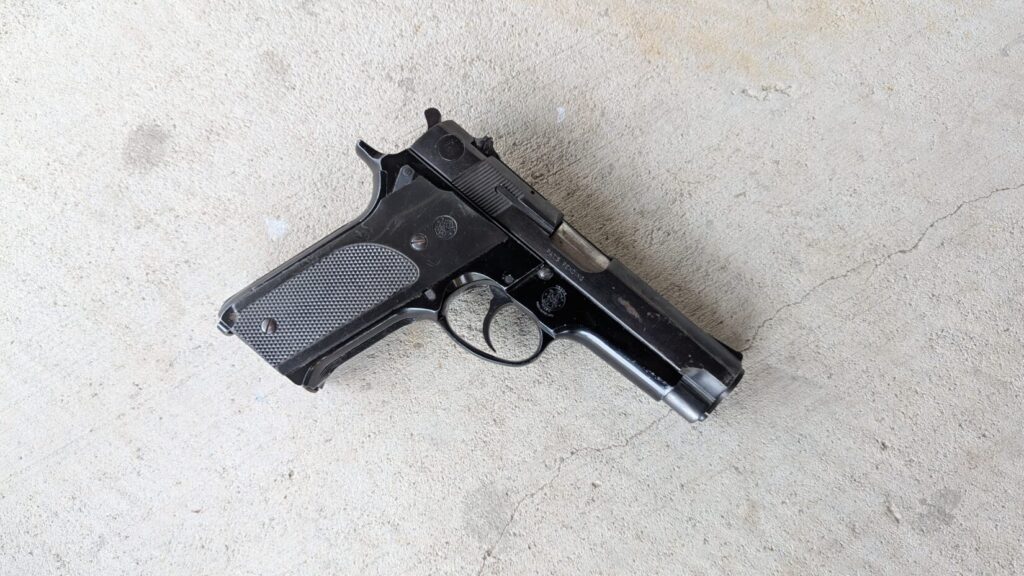
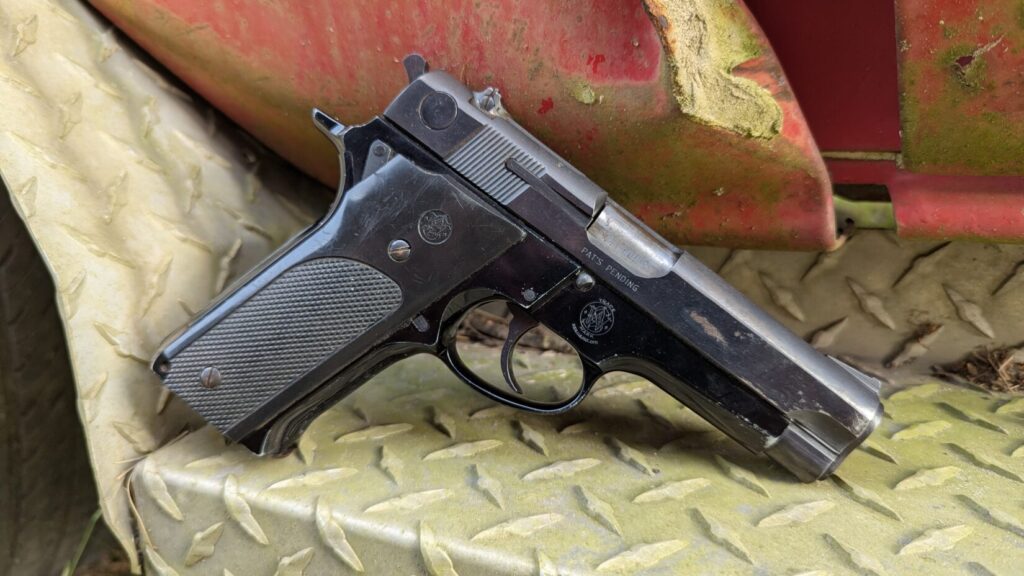
The first generation of the Model 59 has become a bit rarer to find these days. They’ve fallen into antique status, but aren’t so rare as to call for an extremely high price. The Model 59 is an all-metal, hefty gun that feels solid and well-made.
My example was well-loved. It has its nicks and scratches, but for a gun older than me, it’s in surprisingly good shape. Everything has long been smoothed out from the effects of father time. The safety moves easily, the magazine shoots out with authority, and the trigger moves smoothly.
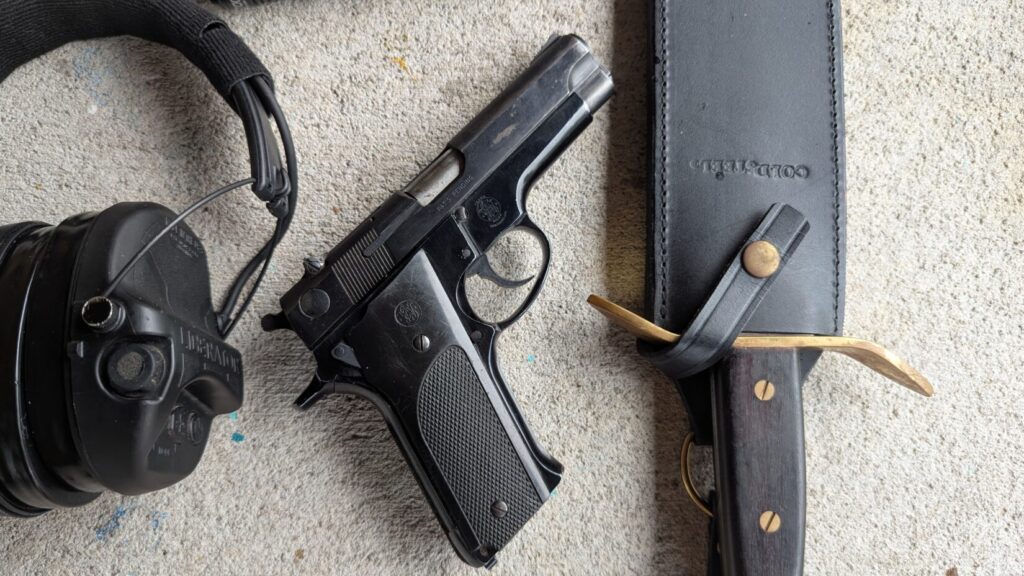
The gun features a micro-sized magazine release. Compared to modern guns, it feels absurdly small. It requires a shift of the hand to access. That’s due in part to the gun’s frame. It’s thick—thicker than modern pistols—and it’s clear they weren’t concerned about making the gun svelte.
The sights are fine; they aren’t nice, big, and easy to see, but they aren’t micro-sized like an original M1911. Snapping behind them and getting them on target is fine in high-visibility conditions, but low light would be a pain.
What surprised me was how easy the slide was to rack. It moves extremely easily, which might be due to a worn-out recoil spring. S&W notoriously undersprung their semi-autos, so I can see a combo of time and a 14-pound recoil spring contributing to making the slide easy to manipulate.
At The Range
What I love most about old guns is the living history aspect to them. I can handle and shoot this gun and have the same experience someone did in the 1970s. I have the same gun that beat cops and Federal agents wielded, and part of me can experience what they experienced.
The Model 59 did prove to be fairly snappy. The gun weighs 30 ounces, but the heavy slide, combined with the undersprung recoil spring, led to increased muzzle rise. It’s not painful or difficult to shoot, but when compared to a modern pistol, like a Glock 19, the difference is immediate.
The smooth double-action trigger is still long and heavy, but won’t affect accuracy. The single action might not be 1911-nice, but it’s enjoyable and breaks cleanly. The single action is like a turbo-charged car; it makes you want to shoot fast.
Shooting Straight
Accuracy was impressive for the old gun. It drove tacks into a two-inch circle at 10 yards from an offhand shooting position. At 25 yards, I could ring gongs of the 8-inch variety, and at 50, if I took my time and shot in single action only, I could hit IPSC-sized targets in the chest area most of the time.
While old, the gun is very competent. It might lack a rail and an optics cut, but at its core, it’s a 9mm handgun that’s reliable, accurate, and still packs 15 rounds. It’s not as efficient as modern guns with its size and weight, but if I had to carry one, I wouldn’t feel underarmed.
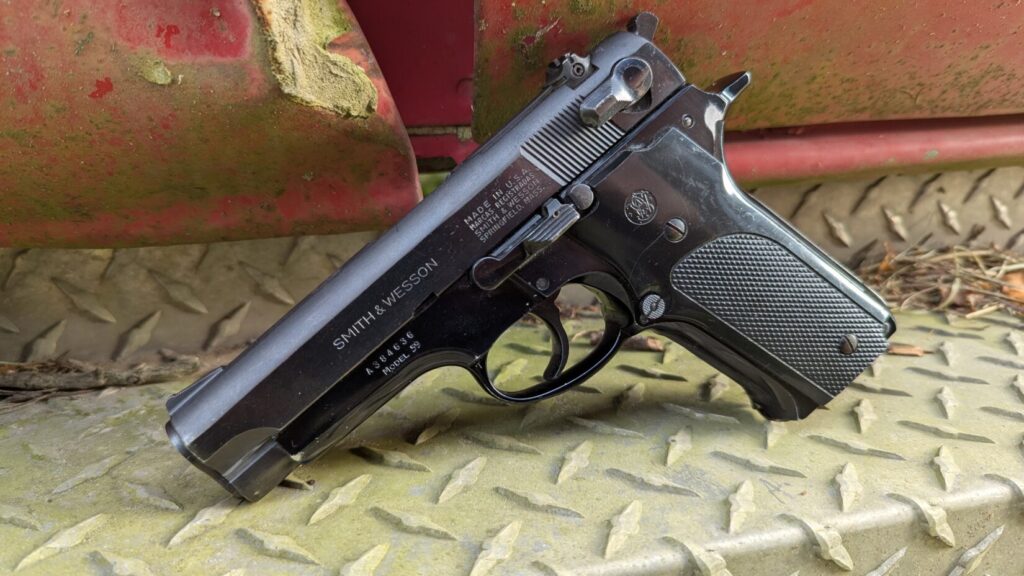
I won’t carry it because it’s a classic, so it only gets broken out for lazy and fun range days.
The Legacy of a Classic
The S&W Model 59 is a classic American fighting pistol. It got its start with the SEAL teams in Vietnam, and S&W wisely decided to make it a catalog item. From there, it entered the age of the Wonder Nine and served for three distinct generations.
As polymer frames and striker-fired guns became the norm, it faded from its former glory, but once you shoot one, you get why it was so popular. It’s a gun with a story to tell and the capacity to still get it done.