Since I first got into guns, I’ve been obsessed with revolvers. Even though I’m shy of 34, I grew up with an interest in history and cowboy movies. As an only child raised on a small dairy farm in Ohio, I was influenced by these movies and their characters. Even my favorite cinematic hero, Indiana Jones, carried a double-action wheel gun on his hip. Revolvers are cool. They have always been, and they always will be.
The first carry gun I purchased, back in my days at the gun counter, was a used Smith & Wesson 637. A .38 Special snubbie, which I thought would make for the perfect carry revolver. In short order, I taught myself how to work on it, changing out springs, swapping to a Pachmayr grip, and chamfering the cylinder.
Then I had my friend, Dave Laubert of Defensive Creations, bob the hammer. To me, this was perfection in a carry revolver. For years, I carried it before switching over to a modern slimline pistol (in today’s world, sometimes more is better when it comes to capacity). But I still have it and carry it on occasion.
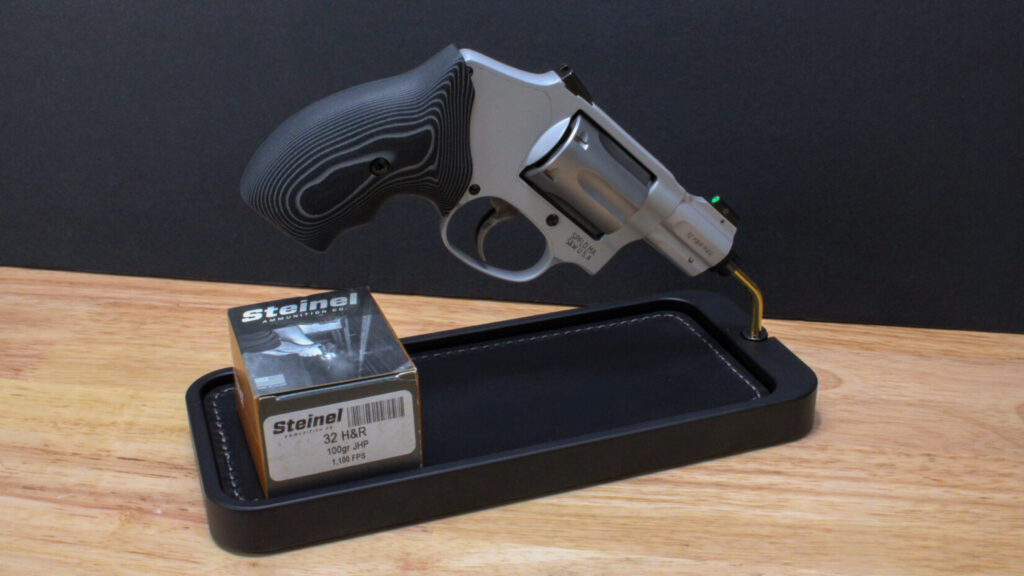
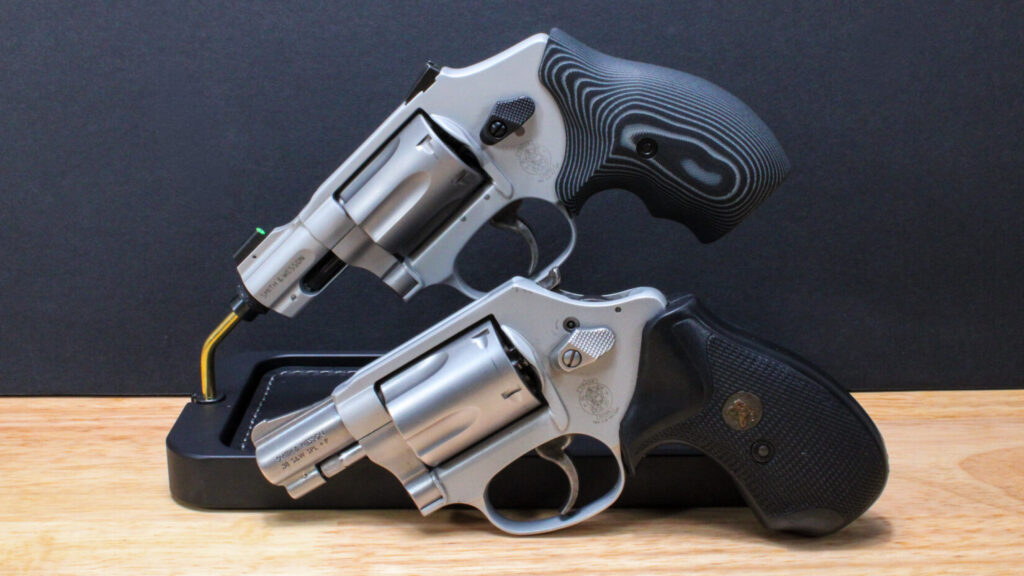
All this to say, I love wheel guns, especially Smiths. I’ve owned several and plan to keep collecting them, both old and new. However, in 2025, Smith & Wesson, in partnership with Lipsey’s, revived the Ultimate Carry revolver in the 632 and 432 series. Like my .38 Spl snubnose, these are J-frame size double-action revolvers chambered in .32 H&R Magnum. They also feature other upgrades, including aftermarket grips, sights, and internal enhancements.
I had to get one. Not only am I a fan of this gun, but I’m obsessed with building the “ultimate carry” revolver (maybe someday I’ll write about my 686+ 4” that I worked on…). So I ordered one through my local FFL. Specifically, I ordered the matte stainless steel 632 because it matched my 637.
SPECS
On opening the box, I was immediately impressed. The gun looked cool and felt great. Even working the action, I was surprised how smooth it was. But before I wax poetic on my thoughts and opinions of the pocket rocket, let me go over the standard specs and features so you have a clear understanding.
- Model(s): 14034 (632)
- Action: D/A Only
- Grip: VZ Grips G10 Grips
- Caliber: 32 H&R Magnum
- Frame Size: J-Frame, No-Lock
- Capacity: 6
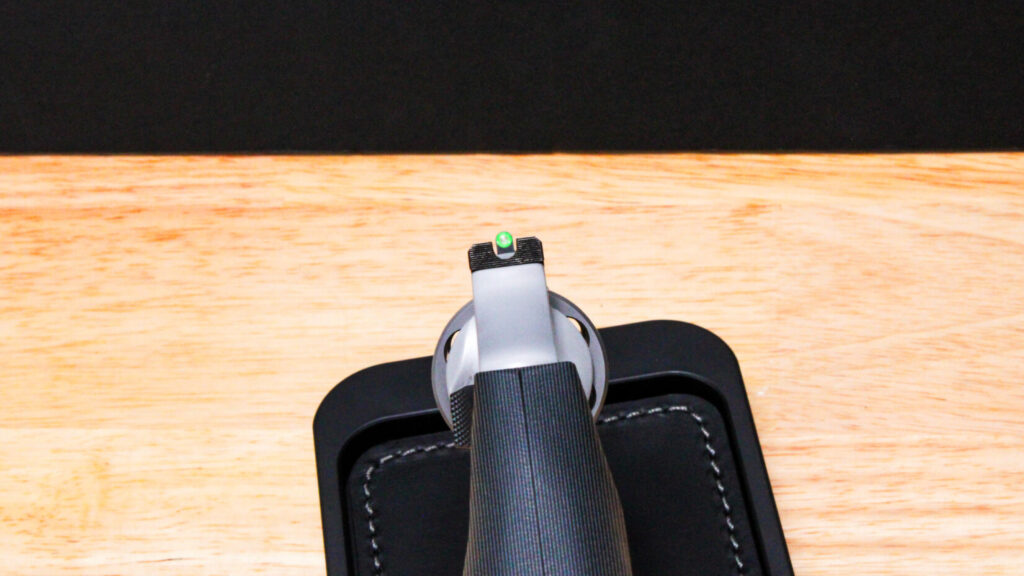
- Sights: XS Sights green ring with Tritium dot front sight and a dovetail black u-notch rear sight
- Barrel Length: 1.3”
- Overall Length: 6.31”
- Width: 1.3”
- Height: 4.3”
- Weight: 16.3 oz
- Price: $769.00 MSRP (Lipsey’s Exclusive)
FEATURES
Both the 432-UC and 632-UC are chambered in .32 H&R Magnum (hence the “32” in the model number), with a 6-round capacity, a 1.88-inch stainless-steel barrel, and an aluminum alloy frame that keeps overall weight at a user-friendly 16.3 ounces. And, this isn’t the first year of the UC reintroduction. Big Blue also introduced models in .38 Special +P, the 442-UC and 642-UC.
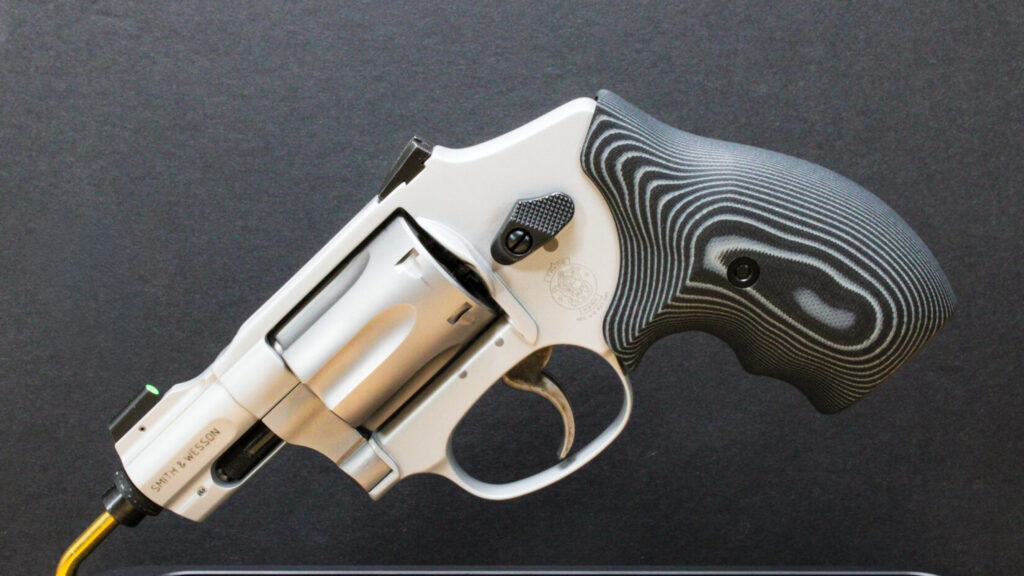
Aesthetically, the 632-UC features a matte stainless finish. All the revolvers in this collection are “no-lock” models, meaning they lack the key hole above the cylinder release. They come factory-equipped with the Endurance Package, featuring a fluted stainless-steel cylinder and chamfered charge holes for smoother reloading. The sighting system includes an XS Yellow Tritium front sight paired with a black dovetail u-notch rear.
Finally, S&W added their enhanced J-Frame synthetic boot grips from VZ Grips—a design built to manage recoil and improve control where it matters most. It’s hard to speak badly about this setup, and its features (okay, maybe, just maybe an optic-ready version would be cool. Taurus is doing it now).
WHY 32 H&R MAGNUM?
Why .32 H&R? That’s the big question, right?
Before diving into ballistics, there are several important factors to consider. First, the wide range of calibers available, such as .32 Long and .32 Short. While these might not seem like a big deal since they are a bit archaic, they offer soft shooting options that make for a pleasant range day.
That said, because of its smaller caliber, a J-Frame cylinder can hold 6 rounds instead of the typical 5. More is always better, right?
Now for some ballistics.
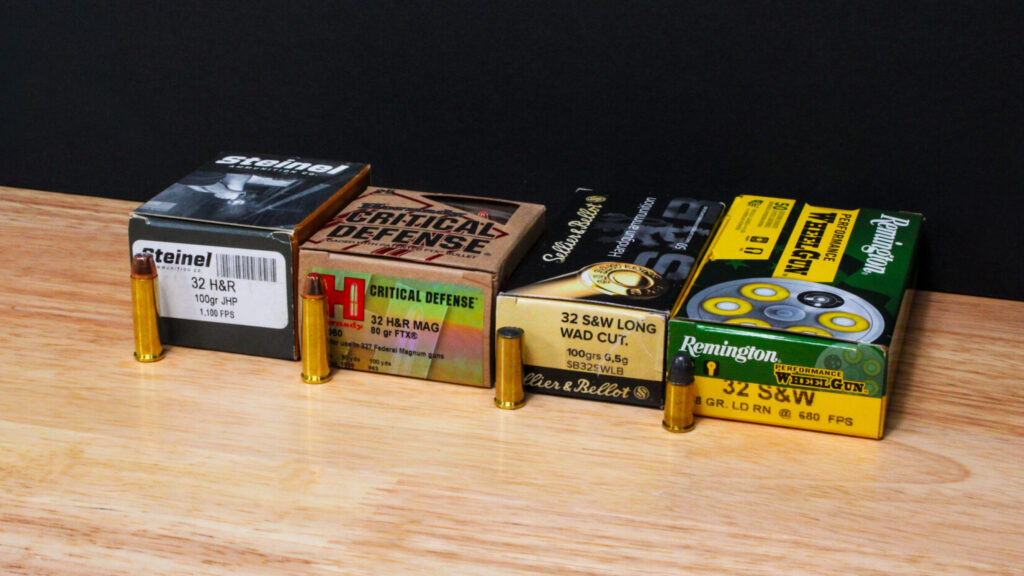
The .32 H&R Magnum is based on an elongated .32 S&W case to increase powder capacity, a practice that has been standard for years. Typically, a .32 H&R Magnum propels an 80 to 100-grain projectile between 1,100 and 1,200 feet per second.
For simplicity’s sake, let’s look at the Hornady 80-gr FTX Critical Defense load. I’m using their published data for this. Out of a 4-inch barrel, the bullet speed is 1,150 FPS. Using a bullet energy calculator, that’s equivalent to 234.87 foot-pounds of energy (FPE).
Doing the same calculation with Hornady’s 38 Special 110-gr FTX Critical Defense load (1010 FPS out of a 4-inch barrel) results in 249.10 FPE. Therefore, the actual difference is minor. But once you consider felt recoil and capacity, the scales tip in favor of the 32 H&R Magnum.
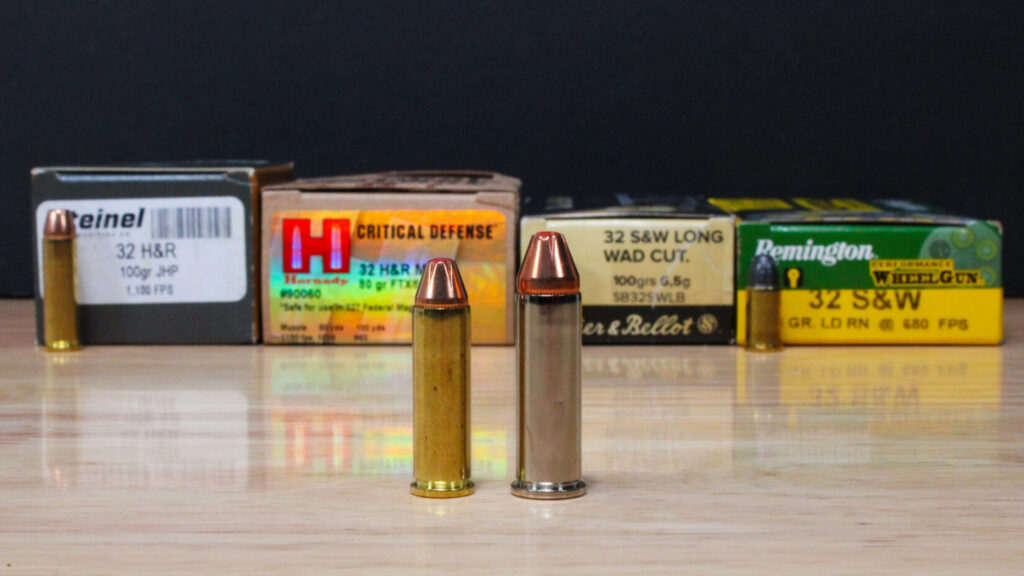
Fellow Cadre Dispatch Contributor Shane Jahn, in “A Closer Look at the .32 H&R Magnum,” stated that the .32 H&R Magnum has a Relative Recoil Factor (RRF) of just 0.42. For comparison, the .38 Special has an RRF of 0.53.
I believe this data makes a compelling case for the .32 H&R Magnum. It seems more than capable for a defensive role and offers some clear advantages over the .38 Special. Of course, those benefits are null once compared to modern slimline semi-automatic pistols with magazines, higher capacities, and better sights, but this article isn’t about that.
FIELD TEST
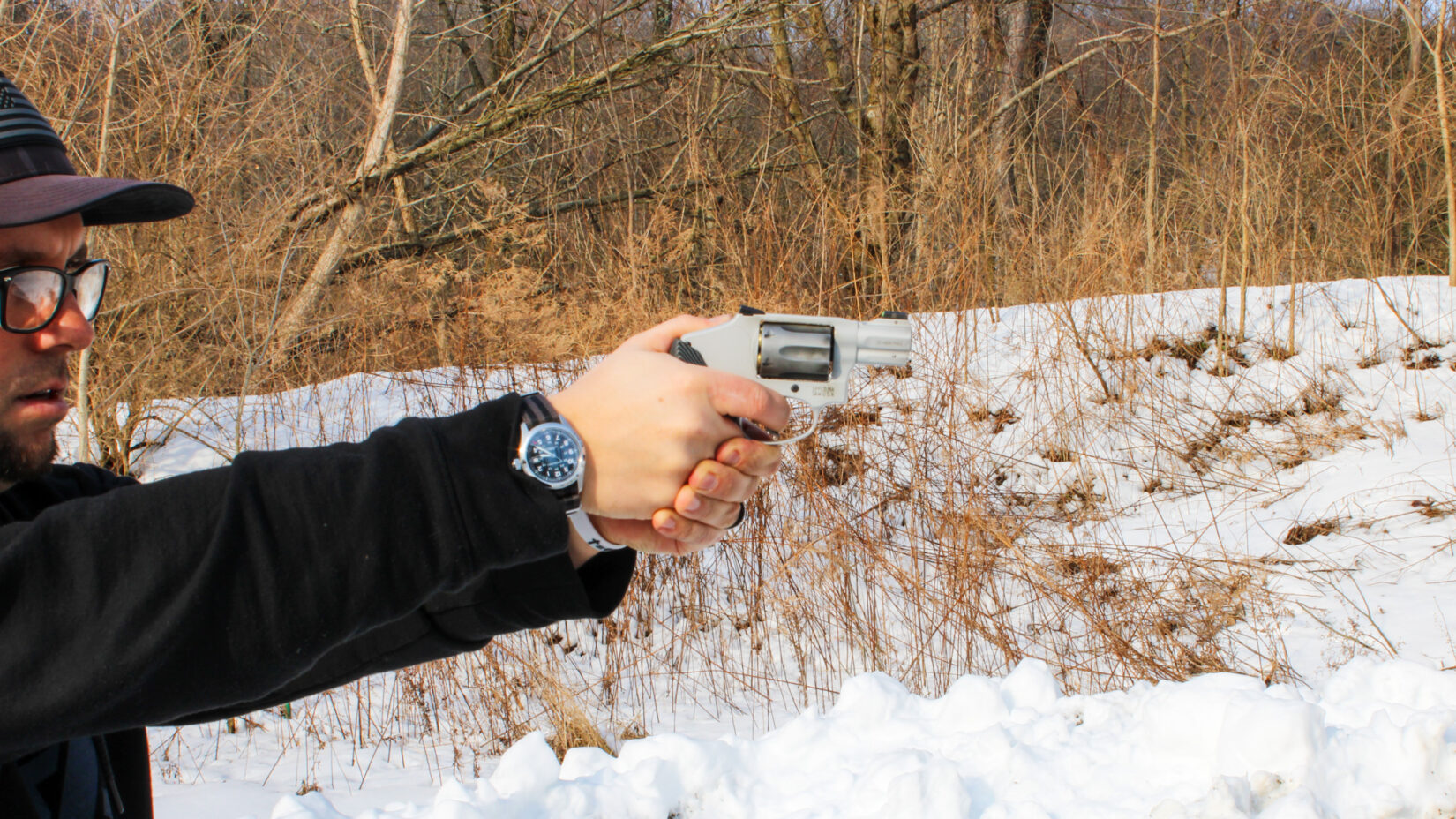
It did take a bit of time to get to the range. Winter Storm Fern took its toll on Northeast Ohio, but I finally made it to the range and braved the elements (really, just the annoying amount of snow).
Now, for the actual shooting. The 632 was relatively pleasant to shoot. I say relatively, because I did develop a hot spot on my shooting hand, just above the web of my thumb. The VZ grips are attractive and offer good comfort and utility, but I may choose Pachmayr grips like those on my S&W 637. I want to enjoy shooting as much as I can, including training with my carry ammo. That would make the experience even better.
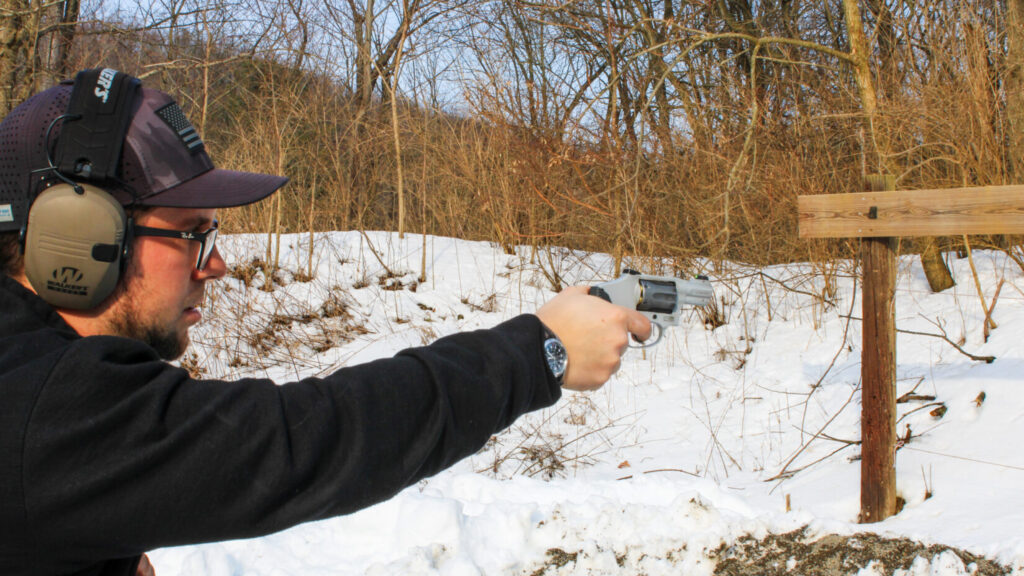
I was pleased with the tuned Endurance Package and improved trigger. It was smooth and easy to stage. I had no issues operating it, even one-handed. I did most of the shooting with Steinel 100-gr JHP, Hornady 80-gr Critical Defense, and Federal 95-gr Lead Semi-Wadcutter, which I picked up from Ammo To Go.
While at the range, I measured velocity data using the Steinel ammo. On a Garmin Xero, it averaged 825.4 FPS. Yes, this is slower from a sub-2-inch barrel than the figures mentioned earlier, which are probably based on 4-inch or 6-inch barrels.
Just for fun, I also tested loads of .32 S&W Long and .32 S&W. Their average velocities were 676.1 FPS and 612.5 FPS, respectively. Speaking of which, for a long-range session, those loads are a joy to shoot. Recoil is greatly reduced, and you can get a lot of practice in with any fatigue—they can be a bit scarce and expensive, though.
DRILLS
I ran a few drills while on the range. All were stationary because of the snow. First up were two-shot Bill Drills at 10 yards from low-ready (why two shots? Because I could run three drills on one cylinder!). My average time was 0.82 seconds across six drills, with an average first shot of 0.55 and splits of 0.28. Hits were all on a reduced silhouette paper target, but I wouldn’t call it my most accurate shooting. It does take time to get used to a double-action trigger.
Next was a modified Mozambique Drill from the holster. The gun starts holstered, then is drawn, followed by two shots to the chest and one to the head. For this drill, I used a Bianchi #57 holster designed for S&W J-Frame revolvers. The holster is comfortable and well-made, but it needs a bit more time to break in. I noticed that the larger front sight drags on the leather more than the smaller blade-style sight commonly found on Smith J-Frames.
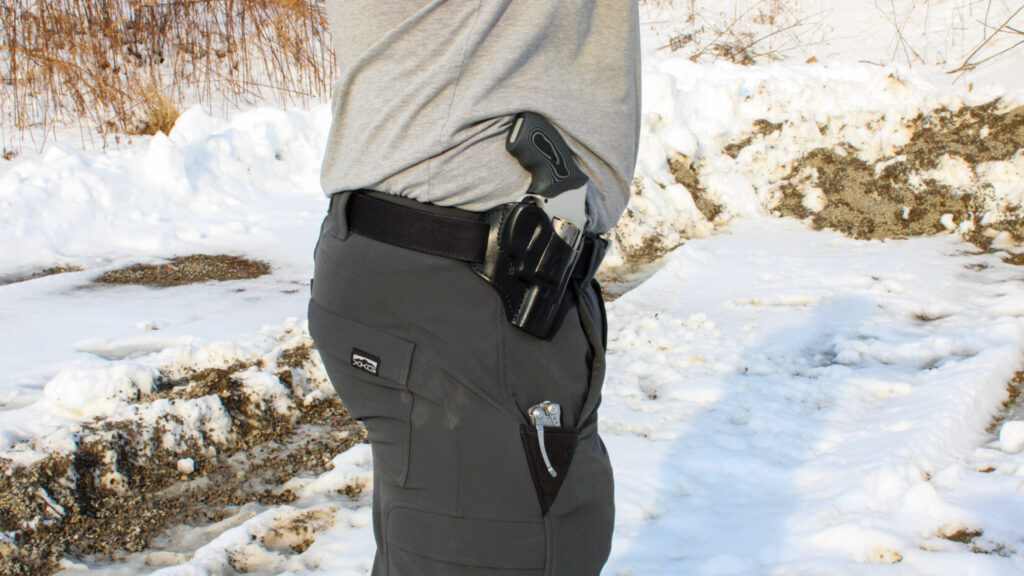
The average times across five drills were 2.7 seconds total, with 1.88 seconds for the first shot and .54 seconds for splits. I’m pretty pleased with my performance, and I noticed my grouping was better this time, mainly because I found it easier to stage the trigger when transitioning from the body to the head box.
Final Thoughts
Ultimately, the 632-UC checks many boxes for me. It combines old-school charm with thoughtful modern upgrades, offering a revolver that feels both nostalgic and relevant. The .32 H&R Magnum provides a practical balance of capacity, control, and respectable performance, especially in a lightweight J-Frame package.
While it won’t replace a high-capacity semi-auto in every role, that’s not the goal. The Ultimate Carry is about refinement within a classic format—smooth trigger, usable sights, sensible upgrades, and six shots ready to go. For someone who grew up admiring wheelguns and still believes in their place, this Lipsey’s collaboration feels like a welcome nod to the past, with just enough modern touch to keep it practical for concealed carry.