
I hated geometry in school. Not sure why, but all the angles and shapes broke my brain. If my geometry teacher had mentioned angles and how they affect a gunfight, I might have paid more attention. Working the angles can make a big difference in any violent situation.
Martial artists of all types use different angles to avoid attacks, to launch attacks, and gain the upper hand. Some of those same benefits can translate into firearms use in a variety of ways. Playing the angles is playing to win.
It bears mentioning that not every situation allows you to play the angles, or time to do anything but react with appropriate force. When that’s the situation, it is what it is, but when it’s allowed, working the angles can help you win the fight.
Working the geometry of a conflict has three main goals:
- Give yourself a positional advantage over a threat or potential threat.
- Maximize cover and minimize exposure.
- Get out of the line of fire.
Positional Advantage
Gaining positional advantage on a threat can end the fight before it ever begins. Facing the threat puts you in the direct line of fire and forces you to react to their action. We can change this dynamic through angles.
If you are responding to a threat, you should give yourself as much positional advantage as possible. If you’re approaching a known threat or violent situation, it’s easy to take the straight line to engage, to get tunnel vision, and to charge in. Sometimes you want to take a moment to breathe and think about how you can approach the threat to maximize your chance of success.
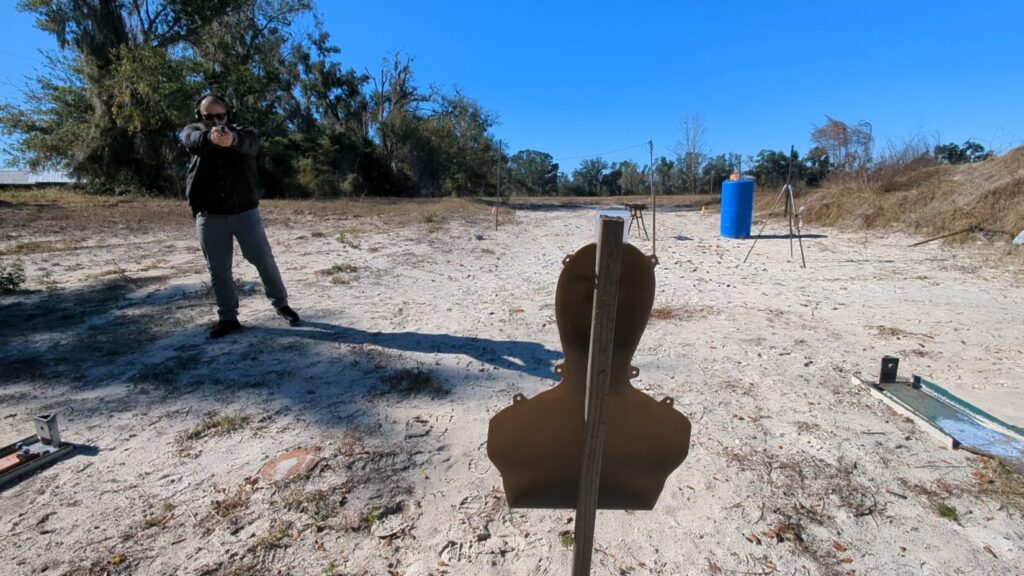
Preferably, you’ve taken this advantage before engaging or being engaged, but that’s not always the case.
If your threat is using cover, the positional advantage is to place yourself in a flanking position, rendering their cover moot. Even if cover isn’t a factor, approaching from a 90-degree angle can force the attacker to react rather than you reacting to the attacker. If you can approach from this angle, you’ve gained a significant upper hand.
In a 3D world, the advantage often goes to those who hold the high ground. In a mall, for example, the second story can render cover on the first story useless to a threat, while still providing significant cover for you.
Moving Advantages
If you are coming around a corner, it’s not wise to just pop the corner and go. You can pie the corner. You can take small steps in a tight arc around the corner, and you can gradually clear the corner.
As you’re pieing the corner, you can potentially see the threat while presenting an extremely small sliver to that threat.
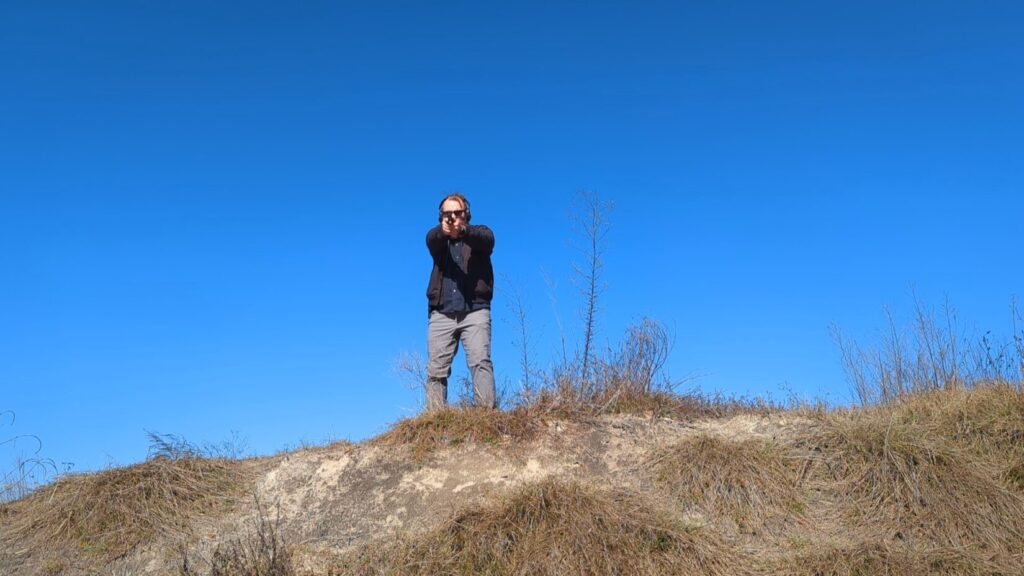
If you are on the defense, you can position yourself deep within a room to gain an angle of advantage on potential attackers. Positioning yourself deep in the room gives you a wide field of view and allows a defender to funnel the threat to them via a doorway. Defenders can also see a greater portion of the space outside the door before the threat is fully inside, giving you additional time to act.
Time is decisional currency.
M&M and Cover
Cover serves as a critical asset during a gunfight. It’s a security blanket. If available, one should prioritize moving toward cover. Should cover be established, a tactical repositioning to superior cover may be necessary, as better cover confers an advantage over the threat.
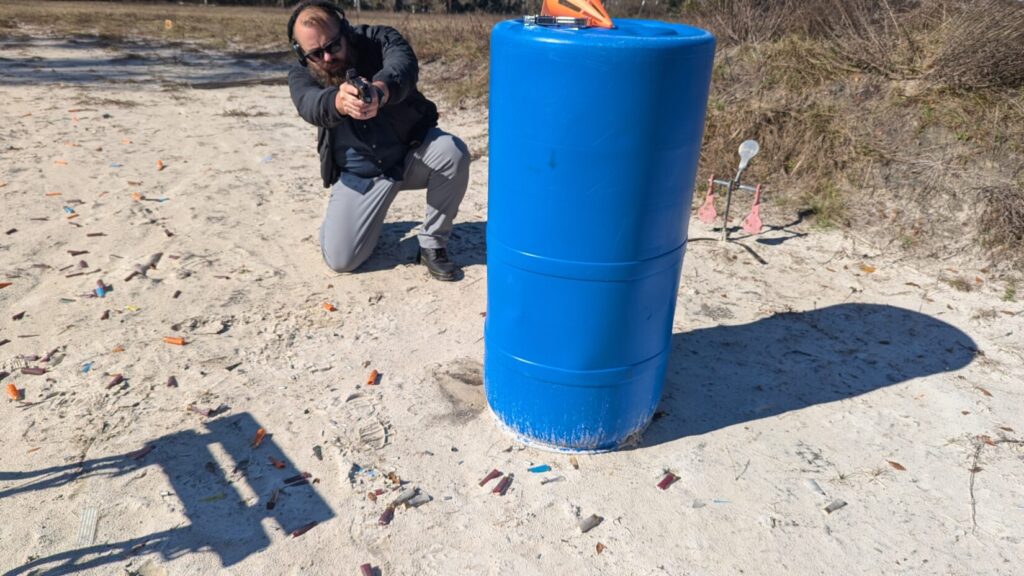
Superior cover may involve establishing a 90-degree angle, or as close as feasible, relative to the threat. Effective movement and use of cover are not arbitrary; instead, they should be strategically employed to secure a safer, more advantageous position against the threat.
The M&M principle applies to using cover. You want to maximize your body’s position behind cover. Soak up as much of it as you possibly can. At the same time, when aiming around cover, you want to minimize your exposure.
You can pie cover much like pieing a doorway. This ensures you are using the maximum amount of cover while minimizing your exposure. Additionally, when using cover, it may be beneficial to change the angle of attack.
If you’re standing, as you pie around cover, engage, and go to a knee. If you dip back behind cover and are able to, use the opposite side or a different position to avoid being predictable. Using different angles forces reaction instead of action.
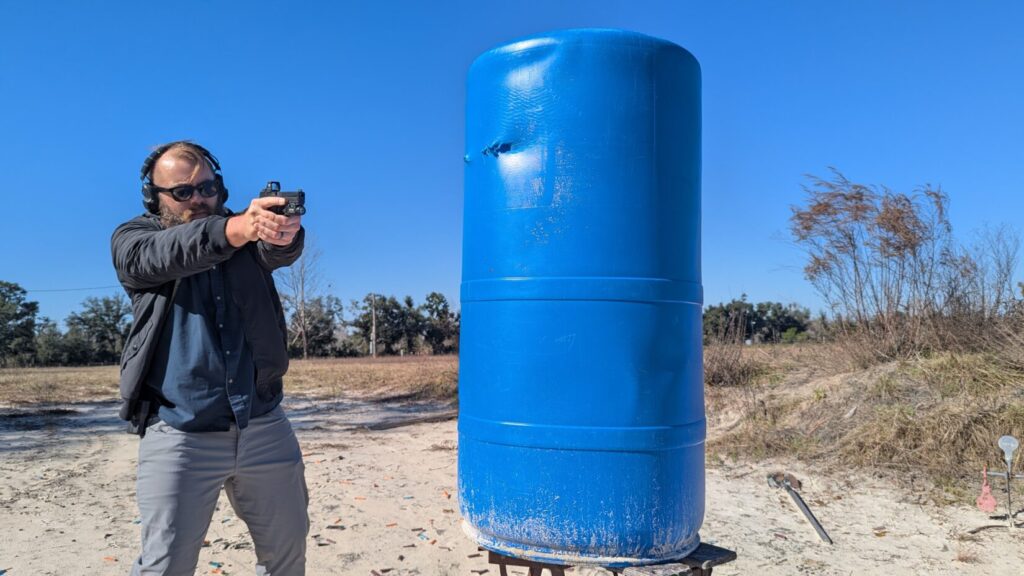
It’s entirely possible the threat will attempt to flank your cover and gain their own positional advantage. When this occurs, you’ll need to react and potentially seek deeper into cover, almost reversing the pieing maneuver. Cover offers an arc of safety, and when the threat attempts to get around that arc of safety, you’ll need to be prepared to reposition and find better cover.
The Line Of Fire
If you find yourself facing an armed threat, getting out of the line of fire should be a priority.
Optimistically, the best position to move to is 90 degrees to the threat’s line of fire. This forces a threat to pivot their entire upper body to engage. Obtaining 90 degrees to an armed or potential threat can be difficult, so we take whatever angle we can to force them to turn their body to face you.
Lateral movement is easy to do while facing the threat and potentially engaging. Lateral movement allows you to move toward the threat’s weak side, making it more difficult for them to shoot. When you move laterally, you want to move in the direction of your strong side, which in most situations will be in the direction of your opponent’s weak side.
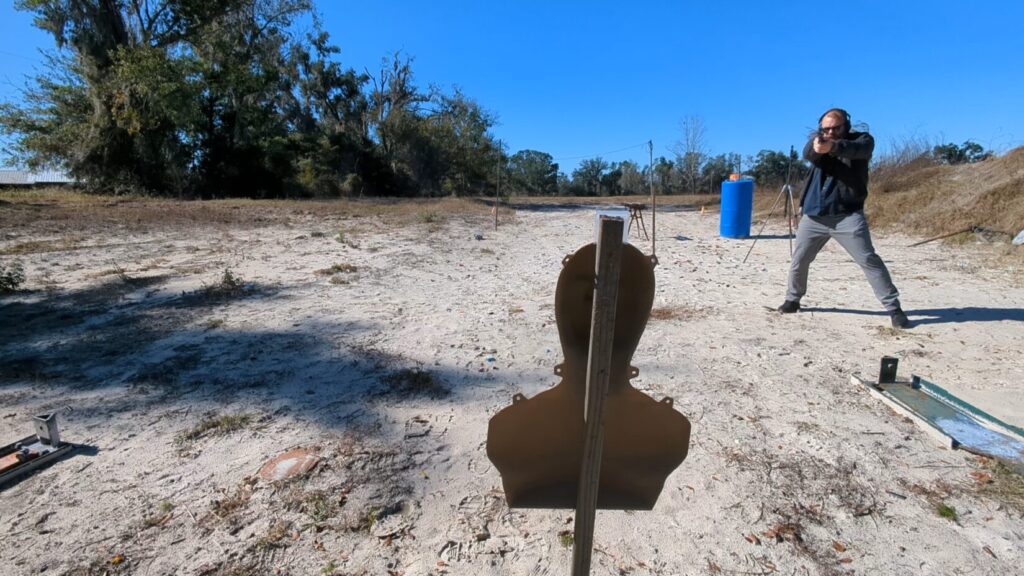
Moving laterally and shooting isn’t complicated; you’re keeping the majority of the threat in your direct line of fire while moving out of their line of fire. If you can force them to turn, you are slowing them down because they are now reacting to your action.
This changes if cover is available, and your angle of movement should change to embrace cover. This might mean moving forward, rearward, or laterally. In general, you want to ensure you can see the threat as you move.
Training The Use of Angles
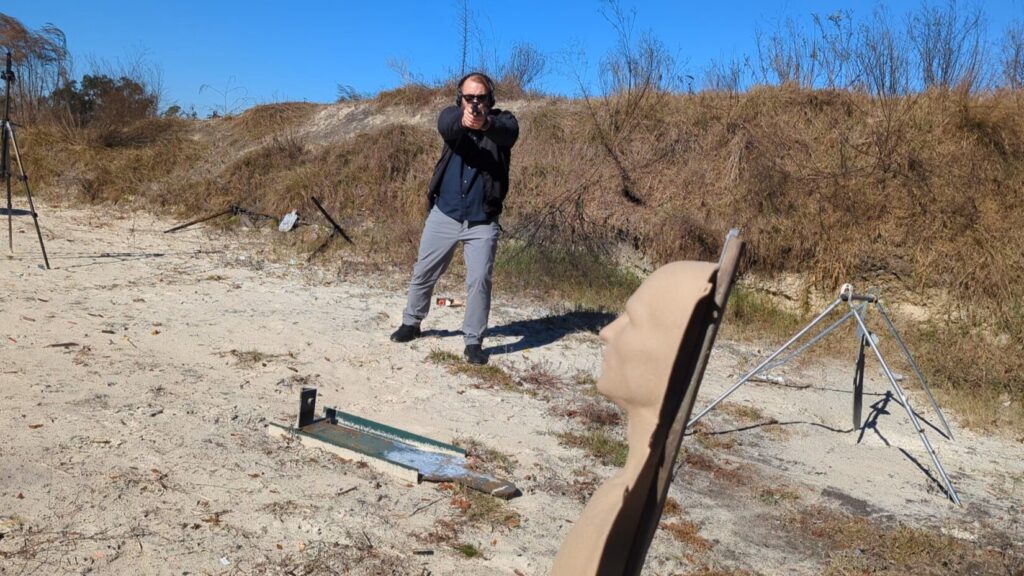
Training angles isn’t difficult. 3D targets are some of my favorites for training angles. The 3D torso targets from Birchwood Casey are an effective way to integrate angle training while retaining realism.
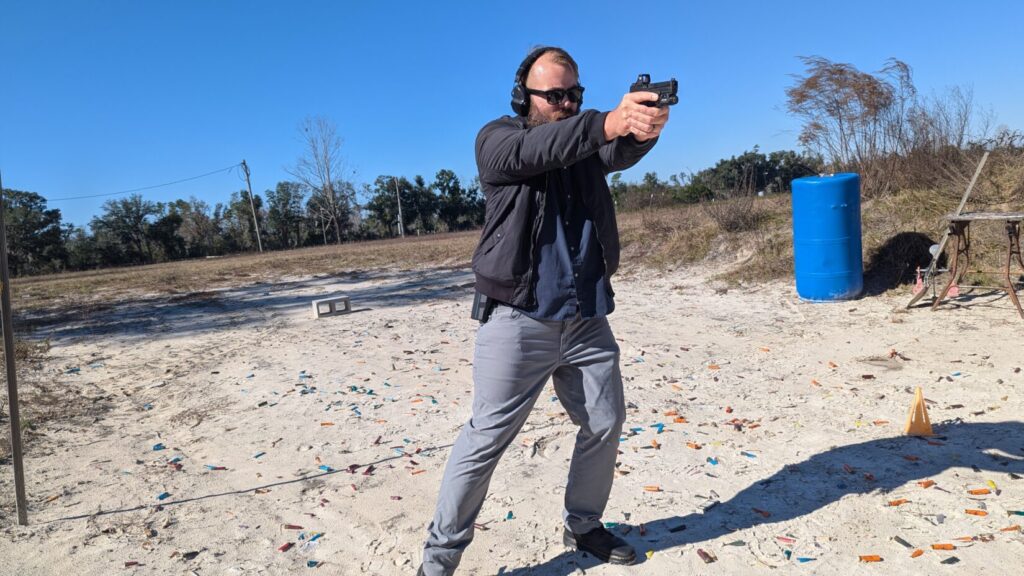
Training to establish the high ground, approach from a flank, or sit deep in a room isn’t necessarily easy to accomplish without a dedicated environment, force-on-force markers, and role players.
We can train to use cover, pie around doorways and corners, as well as get out of the line of fire easily enough. Setting up a few barrels or obstacles at the range allows you to work those corners, and to work cover.
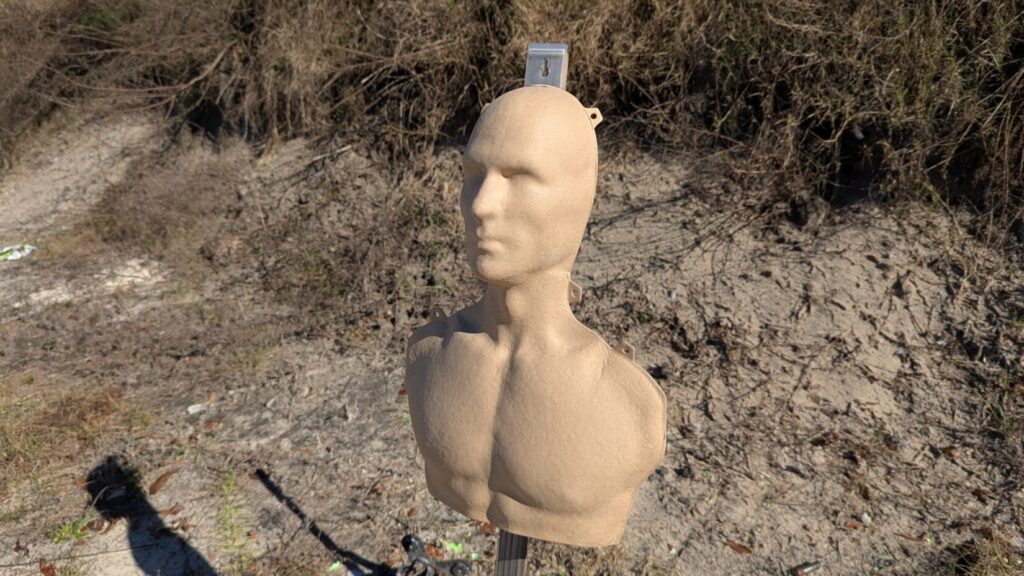
Lateral movement or movement to cover drills are also easy to implement. What I like to do is mix in a standard drill, like the Failure to Stop Drill, with the use of cover, pieing around a corner, or mixing in lateral movement.
This way, we have a standard baseline drill, and we are working the angles. You can do this with a Bill Drill, a 10-10-10 Drill, and more; just add movement, cover, or work the angles.
The Main Takeaway
If you can remember one thing, remember that reaction is slower than action, and time is decisional currency. Working the angles, be it to get a positional advantage, use cover, or get out of the line of fire, gives the time necessary to make the right decision and win the fight.
Establish a mindset of seeing the angles, identifying cover, advantageous positions, and remember that it’s a lot easier to hit a stationary target, so move out of the line of fire.