
I have been shooting pistols equipped with red dots for many years, back when many were very hesitant or even anti-red dots on pistols due to cost and perceived unreliability of the optics mounted to slides. Thankfully, there are many options these days that are more affordable and reliable.
Red dots have been proven since then, not to say they are now indestructible, but they definitely can withstand the recoil after thousands of shots and being put through hard use. That said, with the exposed emitter models, dirt, rocks, sand, or lint can accumulate and become an obstruction, taking out your red dot when you need it the most. Weather, as in rain or humidity, can be another factor.
For that reason, closed emitter models are gaining in popularity, and in my opinion, that’s a good thing.
Open Vs. Closed Emitter Red Dot Optics
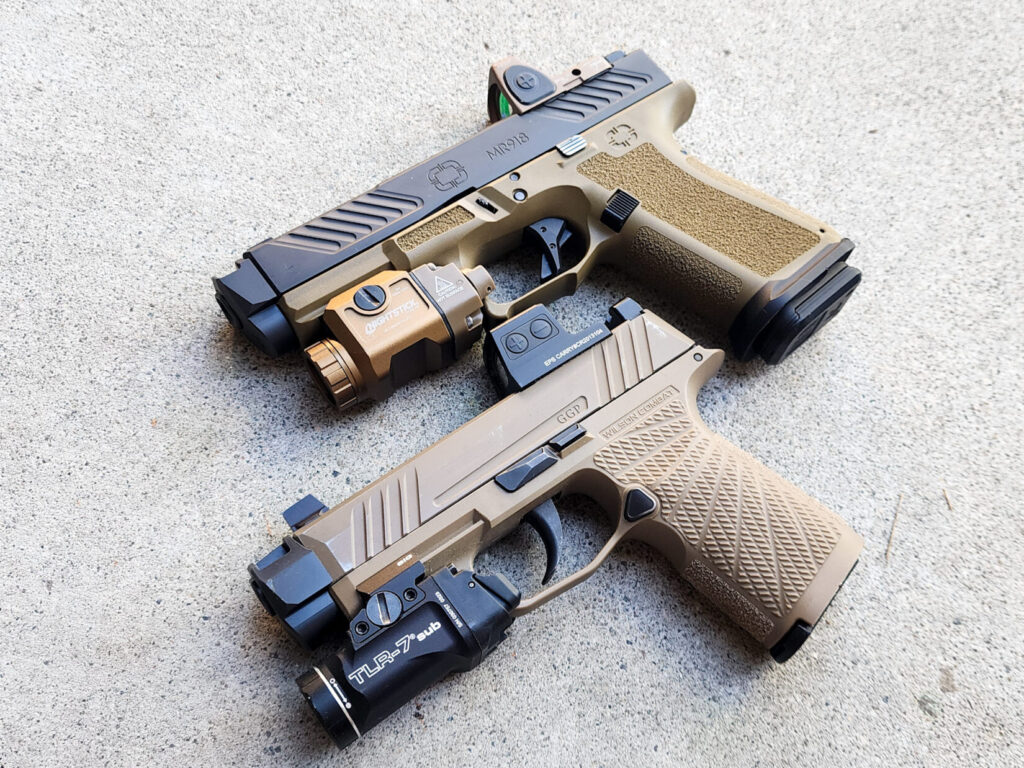
If you are not familiar with the term or type, when it comes to red dots, there are two types of emitters: open and closed. Red dots work by having an LED project a dot onto a lens through an emitter.
On an open emitter RDS, the emitter is not covered by anything other than a small, clear piece of glass in front of it, keeping it exposed to the environment. Closed emitter RDS, on the other hand, are fully enclosed inside the body of the optic, sealed in from the elements with a secondary rear window.

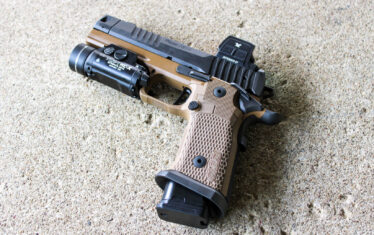
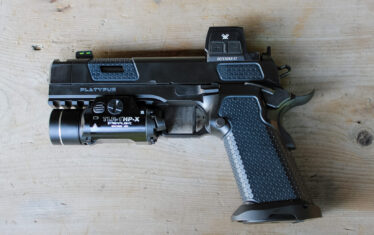
The early red dots for pistols were mostly open emitter types. The Trijicon RMR, Leupold Delta Point Pro, and Holosun 507 series were some of the most popular and durable models. They worked well, and they still are great RDS options to this day. They are generally lightweight and durable.
Practical Differences
However, they do have some vulnerabilities since they are exposed to the environment. This can be an issue for a lot of scenarios, especially for those who use their RDS-equipped pistol for duty or self-defense.
I personally have experienced situations or have seen others with open emitter red dots having the objective lens occluded. I was taking a pistol course where there was some rain in the forecast, and it ended up pouring cats and dogs. We went ahead and attempted to go forward with the class despite the heavy rain.
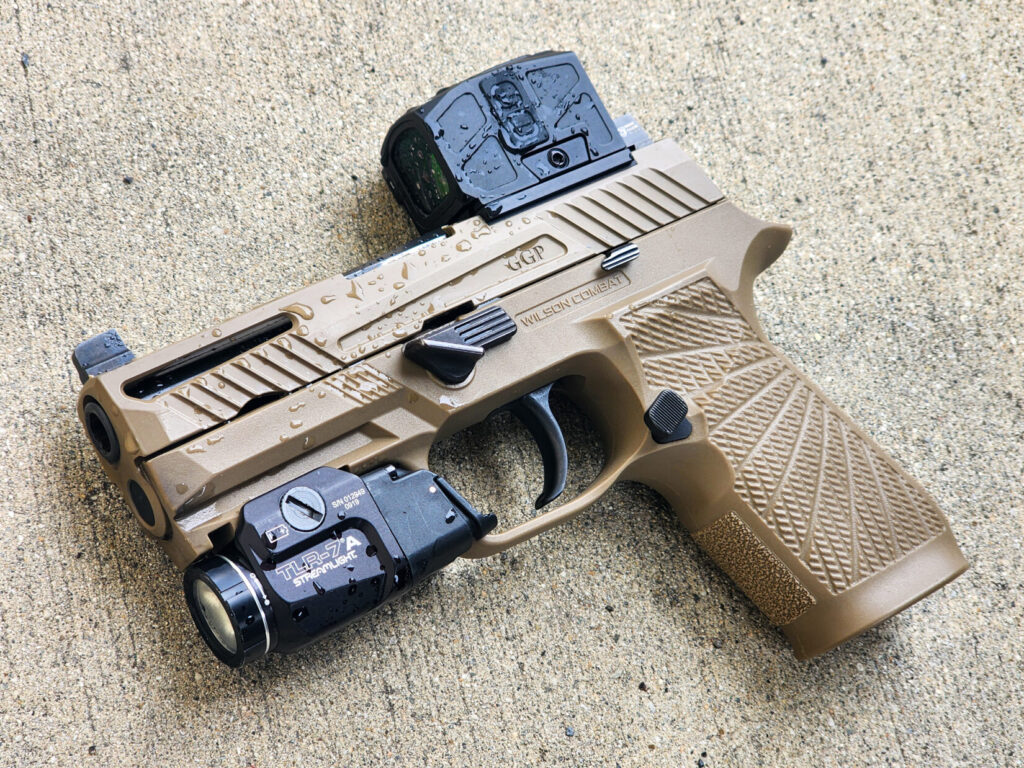
We started with zeroing our red dots, and I didn’t have any issues since I was running an enclosed emitter RDS that I happened to be reviewing. All the other students had open emitter RDS on their pistols, and they all had issues finding their dots.
The rain was in the way of the emitter window, refracting the LED. Therefore, there was either no dot or a ton of dots in their objective lens. Firing a round would clear the rain out for the subsequent shots, but would continue to happen once the pistol was holstered and redrawn for the next string.
This was my first experience shooting in torrential rain. I’m in California, and we don’t get too much rain around here. I immediately saw the advantages a closed emitter RDS has over an open emitter RDS in the rain.
Daily Upkeep
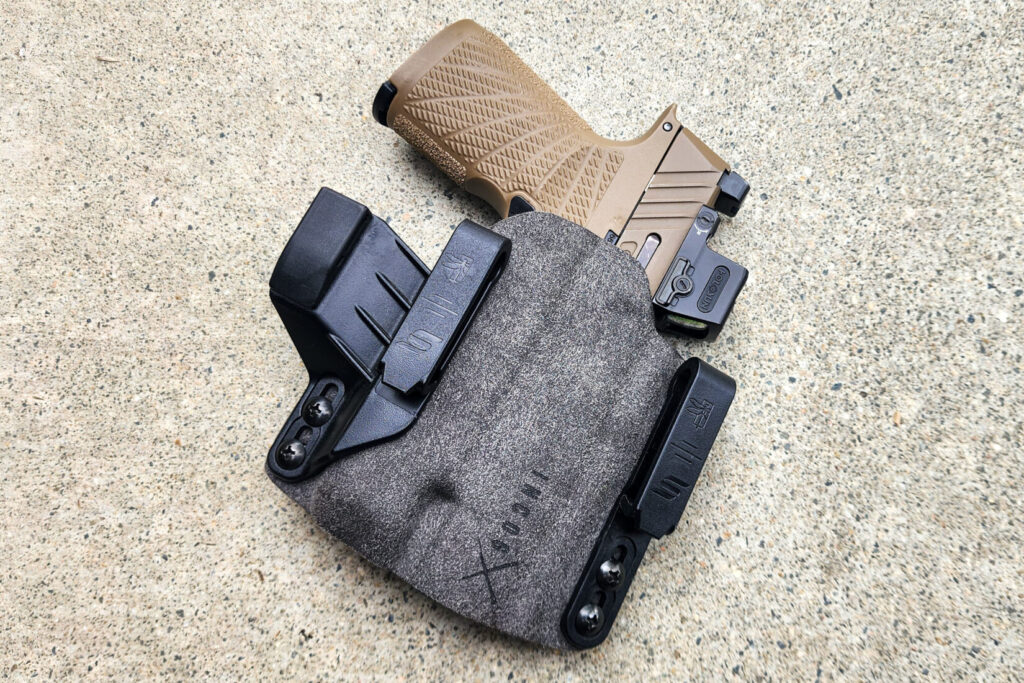
The first RDS that I used for my Everyday Carry setup was the Sig Sauer Romeo Zero on my P365. It is a compact, open emitter, lightweight RDS. It got the job done, and it held zero for the entire time I carried it and was durable enough for its purpose.
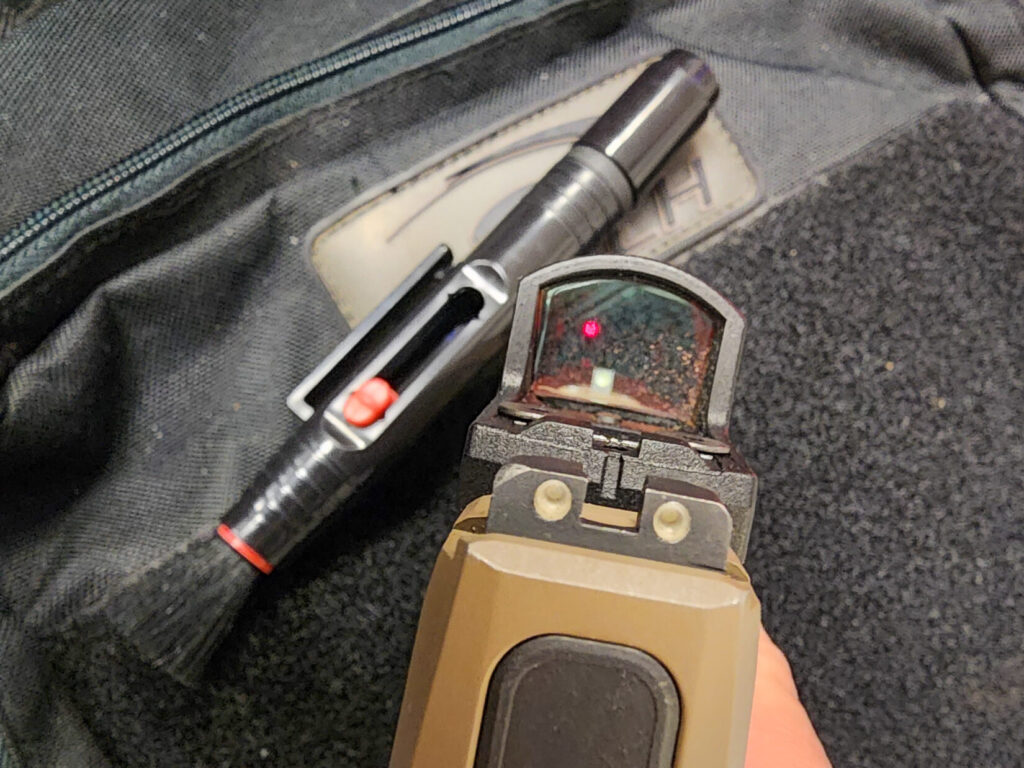
I experienced right away that the objective lens got dirty fast. It was a lint magnet, and I would have to check and clear it out daily. Between lint off my clothes and most likely dead skin particles that we all shed, the Romeo Zero was a little bowl that caught it all.
At the time, there were no closed emitter RDS for microcompact pistols. I just got used to cleaning the Romeo Zero every morning with a lens brush. It was a daily, albeit annoying, chore that had to be done. Still, it was worth it to have the benefits of the RDS on board.
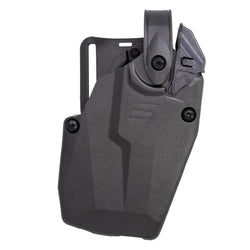
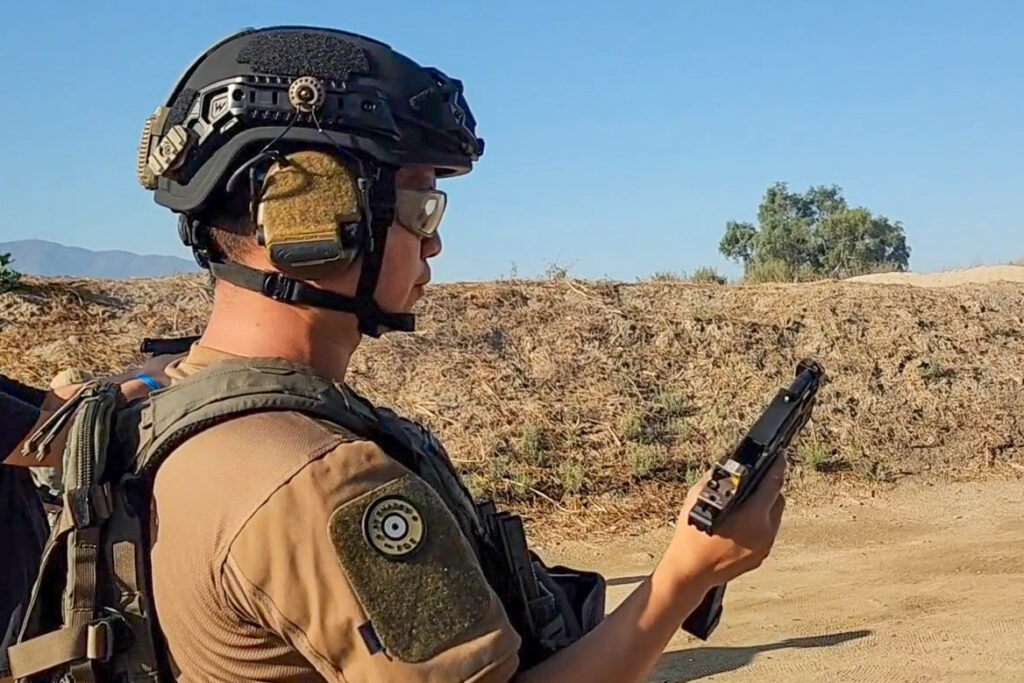
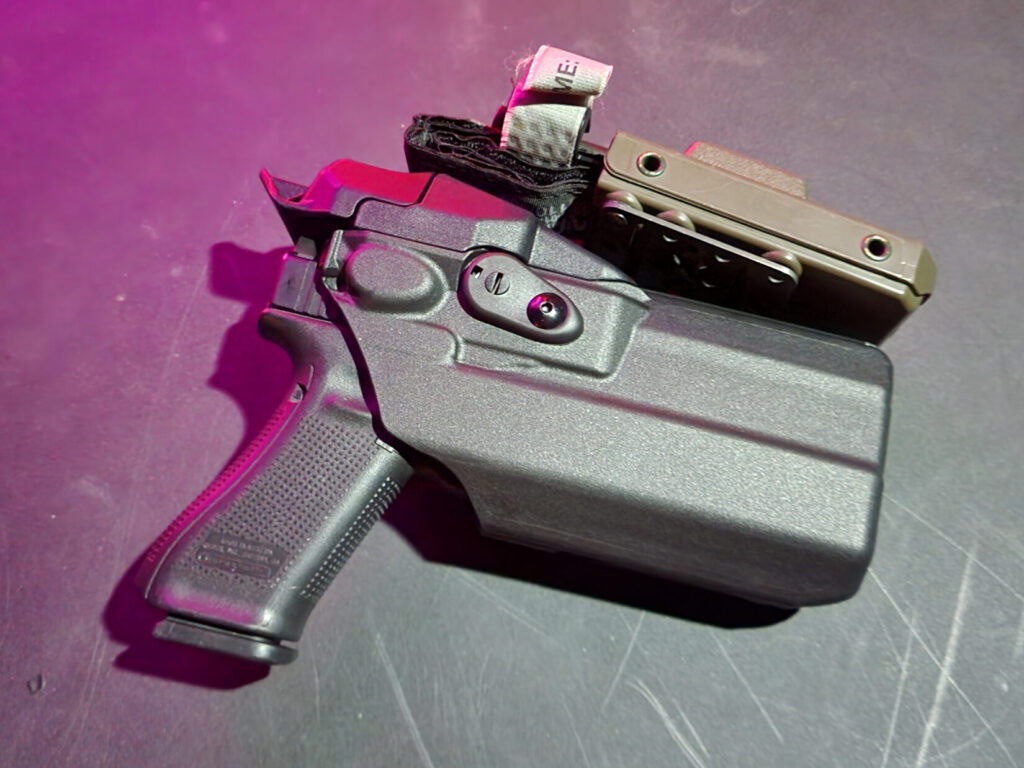
On my duty gun, I run the Trijicon SRO. Like the Romeo Zero, it is an open emitter RDS and catches dust regularly. It is not nearly as bad as it is on the Romeo Zero, mostly because it is in my Safariland 7TS holster with a hood over it and not in an AIWB Holster under a shirt and next to my body.
I check my duty gun at the beginning of my shift, and I would have to clear dust out of the objective lens a few times a week, but not as often as I did with the Romeo Zero. Clearly, an enclosed emitter RDS has an advantage over an open emitter RDS on pistols.
Holsters
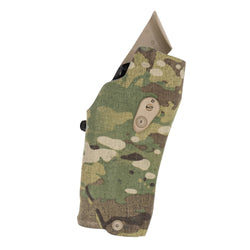
Another consideration to keep in mind is holster compatibility. For the most part, it is less of an issue these days, with many models accommodating closed emitter RDS optics. If you are running an older model holster, some of these sights may be too big to fit in duty holsters made specifically for the open emitter RDS optics. You will then have to buy a newer model holster to fit your new closed emitter RDS.
Open vs Closed Emitter RDS on Rifles
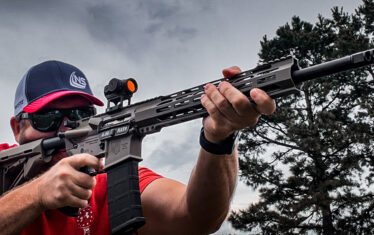
Just like my experience with RDS on my pistols, I started with open emitter RDS on my rifles as offset optics long before I got some closed emitter RDS. I have had good experiences with both and have not had issues with either.
Closed emitter RDS sights on offset setups will have an advantage over open emitter RDS sights for the same reasons they do on pistols. They will not be affected by environmental factors as much as their open emitter counterparts.
Closed Emitter Drawbacks
Closed emitter RDS are not without fault. They are like any electronic device or optic; they can fail and break. The seal around the lens could fail, allowing moisture to get in and create fogging inside the optic. It is quite rare, but it is a possibility.
Knowing the capabilities as well as the limitations of the gear you use is crucial. Being aware of failure points and having workaround solutions is the key to success.
Would I replace every open emitter RDS with an enclosed emitter RDS?
Absolutely not. These open emitter RDS work fine and will continue to serve me until they reach the end of their life cycles or break from use. I do suggest, however, looking closely into a closed emitter RDS when purchasing a new optic. If the needs and budget meet up, then I would select favorably towards a closed emitter RDS.
Again, it’s dependent on your specific needs. Always go with the features you desire and what fits in your budget.