
Our world is unpredictable. Every day we see news stories confirming the violence that exists. The potential for conflict in our daily lives is just as unpredictable. This is why it’s important to understand the escalation ladder; it’s a fundamental part of being prepared.
You’ve probably heard the saying, “Prepare for the worst and hope for the best.” For those who try to be prepared, this is not just good advice, it’s a way of living. This is especially true for those who carry a firearm for protection. It’s not just about training with your firearm on the range; it’s about understanding the dynamics of a confrontation.
What Is the Escalation Ladder?
The escalation ladder is a conceptual framework that lays out the progression of a conflict, from its inception as a minor disagreement to the critical moment where justified force, including lethal force, might become a tragic necessity.
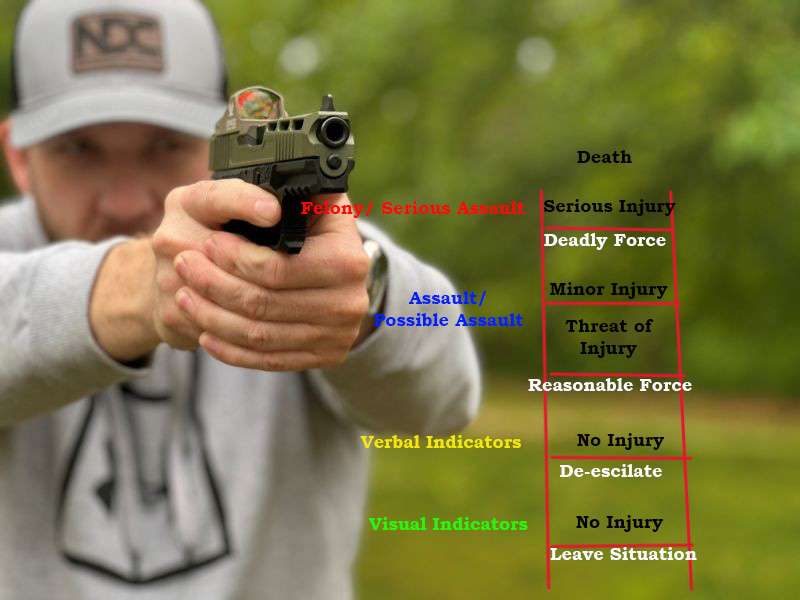
This doesn’t mean all incidents start at the bottom of the ladder and move up. When a mass shooter opens fire in a crowd, the incident is already at the top of the escalation ladder, requiring a response.
So, let’s start at the beginning and talk about some other types of incidents that may start at the bottom of this ladder.
Words and warnings
Every physical altercation has some type of non-physical stage. It may be a hostile glance, a muttered insult, or an aggressive posture. This is the first step of the ladder. For the responsible citizen, the primary objective is to get off the ladder as quickly and safely as possible.
This first requires you to recognize those incidents that could escalate quickly. Next, you must understand how to de-escalate the situation or get out of it completely if possible.

De-escalation is your primary tool. The principles of de-escalation are simple in theory, but in the heat of the moment, it’s easier said than done. Here are a few things to keep in mind when a verbal incident is starting to escalate.
Control your ego
A bruised ego is infinitely better than a physical injury or a legal battle. You are not obligated to win an argument or have the last word. After two decades in law enforcement, I would say this is what starts a large number of altercations that turn physical.
Use non-confrontational language
When someone is getting upset, but you manage to stay calm, it often helps them calm down as well. Speak calmly and clearly when communicating. Avoid accusatory or inflammatory statements. Be simple and direct with your phrases, like “I don’t want any trouble,” or “Let’s just go our separate ways.”
When phrases like this do not work, I’ve found it’s often because the person who wants to leave does not do it. They say, “I don’t want any trouble.” And of course, the other party mouths off something offensive. The person who didn’t want any trouble then feels obligated to throw back their own insults, which in turn starts the escalation process.
Be aware of your body language
Maintain a neutral and open posture. Avoid aggressive gestures like pointing or clenching your fists. Making eye contact can show you are paying attention, but avoid a prolonged, challenging stare. Again, you are trying to de-escalate, not win an argument or staring contest.
Create distance
Physically removing yourself from the situation is often the most effective de-escalation tactic. If you can walk away, do it. I get it, not all situations allow you to walk away. But you may be surprised at how many tragic incidents could have been avoided if one party had just left.
As a kid, most of us learned the saying, “Sticks and stones may break my bones, but words will never hurt me.” Well, it turns out that’s true, at least when it comes to physical harm. Sure, someone can hurt your reputation, business, or ego by saying things about you. But there are better ways of handling it than escalating to a physical confrontation.
The goal at this stage is to deny the aggressor a target and to refuse to fuel the fire. Your objective is not to win the encounter, but to end it.
When words fail
Unfortunately, de-escalation is not always successful. The next step of the ladder involves the introduction of physical force. It’s important to understand the legal concept of proportionality. The force you use in self-defense must be reasonably proportionate to the threat you are facing.
Physical Assault
If an individual initiates a physical attack, you are generally justified in using a reasonable amount of non-lethal force to defend yourself. This could include pushing, blocking, or striking to create an opportunity to escape. It is important to use only enough force to stop the attack and get away.
After an incident happens, the parties involved will likely end up in court and possibly a criminal or civil trial. One factor that will be considered is this: Was the amount of force necessary to stop the threat? If the level of force used did not match the level of the threat you were faced with, you have a problem.
Lethal Threat
The level of force changes dramatically when you are faced with a threat of death or serious bodily harm. This is the highest step of the escalation ladder. It’s important that you have a good understanding of what constitutes this type of justified force before you are involved in an incident.
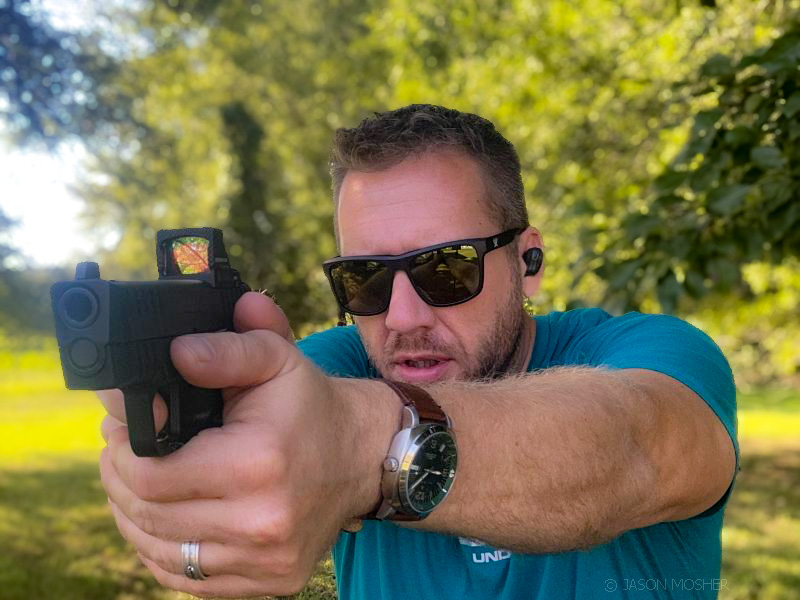
The Decision to Use Justified Force
The law recognizes the right to use lethal force for self-defense, but the conditions are strict, and the aftermath is life-altering.
In most states, the legal standard generally uses the concept of “reasonable belief.” This means a reasonable person would believe you were facing an “imminent threat” of death or serious physical injury.
- Reasonable Belief: Would a reasonable person in the same situation, with the same knowledge, have believed they were in mortal danger?
- Imminent Threat: The danger must be immediate. A threat of future harm does not justify the use of lethal force in the present moment.
The decision to use a firearm in self-defense should be a last resort. It is often made in a fraction of a second under immense stress.
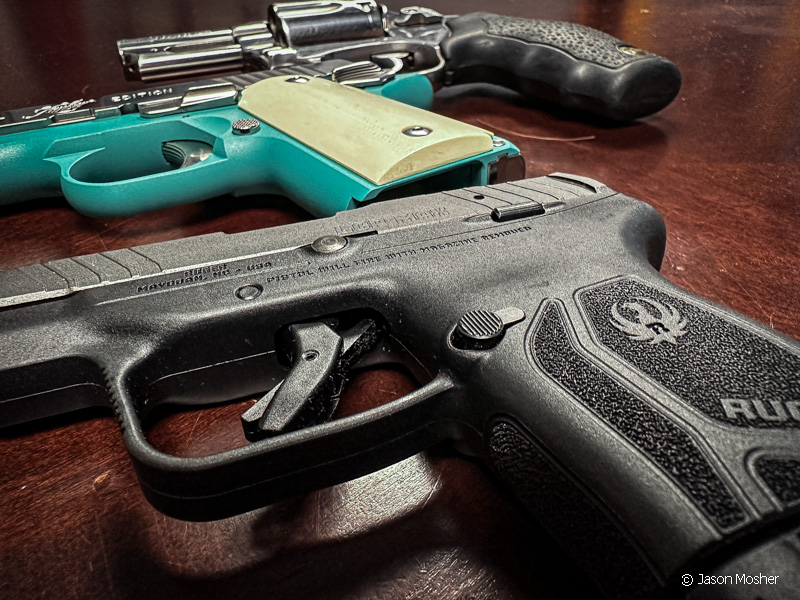
This is why simply training with your firearm is not enough training. It’s also about your mindset and judgment skills. Some situations may require an immediate escalation to deadly force. Take time to think about and identify what those types of threats would be. Is it possible to leave and avoid the situation? Or is it likely you could be seriously injured or killed if you do not take action?
If an incident does require the use of lethal force, you must be proficient with your firearm. This is why training on the range is an important part of being prepared; just keep in mind that it’s not the only part.
The Responsibility of Carrying a Firearm
For those who choose to carry a firearm, it is a tool of last resort. It’s an option to be deployed only when all other avenues of safety have been exhausted or are not possible. A responsible armed citizen should be of the mindset to avoid conflict when possible.
Carrying a firearm should make you more inclined to de-escalate a threat, not less. If you participate in the incident and the result causes an escalation, you may not be justified. In most states, the law is clear that a person cannot cause the escalation they defended themselves from.
Consider an example scenario: someone says, “Leave me alone,” and walks away. But you are mad and determined to have the last word. If you act (like following them) and this causes the incident to escalate, you could be held responsible regardless of your reasoning for self-defense.
Carrying a firearm shouldn’t give you more courage to confront people; it gives you a fighting chance when there are no other options. It’s not to empower you to engage in disputes you could have otherwise avoided.

Ultimately, the escalation ladder is a guideline for understanding the unfortunate progression of violence. Our goal should be to stay at the lowest possible level.
The decision to climb higher on that ladder, especially to the point of using lethal force, should not be taken lightly. What makes you a tactical, self-defense guru is not winning a fight but having the wisdom and skills to avoid one altogether. When that’s not possible, then you take action to defend yourself.