
My first firearms safe was a simple steel container that came from a big-box store. It was about $100 at the time, and it was all I needed to hold my Ruger 10/22, Remington 870, and whatever other long guns eventually came into my inventory. That safe fit in my closet, was bolted to the wall, and I was the only person who knew where the key was stored.
Fast forward over three decades later to the present day, and you’ll find a similar setup in my home. Of course, what I own now has changed significantly since then, but so has my knowledge of how to store firearms and how I think about firearm storage in general. What follows are my thoughts on different techniques to safeguard your collection.
Large Centralized Storage
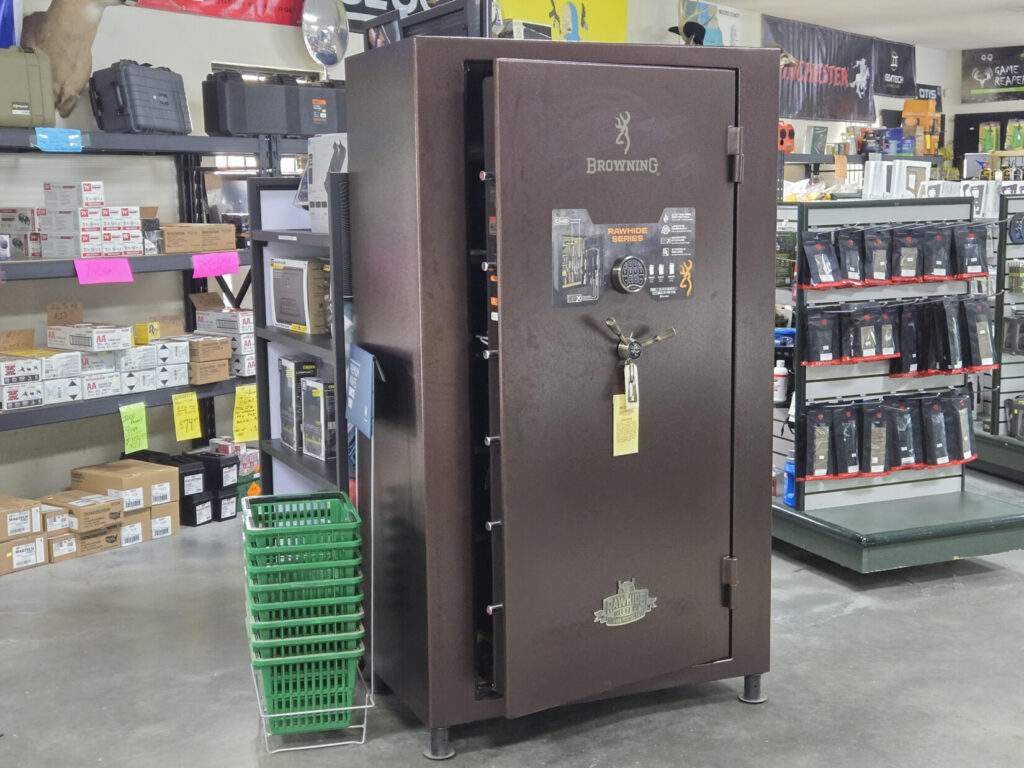
One of the most formidable options for firearms storage is the large fire-rated and enamel-painted gun safe with a large vault door. These safes are sometimes displayed as the centerpiece or focal point in a den or study, and moving them is a feat of superhuman strength.
While incredibly secure, the tradeoff to theft deterrence is the logistical nightmare they can be for moving on your own, and the equally heavy price tag paid for ornate decorative finishes. Despite this, many are purchased for their aesthetics, fire resistance, built-in dehumidifiers, and lights.
Wooden/Glass Storage Cabinets
A common firearms storage option is the wooden and glass case. There is no denying the classy look, but one must recognize glass will only keep good people out. A common solution to this type of case is a locking arm feature that secures the firearms around the pistol grips or a heavy wire cable that runs through the trigger guard or open action.
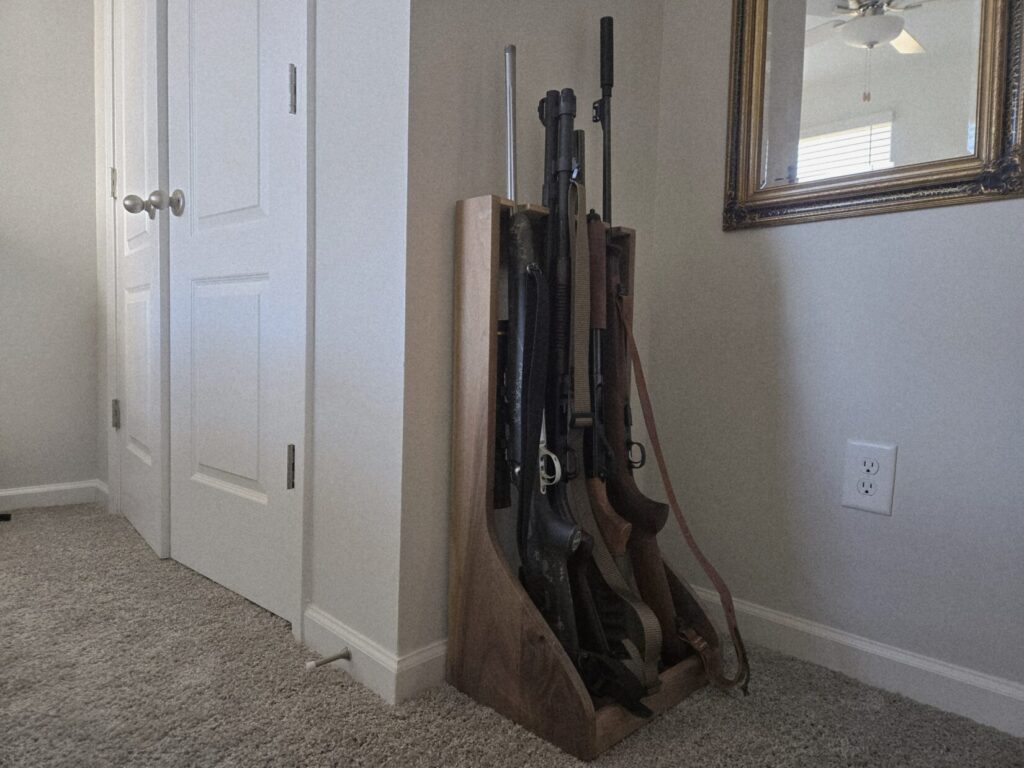
These storage cabinets should be secured to the wooden studs in the wall, and they should also be locked behind a security door in your office. A similar method of storing firearms is the quintessential wooden rack. Whether stored horizontally or vertically, these racks can be visually appealing, but they offer zero additional security over resting a firearm against a wall.
Decentralized Storage
The expression “don’t put all your eggs in one basket” comes to mind when decentralized firearm storage comes up. This idea is the antithesis of the single large firearm safe.
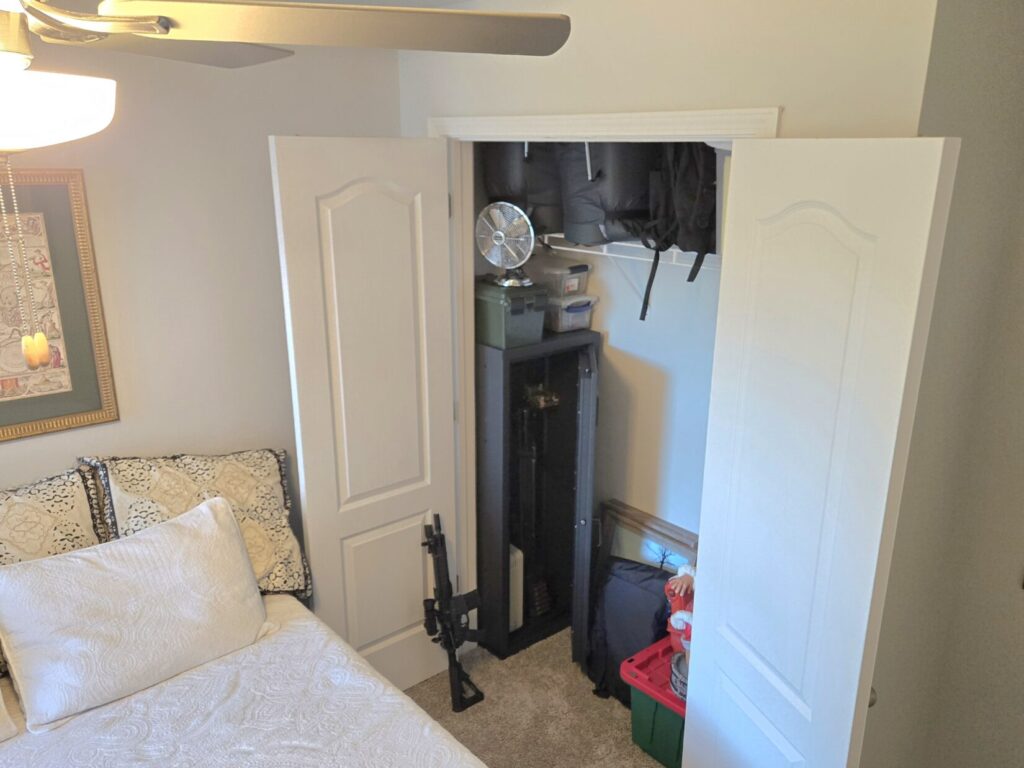
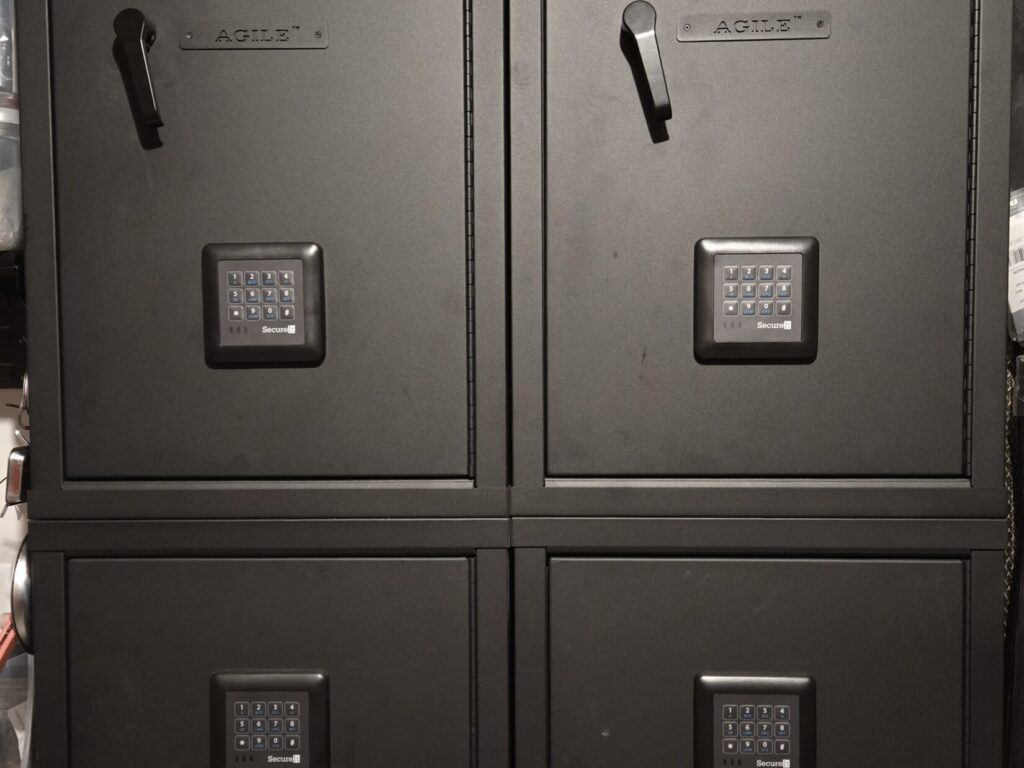
Decentralized storage means having multiple safes located in various rooms in your home. One smaller wall safe can be mounted in the master bedroom closet, a larger safe could hold the lion’s share of your collection in the office, and another mid-size safe could be located in an inconspicuous space like a linen closet, guest bedroom, or loft.
The rationale for decentralized storage is having options for ready access in the home without having a single strong point.
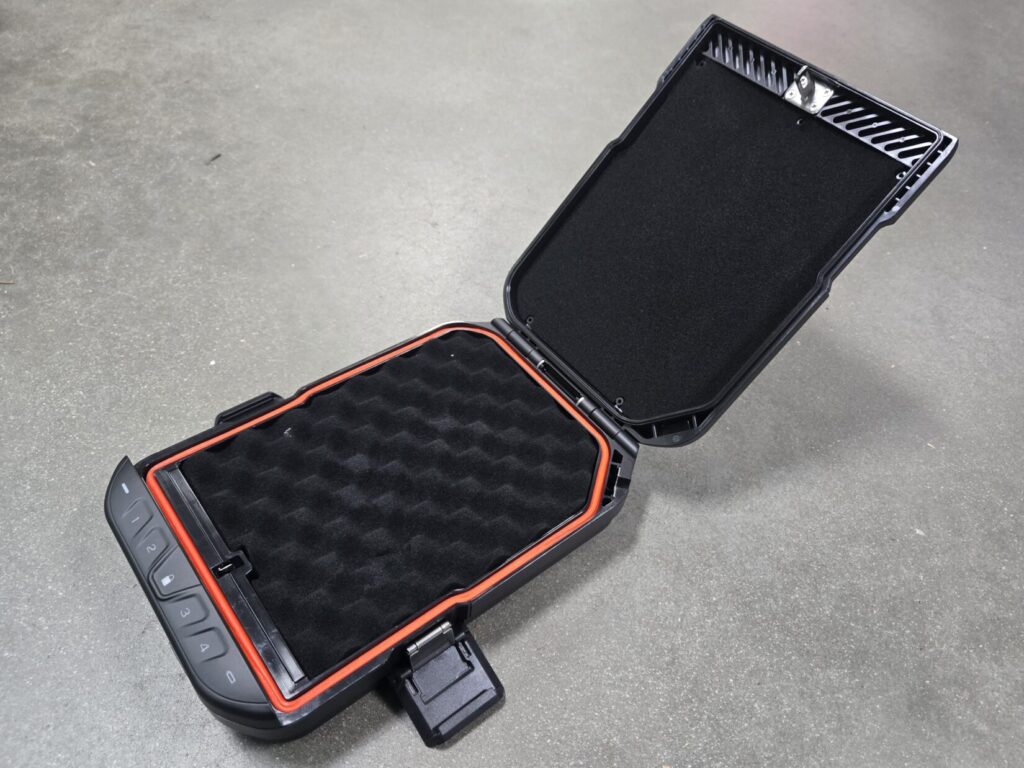
Individual Firearm Safe/Strong Box
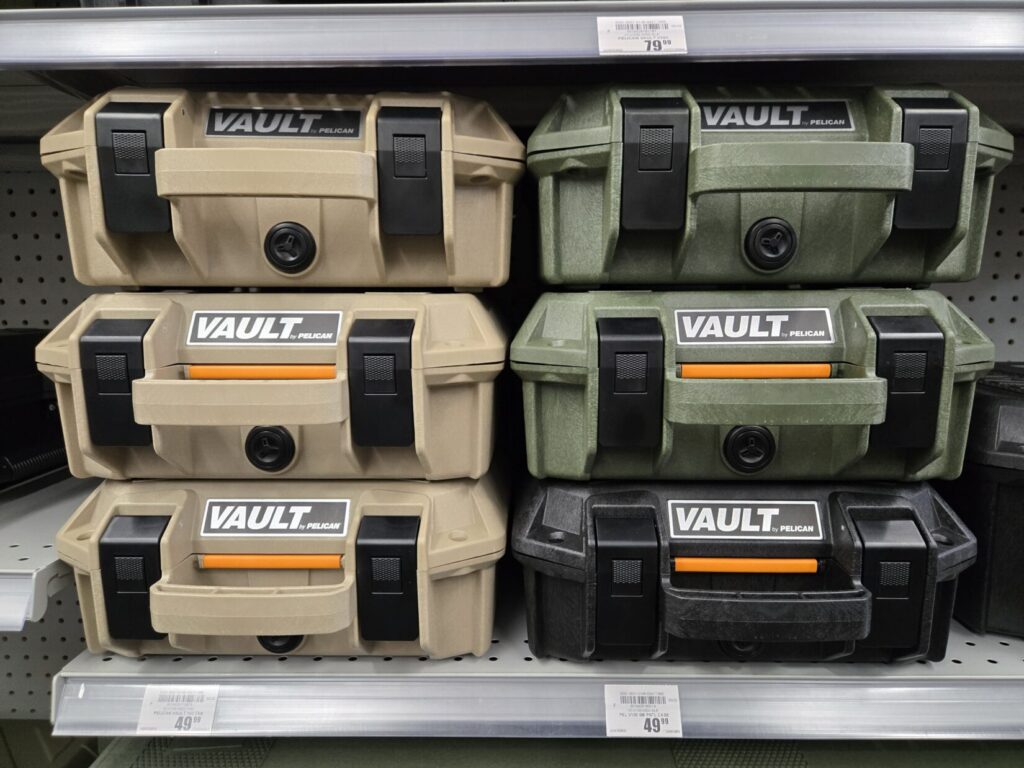
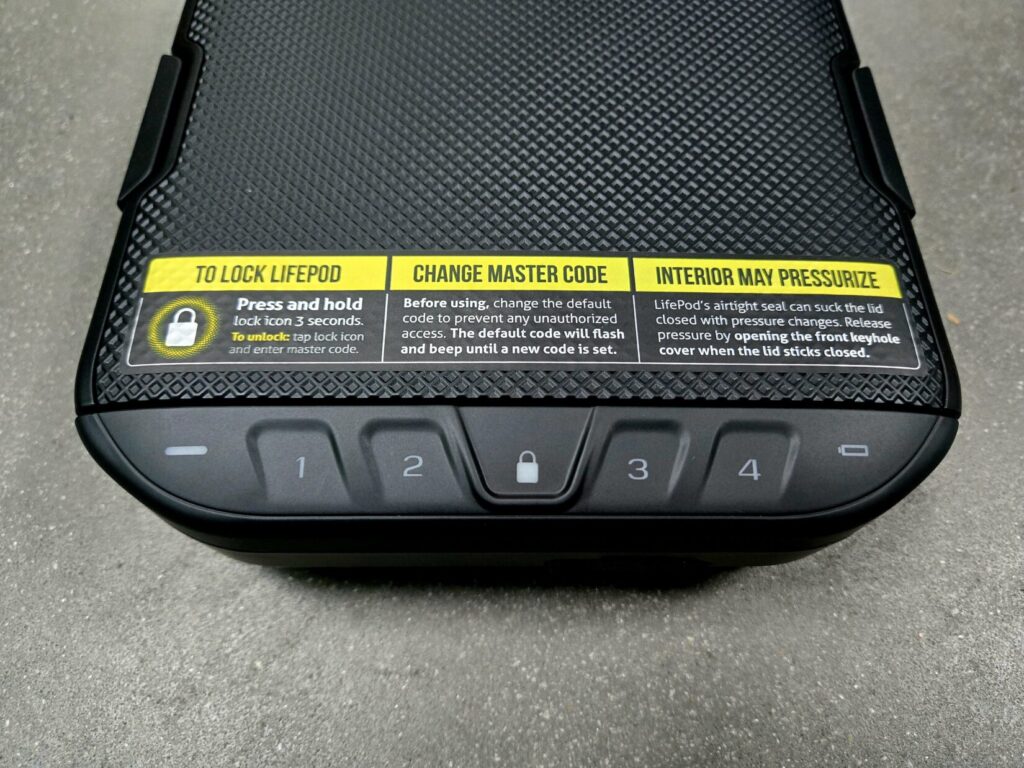
Sometimes, a single small storage box is all that is needed to safely store a personal defense firearm.
Consider the gun owner who only has one pistol and a house full of children. Regardless of the firearm safety talk provided to the kids, being able to lock a firearm away from curious hands can bring some peace of mind.
This strong box should be secured in a manner that would make forceful removal difficult. Biometric panels are popular, but they add another failpoint and may not work if hands are bloody, greasy, dirty, or covered in a substance that makes reading prints difficult.
Conversely, a keyhole may be difficult to find in a stressful situation. Training can reduce fumbling and speed up response time. Make sure to factor in safe directions and no shoot walls as part of it.
Hidden without a Safe
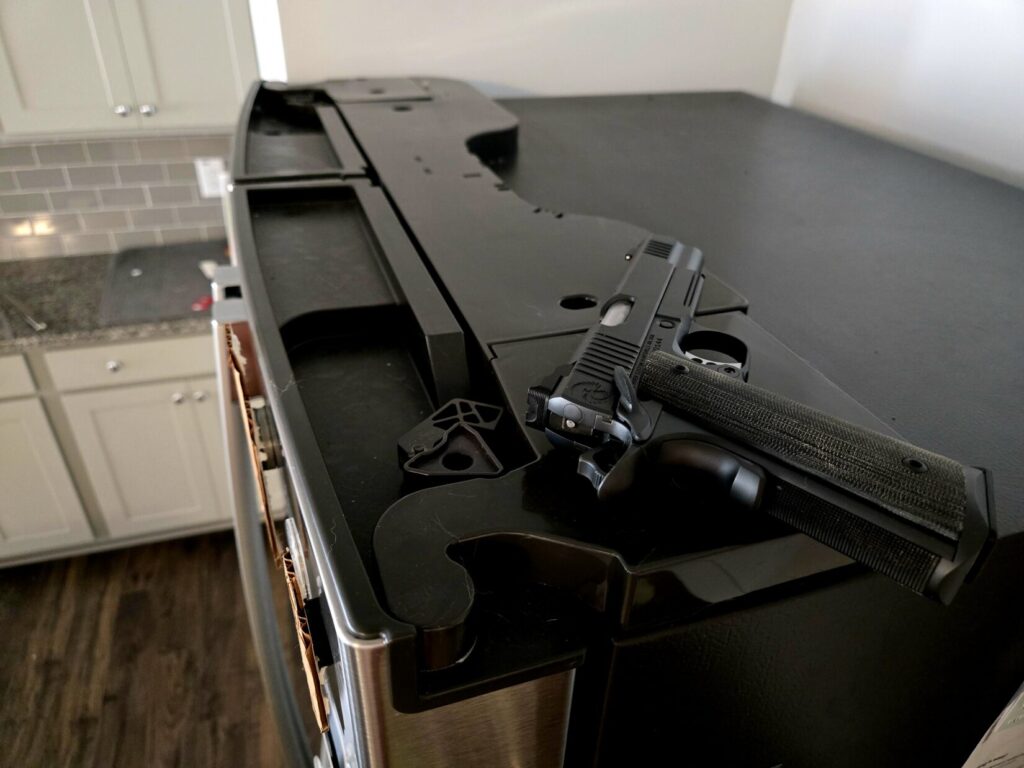
Firearms stored hidden without a safe may or may not be legal in your jurisdiction. The 12 ga you have leaning up against the bedroom wall or the pistol in the nightstand will be quick to access, but this is true for you and anyone else who finds them.
Concealment is the first line of weapons retention, and there are creative ways to hide firearms that wouldn’t be the first place searched. When assessing locations to place your firearm, assume the role of a home invader. Also consider where you spend the majority of your time in your home. You shouldn’t have to travel far to access a firearm in an emergency.
Safe Room/War Room
In my late 20s, the house I lived in was broken into. As part of my response, I built out a “safe room” in the basement with plywood and chicken wire interior walls, along with a heavy metal security door. I lived with my sister and my niece at the time, and the rationale was that they could secure themselves in that room while waiting for the police to arrive from only a couple of miles down the road.
Whether you build a “safe” or “war” room, consider the limitations of it as well as the advantages it offers. If the entire room is secure, firearms can be locked inside it. If the room only has a single point of entry, it also only has a single point of escape. Make sure you have an understanding of connectivity inside this room and test your electronics and communication devices.
Vehicle Safes and Detached Garages
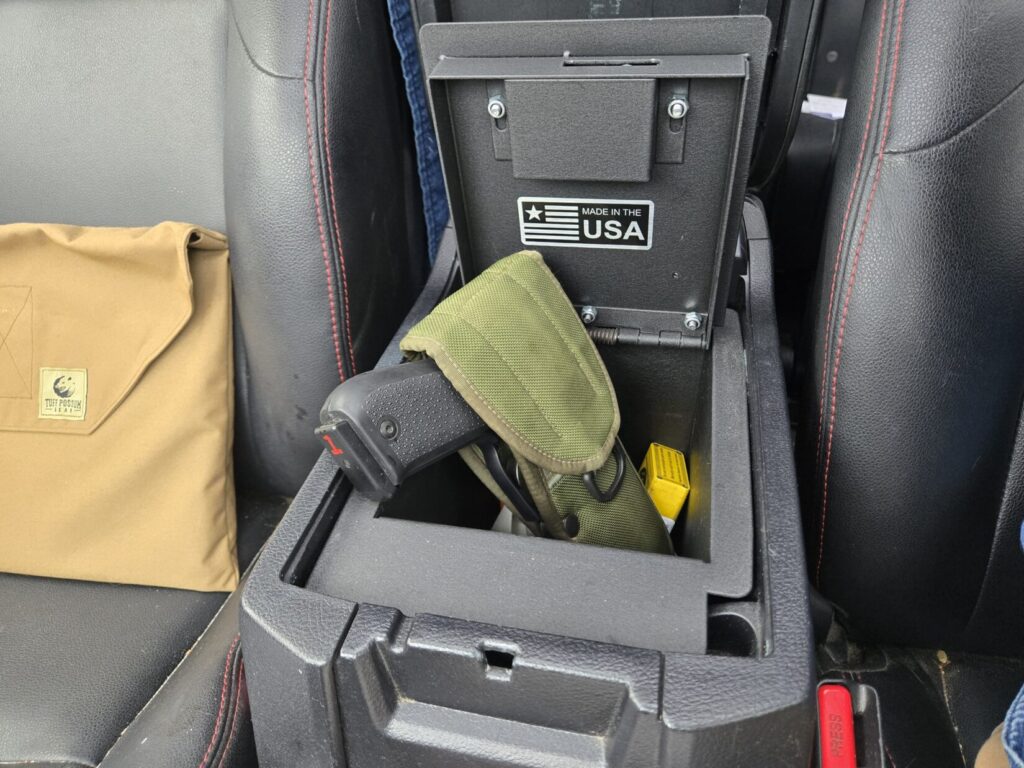
I do not like the idea of firearms left inside a vehicle overnight, where they can be stolen. The only concession I’ll make to this stance is the dedicated firearms vaults that lock securely inside the vehicle trunk, bed, cab, etc. While one could steal the entire vehicle, these safes are better than leaving firearms tucked out of the way, where they can be removed quickly.
Vehicles are harder to hide than firearms. If you do your part, locking your doors and keeping your keys inside, the usual smash-and-grab thief won’t be prepared to drive away.
You may have a detached garage that isn’t part of your home and have a firearm safe there. If your garage isn’t equipped with its own alarm system, motion lights, and secured windows and doors, you’re providing a thief a place out of view to work on your safe.
There are many variables factoring into how and where you store your firearms (and your ammo). The only constant with firearms storage is that there is no constant. The protocols you have for your firearms may change when company visits, when you leave town for an extended period of time, or when your collection grows.
From one storage solution to the next, the ultimate goal is keeping them safe from those who shouldn’t have access to them. The measures mentioned in this blog are all physical, but some habits and practices will decrease the visibility and awareness of your firearms to the outside world.
Operational security, or not talking about what you have with those who don’t need to know, cannot be overstated. Securing your firearms at home also means securing your home and keeping unwanted guests from knocking at or breaking through your door.