
The short answer: A suppressor attaches to your gun in one of three ways: direct thread, a Nielsen Device for handguns, or a quick-detach (QD) system. Most rifles use a muzzle device (the part on the end of the barrel that the silencer attaches to, and most centerfire handguns need a Nielsen Device.
More shooters are considering their first suppressor. While they don’t make a gun “silent,” they reduce noise, which helps protect hearing. They can also help reduce felt recoil and provide a more consistent shooting experience. If you’re new to silencers, start with things to know before buying your first suppressor.
Reading about direct thread, quick-detach (QD), and muzzle device compatibility can be confusing because some companies provide everything you need in the box, while others do not. Here is a quick guide to how these systems work.
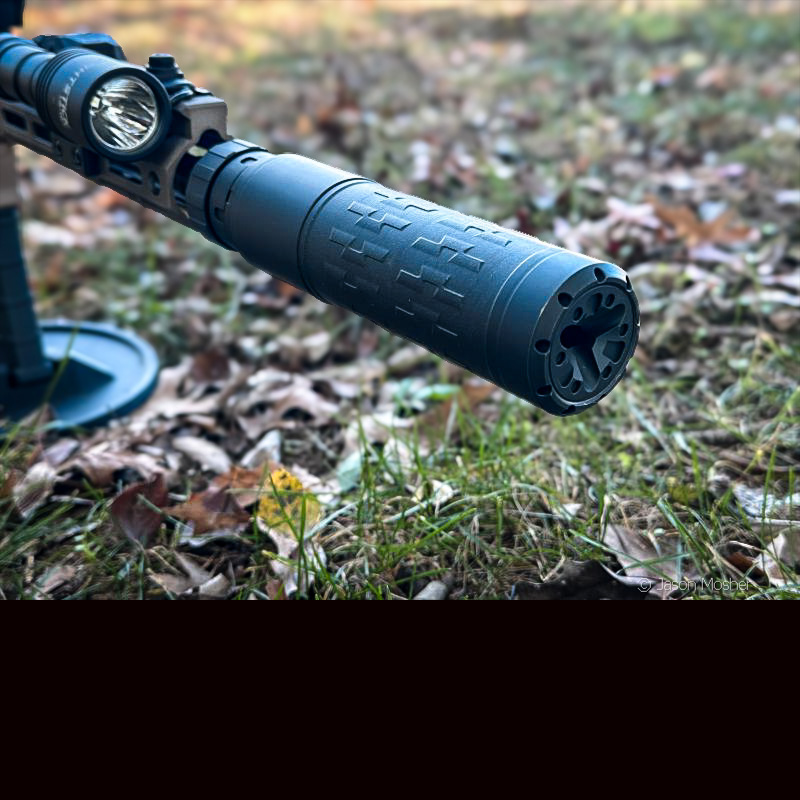
The suppressor Mount
A silencer’s body is almost always wider than a gun barrel, meaning the threads on the back of the silencer are much larger than the threads on your muzzle. To bridge this gap, you need a suppressor mount. This adapter screws into the back of the silencer and features a center hole designed to attach to your firearm.
Mounts are not “one size fits all” because most manufacturers design their suppressor’s rear opening differently. However, one standard has become common: The HUB (or Hybrid Universal Base).
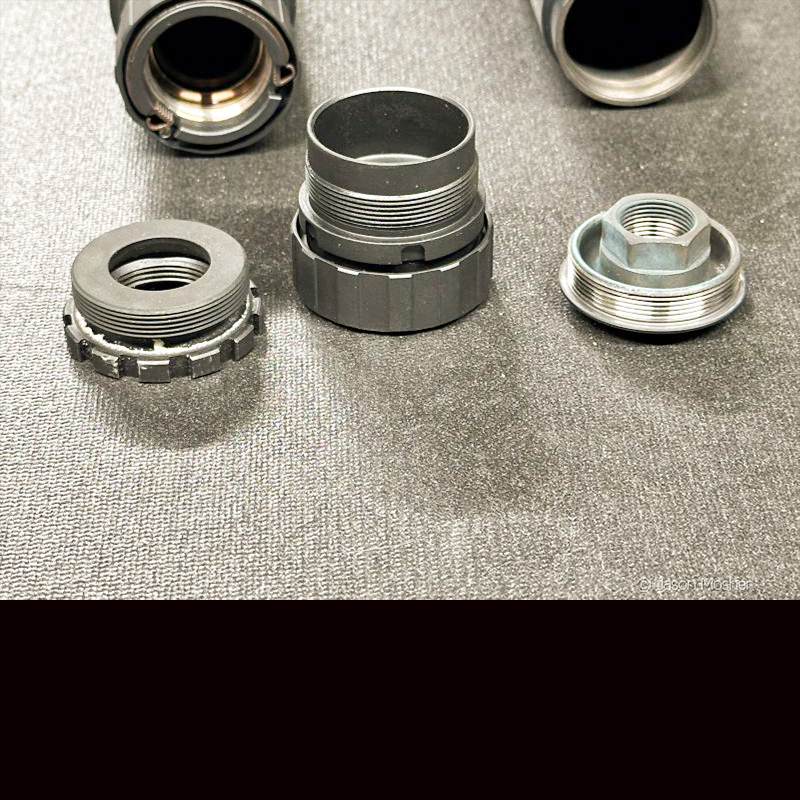
Understanding the HUB (1.375×24)
The HUB refers to a specific thread pattern (1.375×24) machined directly into the back of the silencer. It is a common internal thread standard, not a physical part. If a suppressor is “HUB-compatible,” you can use mounts from different brands.
However, not all suppressors use this standard. Many SilencerCo models, including the Velos LBP, use a proprietary system (like the “Charlie” mount) that is built for higher durability but is not compatible with HUB accessories.
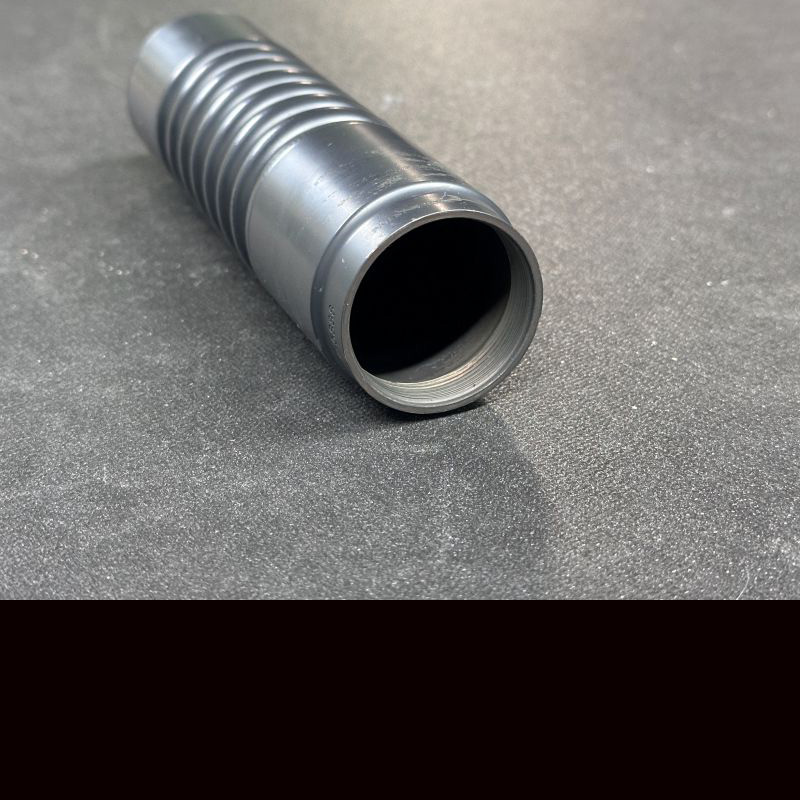
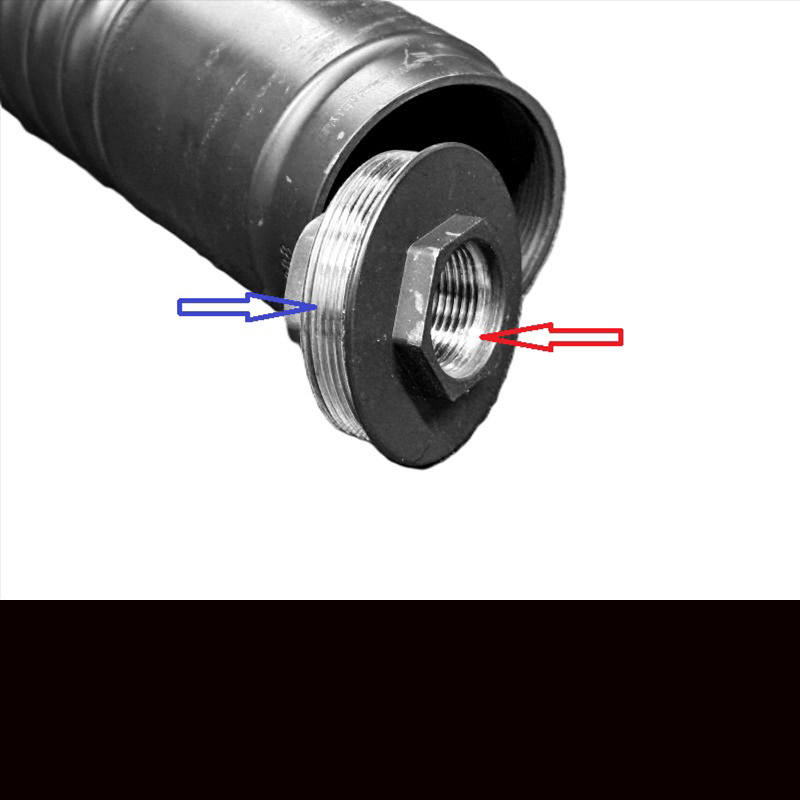
Common Mounting Options
There are three primary ways a mount attaches to your firearm:
Direct Thread
The mount screws into the suppressor and then threads directly onto the barrel. While simple, this is typically reserved for rifles or fixed-barrel firearms like rimfire (.22 LR) pistols.
Piston (Nielsen Device)
This is the most common way to mount a suppressor to a modern centerfire handgun. Because most pistols have a tilting barrel, the weight of a silencer can stop the gun from cycling. A Nielsen Device, also called a piston or booster, is a spring-loaded part that lets the barrel move independently of the silencer’s weight.
The Nielsen Device is installed on the suppressor, which allows it to attach to the handgun. Depending on the brand and type used, you can screw the silencer directly on once the Nielsen Device is installed, or use a quick-connect system made for handguns.
Quick Detach (QD)
A sub-category of muzzle systems, QD mounts allow you to attach or remove the suppressor with a quick turn or click, often using a locking mechanism to keep it secure. When these are used, the silencer is connected to the muzzle device of your rifle, not directly to the barrel threads.
Muzzle Devices for Rifles
Once you choose a mounting system, you need to use a muzzle device that works with that mount and your rifle. Remember the center of the mount has a hole with threads in it. A compatible muzzle device will have threads on the outside of the device (blue arrow in photo below) that work with the threads on that center hole of the mount (next to muzzle device in photo below).
You also need to make sure the muzzle device has the correct internal threads to screw onto your gun barrel. (red arrow in photo below). A muzzle device does not have to be used on rifles for a suppressor to work, but when you remove the silencer, you will have exposed threads. Because most people prefer to have the option to use their rifle with or without a silencer, they use a muzzle device that works with silencers.
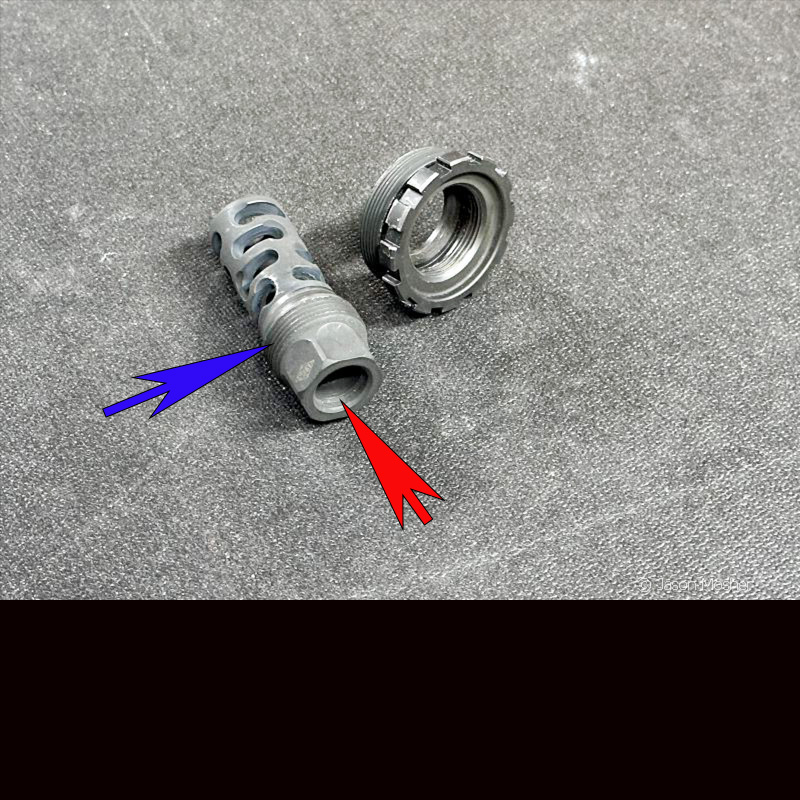
When this type of muzzle device is used, you can remove your silencer (which is screwed onto the muzzle device) while leaving the muzzle device on your gun. Once the silencer is removed, you still have an active, working muzzle device on your rifle.
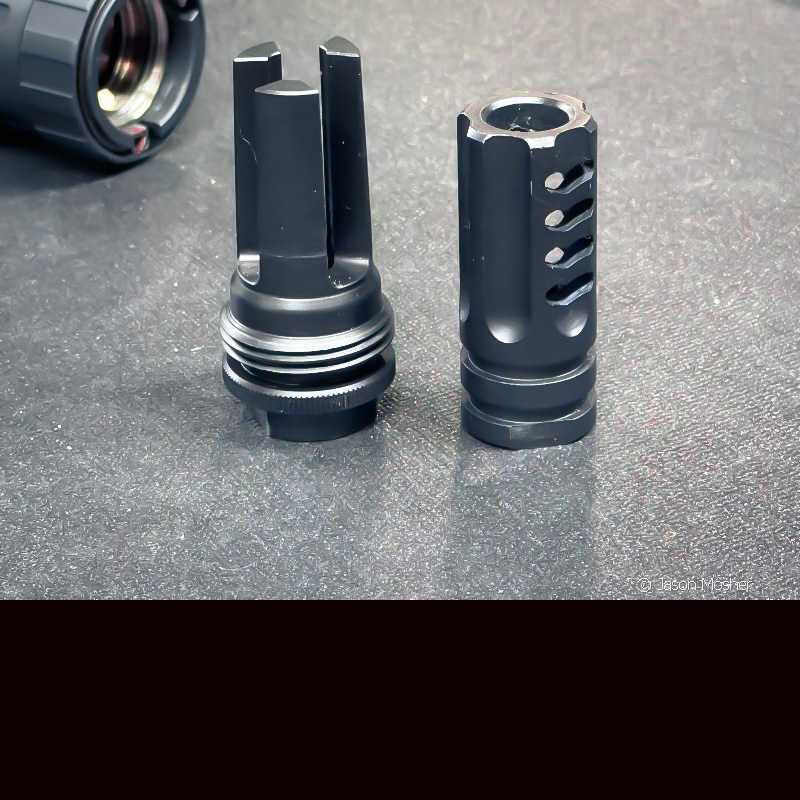
Pick a Mounting System
There are several popular mounting systems on the market for silencers that include:
- Dead Air KeyMo
- Q Plan B
- Rearden Atlas
- Griffin Armament Dual-LOK
- SilencerCo ASR
The simplest thing to do is pick one mounting system and stick with it. A lot of suppressor manufacturers make their own mounting systems, which makes the process easier. This is one of the reasons I like to use SilencerCo.
My Velos LBP silencer came with an ASR mount already attached to the silencer, along with a .30 caliber ASR muzzle brake. I removed the old muzzle device from my rifle and screwed on the ASR muzzle brake. Now the Velos LBP 762 will screw directly to the muzzle brake on my .300 Blackout JAKL. A quick turn of the locking ring will lock the silencer in place and keep it from coming loose while shooting.
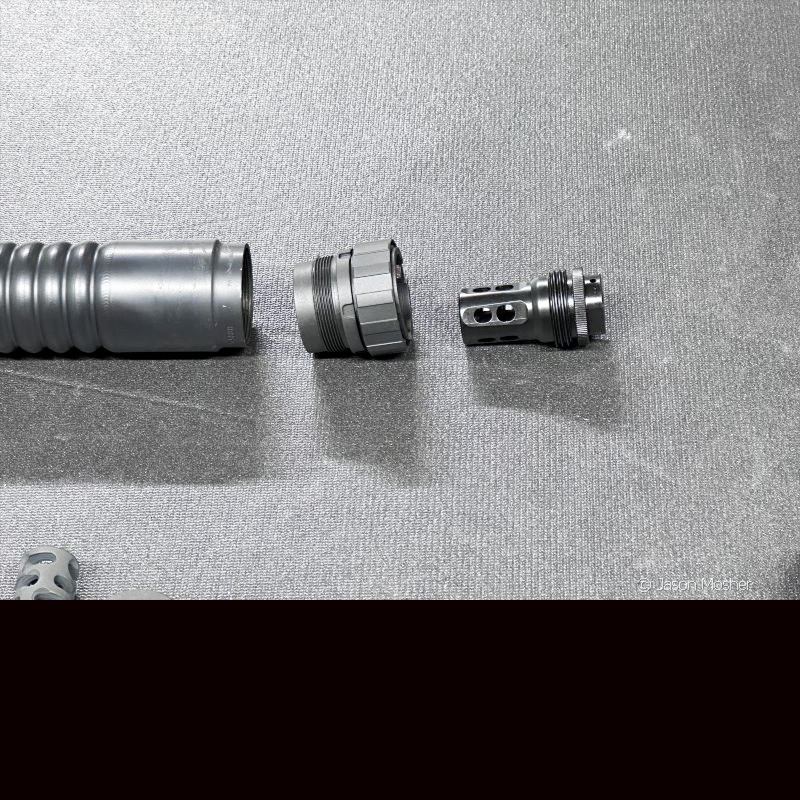
If I want to use that silencer on another rifle, say a 5.56 AR-15, I don’t need a new mount. I just need an ASR muzzle device threaded for that rifle’s barrel. If you remember from above, a 5.56 or .223 rifle uses 1/2×28 threads. Once I install a 1/2×28 ASR Muzzle device on a 5.56 rifle, I can start using my silencer on it as well.
Step-by-Step suppressor Mounting Guide
Identify Your Barrel Thread
Determine the thread pitch of your firearm’s barrel.
- 9mm Handguns: Usually 1/2×28 (common for US brands like Glock/S&W) or M13.5×1 LH (common for some European pistols).
- 9mm Rifles/PCCs: Most modern ones use 1/2×28, though older models might use 1/2×36.
- Rifles: Typically 1/2×28 for 5.56/.223 and 5/8×24 for .30 caliber.
Choose a Mounting System
Pick a system for your silencer, such as SilencerCo ASR, YHM Phantom, or Dead Air KeyMo. This allows you to use the same silencer across different guns by putting the same brand of muzzle device on each.
Purchase Your Hardware
- For rifles: Buy a muzzle device (flash hider or brake) that matches your barrel threads and a compatible suppressor mount (the adapter for the silencer).
- For semi-auto handguns: Buy a Nielsen Device (also called a piston or booster). This is required for most handguns to cycle properly; without it, the weight of the silencer can stop the gun to from cycling. Many suppressor made for pistols will come with a Nielsen Device already installed on the silencer.
Prep the suppressor
Screw your chosen suppressor mount (for rifles) or Nielsen Device (for handguns) into the back of your silencer. Make sure it is tightened to the manufacturer’s torque specs.
Install the Muzzle Device (Rifles only)
Attach the muzzle device to your rifle’s barrel. Use a shim kit to “time” (align) the device if it’s a muzzle brake. Note: For handguns, the piston (part of the Nielsen Device) usually screws directly to the barrel threads.
Mount the suppressor
Slide the silencer over the muzzle device (or screw the piston onto the handgun), or thread the silencer and Nielsen Device onto a handgun’s barrel, and engage the locking mechanism.
Final Alignment Check
Before you look through the bore, confirm the firearm is unloaded. Then use an alignment rod or look through the bore to make sure the suppressor is centered. This prevents “baffle strikes,” which can destroy your silencer.