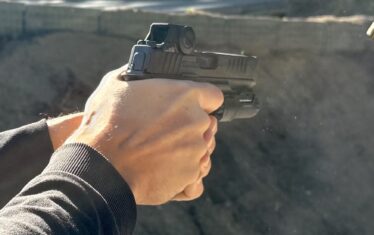

Let’s start the New Year with a drill designed to “burn it down” and build your pistol shooting proficiency. This month, we are adding speed to the skill builder shooting exercise and shooting our War HOGG 5-shot drill.
How The Skill Builder Works
Having shooting goals and a plan is critical to improving your overall marksmanship skills. Our intent at War HOGG Tactical is to supplement your firearms training program and watch you become more efficient and effective with your firearms with a shooting plan to reach that goal.
Shoot the monthly exercise at the beginning of the month and record your results in The Firearms Training Notebook. Use that data to develop a specific dry-fire plan to work on throughout the month. Around the end of the month, reshoot the skill builder and see your improvement.
Equipment Needed
- Standard Range Gear: Your primary firearm and belt setup.
- Training Areas: Both a Live Fire Range and a dedicated Dry Fire area.
- Shot Timer: We recommend the PACT Club Timer III. Click the link to learn how to use a timer effectively in your marksmanship training.
- The Firearms Training Notebook – available on Amazon to track your data.
- Recording device and tripod or holder
- Targets: 25m B8 Bullseye Replacement center, War HOGG Tactical Training Target, or target of choice.
The War HOGG 5-Shot Drill
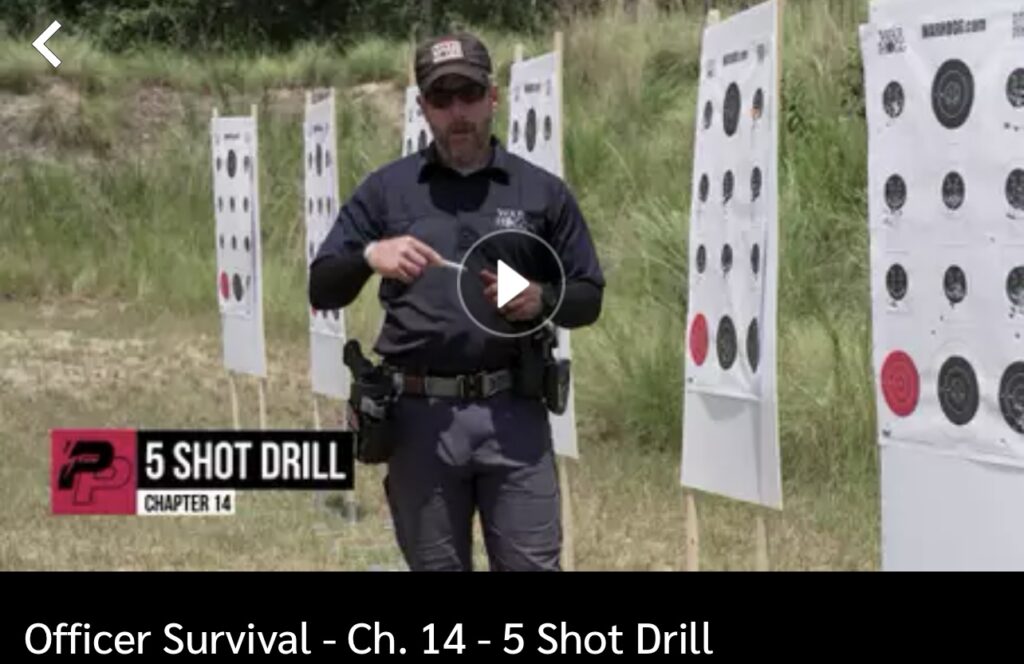
This is one of the core shooting drills we conduct during our War HOGG Tactical firearms training courses. As I explain to my students, this is not a cadence drill; the red dot always gives you permission when to shoot.
This drill will evaluate your shooting grip for any deficiencies, recoil management, and calling your shots. The reason for five shots is that you can get three iterations out of a 15-round mag.
Range Execution
Head out to the range and conduct your 5-shot drills. Remember, no warmup. Just shoot the drill.
Record your scores, distances (at a minimum: 5, 7, and 10 meters), marksmanship data, and the target used. If you have the space to push back to 25 meters, do so. Use the notes section of your notebook to annotate what you learned (e.g., “Grip felt loose during rapid strings”).
- Start Position: Holstered with hands relaxed, in a “surrender” position, or at the ready position, depending on your skill level.
- The Beep: At the signal, draw explosively and fire five rounds into the target as fast and accurately as possible.
- The Focus: Observe the red dot’s recoil behavior and what you are doing with your grip pressure. Watch the dot lift straight up and return as the red dot appears as a red line or streak. Fire the next shot the moment that streak is in the acceptable target area, without waiting for the red dot to settle.
- The Goal: Build repeatable recoil management and rapid follow-ups, with ideal split times hovering around 0.2 to 0.3 seconds.
Scoring
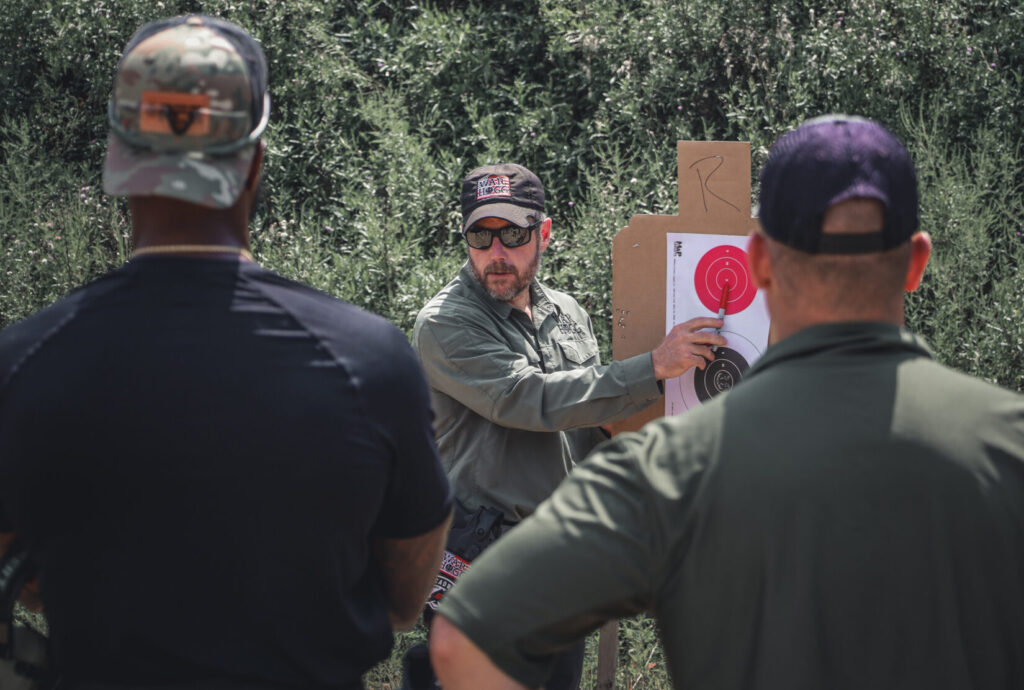
I like to use a B8 replacement center bull or the War HOGG Tactical Training Target, which has numerous B8 bulls on it. The B8 just gives me a little more data to record. An “A” zone IPSC target is about 6×12, and it’s either an A zone or not.
The Dry Fire Element
Most shooters only press the trigger once during dry fire. For the War HOGG 5-shot drill, you must press that trigger five times. With each trigger press, the red dot movement will tell you something about your possible grip pressure change. Aim for as little dot movement as possible when pressing the trigger.
Don’t be afraid to try different techniques and see if you get a change in performance. A common one I often see is just a trigger finger placement adjustment for better results.
The Skills
The primary skills developed with the War HOGG 5-shot drill are recoil management, red dot tracking, and calling your shot.
Shooters learn to observe the red dot’s movement during recoil, watching it lift out of the optic window as a “red blur” and snap back as it moves back to the target area. This visual tracking allows for immediate follow-up shots without waiting for perfect alignment, building intuitive control over muzzle flip through a firm, high grip and proper stance.
Consistent practice minimizes erratic dot paths, revealing and correcting issues like uneven grip pressure.
Check On Your Work
Near the end of the month, head back out to the range and reshoot the War HOGG 5-shot drill and see where your performance is at.
Now, there are some things that could throw your performance off. If you have a mechanical malfunction (failure to fire/extract), reshoot the drill. If you fumble your draw from the holster, pistol presentation, or grip, I would finish the drill and gather your data. Then it’s your call if you want to reshoot the drill. You still have 5 pieces of data for a comparison, so all is not wasted.
Conclusion: Build Your Shooting Tribe
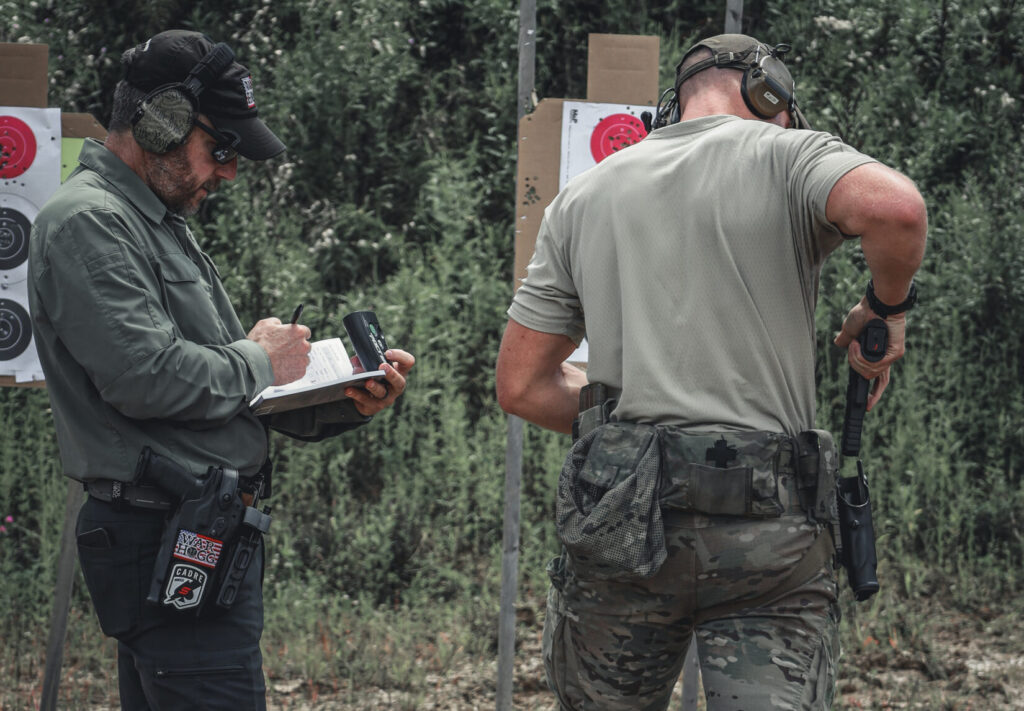
Having other like-minded shooters around will help you push to make yourself better. If you have friends, family, or co-workers who share your shooting passion, start building that shooting tribe. This way, not only do you have your own accountability, but you also have others to help you improve on your marksmanship journey. They can record you shooting, possibly give you feedback on things they see, and it’s always good to have some fun competition to help you grow.
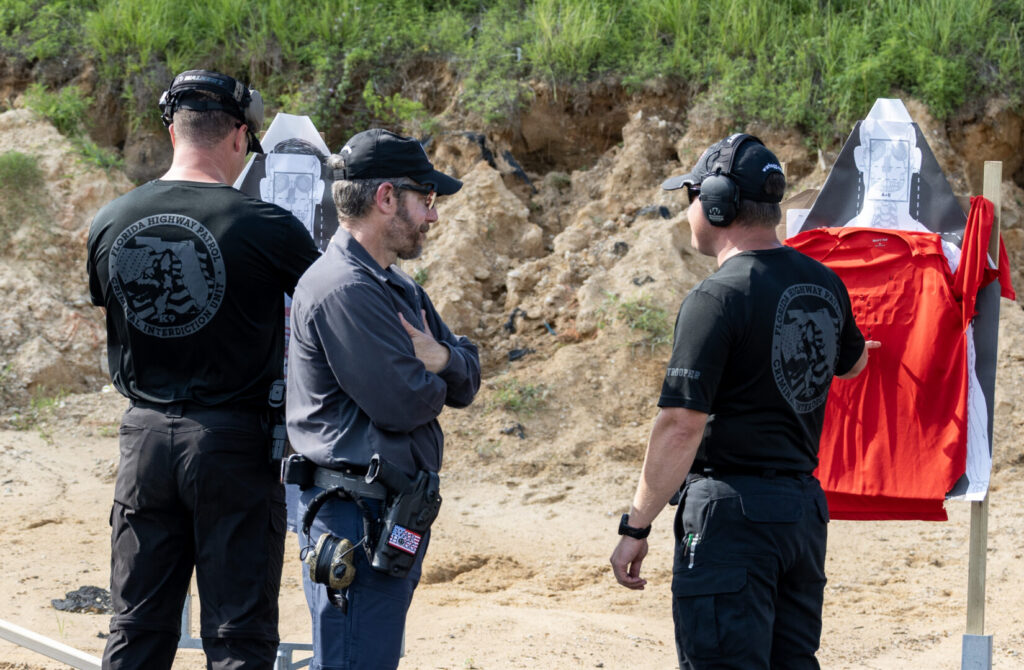
At War HOGG Tactical, our motto is “Be 1% Better Everyday!” You can always join us in sharing your marksmanship growth.
Go to our On The Range (OTR) Patreon “CREW” members’ page and join like-minded shooters looking to get more proficient in their marksmanship skills. My co-author, Mark Kelley (Kelley Defense), and I conduct bi-monthly interactive Zoom calls where we break down each shooter’s skill builder. We have even reviewed video of “CREW’ members shooting during our Zoom call and given immediate feedback on where we see they can improve their shooting skills.
Put In The Work
To see improvement in your marksmanship skills, you must put in the work. This means having a solid dry fire training plan throughout the month and a way to record your progress, like with The Firearms Training Notebook. Using additional tools, like a shot timer and a phone to video your training sessions, you can take your dry fire training to the next level and see increased performance during your live training.
Train Hard, Stay Safe, and see you “On The Range” – Rick