
I once heard Ben Stoeger, one of the best shooters in the world, say dry fire is the training and live fire is the test. That resonated with me and has sent me on a renewed dry-fire journey. As someone interested in the scientific method of training, I wanted to examine dry fire through that lens.
There isn’t a lot in the shooting world about the science behind a skill, but there is a lot of scientific evidence about how people who play sports and train in martial arts learn skills. While those are drastically different than dry fire, there is a lot we can learn from those scientific methods.
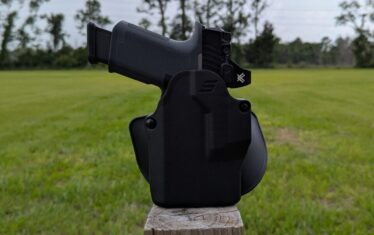
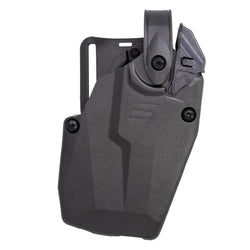
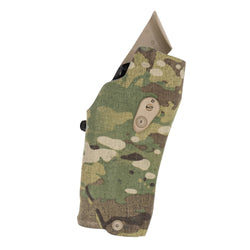
Today, we will examine how to optimize dry-fire practice with a Safariland Duty Holster using a scientific approach.
Muscles, Motors, and Repetition
You’ll hear the term muscle memory a lot when discussing any kind of physical skill building. Your muscles don’t remember anything. Your brain does.
Muscle memory is better described as motor memory. A fast draw isn’t just moving your hands faster; it’s a byproduct of efficiency and neurological automation. You build that through effective dry fire.
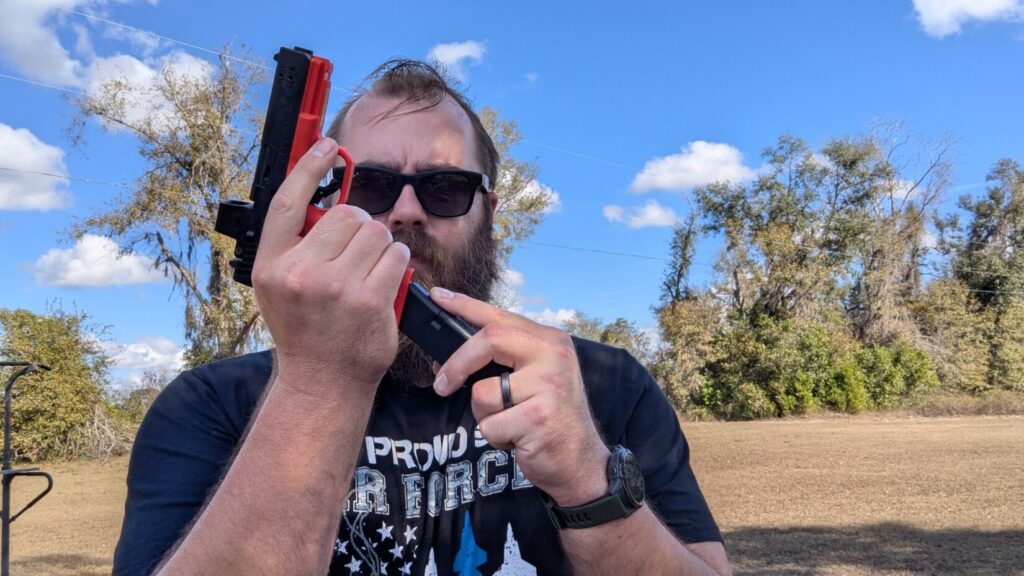
When you do repeated, correct movements, you coat your neural pathways in myelin. Myelin allows the signal from your brain to your hand to travel faster and with greater efficiency. Myelinated axons travel between 80 to 120 meters a second; unmyelinated axons travel at about .5 to 2 meters a second.
When you’re building a skill, you are creating a high-speed network in your brain. With that said, you can learn it incorrectly. Quality over quantity becomes crucial.
When engaging in dry fire, you want quality draws. You want to be able to defeat the SLS hood and ALS lever rapidly, but correctly. You then want to draw and present quickly, but also perfectly. If you practice sloppiness, the myelin will reinforce sloppiness.
At the same time, you have to push yourself to the edge of your ability. In this case, it’s speed, but also presentation and grip. If you only practice slowly and perfectly, you’ll only be slow and perfect.

It’s a balancing act. You need to go fast, but only as fast as you can keep good form. Speed will slowly increase as the myelin sheath is built. This leads to automation.
Mistakes are part of the process. During dry fire, you need to recognize those mistakes and acknowledge them. Don’t let sloppy become the norm because it’s fast.
Milestones
There isn’t a golden rule of when things become automated, but there are some research-backed milestones.
300 to 500 Repetitions. You move from cognitive to associative. You do not need to think about the steps, but you still need to focus to avoid mistakes.
3,000 to 5,000 Repetitions. Here is where we start to see automation. This is when the neural pathway has a good sheath of myelin. At this stage, you can complete the draw without thinking, in any condition, including under stress.
The trick is to make sure these are high-focus repetitions. Doing it mindlessly over and over won’t do you much good. You need to focus, visualize, or even voice your goals.
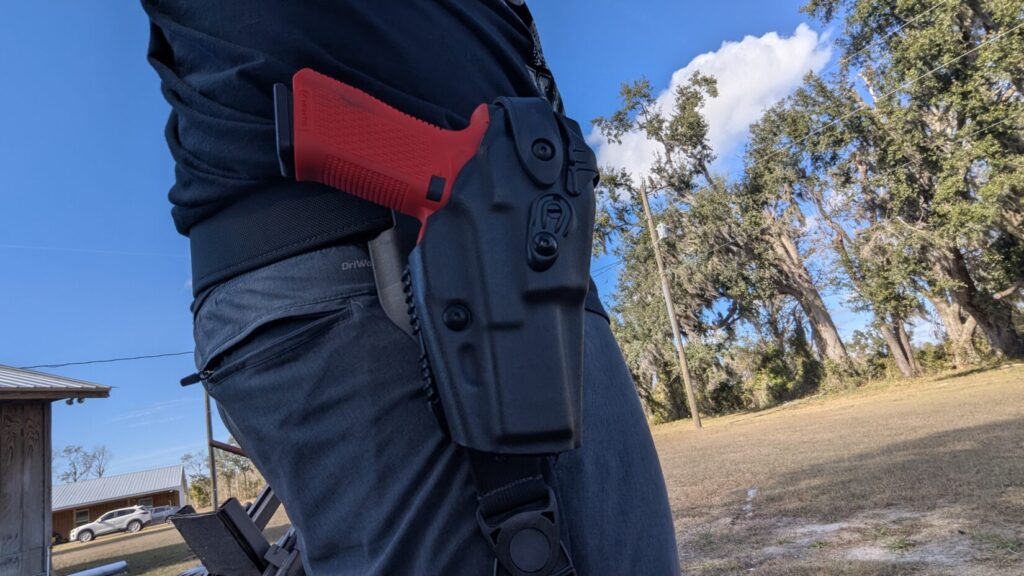
“I want to defeat the SLS and ALS device, draw, and present to the target. My sight should be on target before I reach full extension.” Thinking or saying it helps keep your focus on the task at hand.
Doing one skill over and over will build a myelin sheath, but changing things up will create a better neural map. Practice drawing from different positions, engaging multiple targets, or integrating drills, like Failure to Stop, the Bill Drill, etc.
Mental rehearsal through visualization fires the same neural circuits as physical practice. This allows you to practice anywhere.
Most importantly, you get the most myelin while you sleep. If you don’t get good sleep, you’re not maximizing the efficiency of your dry fire training.
Structuring Dry Fire
First, your warm-up phase is crucial for learning how to draw. You want to break it down into the micro-movements.
- Step 1 – Establish a master grip and defeat the SLS hood.
- Step 2 – Defeat the ALS device.
- Step 3 – Lift the gun straight upward.
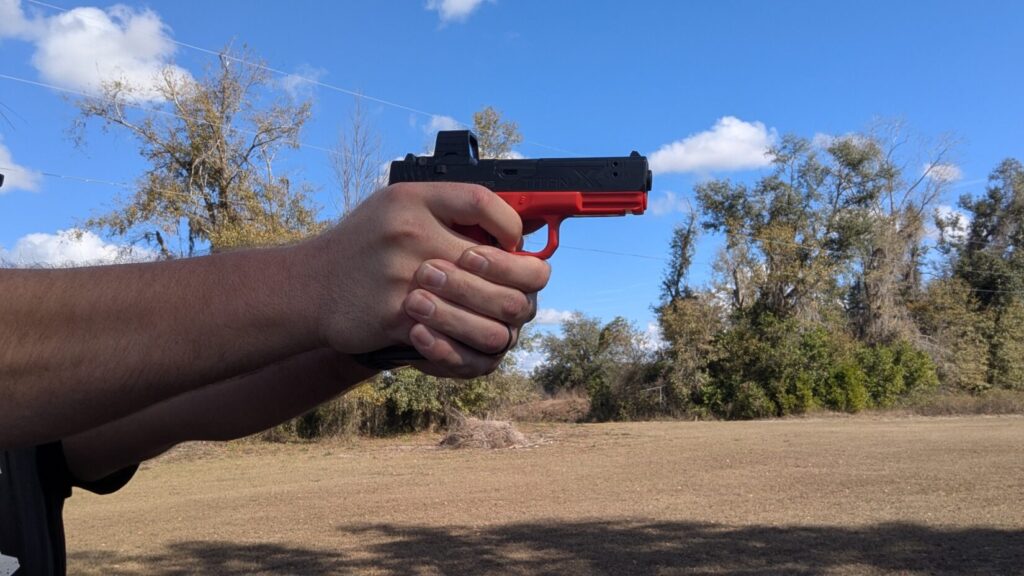
- Step 4 – Present the gun to the target, establishing a two-hand grip. Ensure your sights are on target.
- Step 5 – Dry fire the firearm.
Think through every movement consciously and focus on every part of the draw. Training slowly can help build a foundation you’ll use to get faster.
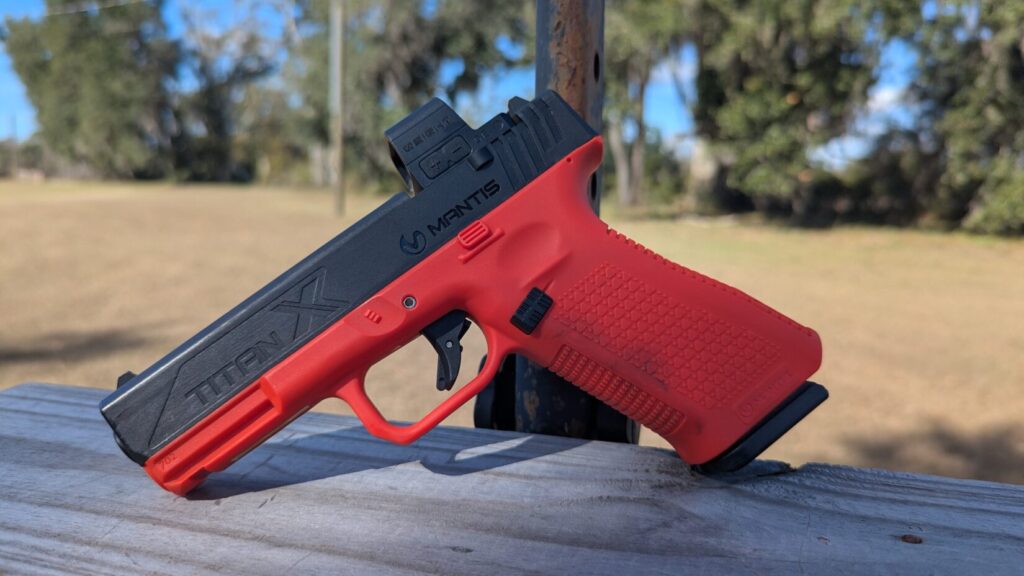
After a few reps of slow drills, say 10 to 20, we can add speed. For this step, we want a shot timer with a par time. You can use a real shot timer, a phone app, or be like me and use the Mantis TitanX system.
The shot timer does two things. It provides us with objective data and increases cognitive load. Increased cognitive load will help produce myelin.
Use the shot timer and focus on speed while producing high-quality repetitions. Your first cold shot will be the most important and will show your raw cold performance. Practice going faster and faster, even if it’s just 0.01 of a second.
Many small gains are how to get a big gain.
The Test
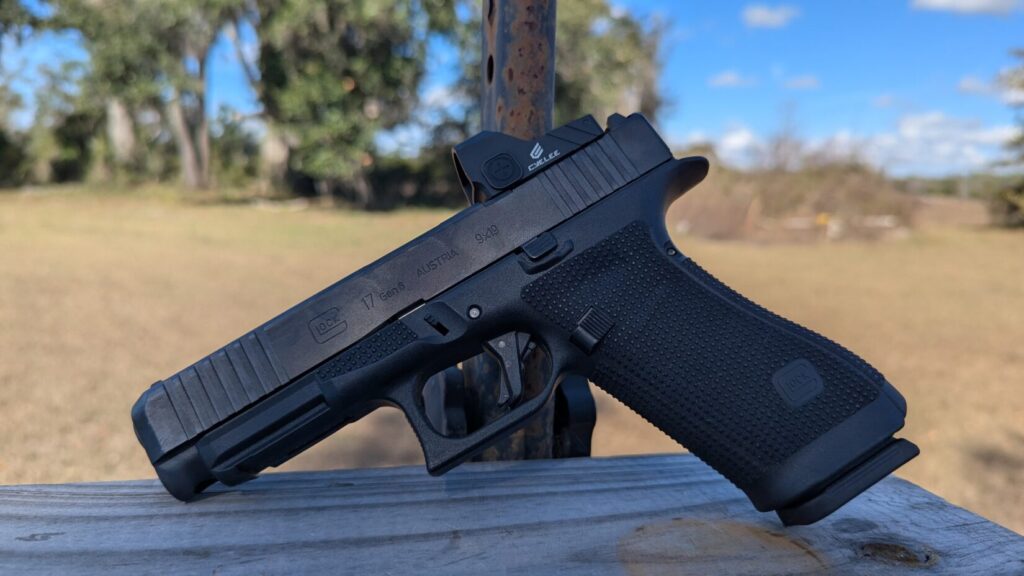
The true test of your dry-fire training is your live-fire shooting. Since we are discussing a draw from a Safariland holster primarily, that’s our focus here. However, anything you practice dry should be practiced live as well.
When you hit the street, there is no warm-up, so we’ll hit the range with the same mentality.
Your first shot from the holster shows you your cold skill. This is your performance on demand. As you practice at the range, that number will slowly decrease, but that time is the most important one to note.
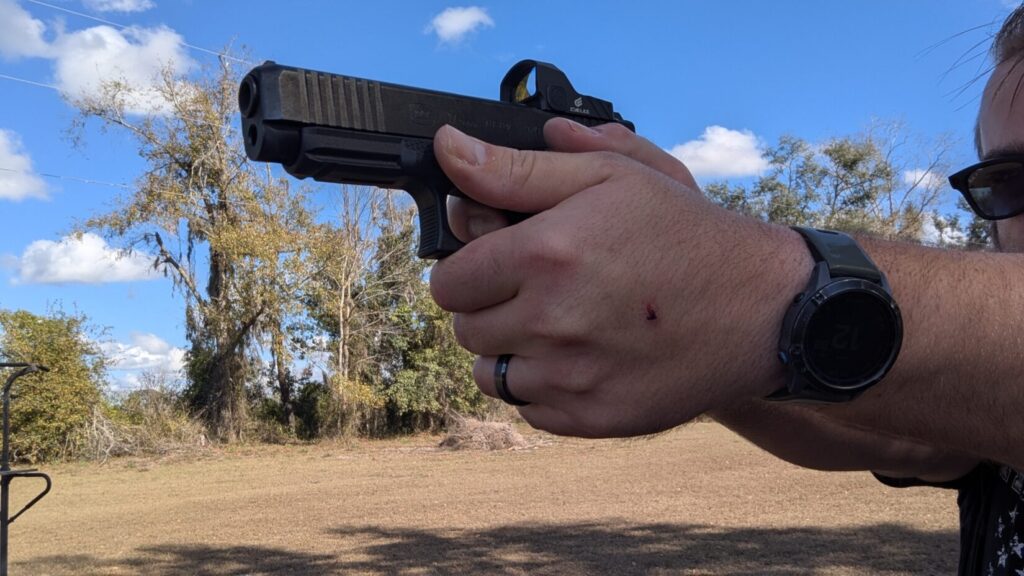
Additionally, you’ll get to find all of your performance flaws. If you can draw fast and land one hit, that’s great, but it’s not everything. Is your grip compromised? Firing more than one shot live will tell you really quickly if your grip sucks.
Those are the things live fire tells you that dry fire does not. The times I achieve in dry fire are not reflective of my times when I switch to live fire. This represents a skill gap and a lack of automation.
I need more reps. I can take this information to my dry fire practice and improve my practice. Next time I hit the live fire range, I’ll be a little bit better.
Neurons, Myelin, and Science
It’s not some mystical skill that makes you a better shooter. If you want a fast draw, you need to practice a lot and test yourself at the range. It’s a process that takes time, repetition, some good sleep, and a little stress.
No one becomes an expert overnight. A science-based approach can increase your efficiency and decrease the time required to get good, for lack of a better term. So let’s get good.