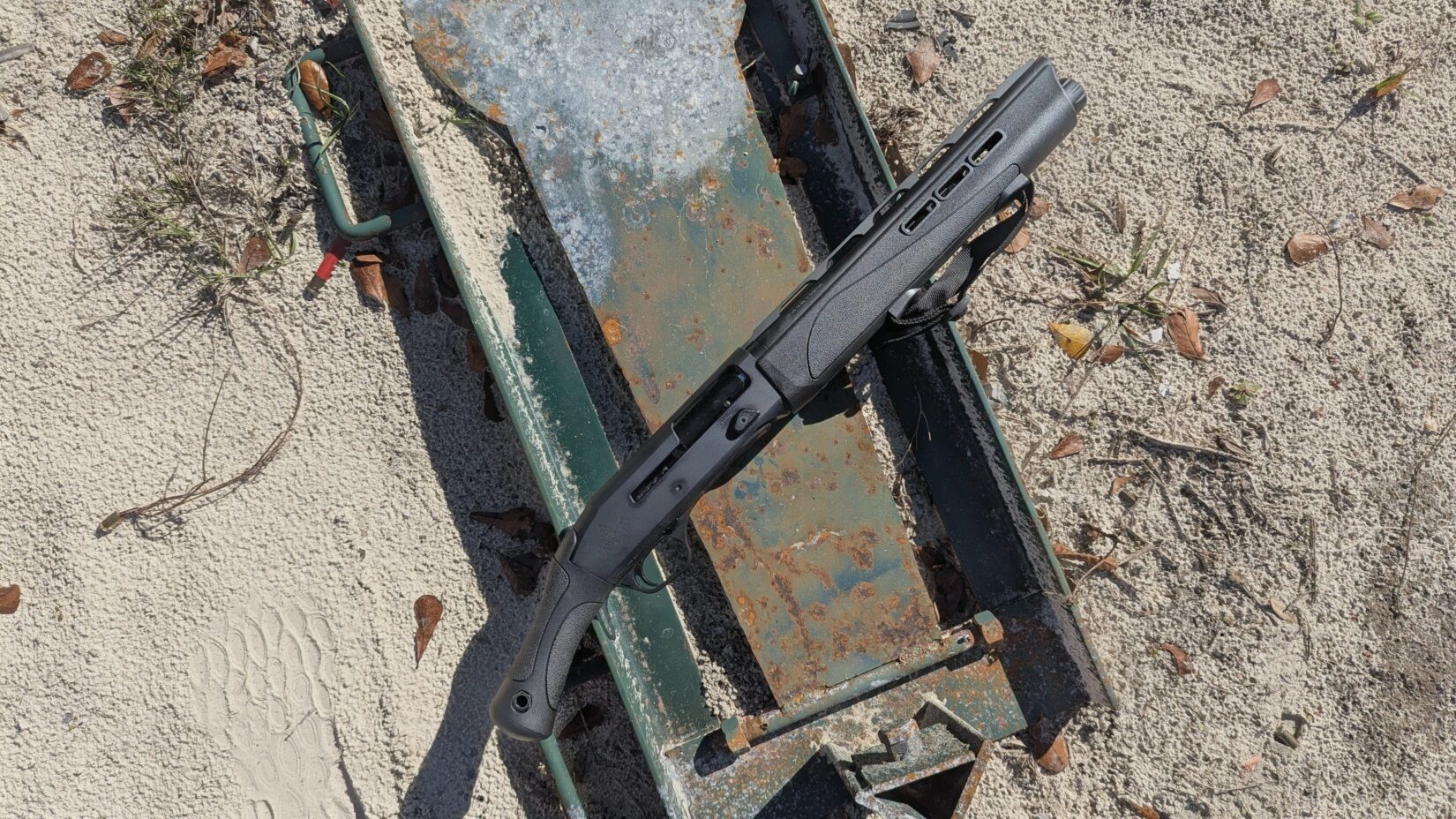
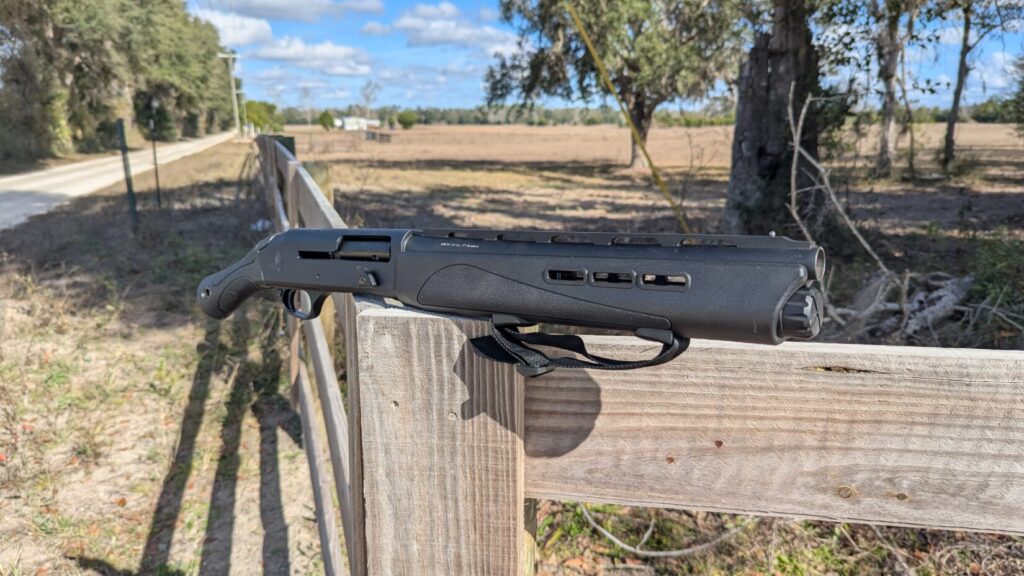
Semi-auto, short-barreled 12-gauge firearms aren’t a common sight in the modern market. You’d think with the popularity of the Shockwave-style firearms, these things would be absolutely everywhere. However, IWI recently introduced what’s the fourth model I know of: the Mafteah.
Mafteah is Hebrew for “key.” It’s a clever name for a short 12-gauge. It’s not uncommon for breaching guns to be short-barreled, pistol-grip-only 12-gauge shotguns or firearms. They are often jokingly referred to as “master keys.” Outright naming one the Key is clever.
As mentioned, the Mafteah is one of four I know of. Currently, of those four, only two seem to be in production: the 990 Aftershock from Mossberg and the Mafteah. Black Aces Tactical had a cheap Turkish model, and Remington had the TAC-13, which seems to be out of production.
Before the Mafteah, the other models were all gas-operated. The Mafteah is referred to as recoil-operated by IWI, but better described as inertia-driven. That’s not the only way the Mafteah is different. It’s not just different compared to other 12-gauge firearms, but different than most other shotguns.
The Inertia Design
Inertia-operated guns have their benefits and downsides. The benefits include being incredibly simple—at least to work on. To produce, that’s a different story.
Taking the gun apart and cleaning it takes no time at all. Not only is it easy to take apart, but it barely gets dirty. The lack of a gas system means less gas and debris entering the system. This means less carbon.
Gas systems get slow and sluggish with high round counts; inertia guns just keep on running. They can shoot and shoot without needing cleaning. Inertia systems are also lighter, shaving a few pounds off compared to similar platforms. For shoulder-fired shotguns, that’s not a huge advantage, but for compact, lightweight guns, it can be beneficial. The Mafteah weighs 5 pounds 11 ounces, making it slim and trim.
The downsides of the inertia system are increased felt recoil, though the Mafteah does a great job of mitigating it. The other downside is that inertia systems can be a little more finicky when it comes to ammo choice.
The only rounds the Mafteah didn’t handle were exceptionally low-recoil shells. It handled everything else, including reduced-recoil buckshot down to 1,145 FPS. Anything less than 00 at that velocity might be a challenge, and stay away from those sub-1,000 FPS birdshot loads.
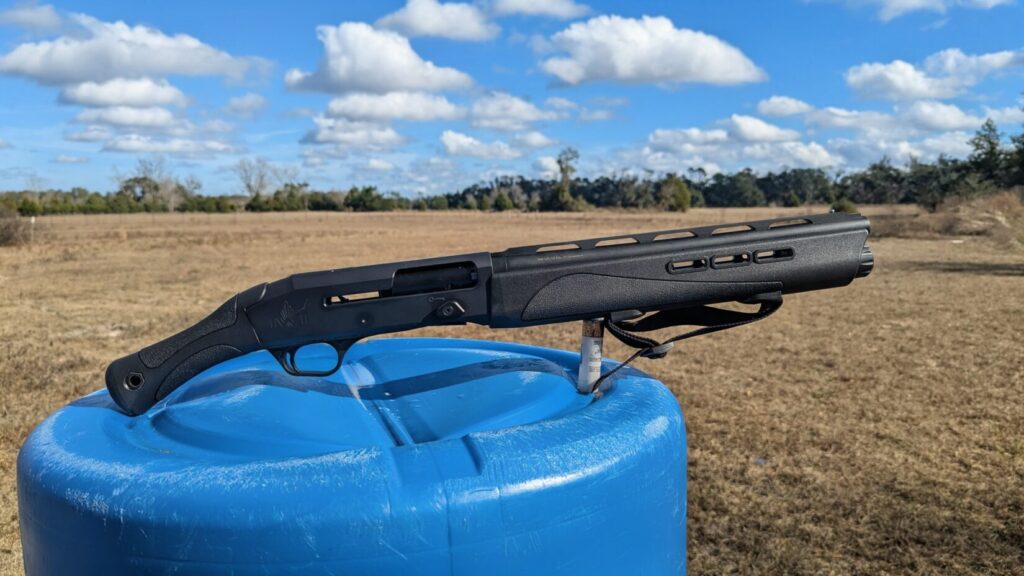
The Mafteah can handle the three loads I want to run: cheap regular buckshot, reduced-recoil tactical buckshot, and cheap Walmart-special birdshot for training.
Shooting the IWI Mafteah
Inertia guns are supposed to have more recoil, but it’s not a major difference with the Mafteah. With semi-auto buckshot, I’m capable of putting two rounds onto an IPSC-sized A-zone in about a second—sometimes over, but most of the time it’s consistently less than a second. Make it reduced-recoil buckshot, and I can always do it in under a second.
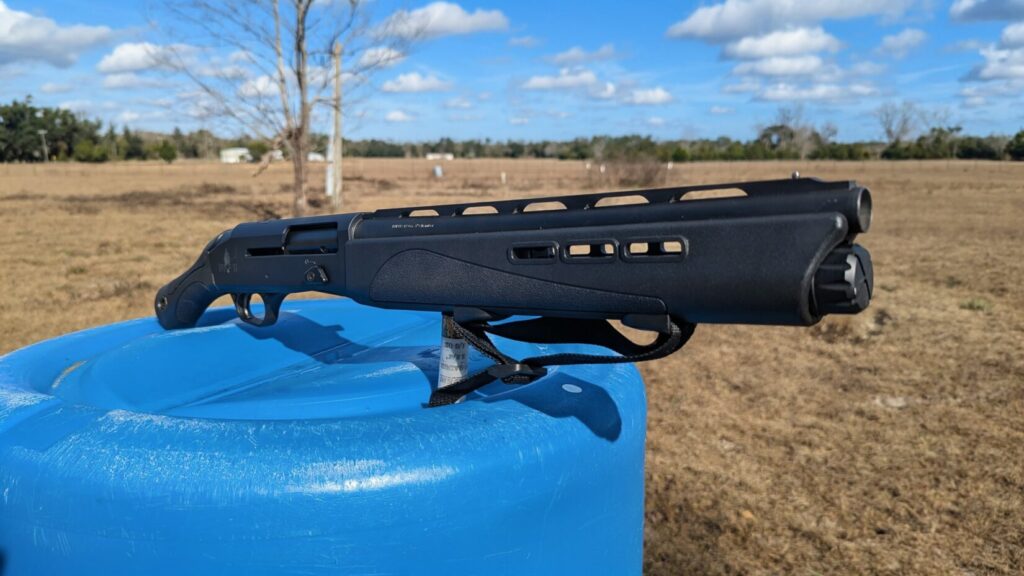
The gun sets you up for success if you know how to run a shotgun. The handguard is huge and fills the hand. At the bottom, you have an adjustable strap that’s designed to keep your hand from slipping in front of the barrel.
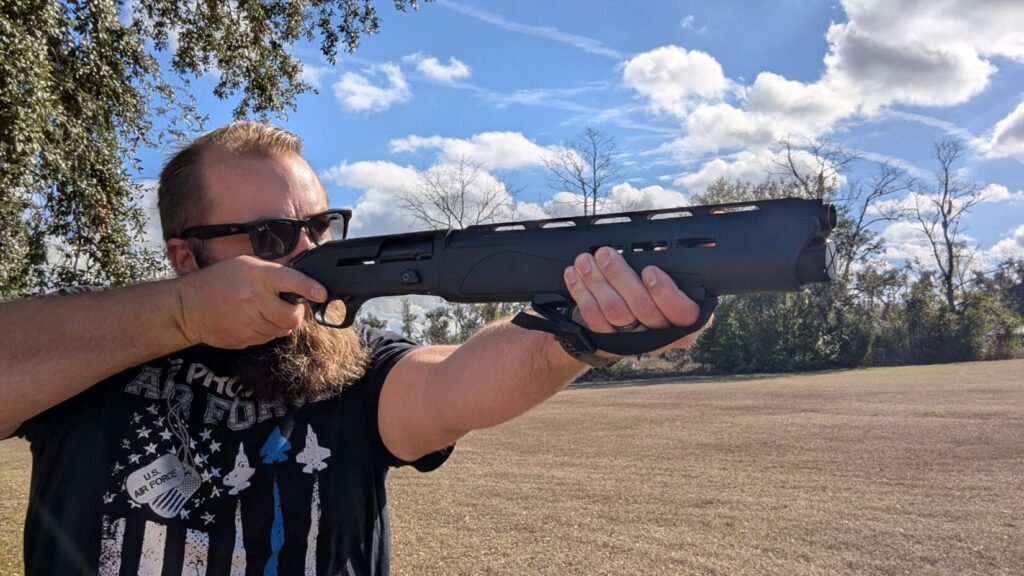
That strap can be tightened down, and I run it super tight. I can loop my hand in and then “push” with the gun while I pull on the grip. This creates isometric tension and allows me to mitigate recoil.
That strap makes it easy to engage with the push/pull method and to quickly shoot the gun while maintaining excellent control. The forend also allows you to get a good, tight grip on the gun. It goes halfway up the barrel, preventing your hand from touching the hot steel.
This kind of control makes it almost on par with a stocked shotgun. It takes practice, but you can wield this gun with incredible efficiency.
Accuracy and Patterns
The Mafteah features a ventilated rib, and the bead sits on top of it. This keeps the point of aim and point of impact just perfect. My buckshot is landing centered on the bead every time.
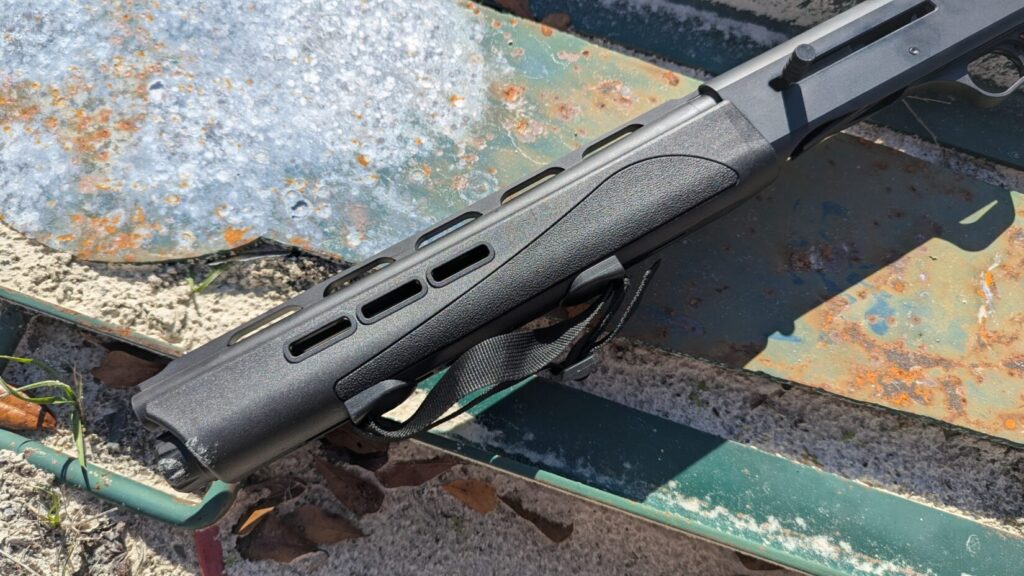
What if I want an optic? There is a point to attach a rail at the top like normal, but that’s lame. Instead, the Mafteah comes with a Glock MOS footprint. This means it can use the Glock MOS plates and a wide variety of optics. This includes optics from C&H Precision (CHWPS) that direct-mount to the Glock MOS pattern, which is what I’d personally go with.
The patterns are what you expect from a cylinder bore shotgun. With bare-bones, cheap buckshot, we get patterns around six to seven inches at 10 yards. With Flitecontrol, we get that 50-cent-piece-sized group. Overall, it patterns well and, most importantly, consistently.
Run and Gun
The Mafteah isn’t your ordinary semi-automatic 12-gauge. One of the big benefits of the design is that IWI doesn’t just make traditional shotguns; they aren’t stuck in that box of making a shotgun only one way.
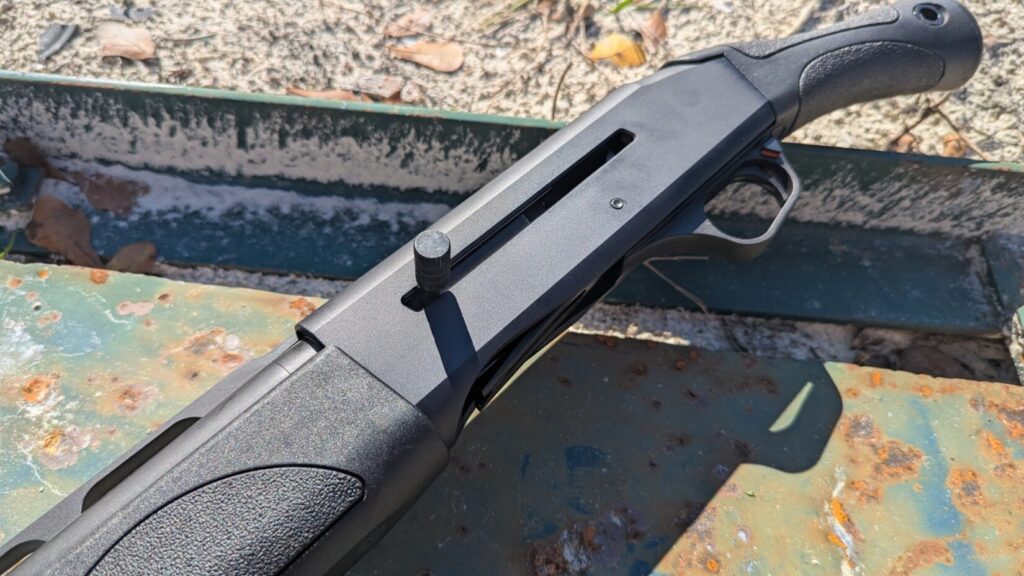
One of the most interesting features is the ability to swap the charging handle from the left to the right side and vice versa. Putting the charging handle on the left side of the gun makes it easy for me to operate the bolt without breaking my firing grip. It’s easy to access and allows the gun to operate smoothly.
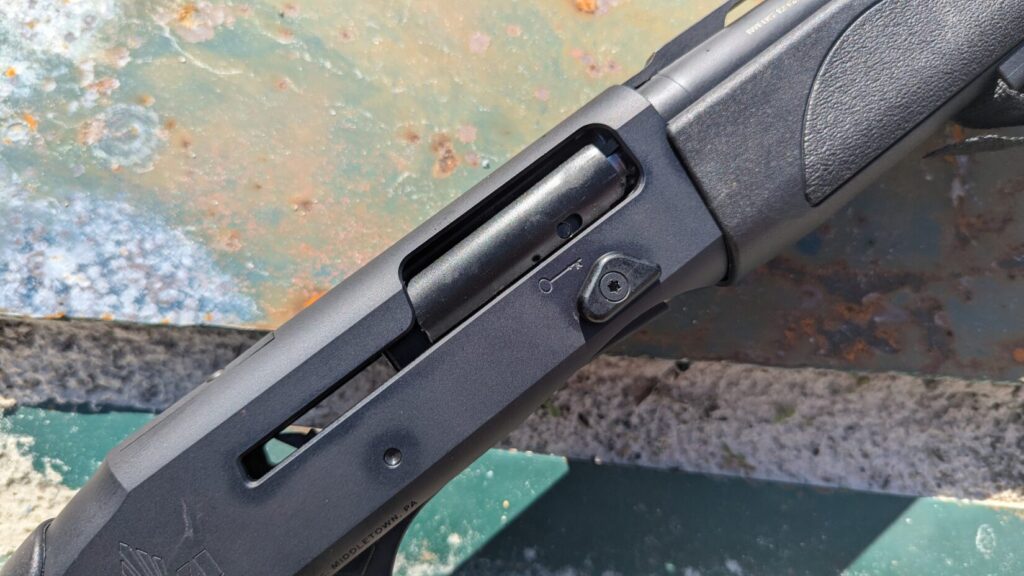
Placing the charging handle on the left side also makes it easy to do emergency port reloads. The charging handle is out of the way, which makes for a quicker over-the-top reload.
Outside of the charging handle, we get some modern shotgun ergonomics. The Mafteah has a massive bolt release that’s easy to find and access. Give it a slight press, and it closes with ease.
The loading port is beveled and makes for quick and easy reloads. Threading shells into the magazine tube can be done rapidly with a bit of practice. I kept mine fed with a TP11 pouch from Safariland.
Up front, the forend offers a strap and a hearty handguard with several M-LOK slots on the left, right, and bottom for attaching accessories. It’s pretty easy to attach lights, lasers, or even cup holders.
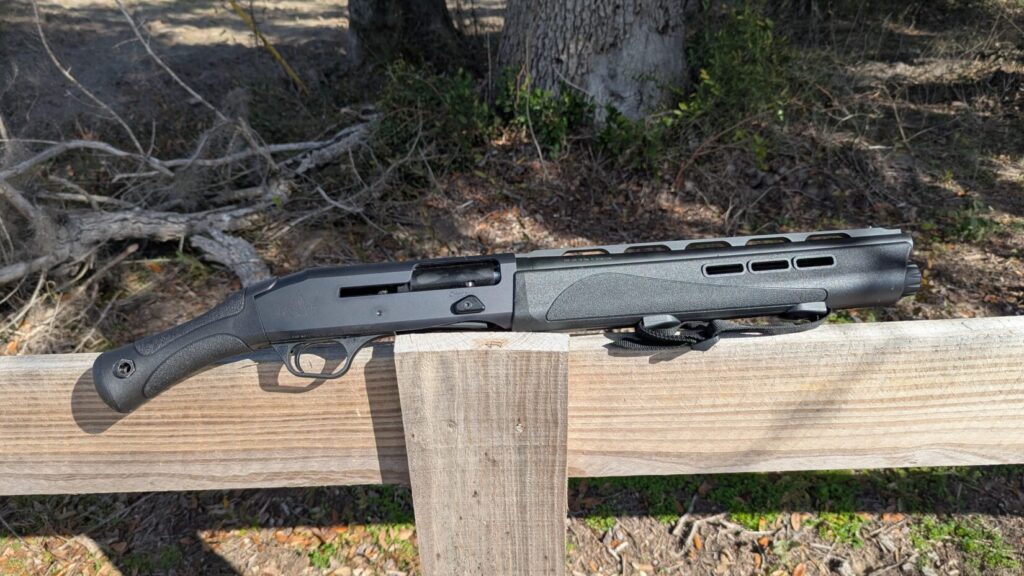
The Mafteah is ergonomically sound and well-designed. It’s easy to operate, and its functions can be performed intuitively and rapidly when needed.
The Key
The Mafteah joins a select group of short, semi-auto, 12-gauge firearms, with a dose of innovation. It’s different, and different is good.
It’s a solid, easy-shooting, and—most importantly—fun-to-shoot firearm that’s functional for a variety of tasks. It’s not for everyone, but if you need close-range, compact firepower, the Mafteah does a fantastic job.