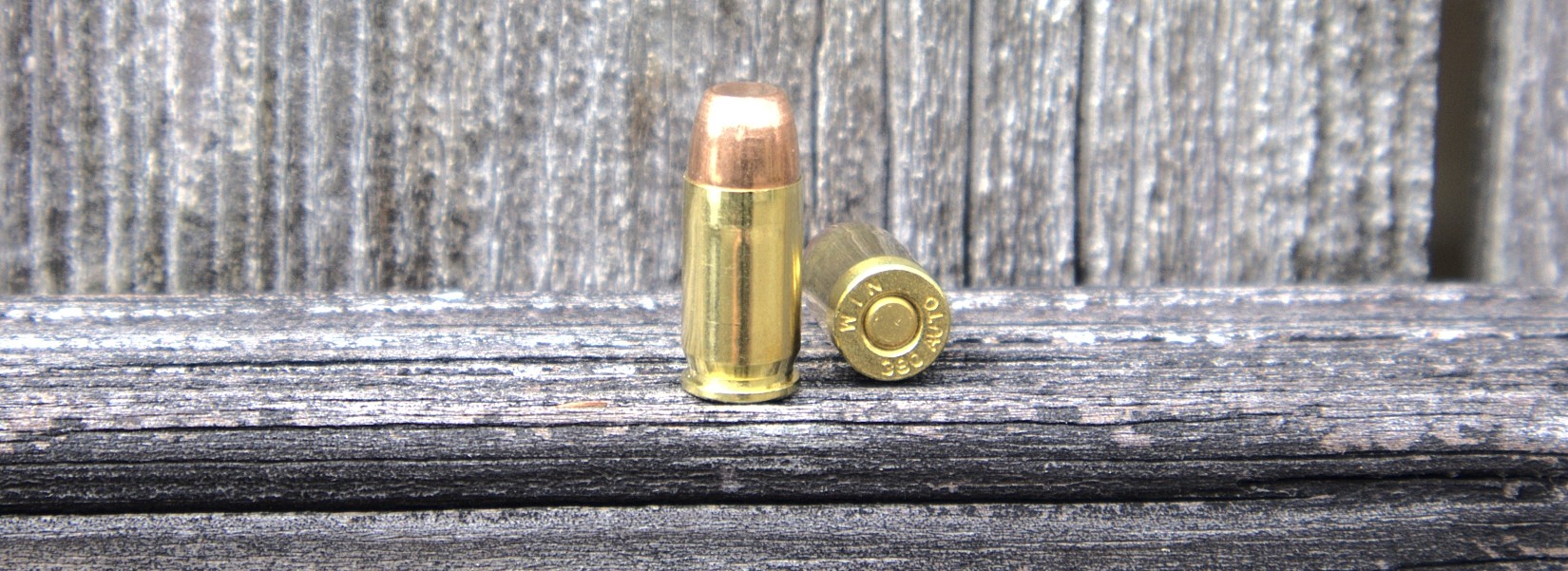
The .380 ACP cartridge is a true Schrodinger’s round. It is known as a weak sister round compared to service cartridges like 9mm Luger and .45 ACP. Hence, it is often recommended for recoil-sensitive shooters. But the .380 is also the most powerful round you can get out of truly micro-sized handguns. It is simultaneously powerful and not powerful, in other words.
In this overview of the .380 ACP’s history and ballistics, we will square the circle and bring some clarity on how you might make it a part of your personal protection plan.
The Origins of the .380 ACP
John Moses Browning is best known for his tilting lock Colt Model 1911 pistol, but he built his success for over a decade designing fixed-barreled blowback pistols. Pistols like the FN Model 1900 and 1910 were mechanically simple, made during an era where the automatic pistol was still being figured out in real time.
The FN Model 1900 in .32 ACP was the first successful slide-operated pistol, but it did not take long to test the limits of the action to handle more powerful ammunition. Browning tried to solve the issue with the 9mm Browning Long and the FN Model 1903, but this round did not suit itself for compact handguns. So too was the .38 ACP cartridge developed for the US Army pistol trials before the Army decided on .45 caliber.
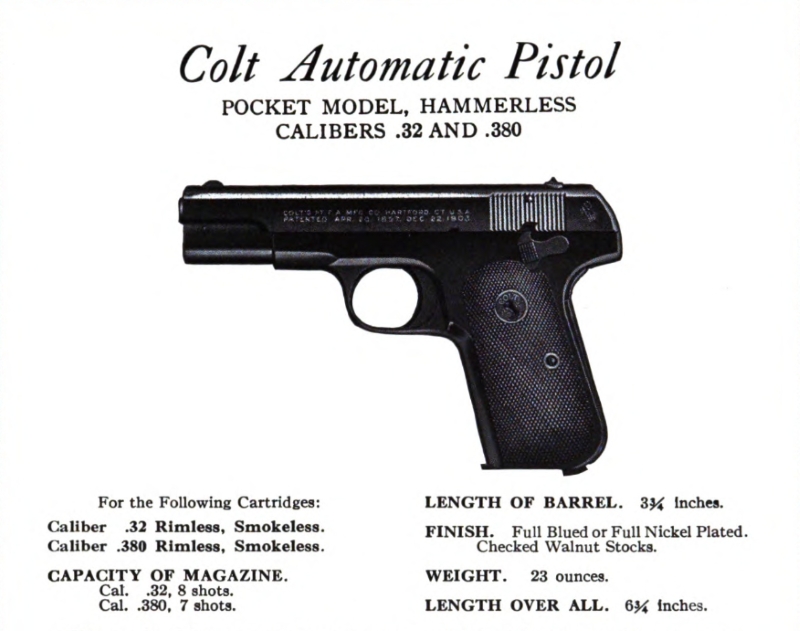
Ultimately, Browning retained the same .356-inch diameter bullet as the 9mm Long and .38 ACP, but paired it with a lighter bullet and shorter rimless case to feed in smaller pistols. The new .380 ACP cartridge debuted with the Colt and FN Model 1908 Pocket Hammerless.
From Blowback to Locked Breech Pistols
The .380 ACP, sometimes called 9mm Corto or 9mm Kurz, was historically the most powerful cartridge paired with inexpensive blowback pistols that also came in .32 ACP. This includes legacy designs like the Beretta Cheetah, Beretta Model 1934, Walther PPK, and Colt Hammerless pistols.
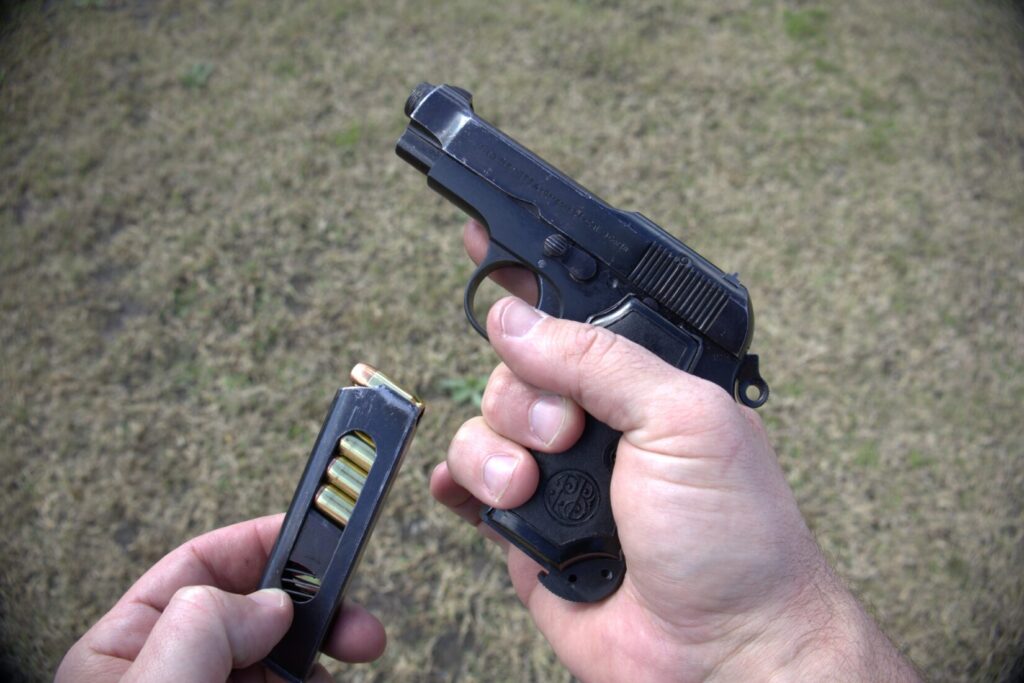
The advantage of these designs is their simplicity, but only the weight of the recoil spring and the slide keep the pistol closed when fired. Without a locking mechanism to delay and bleed recoil, recoil can be surprisingly brisk out of these dense all-steel designs that are otherwise easy to shoot thanks to their larger size.
But in the 2000s, the .380 ACP began to be chambered in locked-breech designs that could be made smaller and softer shooting. Although some holders like the Bersa Thunder, Beretta 80X, and Seecamp LWS 380 are blowback, the majority of modern .380 ACP pistols have a tilting breech design not unlike what Browning came up with for the M1911.
Recent .380 Pistol Trends
.380 ACP pistols are nearly as varied as more popular pistol rounds in terms of both size and features. These include single-stack, double-stack, and micro compact handguns.
Single Stacks and double stacks: New and Historic
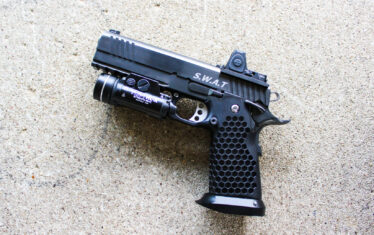
Historically, the .380 has been a compact all-steel handgun with a single-stack magazine holding seven or eight cartridges. This includes current renditions of the Walther PPK and the Beretta 80 series, as well as copies made by Girsan and other Turkish makers.
As a class, these pistols are more compact than comparable 9mm pistols but heavier and bulkier than most contemporary .380 pistols. The advantage of this type is a larger gripping surface and mechanical simplicity. The downside is a lower capacity and higher weight.
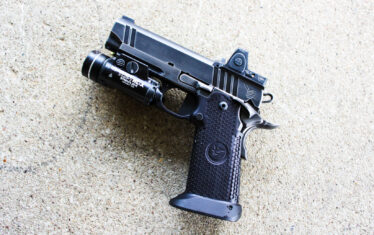
The capacity issue is partly mitigated by coopting these designs to use a double-stack magazine. This includes older models like the Browning BDA and newer designs like the Bersa Thunder Plus, Beretta 80X, and the Girsan MC 14. These feature capacities of 13-15 rounds and are marginally thicker in the grip than traditional single-stack options.
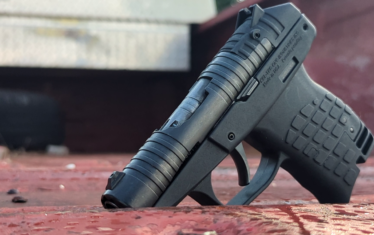
On the opposite end of the spectrum are polymer-framed .380 pistols. In the 2000s and 2010s, single-stack models like the Ruger LCP, KelTec P3AT, and the Smith & Wesson Bodyguard 380 dominated and continue to sell well today thanks to their sheer lack of size. These handguns fully take advantage of lightweight materials and slim single-stack magazines for maximum concealability.
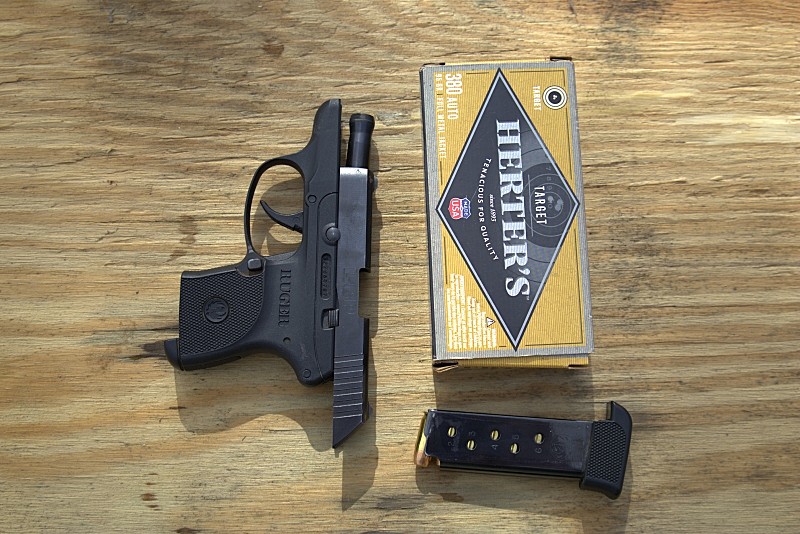
With unloaded weights of under 12 ounces, pistols like these are both small and light. Pistols this light may have historically been chambered in rounds like .22 LR or .25 ACP, but are made in the more powerful .380 round. But those saved ounces and shaved edges come at the cost of greater recoil and slower follow-up shots than what you might get with a larger handgun. Low profile sights and heavier triggers that lend themselves well for pocket pistols also work against the shooter’s experience.
The Micro Compact .380: The Best Carry Package?
An antidote to the drawbacks of the LCPs of the world is the micro compact .380. It began as a quest to expand the capacity of compact 9mm pistols from single stack to double stack. What resulted was a platform slightly larger than the compact .380 but chambered in the more powerful 9mm cartridge. However, going small in size with a moderately powerful caliber in 9mm has the same drawbacks as doing the same with .380.
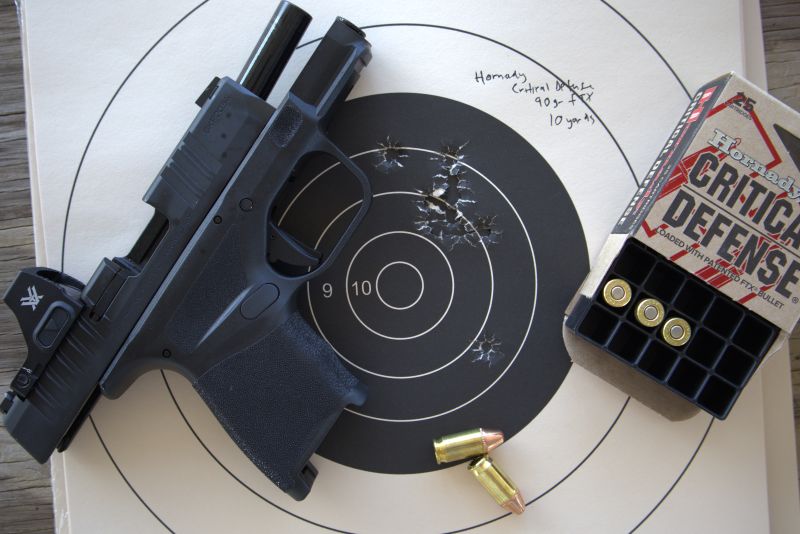
Micro 9 pistols like the Sig P365 and Springfield Hellcat are forgiving to conceal but not necessarily to shoot quickly. In response, the identical platform is now being offered in .380 ACP. This gives the user of a .380 pistol a platform that is easier to shoot than the previous generations of .380 pistols, while being easy to carry.
The Ballistics of the .380 ACP Cartridge
There is a growing variety of .380 pistols for the shooter to achieve the sweet spot between shootability and concealability. The ammunition, however, requires more consideration. For the better part of a generation, the .380 ACP has been considered adequate for personal protection but made better thanks to the advent of new ammunition.
For most of the .380’s run, the 95-grain full metal jacket load was standard. Since the 1980s, various hollow-point loads have come on the market. Initially, these rounds achieved low expansion as the .380 ACP is a lower velocity cartridge, generating about 900-950 feet per second in muzzle velocity.
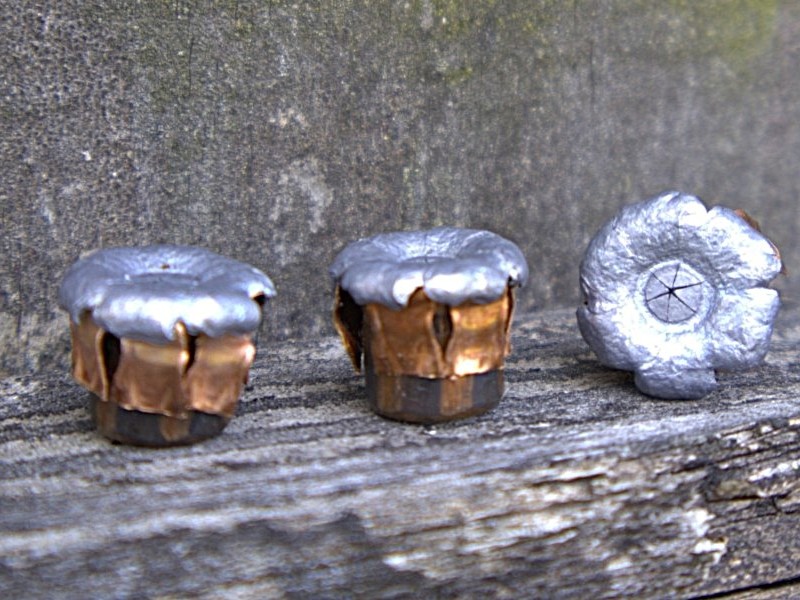
With the rise in popularity of the .380 ACP round, more ammunition options are available. But in the quest to get good penetration and expansion, ammunition makers often sacrifice one for the other. Light and fast all-copper and jacketed hollow points in the 80-grain range tend to produce great expansion but under 10 inches of penetration in 10% ballistic gelatin medium.
Many conventional 90-100 grain hollow point loads fail to expand and give anywhere from 18-22 inches of penetration. This is especially true with short-barreled handguns, whereas larger 4-4.5-inch barreled handguns yield higher velocity and better terminal performance. As it happens, the few loads that expand and penetrate well with pocket pistols tend to overexpand with larger handguns. To that end, some users prefer to use full metal jacket or an all-copper solid to ensure good penetration.
.380 ACP FAQs
Why is .380 called .380?
The .380 ACP standards for .380 Automatic Colt Pistol. The .380 designation dates from old black powder parlance of using oversized projectiles in a nominal .355-.357 inch bore. As it happens, the mouth diameter of the .380 case is .376 inches while the bullet diameter is .355 inches.
What is the Difference between .380 and 9mm?
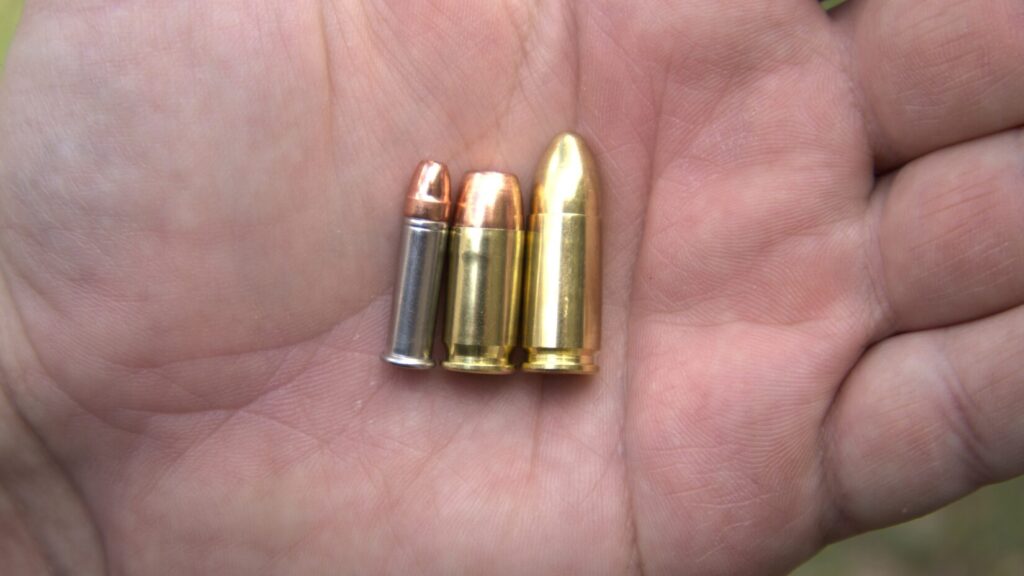
.380 is sometimes called 9mm Corto, 9mm Short, or 9mm Kurz. As it happens, modern 9×19 or 9mm Luger ammunition uses the same .355-inch diameter bullet. The 9mm nominally uses a heavier bullet at higher velocity, has a wider case head, and a tapered case measuring 19mm. The .380 has a simple, straight-walled case that is 17mm in length.
Is the .380 Used by the Military?
Militaries around the world do not currently use .380 ACP as a standard pistol cartridge. However, the .380 was used historically. Italy adopted the cartridge in 1934 and kept it in service into the 1990s. Romania and Germany used .380 pistols like the Beretta M1934 and Walther PPK during the Second World War. The US Army also made limited use of Colt Hammerless .380 models as a General Officer’s Pistol.
How Powerful is .380 ACP?
The .380 is a moderately powerful pistol cartridge compared to smaller cartridges, but comes up short over other rounds like 9mm. It uses a nominal 90-100 grain bullet at between 900-1,000 feet per second. A standard pressure 9×19 cartridge features a 115-124 grain bullet at about 1,100 feet per second. By comparison, the .22 LR uses a light 40 grain bullet at only 900 feet per second out of a short pistol barrel.
The Bottom Line
The .380 ACP has a long and storied history as a personal defense cartridge. But it has been a round attached with both historical baggage and bolstered by technology. This creates a decidedly mixed bag of both guns and ammunition to choose from. Some are excellent choices, some are great choices, while others are lacking to some extent. But with the proper ammunition selection, the .380 is the best answer for those who need a powerful but small handgun or as a low-recoiling option in a larger handgun.