
Leupold is an enigma. A cursory glance through their catalog shows a ton of traditional variable optics and a couple of red dots. Their history shows us a variety of bizarre optics, including the subject of today’s review, the Leupold DP Micro.
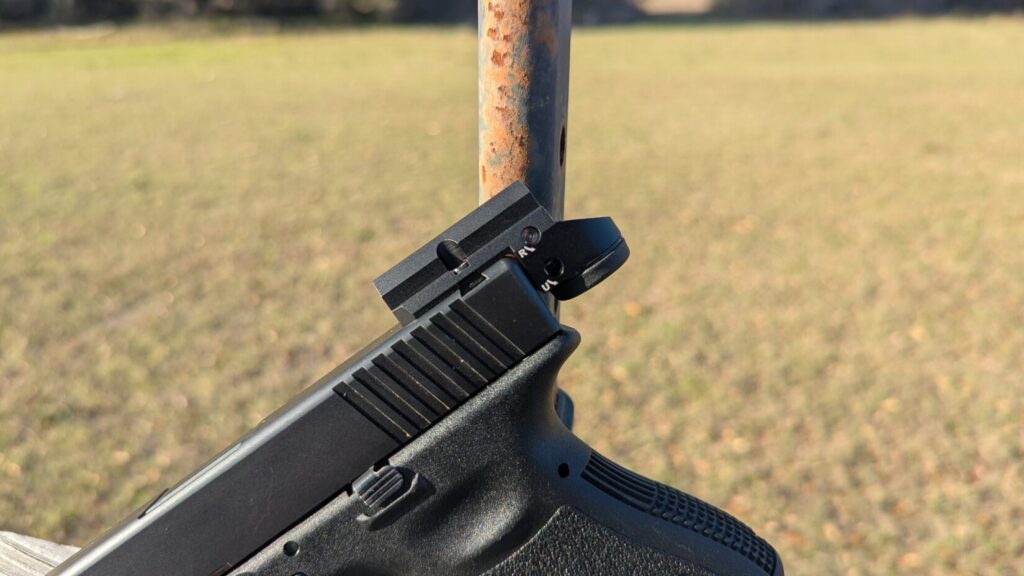
The Leupold DP Micro came out years ago, and while it made an initial splash, it didn’t gain much steam. There isn’t much radical you can do with a red dot, but Leupold made a fairly radical departure with the DP Micro. Sadly, it didn’t seem to stick, and currently these optics are being cleared out for less than $150.
At that price point, I had to try it. The Leupold DP Micro is easily the easiest to approach pistol red dot, and the most difficult.
What’s the Leupold DP Micro?
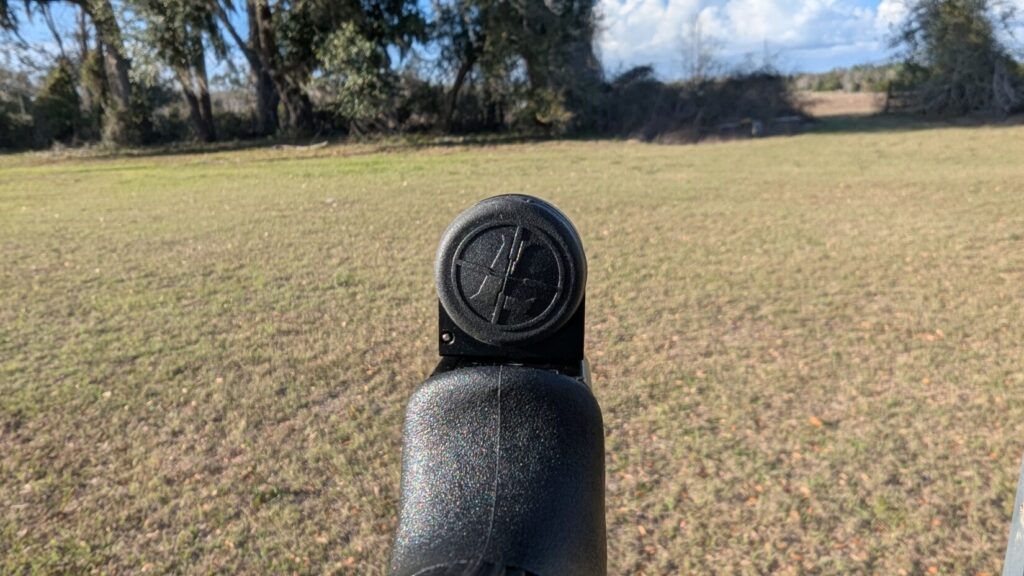
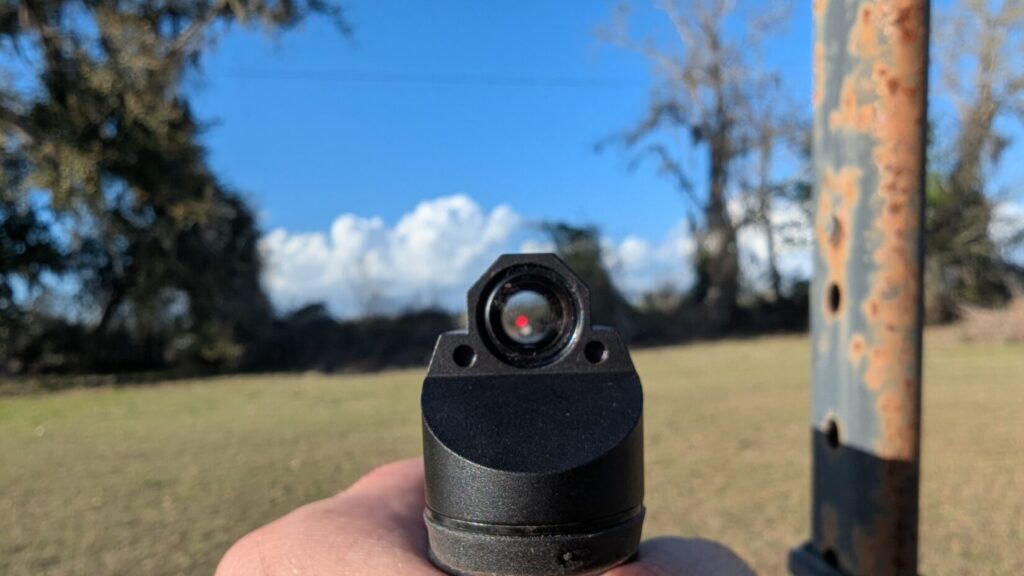
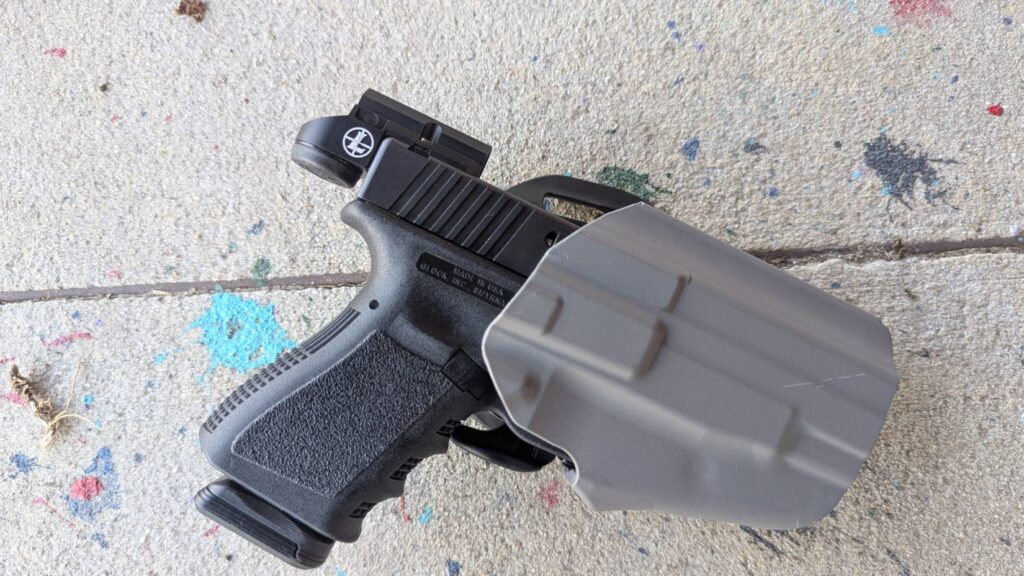
The Leupold DP Micro is a pistol red dot designed for Glock and S&W M&P pistols. This micro-sized dot features a 9mm objective lens and has the electronics packed in a small section at the rear of the optic that sits behind the slide.
The optic sits at the same plane as your iron sights and has an absolute cowitness with your front sight. In fact, even without a dot, this is basically a rear ghost ring. It’s neat in that regard.
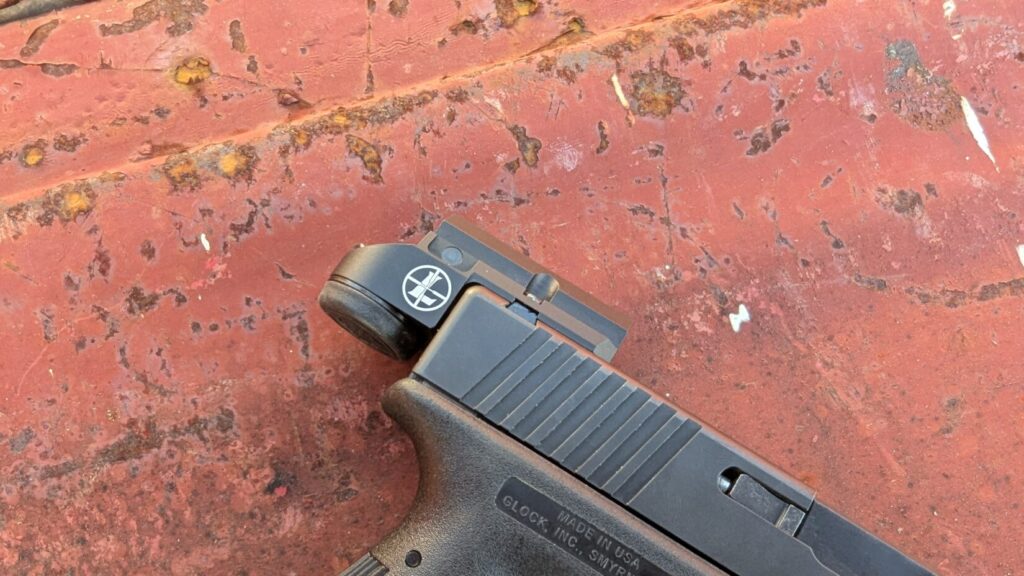
The electronics in the back include your battery compartment and your single-switch control. A simple press button guides you through the eight settings. There is only one button, so if you miss the brightness level you want, you have to cycle through it again.
The dot is a simple 3 MOA reticle. Nothing fancy, but big and precise enough for handgun red dottery.
Installing The DP Micro
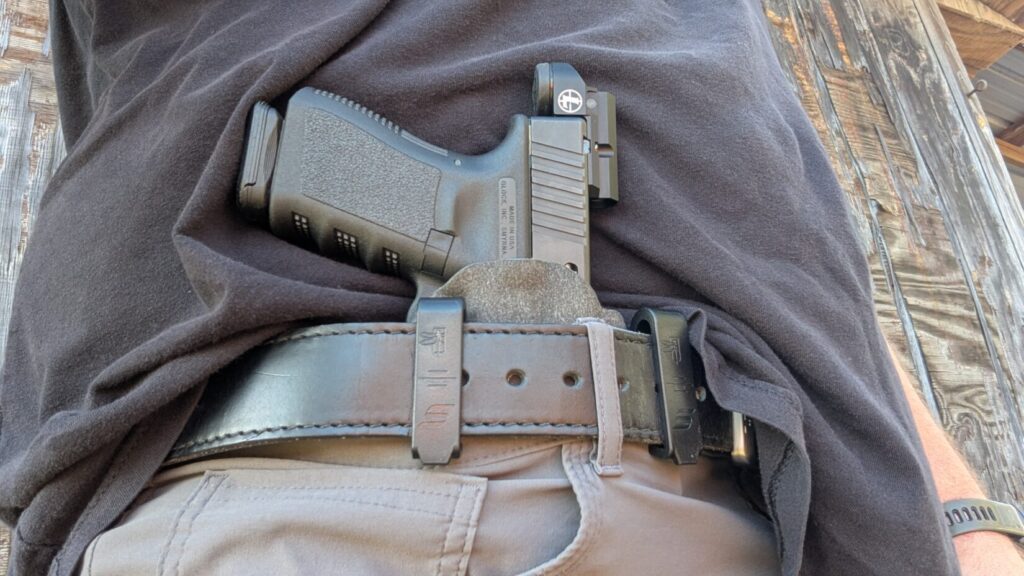
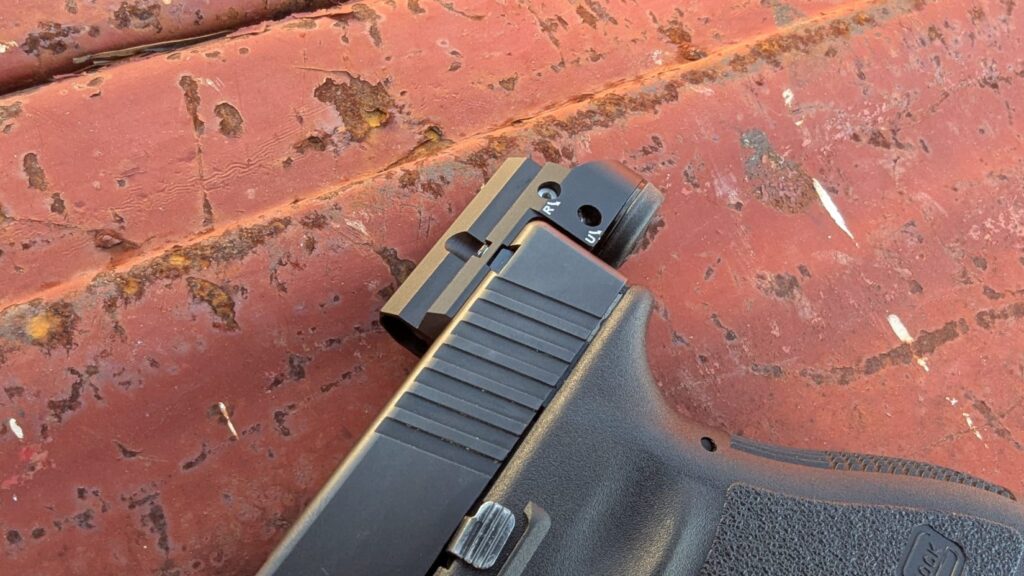
To install the optic, you remove your rear sight and replace it with a slightly undersized dovetail mount. You center the mount and use two screws to attach the optic to the dovetail. This creates tension that pulls the mount up and the optic down.
To remove and attach the slide, you have to remove the battery compartment. If not, you can’t remove the slide from the gun.
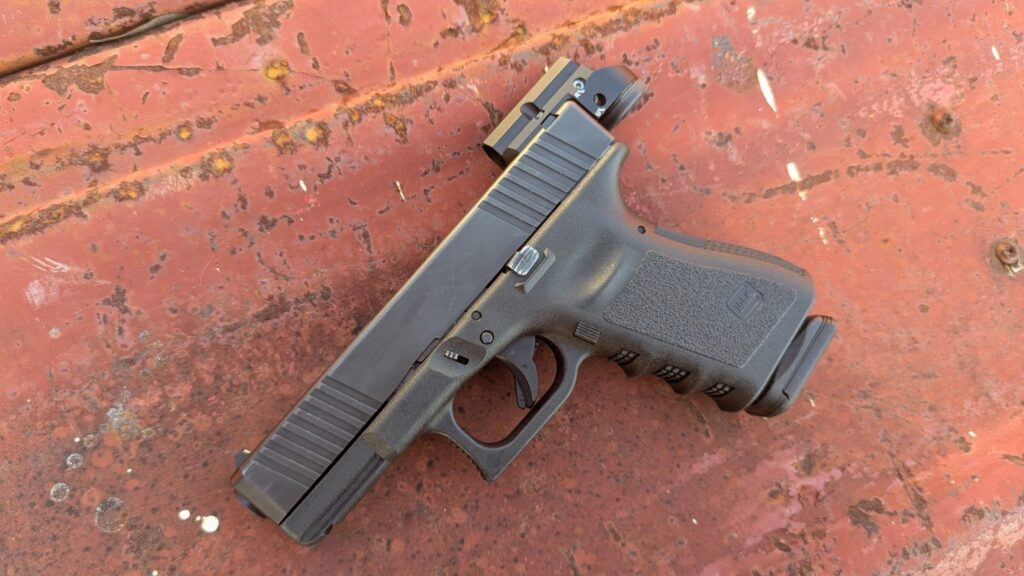
Apply 25 inch-pounds of torque and, bam, the optic is installed. My Gen 4 Glock 19 wasn’t optics-cut, and I really wanted an optic for it. I could spend more than $150 to send it to a shop to get it cut, then buy an optic, or I could spend $145 and get a Leupold DP Micro.
That’s where this thing shines. If your gun isn’t optics-cut, the DP Micro makes it easy to red dot it up. When this dot premiered, optics cuts were common but not universal. It made a lot of sense, especially if you were rocking an old Gen 3 Glock or S&W M&P 1.0.
The Leupold DP Micro At The Range
Immediately, I had a few issues with the Leupold DP Micro. First, the small window sitting in line with the front sight means it more or less slaves to it. I didn’t purposefully slave the dot to the front sight, and it sits just above it and gives me a solid 15-yard zero.
What I hated, and I mean hated, were the adjustments. First, there is no audible or tactile feedback. Second, there isn’t even any tension. They flow freely with barely any pressure.
This made zeroing a slower-than-average process, but eventually, I got it to work. With the optic zeroed, I fired a few groups for confirmation, and we were off to the races.
Leupold used solid glass with no notable notch filter, and the red dot is bright and clear. No problems in the clarity department. It looks fantastic, minus the front sight always being in your way.
I expected to have issues finding the dot, but that wasn’t a problem. I’ve been refining my draw and presentation, so finding the dot wasn’t difficult. When I started with red dots, I liked a bigger window because it was more forgiving.
Without a doubt, this window is not forgiving. If your presentation and draw aren’t close to perfect, you’ll lose the dot. When the gun recoils, the dot leaves the optic immediately, and it’s a lot more like shooting irons than a dot in that way.
Tracking the dot is difficult; the slight up-and-right blur isn’t easy to see because the window is so small. Additionally, the front sight makes distance shooting more difficult.
A small dot is nice for long-range shooting because it obscures less of the target, but since it’s right behind the front sight, your sight picture is obscured, and you lose that long-range capability.
All Complaints?
I’m complaining a lot. The DP Micro does have some flaws, but it’s not a bad dot. You still get red dot speed and target focus. Within 25 yards, you can clear a plate rack rapidly. You see the dot over the target just fine.
With good recoil control, the dot settles right back down on target. As it snaps back down, all you have to see is that blur of red and release the next round. For typical self-defense distances, it’s a dandy dot.
The dot itself looks great and performs well. The fact that it is an absolute cowitness can be a benefit to shooters. If it, for some reason, shuts off, you still have easy-to-see iron sights. It’s accurate enough with the dot off to make some good hits into a torso-sized target. The optic held zero and does provide the reliability of an enclosed emitter red dot. Rain, dirt, snow, or whatever won’t prevent the dot from reaching the window.
Maybe it’s because I had low expectations that I’m walking away so impressed. Even the requirement of a near-perfect draw and presentation is a benefit. Sure, it’s tougher, but it forces you to master those fundamentals.
Worth It
If I paid the original price of around $400, I might not be such a fan. For $145, well, that’s pretty cheap for an optic made by an American company. Sadly, you’re limited to Glock and S&W options, and this might be the only optic to work with a Walther P99 thanks to the decocker button.
The DP Micro is discontinued, but now might be the best time to purchase the Leupold DP Micro. At $145, it’s silly cheap for the quality and stops you from having to mill the slide.