
I’m a firm believer that the best defensive firearm is the one you can actually shoot well.
Notice I didn’t say the most powerful. Or the most expensive.
That’s intentional. And important.
The gun community is chock-full of keyboard warriors who think their home-built, “I know what I got” AR with a 16-inch barrel and a chest rig makes them full-blown SAS operators. And I’m not trying to rain on their parade; to each their own.
All they’re doing, though, is confusing capability with practicality. I aim to meet you somewhere in the middle here with the advent of the PDW.
As a big-city guy who’s dealt with enough urban nonsense to know that discretion is always the better option, I’ve warmed up to Personal Defense Weapons (PDWs) in a big way. They’re not for everyone. That’s a given.
Hell, most folks would probably be better off sticking to a reliable handgun and some training.
But for those of us who want reliable firepower in a comfortable covert package, they’re gold.
So, without the usual gun-blog hype, let’s unpack it a bit, shall we?
What, Exactly, Is a PDW?
While fairly self-explanatory, a PDW, or Personal Defense Weapon, is, in its simplest form, a compact, shoulder-fired (or braced) firearm designed to bridge the gap between a handgun and a full-size rifle.
Originally developed for military support and “rear-echelon” folks who still needed to maintain superior firepower when things got messy, the PDW was intended to be more capable than a pistol yet way handier, more concealable, and infinitely more maneuverable than a full-size rifle.
The PDW gives submachine gun vibes with better terminal performance, often in more niche calibers like 4.6x30mm or 5.7x28mm. If you’re thinking of the FN P90 or HK MP7, you’re on the right track.
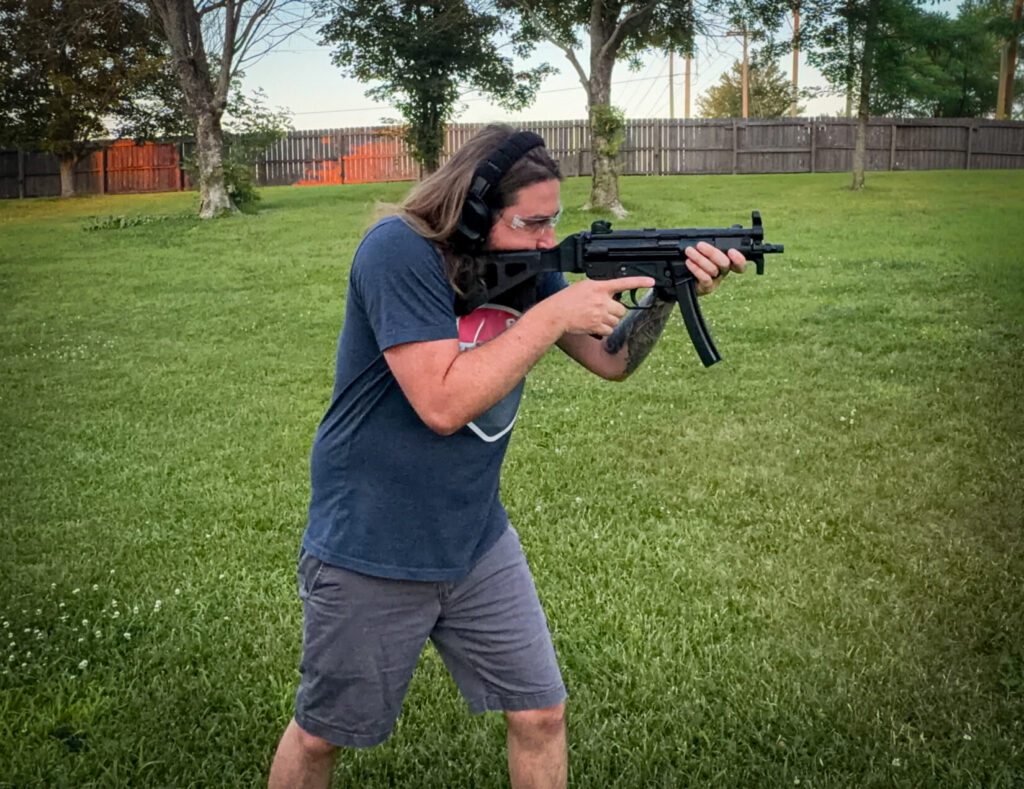
But for civilians, the concept of the PDW has evolved.
Today, civilian PDWs are semi-auto platforms, usually pistol-caliber carbines (PCCs), short-barreled rifles (SBRs), or clever conversion kits that bridge the gap and pack rifle-like handling into something you can actually conceal or haul discreetly.
But remember, these PDWs are not intended to serve as primary battle rifles. Rather, they’re what a Marine friend of mine calls “force multipliers.”
What sets them apart is the emphasis on compactness, rapid deployment, and controllability. A good PDW should quickly and effectively put rounds on target in tight spaces without the overpenetration risk of a high-velocity rifle round or the limited capacity of a standard pistol. In civilian hands, they’re especially great for home defense.
How the PDW Concept Applies to Home & Personal Defense
A PDW gives you rifle-like sight radius and control without the full rifle length that turns doorways into liabilities. You can maneuver the thing one-handed if needed, shoulder it fast, and dump accurate, on-target firepower without the limitations of a handgun in terms of recoil management or follow-up shots.
Many civilian PDWs also share ammo or mags with your carry pistol, simplifying logistics. Train on one, and the other feels familiar. No learning a whole new manual of arms while the adrenaline’s pumping.
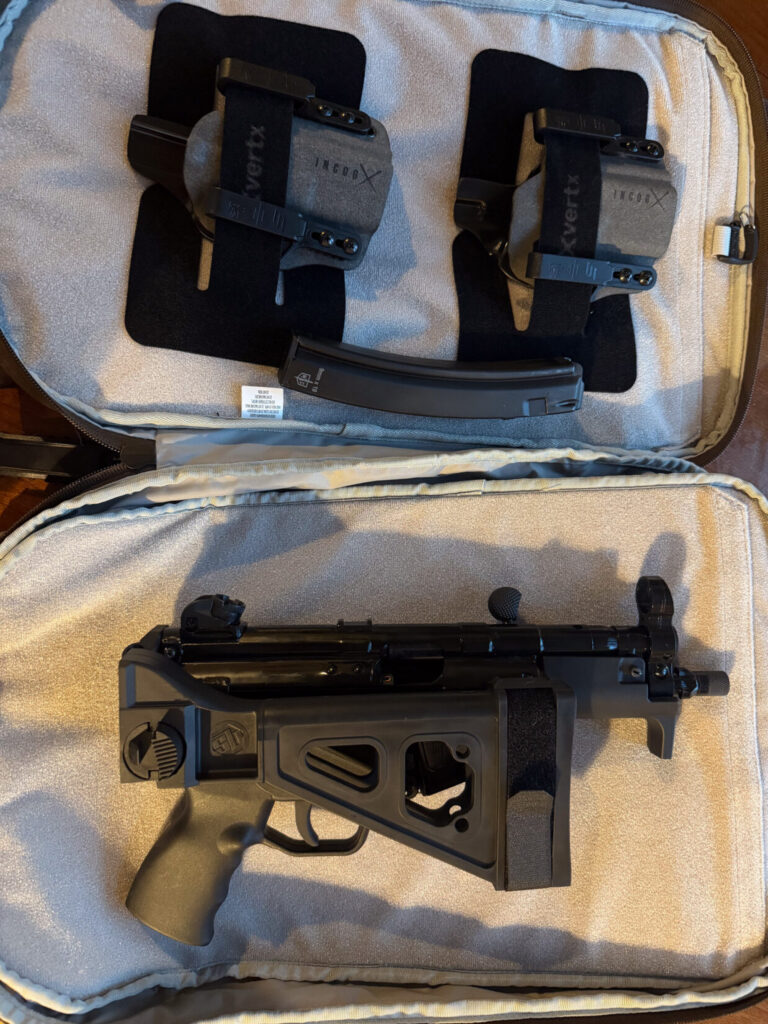
Further, PDWs are the epitome of grab-and-go convenience. In a backpack like my Vertx Gamut Ready Pack, a PDW is highly concealable yet readily deployable. For urban city folk or frequent travelers like myself, this is huge. Using discretion is common sense in a world full of opportunists.
Highly Concealable and Maneuverable
A shorter overall length means you can conceal them better than a standard carbine and maneuver in vehicles, urban environments, or tight interiors. In a pinch, that low profile and quick handling save seconds that matter. They’re not as concealable as a pocket pistol, but way more shootable than one, I’ll tell you that much.
Fast to Deploy
PDWs are lightning-fast in a tussle. Folding stocks and braces (where legal) let you deploy from a bag or vehicle in a hurry. In a home invasion or ambush, that speed can be the difference between reacting effectively and becoming another statistic.
Nothing beats shouldering something compact and getting on target while the bad guy is still chickenwinging his long gun.
Lightweight
Most modern PDWs tip the scales well below that of a standard-length AR-15, making them easier to haul around all day without fatiguing.
Less fatigue means better performance. And for guys like me who aren’t built like lumberjacks but still want to employ capable firepower, this is key.
It makes PDWs perfect for the gray man, blending into your everyday routine without much fanfare or fuss.
Common Civilian PDWs
So, now that we’ve pretty well covered what a PDW is or isn’t, let’s take a look at a few common civilian PDW-style platforms.
MP5 and MP5 Clones (Like My MAC5k)
The HK MP5 is the gold standard. I mean, I get it. The iconic roller-delayed blowback system tames recoil, and its buttery smooth mechanics offer stupid-fast follow-up shots… It’s controllable as hell, too. Just a pleasure to shoot.
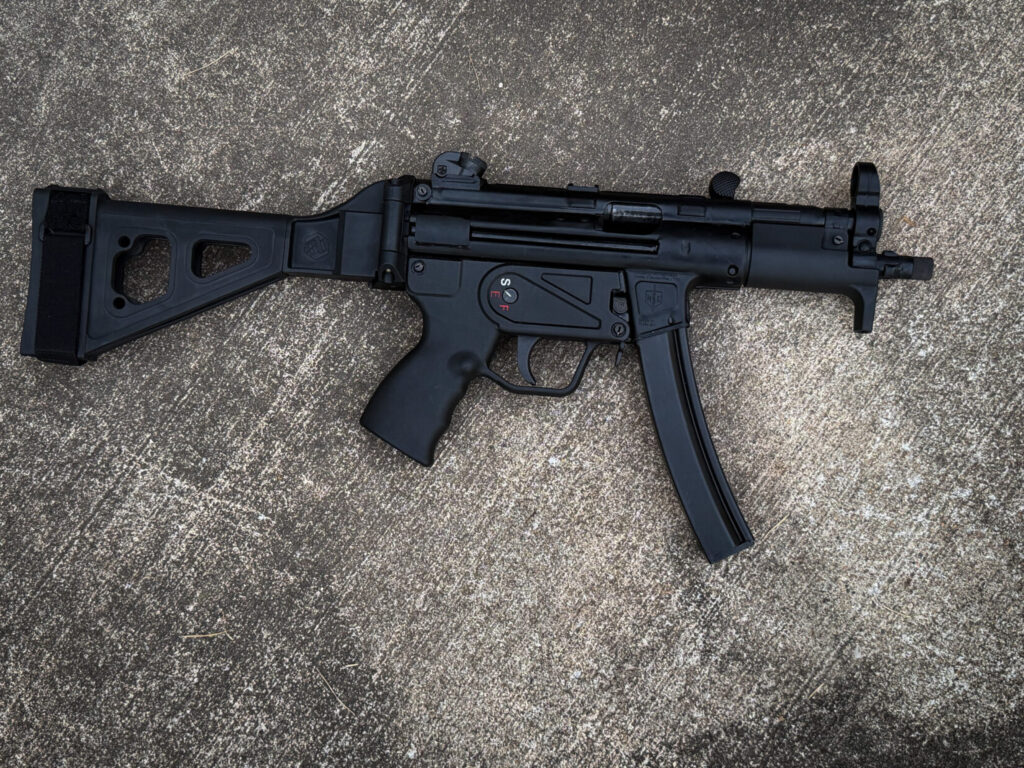
There’s a reason this platform has been a favorite of the British SAS, elite law enforcement teams, protective services (i.e. US Secret Service), and collectors and enthusiasts for decades. Even with newer, more ergonomic designs constantly hitting the market, the MP5 refuses to become obsolete. Sure, there are lighter guns and more modular guns, but few platforms inspire the same level of confidence as the OG.
Thankfully, you don’t have to spend HK money to experience it anymore.
Civilian clones like the Century AP5 or my Military Armament Corp MAC5k capture much of that magic without the need for a second mortgage. My MAC5k has been nothing short of fantastic. It’s a tack driver at realistic distances, runs every bit of 9mm ammo I’ve dumped through it from Ammunition Depot without complaint, and looks cool doing it.
That roller-delayed action is pretty friggin fantastic, man. Compared to many straight-blowback PCCs, recoil feels softer and more predictable, allowing you to stay on target under sustained fire.
The downside, though, is not all clones are created equal.
Some manufacturers have absolutely nailed the machining and engineering, while others… well, not so much. Build quality, reliability, fit and finish, and long-term durability can vary considerably depending on who made it and when it was produced.
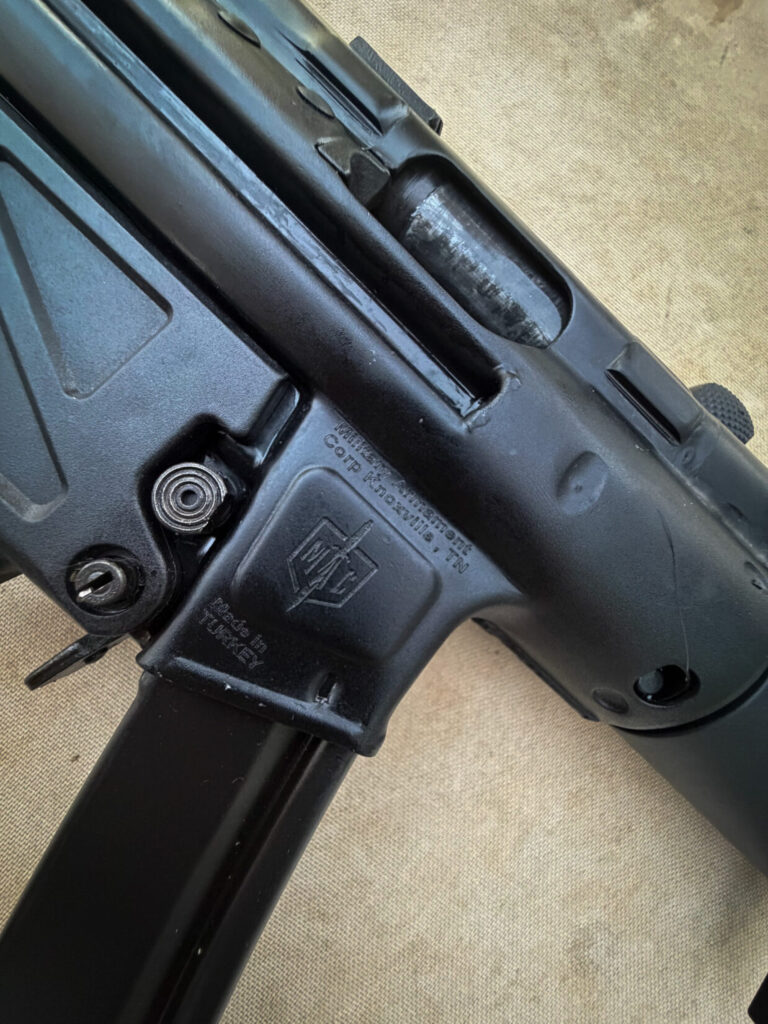
I definitely have opinions on which ones I’d trust, so do yourself a favor and research the manufacturer before dropping your hard-earned cash. A little homework can go a long way.
The platform also isn’t quite as modern as something like a B&T APC9 or Sig Sauer MPX. The manual of arms takes some getting used to (I kinda hate the safety switch), mounting optics requires a special claw-style mount, and the ergonomics show their age in a few places. But, that’s honestly part of its charm.
At the end of the day, there’s a reason the MP5 has earned legendary status. It’s compact, accurate, incredibly smooth, and still one of the most enjoyable 9mm platforms ever designed. It’s a backpack-friendly legend for a reason.
Glock 17 with MCK/Roni Conversion Kit
Take your existing Glock, drop it into something like the MCK micro conversion kit or similar, and boom, you’ve got a PDW on a budget. It’s not as refined as some dedicated platforms, but darn practical.
For a lot of shooters, that’s the appeal. Rather than buying an entirely new firearm, you can leverage a handgun you already own and, well, “convert” it into something that’s easier to shoot and more capable at distance. The added stability of a brace and an optics-ready, ergonomic design make a pretty significant difference in both comfort and control without requiring the investment (or hassle) of another gun purchase.
That said, I’d venture to say that micro conversion kits have come a long way in recent years. Early models often felt like gimmicks, and in a lot of ways, they kinda were. But today’s offerings are generally a hell of a lot better, and they’re compatible with many of the most popular handgun platforms on the market.
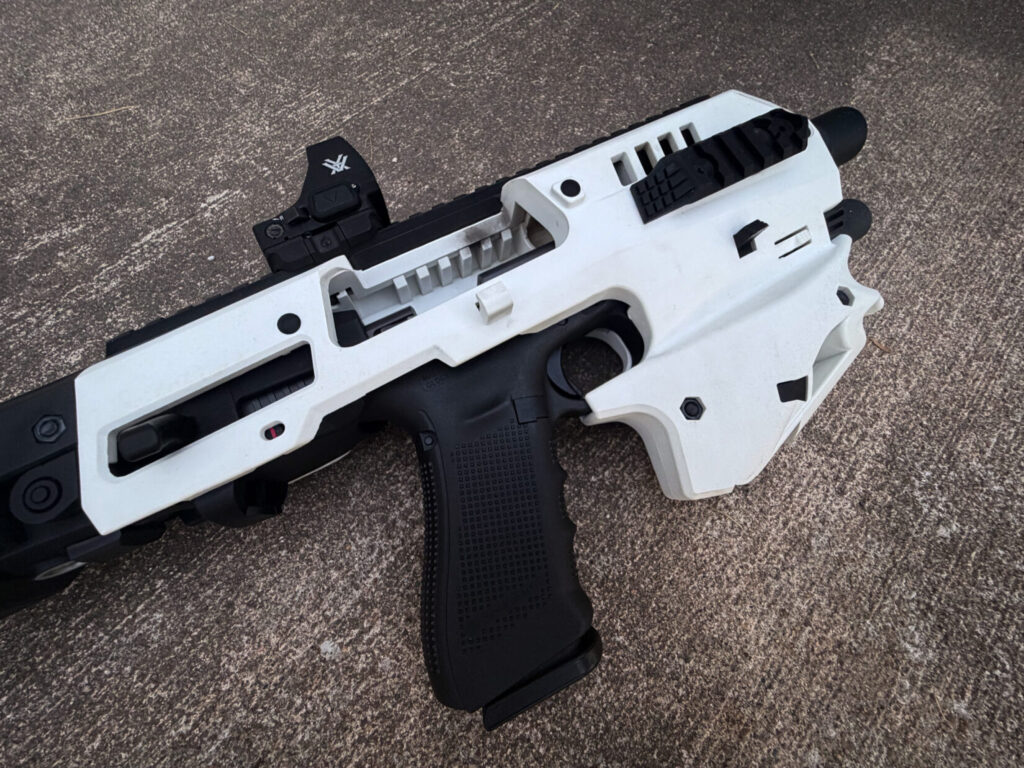
The CAA MCK Glock-compatible conversion kit (or chassis, as you’ll hear some folks say) is probably the best-known example, though there are several others worth considering depending on your pistol and intended use.
Of course, realistic expectations are important here. At the end of the day, you’re still shooting a pistol cartridge from a pistol barrel. You’re not gaining rifle-caliber performance, dramatically increasing effective range, or turning your Glock into an MP5, I’m sorry to say.
What you are getting, though, is a more stable shooting platform that can help you make faster follow-up shots, engage targets with greater confidence, and mount accessories.
That modularity keeps things practical. You can keep your Glock configured as a carry gun most of the time, then install it in the conversion kit for range sessions, home defense, or situations where a more stable platform makes sense. It’s a simple way to stretch the capabilities of a firearm you already trust and know well.
No, it’s not the most sophisticated PDW option out there. But if your goal is maximizing capability while minimizing cost, it’s hard to argue against it.
CMMG Banshee
CMMG’s Banshee series (especially in 9mm) is an easy standout. The Radial Delayed Blowback system makes it soft-shooting, and the AR-ish ergonomics feel natural. Glock mag compatibility on many models is a huge plus. Compact, customizable, and reliable. It’s one of those that just works well for both home and personal defense setups, so it’s my kind of gun.
What really sold me on it, though, is how familiar everything feels. If you’ve spent any time behind an AR-15, the controls are second nature. That’s a big advantage if you’re looking for something that complements your existing training.
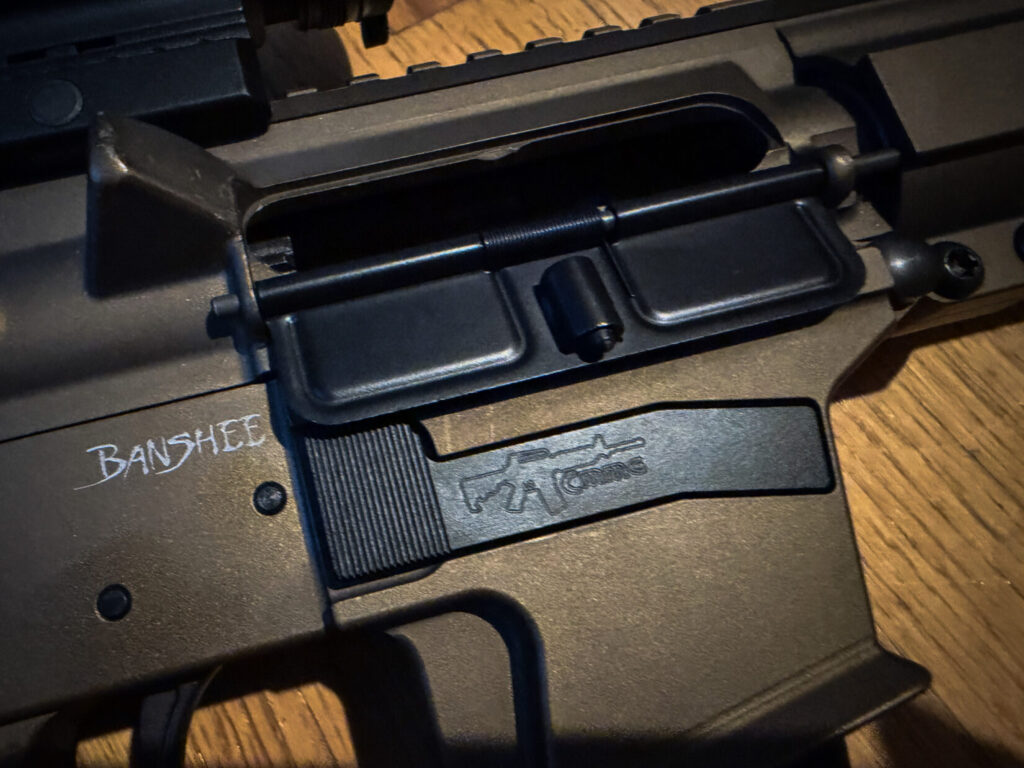
Like most AR-pattern firearms, the Banshee is highly customizable. Want to swap handguards, triggers, braces, grips, optics, lights, or suppressors? Go for it. You can configure the gun exactly how you want without hunting down obscure parts or special mounts (looking at you, MP5).
Most importantly, though, it’s reliable, compact, accurate, and easy to shoot. As I said, my kind of gun.
Of course, the Banshee is far from the only modern option.
If you’ve got a few extra sheckles in your bank account, B&T’s APC9 and TP9 platforms are also phenomenal. Swiss engineering doesn’t come cheap, but the quality, reliability, and refinement are second to none. On the other hand, the SIG MPX offers a premium shooting experience with excellent ergonomics, outstanding accuracy, and one of the smoothest operating systems in the modern PCC market.
And then there are things like the Kel-Tec SUB2000, and whatever other wonderfully weird ideas they dream up. They aren’t for everyone, but for shooters who appreciate unconventional designs, they’re worth a look.
The point is, we’re living in a golden age of civilian PDWs and compact pistol-caliber carbines. Whether your budget is a few hundred bucks or several thousand, chances are there’s an option out there that fits your needs… and your wallet.
Why I Use Them for Personal Defense
Living near and often commuting through a concrete jungle means threats I think about are close, fast, and unpredictable. Urban environments don’t exactly favor full-sized rifles.
That’s one of the reasons I appreciate a good PDW.
A compact platform that fits discreetly in a backpack or vehicle gives me reliable options without having to lug around a full-size rifle. It’s small enough to stay out of the way, quick to deploy when legally appropriate, and much easier to maneuver in confined spaces.
Just as importantly, it’s easier to shoot than a handgun. A more stable platform with multiple points of contact makes fast, accurate follow-up shots much more likely under stress. Now, that doesn’t replace my everyday carry pistol. I still carry my handgun on my person when and where I can. But the PDW fills the gap when I have legal and ready access to something more capable.
And no, this isn’t about being paranoid.
I don’t expect every trip into the city to turn into a tussle. But bad things happen every day here in KC. Unfortunately, we’re kind of notorious for car thefts, violent crime, occasional civil unrest, and other active threats that don’t care whether you’re prepared or not.
I’ve always believed preparedness is about being realistic, not fearful. A PDW simply fits my lifestyle.
Final Thoughts
Like any defensive firearm, a PDW is only as effective as the person behind it. It requires training and a solid understanding of when to use it and when not to. You also need to stay apprised of the laws in your state and any jurisdictions you travel through. Depending on the configuration or your personal setup, PDWs can fall into some surprisingly complicated legal territory, and ignorance isn’t much of a defense.
It’s also important to have realistic expectations. A PDW isn’t meant to replace your full-size rifle, nor is it rendering your concealed carry pistol obsolete. It bridges the gap, and does so surprisingly well.
For me, a quality PDW is a must-have. They’re compact, easy to shoot, adaptable, and well suited to the environments I spend the most time in. But whatever you choose to own and shoot, train with it, understand it, stay within the law, and, for the love of all that is holy, be smart. Stay safe out there.