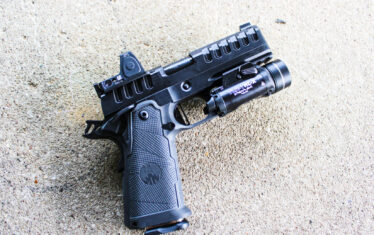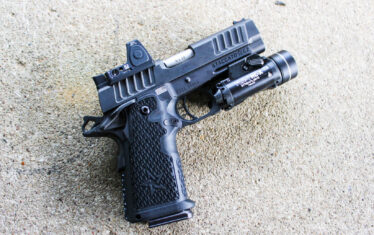

It’s almost expected to use a red dot on a handgun these days. And don’t get me wrong, I have and use red dot optics on several of my handguns. But that doesn’t mean they are always better than iron sights.
This is a topic that tends to draw a lot of mixed opinions. Some advocate for the modern marvel of high-end red dots, and others preach about the reliability of iron sights. My Grandpa used to say, “If it ain’t broke, don’t fix it.” You would never have caught him using a space-age device like a red dot on a handgun.
Growing up around that mentality but having a career in law enforcement has taught me one thing. What works for one person may not always work for another.
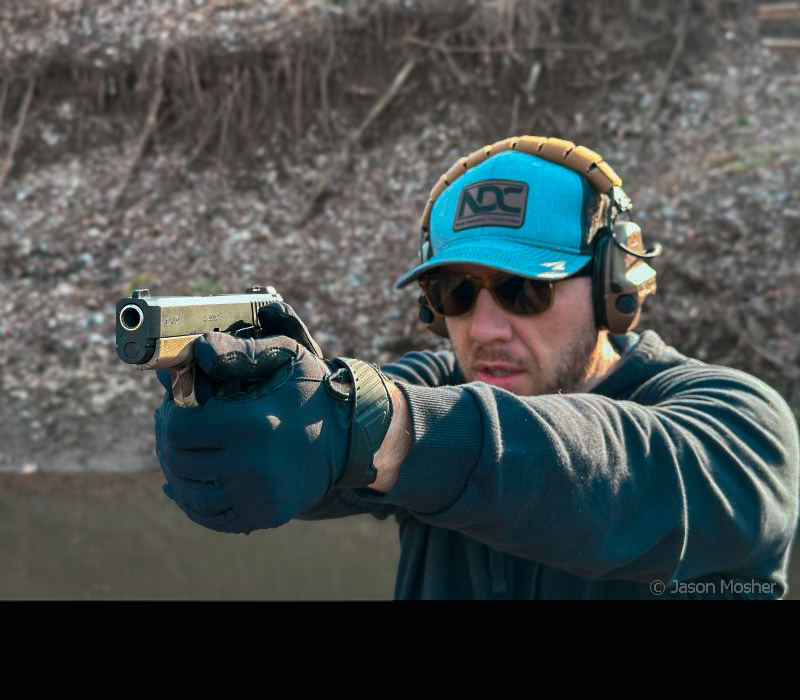
For decades, iron sights were all we had, and they’ve worked just fine since the days of black powder and saloons. They are simple, rugged, and they don’t require batteries.
But as technology marches on, the “glass” revolution has hit the handgun market hard. Red dot sights are everywhere now. You can’t visit a range or walk into a gun shop without seeing a miniature optic perched on top of a slide.
So, are iron sights an outdated aiming device that should not be used? Or is the red dot an electronic device that is more likely to fail? In the red dot vs. iron sights debate, my goal isn’t to prove which one is better, but simply to provide some information so readers can make up their own mind.
Iron Sights: Old Reliable
Iron sights have a history that stretches back centuries. In the early days, they were little more than a notch and a bead. By the late 20th century, the “three-dot” system became the baseline for most combat-style handguns. They are the definition of “tried and true.”
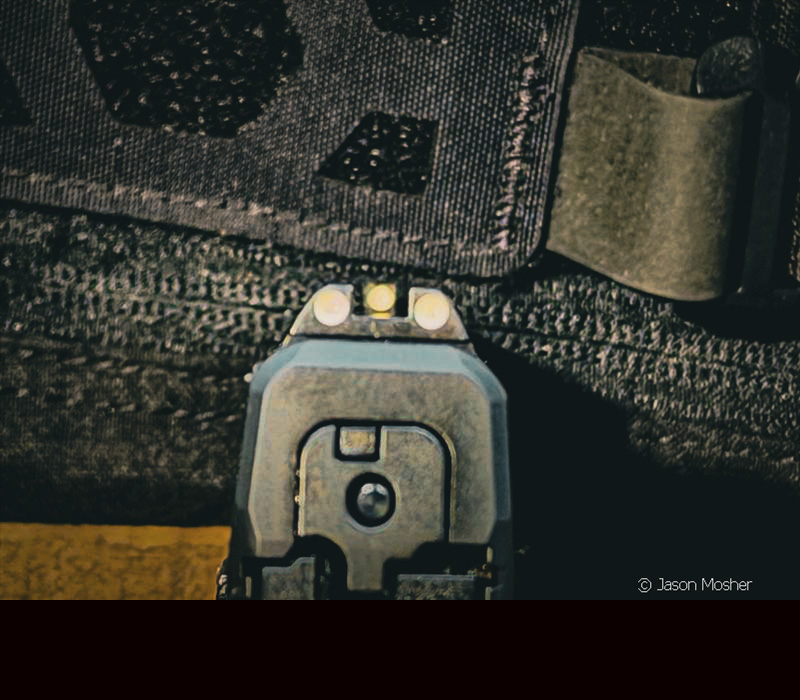
If you are new to firearms, iron sights are all about the “front sight focus.” You align the front post within the rear notch, keep your focus on that front blade, and let the target go slightly blurry. It’s a physical, mechanical alignment that doesn’t rely on software or electronics.
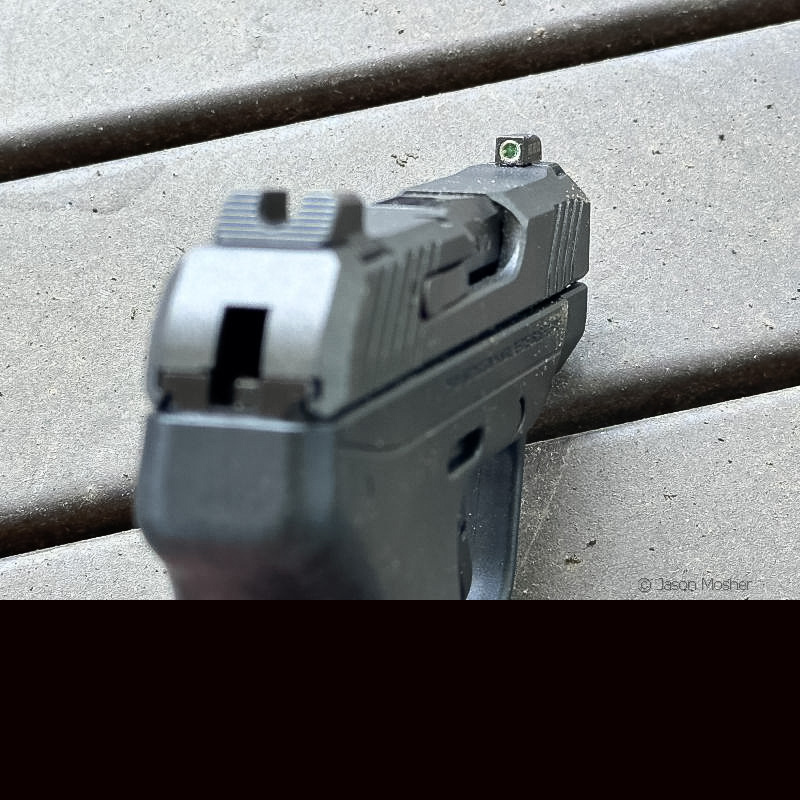
The biggest pro for iron sights is their sheer reliability. You can drop your gun on concrete, drag it through the mud, or leave it in a humid safe for five years. When you pick it up, those sights will still be there.
They are extremely durable. Plus, they are low profile. They don’t snag on clothing easily and they fit most holsters made for that gun.
But iron sights do have their limits. The biggest one? Physics. Iron sights require you to manage three different focal planes: the rear sight, the front sight, and the target. Your brain has to do a lot of math very quickly to make that work. In a high-stress situation, that’s a lot to ask of your eyeballs.
Also, as we get older, our eyes lose the ability to focus on objects that are close up. If you can’t see your front sight clearly, your accuracy is going to tank.
Red Dots: Speed and Accuracy
If iron sights are the flip phones of the gun world, red dots are the latest iPhones. Pistol red dots started gaining real traction about a decade ago.
While competition shooters had been using “open” dots for years, it was the Trijicon RMR that changed the game. This optic, introduced in 2009, was tough enough to survive the violent reciprocating motion of a handgun slide.
Today, the “optics-ready” pistol is the new industry standard. Most handgun manufacturers now mill their slides at the factory. They want you to put a dot on there.
The biggest benefit of a red dot optic is “target focus.” Unlike iron sights, where you look at the front sight, you look at the target when using a red dot. This allows you to stay focused on the target and simply overlay the glowing dot where you want the bullet to go.
It is much more intuitive for the human brain. Because the dot exists on the same focal plane as the target, everything stays crisp.
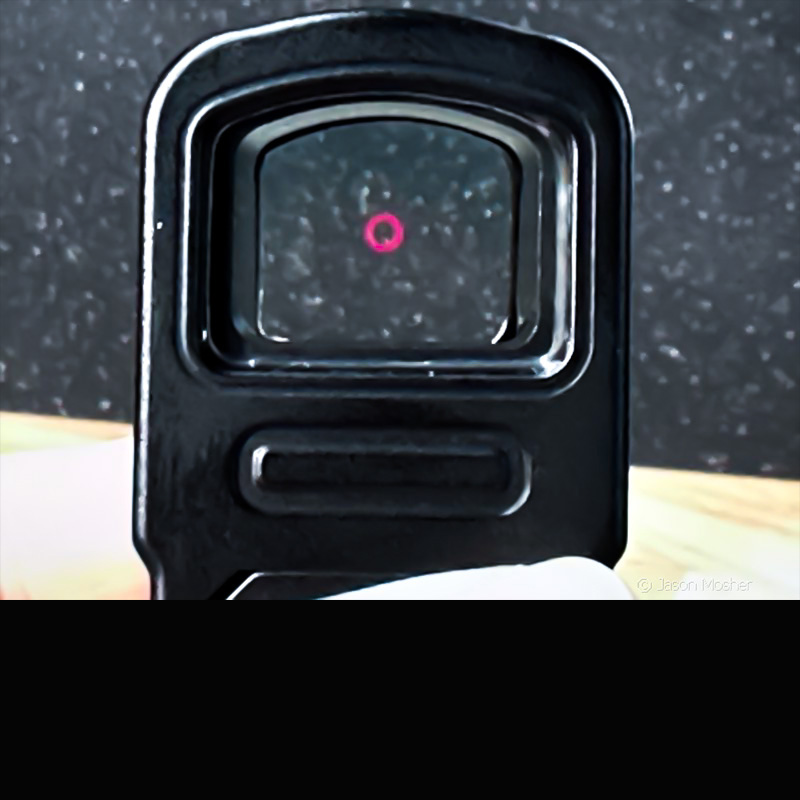
When you look through a red dot optic, you feel like you can become John Wick overnight. But there is a real training curve required when switching to red dots. The biggest is being consistent with finding the dot as you bring the handgun up to eye level. Those who struggle with this find themselves “fishing” for the dot.
Just a wiggle of your wrist can send the dot completely out of view. It takes a lot of repetitive training to build the muscle memory required for a red dot on a handgun.
Can You Run Iron Sights and a Red Dot Together?
Yes — many pistols can run both, a setup known as co-witnessing. Some handguns can work with both an optic and iron sights. Most of the time, this requires the iron sights to be replaced with taller ones, but some optics also have cutouts so you can see the iron sights through the optic.
While this method sounds like the best of both worlds, I have mixed feelings about it. For me, having the iron sights visible with the red dot is just too much going on when you’re trying to focus on the target. But for others, it works out great.
Does a Red Dot Change Your Holster?
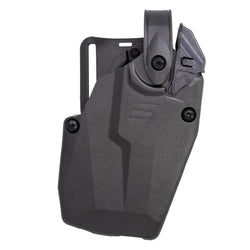
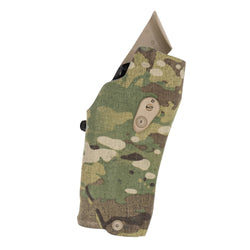
Yes. Iron sights sit low on the slide and fit most holsters made for that gun, but a slide-mounted optic doesn’t. A pistol wearing a red dot needs a holster built to clear the optic.
Safariland marks these as RDS, RDSO, and RDSC holsters. RDS holsters fit an optic-equipped pistol and often add a hood to protect the optic; RDSO holsters leave the optic open, and RDSC holsters use a shorter cut for a faster draw. I broke down each one in Understanding Holster Acronyms. If you add an optic, budget for the right holster, too.
How to Choose Between a Red Dot and Iron Sights
So, how do you decide which one is better for you? You need to look at your specific needs, your budget, and your willingness to train.
If you are a “set it and forget it” person, iron sights might be your best bet. Iron sights are simply reliable and almost maintenance-free. This was an even bigger issue years ago when you had to turn on the optic before use. During an incident, this just isn’t realistic.
On the flip side of this discussion, it should be pointed out that modern technology has allowed us to have optics that turn on when they sense motion and a battery that lasts for thousands of hours. Enclosed emitter optics are even more reliable when it comes to rain, snow, and dust.
There are lots of affordable optics on the market now, but budget constraints are also an issue for some. If your wallet only allows for a quality handgun and holster, an optic may not be an option.
If you have the time and willpower to learn a new aiming system on the range, a red dot can improve your accuracy and speed. It allows for much more precise shot placement because the dot doesn’t obscure the target like a thick front iron sight does. If you’re willing to put in the work to master the “index” (the draw and presentation), you will eventually be faster with a dot.
Ask yourself these questions:
- How is my eyesight? If you struggle to see the front sight, a red dot may be better for your eyes.
- What is my budget? A quality, duty-grade optic can cost nearly as much as the gun itself. Don’t buy a $50 “Amazon special” for a self-defense tool.
- Am I going to practice? If you only go to the range once a year, stick with iron sights. The learning curve of a dot requires consistent practice.
Red dots have an advantage, but require more work
In the end, the benefits of a red dot usually outweigh the disadvantages for most modern shooters. The ability to stay focused on a threat while maintaining a clear aiming point is a massive advantage. However, iron sights are far from obsolete. They are the foundation of good marksmanship.
Whatever you choose, make sure you train with that system.
Because I grew up using iron sights, I am still comfortable using them. But I’ve also done a lot of training with red dot optics and have grown to appreciate them as well.
In the end, I lean toward a red dot over iron sights, but there is nothing wrong with either. It all comes down to choosing the system that works with your lifestyle best.
Red Dot and Iron Sight Questions, Answered
Are red dots better than iron sights on a handgun?
For most shooters willing to train, a red dot improves speed and precision because you stay focused on the target. Iron sights remain more rugged, simpler, and maintenance-free.
Is a red dot better for aging eyes?
Often, yes. Iron sights require focusing on a close front sight, which gets harder with age. A red dot lets you focus on the target instead.
Do I need a special holster for a red dot?
Yes. A pistol with a slide-mounted optic needs an optic-compatible holster. Safariland’s versions are labeled RDS, RDSO, or RDSC.
What does co-witnessing mean?
Seeing your iron sights through the optic window, usually by installing taller, suppressor-height sights