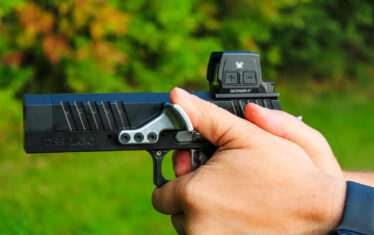

When I say 2011, most people gravitate toward Staccato—the term is their registered trademark. Part of Staccato’s growth and advancement is its shift toward a more duty-oriented pistol. While the XL and XC still exist to fulfill competitive needs, it’s really the duty models that make up the bulk of their sales. This includes the popular P and C2 models as well as the HD lineup.
I’ve always leaned toward the C2 model. It’s essentially the Glock 19 of the Staccato family, and it’s a great blend of size and capacity. But as other manufacturers, such as VKTR and Watchtower—which we’ll cover soon—narrow the gap, is Staccato still reigning supreme when it comes to a duty-style 2011? This Staccato C2 review puts that question to the test.
If you’re new to the 2011 Project, “Party Like It’s 2011: Staccato and the 2011 Revolution” covers where the 2011, Staccato, and this pistol class came from. It sets the stage for everything that follows, and this series is here to give you honest opinions on a fast-growing market.
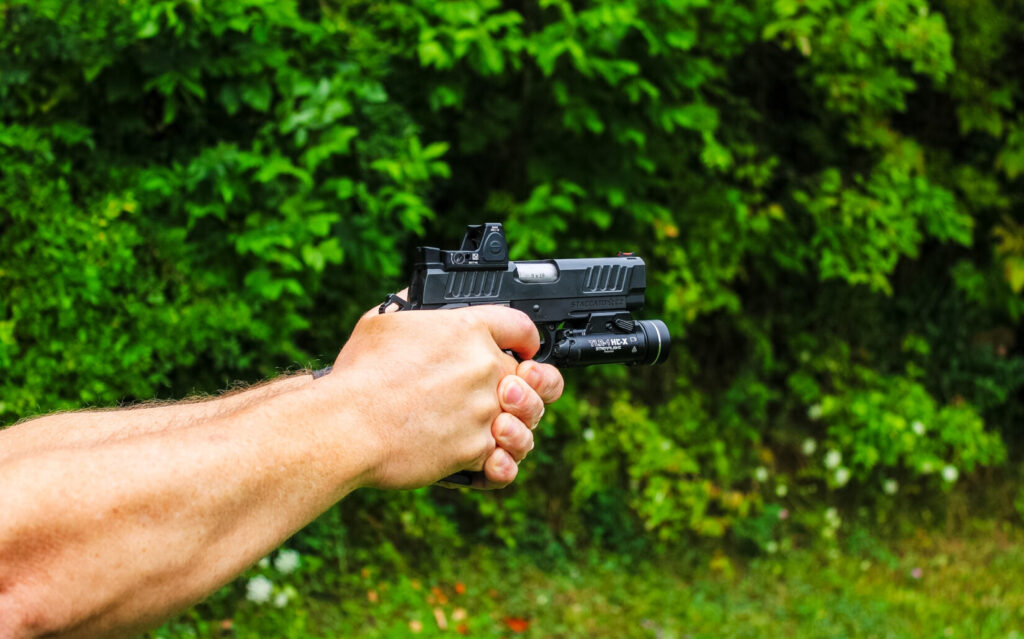
Unlike other trends that come and go, this one has staying power. But unlike other trends, pistols in this class can cost thousands of dollars. The goal here is to give you an unbiased opinion on how these models stack up and help you decide which is best for your needs and budget.
Thank you to Staccato for providing a sample. All thoughts and opinions are my own.
WHO IS STACCATO?
Staccato started life as STI in the early 1990s, and it’s the company that turned John Browning’s 1911 into the double-stack 2011. For decades, STI guns racked up wins on the competition circuit.
After rebranding as Staccato in 2020, the Georgetown, Texas, company—veteran-led, with more than a quarter of its team having served—turned its focus to duty pistols. Today, it pairs that race-gun lineage with hand-fitted assembly and American-sourced parts, and its pistols now serve competitive shooters, law enforcement, military personnel, and armed citizens.
STACCATO C2 — Key SPECS
| Specification | Staccato C2 |
|---|---|
| Model(s) | C2 |
| Caliber | 9x19mm |
| Capacity | 16+1 (two 16-round mags included) |
| Action | Single Action Only |
| Trigger | 4–4.5 lbs. |
| Recoil System | 3.9″ Recoil Master System |
| Grip | Polymer (VIP Carry Grip) |
| Frame | 7075 Aluminum—Billet Precision Machined, anodized |
| Sights | Fiber optic front, black rear |
| Optic Cut | Yes, uses Dawson Precision Red Dot Adapter Plate (sold separately) |
| Barrel Length | 3.9″ bull barrel |
| Overall Length | 7.5″ |
| Width | 1.3″ at grip (1.49″ at safeties) |
| Height | 5.5″ |
| Weight | 25 oz. (without magazine) |
| Price | From $2,299.00 |
FEATURES
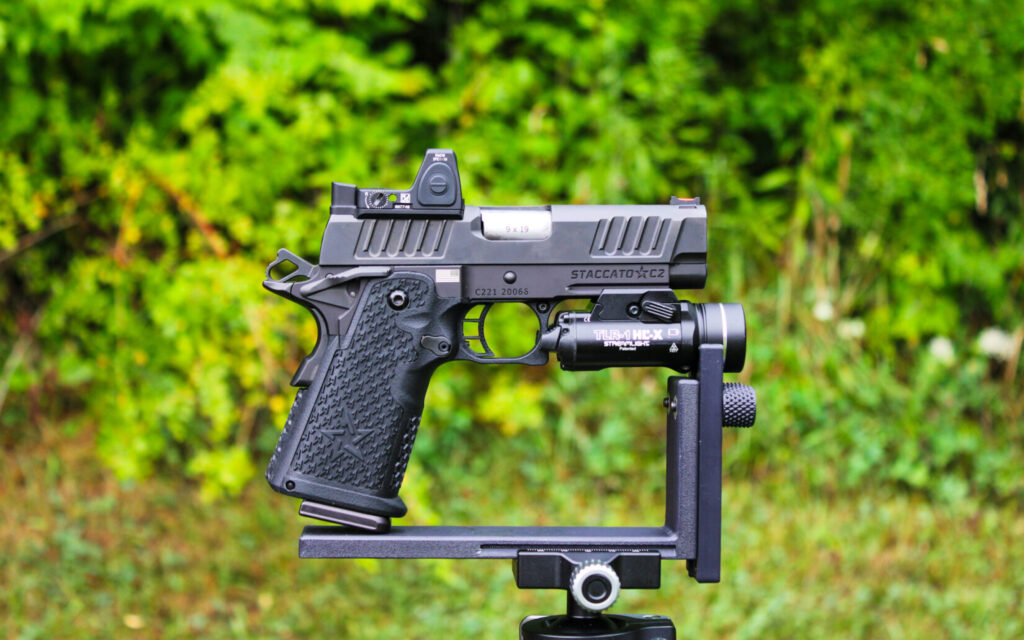
Staccato lists the C2 as a concealed carry pistol, but it’s similar in size to the Glock 19. To me, this makes the pistol a true “tweener,” suitable for both concealment and duty use.
How Does the Staccato C2 Compare to a Glock 19?
The C2 is slightly longer, about a half-inch taller, and a few ounces heavier than a Glock 19 Gen5—but its grip is actually a hair narrower.
Side by side, the numbers confirm my point.
| Spec | Staccato C2 | Glock 19 Gen5 |
|---|---|---|
| Overall Length | 7.5″ | 7.28″ |
| Height | 5.5″ | 5.04″ |
| Width | 1.3″ at grip (1.49″ at safeties) | 1.34″ |
| Weight (no magazine) | 25 oz. | 21.52 oz. |
| Capacity | 16+1 | 15+1 |
The C2’s feature set is exactly what you expect from Staccato. At this point, I wouldn’t say anything surprises me, but these are the essentials. From the moment you pick it up, the lightweight aluminum frame—with its durable anodized coating—suggests that this gun was built to be carried frequently and hard.
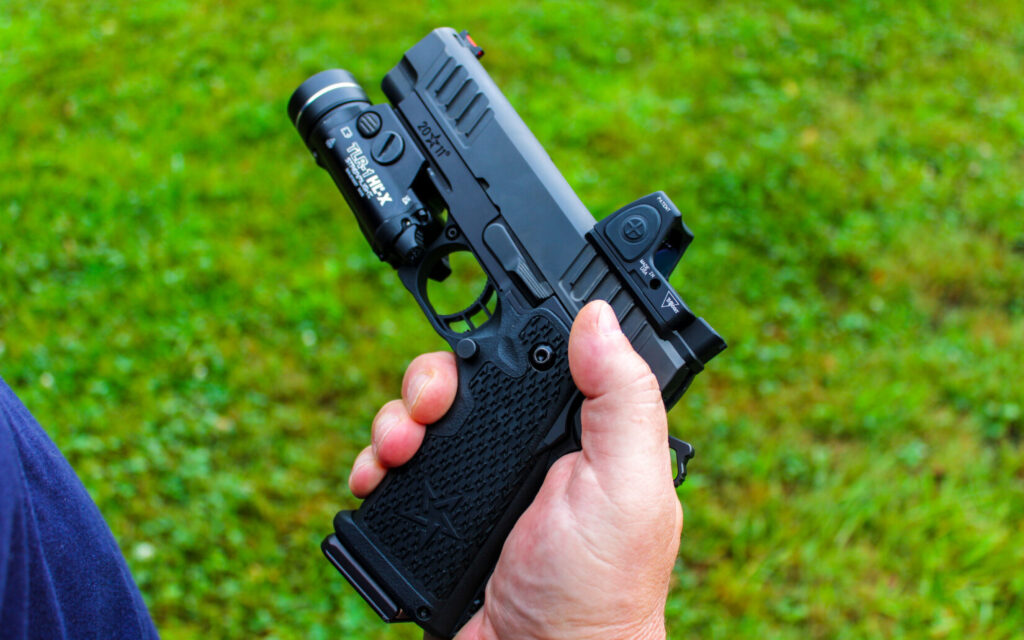
Staccato’s emphasis on precision is clear in the optic-ready design, which supports both compact and full-size optics, but you must purchase a plate—more on that later.
What’s in the Box
The C2 ships in a specially designed Staccato soft gun bag that accommodates up to five magazines and includes a padded divider. Two 16-round magazines, a cable lock, and documentation are included in the package.
SETUP
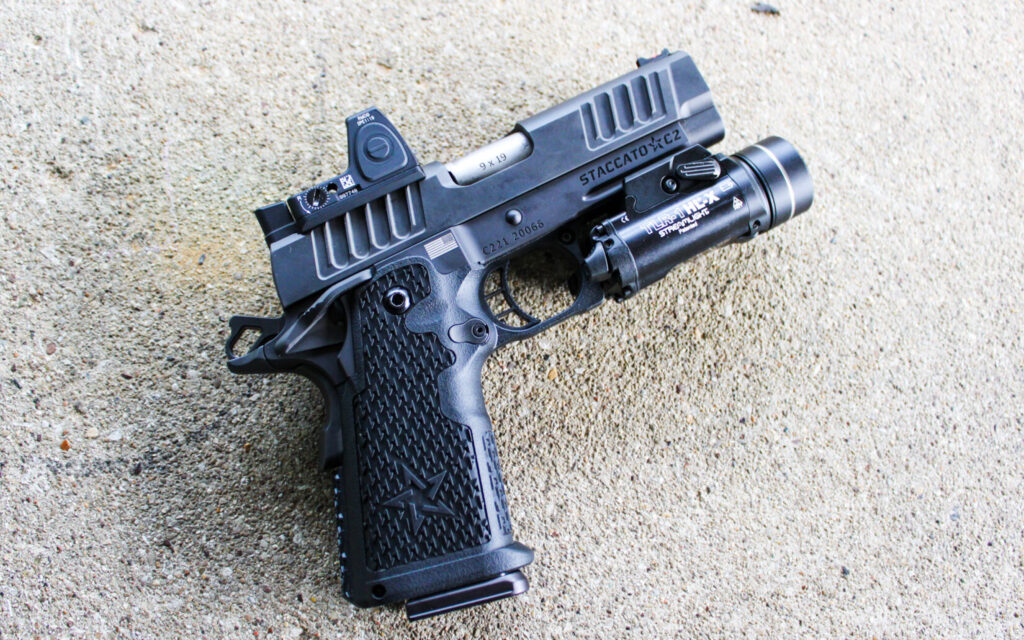
Since Staccato doesn’t ship with an optic plate, I had to pick one up from Dawson Precision. I selected an RMR-footprint plate. For those wondering, those plates are roughly $125–$130 apiece. That’s a real added cost on top of the pistol.
Why the high price? These plates incorporate the rear sight, which increases the price. It’s not a simple plate, like other options.
I wish Staccato would bring over the HOST mounting system used in the newer HD models to their legacy SKUs. These plates are not only cheaper—Staccato’s HOST RMR adapter lists at about $75— but are also free of the rear sight. I’m sure some engineering changes need to be made for this to work—one can hope, though, right?
For optics, I chose the tried-and-true Trijicon RMR. It’s not the most feature-rich option, but it’s durable and has a proven track record.
In my experience mounting red dots on Staccatos, removing the single screw in the rear sight can be a herculean task. Use a properly sized Torx bit (not one that’s starting to wear down) and go slowly, applying steady pressure. In my previous life behind a gun counter, I sent more than a few back because customers stripped the screw.
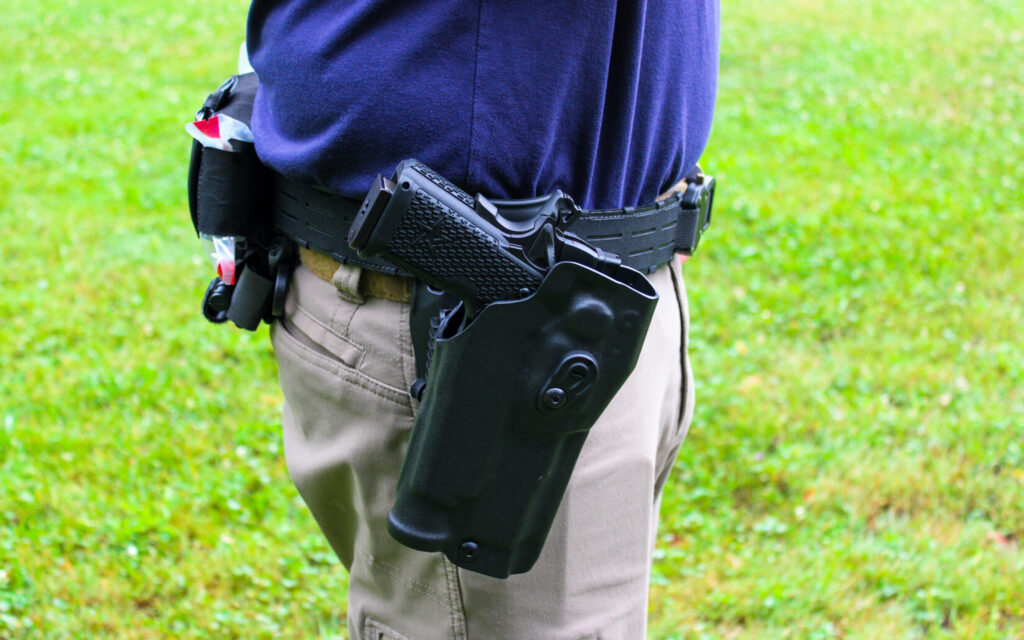
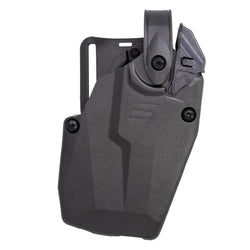
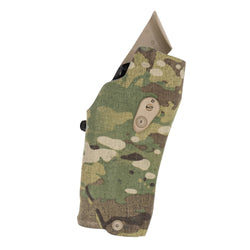
As I am throughout this series, I’m running this pistol stock. That keeps things on an even playing field. For a holster, I’m using the Safariland 6354RDSO – ALS Holster w/ QLS19 Fork and a mid-ride QLS adapter.
This is my go-to setup for any kind of “tactical” shooting or training. Since I’m not in law enforcement, I’ve removed the hood for easier access. This is mounted on the Safariland BASELINE MOLLE Belt, which I’ve grown to like quite a bit.
AT THE RANGE
A note on ammo. All “range ammo” is Blazer Brass 115-gr FMJ (5200). For accuracy testing, I used Hornady American Gunner 115-gr XTP. I picked up all the ammo for testing from Ammunition Depot.
Let’s get into the drills and accuracy testing.
Bill Drills
I start at the low ready with the target at about 7 yards, aiming for six A-zone(ish) hits in 1.25 seconds or less.
My average time over six attempts with the C2 was 1.06 seconds. First shots were at .34 seconds, while follow-ups hovered around .14 seconds. These were among the fastest first-shot times in the series.
My guess as to why the times were so fast: the gun is smaller and lighter than most others. This makes it easier to move, especially when working against gravity. The trigger felt pretty good in this test. It’s a curved shoe with a shorter length of pull than others. All this led to fast times.
Accuracy was okay, though more sporadic. This is also likely due to the weight—it’s not as controllable.
Accuracy Testing
For this portion, I’m shooting from a pistol rest mounted to a tripod. This keeps things as stable as possible and really showcases the pistol’s capability.
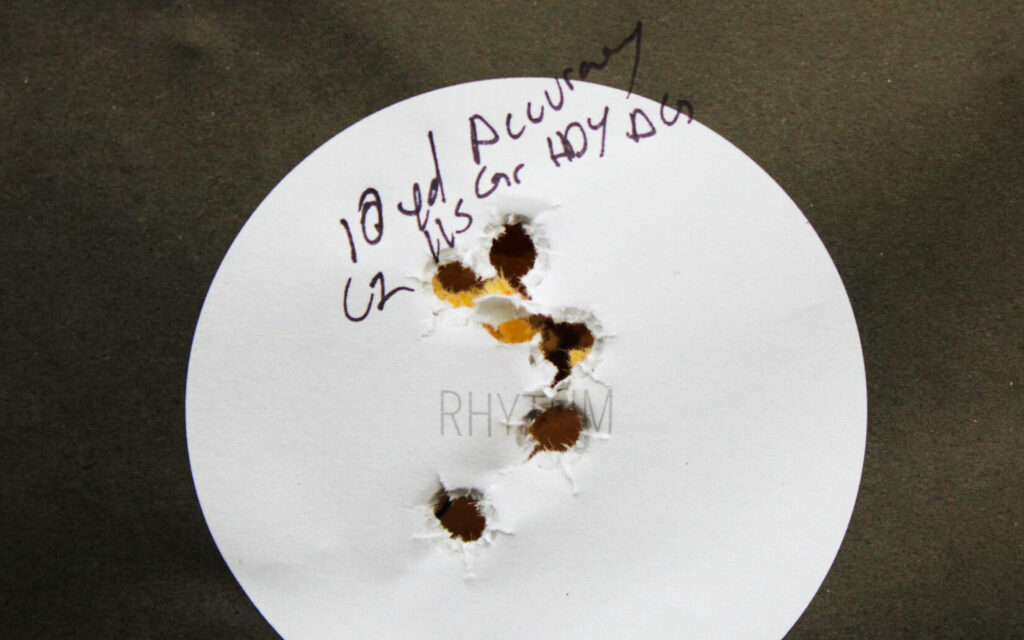
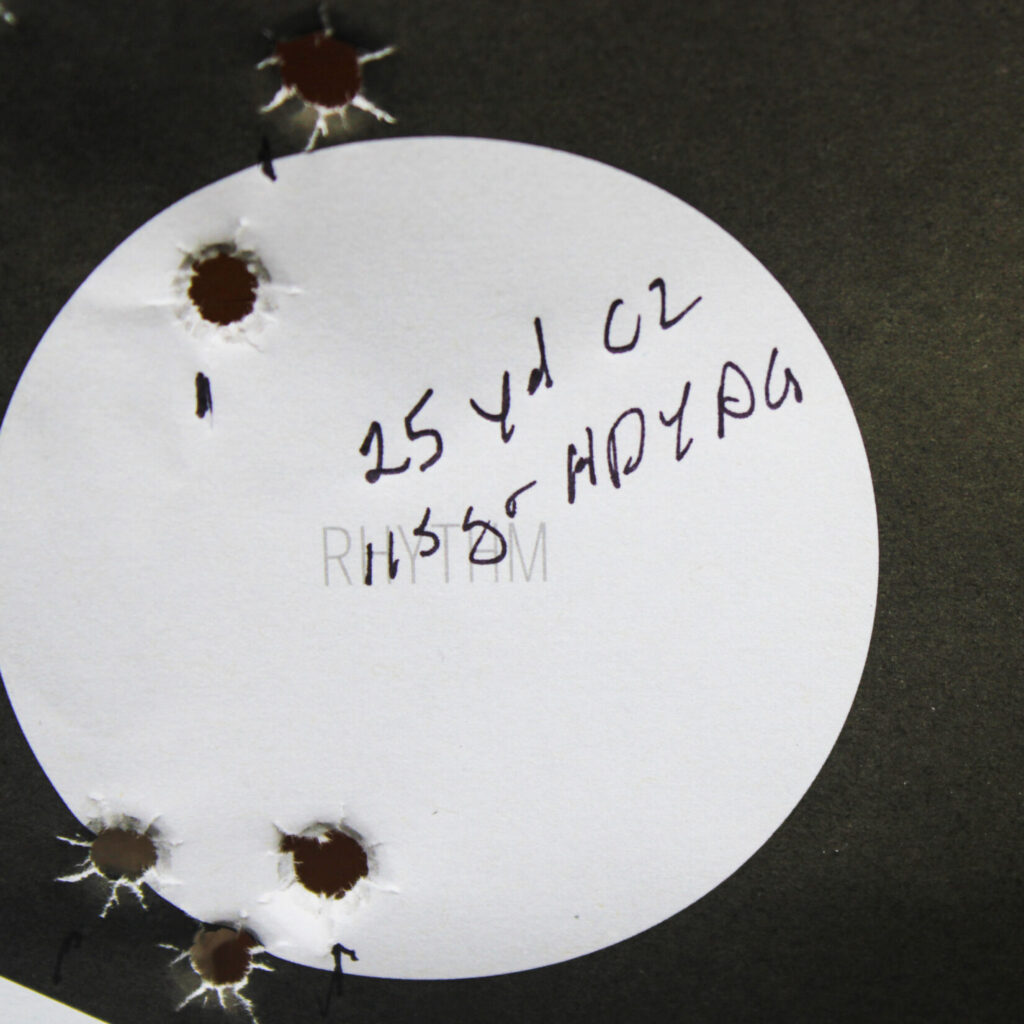
At 10 yards, the C2’s accuracy was average at best, at 2.25”. At 25 yards, the group opened up to over 3”. As you can see in the photo, there was a three-shot cluster at the circle’s bottom and another two-shot cluster at the top.
1-and-1 Drills
The 1-and-1 is still my favorite drill in this series. I start the same way I do for Bill Drills. One shot fired, slide lock, reload, one shot. My goal is to hit a 3.25-second par time.
I have small hands, which can make shooting 2011-style pistols interesting. For this, I’d roll my strong hand to engage the magazine release, then use my support hand to hit the slide release before moving back into position. The C2 feels a little smaller in circumference than other 2011-style pistols I have shot, which helps.
With the C2, my average was 3.15 seconds, with a first shot of .44 and reloads in 2.71 seconds. There’s an issue with the sights that can make it difficult to find the dot, but I’ll explain that in “Where It Falls Short.” I’d say it’s solid and slightly above average.
The Humbler
I closed out the range session with the Humbler, a finisher I picked up from James Williamson of HK. It’s a 10-second par time. Either start with the pistol holstered or on a bench. Fire 10 shots into the A-Zone, then reload and take two shots into the head A-Zone.
I had one line break in the head box and finished in 11.02 seconds—just over par. Again, the issue was finding the dot on the reload (which is why I missed, as I rushed the shot).
Note: If you’ve heard of “The Humbler” before, this is not that drill—it’s a different, shorter exercise that happens to share the same nickname.
Sizing Up the Staccato C2
Where the C2 Delivers
As with any Staccato I’ve shot before, the fit and finish are quite good. There’s no rattle, and the trigger is consistent, with no creep or side sway. But for $2,300, that should be the minimum standard, right?
I don’t have the biggest hands in the world, which can be a problem when shooting 2011-style pistols. The grip’s circumference is larger than that of any polymer-framed gun I own, but not as large as other 2011s in this test. So that’s a positive.
Mixed Results Here
The controls were pretty standard. As you all know by now, I’d prefer an extended slide release and the ability to add a paddle to the magazine release. The C2 doesn’t have either as an option.
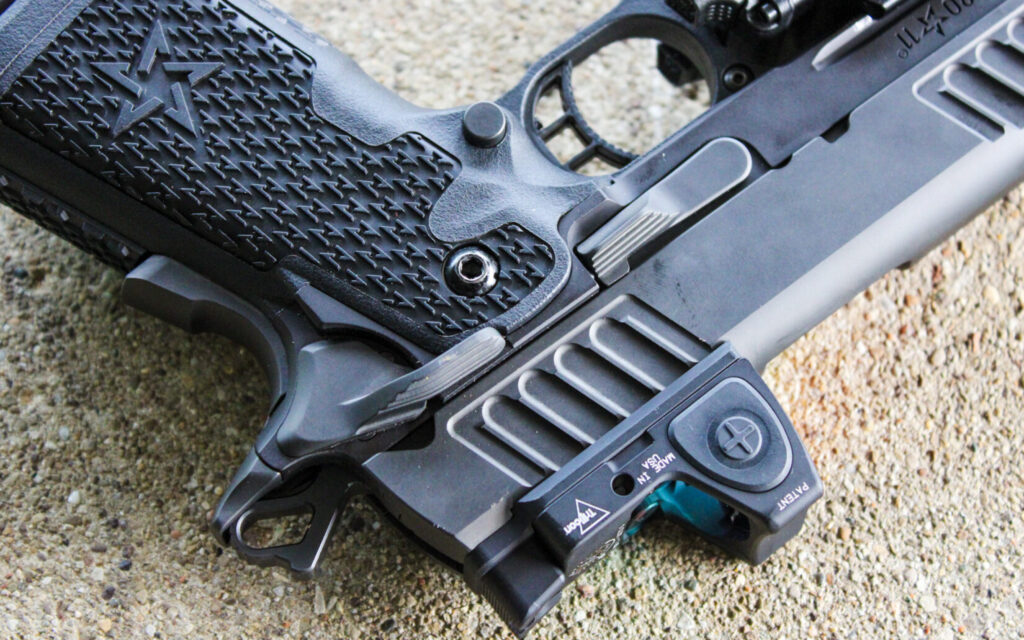
The magwell is definitely on the smaller side, which probably also hurt in the 1-and-1 drills. The texturing is just okay. I’d prefer it to be more aggressive, but that’s just me. It might be fine for you.
Where It Falls Short
One of my biggest gripes is the iron sight setup. Since Staccato loaned me the pistol for this project, it’s not set up the way I’d like. The Staccato optic mounting plate is made by Dawson Precision. The plate integrates the rear sight and positions it at optic height so it can co-witness with the dot.
Here’s the catch: the front sight has to match the plate. The front sight on this sample sits at a lower height meant to pair with a carry plate, while my RMR plate calls for a taller front. When ordering a Staccato, buyers can select a taller front sight. I didn’t have that option, so the front sight sits much lower than the rear. Because of the mismatched front sight height, I lost the dot entirely on reloads.
ZOOMING OUT
The Staccato C2 is a compelling option for duty, carry, or home defense—especially when set up correctly, though I might revisit that. Although it isn’t cheap, it is actually less expensive than other duty-style 2011s in this test. But that doesn’t mean it’s better; it’s all about value per dollar.
The C2 is still the benchmark for fit, finish, and speed, and it’s the most affordable gun in this tier. Next up: the Watchtower Defense Apache Commander.