
You can always default to 100 yards for a hunting rifle zero. Remember that as you read this justification for the 50-yard zero. The 100-yard zero is the easy answer for most hunting rifles across the world.
My apologies; if you are in some countries, it is actually 100 meters instead of yards. There is a time when the 50-yard zero makes sense, and in my experience, it has benefits over the 100-yard zero, along with its share of drawbacks.
To understand why 50 yards might make more sense than 100 yards, let me break down the argument into easy-to-digest concepts.
The Zero
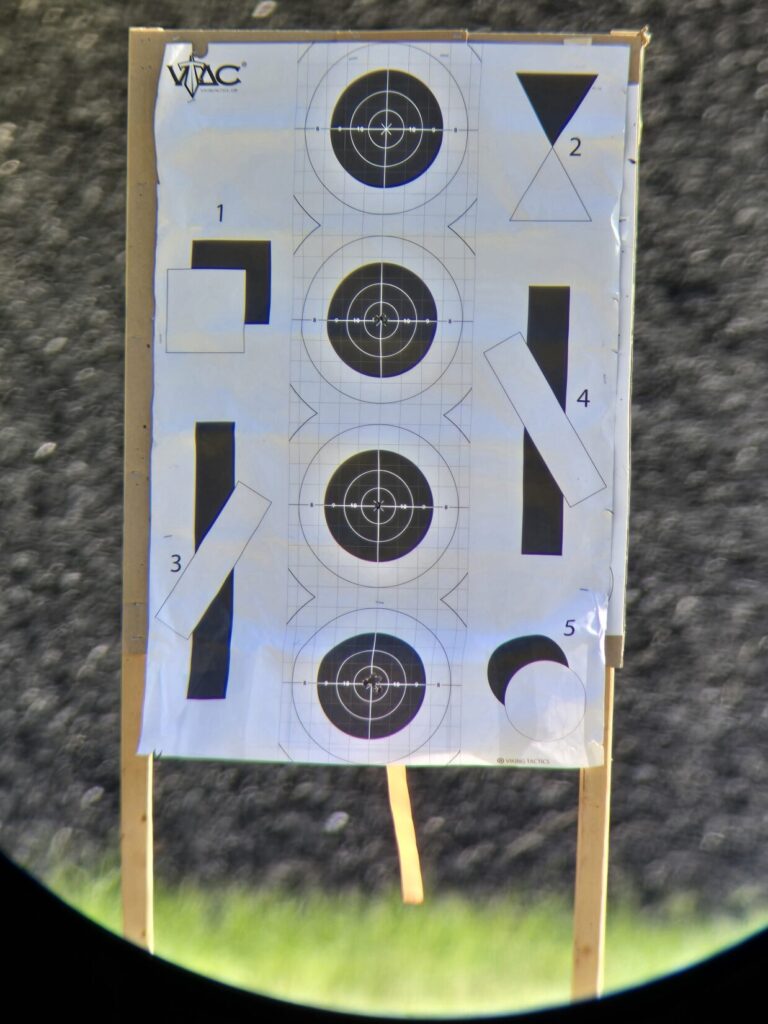
A firearm zero, by definition, is where the firearm’s point of aim matches the point of impact at a set distance. Zeros can be set for any distance, but handguns with red dots are commonly zeroed inside of 25 yards, and rifles typically get zeroed out to 100. A zero can apply to iron sights, dots, scope reticles, and lasers.
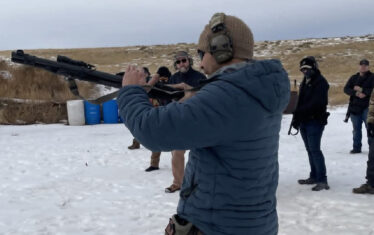
As long as you understand your rifle zero, you can determine where the point of impact will be at ranges before the zero distance and where the point of impact will be after. At the Gunsite 270 rifle course I attended back in 2021, our rifles were zeroed at 50 yards, and that worked well for us out to 200 yards. That course helped steer my practical rifle’s zero to 50 yards instead of the typical 100.
Why a 50-Yard Zero Fits the Deer Woods
I live in North Carolina, and I grew up in Connecticut. The woods on the East Coast are thick, and the typical hunting scenario is within 50 yards. From a tree stand, it can be very difficult to get a clear line of sight without a tree branch or leaf foliage in the way.
Compare this with the wide-open spaces found in the Midwestern and western states. Out west, you can see hilltop to hilltop and across valleys for hundreds of yards. These two regions couldn’t be more opposed.
For my purposes, sighting in at 50 yards is the best option for my most likely scenario. The best-case scenario is having a deer offer a broadside shot right around that distance.
If this scenario sounds like the one that is most common for you, the 50-yard zero should be your preference too. This zero won’t work for everyone, but for those hunting in places like I do, it is an excellent option.
Understanding Maximum Point Blank Range
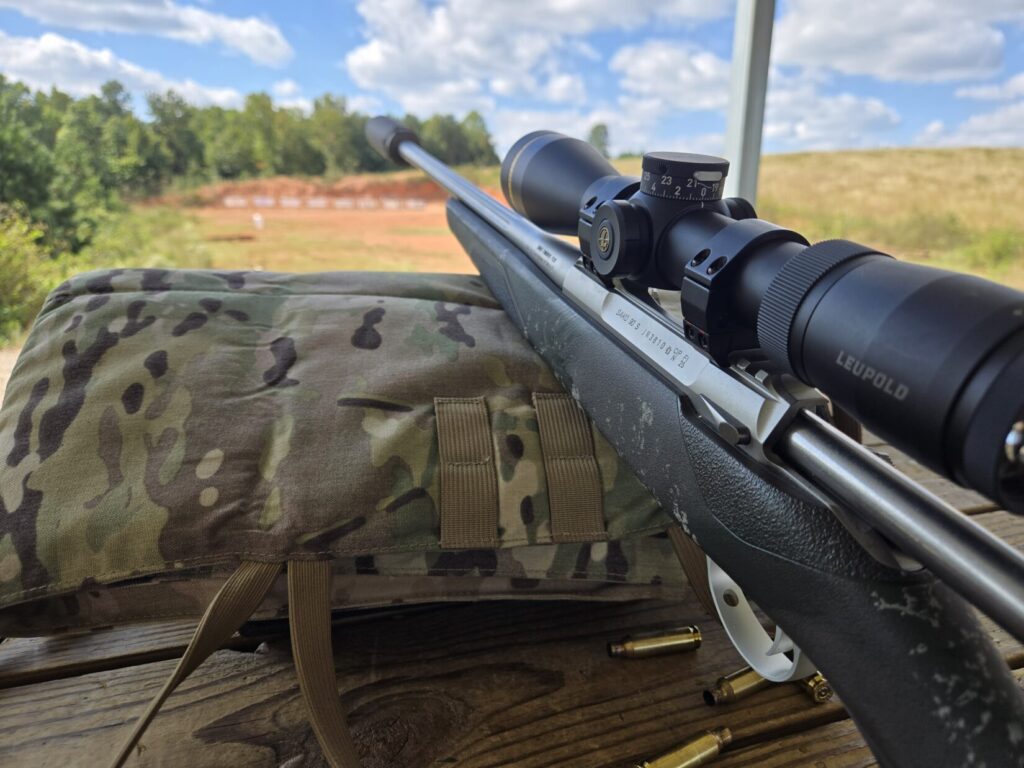
One of the reasons why the 50-yard zero works for me can be best understood through a brief explanation of maximum point-blank range. When we use our rifle, it has a line of sight through the optic, a line that extends perfectly straight from the muzzle, and a path the bullet travels.
Since the rifle barrel has an imperceptible amount of angle, the bullet will fly in a very shallow arc. Where the bullet first intersects with the line of sight is referred to as the “near zero.” For a short distance, the bullet will travel higher than the line of sight until it reaches its max ordinate before it intersects with the line of sight a second time, referred to as the “far zero.”
Depending on the size of your target (a deer’s vitals are often described as an 8- to 10-inch circle), you can determine how far you can shoot, aimed at the center of your target, and still hit it somewhere between the highest point of the bullet’s travel and the lowest spot on the target.
Applied to My Rifle
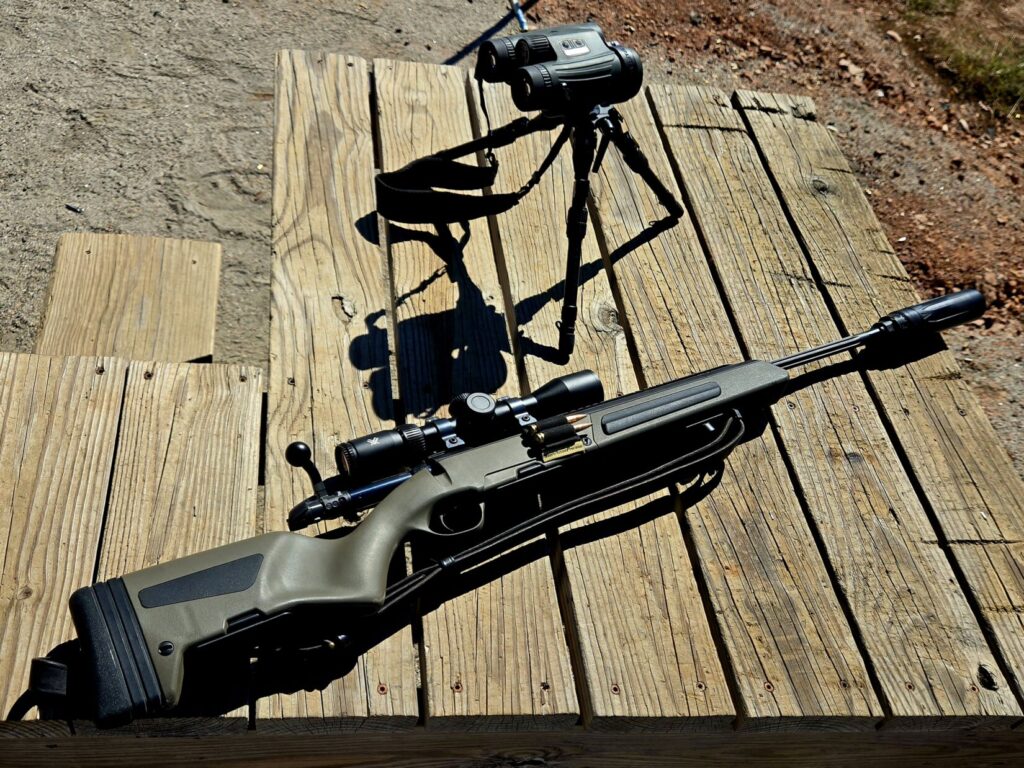
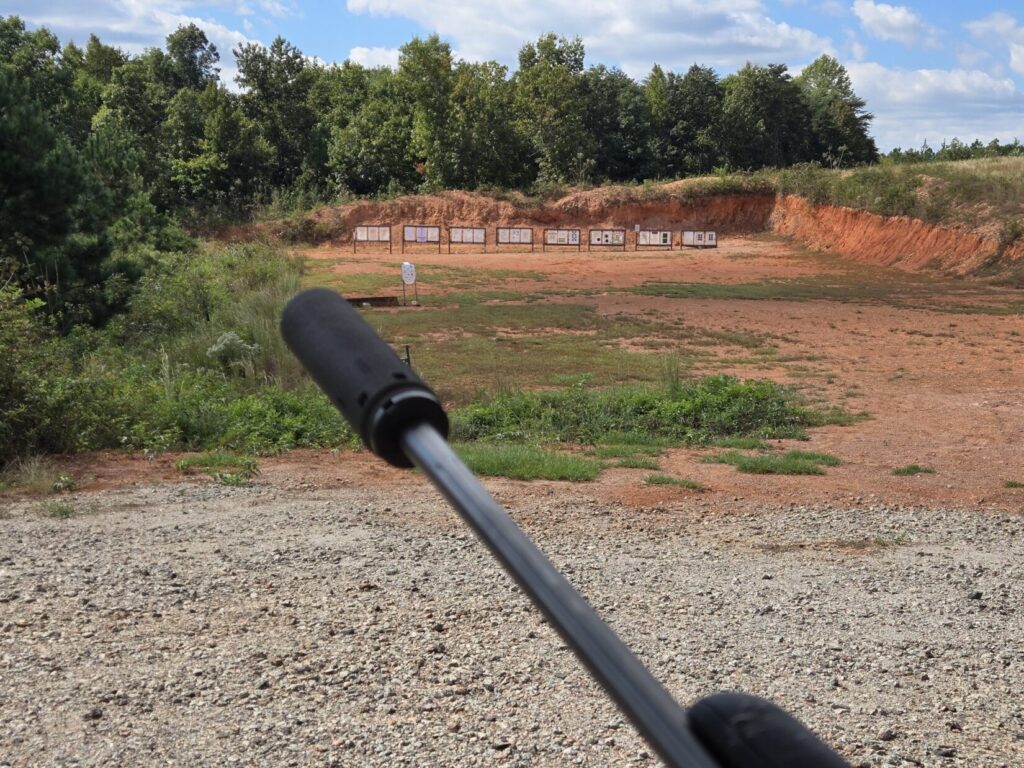
My Robar .300 Winchester Magnum rifle prefers a 200-grain Hornady Precision Hunter round, and through the Lilja barrel, it chronographs at 2875 feet per second. With a 50-yard near zero, the far zero is around 175 yards.
Using ballistic calculators easily found online at places like shooterscalculator.com, I can calculate that if I aim for the center of my target, my bullet will not be more than 2.5 inches high or low. I can further calculate the drop of my bullet and where it will impact beyond my far zero and maximum point blank range.
It may sound crazy to some to zero a .300 Winchester Magnum at only 50 yards, but that gives me the greatest chance of hitting a very small target of only 2.5 inches from the muzzle to far beyond the farthest line of sight I have in the woods where I hunt.
Perceived Motion
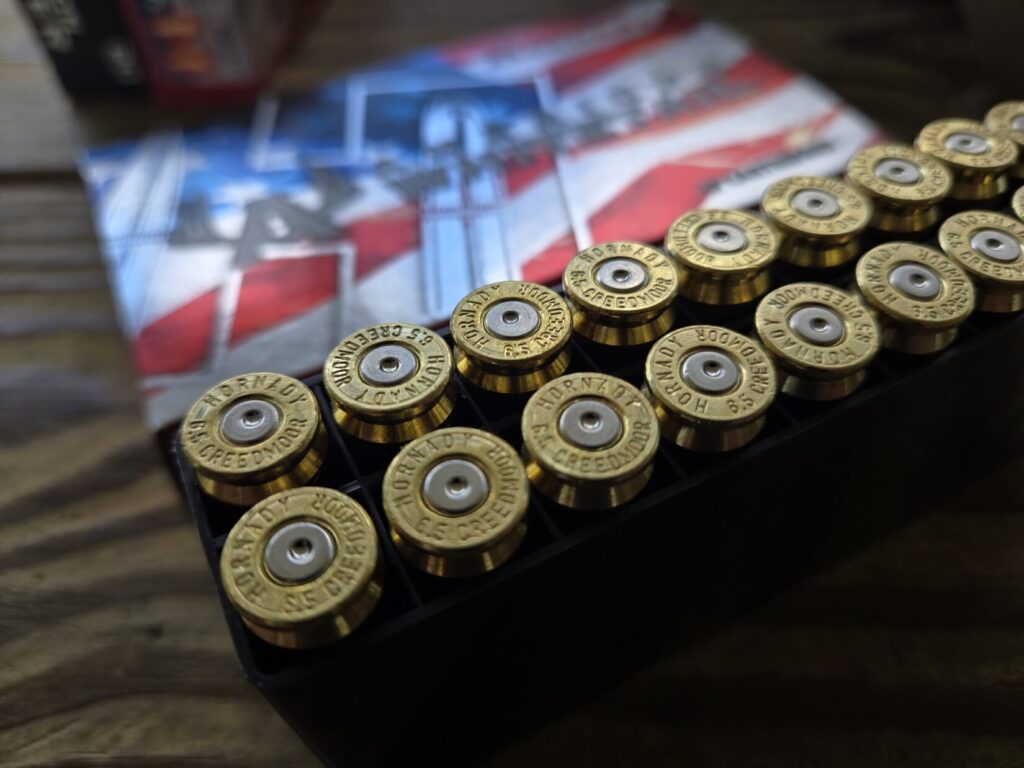
Perhaps one of the most practical reasons for the 50-yard zero is the ease of setting a 50-yard zero. After many years of traveling the country teaching firearm skills, I’ve come across many ranges that have very limited facilities. Some of these are indoors only and/or 50 yards only.
Finding a proper rifle range may not be the easiest or most convenient thing to do. Even if the hunter is limited to a 50-yard zero, it isn’t the end of the world and, in fact, it may even be better for the mind.
Just like long-range pistol shooting, the distance to the target can get into your head. At higher magnification, the reticle will have more perceived motion.
To see a greater distance, shooters tend to crank the variable power to the highest setting. At only 50 yards, the shooter can use a lower magnification setting, which reduces the perceived movement of the reticle.
The Next Step
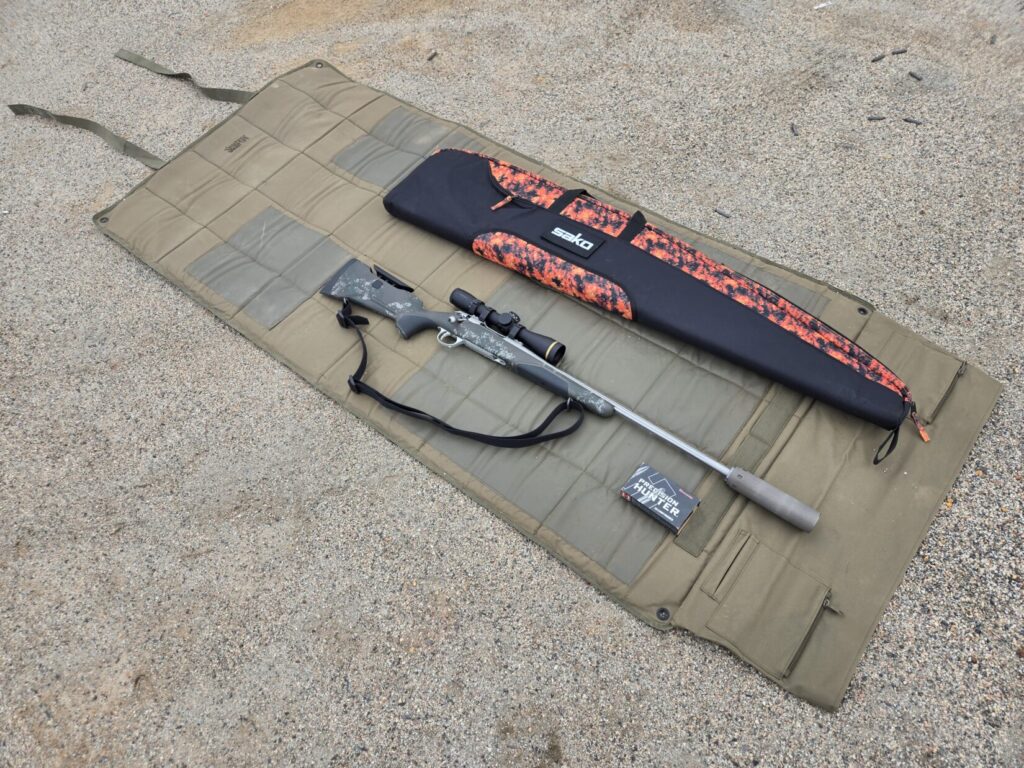
Once you understand the maximum point-blank range and where your bullet impacts at both near and far zeros, you can use a ballistic calculator, a Kestrel, or the analog method to determine where your round will impact out to whatever your upper limit is. An online ballistic calculator like the one offered by Hornady will give you a pretty good idea of what your holdovers are and what your bullet drop is at different intervals.
The downside to using an online application is the fact that it doesn’t account for real-time atmospherics. The same is true for getting old-school analog data one day at one specific temperature with a static density altitude reading.
The best option for the hunter is to pick up a Kestrel and build out a rifle profile for it. A Kestrel isn’t cheap, but it makes up for the cost of ammunition used in the analog method, and it also will save you the aggravation of missing your shot. If you find yourself shooting in an environment you are not accustomed to, your Kestrel will save you the time of zeroing your rifle again.
Learn It Before Hunting Season
The difference between a 50-yard zero and a 100-yard zero doesn’t look like much on paper between 50 and 100 yards, but it definitely makes a difference when you stretch your rifle out to longer distances. While I know my “East Coast zero” works well for me in just about all hunting scenarios I’ll encounter here, I also know I enjoy traveling to hunt, and I want to get the most out of my rifle out to 500 yards.
At the end of the day, you can decide if 50, 100, or 200 yards is the right zero for you, but make sure you know what your round is doing leading up to and after that zero. Learn it before hunting season, or learn it the hard way during the season when you miss.