James Butler “Wild Bill” Hickok fired a steadied shot from 75 yards at Davis Tutt with a .36-caliber Colt 1851 Navy Revolver on July 21, 1865, in Springfield, Missouri. According to the history of the event, Davis Tutt fired first, and Wild Bill braced his pistol across his support forearm and hit Tutt right in the heart. While the events leading up to this duel were largely attributed to terrible decision-making, the fact that his shot hit his mark is pretty incredible considering the technology of the time.
Over 150 years later, the idea of long-range pistol shooting intimidates many shooters. Some believe their pistols are only effective within a limited range, while others stretch out that distance with strong fundamentals and understanding. Hitting your target at long range isn’t impossible, but it is considerably more difficult than working inside of bad-breath distances. Here’s how you can develop “Wild Bill” skills.
Understanding Ballistics
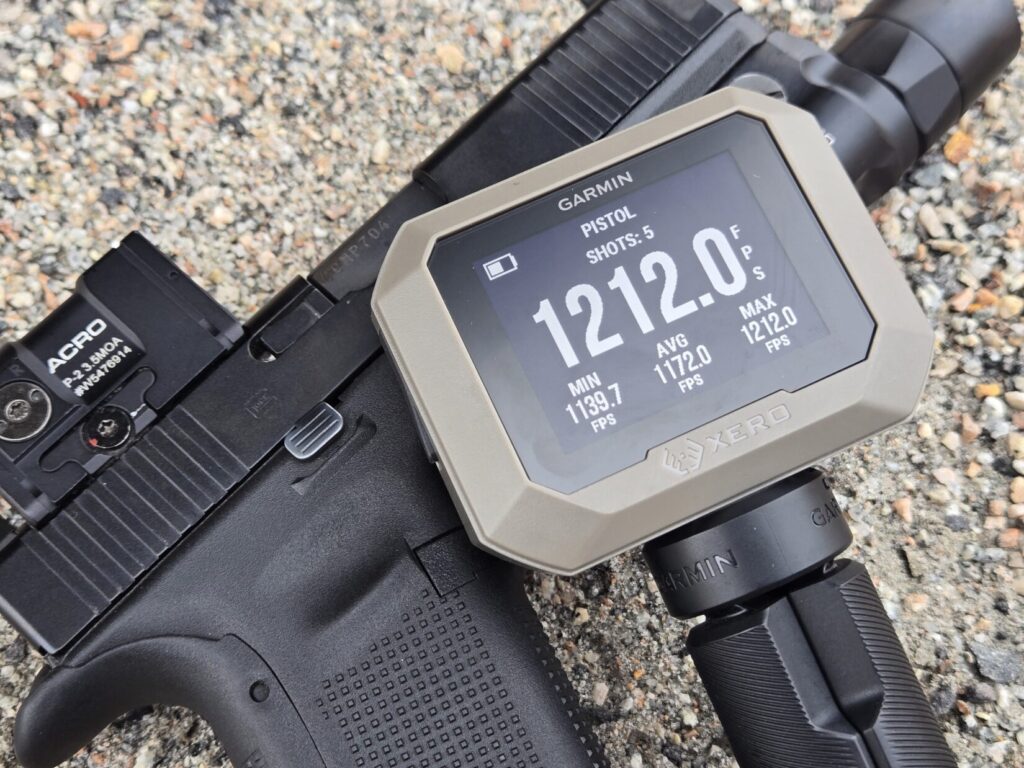
Wild Bill used a cap and ball revolver with fairly crude sights. Compared to your modern pistol, his hardware was less reliable and harder to aim with a simple front post. The modern pistol is capable of incredible accuracy with a shorter barrel than the 7.5-inch revolver, and the ballistics of a modern centerfire cartridge surpass the approximate 950 feet per second muzzle velocity of the older wheel gun, too.
Do a little quick research, and you’ll find the 9mm 115 gr full metal jacket bullet travels 1100 feet per second and will drop just 9-15 inches at 100 yds. The flying ashtray that is the 45 ACP with a 230 gr bullet travels about 825-850 FPS and drops 15” to 20” at 100 yds.
Shooting at 100 yards usually requires holding the top of the front sight with the top of the target instead of splitting it half-way from the bottom.
Braced Shots
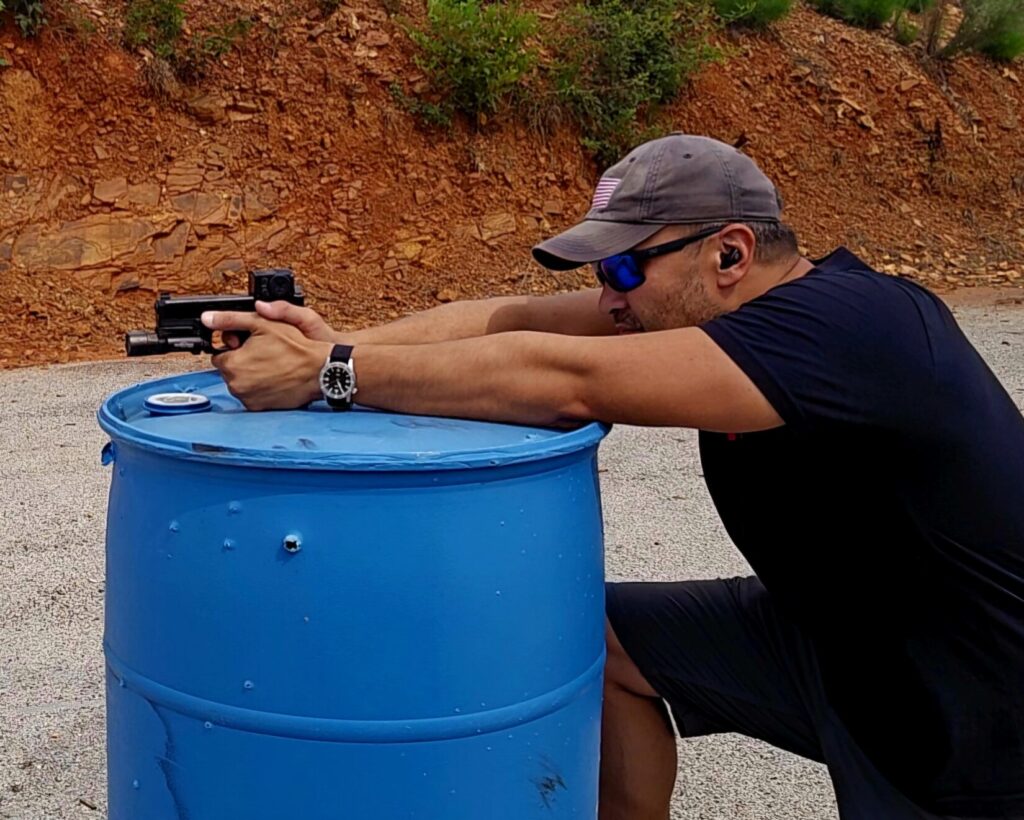
Eyewitnesses say Hickok and Tutt shot about the same time, and there are some historians who debate whether the winner did or did not brace his revolver against his arm or post. Since we cannot go back in time, we can only test how well steadied shots hit their mark in the present.
Shooting with a support hand in a traditional two-hand position is going to give greater accuracy than one-hand shooting.
Kneeling
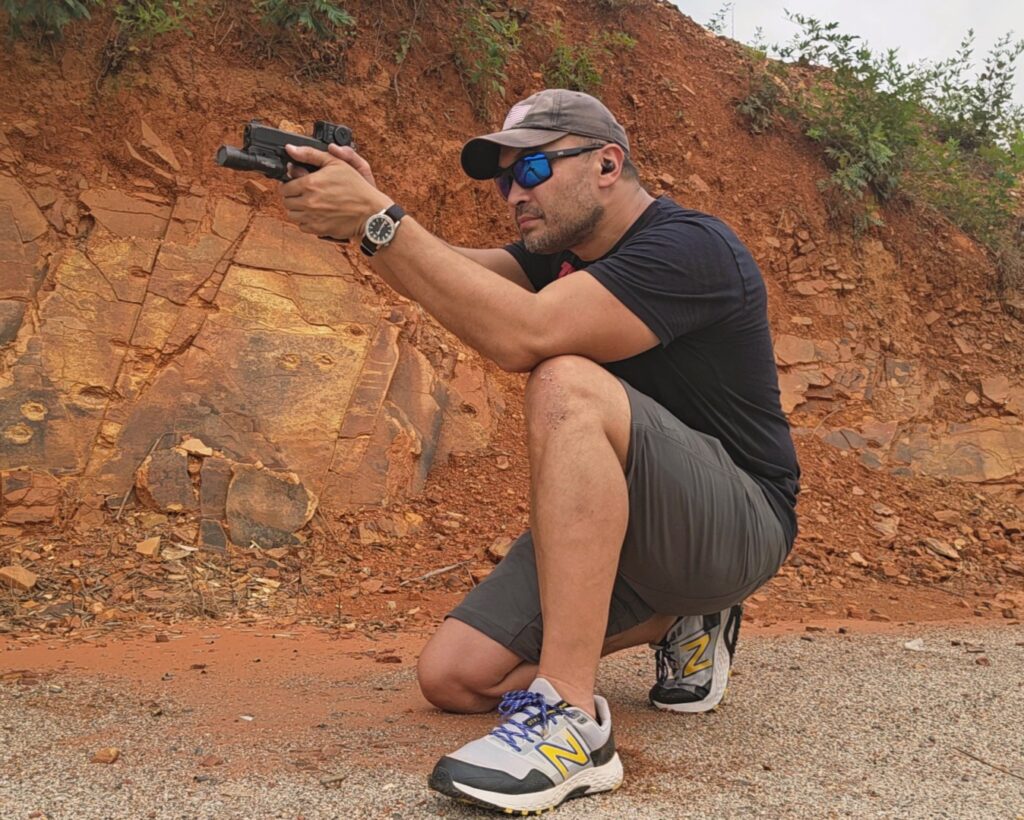
Dropping to a knee allows the shooter to rest their support-side elbow on the inside of their support-side knee. When shooting from a knee, it’s important to never go bone-on-bone, as this creates too much instability. It’s better to use the back of your tricep on your kneecap.
Prone
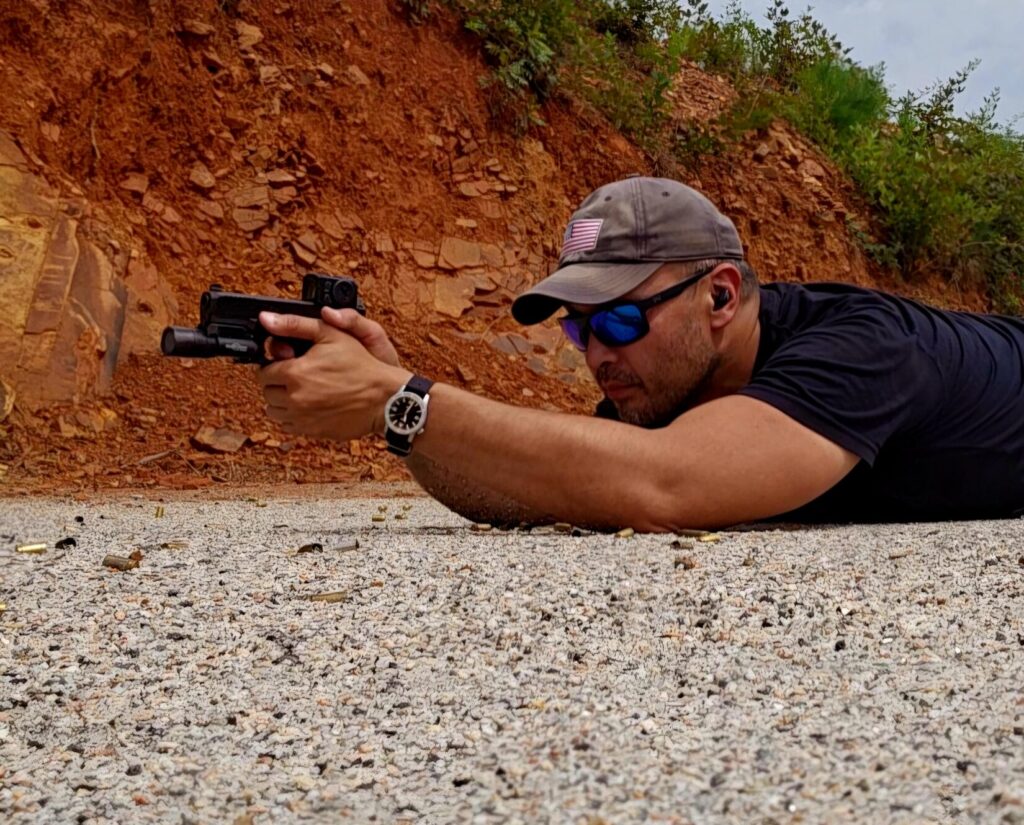
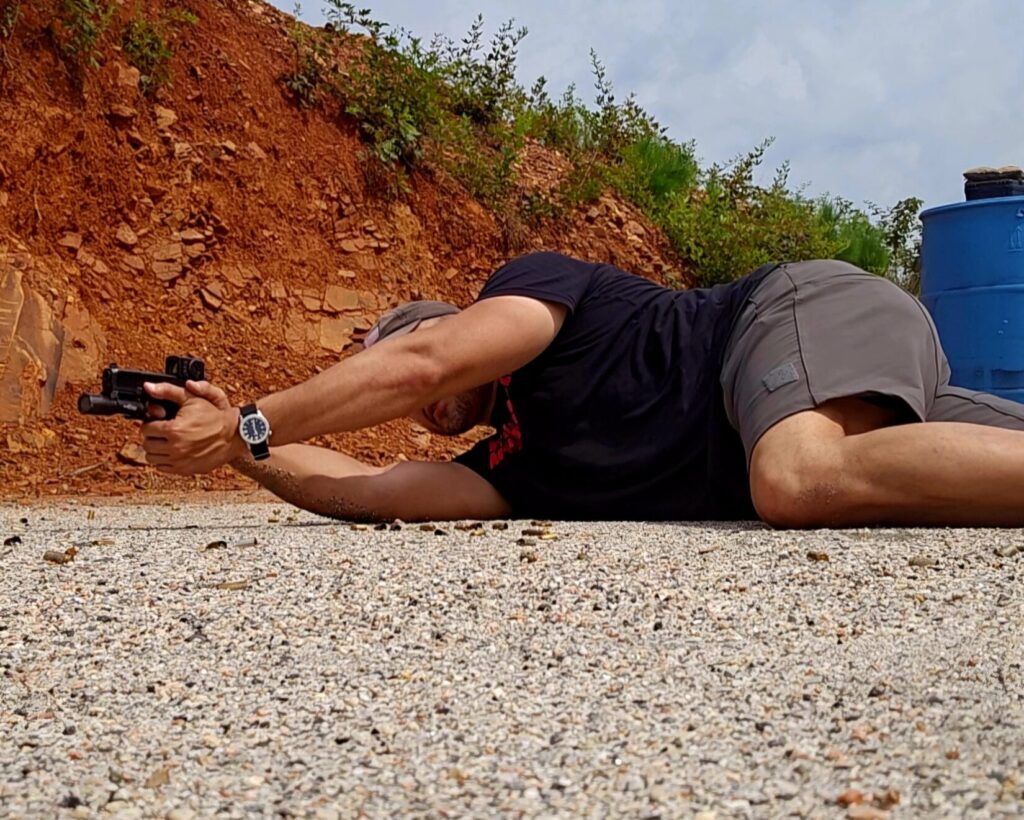
You can also take an incredibly steady shot from a prone position. We are used to shooting rifles from this position, but we don’t often drop to our bellies when using a pistol. Perhaps a handgun hunter maintaining a low profile while creeping through the bush is more accustomed to this type of shooting, but the average defensive-pistol shooter isn’t.
Shooting prone allows the shooter to modify their grip to brace the pistol against the deck. Other variations of shooting prone involve putting the support-side leg over the other, rolling slightly to the side, and resting your head against your shooting bicep. This position opens up the chest and helps the shooter breathe more comfortably than being perfectly prone.
Rested Positions
One of the more stable shots you’ll take is from a truly rested position. Resting the weight of your forearms and pistol on top of a platform will prevent muscle fatigue from holding an extended pistol out.
A rest can be made from a backpack, a fence line, a fallen tree, anything that will support your forearms and pistol. The platform can have give, or it can be solid with no movement. You’ll find a preference through training.
Front Sights
Front sight focus is even more important at 75 yards and beyond than it is inside of 10 yards. Out to about 10 yards, a shooter can backplate their target, where the larger sight picture of the outline of the back of the pistol is superimposed over the target.
With a proper grip, backplating can get a shooter in the “A” zone easily and in the “C” zone at greater distances. It’s interesting how learning to aim your pistol in various ways helps you understand how to be better in other ways. Backplating requires learning how to point the pistol well, and then using the sights helps you fine-tune your aim.
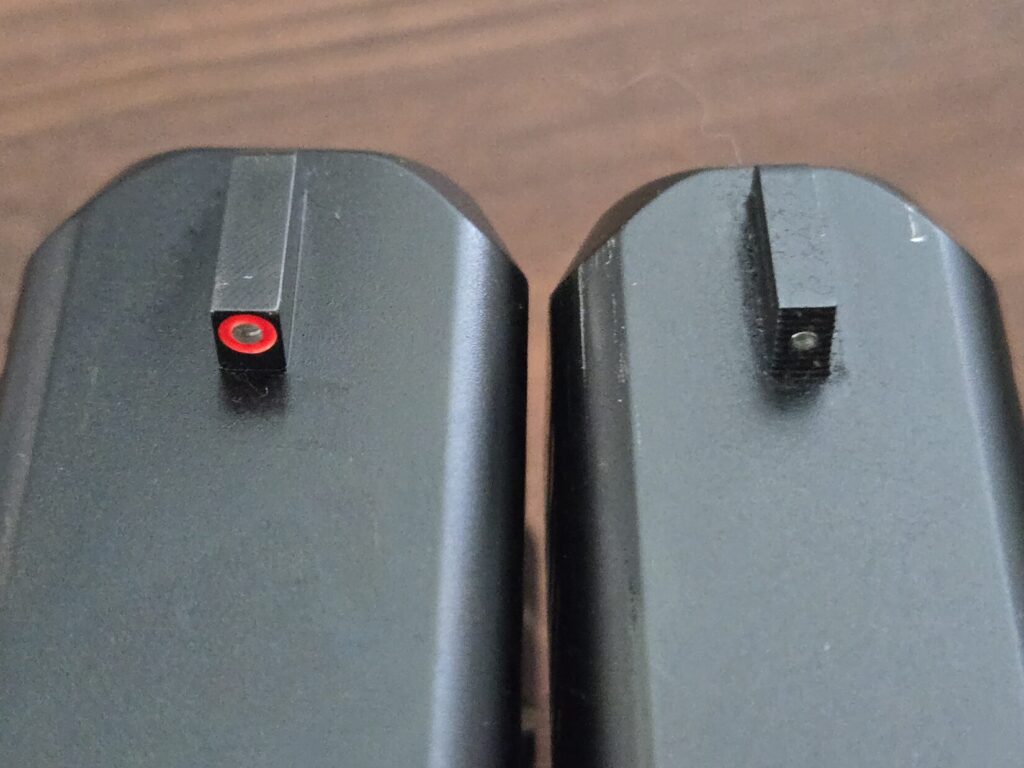
For long-range shooting, the shooter cannot backplate the target and must front-sight focus. When it comes to long-range pistol shooting, a fine front sight with a narrow blade will be easier to use than one with a large dot.
Unlike backplating, where the objective is superimposing a larger sighting reference over the target, at long range a smaller front sight will help you aim small and miss small. A narrow front sight doesn’t occlude the target as easily, and it may be possible to see the target better using one.
Red Dot Dominance
I have no doubt the red dot has changed pistol shooting in an irreversible way. Rather than having multiple focal planes to switch back and forth between, all the user has to do is superimpose the dot over the target and press the trigger.
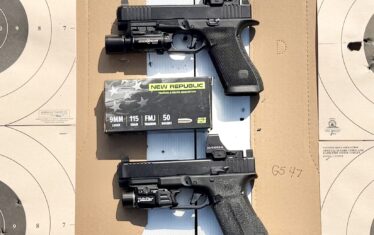
When the brightness setting is lowered and the red dot appears to have a smaller footprint, it is much easier to get incredible accuracy out of a pistol. On my Gen 5 Glock 45 pistol, the Glock Marksman Barrel is capable of exceptional accuracy, and paired with a red dot, it is easy to hit targets at 75 and 100 yards consistently.
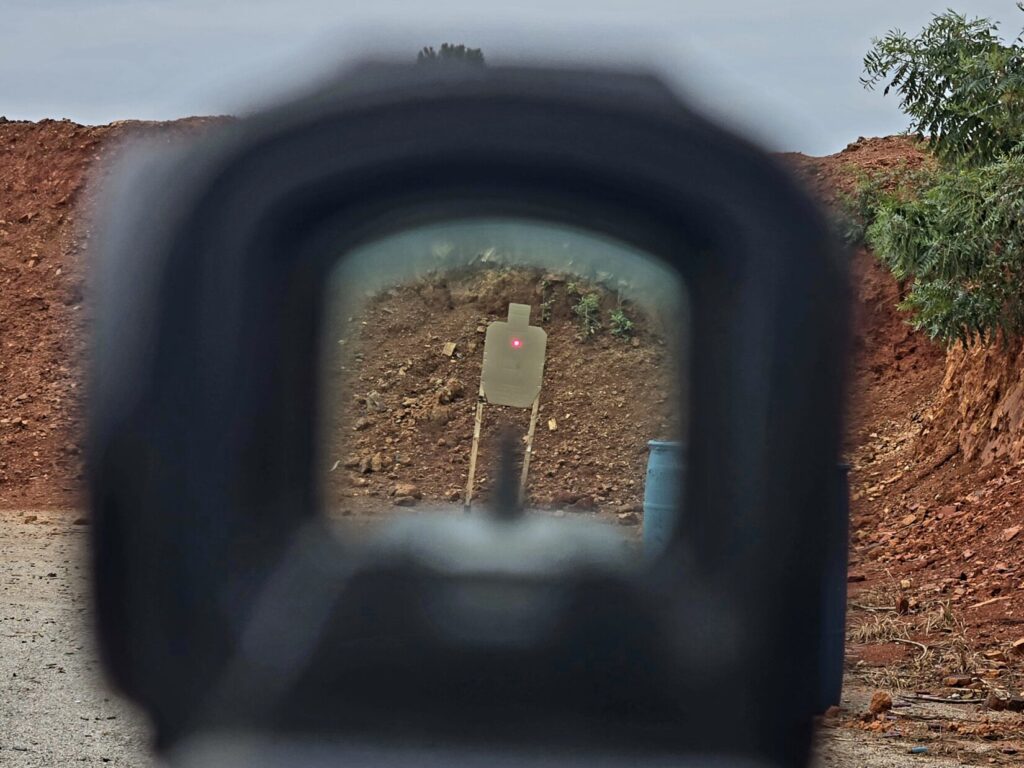
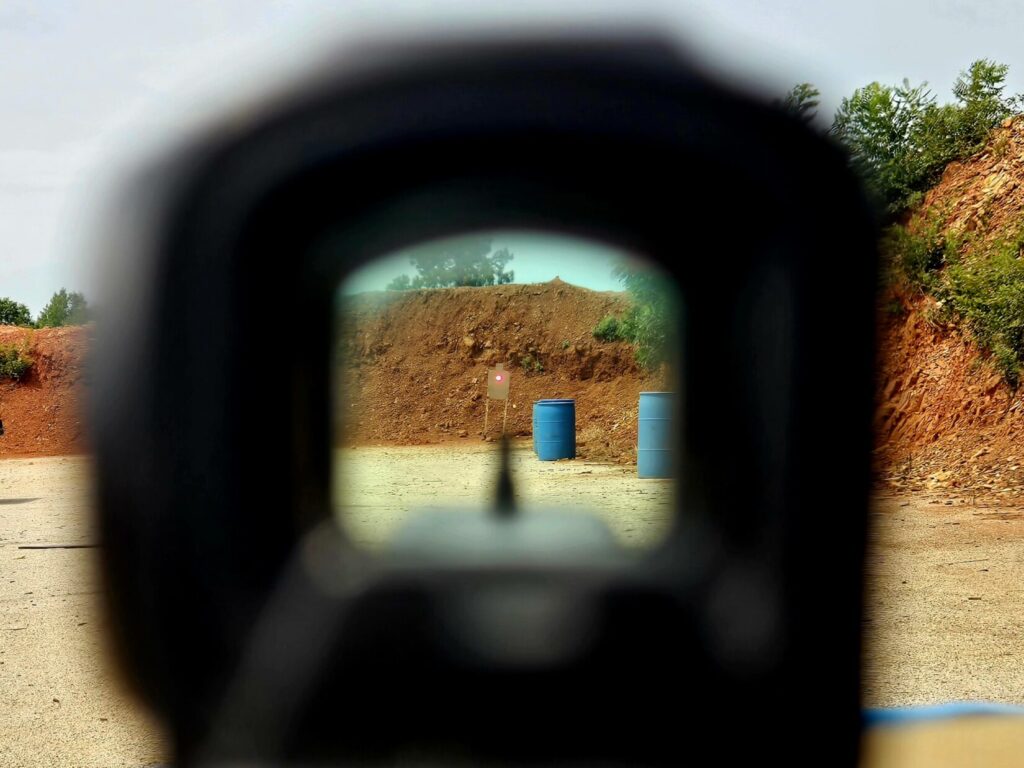
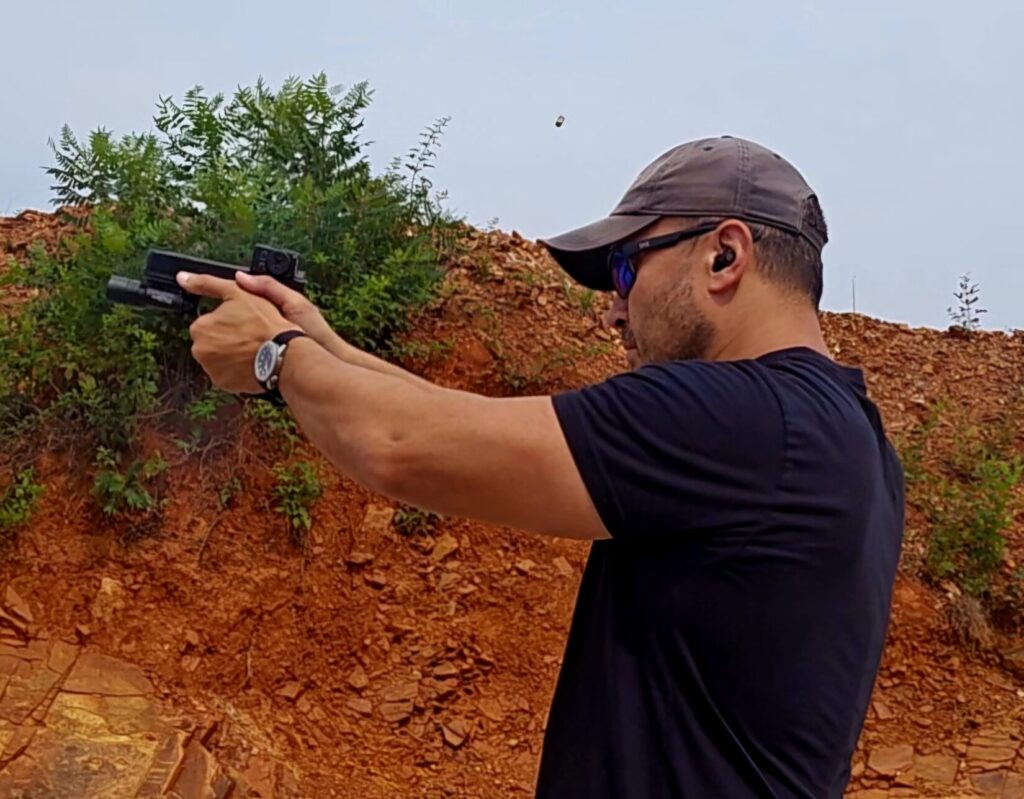
One way to gain confidence with the red dot is starting your practice at 25 or 50 yards, firing a group of five shots, and walking back 5 yards at a time. With each shot, slow, controlled trigger presses are performed as the shooter accepts the wobble of the dot.
When the shooter is able to predict when the dot is perfectly in place and can press the trigger beyond the wall, the shot will register on the target. When the shooter is only able to hit two out of five shots, this becomes the distance to work on. I’d rather train at this range than where I know I can hit over and over without seeing improvement.
Long-Range and Time Standards
There was a time when 25 yards was considered a far shot. Now, there are videos of professional shooters hitting targets well beyond 100 yards with their pistols. With enough time and staging, you can learn to hit a target at long range.
If you find yourself bored by the basics, add in a training modifier with a shot timer. Set a standard for how quickly you want to come out of the holster, get on target, press the trigger, and hit the target. Do this on the clock and make the time shorter and shorter.
If you have a training partner, you can go head-to-head with them and shoot at targets at a given distance and see who can hit their target first. In some ways, this type of competition is like the Hickok/Tutt duel without the grave consequences.