This article, first in a series on asymmetric evacuation (AE), will give historical examples of how AE has been used in MOUT, military operations in urbanized terrain, as well as a contemporary example of active shooter response in a city. We’ll conclude with a brief primer on building materials and how to punch through them.
Silly Name, Valid Concept
Two of the most popular buzzwords during the GWOT, Global War on Terror, have been “kinetic” and “asymmetric.”
Kinetic meant some sort of shooting situation, with anything from a handgun to a missile.
According to Webster’s, something that is asymmetrical is lopsided. One side is bigger or stronger or whatever -er than the other.
When I was a young warrior-in-training, we called asymmetric conflict “guerrilla warfare.” Lacking a larger, uniformed army, guerrillas resorted to sneaky, hit-and-run tactics. Their goal has never been to dominate the battlefield, which is practically impossible.
Rather, their goal is to change the minds of the decision makers on the other side about the advisability of the war. When a guerrilla, now called an “insurgent” in 21st-century speak, is opposing a democracy like ours, those decision makers are primarily the voting populace.

Asymmetric made sense when describing guerrilla warfare. But the A-word wound up as an adjective describing a lot of other things.
One of those was “asymmetric evacuation.”
What Is Asymmetric Evac?
Asymmetric Evacuation (AE) is leaving via an unplanned, unexpected, or previously non-existent route.
Asymmetric may be a silly word to describe breaking contact unconventionally. But AE is a useful tactic to have in your toolbox, whether you are:
- A soldier in an urban environment
- Pinned in a vehicle
- A tactical medic in a Warm Zone that’s about to be Hot
- A police officer evacuating a building
- A person trapped in a burning building
- A family caught up in an active shooter situation
This article will focus on the first of those. Subsequent articles will address the other uses for AE.
Rather than the word-soup mouthful “breaking contact or evacuating patients via an unconventional route, perhaps involving boring through building materials or escaping through windows,” I’ll follow the simpler, if sillier, military convention in this series, using “AE,” “asymmetric,” and “asymmetrically.”
Before you can learn how to AE, you must believe it can be done. Here are a few historical examples of when it was. People have used AE to escape from buildings for about as long as humans have been, well, building them.
AE in Urbanized Terrain
Rorke’s Drift Hospital
Rorke’s Drift was on the Buffalo River, which separated British Natal from Zululand. When British forces invaded Zululand in January 1879, several thousand Zulus completely defeated the British Central Column of nearly 1800 soldiers at Isandhlwana. 55 Redcoats escaped Isandhlwana with their lives.
Pushing onward, the victorious Zulus then fell upon the small detachment of about 150 soldiers guarding the river crossing and field hospital at Rorke’s Drift. When the Brits at Rorke’s Drift learned of the Zulu victory at Isandhlwana, they had considered falling back, but concluded that slow-moving hospital wagons full of sick and wounded would soon be overtaken by the fleet-footed Zulus.
Instead, the British chose to make their stand inside hastily built fortifications. Once they were surrounded by such numerically superior forces, breaking contact was not an option.
As each outer ring was overrun, they fell back into ever-smaller perimeters. It worked to hold the much larger, and quite formidable, Zulu force at bay until the Zulus, believing they had taught the British the peril of invading their land, went back to their home kraals.
What’s So Urbanized About That?
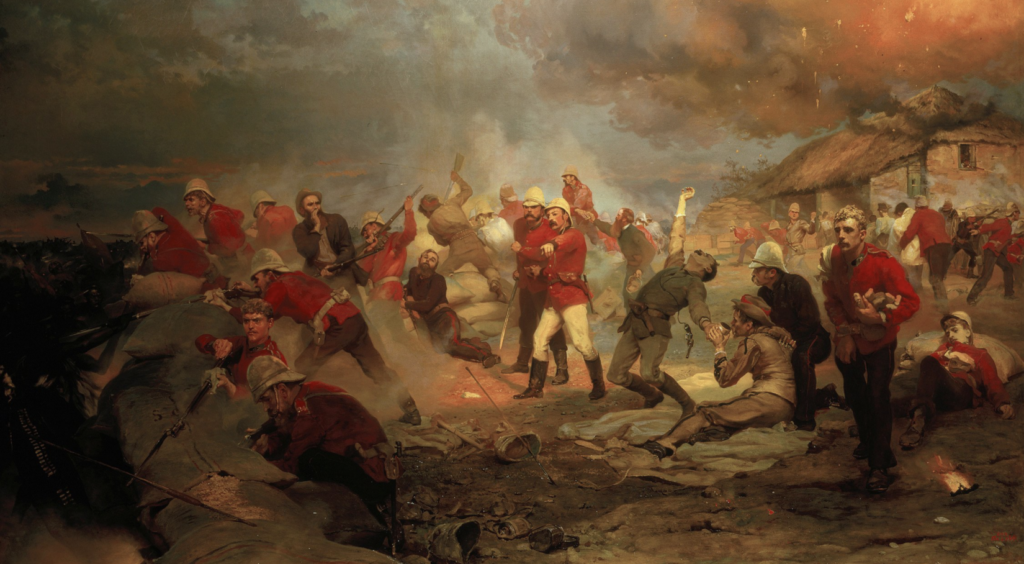
Although the mission station at Rorke’s Drift was in a rural environment, the southwest corner of their outer perimeter was a hospital building. That hospital is pictured on fire in the middle of Alphonse de Neuville’s 1880 painting, also titled The Defence (British spelling) of Rorke’s Drift, at the top of this article.
Four rooms of the small hospital building opened only to the outside. The defenders tried to bar the doors and used a pickaxe to cut loopholes in the mud-brick walls for firing out of the building. The Zulus soon learned that if they got close to the outer wall, they were in dead space, unable to be seen or engaged from the loopholes. They began hacking through the doors with their iKlwas.
Making a Door Where There Was None Before
Hard-pressed to keep literally thousands of righteously indignant Zulus out, Private John Williams used the pickaxe to dig a small hole through the back (east) wall of their west-facing room. The 1964 film Zulu, distributed by Paramount Pictures, shows the scene a little differently.
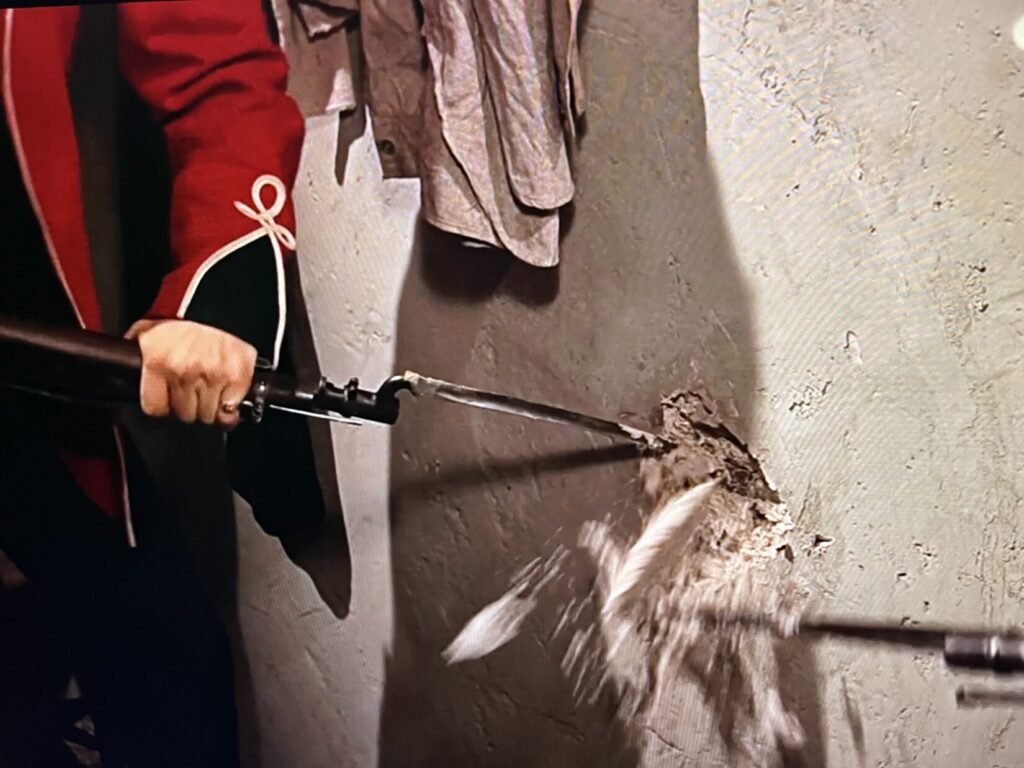
Williams continued to bore through two more walls with that pickaxe, evacuating patients and fighting off Zulus along the way, until most of them were able to escape out the east side of the hospital into the courtyard.
De Neuville’s painting shows patients in white shirts being pulled out through the side of the hospital, into the west half of the Rorke’s Drift perimeter.
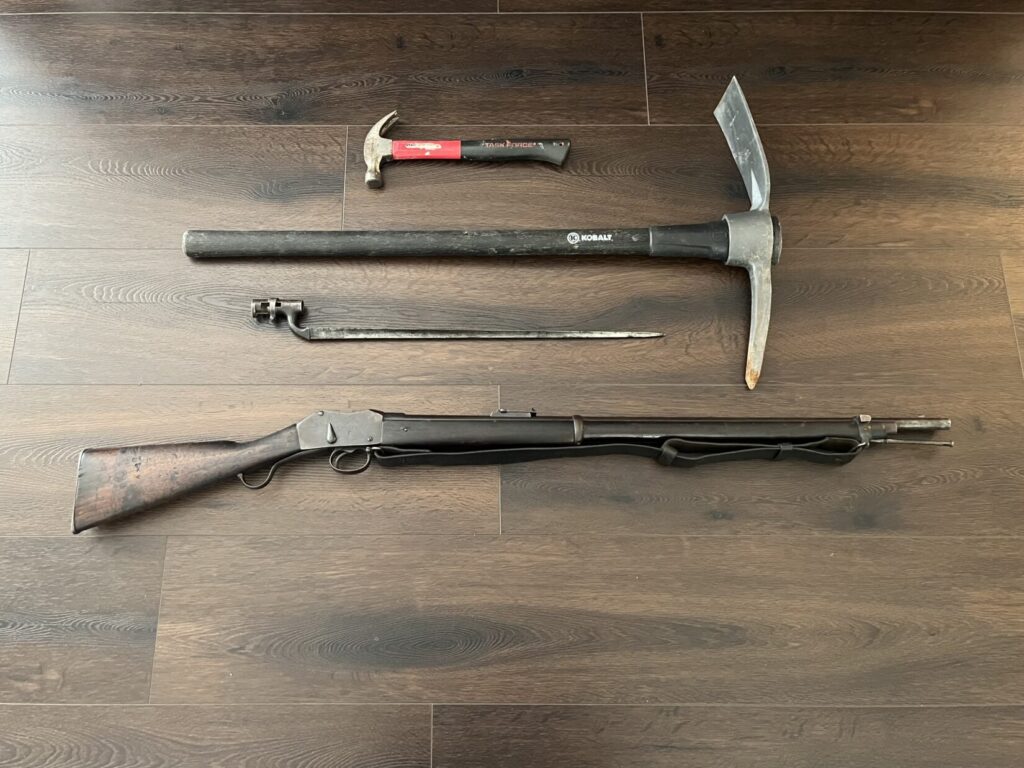
Private Williams was later awarded the Victoria Cross. He’s one of two soldiers I know of who won their nation’s highest award for valor using a pickaxe. First Lieutenant Sam Woodfill found out nearly four decades later, in his fifth German machine gun nest of the day, that a pickaxe can be useful when your .45 runs out of ammo.
Whether you are on the offensive or defending, it’s never a bad idea to have some breaching tools handy. Although the Tommies at Rorke’s Drift broke through the hospital walls as part of a defensive, delaying action, the earliest reference I’ve found to cutting holes in walls for combat, at Plataea in Greece, was offensive in nature.
Plataea
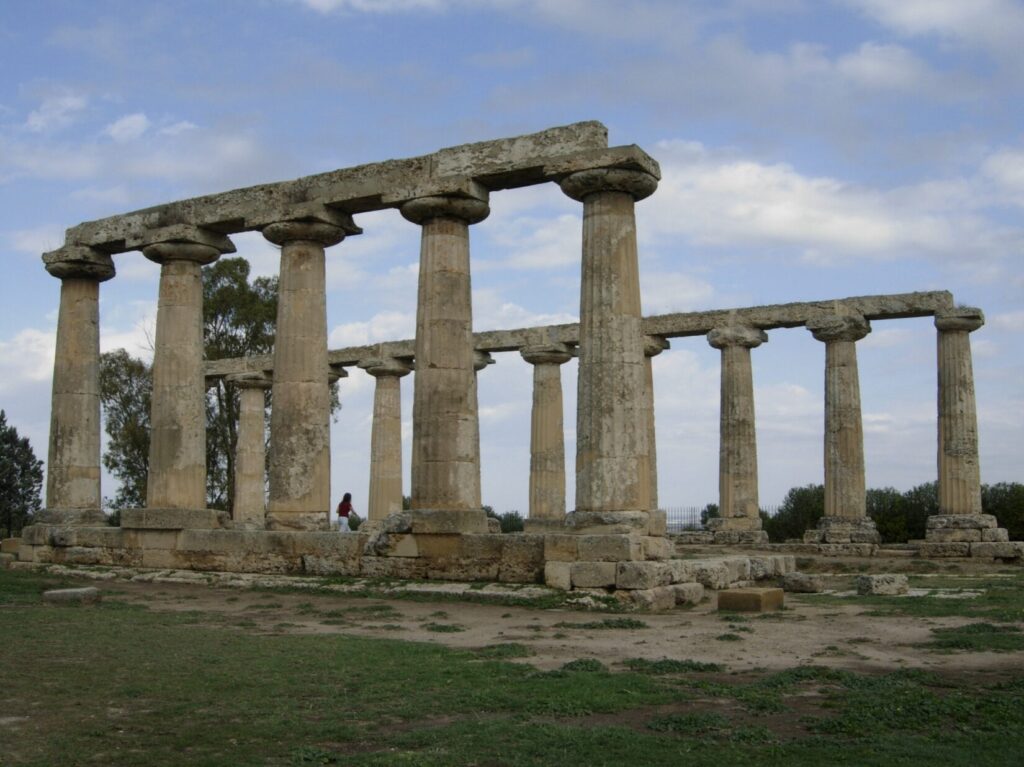
In his 2400-year-old History of the Peloponnesian War, Thucydides wrote that just before the outbreak of hostilities, Theban troops occupied the city of Plataea. The Thebans were confident that they would reach some sort of negotiated settlement with the city fathers within days. So confident, in fact, that they camped out and grounded their arms in the marketplace.
Like most ancient cities, Plataea was laid out like one of those crazy mazes psychologists put mice in. Rather than wasting building materials raising four walls, newer construction usually tacked three walls onto a preexisting structure next door. The result was what we would call row houses or townhouses today.
Unwilling to align with Thebes, the Plataeans surreptitiously cut holes in the walls and snuck fighters into buildings all around the marketplace. At zero-dark-thirty, they sallied forth from every door surrounding the Theban soldiers.
Taken by surprise, the Thebans made a decent stand at first. Eventually, their formation broke and they fled in all directions.
Unfamiliar with the layout of the city, most were chased into blind alleys. Not many Thebans escaped from Plataea.
Jericho: AE in E&E
Modern SERE (Survival, Evasion, Resistance, Escape) students are taught that when outnumbered behind enemy lines, they should avoid contact with security forces. Instead, they should go over, under, around, or through whatever rural or urban terrain they need to that will help them evade and escape (E&E).
Many adherents of Abrahamic faiths (including Judaism, Christianity, and Islam) are familiar with the story of Rahab, a Canaanite woman who helped Joshua’s scouts E&E from security forces during a reconnaissance mission to Jericho. After the city gates were closed, the scouts asymmetrically evacuated by climbing down a rope from Rahab’s high window in the outer wall. They used the cover of darkness, hiding in nearby hills till Canaanite troops finished sweeping the roads.
Whether or not you believe that story is true, its existence proves that the concept of asymmetric evacuation for E&E has been around for thousands of years.
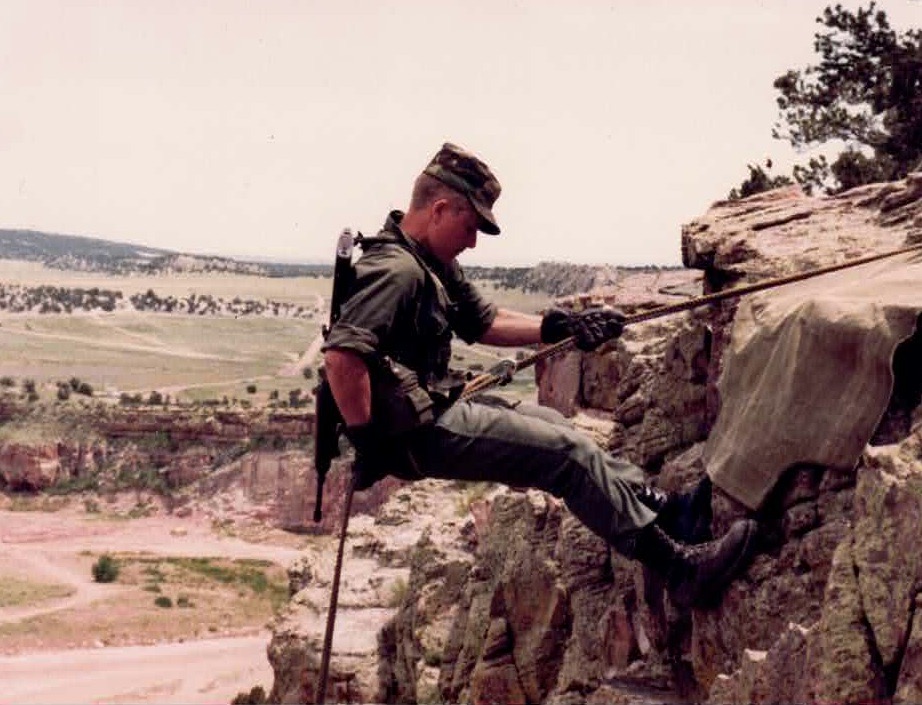
Rappelling techniques, equipment, and safety have improved since that time, but abseiling remains a useful (and fun) AE skill. If you live in a multi-story home, you should at least have one escape rope or ladder in each upstairs bedroom.
The Warsaw Ghetto Uprising
Most defenders in the 1943 Warsaw Ghetto Uprising died fighting the Nazis. But not all.
On May 10, as the Waffen-SS razed the ghetto to the ground with tanks and artillery, Zivia Lubetkin asymmetrically evacuated several dozen fighters through the sewers to portions of Warsaw outside the ghetto. Many lived to fight again in the ’44 Warsaw uprising.
THE A OF EAT
In Richard Harris’ classic PESTS EAT FAST mnemonic, EAT stands for:
- Explode off the X.
- Attain a position of advantage, or at least, less disadvantage.
- Take the fight back to the assailant.
Almost all fights start as ambushes. Unless you are hunting an HVT (high-value target) on a “capture or kill” op overseas, you are most likely to be the ambushee, rather than the ambusher.
When you are ambushed, not getting killed takes priority over shooting back. All bullets are sent to your last known address, so we get off the X first. But eventually, we must take the fight back to the assailant, or he will process through OODA, and adjust fire to compensate for our sudden movement off the X.
Between the first and third steps, we try to get into a less disadvantageous position. Sometimes, egressing out the far side of a car or structure puts you in a less-risky position where you can flank around or “slice the pie” to engage the assailant.
The Olde Town Arvada Police Substation
When a cop killer gunned down Officer Gordon Beesley on June 21, 2021, the assailant’s apparent plan was to ambush other officers as they responded out of the nearby substation. He waited about 30 – 35 meters east of the closest substation door, partially concealed on the opposite side of some large green electrical boxes.
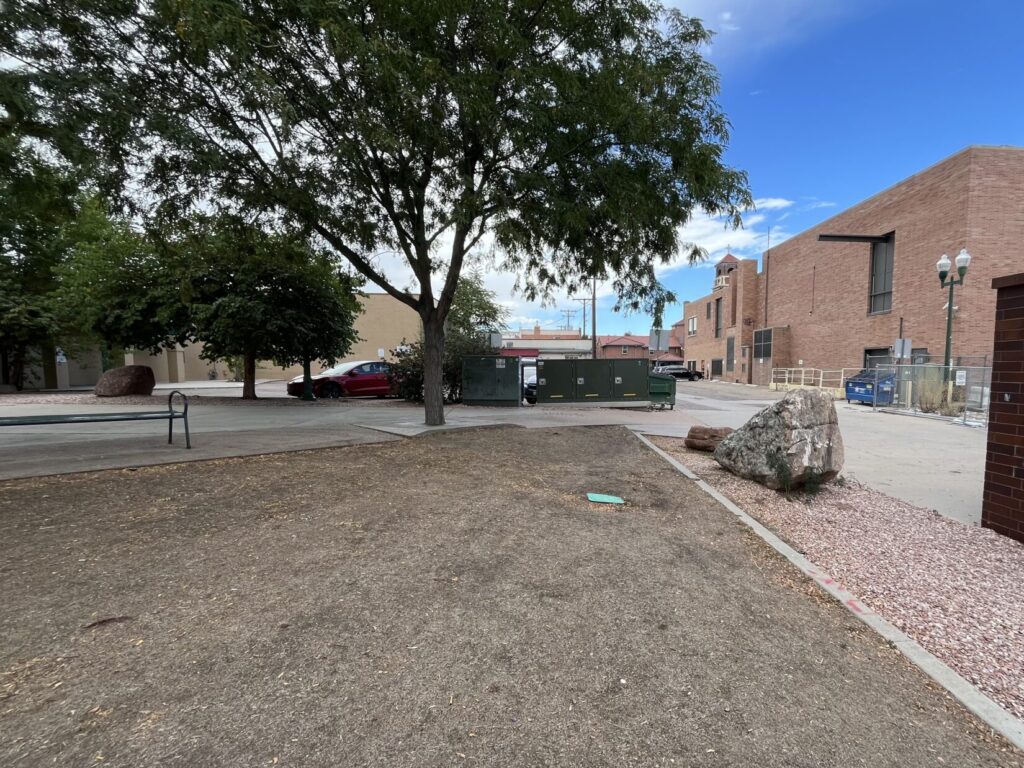
Hearing the commotion outside the East door, Officer Boom first attempted to asymmetrically evacuate the building out the West door, hoping to flank the gunman. The West door was blocked, so he returned to the East door. Officer Brownlow cowboyed up and exited through the East door into the kill zone of the ambush, Glock 34 in hand, to end the confrontation.
By that time, though, armed citizen Johnny Hurley had rendered the cop killer horizontal. The rest of that tragic story is for another article.
How Do You Get Through a Wall With No Door?
If you are trapped in a room with no doors or windows, you don’t need to feel helpless. You don’t need to be a well-equipped construction worker or firefighter to bore through many building materials.
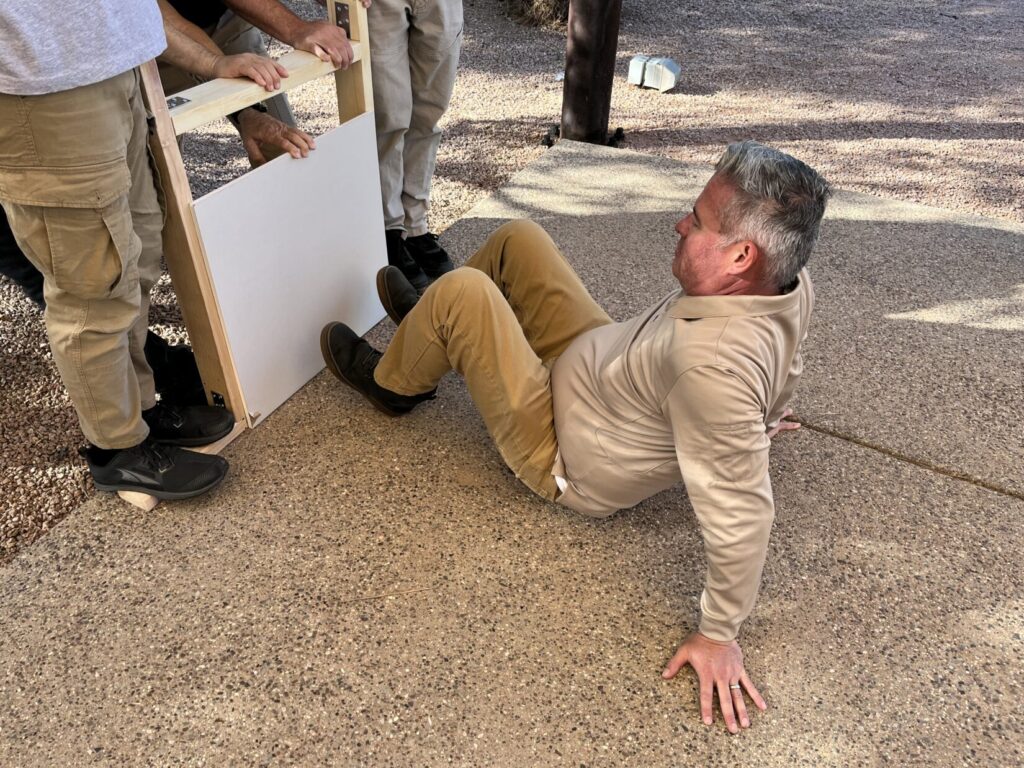
One of the most common materials for walls permitting AE into other interior rooms is drywall. It’s just compressed gypsum powder between sheets of paper. Drywall has many advantages as a building material, but nobody could describe it as “robust” or “ballistically resistant.”
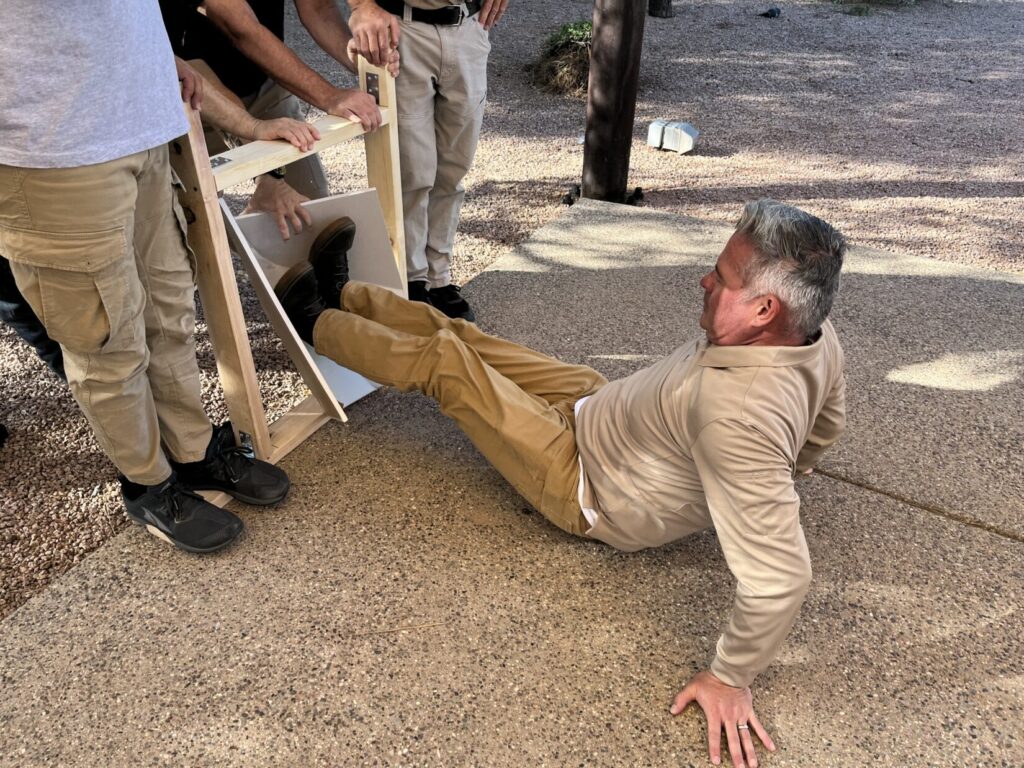
In many places, building codes require load-bearing wall studs to be 16 inches “on center” (OC), leaving a 14- to 15-inch gap between the vertical 2x4s to crawl through. Non-load-bearing walls may be 24 inches OC, like the AE trainer in these photos.
In areas with high winds or frequent earthquakes, local building codes may require 12 inches OC, which would be tight but doable for most evacuees. You might have to squeeze through a narrow gap sideways.
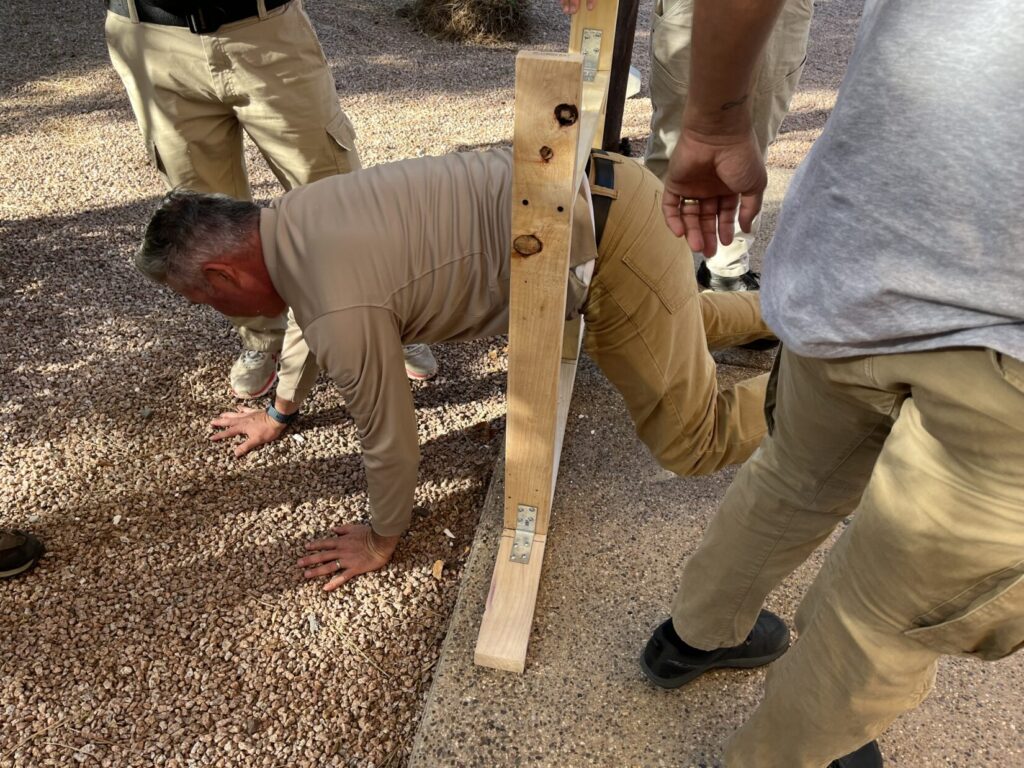
Escaping into another interior room, you would typically have another layer of drywall to punch through. Escaping to the exterior, you might have to deal with insulation, plywood siding, or a thin layer of concrete sprayed on wire netting (stucco).
Stucco is thin and easily damaged, but the wire mesh may make it surprisingly time-consuming to bore a human-sized hole. If the walls are brick or block, a sledgehammer or crowbar would be handy.
Conclusion
AE can be a useful tactic, whether you are on offense overseas or responding to attack in a domestic, urban environment.
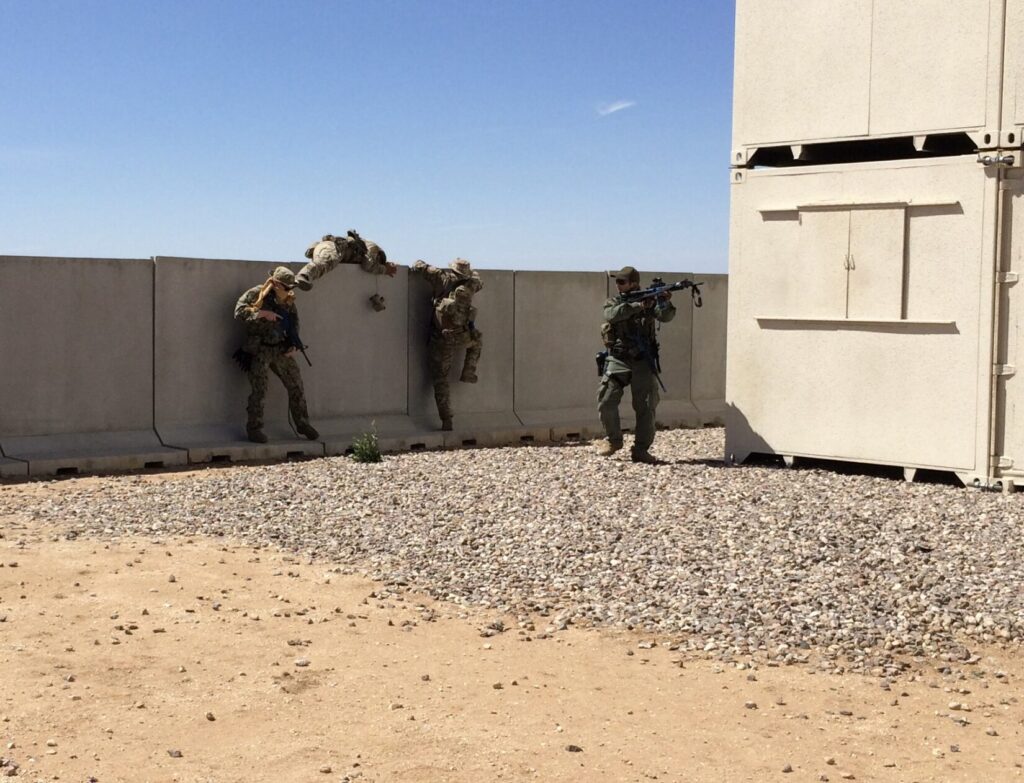
In the next installment of this series, we’ll talk about how AE applies in vehicle ambushes.